Artemis 2 Splashdown: Crew Returns After Historic Lunar Flyby
- The Artemis II crew is heading back to Earth after completing a historic flyby of the Moon.
- The astronauts broke the Apollo 13 distance record, traveling 252,756 miles (406,771 km) from Earth.
- During a 40-minute communications blackout, the crew witnessed a total solar eclipse from the Moon's shadow.
- The highly anticipated Artemis 2 splashdown is scheduled for April 11, 2026, in the Pacific Ocean.

Astronauts head home ahead of the Artemis 2 splashdown
The Artemis II mission astronauts are already en route to Earth following a successful and historic flight around the Moon. Their Orion capsule has turned toward home after humans orbited the Moon for the first time in over 50 years. The Artemis 2 splashdown location is set in the Pacific Ocean off the US West Coast, with the Artemis 2 splashdown date scheduled for April 11, 2026.
This mission has become a crucial step for future lunar programs. It is the first crewed flight on such a trajectory since the Apollo era. NASA intends for this expedition to pave the way for future lunar landings. [1]
The crew consists of four astronauts: Reid Wiseman, Victor Glover, Christina Koch, and Jeremy Hansen. They traveled on a "free-return" trajectory, which allows them to fly around the Moon and naturally return to Earth using gravity. This reduces fuel requirements and increases safety.
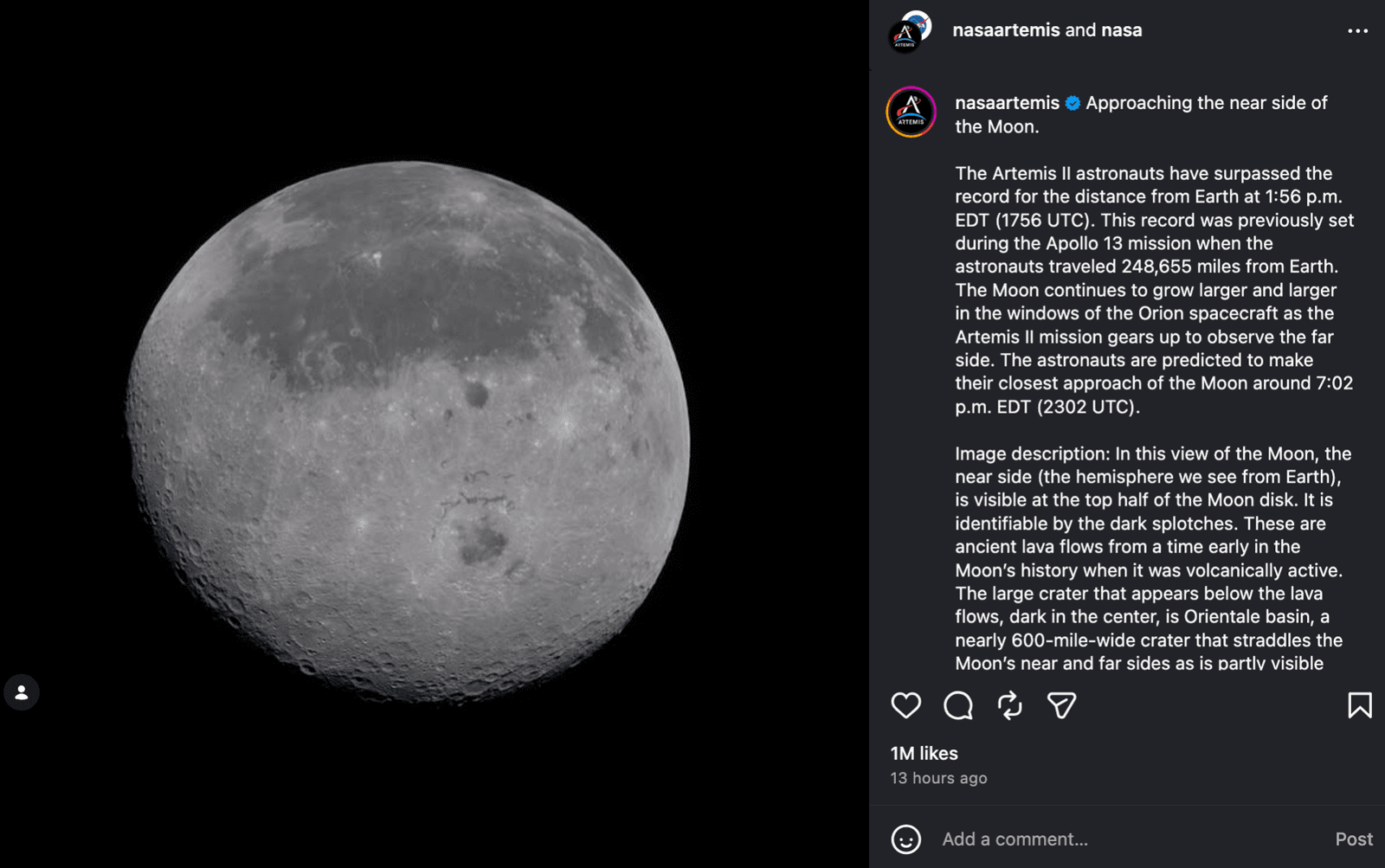
Mission breaks records and captures unprecedented lunar views
Even before rounding the Moon, the astronauts broke a human record. They traveled 252,756 miles (406,771 km) away from Earth, surpassing the achievement of the 1970 Apollo 13 mission. This is the farthest distance humans have ever reached in space.
During the flight, the crew observed the lunar surface and sent detailed notes back to scientists. The astronauts saw a side of the Moon that human eyes had never witnessed before. "It is simply incredible what you can see with the naked eye," said Jeremy Hansen. [2]
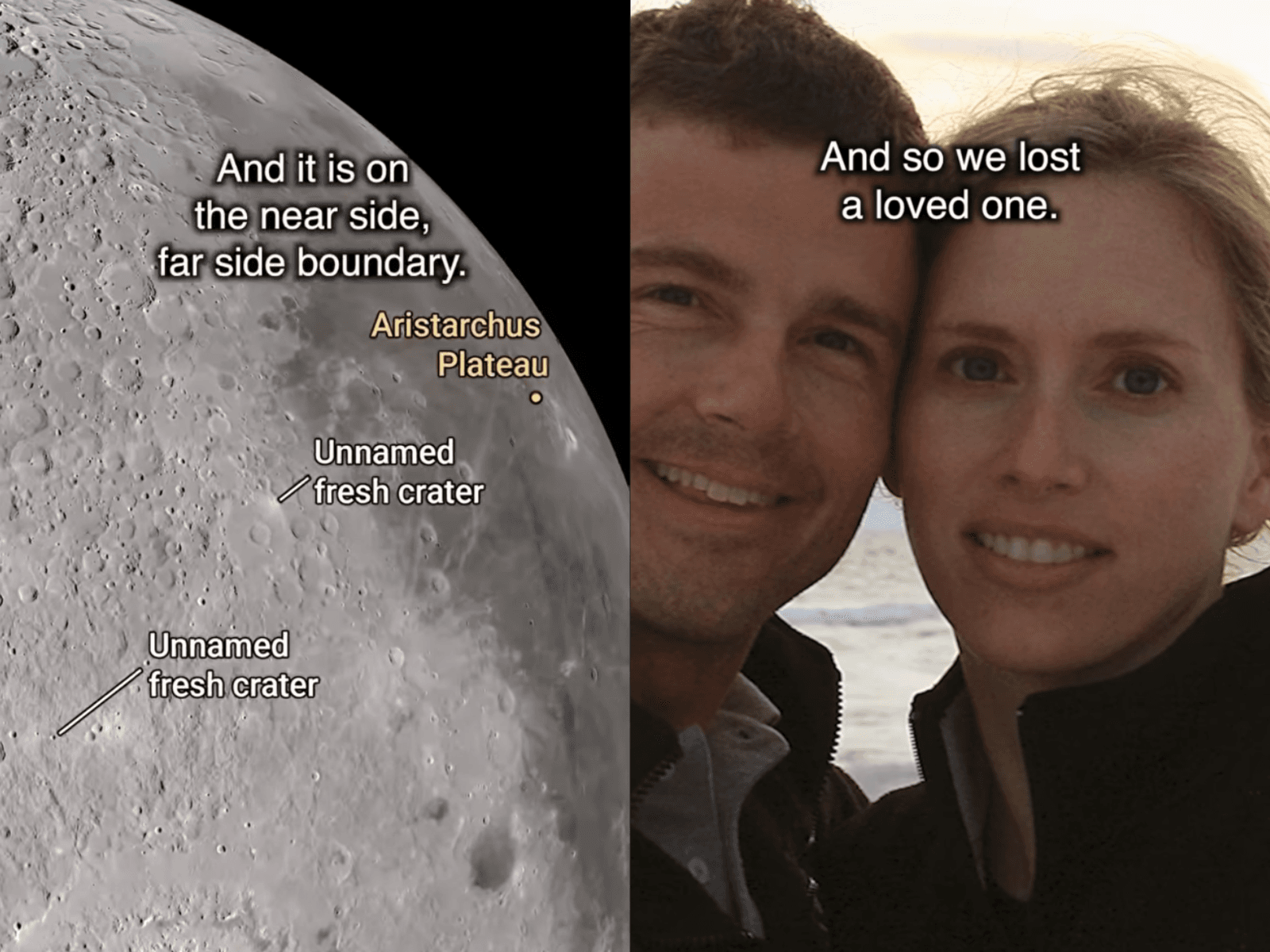
One of the most emotional moments occurred when the crew proposed naming two new craters. One was named "Integrity" after the capsule, and the other "Carroll," honoring Commander Wiseman's wife, who passed away from cancer in 2020.
"A few years ago, we started this journey as a close astronaut family, and we lost someone dear to us. Her name was Carroll—Reid's wife, and the mother of Katie and Ellie," said astronaut Jeremy Hansen.
After speaking these words, he suggested naming a lunar crater "Carroll." This moment was captured on the video broadcast, and viewers witnessed the raw emotion as the astronauts hugged following the announcement.
Pilot Victor Glover was particularly impressed by the terminator line separating lunar light and shadow. "I wish I had more time to just describe what I am seeing," he said. The astronauts also captured images using professional cameras and even smartphones.
Astronauts briefly lost communication while flying behind the Moon
One of the most critical moments of the mission occurred when the Orion capsule flew behind the far side of the Moon. At that time, communication with Earth was lost for about 40 minutes because the spacecraft was out of the direct line of sight. This was a pre-planned phase, but it remains one of the most complex stages in this type of mission. [3]
It was during this time that the astronauts reached several key flight milestones. They approached the Moon to a distance of about 4,067 miles (6,545 km) while simultaneously moving away from Earth to a record 252,756 miles (406,771 km). This is the greatest distance humans have ever reached in space.
At the same time, the crew observed one of the rarest phenomena: a total solar eclipse from the Moon's shadow. The eclipse lasted about 50 minutes, and the astronauts were able to see the solar corona in a way that is impossible to view from Earth.
"It looks like science fiction, completely unreal," said pilot Victor Glover.
When communication with Earth was restored, the first words were emotional. "It is so good to hear Earth again," said astronaut Christina Koch. This moment marked not only a technical milestone but also a symbolic return after one of the most extreme phases of the mission.
The world watched the historic flight, anticipating the Artemis 2 splashdown live
This historic part of the mission was broadcast globally across multiple platforms. NASA provided an official stream through its NASA+ system, YouTube channel, and social media networks, but the footage was also available on commercial platforms including Netflix, Amazon Prime Video, Apple TV, Hulu, HBO Max, and Roku.
Millions of people were able to watch the live footage and hear the astronauts' real-time commentary. The broadcasts were also shown on news portals and television channels, and according to NASA, the mission's content was accessible in dozens of countries.
Following the successful lunar flyby, the astronauts received a direct phone call from US President Donald Trump. He congratulated the crew on their historic achievement, emphasizing their courage and significance to the entire country. The president also invited the astronauts to the White House once they return to Earth. [4]

"You have made history and made all of America proud," Trump said. He also called the astronauts modern pioneers who are paving the way for a new era of space exploration. Such words reflect not only political support but the broader significance of this mission.
This expedition is considered one of NASA's most important steps in decades. The mission also serves as a foundation for future programs that envision a permanent human presence on the Moon. Artemis II is not just a one-time achievement. It marks the beginning of a new era, with plans not only for the astronauts on Artemis 2 landing safely but also for future lunar touchdowns and eventual steps toward Mars.
Frequently asked questions
What is the Artemis 2 splashdown date and location?
The Artemis 2 splashdown date is scheduled for April 11, 2026. The official Artemis 2 splashdown location is in the Pacific Ocean off the US West Coast.
Will we be able to watch the Artemis 2 splashdown live?
Yes, NASA will broadcast the event globally. Viewers can expect to see the Artemis 2 reentry video and live coverage across NASA+, YouTube, and various commercial streaming platforms.
Will there be Artemis 2 splashdown photos available?
Yes, NASA and recovery teams are expected to capture and release Artemis 2 splashdown photos once the Orion capsule and the crew are secured.
Sources
- Euronews: Artemis II crew head back towards Earth after completing record-breaking lunar flyby
- BBC: Artemis II crew head for home after travelling further from Earth than anyone before
- CNN: As 4 astronauts aim to make history at the moon, Trump recommends slashing NASA’s budget
- Politico: Artemis II breaks Apollo 13’s distance record with daring moon flyby that included a solar eclipse
Log in to comment
No comments yet. Be the first.