Night Sky Guide: Northern Lights, Meteor Showers, Moon Phases & Eclipses
- What's in the sky this season (October 2026 – January 2027)
- 1. The Kp index explained: how to read an aurora forecast
- 2. Where and when to see the northern lights in the US
- 3. How to photograph the northern lights
- 4. Meteor showers 2026–2027
- 5. Moon phases and the full moon calendar
- 6. Eclipses: August 2026 and what comes next
- 7. Golden hour and blue hour
- The night-sky year at a glance
- How to plan a night under the stars
The night sky over the United States puts on a better show than most people realize. In the last few years, geomagnetic storms have pushed the northern lights far south of their usual home in Alaska and Canada, meteor showers have kept their reliable annual appointments, a total solar eclipse crossed the Arctic and Spain in August 2026 with a partial phase visible from Alaska to the Mid-Atlantic, and every month brings a named full moon. This guide brings it all together: how to read an aurora forecast and decide whether tonight is worth a drive, where and when to look, how to photograph what you see with a phone or a camera, the meteor shower and full moon calendars for 2026 and 2027, the eclipses ahead, and the golden and blue hours that frame every clear evening. Each section links to an in-depth article, and our live northern lights tonight page turns NOAA's forecast into a city-by-city outlook.
What's in the sky this season (October 2026 – January 2027)
Dates come from the American Meteor Society (meteor showers), the US Naval Observatory (moon phases and the solstice, converted to Eastern Time) and NASA JPL Horizons (moon distances). Aurora chances depend on solar activity and cannot be scheduled; the northern states see them on storm nights throughout the season.
| Date | Event | What to expect |
|---|---|---|
| Oct 21–22 | Orionid meteor shower peak | 10–20 meteors per hour in a normal year; a 76% Moon, so watch before dawn |
| Oct 26, 12:12 a.m. EDT | Hunter's Moon | Looks full on the night of Oct 25 |
| Nov 4–5 | Southern Taurids peak | Few meteors but known for fireballs; 22% Moon |
| Nov 9, 2:02 a.m. EST | New moon | Darkest nights of the month: best for aurora and stars |
| Nov 11–12 | Northern Taurids peak | Slow, sometimes bright meteors; 5% Moon |
| Nov 16–17 | Leonid meteor shower peak | ZHR about 15; 41% Moon sets around midnight |
| Nov 24, 9:53 a.m. EST | Beaver Moon | A near-supermoon |
| Dec 8, 7:52 p.m. EST | New moon | Dark skies ahead of the Geminids |
| Dec 13–14 | Geminid meteor shower peak | The year's strongest shower, ZHR 150; only a 17% Moon |
| Dec 21, 3:50 p.m. EST | Winter solstice | Longest night of the year in the Northern Hemisphere |
| Dec 21–22 | Ursid meteor shower peak | 5–10 per hour; a 91% Moon |
| Dec 23, 8:28 p.m. EST | Cold Moon supermoon | Closest full moon of 2026, about 221,667 miles away |
| Jan 3–4, 2027 | Quadrantid meteor shower peak | Short, sharp peak near 10:30 p.m. EST Jan 3; 16% Moon |
| Jan 22, 2027, 7:17 a.m. EST | Wolf Moon supermoon | Second supermoon of the winter |
1. The Kp index explained: how to read an aurora forecast
Every aurora app and news alert draws on the same handful of products from NOAA's Space Weather Prediction Center (SWPC). The Kp index measures geomagnetic activity from 0 to 9; SWPC's rule of thumb is that the edge of the auroral oval moves about 2 degrees of geomagnetic latitude toward the equator for every step of Kp. When Kp reaches 5, SWPC calls it a geomagnetic storm and rates it on the G-scale: G1 storms commonly bring the aurora to northern Michigan and Maine, G2 storms have produced aurora as far south as New York and Idaho, G3 Illinois and Oregon, G4 Alabama and northern California, and the rare G5 storms Florida and southern Texas. The green-and-red oval that apps call a "northern lights tonight map" is SWPC's OVATION model, which uses solar wind measured about a million miles upstream to forecast the aurora 30 to 90 minutes ahead – the most reliable aurora forecast there is, but a short one.
The key is to use each product for what it can do: the 3-day forecast to know whether to be ready, the OVATION map and a look at the clouds to decide whether to go out. Read the full explanation, with a table of the Kp each region needs, in Kp index explained: how to read a northern lights forecast. For tonight's actual outlook, go straight to our live northern lights forecast for your city, which combines NOAA's Kp forecast, the OVATION model and hourly cloud cover for more than 50 cities in the US, Canada and beyond, updated every 30 minutes.
2. Where and when to see the northern lights in the US
Interior Alaska is the surest bet. The Fairbanks visitor bureau puts the city under the auroral oval, defines its aurora season as August 21 to April 21, and says the aurora is visible on average four out of five nights when the sky is clear and dark. In the lower 48, the northern tier from Washington and Montana through North Dakota, Minnesota and Michigan's Upper Peninsula to Maine sees the aurora during minor to moderate storms. Dark skies make the difference: Voyageurs National Park in Minnesota is a designated Dark Sky Park, and Pennsylvania's Cherry Springs State Park, the state's first Dark Sky Park, catches strong storms.
Timing matters as much as place. SWPC says the best aurora usually comes within an hour or two of local midnight, roughly 10 p.m. to 2 a.m., and that larger storms are more common near the spring and fall equinoxes. As for the Sun itself, NASA and NOAA announced in October 2024 that solar cycle 25 had reached its maximum period; SWPC's smoothed sunspot number peaked at 160.9 in October 2024 in the data so far and has been declining, but NASA notes that significant storms often occur in the declining phase too. Full details, state by state, are in Where to see the northern lights in the US: best states, places and times.
3. How to photograph the northern lights
A phone on a tripod can now capture aurora that the eye barely sees, because camera sensors gather light over several seconds and record color in conditions where human vision is mostly black and white. On an iPhone, Night mode on a tripod with the longest exposure option is the simplest route; on Google Pixel phones, Night Sight switches automatically to Astrophotography mode when the phone is steady. With a dedicated camera, professional night-sky photographer Dave Morrow recommends f/2.8 to f/4, roughly 3–7 seconds for fast-moving aurora and 10–25 seconds for faint displays, ISO 800–4000 and RAW files.
The most common mistakes are camera shake, autofocus hunting in the dark and exposures so long that the aurora's rays blur into a green smear. The step-by-step guide, with settings tables for phones and cameras and a troubleshooting table, is How to photograph the northern lights with a phone or camera.
4. Meteor showers 2026–2027
Meteor showers are the most reliable night-sky events: they return on almost the same dates every year as Earth passes through streams of comet and asteroid debris. The American Meteor Society's calendar lists the Orionids (Oct 21–22, 2026), the Taurids (early and mid-November), the Leonids (Nov 16–17) and the Geminids (Dec 13–14), usually the strongest shower of the year, with a zenithal hourly rate of 150 in the International Meteor Organization's calendar and only a 17% crescent Moon in 2026. In 2027 the Quadrantids open the year on January 3–4, followed by the Lyrids in April, the Eta Aquariids in May and the Perseids on August 12–13.
No equipment is needed. The AMS recommends watching between midnight and dawn for most showers, looking at a dark part of the sky about halfway up, and giving your eyes 20–30 minutes to adjust without phone screens. The full calendar with moonlight conditions and a month-by-month list is in Meteor showers 2026–2027: calendar, peak dates and when to watch.
5. Moon phases and the full moon calendar
The Moon cycles through eight phases about every 29.5 days, NASA explains, because we see different portions of its sunlit half as it orbits Earth. Using US Naval Observatory data, the next full moon is the Hunter's Moon on October 26, 2026, at 12:12 a.m. EDT, followed by the Beaver Moon on November 24 and the Cold Moon on December 23. The year 2026 has 13 full moons, including a Blue Moon on May 31. Checking each full moon's distance in NASA JPL's Horizons system shows that the December 23, 2026, and January 22, 2027, full moons fall within 360,000 km of Earth, the supermoon threshold used by timeanddate.com.
The complete 2026 and 2027 tables with times in Eastern Time, the traditional names, the rule behind the Harvest Moon, and all new moons for dark-sky planning are in Full moon calendar 2026 and 2027: dates, times, names and moon phases.
6. Eclipses: August 2026 and what comes next
On August 12, 2026, a total solar eclipse swept across Greenland, Iceland, northern Russia, the Atlantic and Spain. NASA's tables show it as a partial eclipse across much of the northern US: 37% of the Sun covered at Fairbanks, 24% at Bangor, Maine, 16% at Boston and smaller amounts farther south and west. The next total solar eclipse, on August 2, 2027, crosses southern Spain, North Africa and the Middle East; NASA says only northern Maine in the US will see a partial phase. Lunar eclipses are easier to catch: after the total lunar eclipse of March 3, 2026, and the deep partial eclipse of August 27–28, 2026, the coming ones visible from the US include penumbral eclipses in February and August 2027 and a total lunar eclipse on December 31, 2028.
The long wait is for totality at home. The next total solar eclipse visible from the US is in Alaska on March 30, 2033; in the lower 48 it is August 23, 2044 (Montana, North Dakota and South Dakota), followed by a coast-to-coast eclipse on August 12, 2045. NASA's safety rule never changes: look at a partial eclipse only through eclipse glasses or viewers that meet the ISO 12312-2 standard. More in Eclipses 2026–2045: what the US can see and how to watch safely.
7. Golden hour and blue hour
The golden hour is the period shortly after sunrise and before sunset when the Sun is low and its light warm and soft; the blue hour is the deep-blue twilight just before sunrise and after sunset. Common photography definitions put the golden hour with the Sun between about 6 degrees above and 4 degrees below the horizon, and the blue hour between 4 and 6 degrees below. The National Weather Service defines civil twilight as ending when the Sun's center is 6 degrees below the horizon. Using NOAA's solar equations, we calculated that the evening golden hour lasts about 50 minutes in Miami at the winter solstice, about an hour in New York and about 75 minutes in Seattle, and that in Fairbanks the Sun never climbs more than a couple of degrees above the horizon on the December solstice.
Tables for four US cities at each solstice and equinox, and how to calculate golden hour for your own location, are in Golden hour and blue hour: what they are, how to calculate them and times by season.
The night-sky year at a glance
Some events are fixed in the calendar; others, like the aurora, depend on the Sun. This summary shows when each kind of event is best from the United States.
| Month | Meteor showers | Aurora (northern states) | Nights |
|---|---|---|---|
| January | Quadrantids | Good: long nights, cold | Long |
| February | None major | Good | Long |
| March | None major | Very good: equinox storms | Shortening |
| April | Lyrids | Good | Shortening |
| May | Eta Aquariids (pre-dawn) | Possible, short nights | Short |
| June | None major | Possible, very short nights | Shortest |
| July | Delta Aquariids, Capricornids | Possible | Short |
| August | Perseids | Alaska season opens | Lengthening |
| September | Minor showers | Very good: equinox storms | Lengthening |
| October | Draconids, Orionids | Very good | Long |
| November | Taurids, Leonids | Good | Long |
| December | Geminids, Ursids | Good: longest nights | Longest |
How to plan a night under the stars
- Check the Moon first. The week around the new moon is darkest. A bright Moon dims faint aurora and hides all but the brightest meteors.
- Check the clouds second. A clear gap of two hours matters more than any forecast number. Our northern lights tonight page shows the cloud forecast for the dark hours in each city.
- Get away from lights. Even a short drive out of town makes a large difference; look for a spot with an open horizon in the direction you need – north for the aurora.
- Let your eyes adapt. Twenty to thirty minutes without bright screens, and a red light if you need one.
- Dress for standing still. Winter nights in the northern states can be dangerously cold; bring layers, a chair and a charged phone, and check our winter weather guide for wind chill and frostbite risks.
- Bring a tripod. Whether for aurora, meteors or the Moon, a steady phone or camera is the difference between a blur and a keeper.
This guide is reviewed regularly. Aurora odds change with solar activity, and the eclipse, moon and meteor tables are updated as new calendars are published by the Naval Observatory, NASA, the American Meteor Society and the International Meteor Organization.
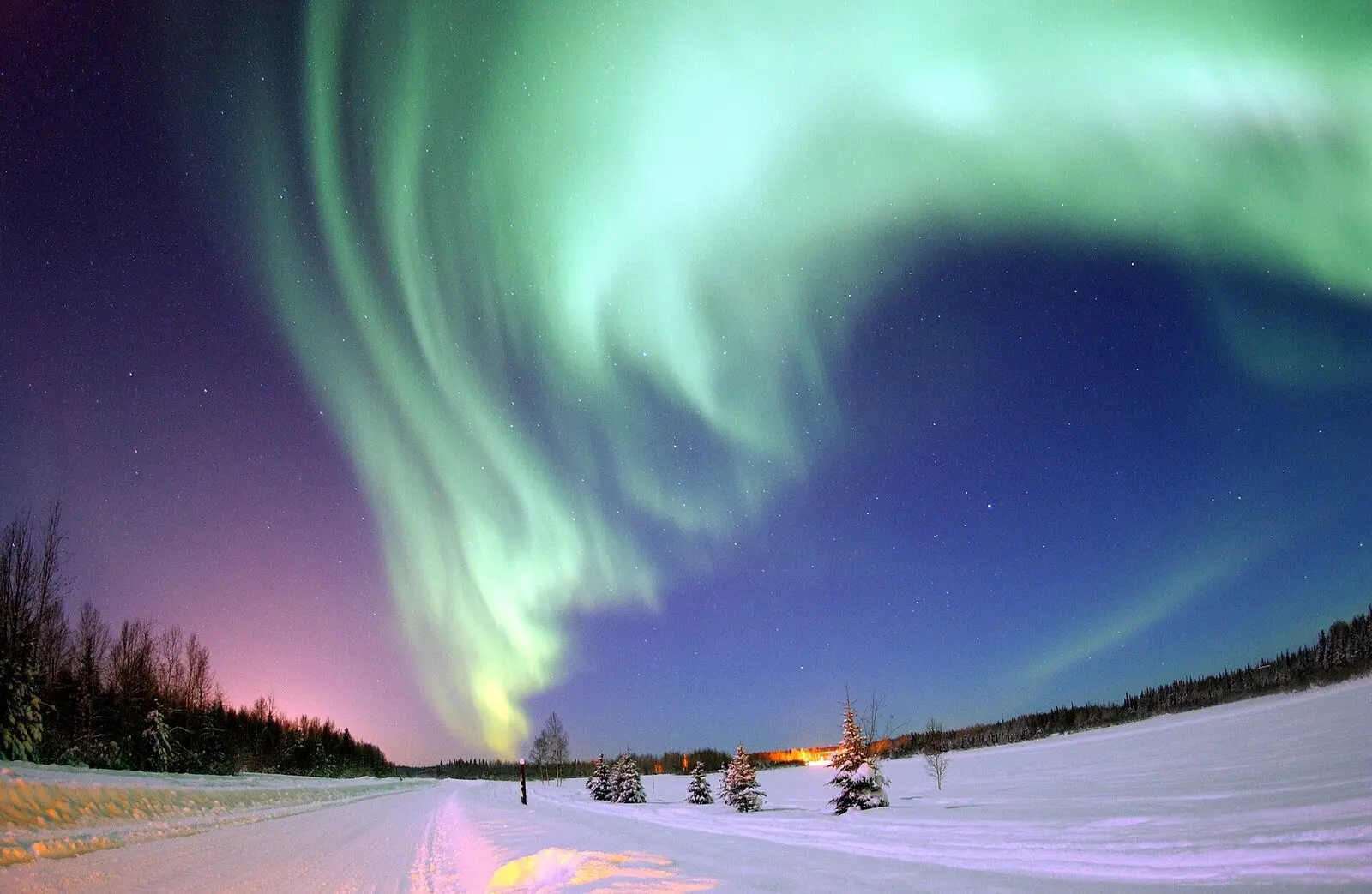
Cover photo: United States Air Force photo by Senior Airman Joshua Strang, Wikimedia Commons (public domain).

Frequently asked questions
Will I see the northern lights tonight?
It depends on the Kp forecast, clouds and where you are. Interior Alaska sees aurora on most clear dark nights in season; the northern tier of the lower 48 usually needs a Kp of 5 to 6 (a G1 to G2 storm). Our northern lights tonight page gives a city-by-city outlook.
What Kp index do I need to see the aurora?
Roughly Kp 1 to 3 in interior Alaska, Kp 5 to 6 along the Canadian border states, Kp 7 to 8 for the middle of the country and Kp 9 for the southern states, based on NOAA's Space Weather Prediction Center guidance and G-scale.
What time are the northern lights most visible?
NOAA's Space Weather Prediction Center says the best aurora is usually within an hour or two of local midnight, roughly 10 p.m. to 2 a.m.
When is the next meteor shower?
The Orionids peak on October 21–22, 2026, followed by the Taurids in early and mid-November, the Leonids on November 16–17 and the Geminids, usually the year's best, on December 13–14.
When is the next full moon?
The Hunter's Moon on October 26, 2026, at 12:12 a.m. EDT, according to US Naval Observatory data. It looks full on the night of October 25.
When is the next total solar eclipse in the US?
In Alaska on March 30, 2033. In the lower 48 the next total solar eclipse is August 23, 2044, visible from Montana, North Dakota and South Dakota, followed by a coast-to-coast eclipse on August 12, 2045.
When is golden hour?
Roughly the first hour after sunrise and the last hour before sunset, when the Sun is low. It is shorter near the equator and in spring and fall, and longer at northern latitudes and around the solstices.
Is solar maximum over?
NASA and NOAA announced in October 2024 that the Sun had reached its maximum period. SWPC's smoothed sunspot number peaked at 160.9 in October 2024 in the data so far and has since declined, but strong storms can still happen in the declining phase.
All parts of the guide
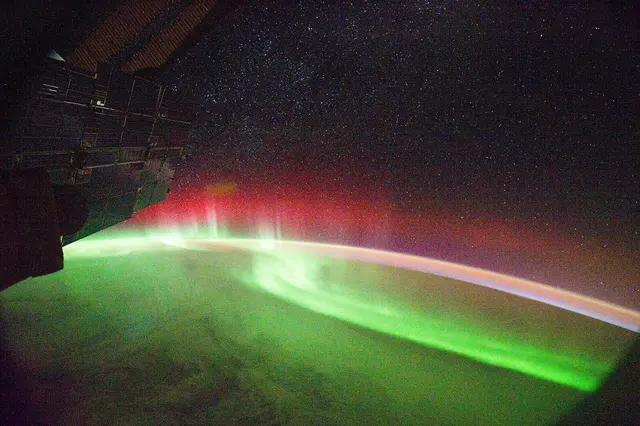 Kp index and aurora forecasts explainedThe Kp index explained: how to read the Kp index, NOAA's G1–G5 storm scale and the OVATION 30-minute aurora map, and which Kp you need in your state.
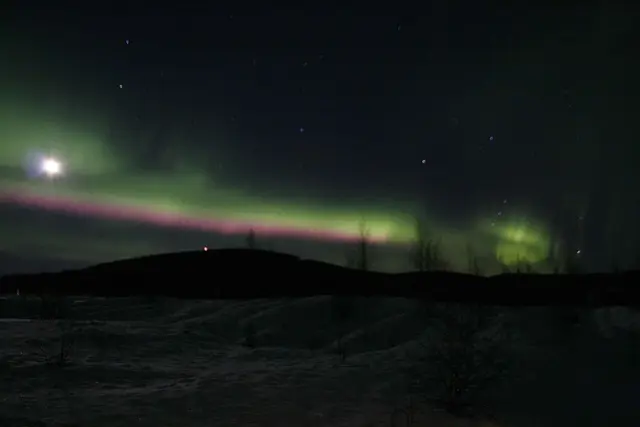 Where and when to see the northern lightsThe best places in Alaska and the lower 48, dark-sky tips, the best hours and months, and what solar cycle 25 means in 2026–2027.
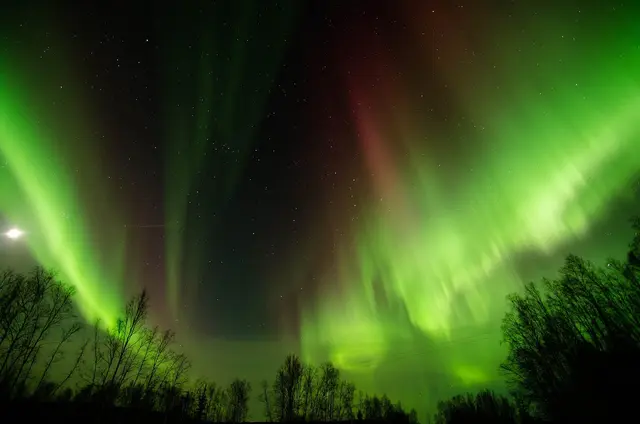 How to photograph the northern lightsStep-by-step iPhone, Android and camera settings for the aurora, with tables, composition tips and fixes for common mistakes.
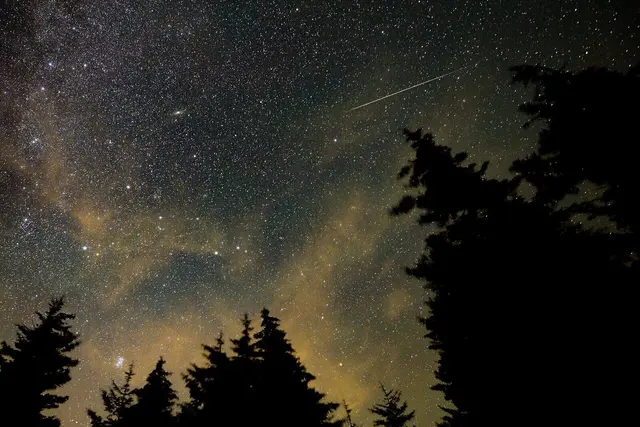 Meteor showers 2026–2027Every major meteor shower from the Orionids to the 2027 Perseids, with peak nights, rates, moonlight and the best time and direction to look.
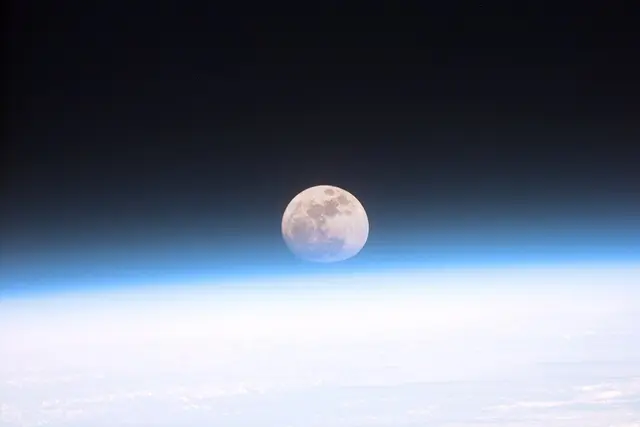 Moon phases and full moon calendarMoon phases explained, every full moon of 2026 and 2027 with dates, Eastern times and names, supermoons and the darkest new moon nights.
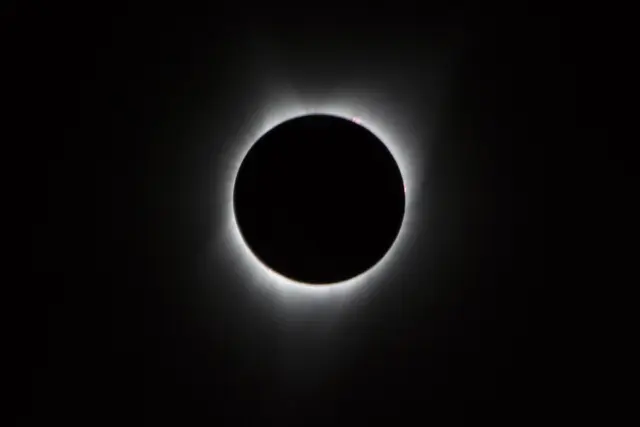 Eclipses: 2026 recap and what's nextThe August 12, 2026 total solar eclipse, the eclipses visible from the US through 2030, the next total eclipses of 2033, 2044 and 2045, and eye safety.
 Golden hour and blue hourWhat golden hour and blue hour are, how to calculate them from the Sun's elevation, and calculated times for Miami, New York, Seattle and Fairbanks by season.
Sources
- NOAA SWPC – Tips on viewing the aurora
- NOAA SWPC – NOAA Space Weather Scales
- NOAA SWPC – Aurora 30-minute forecast (OVATION)
- NOAA SWPC – Solar cycle progression
- NASA – Sun reaches maximum phase in 11-year solar cycle
- Explore Fairbanks – Aurora season
- American Meteor Society – Meteor shower calendar 2026/2027
- International Meteor Organization – 2026 Meteor Shower Calendar
- US Naval Observatory – Phases of the Moon
- US Naval Observatory – Earth's seasons
- NASA JPL – Horizons ephemeris system
- NASA Science – Moon phases
- NASA Science – Total solar eclipse on August 12, 2026
- NASA Science – Future eclipses
- NASA Science – Eclipse viewing safety
- Timeanddate.com – Eclipses in the United States
- CBS News – Next total solar eclipses in the US, 2044 and 2045
- National Weather Service – Definitions of twilight
- Dave Morrow Photography – Northern lights photography guide
Log in to comment
No comments yet. Be the first.