Golden Hour and Blue Hour: What They Are, How to Calculate Them and Times by Season
- Golden hour: the Sun between about 6 degrees above and 4 degrees below the horizon; blue hour: 4 to 6 degrees below.
- Civil twilight ends when the Sun's center is 6 degrees below the horizon, the National Weather Service says.
- The evening golden hour lasts about 45–50 minutes in Miami, about an hour in New York and up to 75 minutes in Seattle.
- Golden hour is shortest near the equinoxes and longest near the solstices.
- In Fairbanks the December Sun never climbs above 6 degrees, so the whole day is golden light.
- What is golden hour?
- What is blue hour?
- How to calculate golden hour
- Golden hour and blue hour times by season
- Why golden hour is longer in the north and at the solstices
- Golden hour photography tips
- Golden hour in clouds, haze and winter weather
- Golden hour, the Moon and the night sky
- Sunrise, sunset and daylight saving time
This article is part of the 77.today Night Sky Guide, prepared by the 77.today editors from the sources listed at the end.
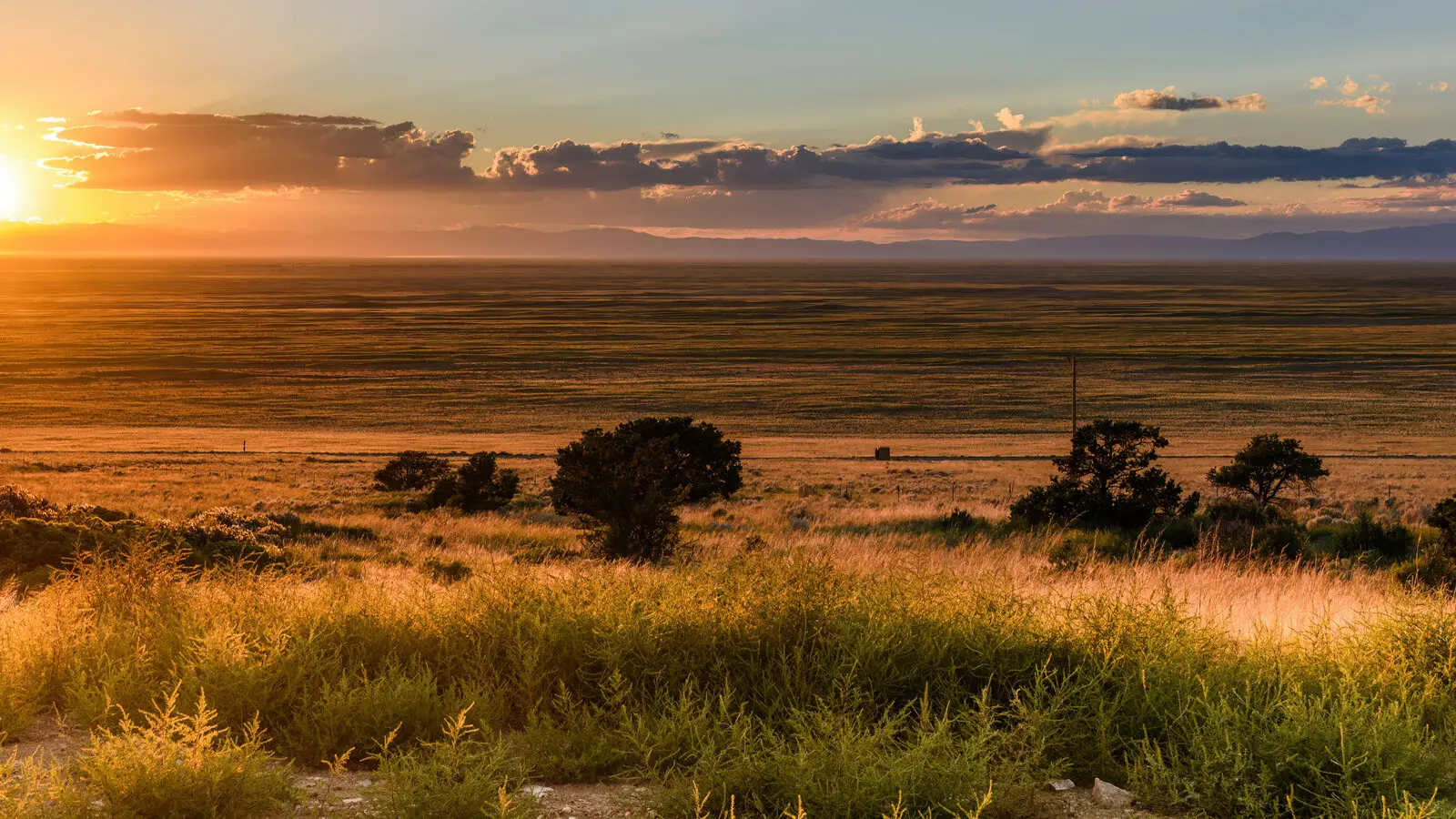
Photographers call it magic hour for a reason. In the short stretch after sunrise and before sunset, the Sun sits low, its light passes through more atmosphere, and everything – faces, buildings, fields – turns warm, soft and long-shadowed. Then, as the Sun slips below the horizon, the sky shifts to a deep, even blue. Those are the golden hour and the blue hour. This part of our Night Sky Guide explains what they are, how they are defined in degrees of sun elevation, how to calculate them for any place, and how long they last in different parts of the US through the seasons, with times we calculated for Miami, New York, Seattle and Fairbanks.
What is golden hour?
Golden hour is the time when the Sun is just above or just below the horizon. Its light reaches you at a shallow angle through a thick layer of atmosphere, which scatters away much of the blue and leaves warmer yellow, orange and red tones. Shadows are long and soft, contrast is lower than at midday, and side-lighting brings out texture in landscapes and faces.
There is no single official definition. Timeanddate.com notes that the warm light characteristic of the golden hour most likely occurs when the Sun is between 6 degrees below and 6 degrees above the horizon. Many photography calculators use a narrower window for the golden hour proper – from the Sun 6 degrees above the horizon down to 4 degrees below it – and call the next band, from 4 to 6 degrees below, the blue hour. We use those definitions in the tables below.
Despite the name, golden hour is rarely exactly an hour. It can be well under one hour near the equator, longer in the north and – in the far north at certain times of year – it can last all night or all day.
What is blue hour?
Blue hour is the period of twilight when the Sun is a few degrees below the horizon, the sky is still lit indirectly and the light turns cool and blue. City lights are on but the sky is not yet black, so skylines, bridges and streets glow against a deep blue background. In the morning it comes before the golden hour; in the evening it follows it.
The blue hour sits inside what meteorologists call civil twilight. The National Weather Service defines civil twilight as the period between sunset and the moment the geometric center of the Sun is 6 degrees below the horizon (and the reverse in the morning). In that light, it says, the brightest stars and planets can be seen, the horizon and objects on the ground can be made out, and in many cases artificial lighting is not needed. Beyond that come nautical twilight (down to 12 degrees) and astronomical twilight (down to 18 degrees), after which the sky is fully dark – the time to look for the aurora, meteors and the Milky Way.
| Period | Sun elevation | What you see |
|---|---|---|
| Golden hour | About +6° to −4° | Warm, soft light; long shadows; sunset or sunrise |
| Sunset or sunrise | Upper edge of the Sun at the horizon (about −0.8° for the Sun's center) | The Sun touches the horizon |
| Blue hour | About −4° to −6° | Deep blue sky, city lights on |
| Civil twilight ends | −6° | Brightest stars and planets visible |
| Nautical twilight ends | −12° | Horizon hard to see |
| Astronomical twilight ends | −18° | Fully dark sky |
How to calculate golden hour
Because golden and blue hour are defined by the Sun's elevation, you can calculate them for any location and date with the same equations used for sunrise and sunset. NOAA's Solar Calculator implements those equations and shows the Sun's elevation for any time and place. The method is simple:
- Find the times when the Sun's elevation is +6° and −4° in the evening. Between them is the evening golden hour.
- Find when the Sun reaches −6°. Between −4° and −6° is the blue hour.
- In the morning, the order is reversed: blue hour first, then golden hour, ending when the Sun climbs to +6°.
As a shortcut, the evening golden hour in most of the contiguous US begins roughly 35 to 50 minutes before sunset and ends 15 to 25 minutes after it, and the blue hour lasts about 10 to 15 minutes after that, based on the city calculations below. Phone weather apps and photography apps that show "golden hour today" use the same principle.
Golden hour and blue hour times by season
We calculated these times with NOAA's solar position equations for the solstices and equinoxes of the coming year (dates from the US Naval Observatory), using the +6° to −4° golden hour and −4° to −6° blue hour definitions. Times are local, with daylight saving time where it applies, and are rounded to the minute; real conditions vary with terrain and haze.
| City and date | Evening golden hour | Sunset | Blue hour |
|---|---|---|---|
| Miami, Dec 21, 2026 | 5:01–5:51 p.m. (50 min) | 5:35 p.m. | 5:51–6:01 p.m. |
| Miami, Mar 20, 2027 | 7:02–7:46 p.m. (44 min) | 7:32 p.m. | 7:46–7:55 p.m. |
| Miami, Jun 21, 2027 | 7:42–8:31 p.m. (49 min) | 8:16 p.m. | 8:31–8:42 p.m. |
| New York, Dec 21, 2026 | 3:49–4:52 p.m. (63 min) | 4:32 p.m. | 4:52–5:03 p.m. |
| New York, Mar 20, 2027 | 6:32–7:25 p.m. (53 min) | 7:08 p.m. | 7:25–7:36 p.m. |
| New York, Jun 21, 2027 | 7:50–8:51 p.m. (61 min) | 8:31 p.m. | 8:51–9:05 p.m. |
| Seattle, Dec 21, 2026 | 3:28–4:43 p.m. (75 min) | 4:21 p.m. | 4:43–4:57 p.m. |
| Seattle, Mar 20, 2027 | 6:42–7:41 p.m. (59 min) | 7:23 p.m. | 7:41–7:53 p.m. |
| Seattle, Jun 21, 2027 | 8:23–9:36 p.m. (73 min) | 9:11 p.m. | 9:36–9:52 p.m. |
| Fairbanks, Mar 20, 2027 | 7:03–8:38 p.m. (95 min) | 8:08 p.m. | 8:38–8:57 p.m. |
The September equinox gives almost the same durations as March: on September 23, 2027, our calculation gives 45 minutes for Miami, 53 for New York, 59 for Seattle and 94 for Fairbanks. Morning golden hours mirror the evening ones – in New York on the winter solstice, for example, the morning blue hour runs from 6:46 to 6:58 a.m. and the golden hour from 6:58 to 8:01 a.m.
Why golden hour is longer in the north and at the solstices
The length of golden hour depends on how steeply the Sun's path crosses the horizon. Near the equator the Sun rises and sets almost vertically, so it passes through the golden band quickly. Timeanddate.com gives the example of Quito, Ecuador, where it takes the Sun only about 50 minutes to go from 6 degrees below the horizon to 6 degrees above it at the March equinox, compared with about an hour at around 40 degrees north, like New York, and more than 90 minutes at about 60 degrees north.
The same geometry explains the seasonal pattern in our table. Around the equinoxes the Sun's path is steepest and the golden hour is shortest; around both solstices it rises and sets at a shallower angle and the golden hour stretches. That is why Seattle gets about 75 minutes of evening golden hour in both December and June but closer to an hour in March and September.
In interior Alaska the usual rules break down. Our calculation for Fairbanks shows that on the December solstice the Sun never rises 6 degrees above the horizon, so the whole short day is one long golden hour; on the June solstice it never sinks to 4 degrees below the horizon, so there is no blue hour at all and the golden light lasts through the night. Timeanddate.com notes the same: within and just outside the polar circles, golden hour can last all night in summer.
Golden hour photography tips
- Arrive early. The best light often comes in the first 15–20 minutes after the Sun drops into the golden band, and clouds can end it early.
- Use the direction of light. Side light brings out texture; backlight creates rim light and silhouettes; front light gives warm, even portraits.
- Watch the white balance. Auto white balance can neutralize the warmth you came for; a "daylight" or "cloudy" setting keeps it.
- Expose for the highlights. With the Sun in the frame, underexpose slightly to keep the sky's color, and lift shadows later.
- Stay for the blue hour. As soon as the golden hour ends, turn around: the eastern sky often shows a pink band (the Belt of Venus) above Earth's blue shadow, and cityscapes reach their best balance of artificial and natural light.
- Bring a tripod. Blue hour exposures run from a fraction of a second to several seconds – the same tripod you would use for northern lights photography.
Golden hour in clouds, haze and winter weather
Calculated times tell you when the Sun is in the right place, not whether its light will reach you. A thick overcast flattens golden hour into gray, but broken clouds often make it better: when the Sun drops below the cloud base near the horizon, it lights the clouds from underneath in orange and pink, sometimes for several minutes after sunset. Haze, dust and wildfire smoke deepen the colors further, though heavy smoke can dim the Sun before it reaches the horizon. In winter, snow on the ground reflects golden light into shadows and turns blue during the blue hour, which is why snowy landscapes are a favorite subject at both ends of the day. Mountains and tall buildings to the west end your personal golden hour early, so a high viewpoint or an open western horizon buys extra minutes. When planning, check the cloud forecast for the hour around sunset as well as the clock times.
Golden hour, the Moon and the night sky
Golden and blue hour also set the stage for night-sky events. A full moon rises around sunset, so on the evening of a full moon it often comes up in the blue hour, low and orange, with enough ambient light to show the landscape; the full moon calendar lists the dates. After the blue hour and the rest of twilight, the sky becomes dark enough for meteor showers and the aurora – check the northern lights forecast for your city and our explanation of the Kp index. Even during an eclipse, the light changes in ways that resemble twilight; see our eclipse guide.
Sunrise, sunset and daylight saving time
Clock changes shift golden hour by an hour on the clock, not in the sky. In 2026, daylight saving time ends on Sunday, November 1, in most of the US, so on November 2 the evening golden hour starts about an hour earlier by the clock than it did on October 31, while the Sun itself has barely changed. Around the winter solstice, northern cities such as Seattle see the evening golden hour begin before 3:30 p.m. That early darkness is one reason winter is such a good season for the aurora, as we explain in where to see the northern lights.
Cover photo: Andrew Russell, Wikimedia Commons (CC BY 2.0).

Frequently asked questions
What time is golden hour?
In the evening it starts when the Sun drops to about 6 degrees above the horizon and ends when it is about 4 degrees below, roughly 35–50 minutes before sunset to 15–25 minutes after it in most of the contiguous US. In the morning the order is reversed.
How long does golden hour last?
From about 45 minutes in South Florida to more than an hour in the northern states, depending on latitude and season. In our calculations, New York's evening golden hour ranges from about 53 minutes at the equinoxes to about an hour at the solstices.
What is the difference between golden hour and blue hour?
Golden hour is when the Sun is just above or slightly below the horizon and the light is warm. Blue hour follows in the evening (and precedes golden hour in the morning), when the Sun is about 4 to 6 degrees below the horizon and the sky turns deep blue.
How do I calculate golden hour for my location?
Find the times when the Sun's elevation is +6 and −4 degrees for your location and date, for example with NOAA's Solar Calculator, which shows the Sun's elevation at any time.
Is golden hour before or after sunset?
Both. It begins before sunset, while the Sun is low, and continues for a short time after sunset, until the Sun is about 4 degrees below the horizon.
What is civil twilight?
The National Weather Service defines evening civil twilight as the period from sunset until the center of the Sun is 6 degrees below the horizon. The brightest stars and planets become visible and outdoor activities can often continue without artificial light.
Why is golden hour longer in winter and summer?
Around the solstices the Sun rises and sets at a shallower angle to the horizon, so it takes longer to pass through the golden band. Around the equinoxes its path is steepest and golden hour is shortest.
Log in to comment
No comments yet. Be the first.