Why Do Windows Fog Up: Excess Humidity or Window Failure?
- Condensation on the inside of windows is typically caused by a combination of high indoor humidity and cold glass surfaces.
- Fogging between the glass panes indicates a failed seal in the insulated glass unit, which often requires replacing the glass.
- Simple steps like wiping down sills, using exhaust fans, and ensuring proper ventilation can help manage daily indoor moisture.
- Exterior condensation on cool mornings is normal for highly energy-efficient windows and usually clears up as the day warms.

- First check: inside, outside, or between the panes?
- Why do windows fog up from the inside?
- What is the ideal indoor humidity and when does glass start to fog?
- Why do new uPVC or vinyl windows sometimes fog up more than old ones?
- Windows fogging up from the outside: is it a bad sign?
- Condensation between panes: when to suspect an insulated glass unit failure?
- Causes and solutions for fogging windows
- What to do today: five steps
- When do you need a window technician or ventilation specialist?
- Frequently Asked Questions
First check: inside, outside, or between the panes?
Wipe a small area of the glass from the inside of the room with a dry cloth. If the droplets wipe off, moisture is accumulating on the interior surface. If the view does not change, check the exterior side when you can reach it safely. Fog that cannot be wiped off from either surface may be inside the insulated glass unit.
This distinction applies to windows with sealed insulated glass units. In older wooden windows with two separate frames, moisture between the inner and outer windows can accumulate for other reasons. Such a structure cannot be treated as a single sealed glass unit.

Why do windows fog up from the inside?
Water vapor is generated in the home every day: by cooking, washing, drying clothes, and even breathing. If moisture is removed more slowly than it is created, humidity levels indoors will increase.
During the colder months, window glass is often one of the coolest surfaces in a room. The air cooling against it can reach the dew point – the temperature at which water vapor begins to condense. Droplets then appear on the glass.
Condensation is determined by two factors: how much moisture is in the air and how cold the glass is. Because of this, windows in one home may fog up due to high humidity, while in another, it happens because the edges of the glass get extremely cold. Both factors can also work together.
For example, humidity in a bedroom can increase overnight, especially when the door is closed and air circulation is poor. If the window is covered with thick curtains, it is harder for the room's heat to reach the glass. In the morning, it will be wet, even though it looks completely dry during the day.
What is the ideal indoor humidity and when does glass start to fog?
During the cold season, a relative indoor humidity of 35–60 percent is recommended for living spaces. However, this is not a guarantee that windows will remain dry across this entire range. If the glass is very cold, condensation can form even at lower humidity levels.
When windows fog up constantly, it is worth observing how the situation changes when maintaining around 40–50 percent humidity and a normal room temperature. If the glass still gets wet, you need to look for other causes. Continuously drying out the air is not the only solution.
The following example is calculated for a room with an air temperature of 68°F (20°C).
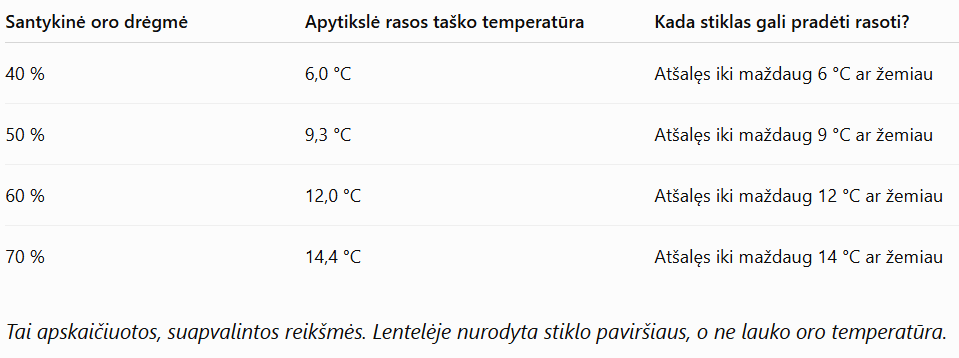

Practical example. The room is 68°F (20°C), the humidity is 60 percent, and the inner glass surface cools down to 52°F (11°C). Under these conditions, it can fog up. By reducing the humidity to 40 percent, the dew point drops to approximately 43°F (6°C). If the glass temperature remains the same, the conditions for condensation no longer exist.
Heating also helps because it warms surfaces and lowers the relative humidity of the air. However, standard indoor heating does not remove water from the home on its own. This requires ventilation or dehumidification.
Why do new uPVC or vinyl windows sometimes fog up more than old ones?
Replacing old windows can reduce drafts in the home, but it also changes the air circulation. Outdoor air used to enter through the cracks in old frames, while new, tightly sealed windows close off this path. If ventilation remains the same, the moisture generated daily can start to accumulate.
Therefore, condensation appearing after window replacement does not prove that the new windows are defective. You need to evaluate how fresh air enters the rooms and how humid air is removed.
However, you cannot blame everything on the residents' habits either. If one window gets significantly wetter than others under similar conditions, it is worth checking its construction, installation location, and sash seal. This is a cue for an inspection, not a final diagnosis.
Windows fogging up from the outside: is it a bad sign?
On a cool morning, the exterior glass may be fogged up even though the room side is completely dry. This happens when the glass cools below the outdoor air's dew point. The phenomenon is more common after a clear, calm night when the air is humid.
A highly energy-efficient insulated glass unit transfers less room heat to the outer pane. Because of this, condensation can form more easily on its exterior side under certain conditions. Once the sun warms the glass or the wind picks up, it usually disappears.
Exterior condensation alone is not a reason to replace a window. However, it also does not confirm that all window parts were installed flawlessly. Exterior dew and, for example, a draft felt through the sash are different symptoms.

Condensation between panes: when to suspect an insulated glass unit failure?
An insulated glass unit consists of two or more panes with hermetically sealed spaces between them. When the edge seal of the unit is compromised, moisture can get inside. Then fog, droplets, or dried water marks appear between the panes.
This type of condensation can intensify or disappear as temperatures change. Therefore, a temporary clearing does not mean the problem is resolved.
Ventilating the room and cleaning the glass will not restore the seal of a damaged unit. A professional should evaluate its condition and replacement options. Often, the insulated glass unit can be replaced while keeping the existing window frame, provided its condition and design allow it.
Before ordering any work, it is a good idea to take photos of the condensation, find your purchase documents, and check the warranty terms.
Causes and solutions for fogging windows

A recirculating range hood, which returns filtered air to the kitchen, does not vent water vapor outside. Therefore, running it alone may not be enough to keep windows from fogging up while cooking.
What to do today: five steps
1. Dry the glass and windowsill. Do not leave puddles of water near the frame or on the trim. Wiping it down does not solve the root cause, but it helps protect areas that are constantly getting wet.
2. Measure the humidity. Use an air humidity monitor, known as a hygrometer. Place it according to the manufacturer's instructions, not right next to a radiator or wet glass. A single reading is not enough: compare morning and evening data over several days.
3. Check the ventilation. Do not block trickle vents or exhaust grilles. If you use a mechanical ventilation system, check the settings and the condition of the filters. When extra ventilation is needed, open the window wide for a short time. The duration depends on the weather conditions and the size of the room; there is no single number of minutes that works for all homes.
4. Let heat reach the window. Pull thick curtains away from the radiator and do not block it with furniture. If the room cools down significantly at night, reevaluate your heating schedule.
5. Reduce moisture where it is generated. Cover pots while cooking, use a bathroom exhaust fan when showering, and dry laundry in an area where moisture can be vented. If you are running a humidifier, check whether its settings are contributing to the condensation.
A dehumidifier can help when there is excess moisture, but it does not replace proper air circulation and will not fix a leaky insulated glass unit.
When do you need a window technician or ventilation specialist?
An inspection is necessary when fog accumulates inside the insulated glass unit, a draft is felt through a closed sash, or water leaks in when it rains. It is also worth seeking help if moisture constantly gathers at the joint between the window and the wall, if the window reveals are molding, or if condensation does not decrease after improving daily ventilation.
Photos, room temperature and humidity readings, and an explanation of when the problem occurs will be useful to the specialist. This information makes it easier to distinguish a lack of ventilation from a window or installation issue.
Frequently Asked Questions
Why do uPVC or vinyl windows only fog up at the bottom?
The temperature at the edges of the glass can differ from the temperature in the middle. The bottom may also have poorer air circulation, and any droplets that form will flow downward. This location alone does not prove a defect – you need to assess the humidity and the condition of the window.
Should you ventilate when it is humid outside?
During the colder months, often yes. High relative humidity outdoors does not mean the air contains more water vapor than the warm air inside the room. When cold air is let in, it warms up, and its relative humidity drops. In warm and very humid weather, ventilation does not always dry out the rooms.
Will adjusting the window sash pressure stop the condensation?
Only if an improperly closing sash or air leakage is contributing to the problem. Adjusting it will not reduce the humidity in the room and will not restore the seal of the insulated glass unit. The sash should be adjusted according to the specific window manufacturer's instructions.
Is it necessary to replace the entire window because of condensation?
Not always. First, you need to determine the cause of the condensation forming on the room side. If the insulated glass unit is damaged, replacing just the glass may be enough. The entire window is replaced only after evaluating the condition of the frame, sash, and other parts.
Frequently asked questions
Why do uPVC or vinyl windows only fog up at the bottom?
The temperature at the edges of the glass can differ from the center. The bottom may also have poorer air circulation, and any droplets that form naturally flow downward. This location alone does not prove a defect – you must assess the humidity and the condition of the window.
Should you ventilate when it is humid outside?
During the colder months, often yes. High relative humidity outdoors does not mean the air contains more water vapor than the warm air inside the room. When cold air enters, it warms up, and its relative humidity drops. In warm and very humid weather, ventilation does not always dry out the rooms.
Will adjusting the window sash pressure stop the condensation?
Only if an improperly closing sash or air leakage is contributing to the problem. Adjusting it will not reduce the humidity in the room and will not restore the seal of the insulated glass unit. The sash should be adjusted according to the specific window manufacturer's instructions.
Is it necessary to replace the entire window because of condensation?
Not always. First, you need to determine the cause of the condensation forming on the room side. If the insulated glass unit is damaged, replacing just the glass may be enough. The entire window is replaced only after evaluating the condition of the frame, sash, and other parts.
Log in to comment
No comments yet. Be the first.