Cuban Underwater City & Other Bizarre Global Discoveries
- A $15 million Norman Rockwell painting was discovered hidden inside a wall in Vermont.
- Sonar scans revealed a potential Cuban underwater city made of massive granite blocks.
- The world's largest blooming flower, measuring 3.6 feet (1.1 m) across, was found in Indonesia.
- A 500-year-old Portuguese shipwreck loaded with gold coins was unearthed in the Namibian desert.
Step Off the Couch and Expand Your Travel Horizons Beyond Standard Routes
Every one of us has stumbled upon something unlikely at least once in our lives: perhaps we felt a $20 bill in a coat pocket, or found a striking family heirloom while cleaning the basement. On a grander scale, the variety of discoveries on Earth can be extraordinary and unseen by most even today: from bizarre, priceless artifacts to mystical relics steeped in history.
Interestingly, a significant number of world-shaking discoveries also serve as material for Netflix documentaries. While some were the result of pure luck, others stand as a testament to the hard work and determination required to unravel what connects us to the past.
Two brothers found a $15 million painting inside a wall in Vermont, USA, in 2006 [1]. While doing post-mortem renovations on their father's house, they discovered that the property hid an original Norman Rockwell painting. It eventually came to light that the father had hidden the expensive artwork from his ex-wife during their divorce. The painting later sold at auction for $15.4 million.
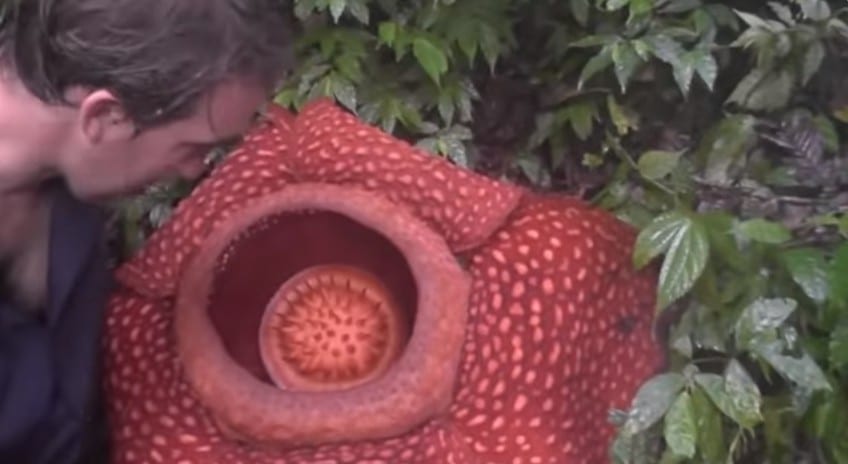
The world's largest flower was found in an Indonesian jungle in 2020. While trekking through a remote jungle in the West Sumatra region of Indonesia, conservationists stumbled upon the world's largest blooming flower [2]. The species, Rafflesia tuan-mudae, is famous for its massive, rare blossoms that open for just one week at the end of the plant's life. This giant flower measured 3.6 feet (1.1 m) in diameter, making it the largest Rafflesia ever recorded. Because the plant belongs to the "corpse flower" family, it emits an odor resembling rotting flesh.
Archaeologists found a stone slab with strange, swirling marks in Scotland in 1885. The Cochno Stone, sometimes called the Druid Stone, was discovered by an archaeological team in West Dunbartonshire, Scotland. However, it seems ancient druids—not ancient aliens—were responsible. Dating back to the Bronze Age, the Cochno Stone measures 43 by 26 feet (13 by 8 m) and features ninety carved indentations. In the mid-1960s, the stone was buried to protect it from vandalism (or perhaps to prevent the release of ancient druidic magic).
The Mystery of the Holed Roman Vase and the Cuban Underwater City
In 2011, a vessel was initially found shattered into 180 pieces in Canada, so you can only imagine the meticulous effort researchers put into piecing it back together. When scientists finally reassembled the 15.7-inch (40 cm) clay pot, which is roughly 1,800 years old, its most distinguishing feature was a network of tiny, round holes—reportedly, there is nothing else quite like it in the world. Theories vary: some suggest ancient Romans used this "holed" vase as a lamp, while others believe it was an enclosure for rodents or a container for snacks.
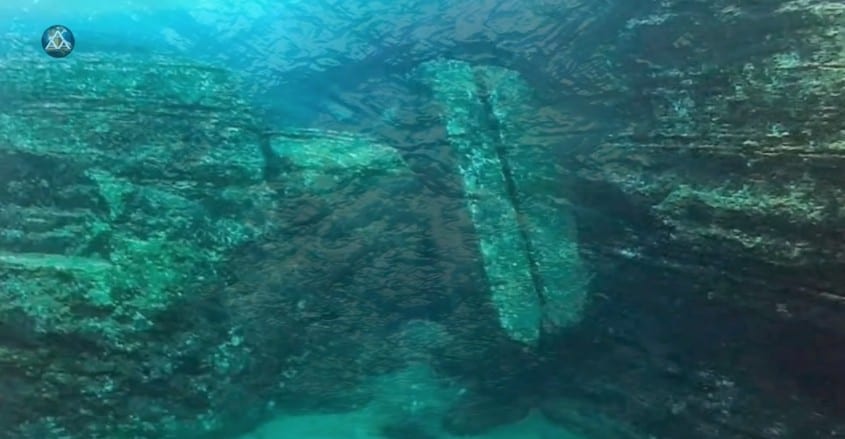
A sunken Cuban underwater city fuels new "Atlantis" speculation. Numerous "sunken cities" have been discovered around the world, and each one sparks rumors about Atlantis [3]. Off the coast of Pinar del Río, Cuba, in 2001, researchers using sonar found an underwater formation made of massive, smooth blocks of hewn granite. While more samples are needed before definitively identifying the site, the findings have thoroughly captured the public's imagination.
An underground pyramid was found in Bolivia in 2015. Tiwanaku was once the most important ancient city in South America, with an empire covering roughly 231,000 square miles (598,288 sq km). Discoveries from this massive historical site have included stone monuments, palace ruins, and sculptures. Yet, one of the most shocking finds is an underground pyramid.
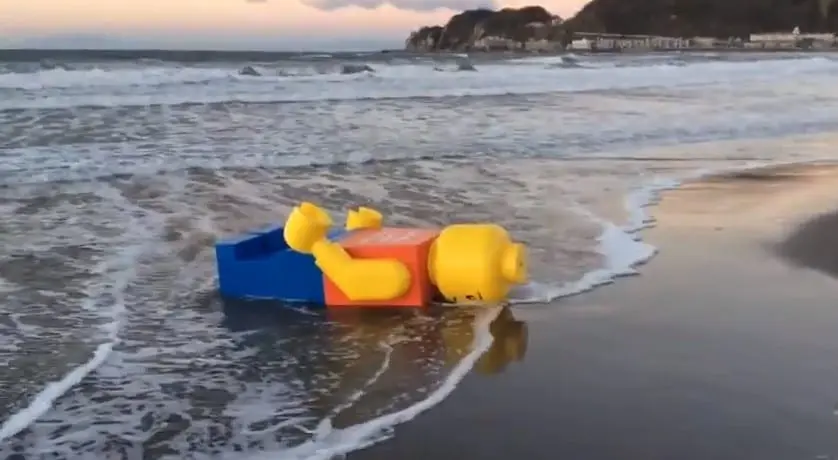
Giant Lego men wash up on Yuigahama Beach in Japan. People often worry about dead wildlife washing ashore, as it can be a sign of poor water quality. But who knows what a menacing 9.8-foot (3 m) Lego man means? This bizarre omen was discovered by a Japanese surfer. It is widely believed that a mysterious Dutch artist named Ego Leonard is behind it. In fact, this is far from the first time the gigantic figure has washed ashore: similar creations have also been found on Siesta Key in Florida and Topanga Beach in California.
Long-Lost Ship Found in the Namibian Desert—With Gold
When you think of places to find a shipwreck, the Namibian desert is probably last on the list. But believe it or not, the remains of the Bom Jesus were discovered there. This Portuguese ship disappeared five hundred years ago when it sank off the coast of Namibia. As the coastal waters receded over time, the Bom Jesus reemerged. Diamond miners reportedly discovered the ship, uncovering two thousand pure gold coins and tens of thousands of pounds of copper ingots—almost entirely undamaged. The total value of the find is estimated at $13 million.
A family discovered an ancient chapel hidden under their house in England in 2010. In Shropshire, England, Pat and Diane Farla were hosting a Good Friday party when someone finally decided to look behind a 6.5-foot (2 m) rectangular slab on their wall (which they had paid little attention to until then) [4]. They eventually uncovered a hole that led them into a tiny underground chapel. Authorities believe it may have been used centuries ago by congregations fleeing religious persecution during one of England's many religious conflicts.
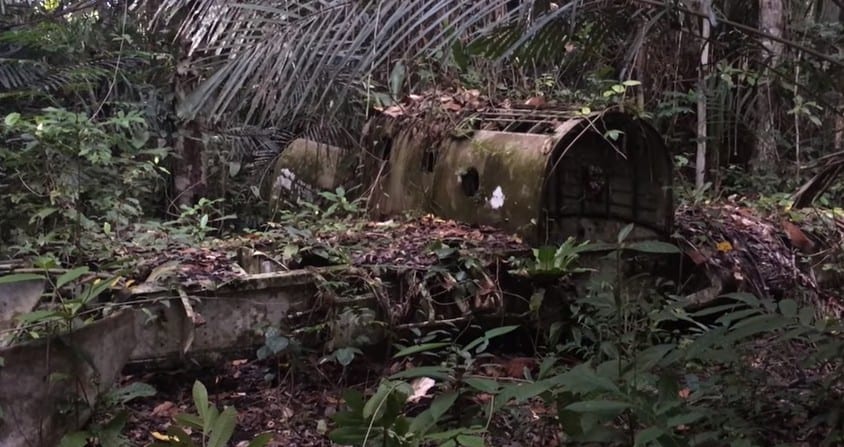
A World War II plane was found in the Papua New Guinea jungle in 1972. The "Swamp Ghost" was a Boeing B-17E bomber that undoubtedly wreaked havoc during WWII—that is, until the plane went down in the jungles of Papua New Guinea in 1942 after taking enemy fire. The aircraft remained untouched for decades. On the day the mystery was uncovered, it looked so remarkably preserved that even a thermos of coffee was still intact in the cockpit. According to some sources, a WWII plane in such pristine condition is valued at around $9 million.
Frequently asked questions
What is the Cuban underwater city?
It is an anomalous underwater formation of massive, smooth granite blocks discovered by sonar off the coast of Pinar del Río, Cuba, in 2001, which has sparked numerous Atlantis theories.
Where was the world's largest flower found?
The largest recorded Rafflesia tuan-mudae, measuring 3.6 feet (1.1 m) in diameter, was discovered in the jungles of West Sumatra, Indonesia, in 2020.
How was the Bom Jesus shipwreck discovered?
The 500-year-old Portuguese ship was found by diamond miners in the Namibian desert after coastal waters receded, revealing a cargo of gold and copper valued at $13 million.
Log in to comment
No comments yet. Be the first.