Earth Carrying Capacity: How Many Humans Can Our Planet Hold?
- The global population is projected to reach 9.8 billion by 2050 and 11.2 billion by 2100.
- While Western nations face declining birth rates, populations in Africa and Asia continue to grow rapidly.
- Scientists estimate that Earth's maximum carrying capacity is around 9 to 10 billion people.
- Supporting 10 billion people would likely require humanity to adopt a vegetarian diet to maximize arable land.
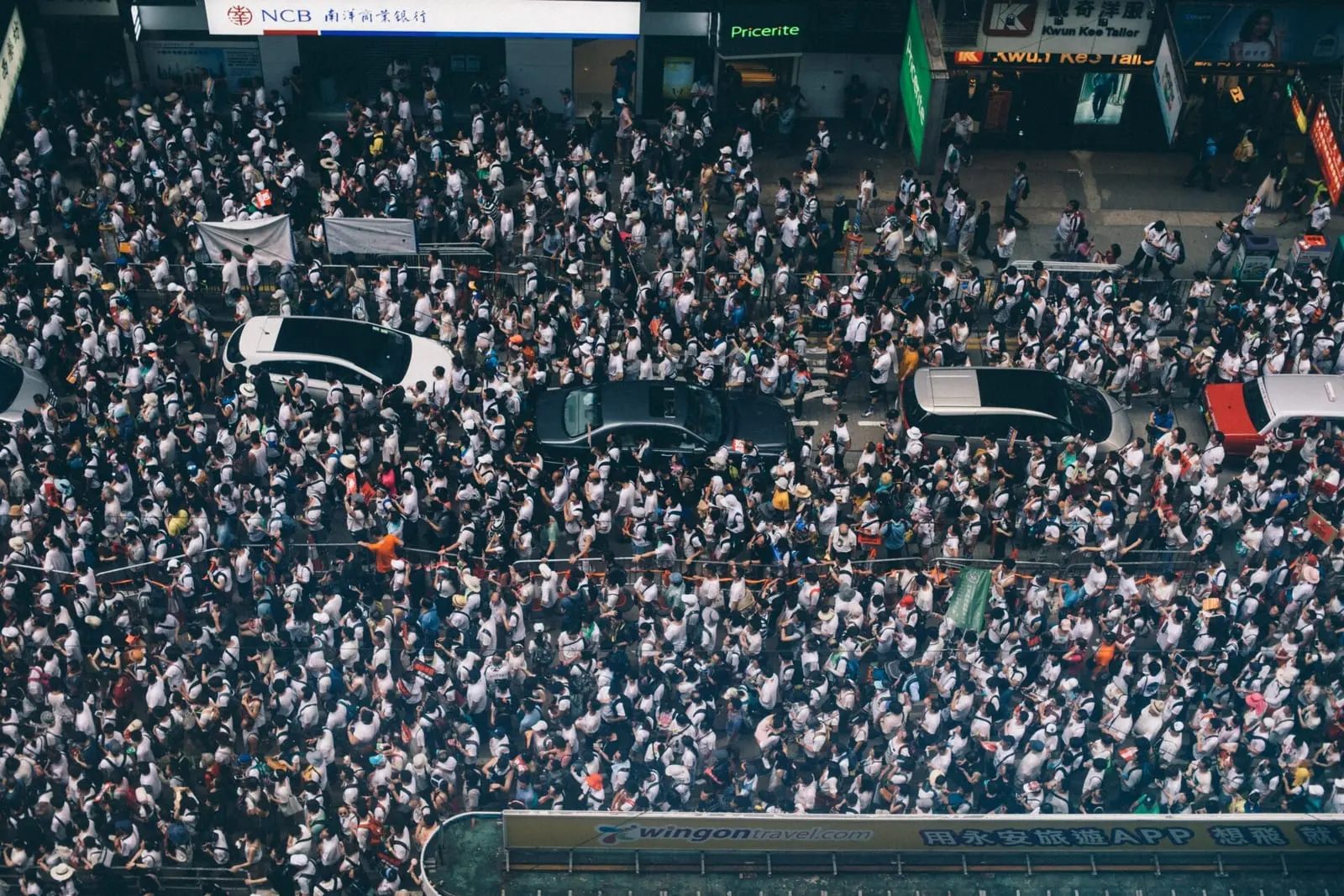
Earth carrying capacity: Are we running out of space?
In early 2022, our planet was home to 7,938,113,205 people [1]. This number is constantly growing, even though the world loses dozens of lives every second [2].
On average, about 250 babies are born every minute, totaling more than 130 million a year. According to the United Nations, the global population is projected to reach 9.8 billion in 2050 and 11.2 billion in 2100.
These projections indicate that the fastest population growth will occur in Africa and Asia. This means that despite the Western cultural trends of starting families later, having fewer children, or choosing to remain child-free, our overall population is not shrinking—it is only expanding.
This can be seen as a positive thing: to sustain humanity, we need new life. On the other hand, while the population grows, our planet remains the exact same size. Now, as the global population approaches 8 billion, we are already facing shortages of fresh water, food, and even living space.
So, what might happen when the world has 10 billion or 11 billion people? Exactly how many humans can Earth hold, and what will occur when the population simply becomes uncontrollable?
As the Western world has fewer children, Asia and Africa take the lead
In many developed nations, annual birth rates have fallen below death rates. As a result, there is growing discussion about the importance of encouraging higher birth rates, with fears that certain populations could face demographic collapse.
Western countries have been experiencing a significant decline in birth rates for years. Societies are rapidly aging, and young people are in no rush to start families early or have many children.
People are marrying and planning for children not right after leaving school, but well into their thirties or forties. Some choose a different lifestyle, focusing on their careers or hobbies, and opt for a child-free life.
Others dream of having children, but health issues stand in the way: infertility is a pressing problem for many today.
However, while fewer babies are born in the West each year, African and Asian countries do not need to encourage birth rates. Instead, these regions require measures to ensure the well-being and stability of their growing populations.
Looking at global population statistics, more boys are born than girls. Over the past 30 years, some regions have seen up to 25% more men born than women [4].
The resulting gender imbalance can have harmful social consequences. For example, increased sexual violence and human trafficking are becoming growing problems.
However, these statistics vary by region. For instance, Eastern Europe has a higher population of women, whereas Asian countries have a higher population of men.
In Asia, these statistics can be explained by past policies. In China, due to the former one-child policy, many "unwanted" children—especially girls—were abandoned.
This not only created a crisis of homeless children but also a severe demographic imbalance. Currently, there are significantly more men than women in China. As a result, Chinese men have increasingly looked for partners from Eastern Europe, such as Ukraine, Russia, and Moldova, to start families and avoid remaining single [5].
The fastest population growth is currently happening in Africa and Asia. It is estimated that by 2050, the countries in these continents will have the largest populations in the world. This means, for example, there will be more Nigerians than Americans.
Human carrying capacity: The population grows, but our planet remains the same
Expert Paul Ehrlich once stated that the global population exceeded its optimal limit long ago. Although some dispute this claim, the increasingly prominent problems our planet faces might make us reconsider [6].
Some experts studying population curves emphasize that declaring the population too large is a controversial statement. It implies that birth rates in poorer, less developed countries are potentially too high and might require some form of control.
In this regard, such a projection can be viewed as unethical. Experts point out that while less developed countries have more people, they consume far fewer resources.
Meanwhile, developed nations have smaller populations, but their people are exceptionally consumerist. The simple fact that people are living longer today also forces us to think about the rapid scale of population growth.
At the end of the 18th century, philosopher Thomas Malthus wrote an essay about what he saw as a grim future for humanity. Malthus argued that due to humanity's relentless desire to reproduce, the population would simply become too large, we would consume all available resources, and ultimately perish in a global famine [7].
Therefore, now that the population continues to grow rapidly and experts increasingly warn that we have less time to save our planet, a natural question arises: has Earth reached its carrying capacity? To understand this, we must ask what is carrying capacity in biology, and how does it apply to human civilization?
The prevailing opinion among scientists is that Earth can accommodate a maximum of 9 to 10 billion people. Harvard University sociobiologist Edward O. Wilson reached this conclusion based on calculations of Earth's available resources: water, food supply, and habitable land.
Furthermore, given that the climate is warming faster than anticipated, the amount of land suitable for agriculture, livestock, and living will continue to shrink. We may face a sad reality: humans will still be able to grow grains and other crops, but all the produce will have to go directly toward feeding people.
We would then have to forget about livestock, and along with it, meat. A classic carrying capacity example is this: if everyone agreed to become vegetarian, leaving little to nothing for livestock, the current 3.5 billion acres (1.4 billion hectares) of arable land could support about 10 billion people. This means that 10 billion is the safe limit where we can still survive, though it would require significant changes to our usual way of life.
Frequently asked questions
What is carrying capacity in biology?
In biology, carrying capacity refers to the maximum population size of a biological species that can be sustained by a specific environment, given the food, habitat, water, and other available resources.
How many humans can Earth hold?
Most scientists, including Harvard sociobiologist Edward O. Wilson, estimate that Earth's maximum carrying capacity for humans is around 9 to 10 billion people, depending on our consumption habits.
Has Earth reached its carrying capacity?
While we have not yet reached the absolute limit, experts warn that with a population approaching 8 billion people, we are already straining the planet's fresh water, food, and habitable land resources.
Sources
- United Nations: World population projected to reach 9.8 billion in 2050, and 11.2 billion in 2100
- Worldometer: Current World Population
- INED: Are there more men or more women in the world?
- Insider: Interest in Ukrainian women doubled during Russia's invasion
- The Guardian: With 250 babies born each minute, how many people can the Earth sustain?
- Live Science: How many people can Earth support?
Log in to comment
No comments yet. Be the first.