Ferrari Luce EV: The $640,000 Supercar Rewriting the Rules
- Ferrari has officially introduced the Luce, its first fully electric, five-seat luxury vehicle.
- Priced at approximately $640,000, the EV boasts over 1,000 horsepower and a top speed of 192 mph (310 km/h).
- The vehicle offers a range of over 310 miles (500 km) and features a bespoke interior crafted with former Apple designer Jony Ive.
- Rather than artificial engine noise, the Luce amplifies the natural vibrations of its electric drivetrain for a unique acoustic signature.
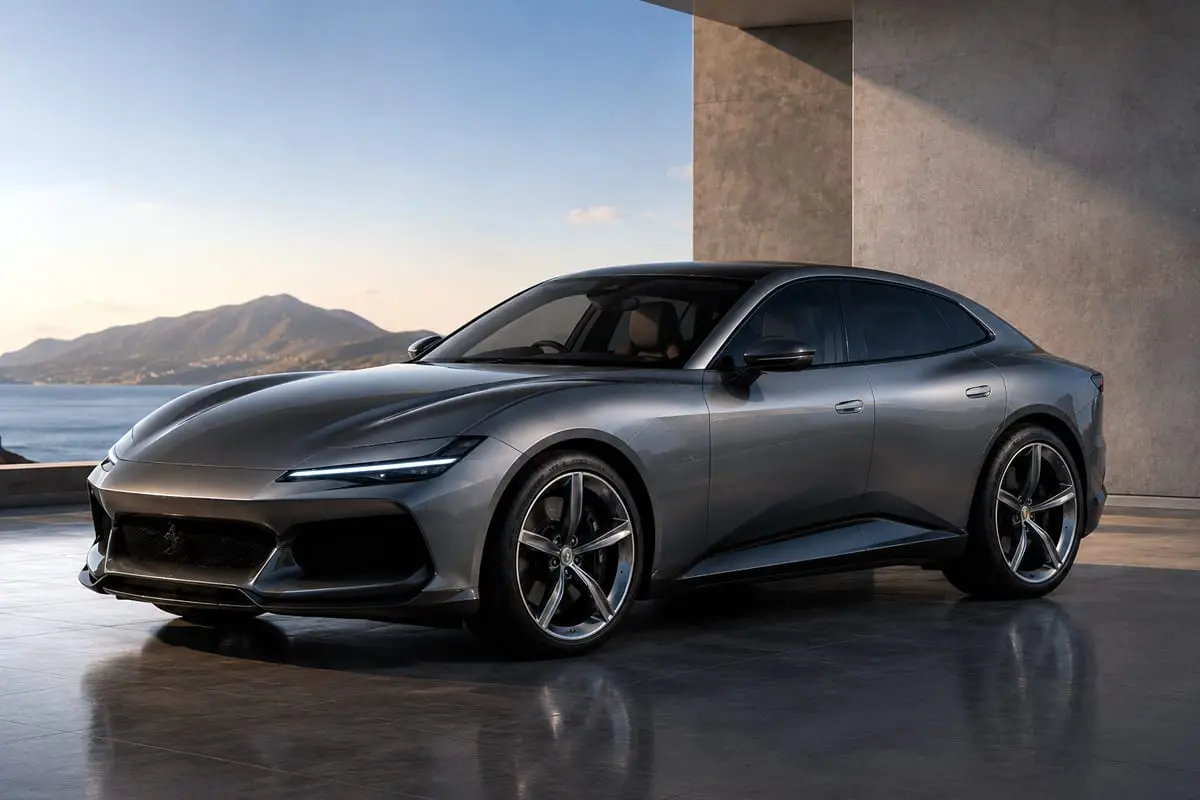
- Ferrari Introduces Its First Fully Electric Model
- The Ferrari Luce EV Delivers Over 1,000 HP With Four Motors
- The Biggest Challenge Is Sound, Not Power
- Ferrari Goes Against the Current as Others Stall EV Plans
- A Five-Seater Ferrari Expands the Brand's Boundaries
- The Luce Is Ferrari's Test for a New Generation
Ferrari Introduces Its First Fully Electric Model
Ferrari has officially introduced its first fully electric car, the Ferrari Luce—a model that represents much more to the Italian manufacturer than just another new body style or powertrain. This is Ferrari's first attempt to prove that the brand's identity can survive without the roaring internal combustion engine that has been an integral part of its legend for decades. The "Luce," which means "light" in Italian, is presented as a five-seat, four-door luxury electric vehicle. It is aimed not at the mass market, but at ultra-wealthy buyers who want the Ferrari badge combined with the comfort of a family car.
The vehicle is priced at approximately $640,000. Customer deliveries are scheduled for late 2026, with Reuters indicating they should begin in the fourth quarter of the year. This price tag places the vehicle far above standard EVs, elevating it to a tier where the car simultaneously becomes a status symbol, a technology showcase, and a collector's item.
Ferrari is making a risky move here. While some luxury and sports car manufacturers are halting or delaying their electrification plans due to weaker demand, the Maranello-based automaker is trying to show that an electric car does not have to be quiet, sterile, and emotionally hollow. In other words, Ferrari is attempting to sell a new myth of luxury, rather than just a battery on wheels.
The Ferrari Luce EV Delivers Over 1,000 HP With Four Motors
The technical specifications show that Ferrari has no intention of entering the EV market quietly. Its four electric motors deliver a combined output of more than 1,000 horsepower. Reuters notes that the car can surpass a top speed of 192 mph (310 km/h), even though the model weighs around 4,850 lbs (2,200 kg). This is a heavy mass for a sports car, but the electric drivetrain allows Ferrari to extract instant acceleration and precise all-wheel control.
The Ferrari Luce range is reported to exceed 310 miles (500 km) on a single charge. The car is focused not just on track performance or weekend thrills, but also on longer journeys. Reuters emphasizes that Ferrari aims to attract ultra-high-income families: the model features comfortable seats, high-end technology, and 21.2 cubic feet (600 liters) of trunk space. For Ferrari, this is practically a revolution—the brand has long thrived on two-seater dreams, and now it is trying to sell an electric family GT for well over half a million dollars.
The design and engineering choices prove that the Luce is not just a "Tesla with a prancing horse on the hood." The vehicle was crafted with former Apple design chief Jony Ive, alongside his creative collective LoveFrom. The Ferrari Luce interior features premium leather, glass, anodized aluminum, and tactile physical controls rather than relying solely on massive screens. This is a crucial detail: Ferrari understands that its clients are buying a sensory experience, not just an app on wheels.
The Biggest Challenge Is Sound, Not Power
An electric Ferrari faces an almost philosophical problem: how to create emotion without the sound of a combustion engine. Internal combustion Ferrari models have always been recognizable not just by their shape or speed, but by their exhaust note. It was a mechanical signature that allowed the car to be identified before it was even seen. An EV fundamentally breaks this tradition.
Ferrari chose not to use a simple artificial soundtrack, but rather a system that amplifies the natural vibrations of the electric drivetrain. Reuters reports that the Luce uses a specialized solution to enhance the sensations produced by the motors and transmission, ensuring the driver experiences a distinct electric Ferrari feel rather than a sterile silence. It is a clever compromise: the car does not try to pretend it has a classic V12, but instead attempts to forge a new sonic identity.
This is where the greatest challenge lies. Ferrari clients are not purely rational buyers calculating kilowatts and charging speeds. They are buying history, ritual, mechanical drama, status, and a sense of rarity. If the Luce can successfully translate these elements into the electric era, Ferrari will win much more than just a single model's success. If not, the ultra-expensive EV will remain a costly experiment.
Ferrari Goes Against the Current as Others Stall EV Plans
The Luce arrives at a time when the luxury sports EV market is not as hot as anticipated a few years ago. Reuters previously reported that Ferrari delayed plans for its second fully electric model until at least 2028 due to weaker demand for high-end electric sports cars. This indicates that even Ferrari understands the electric transition in the supercar world will not be a straight highway.
The company has also adjusted its long-term model roadmap. In 2022, Ferrari projected that electric vehicles would make up 40 percent of its lineup by 2030. This target was later reduced to 20 percent electric models, 40 percent hybrids, and 40 percent internal combustion engine cars. While not a full retreat, it is a clear sign that the market is dictating a more cautious pace.
At the same time, Ferrari cannot ignore China, European regulations, and younger buyers for whom an electric drivetrain is no longer a compromise. The Luce allows the brand to speak to a new luxury audience: wealthy clients who demand that an eco-friendly image, technological advancement, and brand prestige all go hand in hand. Ferrari is betting on a symbol here, not on mass volume.
A Five-Seater Ferrari Expands the Brand's Boundaries
The Luce is important not solely because it is electric. It is Ferrari's first five-seat model, which expands the very purpose of the brand. For a long time, Ferrari was associated with a narrow, selfish pleasure—the driver, the engine, the road, and the risk. The Luce introduces family, trunk space, comfort, and daily usability into this formula.
This does not mean Ferrari is becoming a family car manufacturer. Quite the opposite—the company is trying to turn a family car into a Ferrari object. The 21.2 cubic feet (600 liters) of trunk space, five seats, and four doors are not just practical figures here. They represent an effort to say that an ultra-wealthy client can have one car for family trips while still feeling entirely immersed in the Ferrari world.
This pivot mirrors a broader transformation in the luxury car market. Lamborghini struck gold long ago with the Urus, Porsche with the Cayenne and Macan, and Ferrari responded with the Purosangue. The Luce goes even further: it attempts to combine the prestige of a supercar, the comfort of a family GT, and the technology of the electric era.
The Luce Is Ferrari's Test for a New Generation
Ferrari is taking a risk, but it is a calculated one. The company is not trying to sell an electric car to everyone. It is selling a highly expensive, limited-audience technological statement designed to prove that Ferrari can evolve without losing its core identity. That is exactly why the Luce matters, even to those who will never buy one.
If the model is well received, Ferrari will gain the green light to expand its electric direction without major brand conflict. If clients remain cold, Maranello will have another argument to stick with hybrids and internal combustion engines longer than regulators or investors might prefer. Currently, the company's strategy already reflects a cautious balance between batteries, hybrids, and traditional mechanics.
The Luce is not just the first electric Ferrari. It is an attempt to answer the question of whether a supercar's soul depends on cylinders, sound, and the smell of gasoline, or on power, design, rarity, and the human desire to own something others cannot. Ferrari has chosen the second answer. The market will now reveal whether this $640,000 "light" will truly ignite a new era.
Reuters. (2026). Ferrari bets on generational tech shift with Luce five-seat EV
https://www.reuters.com/business/autos-transportation/ferrari-bets-generational-tech-shift-with-luce-five-seat-ev-2026-05-25/
Reuters. (2026). Ferrari’s Luce leads bold leap into uncertain electric era
https://www.reuters.com/business/autos-transportation/ferraris-luce-leads-bold-leap-into-uncertain-electric-era-2026-05-25/
The Verge. (2026). Ferrari reveals its first EV, with design help from Jony Ive
https://www.theverge.com/transportation/937066/ferrari-luce-ev-jony-ive-marc-newson-lovefrom
Reuters. (2026). Italy’s Ferrari sets price of first electric car at over $640,000, Bloomberg News reports
https://www.reuters.com/business/italys-ferrari-sets-price-first-electric-car-over-640000-bloomberg-news-reports-2026-04-21/
Frequently asked questions
When will the Ferrari Luce be available?
Customer deliveries for the Ferrari Luce are scheduled to begin in the fourth quarter of 2026.
How much horsepower does the Ferrari Luce have?
The Ferrari Luce features four electric motors that combine to produce over 1,000 horsepower.
What is the range of the Ferrari Luce EV?
The Ferrari Luce is expected to deliver a driving range of over 310 miles (500 km) on a single charge.
Log in to comment
No comments yet. Be the first.