Freddie Mercury: Age, Net Worth, Biography and Facts
- Freddie Mercury was born Farrokh Bulsara in Zanzibar in 1946 to a Parsi family and moved to England in 1964.
- He co-founded Queen in 1970 and wrote Bohemian Rhapsody, Somebody to Love, We Are the Champions and Don't Stop Me Now.
- Queen's Live Aid set on July 13, 1985, is regarded as one of the greatest live performances in rock history.
- He died on November 24, 1991, of bronchial pneumonia brought on by AIDS, a day after confirming his illness.
- He never married; Mary Austin was his closest companion and Jim Hutton his partner in his final years.
- Age and earnings
- Freddie Mercury biography
- Freddie Mercury in numbers
- Freddie Mercury real name, parents and nationality
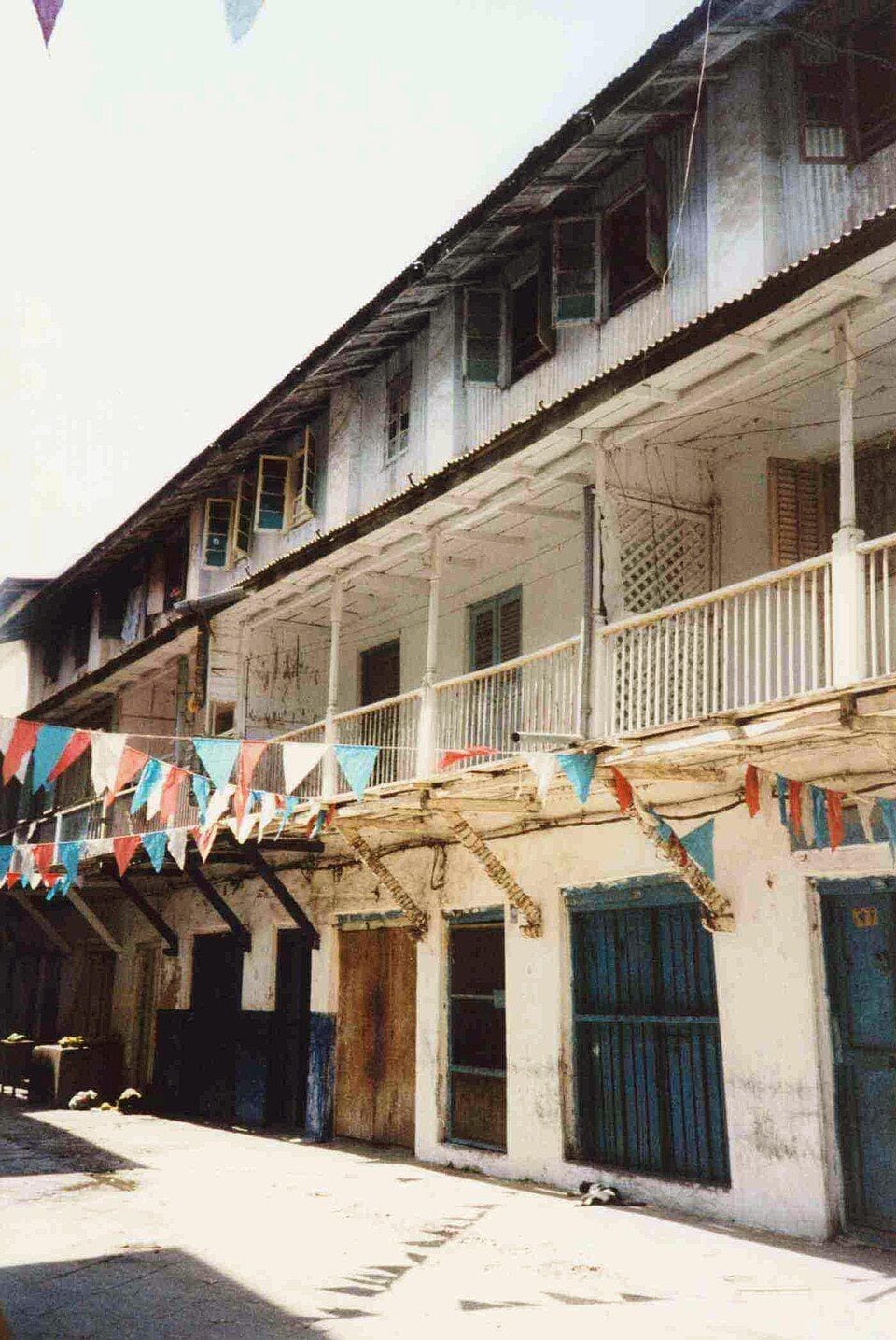
- Childhood in Zanzibar and India
- Escape to England and the birth of Queen
- "Bohemian Rhapsody" and global fame
- Freddie Mercury songs
- Freddie Mercury and Queen: the albums
- Live Aid and solo work
- Freddie Mercury death and cause of death
- Freddie Mercury wife and relationships
- Legacy
- Quick facts
- Timeline
Freddie Mercury (1946–1991) was a British singer, songwriter and pianist, the lead vocalist of Queen, the writer of "Bohemian Rhapsody," "Somebody to Love" and "We Are the Champions," and one of the greatest rock singers in history. This biography covers his real name, parents, nationality and religion, his songs, Live Aid, his relationships and the cause of his death.
Age and earnings
Freddie Mercury was born on September 5, 1946 and died on November 24, 1991, at the age of 45.
Forbes estimated his estate earned $250 million in the 12 months to September 2024, driven by the Queen catalog sale to Sony (Forbes). Figures like this are published estimates, not official statements of wealth.
Freddie Mercury biography
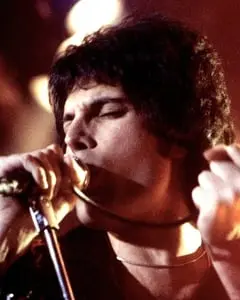
Freddie Mercury was born Farrokh Bulsara on September 5, 1946, in Stone Town, Zanzibar, then a British protectorate and now part of Tanzania, and died on November 24, 1991, at his home in Kensington, London. As the frontman and pianist of Queen, he became famous for his remarkable vocal range, his flamboyant costumes and his unmatched ability to command stadium crowds.
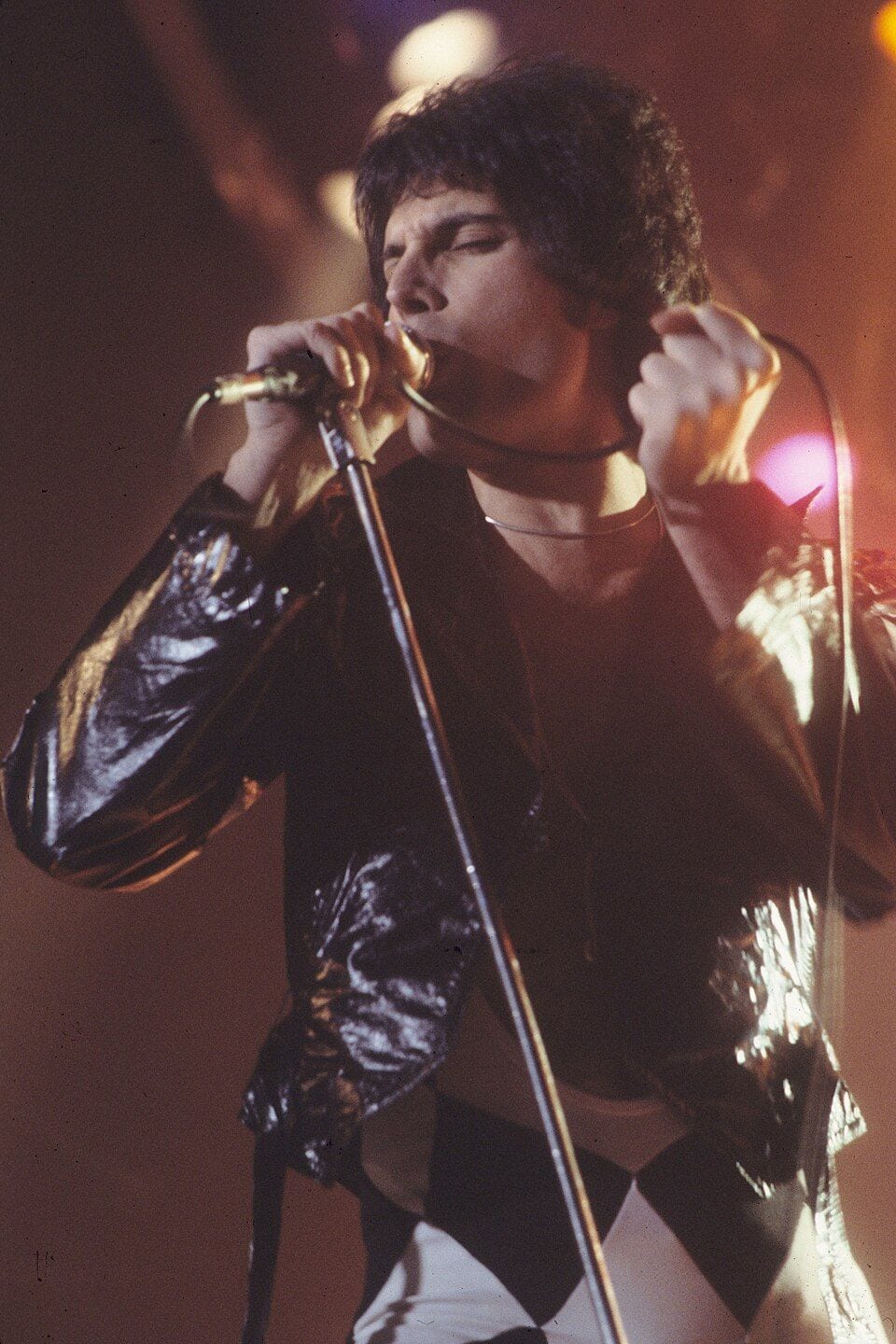
Mercury wrote many of Queen's best-known songs, including "Bohemian Rhapsody," "Killer Queen," "Somebody to Love," "We Are the Champions," "Don't Stop Me Now" and "Crazy Little Thing Called Love." Queen's 20-minute set at Live Aid in 1985 is widely regarded as one of the greatest live performances in rock history. He died at 45 of bronchial pneumonia brought on by AIDS, one day after publicly confirming his illness.
Freddie Mercury in numbers
| Metric | Value |
|---|---|
| Real name | Farrokh Bulsara |
| Dates of life | September 5, 1946 – November 24, 1991 |
| Birthplace | Stone Town, Zanzibar (now Tanzania) |
| Nationality | British |
| Parents | Bomi and Jer Bulsara |
| Religion | Raised in the Zoroastrian (Parsi) faith |
| Band | Queen (1970–1991) |
| Solo albums | Mr. Bad Guy (1985), Barcelona (1988, with Montserrat Caballé) |
| Halls of fame | Rock and Roll Hall of Fame (2001, with Queen), Songwriters Hall of Fame (2003) |
| "Bohemian Rhapsody" | RIAA Diamond certification (2021) |
Freddie Mercury real name, parents and nationality
Farrokh Bulsara was born into a Parsi family of Indian origin. His father, Bomi Bulsara, worked as a cashier at the British Colonial Office in Zanzibar, and his mother, Jer, raised Farrokh and his younger sister, Kashmira. The Parsis are descendants of Persian Zoroastrians who settled in India centuries ago, and the family practiced Zoroastrianism. He held British citizenship from birth, as Zanzibar was a British protectorate, and he lived in England from the age of 17.
He adopted the name Freddie at school in India and formally took the surname Mercury, after the messenger of the Roman gods, around 1970, when Queen was formed. He legally changed his name shortly afterwards.
Childhood in Zanzibar and India
Farrokh spent most of his childhood in India. At eight he was sent to St. Peter's School, a British-style boarding school in Panchgani near Bombay (now Mumbai), where he began formal piano lessons and showed a striking ability to play by ear. There he formed his first band, The Hectics, playing rock and roll covers at school events, and his friends began calling him Freddie. He finished his schooling in Bombay before returning to Zanzibar.
Escape to England and the birth of Queen
In 1964, during the Zanzibar Revolution, the Bulsara family fled to England and settled in Feltham, Middlesex, near Heathrow Airport. Freddie studied art at Isleworth Polytechnic and then graphic art and design at Ealing Art College, graduating in 1969. He worked at Heathrow, sold second-hand clothes at Kensington Market with drummer Roger Taylor and sang in bands such as Ibex and Sour Milk Sea.
In 1970 he joined Taylor and guitarist Brian May, who had played together in the band Smile, and suggested the name Queen. Bassist John Deacon completed the lineup in 1971. Mercury designed the band's crest, combining the members' zodiac signs, which is still used today.
"Bohemian Rhapsody" and global fame
Queen's debut album appeared in 1973, and Mercury's "Killer Queen" from Sheer Heart Attack (1974) became their first major international hit. On October 31, 1975, the band released "Bohemian Rhapsody" from A Night at the Opera, a nearly six-minute suite moving from ballad to mock opera to hard rock. Record executives doubted it could be a single, but after DJ Kenny Everett played it repeatedly on London radio it spent nine weeks at number one in the UK. Its promotional video helped establish the music video as a marketing tool. It returned to number one in the UK after Mercury's death in 1991, and in 2021 the RIAA certified it Diamond for 10 million units in the US, as Billboard reported.
Hits followed throughout the late 1970s and 1980s: the gospel-inspired "Somebody to Love" (1976), the stadium anthems "We Are the Champions" (1977, by Mercury) and "We Will Rock You" (by May), "Don't Stop Me Now" (1979) and "Crazy Little Thing Called Love" (1979), which topped the US Billboard Hot 100 in 1980. Deacon's "Another One Bites the Dust" became their second US number one later that year.
Freddie Mercury songs
| Year | Song | Note |
|---|---|---|
| 1973 | "Seven Seas of Rhye" | First Queen UK chart hit (released 1974) |
| 1974 | "Killer Queen" | First major international hit |
| 1975 | "Bohemian Rhapsody" | UK number one for nine weeks; RIAA Diamond |
| 1975 | "Love of My Life" | Ballad written for Mary Austin; a concert singalong |
| 1976 | "Somebody to Love" | Gospel-influenced, multi-tracked choir |
| 1977 | "We Are the Champions" | Global sports anthem |
| 1979 | "Don't Stop Me Now" | One of Queen's most-streamed songs |
| 1979 | "Crazy Little Thing Called Love" | US number one in 1980 |
| 1980 | "Play the Game" | First Queen single featuring a synthesizer |
| 1981 | "Under Pressure" | With David Bowie; UK number one |
| 1985 | "Living on My Own" | Solo single; a posthumous UK number one in 1993 as a remix |
| 1986 | "Princes of the Universe" | Mercury-written theme for the film Highlander |
| 1987 | "The Great Pretender" | Solo cover of The Platters |
| 1988 | "Barcelona" | With Montserrat Caballé |
| 1991 | "Innuendo" | UK number one; co-written with the band |
Freddie Mercury and Queen: the albums
Mercury sang on all 15 Queen studio albums, from the self-titled debut to the posthumous Made in Heaven. Unusually for a rock band, all four members wrote hits, and from 1989 every song was credited to Queen as a whole to avoid disputes over royalties and to reflect the band's collaborative way of working.
| Year | Album | Key tracks sung by Mercury |
|---|---|---|
| 1973 | Queen | "Liar," "My Fairy King" |
| 1974 | Queen II | "Seven Seas of Rhye," "The March of the Black Queen" |
| 1974 | Sheer Heart Attack | "Killer Queen" |
| 1975 | A Night at the Opera | "Bohemian Rhapsody," "Love of My Life" |
| 1976 | A Day at the Races | "Somebody to Love" |
| 1977 | News of the World | "We Are the Champions" |
| 1978 | Jazz | "Don't Stop Me Now," "Bicycle Race" |
| 1980 | The Game | "Crazy Little Thing Called Love," "Play the Game" |
| 1980 | Flash Gordon | Soundtrack |
| 1982 | Hot Space | "Under Pressure" (with Bowie) |
| 1984 | The Works | "It's a Hard Life" |
| 1986 | A Kind of Magic | "Princes of the Universe" |
| 1989 | The Miracle | Credited to Queen |
| 1991 | Innuendo | "Innuendo," "The Show Must Go On" |
| 1995 | Made in Heaven | "A Winter's Tale," his last composition |
Live Aid and solo work
On July 13, 1985, Queen played a 20-minute set at the Live Aid charity concert at London's Wembley Stadium. Mercury led around 72,000 people in call-and-response vocal improvisations, and the band's run through "Bohemian Rhapsody," "Radio Ga Ga," "Hammer to Fall" and "We Are the Champions" stole the show. The performance has repeatedly topped polls of the greatest live performances in rock history.
That same year he released his first solo album, Mr. Bad Guy. In 1987 he scored a solo hit with a cover of "The Great Pretender," and in 1988 he recorded Barcelona with the Spanish operatic soprano Montserrat Caballé. Its title track was chosen as an anthem of the 1992 Barcelona Olympic Games and returned to the charts when the Games opened.
Freddie Mercury death and cause of death
Mercury is believed to have been diagnosed with HIV/AIDS in 1987. He kept the illness private as speculation grew about his gaunt appearance, and continued working with Queen on the albums The Miracle (1989) and Innuendo (1991), recording in Montreux, Switzerland, whenever his health allowed. Queen stopped touring after the Magic tour of 1986, which ended at Knebworth Park.
On November 23, 1991, he issued a statement confirming that he had AIDS, saying he wanted the truth known so that people could join the fight against the disease. He died the next evening, November 24, at Garden Lodge, his home in Kensington. His publicist said the cause of death was bronchial pneumonia brought on by AIDS, as reported by The Guardian and The New York Times. His funeral was conducted by Zoroastrian priests, and he was cremated; the location of his ashes has never been revealed publicly.
The band's final album with his voice, Made in Heaven, built from his last recordings, was released in 1995. On April 20, 1992, the surviving members organized the Freddie Mercury Tribute Concert for AIDS Awareness at Wembley Stadium, and they co-founded the Mercury Phoenix Trust, which continues to fund HIV/AIDS projects around the world.
Freddie Mercury wife and relationships
Mercury never married. In the early 1970s he lived with Mary Austin, who worked at the Biba boutique in London, and they were engaged for a time. After he told her he was bisexual, their romantic relationship ended, but they remained extremely close; he called her his common-law wife and wrote "Love of My Life" for her. In his will he left her his Garden Lodge home and the largest share of his estate, with the rest going to his parents, his sister and close friends.
From the mid-1980s until his death his partner was Jim Hutton, an Irish hairdresser who lived with him at Garden Lodge and later wrote a memoir about their years together. Mercury was famously private and gave few interviews about his personal life. In 2023 Mary Austin sold most of his personal belongings at a Sotheby's auction in London.
Legacy
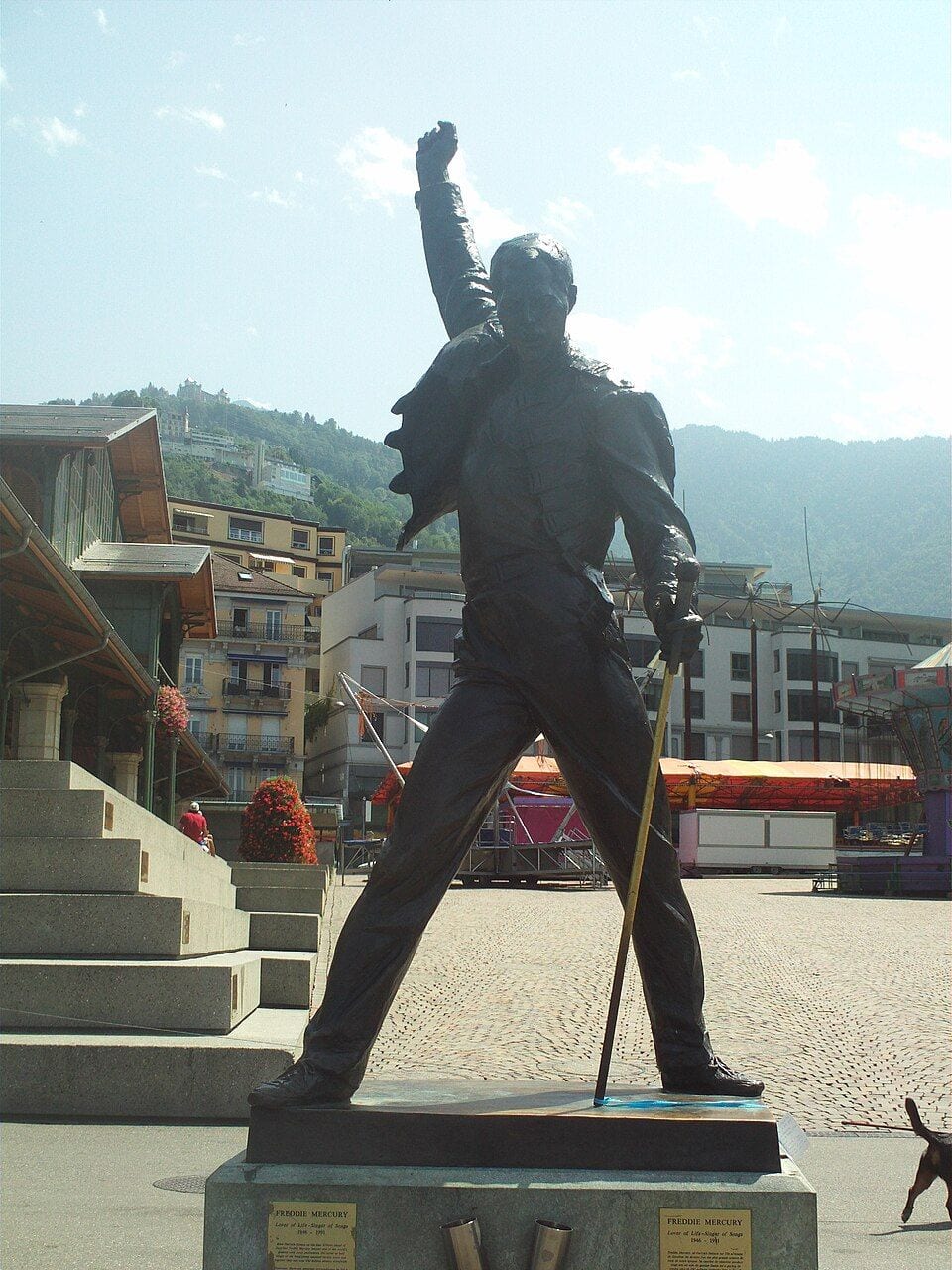
In 1996 a bronze statue of Mercury by Czech sculptor Irena Sedlecká was unveiled on the shore of Lake Geneva in Montreux, where Queen owned Mountain Studios; fans gather there each year on his birthday. Queen were inducted into the Rock and Roll Hall of Fame in 2001, and Mercury was inducted into the Songwriters Hall of Fame in 2003. In 2018 the band received the Grammy Lifetime Achievement Award.
The biopic Bohemian Rhapsody (2018) became one of the highest-grossing music biopics ever, and Rami Malek won the Academy Award for Best Actor at the 2019 ceremony for playing Mercury. In 2024 Sony Music agreed to acquire Queen's recorded music and publishing rights, and in October 2025 "Bohemian Rhapsody" marked its 50th anniversary. Brian May and Roger Taylor continue to tour as Queen with singer Adam Lambert.
Quick facts
| Real name | Farrokh Bulsara |
| Born | September 5, 1946, Stone Town, Zanzibar |
| Died | November 24, 1991, Kensington, London |
| Cause of death | Bronchial pneumonia resulting from AIDS |
| Nationality | British |
| Religion | Zoroastrian (Parsi) upbringing |
| Parents | Bomi and Jer Bulsara |
| Band | Queen |
| Most famous songs | "Bohemian Rhapsody," "We Are the Champions," "Somebody to Love," "Don't Stop Me Now" |
| Honors | Rock and Roll Hall of Fame (2001), Songwriters Hall of Fame (2003), Grammy Lifetime Achievement Award with Queen (2018) |
Timeline
- September 5, 1946: Born in Zanzibar
- 1954: Started boarding school in Panchgani, India
- 1964: Family fled to England
- 1969: Graduated from Ealing Art College
- 1970: Queen formed
- 1973: Debut Queen album released
- 1974: "Killer Queen"
- October 31, 1975: "Bohemian Rhapsody" released
- 1977: "We Are the Champions"
- 1985: Solo album Mr. Bad Guy; Live Aid on July 13
- 1987: Believed to have been diagnosed with AIDS
- 1988: Barcelona with Montserrat Caballé
- November 23, 1991: Publicly confirmed he had AIDS
- November 24, 1991: Died in London
- April 20, 1992: Tribute concert at Wembley Stadium
- 1995: Made in Heaven released
- 1996: Statue unveiled in Montreux
- 2001: Queen inducted into the Rock and Roll Hall of Fame
- 2018: Biopic Bohemian Rhapsody released
- October 2025: 50th anniversary of "Bohemian Rhapsody"
Photo: Carl Lender, CC BY-SA 3.0, Wikimedia Commons
Frequently asked questions
How old was Freddie Mercury at death?
Freddie Mercury was born on September 5, 1946 and died on November 24, 1991, aged 45.
How much does Freddie Mercury's estate earn?
Forbes estimated his estate earned $250 million in the 12 months to September 2024, driven by the Queen catalog sale to Sony.
What was Freddie Mercury's real name?
Farrokh Bulsara. He took the name Freddie at school in India and adopted the surname Mercury around 1970.
How did Freddie Mercury die?
He died on November 24, 1991, at his London home, of bronchial pneumonia brought on by AIDS. He had publicly confirmed his illness the day before.
Was Freddie Mercury married?
No. He was engaged to Mary Austin in the early 1970s and remained devoted to her, and his partner from the mid-1980s until his death was Jim Hutton.
What nationality was Freddie Mercury?
British. He was born in Zanzibar, then a British protectorate, to parents of Indian Parsi descent, and lived in England from 1964.
What religion was Freddie Mercury?
He was raised in the Zoroastrian faith of the Parsi community, and his funeral was led by Zoroastrian priests.
Who were Freddie Mercury's parents?
Bomi Bulsara, a cashier at the British Colonial Office in Zanzibar, and Jer Bulsara. He had a younger sister, Kashmira.
What songs did Freddie Mercury write?
Among others: Bohemian Rhapsody, Killer Queen, Somebody to Love, Love of My Life, We Are the Champions, Don't Stop Me Now, Crazy Little Thing Called Love and Play the Game.
When did Freddie Mercury join Queen?
He formed Queen with Brian May and Roger Taylor in 1970; John Deacon joined in 1971.
Sources
- The New York Times – Freddie Mercury, 45, lead singer of Queen, is dead (1991)
- The Guardian – Queen star dies after Aids statement (1991)
- Rock and Roll Hall of Fame – Queen
- Songwriters Hall of Fame – Freddie Mercury
- Billboard – 14 things to know about Bohemian Rhapsody at 50
- Oscars.org – 91st Academy Awards (2019)
- Variety – Queen catalog acquired by Sony Music
- Queen Online – official site
- Mercury Phoenix Trust – official site
- Forbes
Log in to comment
No comments yet. Be the first.