How Close to a Property Line Can You Plant a Tree?
- Distances must be measured from the official property line, which may not align perfectly with existing fences.
- Planting regulations vary widely by municipality, council, and neighborhood association.
- General best practice dictates planting large trees far enough away to accommodate their mature canopy and root system.
- In many jurisdictions, you can trim overhanging branches up to your property line, provided it does not harm the tree.
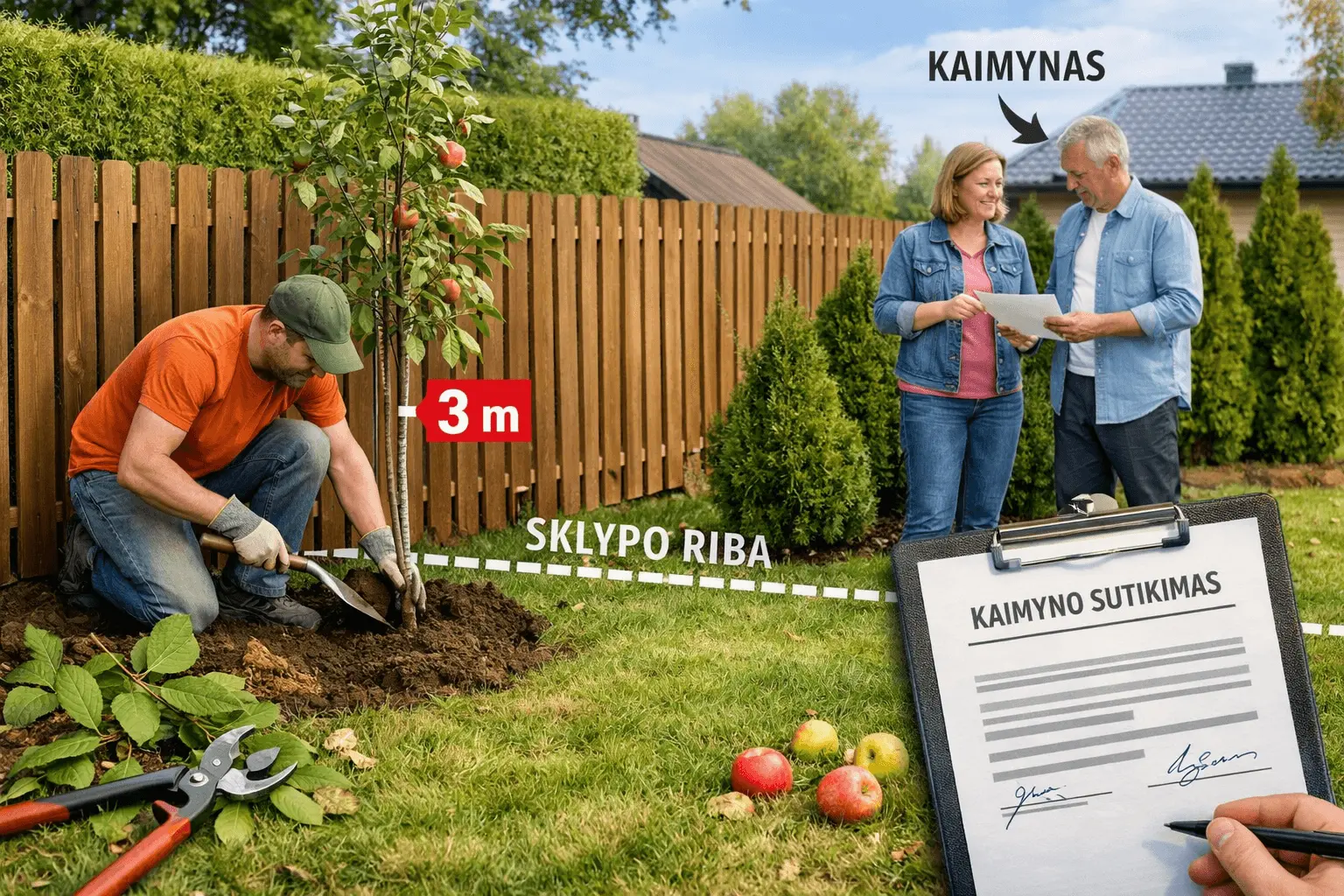
- When planting trees and hedges, the most important thing to know is that distance is calculated from the official property line, not the fence
- Local regulations and neighborhood covenants dictate how far from a neighbor you can plant different types of vegetation
- If you wish to plant closer than local guidelines allow, a neighbor's written consent is often required
- Frequently Asked Questions
When planting trees and hedges, the most important thing to know is that distance is calculated from the official property line, not the fence
As the planting season begins and the soil can be worked, many homeowners plan to plant trees, shrubs, or establish new hedges. However, landscaping often becomes a source of neighborhood disputes when it turns out that plants have been placed too close to a shared boundary.
Legal and real estate experts frequently point out that one of the most common mistakes is misunderstanding where the actual property line lies. When evaluating whether a plant is legally positioned, the physical fence is often irrelevant; what matters is the official boundary according to local land registry or cadastral data.
"It is essential to understand one fundamental principle: distances are calculated not from the fence, but from the official property line established by land surveys. If a fence was built off the boundary line, it has no legal bearing on determining a lawful planting location," note property law professionals. [1]
This means that even if a fence appears to be the dividing line between lots, it might have been erected slightly inside one property or the other. In such cases, a tree or shrub might be considered planted too close to a neighbor's territory, even if the distance from the fence seems sufficient.

Local regulations and neighborhood covenants dictate how far from a neighbor you can plant different types of vegetation
Unlike a single national law, planting rules differ significantly by country, state or province, municipality or council, and even individual neighborhood associations or deed covenants. Minimum distances from a neighboring plot usually depend on the mature height and spread of the plant.
As a general best practice, large trees that will grow taller than 10 feet (3 meters) should be planted at least 10 to 15 feet (3 to 4.5 meters) from the property line. This ensures that the mature canopy and root system do not encroach on the neighboring lot. In some jurisdictions, planting on the north side of a property requires even greater distances to prevent shading a neighbor's yard.
Medium-sized landscaping plants, reaching heights of 6 to 10 feet (2 to 3 meters), are typically safely planted at least 6 feet (2 meters) from the boundary. Meanwhile, dwarf varieties and small shrubs that do not exceed 6 feet (2 meters) in height can usually be planted closer, often around 3 feet (1 meter) from the line.
Hedges also come with their own set of guidelines. They are generally planted at least 3 feet (1 meter) from the property line to allow room for maintenance and trimming on both sides. Additionally, their height is frequently restricted by local ordinances or neighborhood rules; for example, front yard hedges are often capped at 3 to 4 feet (0.9 to 1.2 meters) for visibility, while backyard privacy hedges might be allowed up to 6 or 8 feet (1.8 or 2.4 meters).
Vines or climbing plants can sometimes be planted closer, often within 1.5 feet (0.5 meters) of the boundary. However, if you plan to grow them on a shared fence or wall, obtaining your neighbor's explicit consent is usually necessary and always good etiquette.
If you wish to plant closer than local guidelines allow, a neighbor's written consent is often required
Legal experts emphasize that strict planning rules or neighborhood setbacks can sometimes be bypassed, but usually only if the affected neighbor agrees. In such situations, it is highly recommended to secure this agreement in writing.
In practice, this is typically a simple document where the neighbor confirms they do not object to the planting of a specific tree or shrub in a specific location. Such consent can serve as crucial evidence if a dispute arises between neighbors in the future or if the property changes hands.
Problems can also emerge years later as the plants mature. In many jurisdictions, property law dictates that if a neighbor's tree branches or roots cross into your lot and interfere with your use of the property, your first step should be to ask the neighbor to address the issue.
If the neighbor fails to act within a reasonable timeframe, common law in many areas grants you the right to trim the branches or roots up to your property line, provided the pruning does not permanently damage or kill the tree. Additionally, rules regarding fallen fruit vary, but it is often considered the property of the person on whose land it falls.
Landscaping professionals remind homeowners that before planting, it is wise to verify exact property lines with a land survey, research the mature size of the chosen plants, check local planning or neighborhood rules, and discuss plans with neighbors. This proactive approach often prevents long and unpleasant boundary disputes down the road.
Frequently Asked Questions
What are the general guidelines for planting distances from a property line?
While rules vary by location, a common best practice is to plant large trees at least 10 to 15 feet (3 to 4.5 meters) away, medium shrubs 6 feet (2 meters) away, and small plants at least 3 feet (1 meter) from the boundary. Always check local municipal or neighborhood regulations.
Can I plant trees or hedges closer to the boundary than local rules allow?
In many cases, yes, but it usually requires explicit written consent from your neighbor confirming they do not object to the placement.
What can I do if a neighbor's tree branches hang over my property?
The best first step is to ask your neighbor to trim them. If they do not, most local laws allow you to trim branches up to the property line, as long as the pruning does not harm or kill the tree.
Are there specific rules for planting hedges?
Yes, hedges are typically planted at least 3 feet (1 meter) from the property line to allow for maintenance. Local ordinances or neighborhood covenants often restrict their maximum height, especially in front yards or near intersections.
How should I verify my property lines before planting?
It is highly recommended to consult official land registry documents, check your property's plat map, or hire a professional surveyor to mark the exact boundaries.
Frequently asked questions
What are the general guidelines for planting distances from a property line?
While rules vary by location, a common best practice is to plant large trees at least 10 to 15 feet (3 to 4.5 meters) away, medium shrubs 6 feet (2 meters) away, and small plants at least 3 feet (1 meter) from the boundary. Always check local municipal or neighborhood regulations.
Can I plant trees or hedges closer to the boundary than local rules allow?
In many cases, yes, but it usually requires explicit written consent from your neighbor confirming they do not object to the placement.
What can I do if a neighbor's tree branches hang over my property?
The best first step is to ask your neighbor to trim them. If they do not, most local laws allow you to trim branches up to the property line, as long as the pruning does not harm or kill the tree.
Are there specific rules for planting hedges?
Yes, hedges are typically planted at least 3 feet (1 meter) from the property line to allow for maintenance. Local ordinances or neighborhood covenants often restrict their maximum height, especially in front yards or near intersections.
How should I verify my property lines before planting?
It is highly recommended to consult official land registry documents, check your property's plat map, or hire a professional surveyor to mark the exact boundaries.
Log in to comment
No comments yet. Be the first.