Ig Nobel prizes: Drunk bats, striped cows, and lizard pizza
- The 35th annual Ig Nobel prizes celebrated research that first makes people laugh, then makes them think.
- Winning studies included painting cows with zebra stripes to deter flies and testing how alcohol affects bat echolocation.
- Other notable awards went to physicists studying pasta sauce clumps and researchers feeding pizza to lizards.
The intersection of humor and science: The 35th Ig Nobel prizes
Not everyone is destined to receive a Nobel Prize, but there is a more entertaining alternative: the Ig Nobel prizes. They are awarded annually for research that first makes you smile, and then makes you think about its deeper meaning.
The 2025 ceremony in Boston, organized by the magazine Annals of Improbable Research, was traditionally full of surprises: paper airplanes "attacking" the participants, a mini-opera about digestion, and 24-second lectures. In one such lecture, Trisha Pasricha explained the hemorrhoid risks associated with using smartphones on the toilet [1].

Master of ceremonies Marc Abrahams emphasized: "Every great discovery initially seems ridiculous. The same goes for completely worthless discoveries. The Ig Nobel prizes celebrate both, because in the beginning, no one can know what will become important."
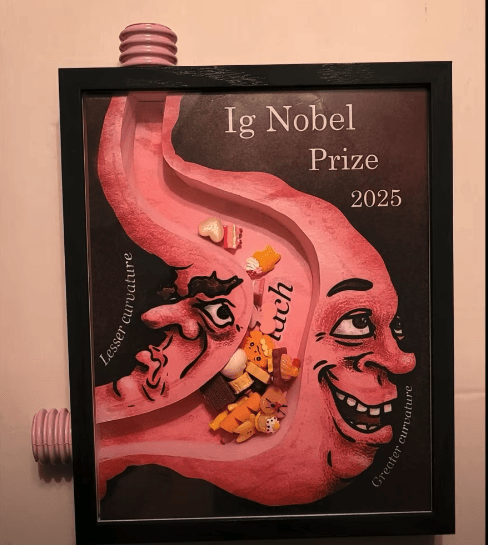
The complete Ig Nobel prizes list for 2025
- Literature (US): The late physician William Bean, who consistently recorded and analyzed the growth rate of one of his fingernails for 35 years.
- Psychology (Poland, Australia, Canada): Marcin Zajenkowski and Gilles Gignac, who studied what happens when you tell a narcissist, or anyone else, that they are smart.
- Nutrition (Nigeria, Togo, Italy, France): Daniele Dendi, Gabriel Segniagbeto, Roger Meek, and Luca Luiselli, who discovered which type of pizza a certain species of lizard prefers.
- Pediatrics (US): Julie Mennella and Gary Beauchamp, who investigated how eating garlic affects the taste of breast milk and whether babies like it.
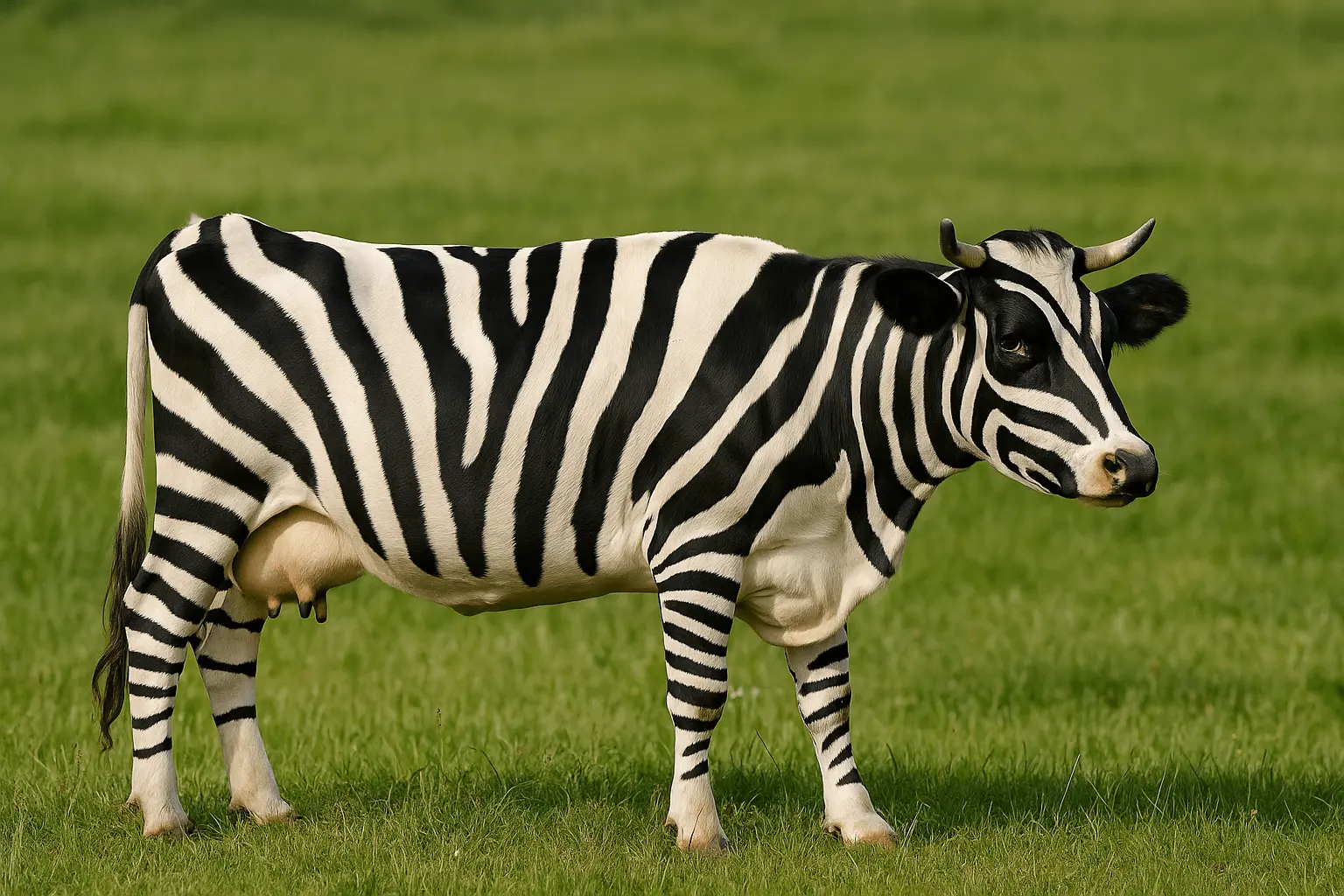
- Biology (Japan): Tomoki Kojima, Kazato Oishi, Yasushi Matsubara, Yuki Uchiyama, Yoshihiko Fukushima, Naoto Aoki, Say Sato, Tatsuaki Masuda, Junichi Ueda, Hiroyuki Hirooka, and Katsutoshi Kino, who proved that painting cows with zebra stripes reduces fly bites by almost half.
- Chemistry (US, Israel): Rotem Naftalovich, Daniel Naftalovich, and Frank Greenway, who examined whether eating Teflon could increase food volume without adding calories.
- Peace (Netherlands, UK, Germany): Fritz Renner, Inge Kersbergen, Matt Field, and Jessica Werthmann, who demonstrated that alcohol sometimes improves a person's ability to speak a foreign language.
- Engineering Design (India): Vikash Kumar and Sarthak Mittal, who analyzed how the impact of smelly shoes changes the experience of using a shoe rack.
- Aviation (Colombia, Israel, Argentina, Germany, UK, Italy, US, Portugal, Spain): Francisco Sánchez, Mariana Melcón, Carmi Korine, and Berry Pinshow, who investigated whether bats' ability to fly and echolocate is impaired by alcohol.
- Physics (Italy, Spain, Germany, Austria): Giacomo Bartolucci, Daniel Maria Busiello, Matteo Ciarchi, Alberto Corticelli, Ivan Di Terlizzi, Fabrizio Olmeda, Davide Revignas, and Vincenzo Maria Schimmenti, who studied the physics of pasta sauce, specifically the phase change that can turn it into an unappetizing clump.
When funny questions turn into serious answers
Although many of the best Ig Nobel prizes sound like jokes, the results can have unexpectedly serious implications. Japanese scientists proved that black-and-white stripes on cows reduced fly bites by nearly 50 percent. Such a method could become an alternative to insecticides and protect livestock from insect-borne diseases [2].
Italian physicists delved into one of the greatest kitchen tragedies: why preparing cacio e pepe pasta sauce sometimes turns it into a sticky clump. They discovered that the problem stems from an improper ratio of starch to water, and the solution might be using cornstarch to keep the sauce smooth. It is a small but practical discovery for anyone trying to replicate Italian perfection.
Another witty yet useful piece of research is the study on the effects of alcohol when speaking a foreign language. Experiments showed that small doses of alcohol helped Dutch speakers speak German more fluently. This could explain why some people feel that "one glass" helps overcome the language barrier.
Perhaps the most smile-inducing was the study of the lizard menu. Scientists noticed that certain lizards in Togo more frequently chose four-cheese pizza. It sounds funny, but researchers use this method to analyze the dietary choices of lizards in ecosystems affected by human activity.
Finally, there were the drunk bats—specifically, how these nocturnal animals are affected by alcohol. It turns out that an intoxicated bat not only flies poorly but also makes echolocation errors. These results help us better understand how alcohol affects the mammalian nervous system, even if the study initially seems more suited for a bar joke.
Frequently asked questions
What is the purpose of the Ig Nobel prizes?
The Ig Nobel prizes highlight research that initially makes people laugh and then makes them think, proving that even seemingly worthless discoveries can have scientific value.
What did the winning biology research discover?
Japanese researchers won by proving that painting cows with zebra stripes reduces fly bites by almost 50 percent, which could serve as an alternative to chemical insecticides.
How does alcohol affect bats according to the aviation prize winners?
The research showed that drunk bats not only fly poorly but also make mistakes in echolocation, helping scientists understand how alcohol affects the mammalian nervous system.
Log in to comment
No comments yet. Be the first.