Is Time an Illusion? Why Physics Says Time Might Not Exist
- Modern physics faces a crisis because general relativity and quantum mechanics contradict each other.
- Theories of quantum gravity, such as loop quantum gravity, suggest that time might not exist at a fundamental level.
- Even if time is an illusion, causality remains intact, allowing the universe and human life to function normally.
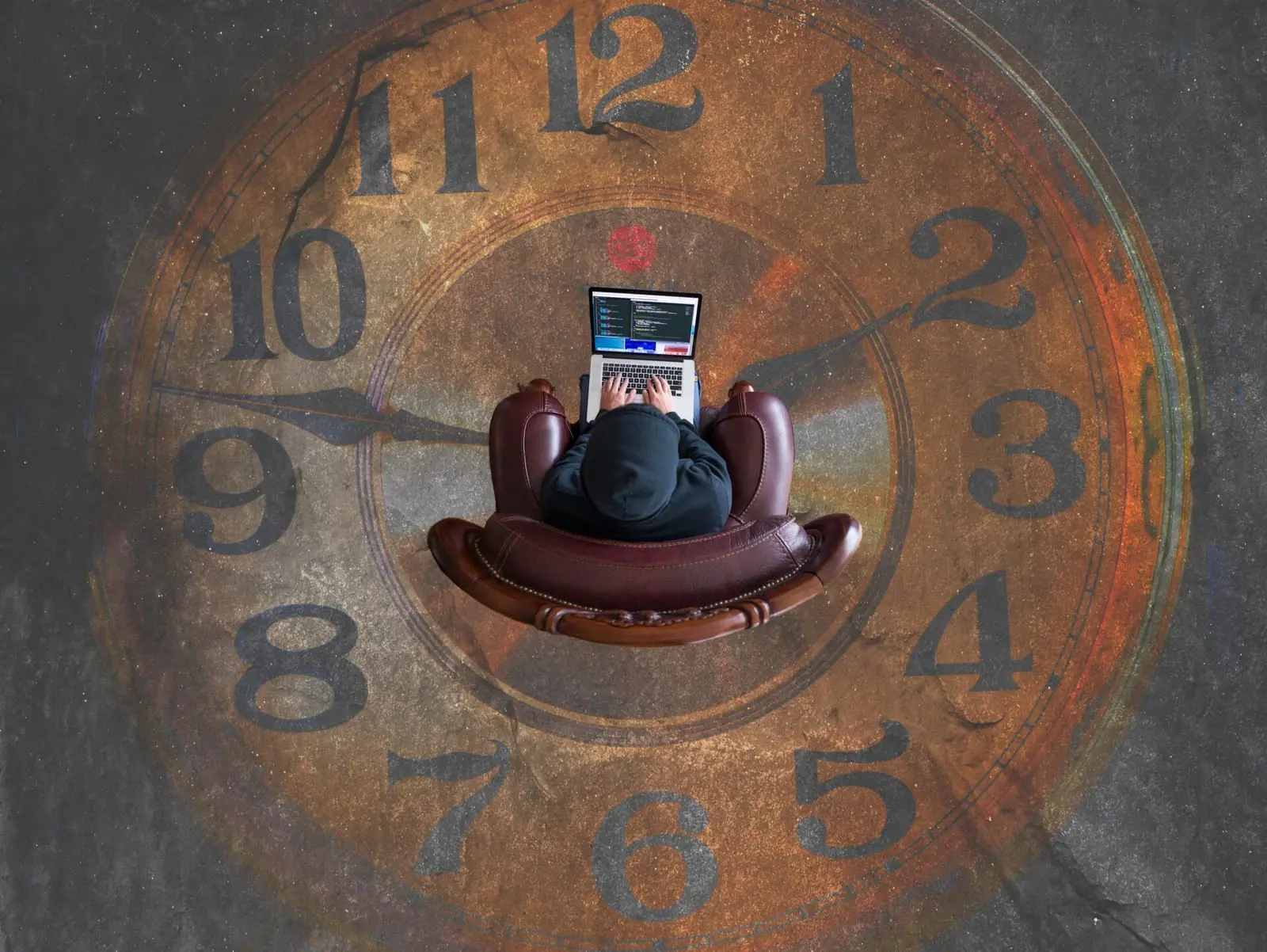
Is time an illusion? Why current theories need an upgrade
Is time real? The answer to this question might seem incredibly obvious: of course it is! Just look at a calendar or a clock. However, developments in physics indicate that the non-existence of time is a serious possibility that we should not ignore. How could this be, and what would it mean? It will take a little time to explain, but do not worry: even if time is an illusion, our lives will continue as usual.
Physics is currently facing a crisis. For the past century, we have explained the universe using two incredibly successful physical theories: general relativity and quantum mechanics.
Quantum mechanics describes how things work in the incredibly small world of particle interactions. Meanwhile, general relativity describes the broader picture of gravity and how objects move. While both theories work exceptionally well on their own, they contradict each other. Because of this, scientists agree that both must be replaced by a new, more general framework.
This is exactly why physicists want to develop a theory of "quantum gravity" that would replace general relativity and quantum mechanics while capturing the extraordinary success of both. This new theory would finally explain how gravity operates on a miniature particle scale.
Quantum gravity, string theory, and the fabric of space
As it turns out, creating a theory of quantum gravity is incredibly difficult. One of the most prominent attempts to overcome the conflict between these two theories is string theory.
In this approach, fundamental particles are replaced by strings vibrating across 11 dimensions. However, string theory faces its own set of difficulties. It provides numerous models that describe the universe broadly but fails to offer clear predictions that can be tested through experiments to determine which model is actually correct.
During the 1980s and 1990s, many physicists grew dissatisfied with string theory and developed a variety of new mathematical methods related to quantum gravity. One of the most prominent alternatives is loop quantum gravity, which proposes that the fabric of space and time might be composed of a network of extremely small, discrete chunks or "loops."
Ultimately, one of the most fascinating aspects of loop quantum gravity is that it suggests time could be entirely eliminated from the fundamental picture of reality.
Loop quantum gravity is not the only approach that abolishes time. It seems that many other emerging methods also remove the concept of time as a fundamental aspect of reality. We know that we fundamentally need a new physical theory to explain the universe. On the other hand, if a new theory accurately mapping space proves to be correct, would it really mean that time does not exist?
Answering this is quite complex and depends on what exactly we mean by "existence." For example, fundamental physics theories do not include tables, chairs, or people, yet we still accept that tables, chairs, and people exist—they just are. We say that tables "emerge" from specific particles scattered across the universe. But while we have a fairly good understanding of how objects can be made of particles, we have no idea how time could be "made" of something more fundamental.
Regardless, while we might assume that time exists, it is unfortunately not unequivocally clear. Much of our understanding is based on assumptions driven by our rational minds.
Time might not exist on any fundamental level
Trying to get by in a world without tables might be difficult, but managing without time seems truly disastrous.
It is no secret that our entire lives are built around time. We plan for the future based on what we know about the past. We hold people morally responsible for their past actions, sometimes even seeking to punish them.
We believe we are agents—entities capable of doing things—because we can plan to act in ways that will bring about specific changes in the future. Yet, what is the point of acting to create change in the future if there is no tangible future at all? Furthermore, what is the point of punishing someone for a past action when there is no past, meaning the action itself technically never happened?
It seems that the discovery of time's non-existence could bring the entire world to a halt. We might not even have the motivation to get out of bed. On the other hand, there is a way out of this conceptual mess.
While physics theories might eliminate time, it is clear that causality remains intact—the principle that one thing can cause another. In other words, physics might be telling us that causality, rather than time, is the fundamental feature of our universe. If this assumption is correct, the planet and its inhabitants will survive just fine, as it is entirely possible to reconstruct our sense of individual agency and motivation in other terms.
Ultimately, the discovery that time does not exist might have no direct impact on our daily lives, even as it propels physics into an entirely new era.
Frequently asked questions
Is time an illusion or a dimension?
While string theory involves particles vibrating across 11 dimensions, emerging approaches like loop quantum gravity suggest time might be an illusion that does not exist at the most fundamental level of reality.
Is time real according to quantum physics?
Quantum mechanics describes how things work in the incredibly small world of particle interactions. However, the quest for a unified theory of quantum gravity hints that time may not be a fundamental aspect of the universe.
If time does not exist, how do things happen?
Physicists propose that causality—the principle that one event causes another—is the true fundamental feature of the universe, allowing life and actions to continue even without time.
Log in to comment
No comments yet. Be the first.