Life on Enceladus: Phosphorus Discovery Boosts Alien Hopes
- Data from NASA's Cassini spacecraft reveals high concentrations of phosphorus in the subsurface ocean of Saturn's moon Enceladus.
- Phosphorus is a crucial building block for DNA and RNA, meaning Enceladus now meets all known criteria for a habitable ocean.
- Scientists are proposing a new Enceladus mission to fly through its water plumes and search for definitive signs of microbial life.
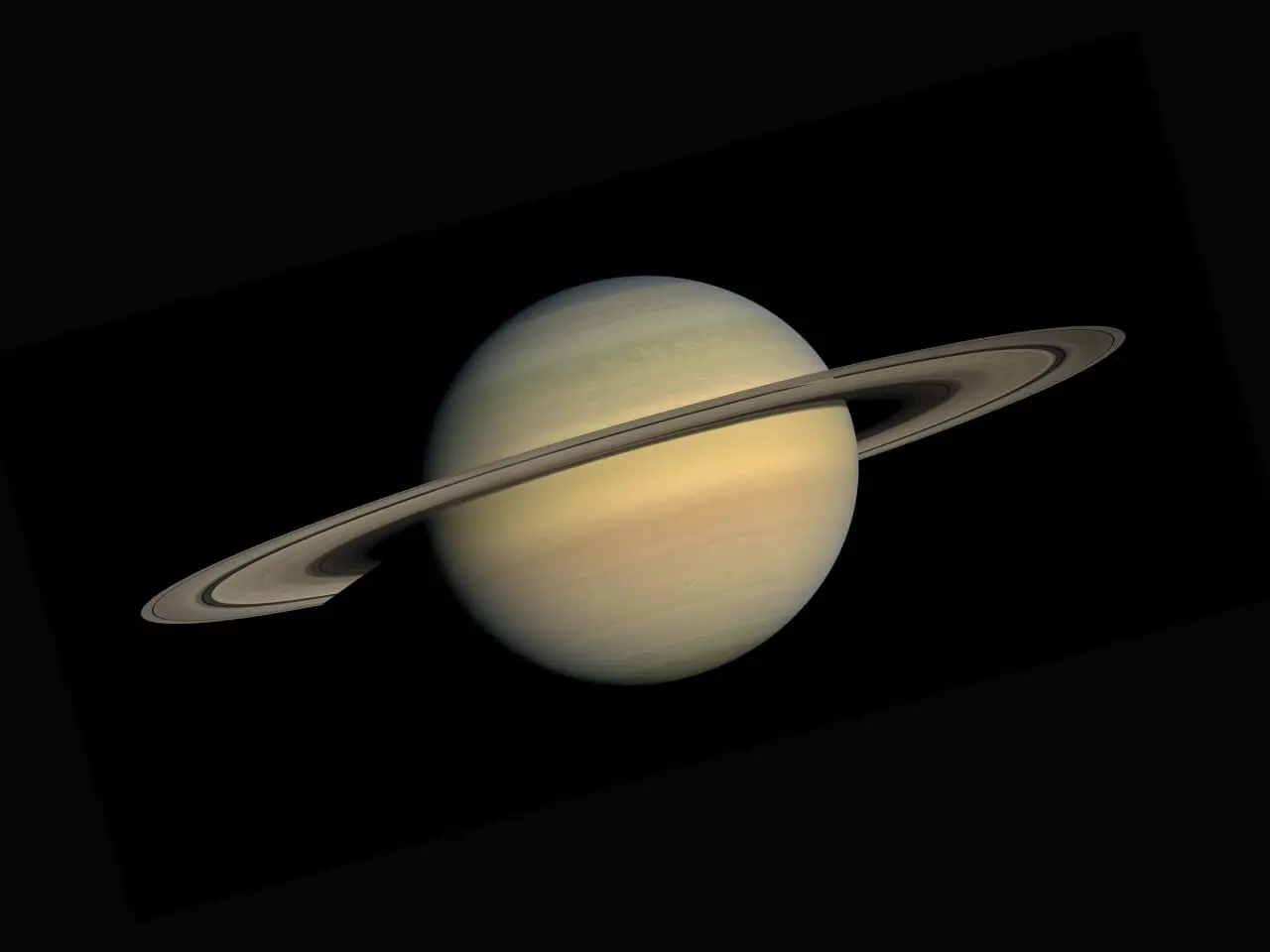
Does Enceladus have life? Phosphorus discovery fuels the debate
An analysis of data from NASA's Cassini spacecraft has revealed the presence of phosphorus at the bottom of the subsurface ocean on Saturn's moon Enceladus. This crucial ingredient for life is essential for the formation of DNA and RNA.
The data analysis indicates that Enceladus phosphorus concentrations could be thousands of times higher than on our planet Earth.
This discovery only confirms previous assumptions made by scientists that Enceladus is one of the most likely places where extraterrestrial life could exist.
The building blocks for life on Enceladus: A surprising discovery
Saturn's moon is enveloped in a thick layer of ice, beneath which lie expanses of saltwater. In 2005, the Cassini spacecraft captured a spectacular sight when vapor and ice grains were ejected from Enceladus's icy shell in the form of geysers. An examination of these grains revealed that they contain organic molecules. This spurred further interest in the Saturnian moon.
With this discovery, the theory that some form of life exists on Enceladus has been expanded even further.
"We knew that Enceladus had most of the elements that are essential for life as we know it—carbon, hydrogen, nitrogen, oxygen, and sulfur. Now that [phosphorus] has been confirmed, Enceladus now appears to meet all of the criteria for a habitable ocean," says Morgan Cable, an astrobiologist at the Jet Propulsion Laboratory in Pasadena, California [1].
Previously, researchers were not even sure if there was any phosphorus on Enceladus at all. On Earth's surface, this element is relatively scarce, and most of it is locked away in minerals.
After analyzing the chemical data collected by Cassini, researchers determined that some of the ice grains from Enceladus are rich in a phosphorus compound called sodium phosphate.
Scientists estimate that one kilogram of water from Enceladus's ocean contains roughly 1 to 20 millimoles of phosphate, a concentration thousands of times higher than in Earth's oceans [2]. Experts suggest that phosphates could form at the bottom of Enceladus's ocean due to reactions between seawater and the phosphate-bearing mineral apatite.
A future Enceladus mission could reveal what hides beneath the ice
In 2021, a team of scientists from the University of Arizona and Paris Sciences et Lettres University calculated that if there are indeed life forms on Enceladus, there is a high probability that their presence could explain why methane gas is erupting around the moon. Because of this, scientists are pushing for NASA to organize another Enceladus mission.
Researchers from the universities in Arizona and Paris argue that even though the hypothetical total mass of living microbes in Enceladus's ocean would be small, a visit from an orbiting spacecraft is all it would take to definitively find out whether Earth-like microbes live in the ocean beneath the moon's shell.
In recent years, Enceladus has been gaining more attention from scientists as a place to return to and explore more thoroughly. One proposal, the Enceladus Orbilander developed by the Johns Hopkins Applied Physics Laboratory, envisions a mission that would collect extensive data about Enceladus by both orbiting and landing on the celestial body.
Experts state that if a biosphere exists in Enceladus's ocean, signs of its existence could be detected in the plume material without landing or drilling, but such a mission would require an orbiter to fly through the plume multiple times to collect enough material for analysis.
Nevertheless, the current discoveries are a giant leap forward compared to what we knew about Enceladus a few decades ago. When NASA's Voyager 1 spacecraft first observed Enceladus in 1980, it looked like a small, not particularly interesting celestial body resembling a snowball [3].
Later, between 2005 and 2017, NASA's Cassini spacecraft orbited the Saturnian system and extensively studied Saturn's complex rings and moons. Scientists were stunned when Cassini discovered that Enceladus's thick ice shell hides a massive, warm saltwater ocean emitting methane—a gas that typically originates from microbial life on Earth.
Methane gas, along with other organic molecules that form the basis of life, was detected when Cassini flew through the giant water plumes erupting from the surface of Enceladus.
Enceladus is approximately 800 million miles (1.3 billion km) from Earth. It orbits Saturn roughly every 33 hours. Typically, the surface of Enceladus maintains a constant temperature of -328 °F (-200 °C).
Frequently asked questions
Does Enceladus have life?
While life has not been definitively found, the discovery of essential elements like phosphorus in its subsurface ocean makes Enceladus one of the most likely places for extraterrestrial life to exist in our solar system.
What is the correct Enceladus pronunciation?
Enceladus is generally pronounced as en-SELL-uh-dus.
Why is the Enceladus phosphorus discovery important?
Phosphorus is a vital building block for DNA and RNA. Finding it in high concentrations on Enceladus means the moon's ocean contains all the essential elements required for life as we know it.
Log in to comment
No comments yet. Be the first.