Mary McLeod Bethune Statue Unveiled at the US Capitol
- A marble statue of Mary McLeod Bethune was unveiled in the US Capitol's National Statuary Hall in July 2022.
- She is the first Black American woman to be honored with a state-commissioned statue in the prestigious collection.
- Gifted by Florida, the 11-foot (3.4 m) sculpture replaces a statue of a former Confederate general.
- Bethune was a pioneering educator, civil rights leader, and advisor to President Franklin D. Roosevelt.
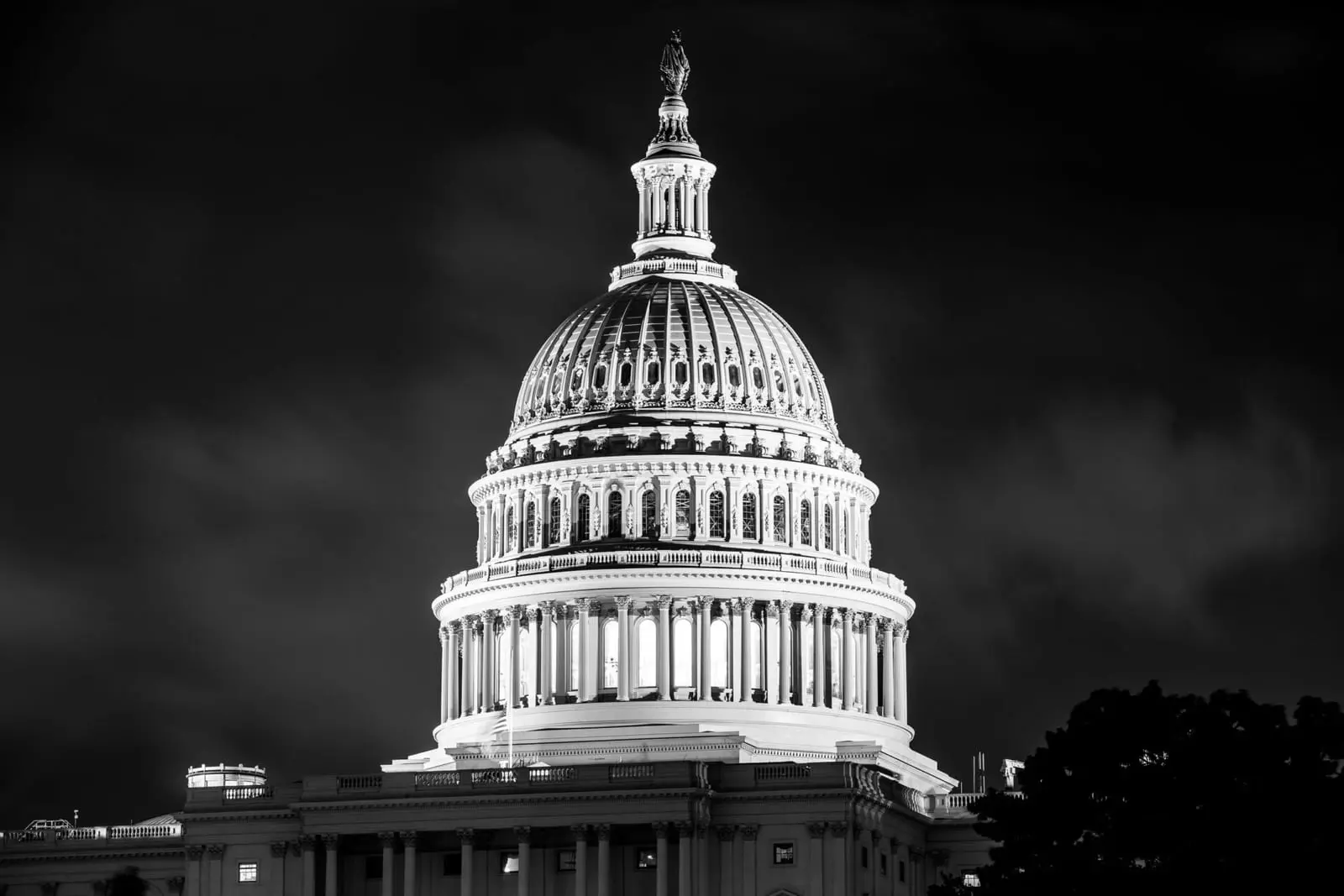
Mary McLeod Bethune Statue Added to the National Statuary Hall
July 13, 2022, marked a historic day at the US Capitol. A statue of educator, philanthropist, and civil rights activist Mary McLeod Bethune joined the National Statuary Hall Collection [1].
This event marks the first time a Black American has been recognized and honored in the famous National Statuary Hall.
The daughter of formerly enslaved people, Mary McLeod Bethune is considered one of the most important Black educators, civil and women's rights leaders, and government officials of the 20th century.
The university she founded laid the foundation for modern Black educational standards, and her role as an advisor to US President Franklin D. Roosevelt gave African Americans hope and faith in a promising future.
Honoring Bethune in the National Statuary Hall is a significant gesture. This hall is one of the most popular spaces in the US Capitol building. Thousands of tourists visit it and its collection of statues from individual states every day.
First Statue of a Black Woman in the Prestigious Capitol Space
For the first time in history, a statue of a Black American woman was placed in the National Statuary Hall at the US Capitol, the meeting place of the federal legislature that is heavily visited by tourists and distinguished guests.
During the 2022 ceremony, House Speaker Nancy Pelosi, Florida Representative Kathy Castor, and other members of Congress formally celebrated the unveiling of the Mary McLeod Bethune statue [2].
According to Castor, representing Florida—the state that gifted the statue to the National Statuary Hall—Bethune embodies deeply cherished values:
"Today, at a time of competing ideologies, we can lift her up so that her example can help heal and unify us."
Meanwhile, Lawrence M. Drake II, interim president of the Bethune-Cookman University founded by the activist, stated that this sculpture takes its "rightful place" among other prominent Americans in the National Statuary Hall:
"No one could have predicted that this daughter of slaves would create a university, found a powerful political organization, advise presidents, and inspire generations."
The 11-foot (3.4 m) Mary McLeod Bethune statue depicts her smiling in a cap and university gown, holding a rose in her hand.
The sculpture was created by Nilda Comas, who was selected from 1,600 artists. Comas sculpted the piece in Italy, using marble sourced from the same quarry where Michelangelo obtained the stone for his statue of David.
Comas notes that the sculpture symbolizes Bethune's vast achievements.
"She is dressed in a cap and gown because it symbolizes education. That was her greatest goal and what led her to where she achieved many other things related to civil rights," the sculptor explains.
From the Daughter of Enslaved Parents to Presidential Advisor
The daughter of formerly enslaved parents, Mary McLeod was born on July 10, 1875, near Mayesville, South Carolina. She was one of the youngest of Samuel and Patsy McLeod's seventeen children [3].
After the Civil War, her mother worked for her former owner until she could buy land where the family grew cotton.
As she grew up, McLeod took advantage of educational opportunities for Black Americans and graduated in 1894 from Scotia Seminary, a boarding school in North Carolina.
She later studied at the Dwight L. Moody Institute for Home and Foreign Missions in Chicago and eventually became an educator. While teaching in South Carolina, she married fellow teacher Albertus Bethune.
Although her marriage ended in 1904, she was determined to provide for her son. To ensure a stable future for him, she opened a boarding school.
Over time, the school grew into a college, which merged with the all-male Cookman Institute in 1929 to become Bethune-Cookman University. The university's first graduates received their degrees in 1943.
Throughout her life, Bethune was an active champion for racial and gender equality. She founded numerous organizations and led voter registration drives after women gained the right to vote in 1920.
She was a close friend of Eleanor Roosevelt, and in 1936, she became the highest-ranking African American woman in government when President Franklin D. Roosevelt appointed her as the director of Negro Affairs of the National Youth Administration, a position she held until 1944.
Appointed by President Harry S. Truman, Bethune was the only Black woman present at the founding conference of the United Nations in 1945.
She also wrote regularly for major African American newspapers like the Pittsburgh Courier and the Chicago Defender, and was a gifted businesswoman who owned the Central Life Insurance Company in Tampa.
On May 18, 1955, she passed away from a heart attack [4]. In 1974, a memorial was erected in her honor in Washington, D.C., and in 1985, her life's work was commemorated with a special-edition postage stamp. Her final residence is now a National Historic Site.
Gifts From Every US State in the National Statuary Hall
Each US state donates two statues to the Capitol and the National Statuary Hall. Florida requested to replace its previously donated statue of Confederate General Edmund Kirby Smith with the sculpture honoring Bethune.
The first statue was placed in the hall back in 1870, and by 1971, all 50 US states had donated at least one statue [5].
Each statue is a gift from the entire state, rather than from an individual or a specific group of citizens.
The donation process typically begins with a resolution passed by the state legislature. This resolution names the citizen to be memorialized, outlines their qualifications, designates a committee or commission to represent the state in selecting a sculptor, and outlines a method for securing the funds needed to implement the resolution.
When a donated statue arrives at the Capitol, it is placed in a location designated by the Joint Committee on the Library. Today, the entire collection consists of 100 statues.
Frequently asked questions
Who was Mary McLeod Bethune's husband?
She was married to Albertus Bethune, a fellow educator she met while teaching in South Carolina. They were married until 1904.
Did she have children, and what did Mary McLeod Bethune's son inspire her to do?
Yes, she had one son. After her marriage ended, she was determined to retain custody and provide for him, which inspired her to open a boarding school to ensure a stable future.
Where is the Mary McLeod Bethune statue located in the Capitol?
The Mary McLeod Bethune statue is proudly displayed in the National Statuary Hall Collection inside the US Capitol building in Washington, D.C., representing the state of Florida.
Log in to comment
No comments yet. Be the first.