NEOM The Line: Saudi Arabia's Mirrored City for 9M People
- Saudi Arabia's NEOM project features "The Line," a 105-mile (170 km) mirrored glass city designed for 9 million residents.
- The futuristic megacity will operate without cars or roads, relying entirely on 100% renewable energy and artificial intelligence.
- Despite ambitious plans for zero-gravity urbanism and a high-speed rail, experts remain skeptical about the project's feasibility and environmental impact.
NEOM The Line: An Ambitious Vision by the Saudi Crown Prince
Back in 2017, Saudi Crown Prince Mohammed first presented an ambitious idea—to create a new city called NEOM, which would become a model for the country's business and tourism development on the Red Sea coast. While new cities are constantly being planned, this one would be exceptional—it is designed to resemble a glass line.
Promotional videos currently available to the public already show what the NEOM city should look like in reality. It features two mirrored glass skyscrapers stretching more than 100 miles (160 km) across desert and mountain terrain, which will house 9 million people in the future [1].
Today, such an image seems like a fantasy, but the NEOM project is planned to be completed in just a few years.
Although Saudi Arabian officials are proud of this highly ambitious project that could break all urban norms, experts are much more cautious and do not hesitate to point out the flaws of this idea.
Critics suggest that this might just be another unrealizable urban utopia, the scale and scope of which are not fully understood even by those working on the project. Meanwhile, internet users are both enticed and frightened by the idea of a glass city, which resembles scenarios from popular sci-fi movies and literature.
A Saudi Arabia Mirror City Designed Without Cars or Roads
The NEOM city project in Saudi Arabia was first presented to the public back in 2017. At that time, Saudi Crown Prince Mohammed spoke proudly of an innovative city plan that will cost billions and include infrastructure, business, research, sports and entertainment venues, as well as tourism centers [2].
The concept itself—a closed glass city—is expected to cover an area of approximately 10,230 square miles (26,500 square kilometers). It is within this territory that everything found in the world's largest megacities should fit.
The NEOM "Line" project is intended to become a unique environment: the first city without roads, cars, and emissions.
According to the project's introductory presentation, the city will use 100% renewable energy, and priority will be given to human health and well-being, rather than transport and infrastructure, as in traditional cities [3].
Although urban planning that takes nature more into account has become a trend in architecture and territorial development in recent years, the progress of The Line steps almost beyond human comprehension.
The Line will be a closed city 656 feet (200 meters) wide, 105 miles (170 km) long, and 1,640 feet (500 meters) above sea level, hoping to accommodate up to 9 million people who will be able to reach all facilities within a five-minute walk, while a high-speed rail will travel to the end point in 20 minutes.
Another feature of this city is interesting but difficult to imagine. According to the project developers, the exterior mirrored facade "will give the city its unique character and allow even a small footprint to blend with nature," and "its design will be digitized, and construction industrialized using advanced construction technologies and manufacturing processes."
The final version of the project will consist of two 1,600-foot-tall (488-meter) glass, light-reflecting buildings running parallel across the coast, mountains, and desert. Both buildings will be connected by pedestrian walkways, and a high-speed train will run beneath them. It is estimated that all this will cost a staggering amount of money: approximately $1 trillion [4].
Life in the City Will Be Managed by Artificial Intelligence
Representatives of The Line project paint a tempting and attractive picture of what daily life could look like in a smart, self-sustaining, and AI-managed city.
According to Saudi Arabian officials, artificial intelligence will be the most important factor in how people live inside a structure that is 1,640 feet (500 meters) high and 656 feet (200 meters) wide.
The city will preserve 95% of the area's natural environment, thereby emphasizing humanity's relationship with the natural world. All energy in NEOM will be 100% renewable: from solar, wind, and hydrogen. This will ensure zero carbon emissions and a positive impact on the ecosystem.
This concept also includes public parks and pedestrian zones, schools, residential homes, and workplaces.
According to the creators of the idea, the concept of allowing cities to function vertically and enabling people to move seamlessly in three dimensions is called Zero Gravity Urbanism, and it may become particularly relevant and necessary in the future.
In addition, The Line will feature an exterior mirror that will give the structure uniqueness and allow even a small footprint to blend in with nature.
The city will be equipped with a high-speed rail link, making a trip from one end to the other take just 20 minutes. An ideal climate all year round will ensure that residents can enjoy the surrounding nature while walking around the city.
Some still-unconfirmed project documents also include conceptual plans such as integrated vertical farming, a yacht marina, and a sports stadium built at a height of approximately 1,000 feet (305 meters) [5].
Experts Doubt the Success of the NEOM Project
NEOM is owned by Saudi Arabia's Public Investment Fund and is part of the Saudi Vision 2030 plan, which aims to diversify the country's economy and reduce its dependence on oil.
The final deadline for NEOM construction work is 2030, but an initial assessment of The Line project prepared in January 2021 states that development will have to be carried out in phases, and it could take up to 50 years to complete.
Saudi Crown Prince Mohammed himself states that the first phase of the project, lasting until 2030, will cost 1.2 trillion Saudi riyals (approximately $320 billion). According to the prince, The Line will become "the most livable city in the world."
However, the extravagance of the project and the prince's ambitions make analysts and experts shake their heads and doubt whether the project can truly be realized.
Robert Mogielnicki from the Arab Gulf States Institute in Washington told Agence France-Presse that this concept has changed so much from the very beginning that it is now difficult to determine its direction.
Furthermore, a growing number of experts emphasize that NEOM itself reveals not the future of humanity or the problems we must fight for a better tomorrow, but rather our current struggles and the difficulties we experience when trying to imagine the future [6].
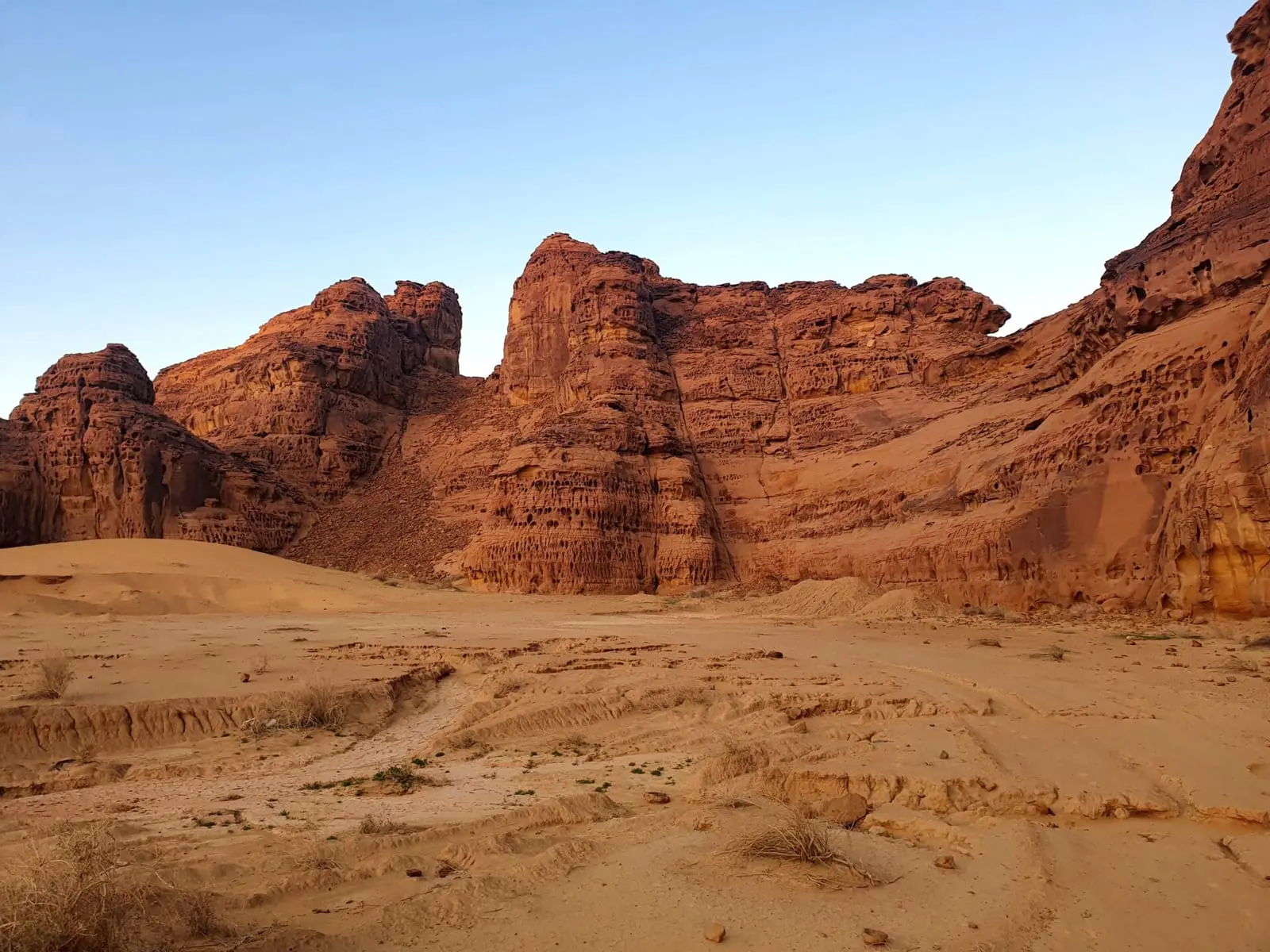
Discussions are also fueled by the fact that the project clearly capitalizes on the climate crisis. Although NEOM proposes to protect and nurture nature, the city is being built in the desert—a landscape that, according to Western philosophy, is not fully habitable.
Saudi Arabian authorities are utilizing such stereotypes, planning to build an empty, glass, enclosed space in a desert considered uninhabitable, which supposedly will help in the fight against climate change.
Environmentalists are also concerned about the lack of information regarding the project's preparation. It is not yet clear what the scale of ecological damage and displacement will be, what the cost in human lives will amount to, or what the carbon footprint will be from manufacturing and delivering construction materials.
Frequently asked questions
What is NEOM The Line?
The Line is a planned futuristic, mirrored smart city in Saudi Arabia designed to house 9 million people without cars, roads, or carbon emissions.
Where is the NEOM city location?
The NEOM project is located in Saudi Arabia, stretching across the desert, mountains, and the Red Sea coast.
How much will The Line in Saudi Arabia cost?
The overall NEOM project and The Line are estimated to cost approximately $1 trillion, requiring a massive financial investment over several decades.
Sources
- Business Insider: NEOM: Saudi Arabia plans to build a futuristic, sustainable city with 170 km glass walls and world's largest floating structure
- NPR: A 105-mile-long city will snake through the Saudi desert. Is that a good idea?
- The Guardian: Saudi Arabia plans 100-mile-long mirrored skyscraper megacity
- 80.lv: The Line: Saudi Arabia's City Project That Looks Like a Glass Wall
- Al Jazeera: Saudi Arabia plans $1 trillion mirrored skyscraper in Neom
- Archpaper: The visions for NEOM, Saudi Arabia's linear megacity in the desert, reveal contemporary shortcomings more than a future utopia
Log in to comment
No comments yet. Be the first.