The Origins of Thanksgiving in America: History & Traditions
- The origins of Thanksgiving in America date back to the 1620s when Pilgrims celebrated a successful harvest alongside Native Americans.
- The holiday's date shifted several times before the US Congress set it to the fourth Thursday of November in 1941.
- Turkey, sweet potatoes, and pumpkin pie have become the staple foods of the modern Thanksgiving Day celebration.
- Unique traditions include the presidential turkey pardon, breaking the wishbone for luck, and massive events like the Macy's parade.
- The real history of Thanksgiving is viewed controversially today, with many Native Americans recognizing it as a day of mourning.
The origins of Thanksgiving in America trace back to English colonists
For millions of families in the United States, the fourth Thursday of November is one of the most important days of the year. About a month before Christmas, relatives travel across the country to gather around one table for a Thanksgiving Day celebration that rivals even Christmas in its significance. Canada has its own Thanksgiving, celebrated in October.
The history of Thanksgiving is long, somewhat complex, and viewed quite controversially in modern times. In 1789, President George Washington proclaimed a national day of thanksgiving, but the tradition's roots stretch back more than a century and a half earlier when it carried a deeply religious tone. Initially, it was a festival expressing gratitude to God, family, and friends for material prosperity and good relationships. The custom of sharing what one is thankful for around the dinner table survives to this day. In contemporary times, the holiday has largely lost its religious meaning, becoming more of a secular and civic occasion to gather with loved ones.
To understand why the Pilgrims celebrated the first Thanksgiving, we must look to the English colonists who arrived on American shores around 1620. The colonists first stepped onto American soil in November. It was bitterly cold, so they hurried to build a settlement, establishing the Plymouth Colony. However, their efforts were almost too late. Enduring the hardships of that first winter after a long journey proved unbearably difficult, and many did not survive the freezing temperatures, starvation, and disease [1].
Those who were more fortunate were helped to settle by local Native Americans, who shared their expertise on how to survive in the harsh, unforgiving land. A year later, their hard work paid off with a bountiful harvest. Thrilled by this success, the first colonial governor, William Bradford, proposed a day of giving thanks to the Lord. For a long time, it remained simply a festival to celebrate a successful harvest and the end of autumn labor, until it was declared a holiday of national importance and a day off after the United States won its independence.
There was considerable debate over exactly when to observe this day, creating a complex Thanksgiving history timeline. Early on, US President George Washington suggested November 26. Much later, in 1863, in the middle of the Civil War, Abraham Lincoln proclaimed a national Thanksgiving on the last Thursday of November, and later presidents followed his example. Franklin D. Roosevelt revisited the law in 1939, moving the holiday to the second-to-last Thursday of November, though half of the US states continued to observe the old date. The current system was finalized in 1941 when the US Congress passed a law mandating that Thanksgiving be celebrated on the fourth Thursday of November [2].
The turkey is the centerpiece of the Thanksgiving Day celebration
Today, most people associate the holiday with turkey, but the early colonists did not consider this bird a particularly delicious centerpiece for their feast. When the holiday was first observed, venison, goose, and duck were much more highly prized. Turkey meat began to gain popularity around the 19th century. Some attribute this shift to the influence of the book "A Christmas Carol," which mentions turkey as a festive dish fit for a feast [3]. Ultimately, historical and cultural circumstances intertwined, certain details were embellished, others perhaps forgotten, and today, turkey and Thanksgiving go together like Christmas and a Christmas tree.
Because food is such a crucial part of the holiday, a turkey alone is never enough. Alongside a massive turkey or other roasted meat, the feast is unimaginable without cranberry sauce, sweet potatoes, and various types of pie. The most popular side dish is mashed potatoes, enriched with milk, butter, herbs, and cheese. Corn-based sides are a traditional alternative. Sweet potatoes are incredibly popular and can be prepared in various ways: some simply bake them in the oven, others mash them, or prepare a highly unusual dish: baking sweet potatoes with brown sugar, butter, and sometimes even marshmallows [4].
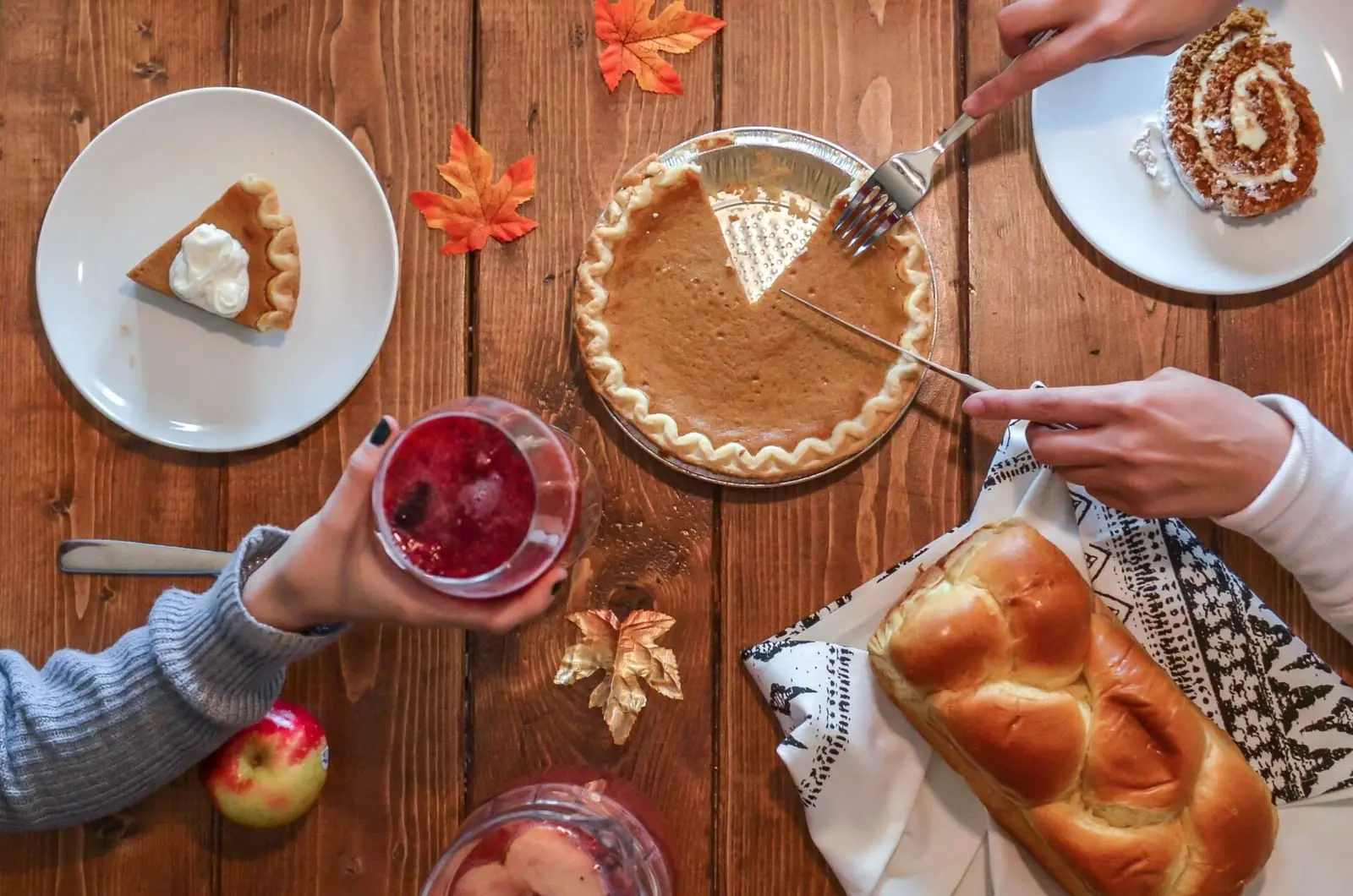
Fans of sweets and baked goods will be delighted to find the popular pumpkin pie, made from pumpkin puree and condensed milk, on the table. Those who might not prefer pumpkin can treat themselves to pecan or apple pie. Punch or apple cider is frequently served alongside these treats. Preparations for the Thanksgiving dinner usually begin well in advance. On the day of the holiday itself, family members spend the morning working in the kitchen before sitting down at the table in the afternoon.
Fascinating traditions and the real history of Thanksgiving
While it is one of the most important holidays for Americans, some traditions might seem quite unusual to outside observers. For example, every year before the holiday, the US President traditionally pardons a few turkeys, saving them from a grim fate. Exactly how this tradition began remains unclear, but stories of spared turkeys date back to the 19th century during Abraham Lincoln's presidency; it is believed his son convinced him to keep one bird alive. The first American president to officially save a turkey from the butcher's knife was John F. Kennedy in 1963, though it only became an annual tradition in 1989.
Another important tradition is the breaking of the wishbone. After the family finishes the turkey, the forked bone from its chest is broken. The person who breaks off the larger piece of the bone is said to be the luckiest and most successful in the coming year, and their wish will come true.
An undeniable holiday tradition is the famous parade, with one of the most well-known being the Macy's Thanksgiving Day Parade in New York City, often watched on television screens across the globe. It is a nearly three-hour event where costumed cartoon characters march down the city's main streets, music plays, massive balloons float in the sky, and a wonderful atmosphere fills the air. Those who have outgrown parades often head to the stores, as the famous Black Friday sales kick off the very next day [5].
However, in recent years, controversies surrounding the real history of Thanksgiving have grown louder. Because the colonists who arrived in America and began celebrating this day eventually forced many Native Americans off their ancestral lands, the history of Thanksgiving from a Native American perspective is quite different. Today, many descendants of Native American tribes choose to ignore the holiday or observe it as a day of mourning.
Frequently asked questions
Why is Thanksgiving celebrated?
Thanksgiving is celebrated to give thanks for the autumn harvest, family, and prosperity, tracing its roots back to a 1621 feast shared by English colonists and Native Americans.
Why did the Pilgrims celebrate the first Thanksgiving?
The Pilgrims celebrated the first Thanksgiving to thank God for a successful harvest after surviving a brutal first winter in the Plymouth Colony, with the crucial help of local Native Americans.
What is the history of Thanksgiving from a Native American perspective?
From a Native American perspective, the real history of Thanksgiving is tied to the subsequent loss of their ancestral lands and lives, leading many descendants to ignore the holiday or observe it as a day of mourning.
Log in to comment
No comments yet. Be the first.