Saturn Rings Disappearing: Why the Planet Will Lose Them
- Data from NASA's Cassini mission reveals that Saturn's rings are only 100 to 400 million years old.
- Constant micrometeoroid bombardment is causing the rings to lose mass and slowly dissolve.
- Scientists predict the planet will be left completely without rings in a few hundred million years.
- The rings likely formed from a destroyed icy comet or moon that strayed too close to Saturn's gravity.
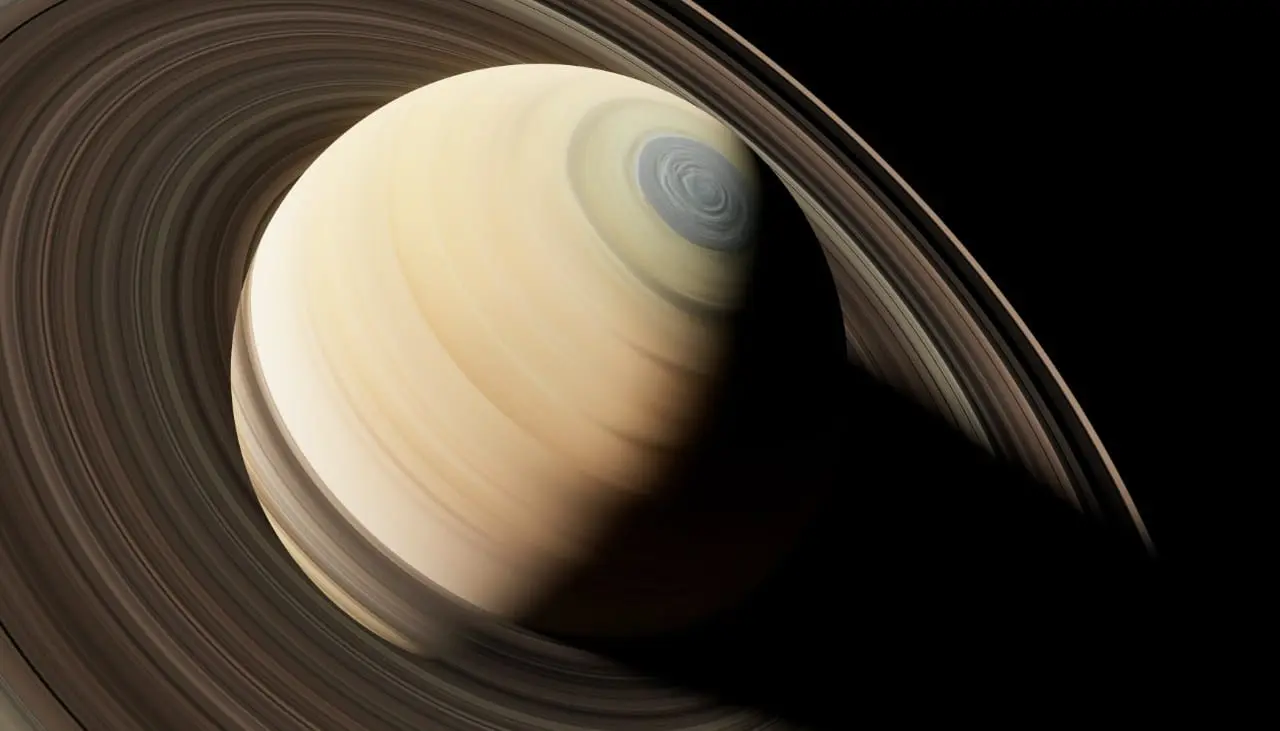
Saturn rings disappearing: The planet will one day be left without them
About 400 million years ago, massive changes occurred: North America, Greenland, and Europe merged into a single landmass, forests began to cover the Earth, sharks swarmed the seas, and the first four-legged amphibians began the colonization of land by vertebrates [1].
At that time, the planet Saturn did not yet have its surrounding rings.
When scientists at NASA's Ames Research Center in California's Silicon Valley examined data from the 2004–2017 Cassini mission, they found clues about Saturn rings disappearing. NASA researchers became convinced that Saturn's rings are still "fresh" and temporary: their age might be only 100 to 400 million years.
Indeed, scientists have debated extensively about the age of the rings, which are largely composed of ice. In this case, one thing is clear: the fact that Saturn's rings are relatively massive and icy indicates their youth.
The discussions bore fruit: it turned out that less than a few percent of the rings' mass consists of micrometeoroids—asteroid fragments smaller than a grain of sand that constantly collide with other ring particles and contribute to the mass of debris orbiting the planet.
A study published in the May 12, 2023, issue of the journal Science Advances also indicates that micrometeoroids do not arrive as quickly as once thought. If this is true, the rings could not have been exposed to such a cosmic hailstorm for more than a few hundred million years, even though Saturn itself is 4.5 billion years old.
"The idea that the main rings of this planet might be a relatively recent feature of our solar system has been controversial, but such conclusions are becoming increasingly convincing," said Ames researcher Jeff Cuzzi, along with five other scientists.
Although humans have never seen Saturn before its rings formed, it is possible that one day we will see a Saturn without rings, and this could happen within the next few hundred million years.
The main reason for this prediction is the rapid loss of ring volume as micrometeoroids and other debris travel into the planet itself, rather than out into the environment.
"I think these results are telling us that the constant bombardment by all this foreign debris not only pollutes the planet's rings but should also wear them down over time," stated Ames researcher Paul Estrada.
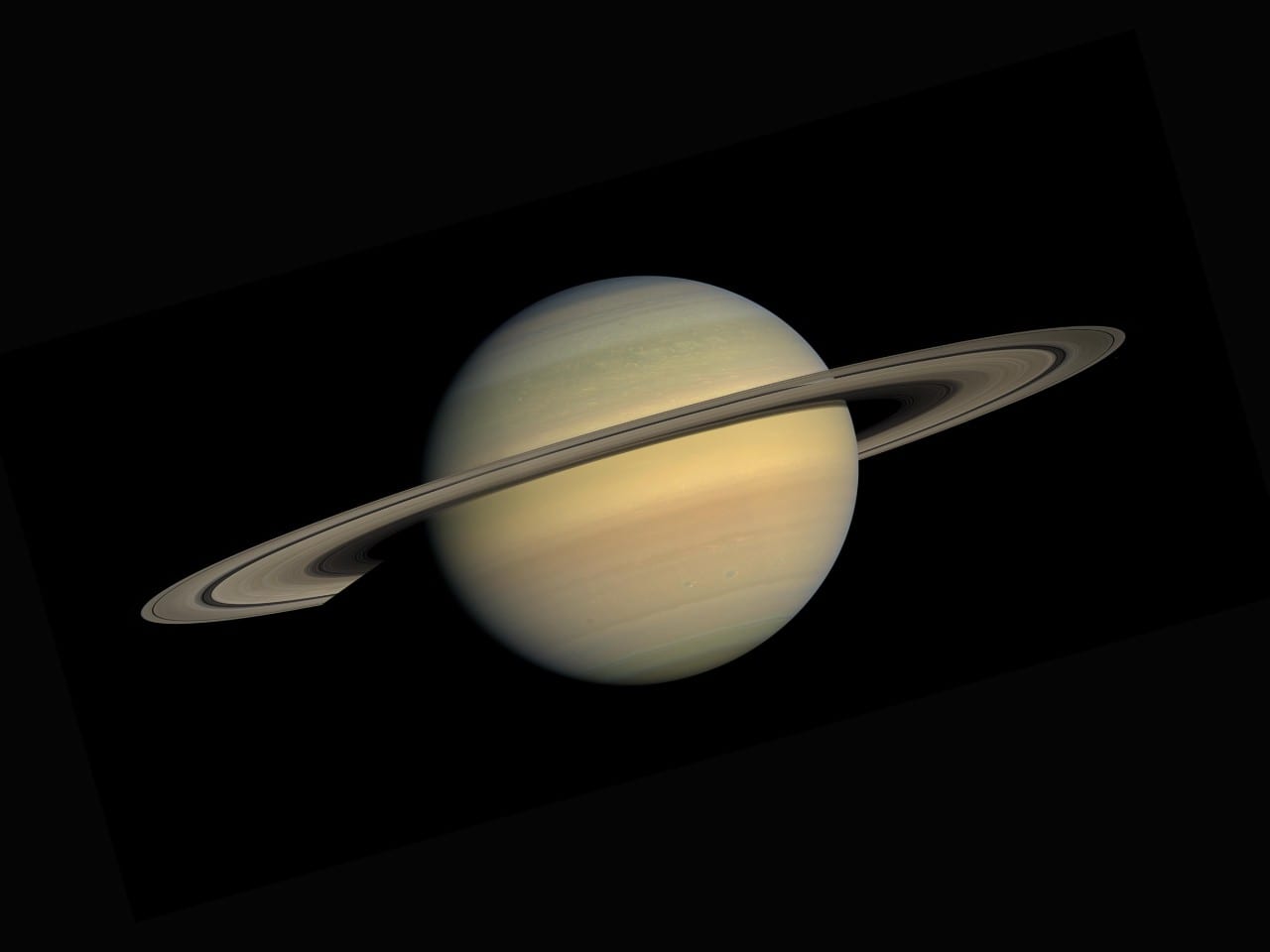
Saturn's rings are young and ephemeral
Although no human has ever seen Saturn without rings, during the time of the dinosaurs, the planet had likely not yet acquired its iconic accessories. Perhaps future inhabitants of Earth will have the opportunity to know a world without them [2].
We can appreciate that one of the three recent studies provides an understanding of the extent to which specific material must have "polluted" the rings since their formation; the analysis also shows that micrometeoroids do not enter as quickly as scientists thought, meaning Saturn's gravity can more effectively pull material into the rings.
This conclusion is supported by another paper that looks at the constant contact of the rings with small space rocks from a different angle.
The authors of the study identified two things that had barely been considered in previous research. Specifically, they examined the laws governing the long-term evolution of the rings and found that the most influential elements are micrometeoroid bombardment and how the debris from those collisions is distributed within the rings.
This research suggests that the rings of Uranus and Neptune are the result of the same process.
In any case, instead of mourning the future death of Saturn's rings, we can feel grateful to be a species born at a time when the planet was at its peak.
Oval formations around the planet are the result of violence
Scientists disagree on exactly when the planet's iconic rings formed and how they appeared. But the theories share one common trait: violence.
In most cases, researchers have a solid understanding of the origins of our solar system's most spectacular features, but Saturn's rings remain a massive mystery that is incredibly fascinating [3].
For example, they know about the chasm carved into Mars, the Great Red Spot raging on Jupiter, or the giant southern basin of the Moon, but Saturn sends a somewhat different "message."
"Saturn's rings are unique because they are the only ones so large and massive, which is unusual," Cuzzi asserted.
Planets, as we know, move in predictable orbits, while constellations rise and set on a schedule. This means that, drifting on a verdant island in an endless cosmic sea, small creatures like us have acquired a certain degree of celestial knowledge.
Obviously, we have deciphered the trajectories of planetary motion; we can calculate exactly when the midday sun will appear; and we know to some extent how everything came to be (except ourselves)—we cling to what we know.
Still, there is a growing consensus that bringing the rings encircling the planet into the "light of day" required the destruction of an icy object—a comet, or perhaps a moon. Then, that object somehow strayed too close to Saturn, and the planet's gravity tore it into countless icy shards (a small fraction of those shards are larger than a house; others are infinitely small). These cataclysms likely occurred during Saturn's early days.
Over time, the shattered remains gathered into the ring system we see today, which stretches about 170,000 miles (274,000 km) across and is about 30 feet (9 meters) thick.
Interestingly, the giant planets did not originate where we see them today; they likely migrated to their current locations, triggering a cascade of instability among smaller objects that were eventually scattered everywhere like celestial ping-pong balls.
It is also anticipated that some of Saturn's moons formed from fragmented rings that spread far enough from the planet—this is the main reason why some of the objects flying near the edges of the rings today are made of the same material.
The trouble is that the icy rings are too—almost pearlescently—white to be billions of years old.
Needless to say, the debate is useful. Meanwhile, Saturn's young rings show that we are lucky: it is no wonder that evolution produced humanity—a species capable of inventing telescopes—in an era that intersects with the magnificent sight of Saturn.
Frequently asked questions
Will Saturn lose its rings in 100 million years?
Scientists estimate that the rings could vanish entirely within the next 100 to a few hundred million years due to constant micrometeoroid bombardment pulling material into the planet.
What will happen if Saturn rings disappear?
If the rings disappear, future inhabitants of Earth will simply see a world without its iconic accessories. The planet itself will remain, but its spectacular icy rings will be gone forever.
Log in to comment
No comments yet. Be the first.