The Scariest Things in Space: Cosmic Threats to Earth
- A colossal megacomet measuring 85 miles (137 km) wide is hurtling through space, though it will safely pass Earth in 2031.
- The Milky Way is on a collision course with the Andromeda galaxy, an event expected in 3 to 5 billion years.
- Catastrophic solar flares and geomagnetic storms pose a serious threat to modern power grids and global communications.
- Astronomers estimate there are up to 100 million rogue black holes drifting through our galaxy, with one found just 5,000 light-years away.
- While 90% of "planet killer" asteroids have been identified, unknown space rocks still present a potential extinction-level threat.
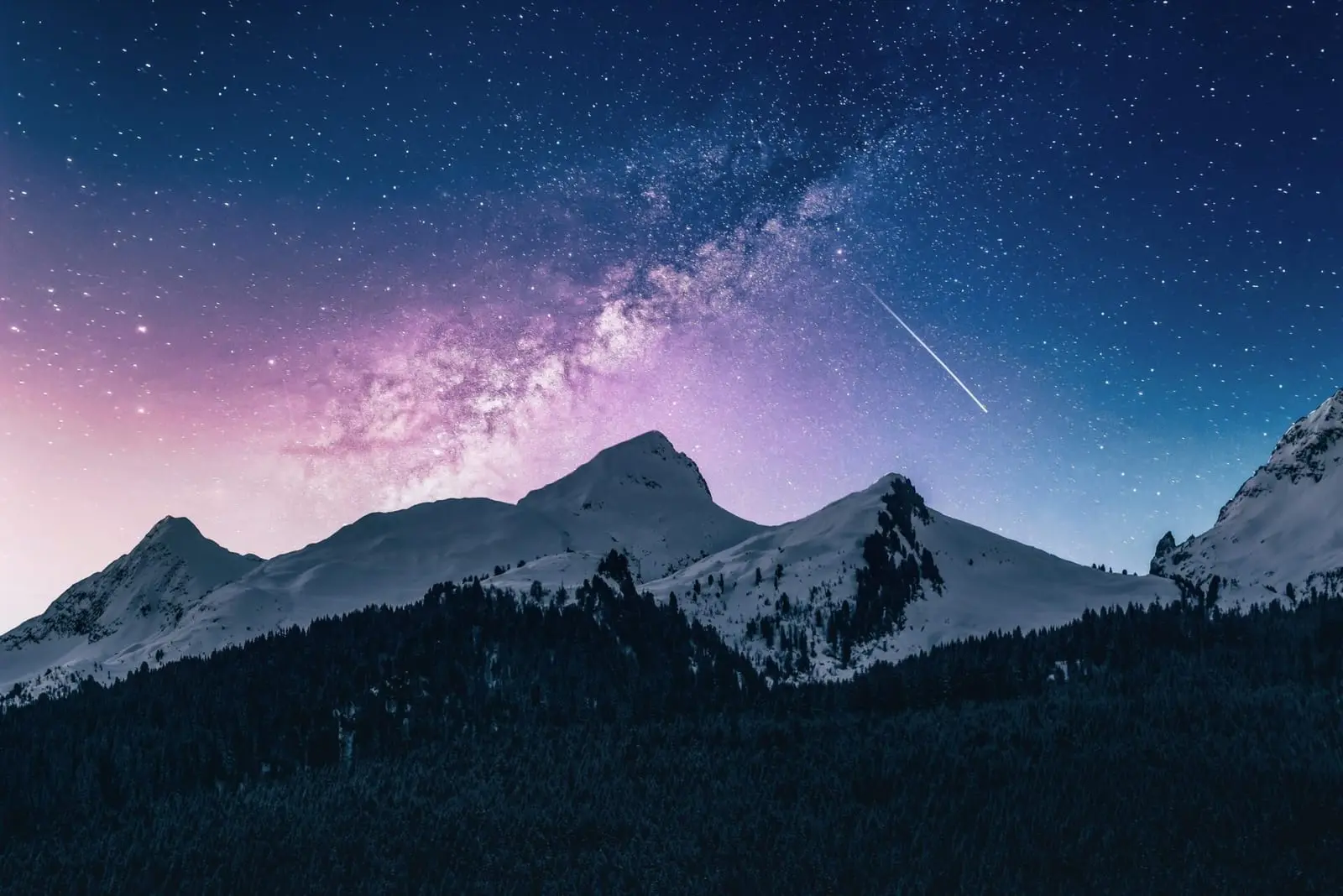
From Megacomets to Black Holes: The Scariest Things in Space
It is no secret that gravity frequently distorts the appearance of stars and galaxies. But the void between our home planet and everything else in the universe remains a massive unknown, filled with unspeakable wonders. When looking at scary space pictures or ranking the top 10 scariest things in space, a few catastrophic events and colossal celestial objects stand out as the most prominent cosmic threats to Earth.
The approach of a megacomet. The largest comet ever discovered in our solar system is estimated to be 85 miles (137 km) wide, though it was initially mistaken for a minor planet [1]. Fortunately, this icy behemoth will come no closer to Earth than 1 billion miles (1.6 billion km) in 2031. But could there be more of these massive comets lurking unseen? That is certainly a terrifying prospect.
A collision with Andromeda. Currently visible some 2.5 million light-years from Earth, Andromeda is the largest galaxy in our Local Group. However, it is on a frightening trajectory: it is heading straight for the Milky Way and will eventually collide with our galaxy. On the bright side, this cosmic crash is not expected to happen for another 3 to 5 billion years.
Catastrophic solar flares. Earth is constantly bombarded by high-energy particles from the sun, but our planet's magnetic field usually deflects these attacks. Occasionally, however, magnetic distortions inside our star trigger sudden flashes of light, emitting incredible amounts of X-rays and energy in all directions. This can disrupt navigation and communication signals. Another scenario involves coronal mass ejections sending magnetic particles into space; if directed at Earth, they can cause severe geomagnetic storms days later, potentially crippling power grids and communications.
Interestingly, the most powerful geomagnetic storm in modern history, known as the Carrington Event, occurred in 1859. If a similar event were to strike today, it could trigger an unprecedented storm leading to an "internet apocalypse" that might last for months.
Rogue Black Holes Drifting Through the Milky Way Galaxy
Black holes are undeniably terrifying. These crushed remnants of massive stars that exploded as supernovas are so dense that nothing, not even light, can escape their gravitational grasp. Fortunately, we are relatively safe from the supermassive black hole at the center of the Milky Way, as it is located more than 20,000 light-years away [2].
However, you should know that not all black holes in the Milky Way are as distant as the monster at our galactic center. In fact, astronomers estimate there could be up to 100 million black holes wandering through our galaxy.
To make matters more unsettling, in 2022, scientists used the Hubble Space Telescope to detect a rogue black hole in our galaxy that is a mere 5,000 light-years from Earth, measuring its mass at seven times that of our sun.
In other words, we probably shouldn't celebrate our safety just yet.
More Than 150,000 Solar System Objects Counted, Mostly Asteroids
SN 1987A was the brightest supernova seen in 400 years, and it occurred relatively close to home [3]. Discovered on February 23, 1987, in the Large Magellanic Cloud—a satellite galaxy of the Milky Way—it burned with the power of 100 million suns for months. When a star dies in a massive supernova explosion, anything within its specific "kill zone" is unfortunately obliterated by intense waves of radiation.
Astronomers calculate that this kill zone extends roughly 40 to 50 light-years from the blast. While it is highly unlikely that any known star near Earth will explode anytime soon, high-energy radiation from more distant supernovas could potentially interact with Earth's atmosphere and damage the ozone layer, allowing dangerous solar ultraviolet radiation to penetrate.
It is also worth mentioning that in 2022, the Gaia satellite detected far more asteroids in the solar system than previously thought. There is a massive number of large objects out there, and we only know about a fraction of them. While you might read lists of 50 scary space facts, one of the most sobering is that an unknown asteroid capable of wiping out life on Earth—much like the one that eradicated the dinosaurs 66 million years ago—could still be out there.
On a positive note, we are discovering more space rocks in our solar system almost daily, thanks to continuously improving wide-field telescope surveys. In fact, scientists now believe they have found about 90% of the "planet killers"—near-Earth objects with a diameter greater than 0.6 miles (1 km).
Finally, when discussing eerie celestial events, we cannot forget total solar eclipses, like the spectacular one that occurred on April 8, 2024. When the moon covers the vast majority of the sun's disk, the sky darkens, temperatures suddenly drop, a cool wind begins to blow, and the hair on your arms might stand up. If you were in a high-elevation spot overlooking a vast landscape, you could even see the moon's shadow racing toward you before it swallowed you in sudden twilight.
Of course, the sun always reappears, but that haunting feeling often lingers long after the daylight returns a few minutes later.
Frequently asked questions
What are the scariest things in space?
Some of the most terrifying cosmic phenomena include rogue black holes, massive megacomets, catastrophic solar flares, and the potential for undiscovered "planet killer" asteroids.
Will the Andromeda galaxy collide with the Milky Way?
Yes, the Andromeda galaxy is on a trajectory to collide with the Milky Way, but this cosmic event is not expected to happen for another 3 to 5 billion years.
Can a solar flare destroy the internet?
A massive geomagnetic storm, similar to the 1859 Carrington Event, could severely damage global power grids and communication networks, potentially causing an "internet apocalypse" that could last for months.
Log in to comment
No comments yet. Be the first.