Thwaites Glacier Melting: Sea Levels to Rise Even if Oceans Cool
- In three models with ocean melting turned off, Thwaites Glacier still lost ice for 150 years.
- Under the same conditions, the neighboring Pine Island Glacier began to thicken and advance.
- A complete Thwaites Glacier collapse would raise global sea levels by about 26 inches (65 cm).
- Every 0.4 inches (1 cm) of sea-level rise exposes about six million more people worldwide to coastal flooding risks.
- Scientists emphasize that cutting emissions determines how much the melting will accelerate.
- Thwaites Glacier melting will continue for at least 150 years
- Scientists turned off ocean melting in three different models
- Past ocean warming has already caused inevitable ice loss
- Every 0.4 inches (1 cm) of sea-level rise threatens another 6 million people with flooding
- Cutting greenhouse gas emissions still determines the glaciers' future
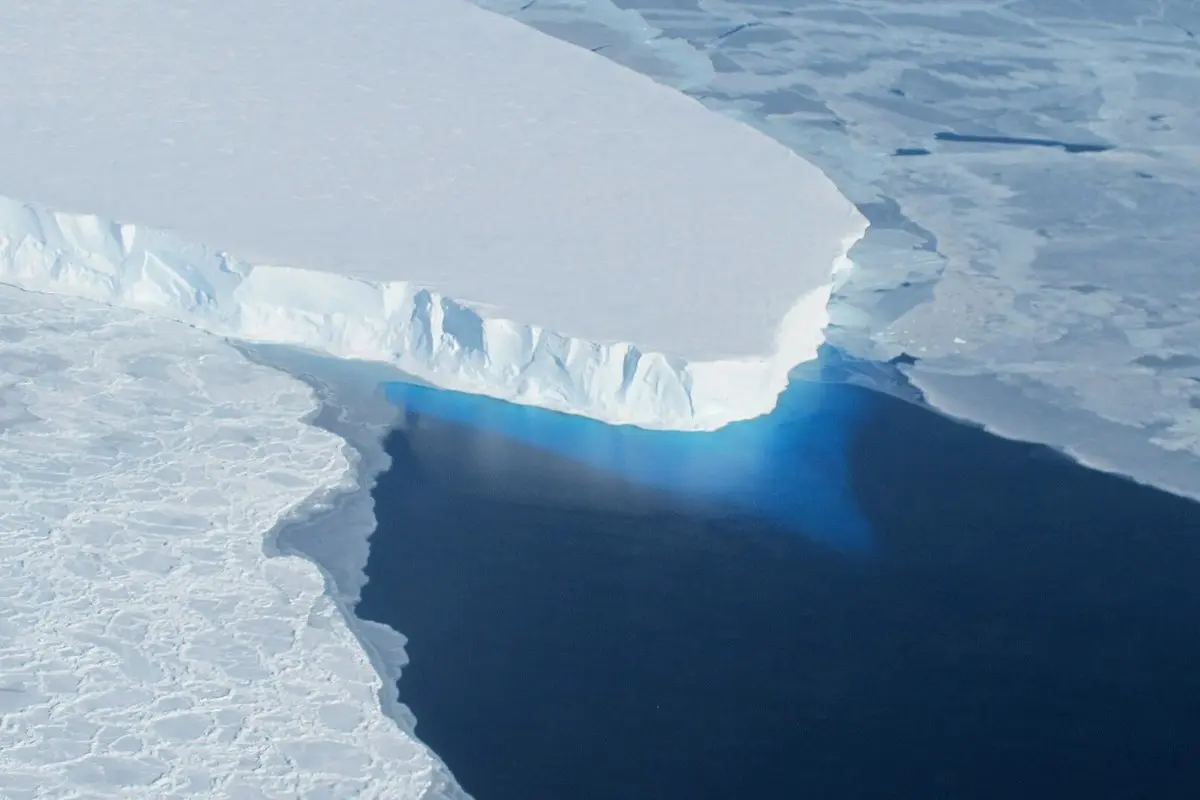
Thwaites Glacier in West Antarctica, often referred to as the "doomsday glacier," will continue to lose ice for at least another 150 years—even if the ocean were to cool suddenly. This conclusion was reached by scientists led by the British Antarctic Survey (BAS). According to the researchers, melting caused by past ocean warming has already "committed" the glacier to further retreat. A complete Thwaites Glacier collapse would raise global sea levels by approximately 26 inches (65 cm).
Thwaites Glacier melting will continue for at least 150 years
Scientists conducted an unusual experiment. In three independent computer models, they completely "turned off" the ocean-induced melting beneath Thwaites and the neighboring Pine Island Glacier to observe what would happen over 150 years. These two glaciers currently contribute the most to ice loss in this part of Antarctica. The study, "Mass loss from Thwaites Glacier continues even without ocean melting," was published in the scientific journal Geophysical Research Letters.
The results, according to BAS, revealed a stark contrast between the two glaciers. Pine Island Glacier behaved as scientists expected: without ocean melting, it began to thicken and advance back toward its position in the first half of the 20th century. Meanwhile, Thwaites Glacier lost ice throughout the entire 150-year simulation period. Over time, as the glacier thinned, the rate of loss slowed down but never stopped.
| Metric | Pine Island Glacier | Thwaites Glacier |
|---|---|---|
| What happened in models with ocean melting turned off | Thickened and advanced | Continued to lose ice |
| Simulation duration | 150 years | 150 years |
| Ice loss rate | Stopped | Slowed down, but did not stop |
| Sea-level impact upon complete collapse | – | About 26 inches (65 cm) |
Scientists turned off ocean melting in three different models
The experiment was deliberately extreme. Euronews notes that doomsday glacier melting will continue even under the "most extreme imaginable ocean cooling conditions." Scientists wanted to separate how much of the ice loss is driven by current ocean impacts and how much is due to processes that started in the past and are now continuing on their own. To do this, they used not one, but three independent ice dynamics models: if all three show a similar result, the conclusion is considered more reliable.
BAS explains that ice in West Antarctica is primarily melted not by the air, but by the warmer ocean, which thins the floating ice shelves from below. As the shelves thin, the glaciers retreat further inland. Scientists are rushing to understand how these glaciers will behave as the ocean continues to warm, and what factors might drive long-term changes. The study's authors are Rosie Williams, Matt Trevers, Sainan Sun, Paul Holland, David T. Bett, Robert Arthern, and Alexander T. Bradley.
Past ocean warming has already caused inevitable ice loss
"These results suggest that past changes in ocean-induced melting have already caused an irreversible future ice loss for Thwaites Glacier. This ice loss cannot be canceled or prevented simply by cooling the ocean," said the study's lead author, BAS glaciologist Dr. Rosie Williams.
According to her, records show that the retreat of these glaciers began in the 1940s, and since then, mounting evidence indicates that the primary driver of ice loss is the gradually warming ocean. The models show that Thwaites Glacier is still exhibiting the consequences of past changes.
Researchers emphasize that a scenario with zero melting is impossible in reality: seawater beneath the ice alone causes some degree of melting. Therefore, according to Williams, in addition to the "committed" ice loss identified in the models, further ocean-induced melting and rising ocean temperatures must be expected this century.
Every 0.4 inches (1 cm) of sea-level rise threatens another 6 million people with flooding
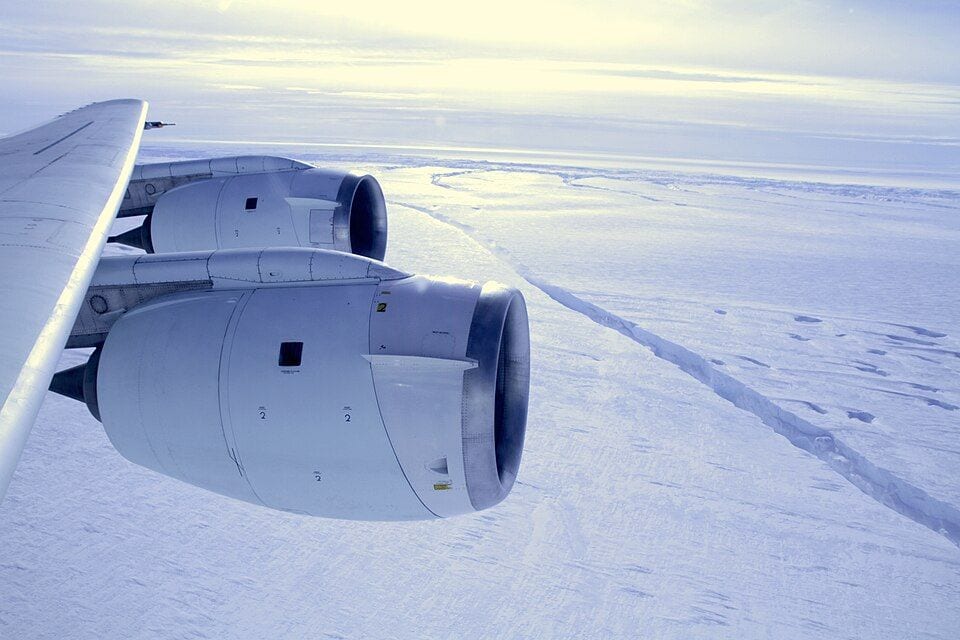
The West Antarctic Ice Sheet is one of the most rapidly changing places on Earth. According to BAS, it contains enough ice to raise global sea levels by about 16.4 feet (5 meters). The ice is melted by the ocean, which thins the floating ice shelves from below, causing the glaciers to thin and retreat inland.
A complete Thwaites Glacier collapse alone would raise sea levels by about 26 inches (65 cm). Euronews points out that every additional 0.4 inches (1 cm) of sea-level rise exposes about six million more people worldwide to coastal flooding risks. In the summer of 2026, the world's oceans reached their highest recorded daily temperatures: on August 22, the average sea surface temperature outside the polar regions reached 70.0 °F (21.1 °C).
Cutting greenhouse gas emissions still determines the glaciers' future
Although Thwaites Glacier is already "programmed" to retreat due to past events, scientists emphasize that current warm ocean temperatures and future greenhouse gas emissions only worsen the situation. In other words, cutting emissions will not stop the process that has already begun, but it can prevent it from accelerating.
"These simulations show that the historical melting of Thwaites Glacier has already left sea-level rise challenges for future generations. Ice loss will increase even further if we do not reduce, and ideally reverse, greenhouse gas emissions," said study co-author and BAS ocean modeler Professor Paul Holland. He added that it remains unknown whether other large Antarctic glaciers are also entering a state of "committed" change, and he urged an immediate shift in human activities that drive ocean-induced glacier melting.
The study does not answer exactly how much and when sea levels will rise—the modeling is illustrative. However, it shows that even with rapid emission reductions, Thwaites Glacier melting will continue for decades to come. Therefore, coastal cities and nations will still need to prepare for higher sea levels, while cutting emissions will determine how fast and how severely this process unfolds.
BAS presents the study as part of broader work on the impacts of a warming ocean and the long-term consequences of greenhouse gas emissions on the stability of the West Antarctic Ice Sheet. According to the scientists, these results should prompt policymakers to take action and prepare for sea-level rise.
Frequently asked questions
Why is Thwaites called the doomsday glacier?
It is an unofficial name used by the media, including Euronews. If a complete Thwaites Glacier collapse occurs, global sea levels would rise by about 26 inches (65 cm).
Would ocean cooling stop Thwaites Glacier melting?
No. In the British Antarctic Survey models, even when ocean melting was completely turned off, the glacier still lost ice for the entire 150-year period, albeit at a slower pace.
When did the retreat of Antarctic glaciers begin?
According to BAS scientists, records indicate that the retreat of the Thwaites and Pine Island glaciers began in the 1940s.
How much could sea levels rise due to West Antarctic ice?
According to BAS, the West Antarctic Ice Sheet contains enough ice to raise global sea levels by about 16.4 feet (5 meters).
Is it still worth cutting emissions if the glacier will melt anyway?
Yes. Scientists emphasize that warm ocean temperatures and future greenhouse gas emissions would increase ice loss even further.
Sources
- Euronews: Doomsday Glacier will keep melting even if oceans cool. Here's why cutting emissions still matters, 2026-10-16
- British Antarctic Survey: Thwaites Glacier will keep losing ice even if oceans cool, 2026-10-13
- Geophysical Research Letters: Mass Loss From Thwaites Glacier Continues Even Without Ocean Melting
- Wikimedia Commons: Thwaites Glacier (NASA, public domain)
- Wikimedia Commons: Pine Island Glacier ice shelf rift (NASA ICE, public domain)
Log in to comment
No comments yet. Be the first.