WIC Eligibility: Income Limits, Who Qualifies and How to Apply
- WIC serves pregnant, postpartum and breastfeeding women, infants and children under 5 who live in the state where they apply.
- Income must be at or below 185% of the federal poverty guidelines, or you qualify automatically through SNAP, Medicaid or TANF.
- For July 1, 2026 to June 30, 2027, the limit is $61,050 a year for a household of four in the 48 contiguous states and D.C.
- Benefits come on an eWIC card: a set food package plus a monthly fruit and vegetable dollar amount, with no cash.
- Immigration status is not an eligibility test, fathers and guardians can enroll children, and most WIC families have earned income.

- What WIC is and who runs it
- The four WIC eligibility tests
- WIC income limits for 2026-2027 by household size
- How to apply for WIC, step by step
- What WIC covers: the food packages
- How long WIC benefits last and recertification
- WIC vs SNAP: the differences that matter
- Breastfeeding support through WIC
- Common questions and misconceptions
- WIC is US-only: equivalents in the UK and Canada
- What to do next
WIC eligibility rests on four tests: you must be pregnant, recently pregnant or breastfeeding, or be an infant or a child under 5; you must live in the state where you apply; your household income must be at or below 185% of the federal poverty guidelines, or you must already be enrolled in SNAP, Medicaid or TANF; and a WIC health check must find a nutritional risk. For July 1, 2026 to June 30, 2027, that income line is $61,050 a year for a family of four in the 48 contiguous states and the District of Columbia.
WIC, the Special Supplemental Nutrition Program for Women, Infants and Children, is a U.S. federal program run by the Department of Agriculture through state, territorial and tribal agencies. It is separate from SNAP, open to working families, and the applicant does not have to be the child's mother. Below: who qualifies, the current income table, how to apply, what the food package contains, how long benefits last, and the nearest equivalents in the UK and Canada.
What WIC is and who runs it
WIC was created under the Child Nutrition Act of 1966, as amended, and has operated nationwide since the 1970s. USDA's nutrition agency, the Food and Nutrition Administration (long known as the Food and Nutrition Service, FNS), sets the rules, publishes the annual income guidelines and funds the program; around 90 state agencies, including every state, the District of Columbia, five territories and dozens of Indian Tribal Organizations, run the clinics and issue benefits. WIC is not a cash program: it provides a defined monthly package of specific foods on an electronic benefit card (the eWIC card), plus nutrition education, breastfeeding support and referrals, all at no cost.
The four WIC eligibility tests
Federal regulations at 7 CFR 246.7 set out exactly four eligibility standards; nothing else, such as citizenship, marital status or employment, is on the list.
1. Categorical eligibility
- Pregnant women, for the length of the pregnancy and up to six weeks after it ends.
- Postpartum women who are not breastfeeding, for up to six months after the birth or the end of a pregnancy.
- Breastfeeding women, up to the infant's first birthday.
- Infants, from birth to their first birthday.
- Children, from age 1 up to their fifth birthday.
Infants and children are the participants; a parent, guardian, foster parent or other caretaker applies on their behalf and shops with the card. That adult's own category does not matter, which is why fathers, grandparents and foster parents can enroll children.
2. Residency
You must live in the state (or the service area of the tribal agency) where you apply. There is no minimum length of residency; the rule explicitly bars agencies from requiring one. Proof is usually a recent bill or lease, and people with no documents, such as someone who is homeless or a migrant farmworker, can confirm their address in writing.
3. Income
There are two routes. The first is adjunctive (automatic) income eligibility: if you are certified for SNAP, Medicaid or TANF, or you belong to a family receiving TANF or a family in which a pregnant woman or infant is on Medicaid, you are income-eligible for WIC with no calculation. The second is the income test: gross household income, before taxes and deductions, must be at or below the state's WIC guideline, which by law can be no higher than 185% of the federal poverty guidelines and no lower than 100%. Nearly all states use the 185% ceiling shown below. Our guides to Medicaid eligibility and SNAP eligibility cover those programs' own thresholds.
4. Nutritional risk
A health professional at the clinic, usually a nutritionist or nurse, must document at least one nutritional risk condition. At minimum the clinic measures height or length and weight and checks for anemia with a hemoglobin or hematocrit test. Risk conditions are broad, from being underweight or overweight, anemia or pregnancy complications to a medical condition or an inadequate diet, and most income-eligible applicants have at least one.
WIC income limits for 2026-2027 by household size
The table below is the federal WIC income eligibility guideline at 185% of the 2026 poverty guidelines, effective July 1, 2026 through June 30, 2027. USDA publishes new figures each spring after the Department of Health and Human Services releases the poverty guidelines in January, and states must adopt them by July 1. Amounts are gross income before deductions.
| Household size | Annual | Monthly | Twice monthly | Every two weeks | Weekly |
|---|---|---|---|---|---|
| 1 | $29,526 | $2,461 | $1,231 | $1,136 | $568 |
| 2 | $40,034 | $3,337 | $1,669 | $1,540 | $770 |
| 3 | $50,542 | $4,212 | $2,106 | $1,944 | $972 |
| 4 | $61,050 | $5,088 | $2,544 | $2,349 | $1,175 |
| 5 | $71,558 | $5,964 | $2,982 | $2,753 | $1,377 |
| 6 | $82,066 | $6,839 | $3,420 | $3,157 | $1,579 |
| 7 | $92,574 | $7,715 | $3,858 | $3,561 | $1,781 |
| 8 | $103,082 | $8,591 | $4,296 | $3,965 | $1,983 |
| Each additional person | +$10,508 | +$876 | +$438 | +$405 | +$203 |
These figures apply to the 48 contiguous states, the District of Columbia, Guam and the territories. Alaska and Hawaii have higher poverty guidelines and therefore higher WIC limits: for a household of four, $76,313 a year in Alaska and $70,208 in Hawaii for the same period.
A pregnant woman counts as one more household member for each expected baby, and the larger household size applies to her eligible family members too. A pregnant woman living with her partner is measured against the household-of-three line ($50,542), and twins would move her to the household-of-four line. Your household is everyone you live with and share income and expenses with, including students away at college.
Income that counts includes wages and tips before tax, self-employment income, Social Security and disability payments, unemployment and workers' compensation, child support and alimony, and retirement income. Loans, AmeriCorps stipends and several kinds of military pay, including the Basic Allowance for Housing and combat pay, are excluded. Disability payments do count, so a household receiving SSDI or SSI should add them in; our guide to SSDI vs SSI explains how those benefits differ.
How to apply for WIC, step by step
- Check your likely eligibility. USDA's online WIC eligibility tool asks who is applying, your state, household size and income, and tells you whether to go ahead. It is not an application.
- Find your local WIC agency. Use the USDA WIC locator or your state health department's WIC page. Many states let you start online or by text; all accept a phone call.
- Book a certification appointment. In person, by video or by phone depending on the state. Everyone being enrolled, including babies, normally needs to be seen for measurements and a finger-stick anemia test.
- Bring your documents. Typically: identification for each person enrolling (driver's license, passport, birth certificate or a hospital crib card for a newborn), proof of address such as a utility bill, and proof of income such as recent pay stubs or your latest tax return. A SNAP, Medicaid or TANF card replaces the income proof.
- Complete the health and nutrition assessment. Staff record height, weight and iron levels, ask about diet and health, and document the nutritional risk. For pregnant women, iron matters here; see our guide on iron supplements for pregnancy.
- Receive your eWIC card and food prescription. If eligible, you leave with a card loaded with your first month of benefits and a list of the foods you can buy. Federal rules require benefits to be available within 10 days of certification.
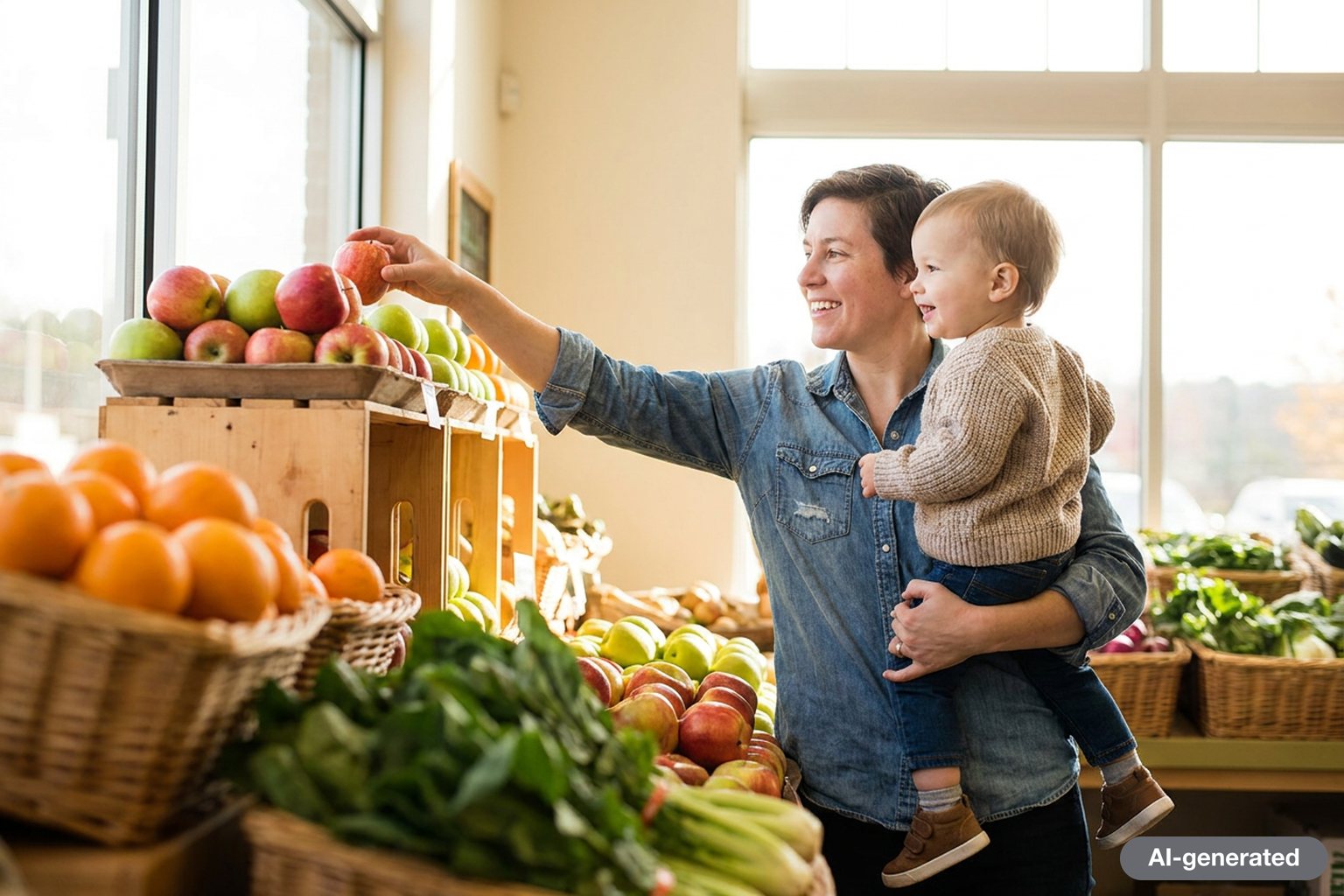
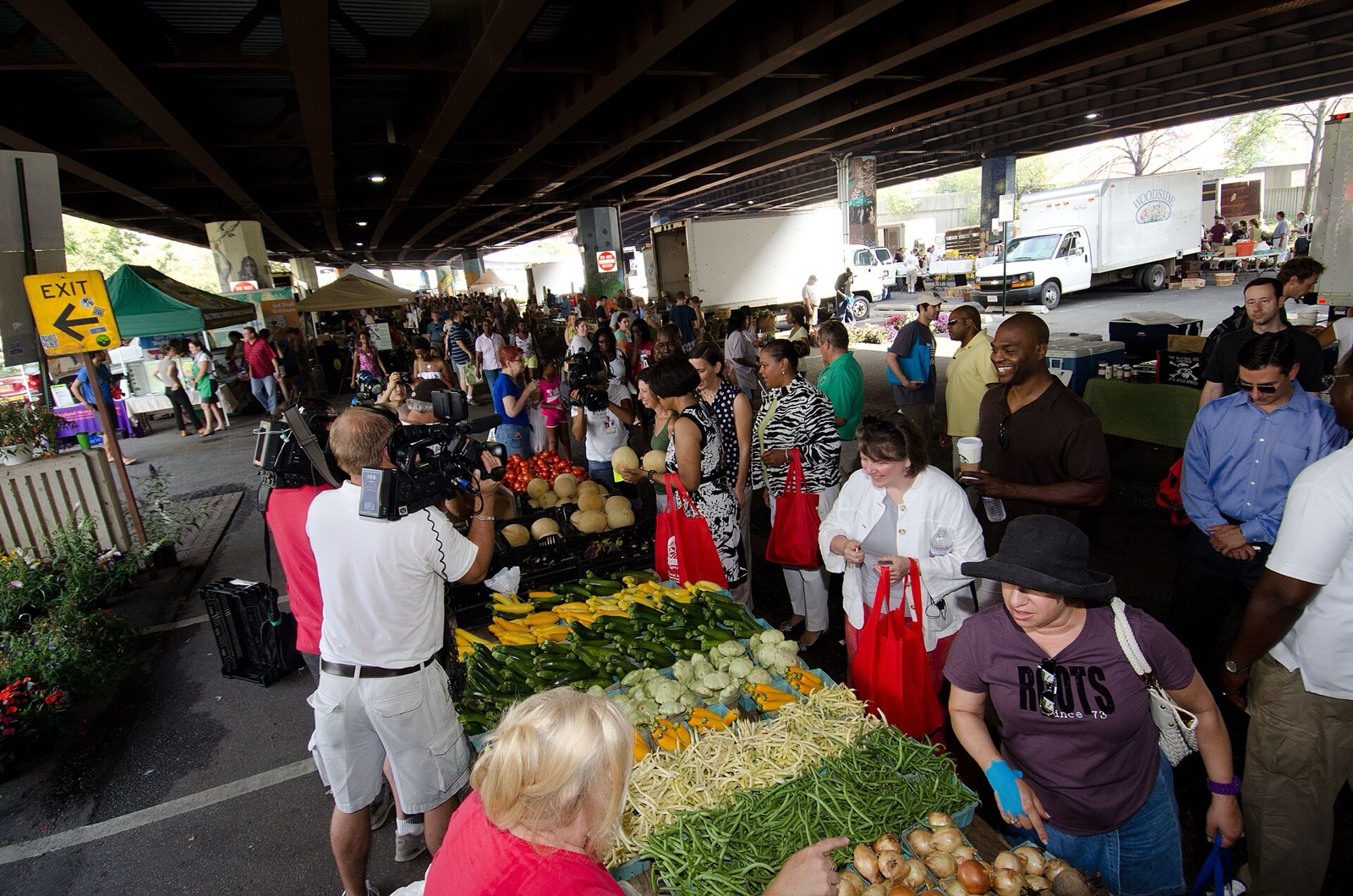
The eWIC card works at WIC-authorized grocery stores and many farmers' markets. Benefits are loaded monthly and do not roll over, and most states offer an app that shows your balance and scans barcodes to check whether a product is WIC-approved.
What WIC covers: the food packages
WIC does not pay for groceries in general. Each participant is assigned one of seven food packages matched to their life stage, each listing specific food categories with maximum monthly amounts. The packages were overhauled by a USDA final rule published April 18, 2024, and effective June 17, 2024, to align them with the Dietary Guidelines for Americans.
The main categories for women and children are:
- Fruits and vegetables through a cash-value benefit, a dollar amount on the card rather than a quantity. The 2024 rule set base amounts of $24 a month for children, $43 for pregnant and postpartum participants and $47 for breastfeeding participants, adjusted each year for inflation; when the rule took effect states were issuing $26, $47 and $52. Frozen, canned or dried produce and fresh herbs are allowed alongside fresh.
- Milk and dairy: 12 quarts a month for 1-year-olds, 14 quarts for children 2 to 4 and 16 quarts for women, with yogurt, cheese, lactose-free milk and plant-based alternatives as substitutions; only unflavored milk is allowed.
- Whole grains: 24 ounces a month for children and 48 ounces for women of whole wheat or whole grain bread, or alternatives such as brown rice, oats, whole wheat pasta, tortillas and quinoa. Breakfast cereals must list a whole grain first.
- Protein foods: eggs, dried or canned beans, peas and lentils, peanut butter and canned fish (6 ounces a month for children, 10 for pregnant and postpartum women, 15 for partially and 20 for fully breastfeeding women).
- Juice, reduced to 64 fluid ounces a month for all children and women, with the option to swap it for a $3 produce benefit.
Infants: formula and first foods
For infants, the package depends on how they are fed. Formula-fed infants receive infant formula in age-based "up to" amounts; each state has a contract brand bought through rebate agreements, and medical formulas require a prescription. Partially breastfed infants can receive up to 364 fluid ounces of formula in the first month under the 2024 rule, up from 104 ounces. From 6 months, all infants receive infant cereal and 128 ounces of jarred fruits and vegetables, and families can swap half or all of the jars for a $10 or $20 produce benefit.
How long WIC benefits last and recertification
WIC enrolls people for a fixed certification period, after which you reapply and repeat the income and health assessment. The periods in federal regulation are:
- Pregnant women: the rest of the pregnancy plus up to the end of the month the baby turns six weeks old, then recertification as breastfeeding or postpartum.
- Postpartum (not breastfeeding): up to the end of the sixth month after the birth.
- Breastfeeding women: roughly every six months, or, where the state allows, until the infant's first birthday or breastfeeding ends.
- Infants: roughly every six months, or up to the first birthday where the state allows it.
- Children: roughly every six months, or up to one year at state option, ending in the month of the fifth birthday.
If your income rises above the limit mid-certification you are expected to report it; the agency must reassess and may end benefits early unless fewer than 90 days remain. Missing a recertification appointment pauses benefits until you are seen again.
WIC vs SNAP: the differences that matter
Many families qualify for both, and getting one does not reduce the other.
| Feature | WIC | SNAP |
|---|---|---|
| Who | Pregnant, postpartum and breastfeeding women, infants, children under 5 | Any low-income household, with work rules for many adults |
| Income test | Gross income at or below 185% of poverty, or automatic via SNAP, Medicaid or TANF | Gross and net income tests, generally 130% and 100% of poverty, plus asset limits in many states |
| What you get | A prescribed package of specific foods plus a produce dollar amount | A dollar amount usable on most groceries |
| Health component | Required nutrition assessment, education and breastfeeding support | None required |
| Where to apply | Local WIC clinic or state WIC agency | State SNAP or human services office |
| Card | eWIC card | EBT card |
| Funding | Annual federal appropriation | Entitlement; everyone eligible is served |
Because WIC is funded through annual appropriations rather than as an entitlement, agencies keep a priority system in case funds run short, placing pregnant and breastfeeding women and infants with medical risk first.
Breastfeeding support through WIC
Every WIC agency offers breastfeeding counseling from trained staff, and most run a peer counselor program in which mothers who have breastfed support new mothers by phone, text and in person. Clinics can lend or issue breast pumps, and the 2024 rule created a separate, larger food package for mothers who mostly breastfeed but use some formula. Fully breastfeeding mothers receive the largest package, qualify for the full year after birth, and their infants receive extra first foods.
Common questions and misconceptions
Does immigration status affect WIC eligibility?
The federal WIC regulation lists four eligibility standards, category, residency, income and nutritional risk, and immigration or citizenship status is not among them. A Social Security number is not required to enroll. Ask the local clinic what identification it accepts; the regulation allows many forms of ID and even a signed statement when documents do not exist.
Can fathers, grandparents or foster parents apply?
Yes. For an infant or child, the applicant is the child; any parent, guardian or foster parent can bring the child to be certified and do the shopping. Foster children are usually treated as a household of one, so the foster family's income is not counted.
Do working families qualify?
Most WIC households have earned income. The 185% line is well above full-time minimum-wage earnings in every state, and for a family of four it is $61,050 a year in 2026-2027. Two earners at modest wages often fit under it, especially once a pregnancy adds a household member, and a spell of unpaid leave around a birth is exactly what WIC is designed for.
WIC is US-only: equivalents in the UK and Canada
WIC exists only in the United States and its territories. The closest counterpart in England, Wales and Northern Ireland is Healthy Start, an NHS scheme for people more than 10 weeks pregnant or with a child under 4 who receive qualifying benefits (anyone under 18 and more than 10 weeks pregnant qualifies without benefits). It provides a prepaid card for milk, fruit, vegetables, pulses and infant formula, plus free vitamins; Scotland has Best Start Foods instead. In Canada, the federal Canada Prenatal Nutrition Program (CPNP), which funds community projects offering nutrition counseling, prenatal vitamins, food coupons and breastfeeding support, became part of the Community Action for Prenatal and Child Health Program on April 1, 2026.
What to do next
If you are pregnant or have a child under 5 and your income is near or below the table above, or you are on Medicaid or SNAP, use USDA's eligibility tool and contact your local WIC agency; benefits begin the day you are certified. Keep your recertification date in your calendar and bring the child to each appointment. New parents may also want our explainer on norovirus in babies, and the rest of our benefits coverage covers related programs.

Frequently asked questions
What is the income limit for WIC in 2026?
For the guideline period July 1, 2026 to June 30, 2027, gross household income must be at or below 185% of the federal poverty guidelines: $29,526 a year for one person, $40,034 for two, $50,542 for three, $61,050 for four and $10,508 more for each additional person in the 48 contiguous states and D.C. Alaska and Hawaii have higher limits. A pregnant woman counts as an extra household member.
Who qualifies for WIC?
Pregnant women, women up to six months postpartum, breastfeeding women up to the baby's first birthday, infants and children under 5. The applicant must live in the state where they apply, meet the income test or be enrolled in SNAP, Medicaid or TANF, and be found at nutritional risk by WIC clinic staff, which most income-eligible applicants are.
Do you automatically qualify for WIC if you get Medicaid or SNAP?
You are automatically income-eligible. Being certified for SNAP, Medicaid or TANF, or belonging to a family where a pregnant woman or infant is on Medicaid, satisfies the WIC income test without any calculation. You still need to be in an eligible category, live in the state and complete the nutrition assessment at the clinic.
How do I apply for WIC?
Use USDA's online eligibility tool, then contact a local WIC agency by phone or online to book a certification appointment, in person or virtual depending on the state. Bring identification for each person enrolling, proof of address and either proof of income or your SNAP, Medicaid or TANF card. If approved, you receive an eWIC card the same day.
What does WIC cover?
A monthly package of specific foods: a fruit and vegetable dollar benefit, milk and dairy or plant-based substitutes, whole grain bread and cereals, eggs, beans, peanut butter, canned fish and juice, plus infant formula, infant cereal and jarred baby foods for infants. It also provides nutrition counseling, breastfeeding support, breast pumps and referrals. WIC does not provide cash or cover general groceries.
Can fathers apply for WIC for their children?
Yes. For infants and children, the child is the participant, and any parent, guardian, foster parent or caretaker can apply, attend appointments and shop with the eWIC card. The adult's own category does not matter. Fathers, grandparents and foster parents routinely enroll children in WIC.
Does WIC check immigration status?
Immigration status is not one of WIC's four federal eligibility standards, which are category, residency, income and nutritional risk, and a Social Security number is not required. Local agencies decide which identification documents to accept, and the regulation allows a signed statement when no documents exist, so ask your clinic what it needs.
How long can you stay on WIC?
Each certification lasts a set period: through pregnancy plus six weeks, six months postpartum, up to a year for breastfeeding mothers and infants, and six months to a year at a time for children until the month of their fifth birthday. You recertify at the end of each period by repeating the income and health assessment.
Can you get WIC and SNAP at the same time?
Yes. They are separate programs with separate budgets, and receiving one does not reduce the other. A SNAP card also proves income eligibility for WIC. WIC gives a specific food package for young children and pregnant or nursing mothers, while SNAP gives a dollar amount for general groceries.
Is there a WIC program in the UK or Canada?
Not under that name. England, Wales and Northern Ireland have the NHS Healthy Start scheme for pregnant women and children under 4 on qualifying benefits, and Scotland has Best Start Foods. In Canada, the Canada Prenatal Nutrition Program funded community prenatal nutrition projects and became part of the Community Action for Prenatal and Child Health Program on April 1, 2026.
Sources
- USDA Food and Nutrition Administration: WIC Income Eligibility Guidelines 2026-2027
- USDA Food and Nutrition Administration: WIC Eligibility
- USDA Food and Nutrition Administration: How to Apply for WIC
- USDA Food and Nutrition Administration: WIC Benefits
- USDA Food and Nutrition Administration: WIC Food Packages (2024 final rule summary)
- USDA Food and Nutrition Administration: Final Rule, Revisions in the WIC Food Packages (2024)
- eCFR: 7 CFR 246.7, Certification of participants
- HHS ASPE: Poverty Guidelines 2026
- Federal Register: WIC 2026/2027 Income Eligibility Guidelines
- GOV.UK: Healthy Start
- Public Health Agency of Canada: Canada Prenatal Nutrition Program (CPNP)


Log in to comment
No comments yet. Be the first.