World's oldest shipwreck discovered off the coast of Turkey
- The shipwreck off Kekova Island in Antalya, Turkey, dates back 4,400 to 4,700 years.
- Divers found three stone anchors and more than 30 amphorae at a depth of 98 feet (30 m).
- The amphorae were likely made in the Jordan Valley and carried olive oil or wine.
- Until this discovery, the Dokos shipwreck in Greece was considered the oldest at roughly 4,200 years old.
- The recovered artifacts will be exhibited in a new underwater archaeology museum in Antalya.
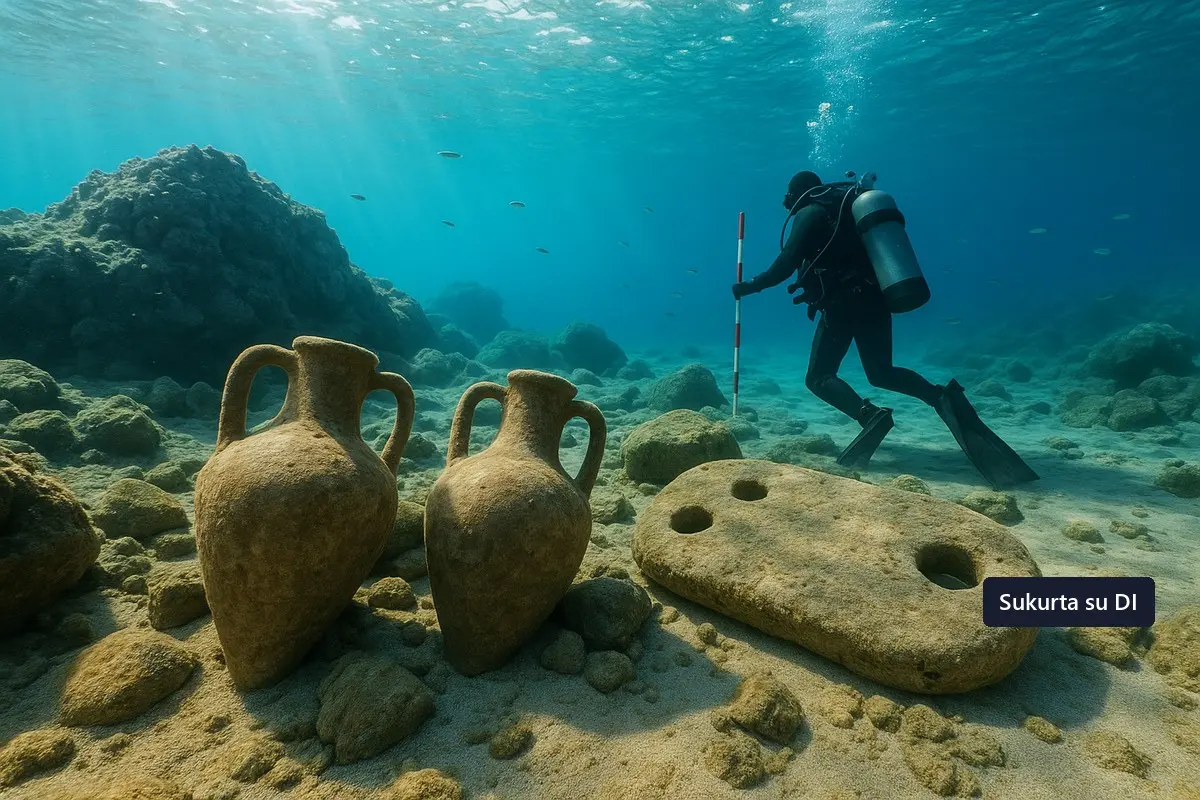
- The oldest shipwreck found at Kekova dates back 4,400 to 4,700 years
- Dokos shipwreck age of 4,200 years previously made it the oldest
- Amphorae may have been produced in Jordan Valley workshops
- An amphora with nine marks may have been used for making butter or cheese
- Underwater archaeology at Kekova began in 2026
- The findings will be exhibited in a new underwater archaeology museum in Antalya
Off the coast of Kekova Island in the Antalya province on Turkey's southern coast, an underwater archaeology expedition has recovered amphorae from a shipwreck estimated to be 4,400 to 4,700 years old. This dates back to the Early Bronze Age, roughly the same time the Great Pyramid of Giza was built in Egypt. Turkey's Minister of Culture and Tourism called the discovery traces of the world's oldest shipwreck, and the BBC reports that the Kekova vessel now tops the list of the oldest known sunken ships.
The oldest shipwreck found at Kekova dates back 4,400 to 4,700 years
According to the BBC, the roughly 33-foot (10 m) merchant ship was carrying cargo across the Mediterranean Sea when it sank just off the coast of Kekova Island. Its remains are scattered across an underwater slope at a depth of just 98 feet (30 m). Divers found three large stone anchors and more than 30 ceramic storage vessels known as amphorae.
Because the ship's wooden structure did not survive, its age could not be determined using radiocarbon dating, which measures carbon isotopes in organic materials. Instead, archaeologists relied on the shape of the amphorae. The Kekova vessels feature two handles, a central ridge, and a flat bottom. Professor Hakan Öniz, head of the Mediterranean Underwater Cultural Heritage Department at Akdeniz University and leader of the expedition, told the BBC that this design matches amphorae found in Egypt and the Middle East dating back 4,400 to 4,700 years.
"The shipwreck is a time capsule on the seabed," Öniz said. He noted that the expedition members are the first people to touch these objects in roughly 5,000 years.
Dokos shipwreck age of 4,200 years previously made it the oldest
The BBC notes that until this discovery, the record holder was the shipwreck off Dokos Island in southern Greece, dating back about 4,200 years. Meanwhile, the oldest known intact ship with surviving wood is the oldest shipwreck Black Sea researchers have discovered, found off the coast of Bulgaria and dating back about 2,400 years.
| Shipwreck | Location | Approximate age |
|---|---|---|
| Kekova ship | Kekova Island, Antalya, Turkey | 4,400–4,700 years |
| Dokos ship | Dokos Island, southern Greece | About 4,200 years |
| Oldest surviving wooden ship | Black Sea, off Bulgaria | About 2,400 years |
Amphorae may have been produced in Jordan Valley workshops
According to Euronews, the amphorae likely carried olive oil or wine. Clay analysis indicates that the vessels were probably made in Jordan Valley workshops. Similar amphorae have been found in Egypt near the pyramids of Giza, Saqqara, and Abusir, as well as in Troy and Crete. This suggests that the ship's cargo may have been part of an extensive trade network.
Researchers believe the ship sailed from a port on the Levantine coast and was heading either to Troy in present-day northwestern Turkey or to the Minoan civilization in Crete.
Dr. Karin Sowada, an archaeologist at Macquarie University in Australia, examined the recovered amphorae and told the BBC she was surprised that a viscous, shiny residue had survived inside some of the intact vessels. "This could be olive oil, wine, or tree resin," she said. "I looked inside and almost fainted. I couldn't believe how much [residue] was visible," she told the BBC. According to the archaeologist, the residue could also indicate that the vessels were reused, as such large amphorae were often utilized for many years.
"Clay analyses show that the amphorae were likely made in Jordan Valley workshops. Finding similar examples in Egypt, Troy, and Crete is very important for understanding the trade networks that connected different regions by sea," Minister Mehmet Nuri Ersoy said. This indicates that nearly five millennia ago, the eastern Mediterranean was already connected by maritime trade routes carrying oil, wine, and other goods.
The initial excavation results have already been detailed in the scientific journal Journal of Maritime Archaeology, where Öniz and Ceyda Öztosun published a preliminary report on the Early Bronze Age shipwreck in the Kekova region.
An amphora with nine marks may have been used for making butter or cheese
One of the recovered amphorae stands out: its body features two holes and nine distinct marks. Initial studies suggest it could have been a churning amphora used to make cheese or butter. If this assumption is confirmed, it would mean that sailors of the era could have taken goats on long voyages, milked them on the ship, and produced their own dairy products at sea.
Therefore, the findings are significant not only for the history of trade. They also provide valuable insight into the daily lives of sailors, their diets, and the conditions of sea travel during the Early Bronze Age.
Underwater archaeology at Kekova began in 2026
The remains of the ship were discovered in previous years during underwater surveys conducted by Akdeniz University researchers. Samples taken from the amphorae indicated that the vessel could date back to the Early Bronze Age. After obtaining permits from the Turkish Ministry of Culture and Tourism, excavations began in 2026 under the direction of the Antalya Museum Directorate.
The BBC reports that due to the depth, divers could only spend 30 minutes at a time at the wreck site. Sailing around Kekova Island has historically been dangerous due to strong currents and winds, which is why there are hundreds of sunken ships in the area. These wrecks are also being investigated by the Mediterranean Archaeological Association, whose expedition was led by Öniz.
Minister Ersoy wrote on social media that the research will continue to reveal Anatolia's maritime history, ensuring that its underwater cultural heritage is preserved for future generations. "In our 'Blue Homeland,' we are uncovering traces of the world's oldest shipwrecks," he stated.
The findings will be exhibited in a new underwater archaeology museum in Antalya
The wreckage belongs to the Turkish Ministry of Culture and Tourism. According to the BBC, the minister assured the public that the recovered artifacts will be exhibited in the new Mediterranean Underwater Archaeology Museum in Antalya when it opens. Meanwhile, scientists are continuing to investigate exactly what was carried in the amphorae. Laboratory tests of the residue should determine whether it was oil, wine, or tree resin, and help clarify the exact origins of the ship's cargo.
Öniz says that when diving at the wreck, he often thinks about the people connected to the ship: the sailors, the amphora makers, and those who waited on the shores for loved ones who never returned.
Frequently asked questions
Where was the oldest shipwreck found?
It was discovered off the coast of Kekova Island in the Antalya province on Turkey's southern coast, at a depth of roughly 98 feet (30 m).
How old is the Kekova shipwreck?
Archaeologists date the vessel back 4,400 to 4,700 years, placing it in the Early Bronze Age.
How was the age of the ship determined?
Because the wood did not survive, the age was determined by the shape of the amphorae. They feature two handles, a central ridge, and a flat bottom, matching 4,400- to 4,700-year-old vessels from Egypt and the Middle East.
What was carried in the amphorae?
The vessels likely carried olive oil, wine, or possibly tree resin. Some intact amphorae still contain visible residue, which is currently being analyzed.
Which shipwreck was previously considered the oldest?
According to the BBC, the shipwreck off Dokos Island in southern Greece, dating back approximately 4,200 years, previously held the record.
Sources
- Euronews: World's oldest shipwreck off Turkey: 4,700-year-old amphorae discovered
- BBC: World's oldest shipwreck found off coast of Turkey
- ABC News: Shipwreck believed to be the world's oldest discovered off the coast of Turkey
- Türkiye Today: World's oldest shipwreck uncovered off Türkiye's Mediterranean coast
Log in to comment
No comments yet. Be the first.