Y Chromosome Disappearing: Will Men Go Extinct?
- Japanese researchers discovered that the Amami spiny rat lacks a Y chromosome and the SRY gene.
- Geneticists are debating whether the human Y chromosome is disappearing and if it could eventually lead to male extinction.
- The loss of the Y chromosome with age in human males is linked to a higher risk of heart disease and a shorter lifespan.
- While the Y chromosome contains relatively few genes, it plays a crucial role in male sex determination and development.
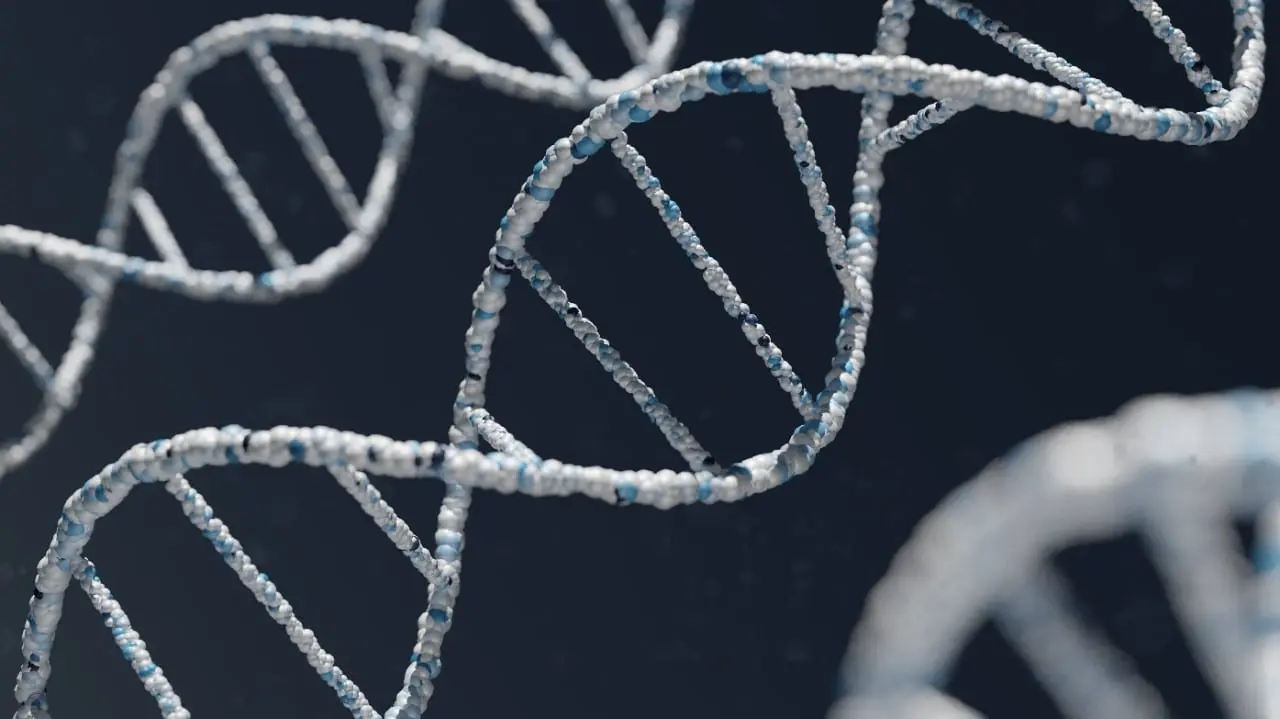
Unexpected Discovery by Japanese Scientists Sends Warning Signs to Men
A team of researchers at Hokkaido University in Japan has discovered that the Amami spiny rat lacks a Y chromosome and the SRY gene, which determines sex and triggers testicular development [1].
Geneticists are now curious to find out whether this rat phenomenon could be replicated in human development, potentially leading to the ultimate extinction of the male sex.
While more research is currently underway on this mechanism, some scientists doubt such a theory, emphasizing that human reproductive and developmental processes are too complex and robust to allow such a drastic impact on natural population growth.
On the other hand, broader studies show that the Y chromosome is responsible for crucial human health factors, such as heart function, making it essential to track chromosomal evolution.
Is the Y Chromosome Disappearing?
Researchers from Japan's prestigious Hokkaido University published a paper stating that the sex Y chromosome, typically found only in male cells designated as XY, has completely vanished from one species of rat [2].
This discovery has led the scientific community to speculate whether a similar future awaits humans. However, some experts urge caution with these predictions, advising against labeling men an endangered species just yet.
Humans have 23 pairs of chromosomes, one of which is the sex chromosomes. Meanwhile, mammalian development begins with a blank XX or XY genetic code. During the first six weeks of pregnancy, only the X gene is expressed. When the male Y gene begins to express itself, it releases androgens, such as testosterone, suppresses the expression of certain X genes, and expresses specific Y genes.
"The mammalian Y chromosome is a weird, small chromosome with hardly any genes and a lot of junk DNA. But one of these genes is SRY, the male-determining gene. The Y chromosome makes no sense, but it is easy to understand from an evolutionary perspective. Once upon a time, X and Y were just an ordinary pair of chromosomes. Then one partner acquired a variant of the SRY gene that determines maleness," says Jenny Graves, a sex chromosome geneticist at La Trobe University in Melbourne [3].
The geneticist notes that in humans, the SRY gene, which provides instructions for producing a protein, operates differently anyway. According to Graves, if humans run out of the Y chromosome, they could either go extinct or evolve a new sex gene that defines new sex chromosomes.
Root Gorelick, a researcher of sexual evolution at Carleton University in Canada, echoes this sentiment. He states that despite the Japanese research team's findings regarding rats, the human genetic code is not expected to dissipate anytime soon.
"Females—and here I mean organisms that produce large gametes called eggs—can self-fertilize in some species. The egg nucleus fuses with another egg nucleus, or the egg nucleus spontaneously doubles all of its chromosomes," the expert explains regarding various possible scenarios.
Loss of Y Chromosome with Age Affects Health
Previous studies have also revealed that as men age, they do not just go bald or lose muscle tone: they also begin to lose Y chromosomes in their cells. Scientists have linked this loss of the Y chromosome to a long list of diseases and a higher risk of death. Studies have revealed that when the Y chromosome was removed from male mice, the animals died earlier than their "relatives" who still carried the Y chromosome.
John Perry, a human geneticist at the University of Cambridge, says this is the best evidence to date that the loss of the Y chromosome harms health.
Blood sample analysis is the simplest way to detect the loss of the Y chromosome. Researchers found that the chromosome is missing in at least some white blood cells in approximately 40 percent of 70-year-olds and 57 percent of 93-year-olds studied [4].
Cells can live and multiply without the Y chromosome, but men missing this chromosome in some of their cells are more likely to suffer from heart disease, cancer, Alzheimer's disease, and other age-related ailments. Kenneth Walsh, a biology expert at the University of Virginia, suggests this condition may be a reason why men in the United States die on average about 5 years earlier than women.
To test whether the removal of the Y chromosome harms health, Walsh and his colleagues transplanted bone marrow into 38 mice. Using the CRISPR-Cas9 gene-editing tool, they removed the Y chromosome from the mice's bone marrow cells and placed the altered cells into young male mice whose bone marrow had been removed.
For nearly two years, researchers monitored both groups of animals. It turned out that the rodents that lost their Y chromosome died more frequently during this period: only about 40 percent of these mice survived 600 days post-transplant.
Something similar may be happening in humans. Walsh and his colleagues obtained DNA from more than 15,000 men. The team found that men who had lost the Y chromosome in at least 40 percent of their white blood cells were 31 percent more likely to die from circulatory system diseases than those with a higher presence of this chromosome.
Why Is the Y Chromosome So Important?
The Y chromosome is one of the two human sex chromosomes. Sex chromosomes make up one of the 23 pairs of human chromosomes in every cell. The Y chromosome contains over 59 million DNA building blocks and accounts for nearly 2 percent of the total DNA in cells [5].
Every person typically has one pair of sex chromosomes in each cell. The Y chromosome is present in males, who have one X and one Y chromosome, while females have two X chromosomes.
The Y chromosome likely contains between 70 and 200 genes that provide instructions for making proteins. Because only males have the Y chromosome, the genes on this chromosome are mostly involved in male sex determination and development.
Sex is determined by the SRY gene, which is responsible for the development of a fetus into a male. Other genes on the Y chromosome are important for enabling men to father children.
Many genes are unique to the Y chromosome, but genes located in areas called pseudoautosomal regions are present on both sex chromosomes. As a result, both men and women have two working copies of these genes.
Frequently asked questions
Does the absence of Y chromosome gender determination mean men will go extinct?
While the Amami spiny rat has lost its Y chromosome, experts believe the human Y chromosome is not expected to vanish anytime soon. Even if it does, humans might evolve a new sex-determining gene rather than facing extinction.
Is the Y chromosome a mutation?
From an evolutionary perspective, the X and Y chromosomes were once an ordinary pair. Over time, one chromosome acquired a variant or mutation of the SRY gene, which determines maleness, creating the specialized Y chromosome we know today.
How does the loss of Y chromosome with age affect men?
As men age, some of their white blood cells naturally lose the Y chromosome. Research links this loss to a higher risk of heart disease, cancer, Alzheimer's disease, and a generally shorter lifespan.
Sources
- Interesting Engineering: Scientists have solved the mystery of male rats without Y chromosomes
- Newsmax: Scientists: 'Y' Chromosome Could Disappear Among Human Males Someday
- Newsweek: The Y Chromosome Is Going To Disappear, Scientists Say
- Science: Men lose Y chromosomes as they age. It may be harming their hearts
- MedlinePlus: Y chromosome
Log in to comment
No comments yet. Be the first.