Jobs That Pay Well Without a Degree: 13 Careers, BLS Pay Data
- All pay figures are BLS May 2025 medians from the Occupational Outlook Handbook; the median for all U.S. occupations was $50,980.
- Top of the list: elevator and escalator installers ($109,910), power plant operators ($105,080) and electrical power-line installers ($95,320), all with a high school diploma as the typical entry requirement.
- Most of these jobs replace a degree with something else: an apprenticeship, a license, a certificate or years of on-the-job training.
- A median is the middle of the range. Pay varies widely by state, employer, union status and experience.
- Jobs that pay well without a degree: the list
- 6 figure jobs without a college degree
- Good-paying trades: apprenticeships
- Jobs that pay well without a degree or experience
- Low-stress jobs that pay well without a degree
- 9 to 5 jobs that pay well without a degree
- Unique jobs that pay well without a degree
- How to choose and get started
- What these salaries mean in take-home pay
- Bottom line
Plenty of jobs pay well without a four-year degree. The catch is that most of them replace the degree with something else: a paid apprenticeship, a state license, a certificate program or years of on-the-job training. The list below uses only official pay data from the Bureau of Labor Statistics (BLS) Occupational Outlook Handbook. Every figure is the May 2025 median annual wage. For comparison, the median for all U.S. occupations was $50,980.
Jobs that pay well without a degree: the list
| Occupation | Median pay (May 2025) | Typical entry-level education | How you get trained |
|---|---|---|---|
| Elevator and escalator installers and repairers | $109,910 | High school diploma | Apprenticeship |
| Power plant operators, distributors and dispatchers | $105,080 | High school diploma | Long-term on-the-job training |
| Electrical power-line installers and repairers | $95,320 | High school diploma | Long-term on-the-job training |
| Police and detectives | $77,310 | High school diploma to college degree, depending on agency | Training academy, then on the job |
| Boilermakers | $76,410 | High school diploma | Apprenticeship |
| Construction and building inspectors | $74,690 | High school diploma | 5 years or more of related work experience |
| Wind turbine technicians | $64,120 | Postsecondary nondegree award | Technical school plus on-the-job training |
| Plumbers, pipefitters and steamfitters | $63,800 | High school diploma | Apprenticeship; license in most states |
| Flight attendants | $63,580 | High school diploma | Moderate-term on-the-job training (airline program) |
| Electricians | $63,190 | High school diploma | 4- or 5-year apprenticeship; license in most states |
| Insurance sales agents | $62,280 | High school diploma | State license; no related experience required |
| HVAC and refrigeration mechanics and installers | $61,010 | Postsecondary nondegree award | Certificate program or apprenticeship |
| Heavy and tractor-trailer truck drivers | $58,640 | Postsecondary nondegree award | CDL training, then short-term on the job |
A "postsecondary nondegree award" means a certificate from a vocational school or community college program, usually months rather than years, and not an associate or bachelor's degree.
6 figure jobs without a college degree
Two occupations on the list have medians above $100,000, so more than half of workers in them earn six figures:
- Elevator and escalator installers and repairers: $109,910. They install, maintain and fix elevators, escalators and moving walkways. Entry is through an apprenticeship, usually after a high school diploma. BLS lists about 24,700 jobs in 2025 and projects 6% growth from 2025 to 2035, faster than average.
- Power plant operators, distributors and dispatchers: $105,080. They control the systems that generate and distribute electricity. Within this group, nuclear power reactor operators had a median of $122,890 and power distributors and dispatchers $106,730. Training is long, and nuclear operators need a license from the Nuclear Regulatory Commission.
In the other jobs, six figures usually comes with experience, overtime, supervision or a high-paying region. BLS reports, for example, that the top 10% of insurance sales agents earned more than $138,140 and the top 10% of flight attendants more than $136,430.
Good-paying trades: apprenticeships
For electricians, plumbers, boilermakers and elevator installers, the standard path is a registered apprenticeship. You work for pay under a licensed tradesperson and take classroom instruction at the same time. BLS says electrician apprenticeships typically last 4 or 5 years. Apprentices start at a fraction of the full wage and earn raises as they progress, so there is no student debt.
To find openings, search Apprenticeship.gov (run by the U.S. Department of Labor), local union halls and large contractors. Most programs want a high school diploma or equivalent, basic math and a driver's license.
Jobs that pay well without a degree or experience
Some occupations hire people with no related work history:
- Flight attendants ($63,580): airlines run their own training programs, then require FAA certification. Expect irregular schedules and starting pay well below the median.
- Insurance sales agents ($62,280): BLS lists no related experience required. You need a state license, and pay often depends on commission.
- Apprenticeships in the trades above, where you are hired to learn.
By contrast, construction and building inspectors usually need 5 years or more of related experience, typically in a trade, before they can start.
Low-stress jobs that pay well without a degree
BLS does not rank jobs by stress, and what feels stressful varies from person to person. A few practical questions help more than any list:
- Who do you deal with all day? Sales and police work involve constant contact with the public. Inspection and plant operations follow set procedures.
- What is the schedule? Power plants run 24 hours, so operators often rotate shifts. Line workers are called out after storms. Long-haul truck drivers spend nights away from home.
- How physical is it? Boilermakers, line workers and elevator installers work at heights and in confined spaces. That is a real safety consideration, not just a matter of fitness.
9 to 5 jobs that pay well without a degree
If a regular weekday schedule matters more to you than top pay, look closely at the work environment section of each BLS profile. Several jobs on this list rarely fit a 9-to-5 pattern: flight attendants, police officers, power plant operators and long-haul truck drivers all work nights, weekends or rotating shifts. Building inspectors, by contrast, usually work during business hours because they visit active construction sites, and many electricians, plumbers and HVAC technicians who work for contractors keep daytime schedules, with paid overtime or on-call rotations for emergencies. Insurance agents set much of their own schedule, though meetings with clients can fall in the evening.
Whatever the job, ask in the interview how overtime is assigned, whether there is an on-call rotation, and how shifts are scheduled for new hires. Newer workers often get the least popular hours.
Unique jobs that pay well without a degree
- Wind turbine technicians ($64,120): BLS projects employment to grow 30% from 2025 to 2035, one of the fastest rates of any occupation. The work involves climbing turbine towers.
- Nuclear power reactor operators ($122,890): a small occupation with demanding training and federal licensing.
- Elevator mechanics: few people think of this trade, which partly explains the pay.
How to choose and get started
- Read the BLS page for each job you are considering, especially "How to Become One" and "Work Environment". It lists training, licenses and physical demands.
- Check local pay. BLS publishes state and metro wage data. A median in your area can be much higher or lower than the national figure.
- Talk to people in the job, ideally through a union hall, a trade school open house or an employer's hiring event.
- Look at the cost of training. Apprenticeships pay you; certificate programs cost money but are often eligible for federal aid, including the new Workforce Pell for qualifying short programs.
- Plan for licenses. Electricians, plumbers, HVAC technicians (refrigerant handling certification), truck drivers (CDL) and insurance agents all need credentials.
What these salaries mean in take-home pay
A median salary is before tax. Federal income tax, Social Security, Medicare and any state tax come out of every paycheck. Our article on the 2027 tax brackets shows how much of each dollar is taxed, and the 401(k) limit article covers how much you can shelter if your new employer offers a plan. Entry-level apprentices sometimes start close to the local minimum wage, so check your state's rate for the first year's budget.
Bottom line
The best-paid jobs without a degree, according to BLS May 2025 data, are elevator installers ($109,910), power plant operators ($105,080) and power-line workers ($95,320). Most good-paying options are skilled trades learned through paid apprenticeships or short certificate programs. Look up the BLS profile, local wages and licensing rules before you choose, and treat the median as a guide to the middle of the range, not a starting salary.
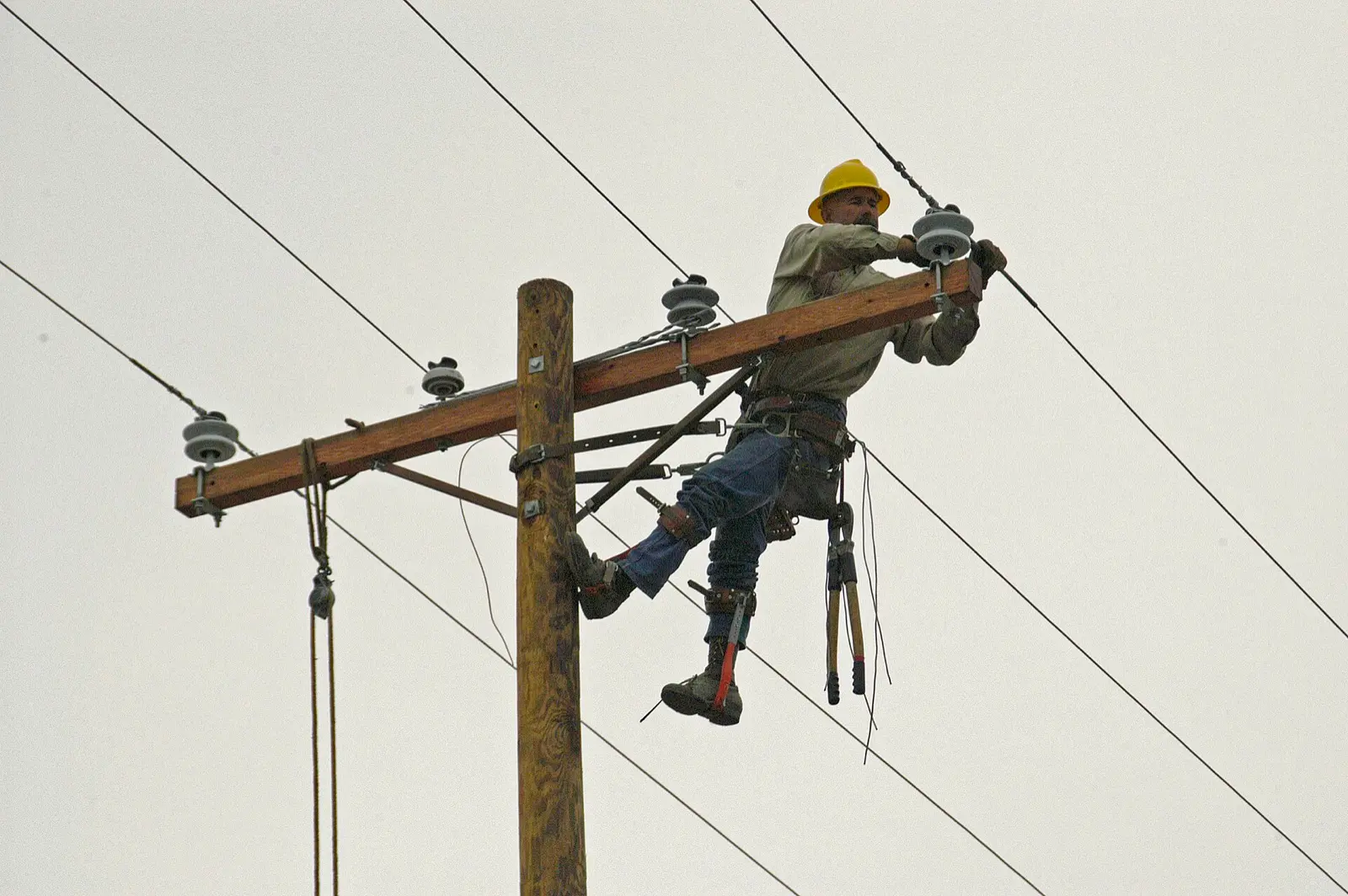
Cover photo: a lineworker restores power in Louisiana, November 2005. FEMA photo by Marvin Nauman, public domain, via Wikimedia Commons.
Frequently asked questions
What job pays the most without a degree?
Among the occupations BLS lists with a high school diploma as the typical entry-level education, elevator and escalator installers and repairers had one of the highest medians: $109,910 in May 2025. Within power plant operators, nuclear power reactor operators had a median of $122,890.
Can you make six figures without a college degree?
Yes, in some occupations. Elevator installers and power plant operators have medians above $100,000, which means about half of workers earn more. In most other jobs on this list, six figures is possible with experience, overtime or supervisory roles, but it is not typical.
What are good-paying jobs without a degree or experience?
Apprenticeships are the main route, because you are paid while you learn. Electricians, plumbers, boilermakers, elevator installers and power-line workers usually start as apprentices. Flight attendants and insurance sales agents need no related work experience to start, according to BLS.
What are low-stress jobs that pay well without a degree?
Stress depends on the person and the employer, and BLS does not rank jobs by stress. Roles with set procedures and less direct customer conflict, such as inspection or plant operations, suit some people better than sales or emergency work. Ask current workers about schedules, overtime and on-call duties before you commit.
How long does an apprenticeship take?
It varies by trade. BLS says electrician apprenticeships typically last 4 or 5 years. Apprentices are paid from the start, usually a percentage of the full rate that rises as they progress.
Do these jobs need a license?
Many do. Most states require electricians and plumbers to be licensed, truck drivers need a commercial driver's license, and insurance agents need a state license. Check your state's licensing board.
Where does this pay data come from?
From the Bureau of Labor Statistics Occupational Outlook Handbook, which uses Occupational Employment and Wage Statistics (OEWS) survey data for May 2025. The median is the wage at which half the workers earned more and half less.
Sources
- BLS OOH: Elevator and escalator installers and repairers
- BLS OOH: Power plant operators, distributors and dispatchers
- BLS OOH: Electrical power-line installers and repairers
- BLS OOH: Police and detectives
- BLS OOH: Boilermakers
- BLS OOH: Construction and building inspectors
- BLS OOH: Wind turbine technicians
- BLS OOH: Plumbers, pipefitters and steamfitters
- BLS OOH: Flight attendants
- BLS OOH: Electricians
- BLS OOH: Insurance sales agents
- BLS OOH: Heating, air conditioning and refrigeration mechanics and installers
- BLS OOH: Heavy and tractor-trailer truck drivers
- BLS: Occupational Employment and Wages, May 2025 (news release)
- U.S. Department of Labor: Apprenticeship.gov
- Wikimedia Commons: Lineworker restoring power in Louisiana, FEMA photo by Marvin Nauman (public domain)
Log in to comment
No comments yet. Be the first.