Pell Grant Eligibility 2026-27: Income Limits, SAI and Max Award
- Official for the 2026-27 award year (July 1, 2026, to June 30, 2027): maximum Pell Grant $7,395, minimum $740 (Federal Student Aid, GEN-26-01).
- Pell is for undergraduates without a bachelor's degree who show financial need on the FAFSA. Your award is roughly $7,395 minus your Student Aid Index (SAI), adjusted for enrollment.
- New from 2026-27: an SAI of $14,790 or more (twice the maximum award) makes you ineligible, under the 2025 budget law.
- Families with adjusted gross income at or below 175% of the poverty guideline (225% for single parents) qualify for the maximum award automatically. For a family of four that is $54,600 (or $70,200).
- Pell Grant amounts for 2026-27
- Basic Pell Grant eligibility requirements
- Pell Grant eligibility income limit: the poverty guideline rules
- Pell Grant eligibility SAI: how your award is calculated
- Pell Grant eligibility changes in 2026
- Pell Grant application: FAFSA step by step
- Pell Grant eligibility calculator: estimate before you file
- Keeping your Pell Grant
- Bottom line
Pell Grant eligibility in short: you need to be an undergraduate without a bachelor's degree, file the FAFSA, and show financial need through your Student Aid Index (SAI). For the 2026-27 award year (July 1, 2026, to June 30, 2027), the official maximum award is $7,395 and the minimum is $740. Unlike a loan, a Pell Grant usually does not have to be repaid.
This article explains who qualifies, the income levels that guarantee an award, the new SAI cutoff that started this year, and how to apply. All amounts come from Federal Student Aid (FSA), the Education Department office that runs the program.
Pell Grant amounts for 2026-27
| Item | 2026-27 | Status |
|---|---|---|
| Maximum Pell Grant | $7,395 | Official (GEN-26-01, confirmed under the Consolidated Appropriations Act, 2026) |
| Minimum Pell Grant | $740 | Official |
| SAI at which you become ineligible | $14,790 or more | Official (twice the maximum, under the 2025 budget law) |
| Year-round Pell | Up to 150% of your scheduled award in one award year | Official |
| Lifetime limit | 12 full-time semesters (600%) | Official |
| Maximum Pell Grant for 2027-28 | Pending | Depends on Congress's appropriations |
The maximum stayed at $7,395, the same as in 2025-26. FSA noted that if Congress changes the amount, it will publish revised figures.
Basic Pell Grant eligibility requirements
To receive any federal student aid, including Pell, you generally must:
- be a U.S. citizen or eligible noncitizen with a valid Social Security number;
- have a high school diploma, a recognized equivalent such as a GED, or have completed homeschooling at the secondary level;
- be enrolled or accepted in an eligible degree or certificate program at a participating school;
- maintain satisfactory academic progress at your school;
- not be in default on a federal student loan or owe a grant overpayment.
Pell adds two more conditions. You must be an undergraduate who has not earned a bachelor's, graduate or professional degree (with a narrow exception for some post-baccalaureate teacher certification programs). And you must have financial need as measured by the FAFSA.
Pell Grant eligibility income limit: the poverty guideline rules
There is no single income cap. Instead, the FAFSA compares your family's adjusted gross income (AGI) with the federal poverty guideline for your family size and state. For 2026-27, FSA uses the 2024 guidelines. Dependent students are measured by their parents' income; independent students by their own (and their spouse's).
- Automatic maximum Pell: AGI at or below 175% of the poverty guideline, or 225% if the parent (or independent student) is a single parent. Families not required to file a federal tax return also qualify for the maximum.
- Guaranteed minimum Pell for dependent students: parents' AGI at or below 275% of the guideline, or 325% for a single parent.
- Guaranteed minimum Pell for independent students: AGI at or below 400% for a single parent, 350% for a parent who is not single, and 275% for a student without dependents.
Approximate thresholds for 2026-27 in the 48 contiguous states and D.C., based on the 2024 HHS poverty guidelines (family size includes the student):
| Family size | Max Pell, two parents (175%) | Max Pell, single parent (225%) | Min Pell, dependent, two parents (275%) | Min Pell, dependent, single parent (325%) |
|---|---|---|---|---|
| 2 | $35,770 | $45,990 | $56,210 | $66,430 |
| 3 | $45,185 | $58,095 | $71,005 | $83,915 |
| 4 | $54,600 | $70,200 | $85,800 | $101,400 |
| 5 | $64,015 | $82,305 | $100,595 | $118,885 |
Alaska and Hawaii have higher poverty guidelines, so their thresholds are higher. Families above these levels can still get a Pell Grant. It then depends on the full SAI calculation, which also looks at assets for many families.
Pell Grant eligibility SAI: how your award is calculated
The FAFSA produces a Student Aid Index, which can range from -1,500 upward. For most students the Pell award is:
$7,395 minus your SAI, rounded to the nearest $5, then adjusted for your cost of attendance and enrollment (full time, three-quarter time, half time or less than half time).
- SAI of 0 or below: maximum award of $7,395 (full time).
- SAI of 3,000: about $4,395 full time.
- SAI of 6,700: about $695, which is below the $740 minimum. You do not get an SAI-based award, though you may still get the minimum if you meet the poverty guideline rules above.
- SAI of $14,790 or more: ineligible from 2026-27, even if the poverty guideline rules would otherwise apply.
A part-time student receives a smaller share. A student who enrolls in summer after using a full year's award can receive up to 150% of the scheduled award in one award year.
Pell Grant eligibility changes in 2026
The One Big Beautiful Bill Act (Public Law 119-21), signed in July 2025, changed Pell starting with the 2026-27 award year:
- SAI ceiling. Applicants whose SAI is at least twice the maximum award are ineligible, even if their income falls under the poverty guideline thresholds. For 2026-27 that is an SAI of $14,790.
- Foreign earned income counts. The foreign earned income exclusion is added back to AGI before the poverty guideline comparison.
- Workforce Pell. The law also created Pell Grants for short, job-focused training programs that meet federal quality standards. Ask the school whether its program has been approved.
Pell Grant application: FAFSA step by step
- Create StudentAid.gov accounts for the student and for each parent or spouse who must contribute information.
- Fill in the FAFSA for the right year. The 2026-27 form covers classes from July 1, 2026, to June 30, 2027. The 2027-28 form, for classes starting July 1, 2027, is already open; the department launched it earlier than ever this year.
- Give consent for the IRS to transfer tax data directly. Without it, you cannot get a Pell Grant.
- List your schools. Each school receives your FAFSA results and builds your aid offer.
- Watch the deadlines. The federal deadline is June 30 at the end of each award year, but states and colleges often set much earlier dates for their own grants.
- Check your FAFSA Submission Summary for your SAI and an estimate of Pell eligibility, then compare aid offers.
Pell Grant eligibility calculator: estimate before you file
StudentAid.gov has an official Federal Student Aid Estimator. It asks for family size, income, assets and state and returns an estimated SAI and Pell amount. The estimate uses the same formula as the FAFSA but is not binding. Your actual award comes from the school after the FAFSA is processed.
Keeping your Pell Grant
- Maintain satisfactory academic progress: grades and completion rates set by your school.
- Refile the FAFSA every year. Eligibility is recalculated annually.
- Watch your lifetime limit. Once you use 12 full-time semesters' worth, Pell stops, even if you have not graduated.
- If you withdraw before completing more than 60% of a term, part of the grant may have to be returned.
Bottom line
For 2026-27 the maximum Pell Grant is $7,395 and the minimum is $740. If your family's AGI is at or below 175% of the 2024 poverty guideline (225% for single parents), you qualify for the maximum automatically, as long as your SAI is under $14,790. Everyone else should still file the FAFSA: the only way to know your Pell eligibility is to apply, and the same form opens the door to state and college grants.
Students on tight budgets may also qualify for food assistance; see our article on SNAP eligibility for the student exemptions, and the SNAP payment schedule for deposit days.
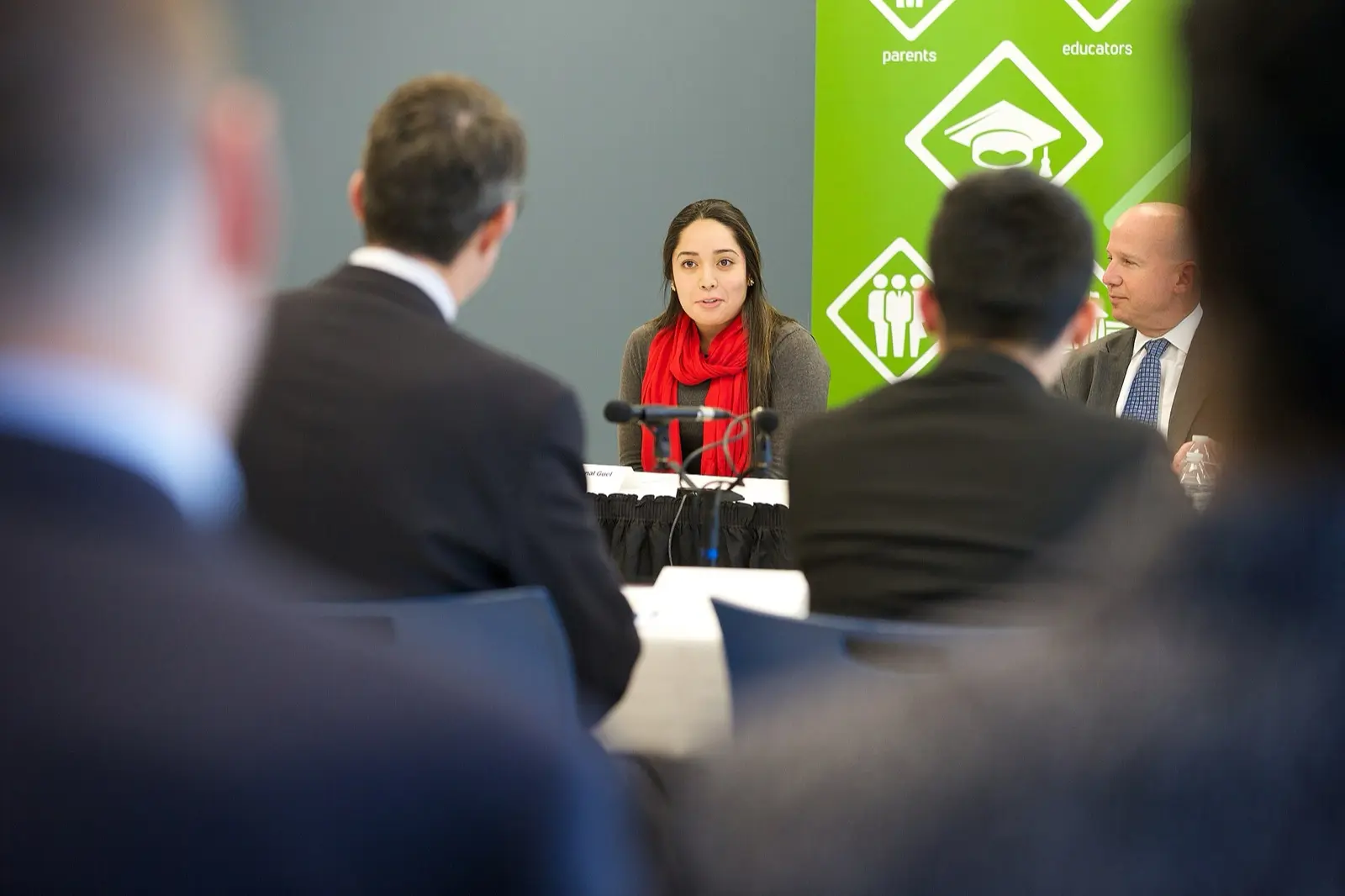
Cover photo: student panel at Delaware Technical Community College, February 2015. U.S. Department of Education, CC BY 2.0, via Wikimedia Commons.
Frequently asked questions
What is the maximum Pell Grant for 2026-27?
$7,395 for a full-time student for the full award year, the same as in 2025-26. The minimum award is $740. Federal Student Aid confirmed the amounts under the Consolidated Appropriations Act, 2026.
What is the income limit for a Pell Grant?
There is no single income cutoff. Eligibility is based on your Student Aid Index (SAI). However, families with AGI at or below 175% of the federal poverty guideline (225% for single parents) automatically get the maximum award, and dependent students whose parents' AGI is at or below 275% (325% for single parents) are guaranteed at least the minimum. For 2026-27 the 2024 poverty guidelines are used.
What SAI qualifies for a Pell Grant?
In general, an SAI below the maximum award produces a Pell Grant, because the award is the maximum minus the SAI, rounded to the nearest $5, as long as the result is at least $740. Starting in 2026-27, an SAI of $14,790 or more makes you ineligible, except for students covered by the special rule for children of servicemembers or public safety officers who died in the line of duty.
How do I apply for a Pell Grant?
Complete the FAFSA at StudentAid.gov. There is no separate Pell application. Your school's financial aid office uses the FAFSA results to determine your award and includes it in your aid offer.
Can graduate students get a Pell Grant?
Generally no. Pell is for undergraduates who have not earned a bachelor's or professional degree. A limited exception exists for some students in post-baccalaureate teacher certification programs.
How long can I receive a Pell Grant?
Up to the equivalent of 12 full-time semesters (600% of a scheduled award) over your lifetime. You can track your used eligibility in your StudentAid.gov account.
Do I have to pay a Pell Grant back?
Usually not. Pell is a grant, not a loan. You may have to repay part of it if you withdraw early in a term or if your enrollment status changes after the money is paid.
Is the 2027-28 FAFSA open?
Yes. The Education Department opened the 2027-28 FAFSA early, before the October 1 deadline set by law. It covers classes starting on or after July 1, 2027, and uses 2025 tax information.
Sources
- Federal Student Aid: GEN-26-01, 2026-27 Federal Pell Grant maximum and minimum award amounts
- Federal Student Aid Handbook 2026-27, Volume 7, Chapter 2: Calculating Pell Grants
- Federal Student Aid: 2026-27 Student Aid Index (SAI) and Pell Grant Eligibility Guide
- Federal Student Aid: 2027-28 Student Aid Index (SAI) and Pell Grant Eligibility Guide
- StudentAid.gov: Federal Pell Grants
- StudentAid.gov: Basic eligibility criteria
- Federal Register: Annual update of the HHS poverty guidelines (Jan. 17, 2024)
- ABC News 4 (Sinclair): Education Department opens 2027-28 FAFSA early
- Wikimedia Commons: Delaware Technical Community College, U.S. Department of Education (CC BY 2.0)
Log in to comment
No comments yet. Be the first.