Saturn Return: Ages, Meaning and How to Find Yours
- NASA puts Saturn's orbit at about 29.4 Earth years (10,756 days), which sets the timing of each return.
- Saturn is in Aries from Feb. 13, 2026, to April 12, 2028, so people born April 1996 to early 1999 are in their first return.
- Research does not support astrology, but psychologists study the late-20s quarter-life crisis as a real transition.
- What is a Saturn return?
- When is my Saturn return? Find it by birth date
- How long does a Saturn return last?
- Saturn return meaning by sign, according to astrologers
- What psychology says about the late 20s
- How people use the Saturn return in practice
- Saturn return vs. other astrology cycles
- About "Return of Saturn" and other things with the same name
- How the dates in this guide were calculated
A Saturn return is the astrological name for the moment Saturn comes back to the exact spot in the zodiac it occupied when you were born. Because Saturn takes about 29.4 years to orbit the sun, according to NASA, the first return arrives around age 29, with its broader influence usually described as running from about 27 to 30. The second comes around 58 to 59 (described as roughly 56 to 60), and a third, for those who live long enough, around 88 (roughly 84 to 89). Astrologers associate the return with a reckoning about adult life: career, relationships, responsibility and what you are building. Psychology does not support any planetary cause, but it does recognize the late 20s as a common period of transition, sometimes called the quarter-life crisis.
This guide explains the astronomy behind the cycle, gives you a birth-date table to find your own Saturn return without a calculator, and lays out what astrologers say about each Saturn sign alongside what research says about the same years of life.
What is a Saturn return?
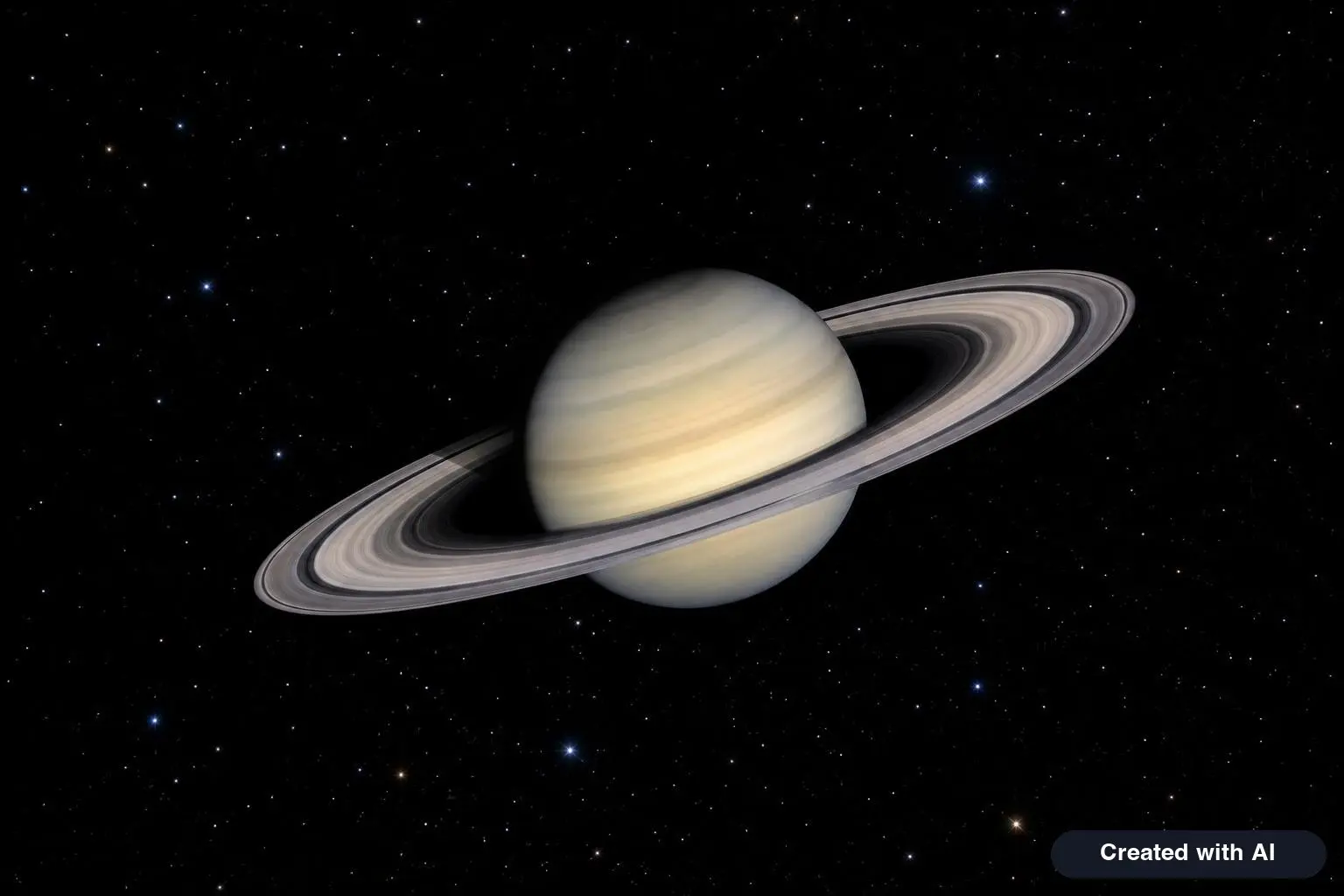
Every planet in a birth chart sits in one of the 12 zodiac signs at a particular degree. Saturn, the slowest of the planets visible to the naked eye, spends about two and a half years in each sign and needs roughly 29.4 years to travel the whole zodiac. When it gets back to your natal degree, astrologers say you are "having your Saturn return."
In astrological tradition, Saturn is the planet of limits, time, structure, discipline, duty and consequences. Ancient and medieval astrologers called it the "greater malefic," the planet of hardship. Modern astrologers tend to describe it as a strict but fair teacher: it tests whatever you have built and rewards what is solid. That is why the Saturn return is popularly framed as a coming-of-age moment, the point when astrologers say you stop rehearsing adulthood and start living it on your own terms.
The astronomy behind the cycle
NASA's Saturn fact sheet gives the planet's orbital period as about 29.4 Earth years, or 10,756 Earth days, at an average distance of 886 million miles from the sun. Seen from Earth, Saturn also appears to go retrograde for about four and a half months every year, because Earth overtakes it on the inside track. That annual back-and-forth is why many people have not one but three exact Saturn returns spread across a year: Saturn crosses the natal degree going forward, backs over it while retrograde, then crosses it a final time. The same apparent motion is behind Mercury retrograde, on a much faster schedule.
| Saturn return | Exact return usually falls at | Window astrologers usually describe | Life stage often associated |
|---|---|---|---|
| First | About 29 to 30 | About 27 to 30 | Leaving early adulthood: career direction, long-term relationships, independence |
| Second | About 58 to 59 | About 56 to 60 | Midlife review: legacy, health, the shape of the next decades, retirement planning |
| Third | About 87 to 88 | About 84 to 89 | Late life: reflection, letting go, what you pass on |
Exact return ages vary slightly because Saturn's speed changes along its orbit and because of the retrograde loops. In our ephemeris checks for sample birth dates between 1968 and 2002, first returns fell between ages 29.1 and 29.8, second returns between 58.5 and 59.6, and third returns between 87.6 and 88.8.
When is my Saturn return? Find it by birth date
Search interest in "Saturn return calculator" is high, but for most people a table does the job. Find the row that contains your birthday. The second column shows the sign Saturn was in when you were born; the next two columns show when Saturn travels through that sign again. Your exact return happens somewhere inside that window, on the date Saturn reaches your natal degree.
Dates are Eastern Time calendar dates, computed with the Swiss Ephemeris. Short rows reflect Saturn dipping back into the previous sign during a retrograde. If you were born on or within a day of a boundary date, check a full birth chart.
| If you were born | Natal Saturn sign | First Saturn return window | Second Saturn return window |
|---|---|---|---|
| Jan 3, 1962 to Mar 22, 1964 | Aquarius | Feb 6, 1991 to Jan 27, 1994 | Mar 21, 2020 to Mar 6, 2023 |
| Mar 23, 1964 to Sep 15, 1964 | Pisces | May 21, 1993 to Apr 6, 1996 | Mar 7, 2023 to Feb 12, 2026 |
| Sep 16, 1964 to Dec 15, 1964 | Aquarius | Feb 6, 1991 to Jan 27, 1994 | Mar 21, 2020 to Mar 6, 2023 |
| Dec 16, 1964 to Mar 2, 1967 | Pisces | May 21, 1993 to Apr 6, 1996 | Mar 7, 2023 to Feb 12, 2026 |
| Mar 3, 1967 to Apr 28, 1969 | Aries | Apr 7, 1996 to Feb 27, 1999 | May 24, 2025 to Apr 11, 2028 |
| Apr 29, 1969 to Jun 17, 1971 | Taurus | Jun 9, 1998 to Apr 19, 2001 | Apr 12, 2028 to May 30, 2030 |
| Jun 18, 1971 to Jan 8, 1972 | Gemini | Aug 9, 2000 to Jun 2, 2003 | May 31, 2030 to Jul 12, 2032 |
| Jan 9, 1972 to Feb 20, 1972 | Taurus | Jun 9, 1998 to Apr 19, 2001 | Apr 12, 2028 to May 30, 2030 |
| Feb 21, 1972 to Jul 31, 1973 | Gemini | Aug 9, 2000 to Jun 2, 2003 | May 31, 2030 to Jul 12, 2032 |
| Aug 1, 1973 to Jan 6, 1974 | Cancer | Jun 3, 2003 to Jul 15, 2005 | Jul 13, 2032 to May 10, 2035 |
| Jan 7, 1974 to Apr 17, 1974 | Gemini | Aug 9, 2000 to Jun 2, 2003 | May 31, 2030 to Jul 12, 2032 |
| Apr 18, 1974 to Sep 16, 1975 | Cancer | Jun 3, 2003 to Jul 15, 2005 | Jul 13, 2032 to May 10, 2035 |
| Sep 17, 1975 to Jan 13, 1976 | Leo | Jul 16, 2005 to Sep 1, 2007 | Aug 26, 2034 to Jul 5, 2037 |
| Jan 14, 1976 to Jun 4, 1976 | Cancer | Jun 3, 2003 to Jul 15, 2005 | Jul 13, 2032 to May 10, 2035 |
| Jun 5, 1976 to Nov 15, 1977 | Leo | Jul 16, 2005 to Sep 1, 2007 | Aug 26, 2034 to Jul 5, 2037 |
| Nov 16, 1977 to Jan 3, 1978 | Virgo | Sep 2, 2007 to Jul 20, 2010 | Oct 16, 2036 to Sep 4, 2039 |
| Jan 4, 1978 to Jul 25, 1978 | Leo | Jul 16, 2005 to Sep 1, 2007 | Aug 26, 2034 to Jul 5, 2037 |
| Jul 26, 1978 to Sep 20, 1980 | Virgo | Sep 2, 2007 to Jul 20, 2010 | Oct 16, 2036 to Sep 4, 2039 |
| Sep 21, 1980 to Nov 28, 1982 | Libra | Oct 29, 2009 to Oct 4, 2012 | Sep 5, 2039 to Jul 13, 2042 |
| Nov 29, 1982 to May 5, 1983 | Scorpio | Oct 5, 2012 to Sep 16, 2015 | Nov 11, 2041 to Oct 30, 2044 |
| May 6, 1983 to Aug 23, 1983 | Libra | Oct 29, 2009 to Oct 4, 2012 | Sep 5, 2039 to Jul 13, 2042 |
| Aug 24, 1983 to Nov 15, 1985 | Scorpio | Oct 5, 2012 to Sep 16, 2015 | Nov 11, 2041 to Oct 30, 2044 |
| Nov 16, 1985 to Feb 12, 1988 | Sagittarius | Dec 23, 2014 to Dec 18, 2017 | Feb 21, 2044 to Jan 23, 2047 |
| Feb 13, 1988 to Jun 9, 1988 | Capricorn | Dec 19, 2017 to Dec 16, 2020 | Jan 24, 2047 to Jan 20, 2050 |
| Jun 10, 1988 to Nov 11, 1988 | Sagittarius | Dec 23, 2014 to Dec 18, 2017 | Feb 21, 2044 to Jan 23, 2047 |
| Nov 12, 1988 to Feb 5, 1991 | Capricorn | Dec 19, 2017 to Dec 16, 2020 | Jan 24, 2047 to Jan 20, 2050 |
| Feb 6, 1991 to May 20, 1993 | Aquarius | Mar 21, 2020 to Mar 6, 2023 | Jan 21, 2050 to Jan 9, 2053 |
| May 21, 1993 to Jun 29, 1993 | Pisces | Mar 7, 2023 to Feb 12, 2026 | Apr 16, 2052 to Mar 21, 2055 |
| Jun 30, 1993 to Jan 27, 1994 | Aquarius | Mar 21, 2020 to Mar 6, 2023 | Jan 21, 2050 to Jan 9, 2053 |
| Jan 28, 1994 to Apr 6, 1996 | Pisces | Mar 7, 2023 to Feb 12, 2026 | Apr 16, 2052 to Mar 21, 2055 |
| Apr 7, 1996 to Jun 8, 1998 | Aries | May 24, 2025 to Apr 11, 2028 | Mar 22, 2055 to Jan 30, 2058 |
| Jun 9, 1998 to Oct 24, 1998 | Taurus | Apr 12, 2028 to May 30, 2030 | May 20, 2057 to Mar 30, 2060 |
| Oct 25, 1998 to Feb 27, 1999 | Aries | May 24, 2025 to Apr 11, 2028 | Mar 22, 2055 to Jan 30, 2058 |
| Feb 28, 1999 to Aug 8, 2000 | Taurus | Apr 12, 2028 to May 30, 2030 | May 20, 2057 to Mar 30, 2060 |
| Aug 9, 2000 to Oct 14, 2000 | Gemini | May 31, 2030 to Jul 12, 2032 | Jul 12, 2059 to May 15, 2062 |
| Oct 15, 2000 to Apr 19, 2001 | Taurus | Apr 12, 2028 to May 30, 2030 | May 20, 2057 to Mar 30, 2060 |
| Apr 20, 2001 to Jun 2, 2003 | Gemini | May 31, 2030 to Jul 12, 2032 | Jul 12, 2059 to May 15, 2062 |
| Jun 3, 2003 to Jul 15, 2005 | Cancer | Jul 13, 2032 to May 10, 2035 | Sep 1, 2061 to Jun 27, 2064 |
| Jul 16, 2005 to Sep 1, 2007 | Leo | Aug 26, 2034 to Jul 5, 2037 | Jun 28, 2064 to Aug 15, 2066 |
| Sep 2, 2007 to Oct 28, 2009 | Virgo | Oct 16, 2036 to Sep 4, 2039 | Aug 16, 2066 to Oct 9, 2068 |
| Oct 29, 2009 to Apr 6, 2010 | Libra | Sep 5, 2039 to Jul 13, 2042 | Oct 10, 2068 to Sep 17, 2071 |
| Apr 7, 2010 to Jul 20, 2010 | Virgo | Oct 16, 2036 to Sep 4, 2039 | Aug 16, 2066 to Oct 9, 2068 |
| Jul 21, 2010 to Oct 4, 2012 | Libra | Sep 5, 2039 to Jul 13, 2042 | Oct 10, 2068 to Sep 17, 2071 |
How to find the exact date of your Saturn return
- Find your natal Saturn sign in the table above.
- Get the degree. Any free birth chart calculator or printed ephemeris lists Saturn's position on your birth date, for example 19°41' Aries. Saturn moves at most about an eighth of a degree a day, so birth time rarely matters for Saturn unless you were born on an ingress day.
- Look ahead about 29 years in an ephemeris and find when Saturn reaches that same degree and sign.
- Check for retrograde passes. If Saturn crosses your degree, backs over it, then crosses again, you have three exact hits, usually within a single year.
Worked example 1: Someone born July 4, 1997, has Saturn at 19°41' Aries. Saturn returns to that point once, on April 23, 2027, at age 29.8. Their second return falls in three passes between June 2056 and February 2057, around age 59.
Worked example 2: Someone born March 15, 1996, has Saturn at 27°12' Pisces. Their first return came in three passes: April 24, 2025; October 8, 2025; and January 15, 2026, ages 29.1 to 29.8.
Who is having a Saturn return right now?
Saturn entered Aries on May 24, 2025, slipped back into Pisces on September 1, 2025, and re-entered Aries on February 13, 2026. It stays in Aries until April 12, 2028, when it moves into Taurus. Saturn turned retrograde on July 26, 2026, at 14°44' Aries and stations direct on December 10, 2026, at 7°55' Aries. As of October 2026, that means:
- First return: people born April 7, 1996, to June 8, 1998, and October 25, 1998, to February 27, 1999 (Saturn in Aries), roughly ages 27 to 30.
- Second return: people born March 3, 1967, to April 28, 1969, roughly ages 57 to 59.
- Third return: people born between April 1937 and March 1940 with Saturn in Aries, roughly ages 86 to 89.
- Just finished: people with Saturn in Pisces (born roughly 1993 to 1996, or 1964 to 1967 for the second return).
- Coming up: people born 1998 to 2001 with Saturn in Taurus, starting April 2028.

How long does a Saturn return last?
It depends on how you define it. The exact return is a single day, or three days if retrograde loops are involved, typically all within about 10 months. Many astrologers widen the window to the whole time Saturn travels through your natal sign, about two and a half years, or to the period when Saturn is within a few degrees of your natal position, often about a year. In popular usage, "my Saturn return" usually means the stretch from roughly 27 or 28 to 30.
Saturn return meaning by sign, according to astrologers
Astrologers read the return through the sign and house Saturn occupied at birth. The sign is said to describe the lesson's flavor; the house, the area of life. The table below summarizes the themes commonly attached to each natal Saturn sign in Western astrology. These are interpretive traditions, not findings.
| Natal Saturn sign | Themes astrologers link to the return | Typical advice in astrology |
|---|---|---|
| Aries | Independence, leadership, patience with yourself; Saturn is traditionally "in fall" here | Channel impatience into a long-term plan; finish what you start |
| Taurus | Money, security, possessions, self-worth | Build savings and stable habits; separate needs from comforts |
| Gemini | Learning, communication, focus, siblings | Commit to one path of study or work instead of many |
| Cancer | Home, family, emotional security; traditionally a difficult placement | Set boundaries with family; build a home base of your own |
| Leo | Recognition, creativity, self-expression, children | Earn confidence through work rather than approval |
| Virgo | Work, routines, health, perfectionism | Create sustainable habits; drop standards no one can meet |
| Libra | Partnership, fairness, contracts; Saturn is traditionally "exalted" here | Decide what commitment means to you; balance give and take |
| Scorpio | Trust, intimacy, shared money, control | Face fears about vulnerability; sort out debts and joint finances |
| Sagittarius | Beliefs, education, travel, meaning | Test inherited beliefs; turn big ideas into a concrete plan |
| Capricorn | Career, ambition, status; Saturn "rules" this sign | Define success yourself; avoid all work and no life |
| Aquarius | Community, ideals, friendships; Saturn's traditional second home | Find your people; balance individuality with belonging |
| Pisces | Boundaries, compassion, spirituality, escapism | Give dreams a structure; watch for avoidance and burnout |
What astrologers say about the second and third returns
The second Saturn return, near age 58 or 59, is usually framed as a review of the structure built after the first: career peak or exit, health habits, relationships that have lasted or ended, and planning for retirement. The third, near 88, is described as a time of reflection and legacy. Astrologers who work with older clients often describe these later returns as quieter than the first, because the questions are less about building and more about what to keep.
What psychology says about the late 20s
No study has shown that Saturn's position affects anyone's life. Controlled tests of astrology, such as a 1985 double-blind study published in Nature, found astrologers could not match charts to personality profiles better than chance, and a 2008 study in the Journal of General Psychology found people could not pick out their own astrological summary from a bogus one. What the Saturn return describes, though, overlaps with something psychologists do study: the transition out of early adulthood.
Emerging adulthood
In 2000, psychologist Jeffrey Jensen Arnett proposed "emerging adulthood" in American Psychologist as a distinct stage running from the late teens through the twenties, with a focus on ages 18 to 25. He described it as a period of identity exploration that is demographically and subjectively different from both adolescence and settled adulthood, and he specified that it exists in cultures that allow young people a prolonged period of independent exploration. By the late 20s, that exploratory period is closing for many people, which is the same window astrologers assign to the first Saturn return.
The quarter-life crisis
"Quarter-life crisis" is a popular term researchers have adopted for developmental crisis episodes during early adulthood, ages 18 to 30. A 2020 study in Frontiers in Psychology, co-authored by University of Greenwich psychologist Oliver Robinson, analyzed 1.5 million tweets from more than 1,400 US and UK users who referred to a quarter-life crisis. Compared with matched controls, they posted more about mixed emotions, feeling stuck, wanting change, career, illness, school and family, and their language was more focused on the future. A 2024 systematic review of 14 studies in Psychology Research and Behavior Management found that commitment to purpose, spirituality and anxiety were the strongest internal factors associated with quarter-life crisis, and social support, age and gender the strongest external ones.
| What astrology calls it | What research looks at | Evidence status |
|---|---|---|
| Saturn return, ages about 27 to 30 | End of emerging adulthood; quarter-life crisis, ages 18 to 30 | The transition is real and studied; no planetary link has been demonstrated |
| "Saturn tests what you built" | Feeling stuck, wanting change, career and relationship decisions | Common themes in quarter-life crisis research |
| Second Saturn return, about 56 to 60 | Late-midlife transitions, retirement planning | Life-stage changes are real; timing varies widely by person |
A reasonable reading: the Saturn return is a cultural frame that gives people language for a real developmental period. Some find that framing comforting, because it suggests the upheaval is normal and temporary. The risk is treating it as fate, which can make a hard stretch feel like something to wait out rather than work through.

How people use the Saturn return in practice
Whether you follow astrology or not, the questions people bring to a Saturn return are practical. Astrologers and coaches who use the concept typically suggest:
- Take inventory. List what is working in your work, relationships, money and health, and what you are keeping out of habit.
- Make one structural change at a time. Saturn is associated with slow, steady building, so the advice is to commit to a plan rather than overhaul everything at once.
- Handle the boring adult tasks. Budget, emergency savings, retirement account, insurance, a checkup. None of these needs a planet to be a good idea.
- Talk it through. Social support was among the strongest factors in the quarter-life crisis research above.
- Keep perspective. Plenty of people pass 29 without any upheaval, and many big changes happen at other ages.
If a transition is affecting your sleep, work or relationships for weeks, or you are feeling hopeless, talk to a doctor or a licensed therapist. If you are in crisis or thinking about harming yourself, call or text 988 to reach the 988 Suicide and Crisis Lifeline, or call 911 in an emergency.
Saturn return vs. other astrology cycles
| Cycle | How often | What astrologers link it to |
|---|---|---|
| Mercury retrograde | About every 116 days, for about three weeks | Communication, travel, technology, revisiting the past |
| Jupiter return | About every 12 years (ages 12, 24, 36 and so on) | Growth, opportunity, expansion |
| Saturn return | About every 29.4 years | Responsibility, structure, maturity |
| Uranus opposition | Once, around the early 40s | The classic "midlife" shake-up |
Jupiter's orbit takes about 11.9 years, which is where the 12-year cycle comes from. For dates of the current Mercury cycle, see our guide to Mercury retrograde in 2026. For other beliefs people often meet in the same corners of the internet, see our explainers on the evil eye and astral projection.

About "Return of Saturn" and other things with the same name
Some searches for "return of Saturn" are looking for No Doubt's 2000 album, which takes its title from the astrological concept, or for films and TV episodes that use the phrase. This guide covers only the astrological idea.
How the dates in this guide were calculated
Saturn ingress dates and return examples were computed with the Swiss Ephemeris (geocentric, tropical zodiac) and converted to Eastern Time calendar dates. The orbital period comes from NASA. Ingress dates published elsewhere may differ by a day because of time zones.
Frequently asked questions
What age is your Saturn return?
The first exact return usually falls around age 29, and astrologers describe its influence as running from about 27 to 30. The second comes around 58 to 59 (described as 56 to 60) and the third around 88 (84 to 89).
How do I calculate my Saturn return?
Find the sign Saturn was in on your birth date using the table in this guide, then look up the exact degree in a free birth chart or ephemeris. Your return is the date, about 29 years later, when Saturn reaches that same degree and sign.
How long does a Saturn return last?
The exact return is one day, or three days spread over several months if Saturn's retrograde loops cross your natal degree. Astrologers usually describe a broader window of one to two and a half years while Saturn moves through your natal sign.
Who is having a Saturn return in 2026?
Saturn is in Aries from Feb. 13, 2026, until April 12, 2028. People born April 7, 1996, to June 8, 1998, or Oct. 25, 1998, to Feb. 27, 1999, are in their first return; people born March 3, 1967, to April 28, 1969, are in their second.
What does a Saturn return mean?
In astrology it marks a reckoning with adult responsibilities: career, relationships, money and identity. Saturn is the planet of structure and limits, so the return is said to test what you have built. There is no scientific evidence that the planet causes these changes.
What is a second Saturn return?
It is Saturn's second return to its birth position, around age 58 to 59. Astrologers associate it with a midlife review of legacy, health, work and plans for retirement.
Is the Saturn return real?
Saturn really does return to the same position about every 29.4 years. The astrological meaning has not been supported by controlled research, but psychologists do study the late-20s transition, including the quarter-life crisis, as a real developmental period.
Is the quarter-life crisis the same as a Saturn return?
They overlap in timing, not in cause. The quarter-life crisis is a psychology term for developmental crisis episodes between about 18 and 30, linked to career, relationships and identity, while the Saturn return is an astrological framing of the late 20s.
Sources
- NASA Science: Saturn Facts (orbital period, distance)
- Arnett JJ. Emerging adulthood. American Psychologist, 2000 (PubMed)
- Agarwal S, Guntuku SC, Robinson OC, et al. Examining the phenomenon of quarter-life crisis. Frontiers in Psychology, 2020 (PubMed)
- Hasyim FF, et al. Factors contributing to quarter life crisis on early adulthood: a systematic review. Psychol Res Behav Manag, 2024 (PubMed)
- Wyman AJ, Vyse S. Science versus the stars. J Gen Psychol, 2008 (PubMed)
- Carlson S. A double-blind test of astrology. Nature 318, 419-425 (1985)
- Astrodienst: Swiss Ephemeris (Saturn ingress and return calculations)
- 988 Suicide and Crisis Lifeline
Log in to comment
No comments yet. Be the first.