Evil Eye Meaning: History, Colors, Bracelets and the Hamsa
- Britannica describes evil eye belief as ancient and nearly universal, from Greece and Rome to Jewish, Islamic, Hindu and Buddhist traditions.
- The cobalt blue glass bead dates back to Mediterranean glassmaking; rainbow color meanings are a modern jewelry convention.
- In a 2022 US survey, 84% of Hispanic caregivers believed in at least one folk illness, yet only 15% had told their child's provider about remedies.
- What does the evil eye mean?
- A short history of the evil eye
- Names for the evil eye around the world
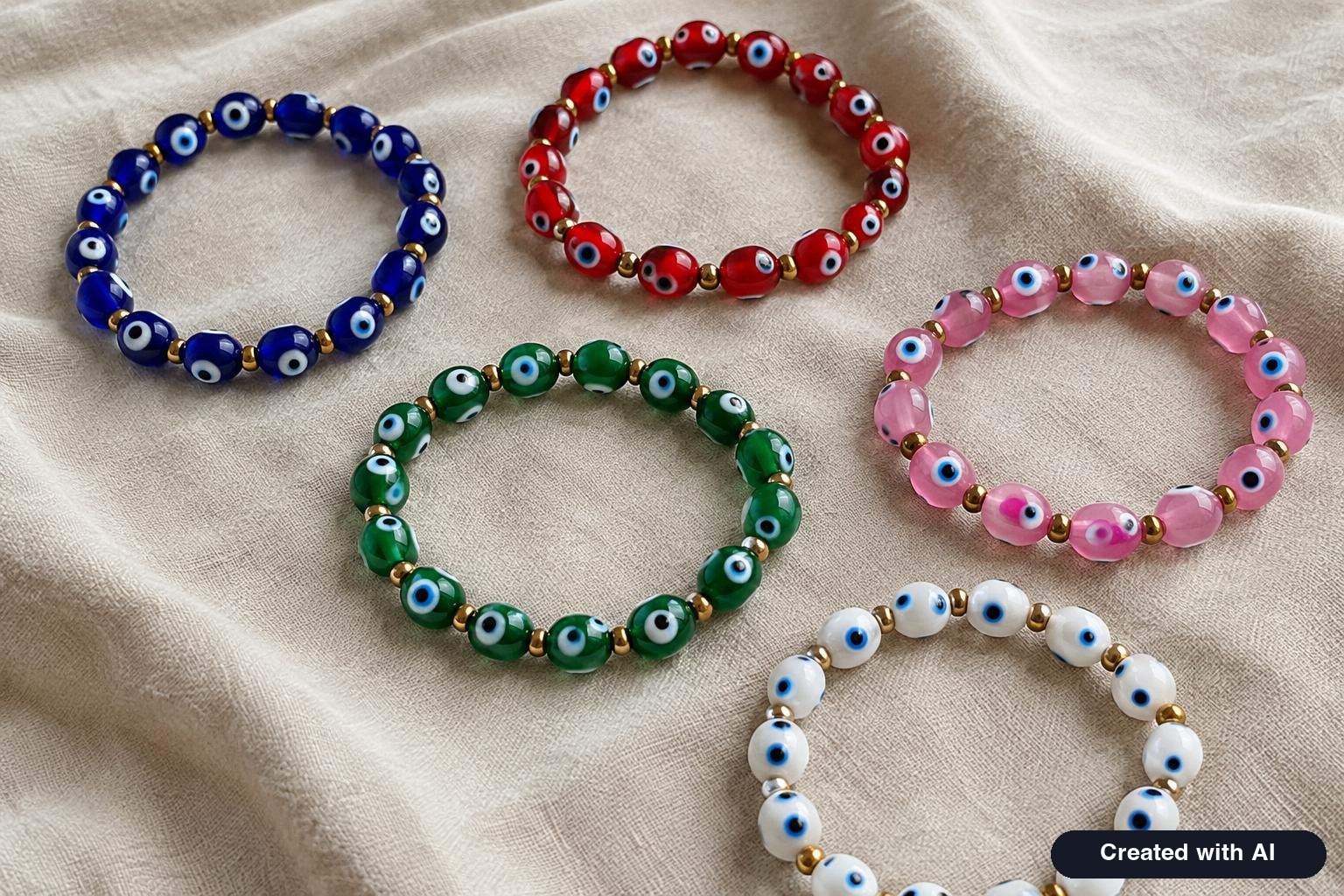
- Evil eye colors and their meanings
- The hamsa: the hand against the evil eye
- What does it mean if your evil eye bracelet breaks?
- How people use the evil eye today
- Wearing the evil eye respectfully
- What science says about the evil eye
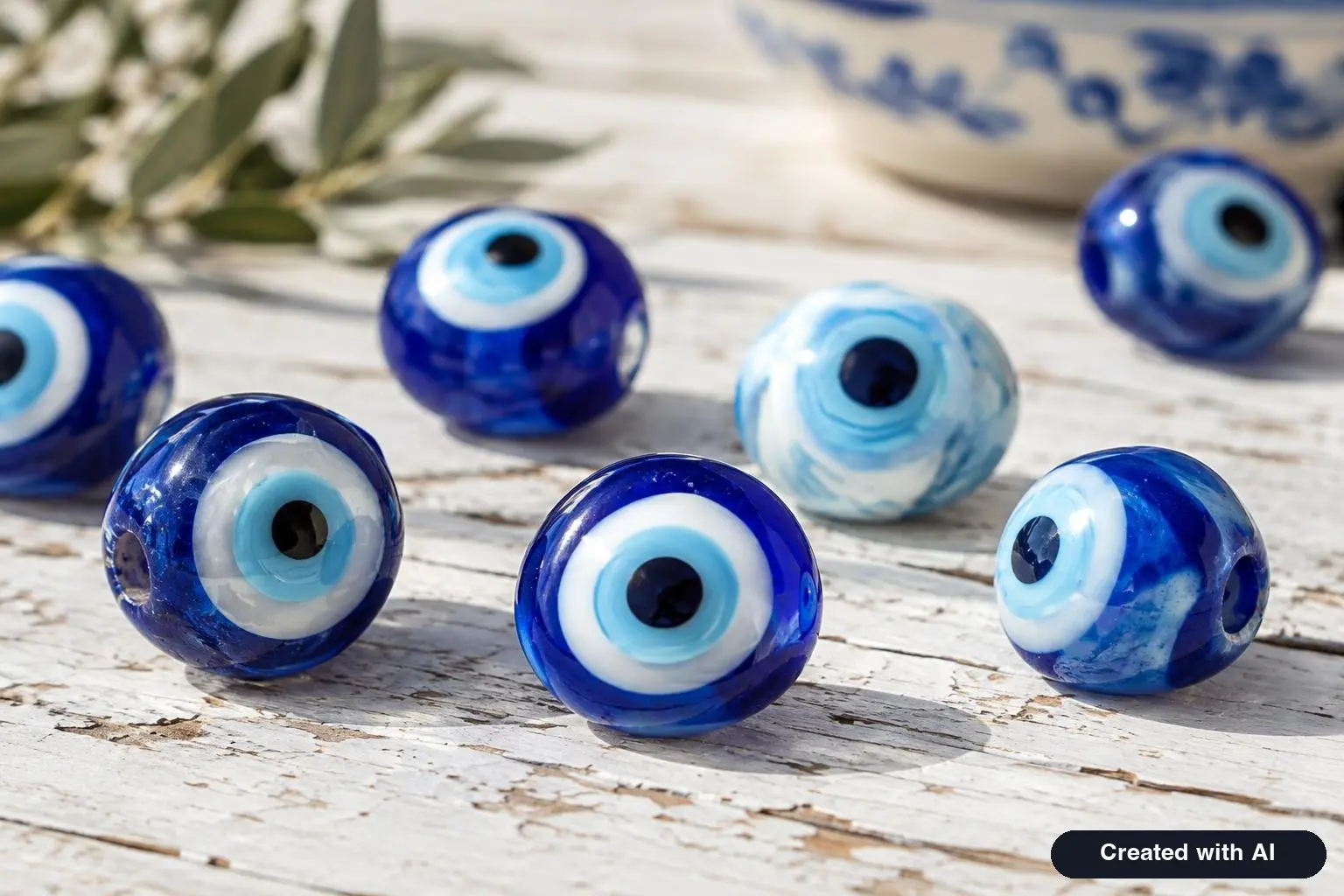
The evil eye is the belief that an envious or admiring look can cause harm, from bad luck and broken possessions to illness, especially in babies, pregnant women and animals. The blue-and-white eye charm most Americans know, the Turkish nazar or Greek mati, is not the evil eye itself but the protection against it: an eye that "looks back" and deflects the harmful gaze. Encyclopaedia Britannica describes the belief as both ancient and nearly universal, found in ancient Greece and Rome and in Jewish, Islamic, Buddhist and Hindu traditions, as well as in folk communities around the world. Wearing the symbol today is usually about protection, good luck or heritage; no research shows that a glance can cause harm or that an amulet prevents it.
This guide covers where the belief comes from, what it is called across cultures, what the colors of an evil eye bracelet are said to mean, the hamsa, what a broken bracelet is believed to signify and how to wear the symbol respectfully.
What does the evil eye mean?
The phrase covers two different things that are often confused:
- The curse: a harmful look, usually driven by envy. In many traditions it can be cast by accident, simply by admiring someone's child, home, health or success without adding a blessing.
- The amulet: the eye-shaped charm worn or hung to repel that look. When people say "an evil eye bracelet," they mean a bracelet that protects against the evil eye.
Britannica notes that pregnant women, children and animals have traditionally been considered especially vulnerable, and that those historically accused of casting the evil eye included strangers, childless women, old women and people with visible differences, a reminder that the belief has also been used to blame outsiders. The power was sometimes thought to be involuntary; Britannica cites a Slavic folktale about a father who blinded himself to avoid harming his own children. More often, envy of prosperity and beauty was blamed. That is why, in medieval Europe, people added phrases such as "God bless it" after a compliment.
In everyday American English, "giving someone the evil eye" just means a hostile glare. In the traditions below, it means something more specific and, for many families, still taken seriously.
A short history of the evil eye
Eye imagery is among the oldest protective symbols people have made. Curationist, an open-access cultural heritage publication, notes that written mentions of the evil eye go back to the third millennium BCE in Mesopotamia, and that eye iconography appears in amulets and funerary art from South Asia to the Mediterranean from at least 2600 BCE.
The alabaster "eye idols" excavated at Tell Brak in present-day Syria, dated to before 3500 BCE, are often cited as the first evil eye objects, but their purpose is debated. The BBC quotes an art historian who calls them the earliest eye amulets, while other specialists read them as votive figurines offered to the gods, unrelated to the evil eye.
In ancient Greece and Rome, the idea was widespread. Greek writers called it the ophthalmos baskanos. Plutarch, writing in the first and second centuries CE, tried to explain it scientifically, proposing that the eyes give off invisible rays strong enough to harm children and small animals. Greek potters painted large eyes on drinking cups, and eyes were painted on the prows of ships, a custom the BBC notes survives on some boats and even airplanes today.
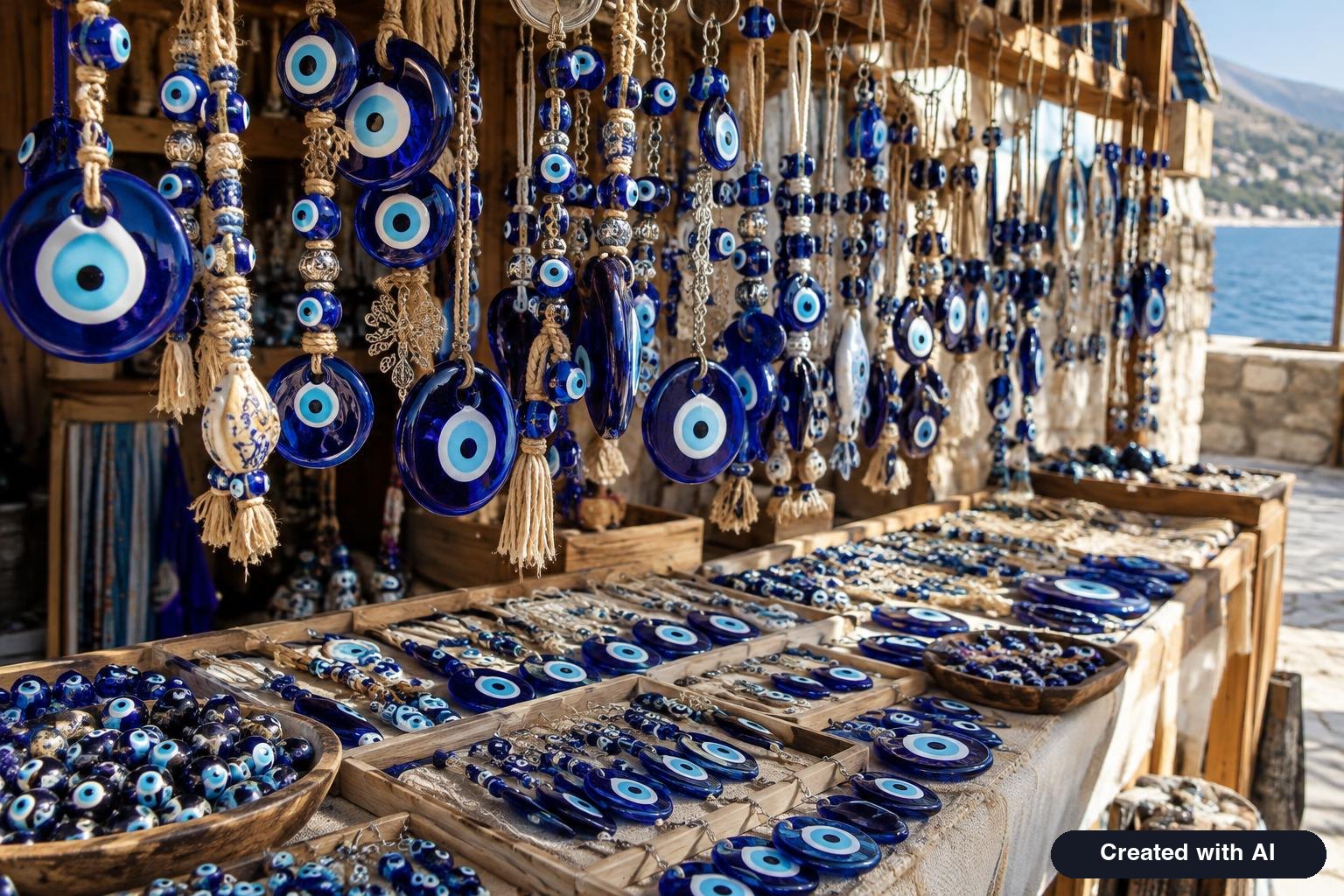
The blue glass bead came later. According to the art historian interviewed by the BBC, blue glass eye beads began appearing in the Mediterranean around 1500 BCE, building on Egyptian blue glazes colored with copper and cobalt, and spread through Phoenician, Greek, Roman and Ottoman trade. The Ottoman world popularized the cobalt nazar boncuğu, the form now sold in markets from Istanbul to Los Angeles.
Names for the evil eye around the world
The belief traveled with trade, empire and migration, and it reached the Americas with Spanish and Portuguese colonization. Here are the names and customs most often encountered in the US.
| Region or tradition | Name | Common protections and customs |
|---|---|---|
| Turkey | nazar; the bead is nazar boncuğu | Blue glass eye beads on babies' clothing, doors, cars and jewelry; giving a bead to a newborn |
| Greece | mati ("eye"); being affected is matiasma | Blue eye charms; a relative says a protective prayer; light spitting ("ftou ftou") after a compliment |
| Italy and Italian America | malocchio; in Sicilian mal'uocchiu | Red horn charm (cornicello), the fig-hand gesture, a mirror near the door, red chili pepper |
| Spain, Mexico and Latin America | mal de ojo or ojo | Red string or bracelet on babies, the seed charm ojo de venado, black jet (azabache), an egg cleansing (limpia) |
| Jewish communities | ayin hara (Hebrew); kinehora (Yiddish) | Saying "kinehora" or "bli ayin hara" after good news, the hamsa, red thread |
| Arab world and North Africa | al-'ayn ("the eye") | The khamsa or hamsa hand, blue beads, saying "ma sha Allah" when admiring something |
| South Asia | nazar or buri nazar | A black kohl dot on a baby's face, black threads, lemon and green chilies hung at shop doors |
| Persia/Iran | cheshm zakhm or cheshm-e bad | Burning wild rue (esfand), blue beads |
Britannica records that in parts of Asia children's faces are sometimes blackened near the eyes for protection, and that among some Asian and African peoples the evil eye is particularly feared while eating and drinking. Common protections across many traditions include sacred texts, amulets and charms, hand gestures and protective drawings or objects.
Mal de ojo in Latin American families
In Mexican and broader Latin American tradition, mal de ojo is typically said to strike babies and young children when someone admires them intensely without touching them. Signs attributed to it include crying that will not stop, fever, vomiting or restlessness. A common remedy is a limpia, in which a raw egg is passed over the child's body while praying and then cracked into a glass of water to "read" the result. Many parents tie a red bracelet with an ojo de venado seed or a small jet charm on a newborn's wrist.
These beliefs are far from rare. In a 2022 survey of 200 Hispanic caregivers at a Kansas City pediatric clinic, published in Clinical Pediatrics, 84% believed in at least one folk illness and 83% had used a cultural remedy for their child, yet only 15% had discussed it with their child's provider. Most said they would feel comfortable doing so.
A health note: fever, vomiting, inconsolable crying or a baby who is unusually sleepy can signal a medical problem. Cultural practices and medical care can go together, but call your pediatrician for any fever in a baby younger than 3 months, and call 911 if a child has trouble breathing, will not wake up or has a seizure. Pediatricians advise against bracelets and necklaces on babies, especially during sleep, because beads and cords are choking and strangulation hazards; a charm pinned out of reach is a safer choice.
The evil eye in Italian and Mediterranean healing traditions
In Sardinia, a 2024 qualitative study in Nursing Reports interviewed 14 traditional healers who practice sa mexina de s'ogu, "the medicine of the eye." The authors concluded that healers remain central figures connecting folk medicine and religious practice, and urged nurses to learn about these beliefs so they can give care that respects patients' culture. Ethnographers have documented similar practices among Sicilian Canadians and on the island of Pantelleria, where the evil eye serves as a way of talking about many kinds of distress.
Evil eye colors and their meanings
The traditional nazar is cobalt blue glass with a white ring, a light blue ring and a dark center. The rainbow of colors you see on bracelets today is largely a modern jewelry convention. The meanings below are the ones most commonly attached to each color by sellers and wearers; they are not ancient doctrine and vary from one source to the next.
| Color | Meaning commonly given |
|---|---|
| Dark blue | The classic: general protection against the evil eye, calm, good fortune |
| Light blue | Broad protection, clear thinking, peace |
| Red | Energy, courage, protection from fear; red has its own long protective tradition (red thread, the Italian red horn) |
| Pink | Friendship, love, emotional calm |
| Green | Balance, health, success in new ventures |
| Yellow or gold | Health, energy, focus, strength |
| Orange | Happiness, creativity, playfulness |
| Purple | Imagination, spiritual awareness, balance |
| White | Purity, new beginnings, clearing negativity |
| Black | Power, resilience; also the black kohl dot and black thread of South Asian tradition |
| Gray | Calm in sadness, a neutral protector |
| Brown | Connection to nature, grounding |
Why blue? The art historian quoted by the BBC traces the color to Egyptian glazes colored with copper and cobalt, and notes that early Turkic peoples revered that shade of blue in connection with their sky deity, Tengri. Plutarch's claim that blue-eyed people were especially adept at casting the curse is sometimes cited too; blue eyes were rare in the ancient Mediterranean, and the BBC suggests that rarity made them seem uncanny.
Evil eye bracelet, necklace and tattoo meanings
- Bracelet: the most popular form. Many people wear it on the left wrist, which some traditions call the "receiving" side; others choose the right or wear one on each. There is no single rule.
- Necklace: worn close to the heart, often as a gift for a newborn, a new home or a milestone.
- Tattoo: a permanent version of the amulet. For some it honors Greek, Turkish, Middle Eastern, Latin American or South Asian heritage; for others it is a general symbol of protection or of "seeing" clearly.
- Home and car: nazars hung by the front door, on a rearview mirror or over a crib are meant to guard a place rather than a person.
The hamsa: the hand against the evil eye
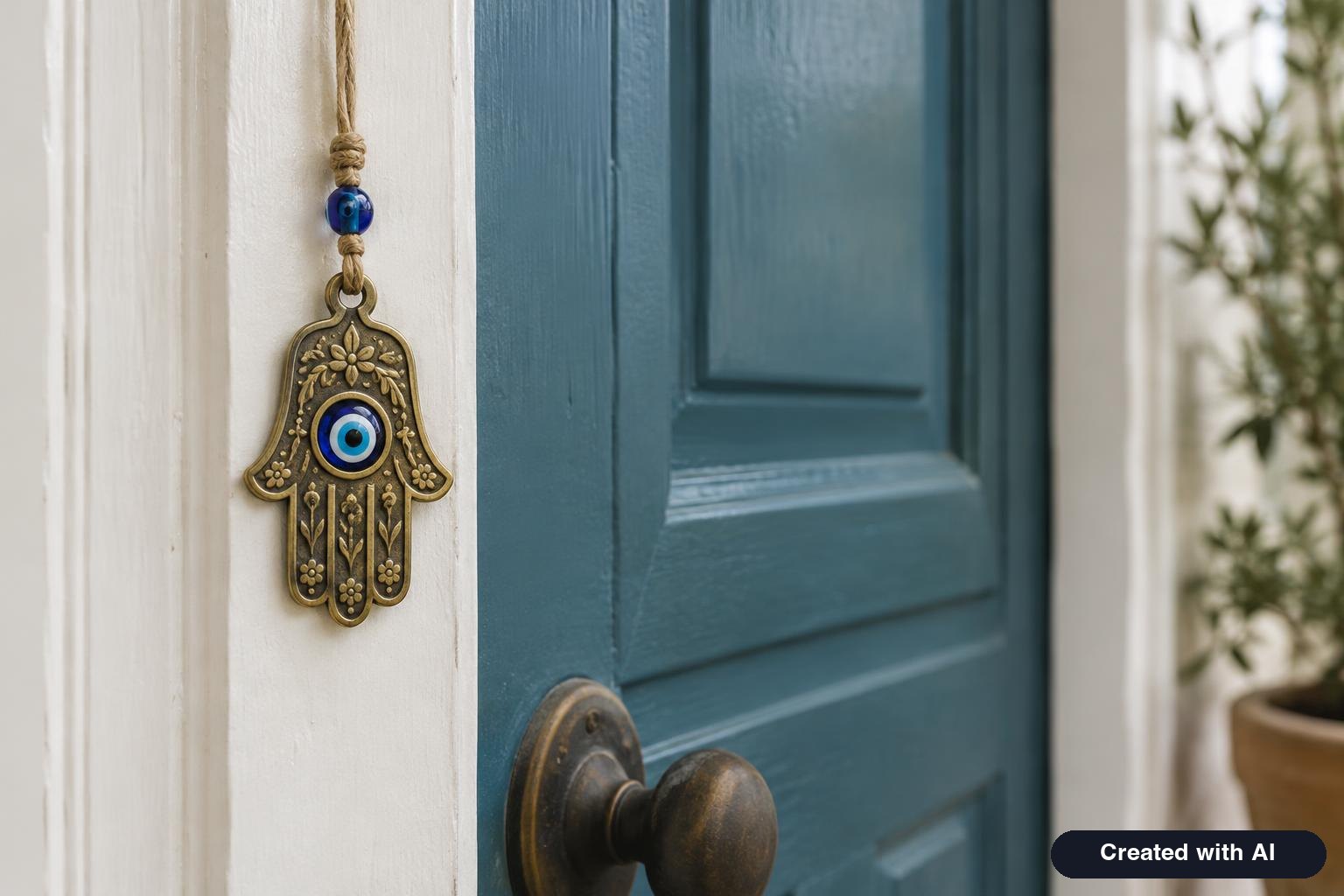
The hamsa, or khamsa, is an open right hand, often with an eye in the palm. The name comes from the Arabic word for "five." The symbol is used across North Africa and the Middle East by Muslims, Jews and Christians, as the BBC and the Jewish Women's Archive both note, and it goes by different names depending on who is wearing it:
- Hand of Fatima, after the daughter of the Prophet Muhammad; historians note the name was popularized by Europeans in French colonial North Africa, while the Arabic name is simply khamsa.
- Hand of Miriam, after the sister of Moses, in many Sephardi and Mizrahi Jewish communities; also hamesh, Hebrew for "five."
- Hand of Mary, among some Levantine Christians.
A hamsa with fingers pointing up is often read as a shield against harm; fingers pointing down, as a blessing or welcome. Open-hand protective symbols appear in the ancient Near East long before any of the religions that use the hamsa today, which is part of why it is shared across faiths. Some religious authorities, including many Islamic scholars, discourage amulets of any kind as superstition, so not everyone in these traditions uses or approves of them.
What does it mean if your evil eye bracelet breaks?
This is one of the most searched questions about the symbol, and the answer is folk belief, not fact. In popular tradition:
- A broken or cracked bead is said to mean the amulet "absorbed" a strong envious look or a bad turn and did its job.
- A lost bracelet is said to have taken the misfortune away with it.
- What people do next: most replace it rather than repair it. Some thank it, then bury it, place it in running water or throw it away; others rinse jewelry in salt water to "cleanse" it. Many Turkish and Greek families keep spare beads on hand.
On the practical side, elastic cord and thin chains wear out with daily use, water and heat, so breakage is expected. If a bracelet breaks often, a stronger cord or a closed clasp will last longer, whatever you believe about why it snapped.
How people use the evil eye today
- For a new baby: pinning a small nazar to clothing, a stroller or crib (out of reach), or giving one as a gift.
- For a home: hanging a nazar or hamsa by the front door or in the entryway.
- When receiving praise: answering a compliment with a blessing such as "kinehora," "ma sha Allah," "God bless" or "ftou ftou."
- At milestones: weddings, a new job, a new car, a move.
- As jewelry: bracelets, necklaces and rings worn daily for luck or heritage.
Wearing the evil eye respectfully
Curationist notes that the blue nazar has become increasingly commercial in North America and in tourist markets. It is not a closed practice: people across many cultures gift it freely, and wearing one is not usually considered offensive. A few habits keep it respectful:
- Learn what it means to the cultures it comes from, rather than treating it as just a pattern.
- Buy handmade glass from makers in those communities when you can.
- Do not mock relatives' or neighbors' practices, such as a red string on a baby or a blessing after a compliment.
- Keep the hamsa's religious associations in mind, especially when it carries Hebrew or Arabic text.
- Do not use the belief to label people. Historically, accusations of casting the evil eye fell on outsiders, older women and people with disabilities.
What science says about the evil eye
There is no evidence that a glance can cause illness or misfortune, or that an amulet can stop it. Anthropologists and health researchers study the evil eye as a cultural explanation for envy, social tension and illness, especially from times and places without modern medicine; Curationist notes it was widely blamed for illness before germ theory. That does not make the belief trivial. For many families, the evil eye carries real meaning, social customs and comfort, and health researchers increasingly urge clinicians to ask about such beliefs respectfully rather than dismiss them.
If you are curious about other experiences people often connect with the unseen, our guides on the sleep paralysis "demon" and ringing in the left ear take the same approach. For astrology's calendar, see Mercury retrograde in 2026 and the Saturn return.
Frequently asked questions
What does the evil eye mean?
It is the belief that an envious or admiring look can cause harm, from bad luck to illness. The blue eye charm, called nazar in Turkey and mati in Greece, is the protection against that look, not the curse itself.
What does an evil eye bracelet mean?
It is worn as protection against envy and bad luck, and often as a sign of heritage or a gift for a milestone. The classic bracelet uses a cobalt blue glass bead; other colors carry modern meanings such as love for pink or courage for red.
What do the different evil eye colors mean?
In common usage, dark blue means general protection and calm, light blue clear thinking, red courage and energy, pink love and friendship, green balance and success, yellow health, and white new beginnings. These meanings are a modern jewelry convention; the traditional nazar is blue.
What does it mean when an evil eye bracelet breaks?
In folk belief, it means the amulet absorbed a bad look or misfortune and did its job, so most people replace it rather than repair it. Practically, cords and chains simply wear out with use.
Which wrist should you wear an evil eye bracelet on?
There is no single rule. Many people choose the left wrist, which some traditions call the receiving side; others wear it on the right or on both. Comfort and personal meaning matter more than placement.
Is it OK to wear an evil eye if you are not Greek or Turkish?
Generally, yes. The nazar is widely gifted across cultures and is not considered a closed practice. Learn its meaning, avoid mocking related customs and, when possible, buy from makers in the cultures it comes from.
What is mal de ojo?
It is the Spanish and Latin American name for the evil eye, believed to affect babies who are admired without being touched. Families may use a red bracelet with an ojo de venado seed or an egg cleansing. A baby with fever or persistent crying should still see a doctor.
What is the difference between the hamsa and the evil eye?
The hamsa is a protective open-hand symbol from North Africa and the Middle East, called the Hand of Fatima or Hand of Miriam. It is used against the evil eye and often has an eye in the palm, but it is a separate amulet.
Sources
- Encyclopaedia Britannica: Evil eye
- Encyclopaedia Britannica: Amulet
- Curationist: Protection from the Evil Eye
- BBC Culture: The strange power of the 'evil eye'
- Fowler AL, et al. Cultural Health Beliefs and Practices Among Hispanic Parents. Clin Pediatr, 2022 (PubMed)
- Curcio F, et al. Transcultural Perspectives in Nursing: Healers and the Evil Eye. Nurs Rep, 2024 (PubMed)
- Naatik Mexico: El mal de ojo, the evil eye
- Jewish Women's Archive: Unity through Symbolism, the Hamsa
- von Kemnitz EM. The Hand of Fatima: The Khamsa in the Arab-Islamic World. Brill, 2022
Log in to comment
No comments yet. Be the first.