Sleep Paralysis Demon: What It Is and How to Stop It
- About 7.6% of the general population, 28.3% of students and 31.9% of psychiatric patients report at least one episode of sleep paralysis (2011 systematic review).
- The figure people see is a hallucination produced while the mind is awake but the body is still in REM-sleep paralysis; episodes average about six minutes or less.
- Back sleeping, short or irregular sleep, stress, PTSD and narcolepsy raise the risk; frequent episodes or daytime sleep attacks warrant a sleep doctor.
- What Is a Sleep Paralysis Demon?
- What People See and Feel: The Three Types
- Sleep Paralysis Folklore Around the World
- The Science: What Happens in the Brain
- What Causes Sleep Paralysis (and Brings the "Demon" Back)
- How to Stop a Sleep Paralysis Episode
- How to Prevent Sleep Paralysis
- When to See a Sleep Doctor
- The Meme Side: Dating a Sleep Paralysis Demon
- Sleep Paralysis, Spirituality and Other "Night Experiences"
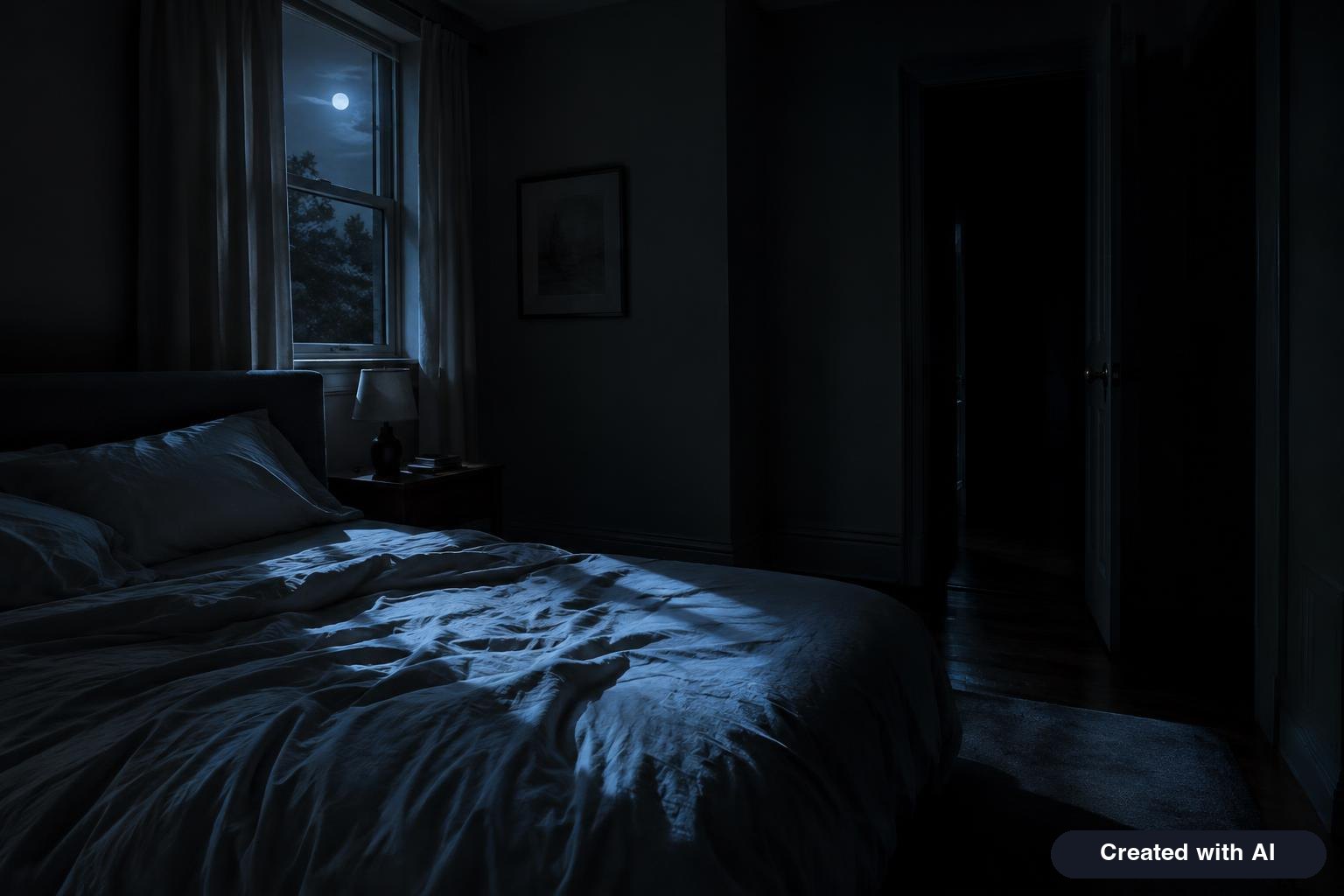
A "sleep paralysis demon" is the shadowy figure, pressure or presence many people sense during sleep paralysis, a brief state in which the mind wakes up while the body is still locked in the muscle paralysis of dream (REM) sleep. The figure is not a supernatural visitor. It is a hallucination produced by a brain caught halfway between dreaming and waking, and it is common: a systematic review of 35 studies found that about 7.6% of the general population has had at least one episode of sleep paralysis, rising to 28.3% of students and 31.9% of psychiatric patients. Episodes are frightening but usually last seconds to a few minutes and are not dangerous in themselves. This guide explains what people see, why it happens, what cultures around the world have called it, and what actually helps.
What Is a Sleep Paralysis Demon?
During normal REM sleep, the brain switches off most voluntary muscles. Researchers call this REM atonia, and it is the reason you do not act out your dreams. In sleep paralysis, awareness returns before the atonia lets go, or the atonia arrives before awareness fades. You are awake, you can usually open your eyes and look around the room, but you cannot move your arms, legs or head, and you may struggle to speak.
That alone would be unsettling. What makes it terrifying is that the dreaming brain keeps generating images, sounds and sensations, and it lays them over the real bedroom. Psychologists call these hypnagogic hallucinations when they happen as you fall asleep and hypnopompic hallucinations when they happen as you wake up. Because the brain is in a state of high alert, the hallucinations tend to be threatening: a dark figure in the doorway, footsteps, a weight on the chest, a whisper by the ear. Across centuries and cultures, people have given that presence a name. Online, it is simply "the sleep paralysis demon."
So when people ask whether sleep paralysis demons are real, the honest answer has two parts. The experience is real: people genuinely see, hear and feel these things, and the fear is not imagined. The demon is not real in the sense of an outside entity in the room. It is the brain's own threat-detection system running on dream imagery.
What People See and Feel: The Three Types
The most useful way to sort the "types of sleep paralysis demons" people describe comes from research, not folklore. In a 1999 paper in Consciousness and Cognition, psychologist J. Allan Cheyne and colleagues at the University of Waterloo analyzed reports from several large samples and found that the hallucinations cluster into three groups. Later prospective work by Cheyne and Girard, in which 383 people reported individual episodes online, supported the same structure.
| Type | What it feels like | Typical descriptions | Likely brain mechanism (per Cheyne's model) |
|---|---|---|---|
| Intruder | A sensed presence, often with intense fear, plus sounds or visions | Shadow person, hooded figure, someone standing by the bed, footsteps, whispering, a face leaning close | A threat-vigilance system activated during REM; the brain "fills in" the source of the threat |
| Incubus | Pressure on the chest, difficulty breathing, sometimes pain | Something sitting on the chest, being held down or choked, the "old hag" riding the sleeper | Changes in how breathing feels when the body's muscles are inhibited during REM |
| Unusual bodily experiences | Floating, flying, spinning, leaving the body, sometimes bliss | Out-of-body experiences, seeing yourself from above, falling or levitating | Conflicting signals about body position and movement (vestibular-motor sensations) |
Cheyne's later work suggests that the felt presence is the core of the experience: once the brain senses "someone is here," the sounds, shapes and pressure tend to organize around that idea. That helps explain why so many people, who have never compared notes, describe nearly the same figure. The third type overlaps with what people call astral projection, which is covered in our guide to astral projection and out-of-body experiences.
Common names people give the figure
Search data shows many people look up a "sleep paralysis demon name." There is no single official name, but the descriptions people share online fall into a handful of recurring characters: the shadow man or hat man (a tall dark silhouette, sometimes wearing a brimmed hat), the old hag or night hag (an old woman sitting on the chest), the incubus or succubus (a figure with a sexual or predatory edge in older European lore), and the "grinning" or "staring" face. These are cultural labels for the same three kinds of experience in the table above, not separate beings.
Sleep Paralysis Folklore Around the World
Long before sleep labs existed, people across the world described the same nighttime attack and explained it with the beliefs available to them. Folklorists and psychiatrists have long pointed to these stories as some of the oldest descriptions of sleep paralysis.
| Place | Name | What the story says |
|---|---|---|
| Newfoundland, Canada | The Old Hag | A hag sits on the sleeper's chest; to be "hagged" means waking unable to move. Folklorist David Hufford documented it in his 1982 book The Terror That Comes in the Night, and a 1978 medical paper by Robert Ness interpreted the Old Hag as sleep paralysis. |
| Southern United States (including South Carolina and Georgia) | The hag | A witch who leaves her body at night and rides or sits on her victim |
| Japan | Kanashibari | Literally "bound or fastened in metal"; the word is also used in everyday Japanese for the paralysis itself |
| China | Gui ya chuang (usually translated "ghost pressing on the bed") | A ghost presses down on the sleeper's body or bed |
| Brazil | Pisadeira ("she who steps") | A tall, thin old woman with long nails who lives on rooftops and steps on the chests of people who go to bed on a full stomach |
| Scandinavia and Germanic Europe | The mare (root of "nightmare") | A spirit that sits on sleepers' chests; the English word nightmare originally meant this attack, not a bad dream |
| Medieval and early modern Europe | Incubus and succubus | Demons said to lie on sleepers at night |
The most famous image of the experience is The Nightmare, painted by the Swiss-born artist Henry Fuseli in 1781 and now in the collection of the Detroit Institute of Arts. It shows a woman sprawled across a bed with a squat demon crouched on her chest and a horse's head peering through the curtains. Fuseli's painting is still the go-to illustration for sleep paralysis because it captures the incubus experience almost exactly: a sleeper, a weight on the chest, and a watcher in the dark.
These traditions are worth taking seriously as culture. They show that the experience is human and universal, and in some communities the explanation a person grows up with shapes how scary an episode feels and how often they talk about it. A 2023 international survey of 6,811 adults in Sleep Medicine found that most people who had experienced isolated sleep paralysis (63.3%) believed it was caused by "something in the brain," while 7.1% endorsed supernatural causes.

The Science: What Happens in the Brain
Sleep runs in cycles. Each night you pass through lighter and deeper non-REM sleep and then into REM sleep, the stage with the most vivid dreams, several times. In REM, brainstem circuits actively inhibit the motor neurons that move your skeletal muscles. Your diaphragm keeps breathing for you, and your eyes can still move, which is why people in an episode can usually look around.
Sleep paralysis happens when the boundaries between those states blur. Researchers describe it as a mixed state: part of the brain is awake and taking in the room, while REM processes, the paralysis and the dream imagery, are still running. A prospective study of 348 people who regularly experience sleep paralysis found episodes clustered in the first two hours after bedtime, with just over a quarter happening within an hour of going to bed and a smaller peak around normal waking time.
Three features of REM explain most of what people report:
- Paralysis: the normal REM muscle shutdown, simply experienced while conscious.
- Fear and a sense of presence: the brain's threat-detection systems are active in REM, and without the usual dream story to explain the alarm, the brain projects a source, someone in the room.
- Chest pressure and breathing difficulty: during REM, breathing becomes shallower and more automatic. If you are awake and try to take a deep breath on command, the muscles do not respond the way you expect, which can feel like being smothered. Your breathing continues regardless.
How long does an episode last?
A clinician's review by psychologist Brian Sharpless, one of the leading researchers on the condition, reports that episodes usually last from seconds up to about 20 minutes, with an average of around six minutes. Time also feels distorted when you are frightened, so many people overestimate how long they were stuck.
What Causes Sleep Paralysis (and Brings the "Demon" Back)
There is no single cause, but a 2018 systematic review of 42 studies in Sleep Medicine Reviews identified several consistent themes: poor or disrupted sleep, stress and trauma, substance use, physical illness, anxiety symptoms, psychiatric disorders and genetic influences. Sleep paralysis appeared to be especially common in post-traumatic stress disorder and, to a lesser degree, panic disorder.
| Risk factor | What the research shows |
|---|---|
| Sleep deprivation and irregular schedules | People with sleep paralysis report shorter sleep, longer time to fall asleep and more insomnia symptoms; it is common in shift workers. |
| Sleeping on your back | In surveys of 6,730 people, more reported episodes in the supine (face-up) position than in all other positions combined, and the supine position was three to four times more common during episodes than when normally falling asleep. |
| Stress, anxiety and panic | Anxiety symptoms and anxiety sensitivity are linked to more frequent episodes; 34.6% of patients with panic disorder report lifetime sleep paralysis. |
| PTSD and trauma | Strongly associated; it is not yet clear whether PTSD causes episodes directly or through disrupted sleep and hypervigilance. |
| Narcolepsy | Sleep paralysis is one of the classic symptoms, together with excessive daytime sleepiness and cataplexy (sudden muscle weakness triggered by emotion). |
| Other sleep problems | Obstructive sleep apnea, idiopathic hypersomnia and insufficient sleep are among the conditions linked to episodes. |
| Alcohol and some substances | Alcohol use is listed among associated factors. |
| Age and sex | In the 2023 survey, women and younger adults were more likely to report episodes. |
The overlap with anxiety runs both ways. A frightening episode can leave you dreading bedtime, which shortens and fragments sleep, which makes another episode more likely. If you also notice racing heart, chest tightness or sudden waves of fear during the day, our guides to anxiety chest tightness and panic attacks versus anxiety attacks explain how to tell those symptoms apart from heart trouble and when to get help.
How to Stop a Sleep Paralysis Episode
There is no switch that ends an episode instantly, but people who have them often, and the researchers who study them, describe techniques that make episodes shorter or less frightening. In the 2023 survey, physical actions and making noise were among the disruption strategies people reported, with success rates that varied widely (roughly 30% to 62%). The cognitive-behavioral treatment manual for recurrent sleep paralysis teaches relaxation and coping during episodes rather than fighting them.
- Remind yourself what it is. Say to yourself, "This is sleep paralysis. It is temporary. It cannot hurt me." Knowing the name of what is happening takes some of the power out of the fear.
- Do not fight for a deep breath. Your breathing is working. Let it be shallow and steady instead of trying to force big gulps of air, which feeds the smothering sensation.
- Start small. Instead of trying to sit up, try to wiggle a toe or finger, scrunch your face, or move your eyes from side to side. Small movements often return first and can break the state.
- Relax rather than struggle. Many people find that letting the muscles go limp and focusing on something neutral, a word, a prayer, counting breaths, ends the episode faster than straining.
- Try to make a sound. A cough or a hum, even a small one, can help you surface, and a bed partner who knows the plan can gently touch or call you.
- After it ends, get up briefly. Turn on a light, sit up for a minute or two and let your heart rate settle before lying down again, ideally on your side.
How to Prevent Sleep Paralysis
Because disrupted sleep is the most consistent trigger, most prevention is plain sleep hygiene, aimed at the specific triggers above. In the 2023 survey, changing sleep position and adjusting sleep patterns were among the prevention strategies people rated as working at least 60% of the time.
- Protect your total sleep. Most adults need seven or more hours. Catching up on weekends does not fully undo a short week.
- Keep a regular schedule. Go to bed and get up at roughly the same time every day, including weekends.
- Sleep on your side. If you drift onto your back, a pillow behind you can help.
- Limit alcohol, especially near bedtime, and avoid heavy late meals and late caffeine.
- Wind down. A 20 to 30 minute screen-free routine helps the brain shift into sleep more smoothly.
- Address stress. Relaxation training, exercise earlier in the day and treatment for anxiety or trauma can all lower the frequency of episodes.
- Keep a simple log. Note bedtime, wake time, sleep position, alcohol and stress. Patterns often show up within a few weeks, and a log is useful if you see a doctor.

When to See a Sleep Doctor
A single episode, or a rare one during a stressful stretch, is not a reason for alarm. Sleep paralysis that happens on its own, without another condition explaining it, is called isolated sleep paralysis. When it keeps coming back and causes distress or fear of sleeping, sleep specialists call it recurrent isolated sleep paralysis, a recognized sleep disorder that can be treated.
Talk to your primary care doctor or a board-certified sleep medicine specialist if:
- Episodes happen often (for example, weekly) or are getting more frequent.
- You are afraid to go to sleep, or the episodes are wrecking your sleep.
- You are very sleepy during the day, fall asleep at inappropriate times, or have sudden muscle weakness when you laugh or feel strong emotion. These can be signs of narcolepsy, which needs a proper evaluation.
- You snore loudly, gasp or stop breathing in your sleep (signs of sleep apnea).
- You have nightmares, flashbacks or other symptoms after a traumatic event.
- You hear or see things during the day, not only at the edges of sleep.
A doctor may ask you to keep a sleep diary, and in some cases order an overnight sleep study. Treatment usually starts with fixing sleep habits and treating any underlying condition. A short, five-session cognitive-behavioral therapy program designed for recurrent isolated sleep paralysis has been published. For frequent, severe episodes, especially with narcolepsy, doctors sometimes use medications that suppress REM sleep, such as certain antidepressants. Sharpless notes that these drug and therapy options are promising but still need larger controlled trials. Never start, stop or change a medication without your prescriber.
Seek emergency care (call 911) if you have true trouble breathing while fully awake, chest pain, confusion that does not clear, or any thoughts of harming yourself. If you are in crisis, you can call or text 988, the Suicide and Crisis Lifeline.
The Meme Side: Dating a Sleep Paralysis Demon
Search for "sleep paralysis demon" and you will quickly find jokes: memes of a horned creature being dumped by its "client," fan art of a demon who just wants a hug, and a long-running bit about "how to date a sleep paralysis demon." Searches for that phrase alone run to thousands a month.
The humor has a point. Turning a terrifying figure into a goofy roommate is a coping strategy, and it mirrors what clinicians try to do: take away the threat by understanding and reframing it. Many people say the jokes were how they first learned that what happened to them had a name and that millions of others had felt the same thing. If the memes help, enjoy them. If you have frequent episodes and the jokes land badly, that is worth taking seriously too. Your fear is valid, and help is available.
The figure also has a home in horror films and Halloween culture, from haunted-bedroom movies to shadow-man costumes. If you are planning a scary movie night, our list of Halloween movies has picks for every tolerance level, and the Halloween hub collects the rest of the season. If bad nights tend to follow scary movies, schedule them early.
Sleep Paralysis, Spirituality and Other "Night Experiences"
Some people interpret their episodes spiritually, as a visit, an attack or a sign. Belief is personal, and many faith traditions have their own practices for nighttime fear. What the science adds is reassurance: the same three experiences are reported by people of every faith and none, they follow predictable sleep-timing patterns, and they become less frequent when sleep improves. You can hold your own beliefs and still use the practical steps above.
Sleep paralysis also connects to other topics readers ask about. Floating or leaving-the-body sensations during episodes are a big part of how people explain astral projection. Hearing sounds at the edge of sleep sometimes gets mixed up with ear ringing; our guide to ringing in the left ear covers the folklore and the medical facts. Readers interested in protective symbols may want our explainer on the evil eye.
Frequently asked questions
What is a sleep paralysis demon?
It is the name people give to the threatening figure, presence or chest pressure they sense during sleep paralysis, when the mind wakes up while the body is still in the muscle paralysis of REM sleep. The brain overlays dream imagery on the real bedroom, so the figure feels real, but it is a hallucination.
Are sleep paralysis demons real?
The experience is real and very common, but there is no evidence of an outside entity. Researchers have shown that the sensed presence, shadowy figures and chest pressure follow predictable patterns tied to REM sleep and appear in people of every culture.
What are the types of sleep paralysis demons?
Research groups the experiences into three types: the intruder (a sensed presence with sounds or a figure), the incubus (pressure on the chest and trouble breathing) and unusual bodily experiences (floating or leaving the body). Names like the shadow man, hat man or old hag are cultural labels for these.
What causes the sleep paralysis demon to appear?
Episodes are linked to short or irregular sleep, sleeping on your back, stress, anxiety, PTSD, narcolepsy, sleep apnea and alcohol. The fear and sense of presence come from threat-detection systems that are active during REM sleep.
Can a sleep paralysis demon hurt you?
No. Sleep paralysis itself is not physically harmful, and your breathing continues even if it feels restricted. The real harms are fear, lost sleep and anxiety about going to bed, which a doctor can help with if episodes are frequent.
How do you wake up from sleep paralysis?
Remind yourself it is temporary, breathe normally instead of forcing deep breaths, and try small movements such as wiggling a toe or finger or moving your eyes. Many people find relaxing works better than struggling. Afterward, sit up briefly before going back to sleep on your side.
Why do people joke about dating a sleep paralysis demon?
The memes turn a frightening experience into something absurd and familiar, which is a coping strategy, and they help many people discover that what happened to them is common and has a name.
When should I see a doctor about sleep paralysis?
See a doctor if episodes are frequent, make you afraid to sleep, or come with heavy daytime sleepiness, sudden muscle weakness with strong emotions, loud snoring or gasping, or trauma symptoms. These can point to narcolepsy, sleep apnea or PTSD, which are treatable.
Sources
- Sharpless & Barber, Lifetime prevalence rates of sleep paralysis: a systematic review (Sleep Med Rev, 2011)
- Cheyne et al., Hypnagogic and hypnopompic hallucinations during sleep paralysis (Conscious Cogn, 1999)
- Cheyne & Girard, prospective study of sleep paralysis experiences (Conscious Cogn, 2007)
- Girard & Cheyne, Timing of spontaneous sleep-paralysis episodes (J Sleep Res, 2006)
- Cheyne, Situational factors affecting sleep paralysis: position and timing (J Sleep Res, 2002)
- Denis et al., A systematic review of variables associated with sleep paralysis (Sleep Med Rev, 2018)
- Sharpless, A clinician's guide to recurrent isolated sleep paralysis (Neuropsychiatr Dis Treat, 2016)
- Rauf et al., Isolated sleep paralysis: prevention and disruption strategies (Sleep Med, 2023)
- Ness, The Old Hag phenomenon as sleep paralysis (1978)
- Wikipedia: Night hag (folklore overview)
- Wikipedia: Sleep paralysis
Log in to comment
No comments yet. Be the first.