Shortcrust Apple Pie: Buttery Crust, Apple Filling and Lattice
- Three rules for shortcrust pastry: cold butter, short kneading, and resting in the fridge
- Apples are briefly cooked in a skillet with butter and brown sugar, keeping the bottom crust crisp
- A quicker variation using store-bought puff pastry
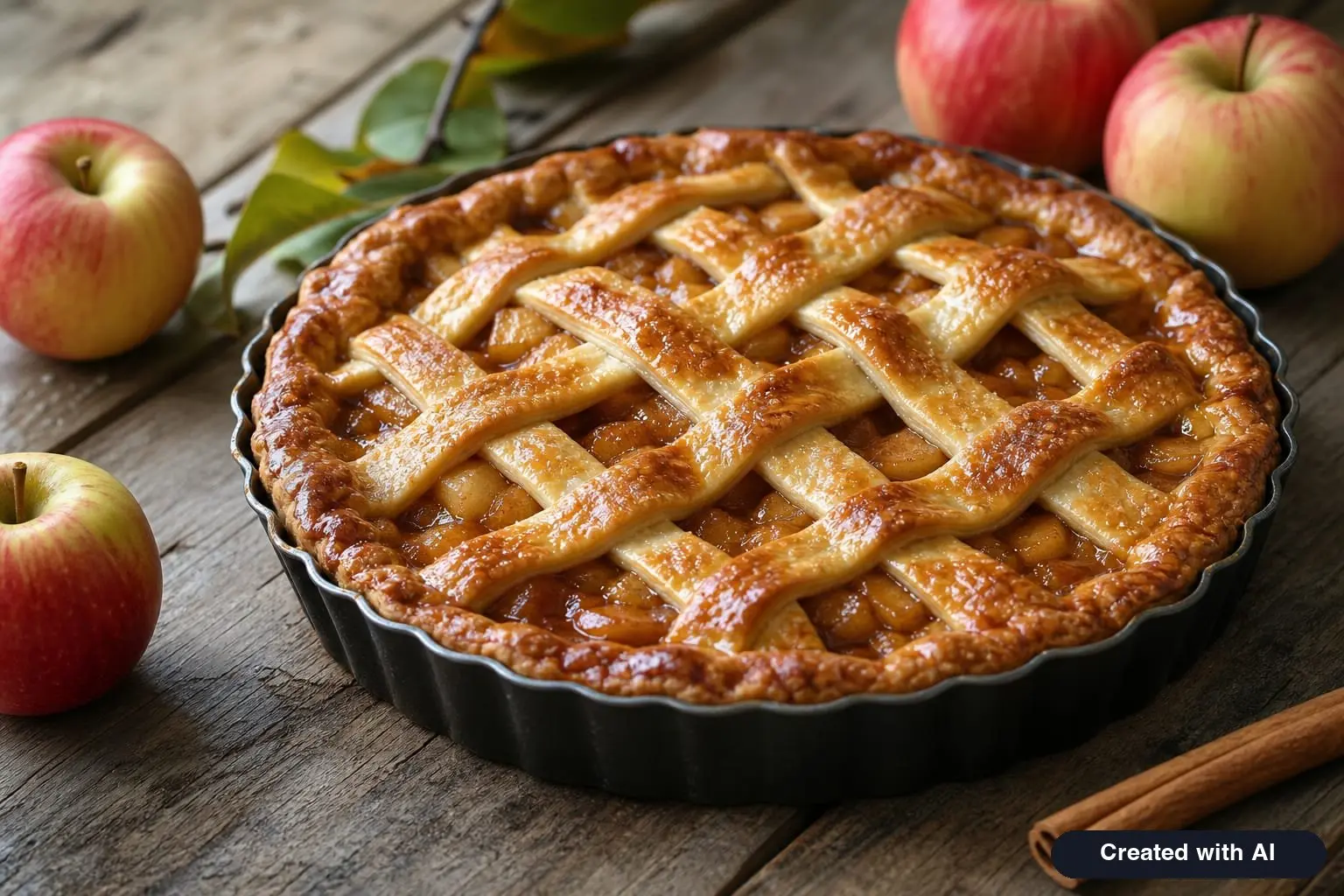
Shortcrust apple pie is made with buttery, tender shortcrust pastry: a thin, crisp base, a thick layer of soft but shape-holding apple slices, and a golden pastry lattice on top. It sits somewhere between a pie and a tart, and in Eastern Europe it often goes by "butter apple pie." It is more elegant than a fluffy sponge or crumb cake, perfect for a festive table, and when made well, cuts into beautiful, neat triangles.
Shortcrust pastry looks finicky at first, but it really comes down to three rules: cold butter, short kneading, and resting in the fridge. By following these, the dough doesn't shrink while baking, doesn't crumble when rolling, and bakes up tender rather than hard. For the filling, the apples are briefly cooked in a skillet with butter and brown sugar—this way they release some of their juices in the pan rather than in the pie, and the bottom pastry layer stays crisp.
The recipe is for a 9½-inch (24 cm) springform or tart pan, yielding 12 slices. The pie spends most of its time in the fridge and oven—active prep time is about 35 minutes.
Below is the full recipe card: you can recalculate quantities for a different pan size, check off what you've already added, and print it. After the card, each step is explained in more detail.
Shortcrust Apple Pie
No ratings yet – be the firstIngredients
For the shortcrust pastry
For the filling
For brushing
Directions
- Pastry. Mix the flour with powdered sugar and salt, add the cold butter cubes, and quickly rub into fine crumbs with your fingertips or a food processor. Add the egg and knead just until the dough comes together into a ball; if it crumbles, add a tablespoon of ice water.
- Chilling. Divide the dough into two parts (about ⅔ and ⅓), flatten into disks, wrap in plastic wrap, and keep in the fridge for at least 30 minutes.
- Filling. Peel the apples and cut into ½-inch (1 cm) thick slices. In a skillet, melt the butter, add the apples, brown sugar, and cinnamon, and cook for 5–7 minutes until the apples soften but don't lose their shape. Stir in the lemon juice and cornstarch, heat for a minute, and cool completely.
- Base. Preheat the oven to 375°F (190°C). Roll out the larger piece of dough between two sheets of parchment paper to ⅛ inch (3–4 mm) thick, line a 9½-inch (24 cm) pan with 1 ¼-inch (3 cm) sides, and prick with a fork.
- Filling into the pan. Place the cooled filling into the base without excess liquid and smooth it out.
- Lattice. Roll out the smaller piece of dough and cut into ½-inch (1.5 cm) strips. Arrange them in a lattice over the filling, pressing the ends to the edges. Brush the top with the yolk and milk mixture.
- Baking. Bake in the lower third of the oven for 45–50 minutes, until the pastry turns golden brown and thick juices bubble through the lattice. If the edges brown too quickly, cover them with foil.
- Cooling. Cool the pie in the pan for at least 1.5 hours—the warm filling is still a bit runny, but it sets as it cools and the slices cut neatly.
- Calories
- 336 kcal
- Protein
- 3.7 g
- Fat
- 16.7 g
- of which saturated
- 10 g
- Carbohydrates
- 44.5 g
- of which sugars
- 21 g
- Fiber
- 2.8 g
Calculated with the Firmus Medicus calorie database (USDA, Fineli).
Ingredients and how to choose them
Butter. In this pie, butter is not just fat, but flavor, so use real butter (at least 80% fat; European-style 82% is even better). It must be cold—cut into cubes and, if your kitchen is warm, kept in the freezer for another 10 minutes. Margarine or spreads have more water, making the dough sticky, prone to shrinking while baking, and flat in flavor.
Powdered sugar, not granulated. Powdered sugar dissolves in the dough instantly, so the dough doesn't need long kneading, and once baked, it has a finer, smoother texture. Granulated sugar also works, but the pastry will be coarser and spread more during baking.
Egg binds the dough and gives it strength so the lattice strips don't break. Add ice water only if the dough still crumbles after the egg—the less liquid, the more tender the result.
Apples. This pie requires firm, tart baking apples that hold their shape when cooked and baked, such as Granny Smith, Jonagold, or Golden Delicious. Soft apples turn into mush here—they are suitable for sharlotka, not a shortcrust pie. You will need about 2.5 lb (1.2 kg) of unpeeled apples.
Brown sugar and cornstarch. Brown sugar gives the filling a caramel flavor and a beautiful amber color. Cornstarch thickens the juices—without it, the cooled filling remains runny and leaks when sliced.
How to bake shortcrust apple pie step by step
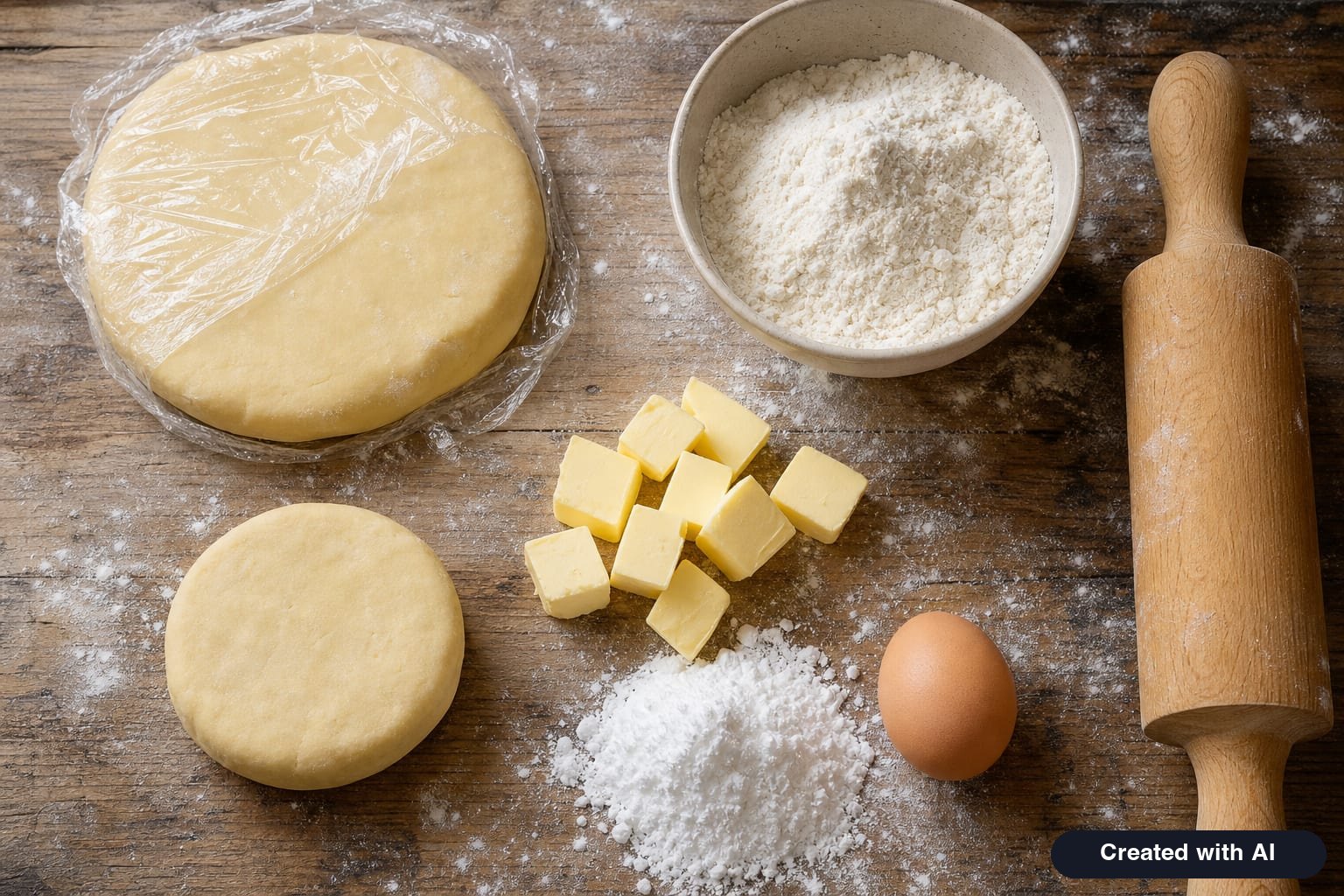
1. Pastry. Mix the flour with powdered sugar and salt, add the cold butter cubes, and quickly rub into fine crumbs with your fingertips. It's most convenient to do this in a food processor—a few short pulses and the mixture resembles damp sand. Add the egg and press the dough into a ball. Do not knead longer than necessary: the longer it's kneaded, the more gluten develops, and the pastry bakes up hard and shrinks.
2. Resting in the fridge. Divide the dough into two parts—about two-thirds for the base and one-third for the lattice. Flatten into disks, wrap in plastic wrap, and keep in the fridge for at least 30 minutes (or overnight). The chilled butter firms up, and the gluten relaxes—then the dough rolls out easily and doesn't spread.
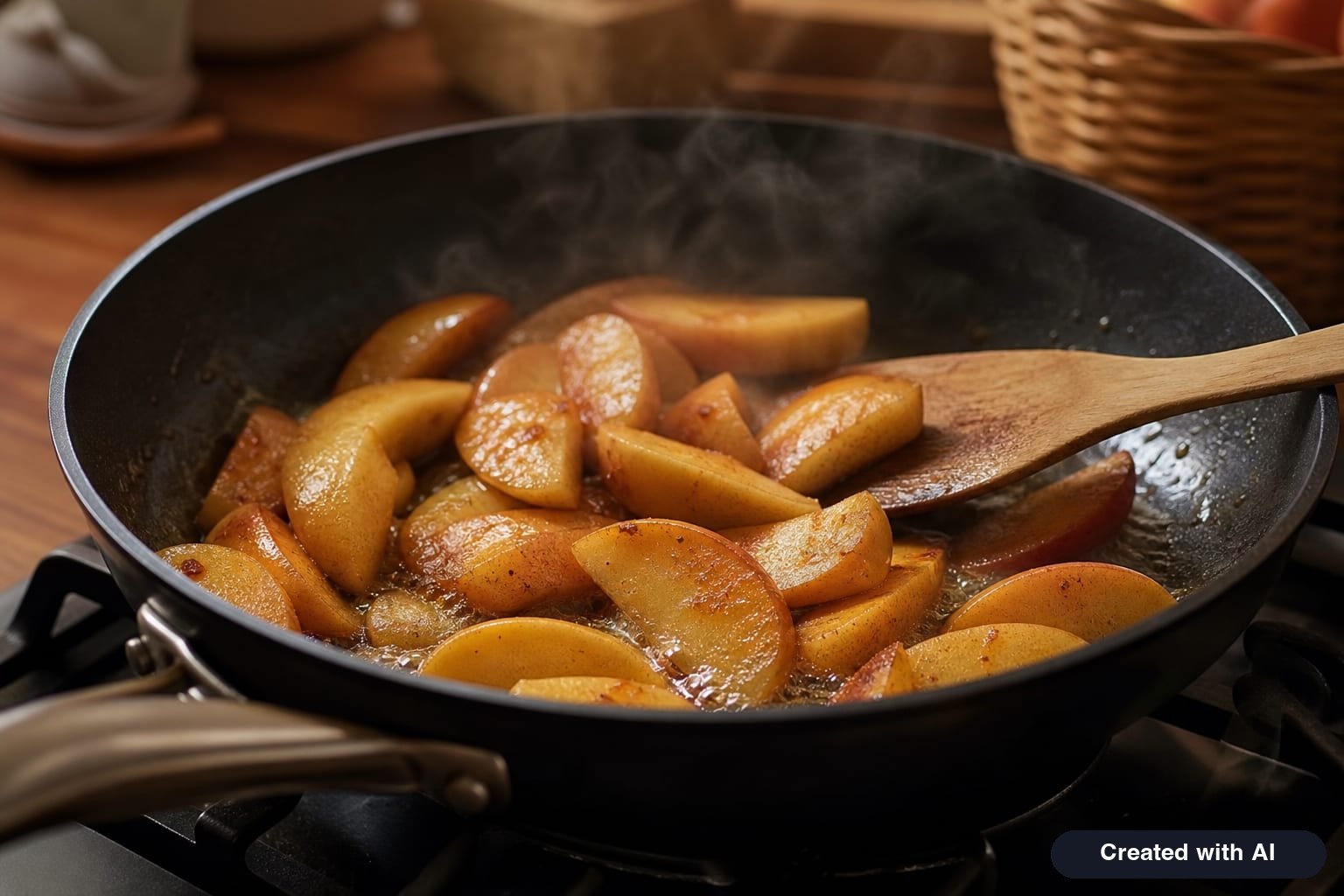
3. Filling. Peel the apples, core them, and cut into slices about ½ inch (1 cm) thick. In a large skillet, melt 2 tbsp (30 g) of butter, add the apples, brown sugar, and cinnamon. Cook over medium heat for 5–7 minutes, stirring occasionally, until the apples soften slightly and release their juices. Stir in the lemon juice and cornstarch, heat for another minute until the juices thicken, and let the filling cool completely. A hot filling would melt the butter in the raw dough, and the base would no longer be crisp and tender.
4. Base. Preheat the oven to 375°F (190°C). Roll out the larger piece of dough between two sheets of parchment paper—this avoids the need for dusting flour and keeps the dough from sticking to the rolling pin—into a circle about ⅛ inch (3–4 mm) thick and 1.5–2 inches (4–5 cm) wider than the pan. Remove the top sheet, flip the dough into the pan, press it against the bottom and sides, and trim the excess. Prick the bottom with a fork.
5. Filling into the pan. Place the cooled apples into the pastry base, leaving any excess liquid in the skillet if there is a lot. Smooth the surface.
6. Lattice. Roll out the smaller piece of dough the same way and cut into strips about ½ inch (1.5 cm) wide. Lay half of the strips parallel, then the rest crosswise, alternately lifting the bottom ones to weave them. If you don't want to weave, simply lay the strips in a crisscross pattern. Press the ends to the edges of the base, and brush the top with a mixture of egg yolk and a tablespoon of milk—the baked pie will be glossy and golden.
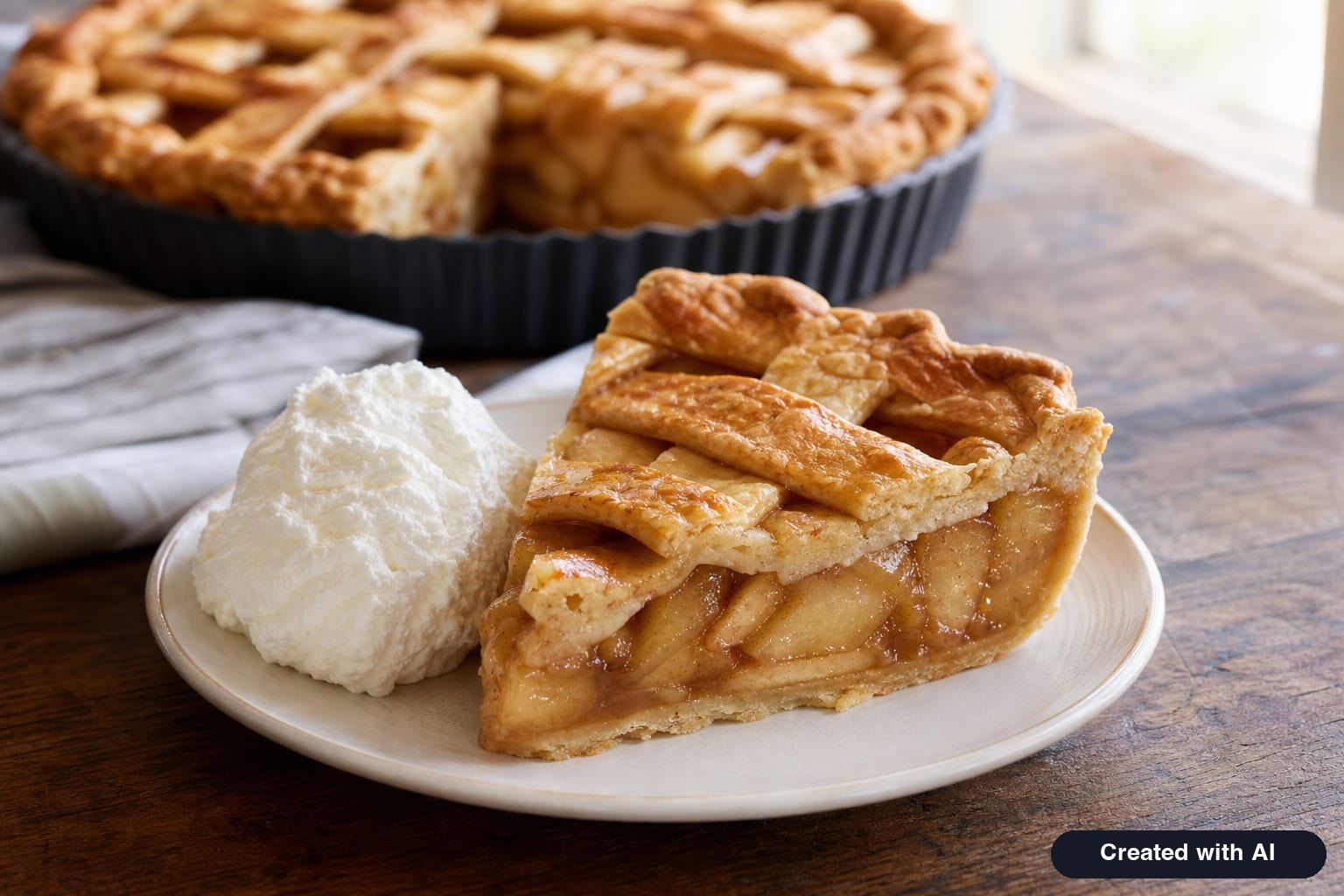
7. Baking. Place the pie in the lower third of the oven—this way the bottom gets more heat and bakes up crisp. Bake for 45–50 minutes, until the pastry turns golden brown and thick juices bubble through the lattice. If the edges brown faster than the middle, cover them with a strip of foil.
8. Cooling. Let the pie cool in the pan for at least an hour and a half. The warm filling is still a bit runny, but it sets as it cools—only then will the slices come out neat. If you want to serve it warm, bake it in advance and reheat it for 10 minutes in a 320°F (160°C) oven before eating.
Common mistakes and how to avoid them
The pastry shrank and slipped down the sides during baking. It was kneaded too long or didn't rest in the fridge. Knead only until it comes together, and be sure to chill it for at least 30 minutes; you can chill the lined pan for another 10 minutes before adding the filling.
The bottom is soggy and underbaked. The filling was too wet or hot, or the pie was baked too high in the oven. Cook the filling with cornstarch, cool it completely, and bake on the lower rack.
The dough crumbles when rolling. It's too cold or too dry. Let it sit at room temperature for 5–10 minutes; if it still crumbles, knead in a few drops of ice water.
The pastry is hard, not tender. Too much water or flour, or too much kneading. Roll between sheets of parchment paper so you don't need extra flour.
The filling leaks when sliced. The pie was sliced too hot or there was no cornstarch in the filling. Patience—an hour and a half of cooling solves almost all filling problems.
Variations: puff pastry, closed top, nuts
Apple pie with puff pastry. If you're short on time, you can replace the shortcrust pastry with two packages (about 1 lb / 500 g) of store-bought all-butter puff pastry. Line the pan with it, add the same cooled filling, cover with the second sheet or a lattice of strips, brush with egg yolk, and bake at 400°F (200°C) for about 35–40 minutes, until the pastry puffs and turns golden. A puff pastry apple pie is lighter and crispier, but not as crumbly and buttery as with homemade pastry.
Closed top. Instead of a lattice, roll out the smaller piece of dough into a circle, cover the filling, crimp the edges, and cut a few slits in the top for steam to escape. This is the classic American pie method—we describe it in more detail in the apple pie recipe.
Open tart. Use all the dough for the base, arrange the apple slices in a circle, and after baking, brush with warmed apricot jam. This pie is closer to a French apple tart.
With nuts or raisins. Stir ½ cup (50 g) of toasted walnuts or a handful of raisins, plumped in tea or a splash of rum, into the filling.
Lighter version
Shortcrust pie is one of the highest-calorie apple pies—almost three-quarters of the energy comes from the shortcrust pastry. Here is how much the most common substitutions actually change, calculated per one of the 12 slices:
| Change | How | kcal / slice | Difference |
|---|---|---|---|
| Main recipe | as written above | 336 | – |
| Less sugar in the filling | 2.5 tbsp (35 g) brown sugar instead of ⅓ cup (70 g) | 325 | −11 |
| No lattice | only the pastry base, open top (⅔ of the dough amount) | 257 | −79 |
| Filling without butter | cook the apples in 3 tbsp water instead of 2 tbsp (30 g) butter | 318 | −18 |
| Half whole wheat flour | 1 ¼ cups (150 g) all-purpose + 1 ¼ cups (150 g) whole wheat flour | 332 | −4 |
| Puff pastry | 2 packages (1 lb / 500 g) store-bought puff pastry instead of shortcrust | 323 | −13 |
Calculated with the Firmus Medicus calorie database, with the recipe divided into 12 slices.
Skipping the lattice saves the most calories: an open pie with just a pastry base has almost 80 kcal less per slice. Cooking the filling without butter saves another 18 kcal, and halving the brown sugar saves about 11. Whole wheat flour barely changes the calories but adds fiber and a nutty flavor. Store-bought puff pastry, despite the impression, is not much lighter—it is also made of fat and flour.
How many calories are in shortcrust apple pie
One slice of this pie (divided into 12 slices, about 5 oz / 150 g) has about 335 kcal. This is more than a slice of easy apple cake (about 200 kcal), because the ratio of butter and flour in shortcrust pastry is much higher than in a sponge. Below is how many calories each ingredient brings.
| Ingredient | Amount | kcal, whole recipe | Share |
|---|---|---|---|
| Butter | 200 g | 1434 | 36 % |
| White wheat flour | 300 g | 1092 | 27 % |
| Apple | 1000 g | 520 | 13 % |
| Powdered sugar | 80 g | 311 | 8 % |
| Brown sugar | 70 g | 266 | 7 % |
| Butter | 30 g | 215 | 5 % |
| Egg | 50 g | 72 | 2 % |
| Cornstarch | 15 g | 57 | 1 % |
| Egg yolk, raw | 17 g | 55 | 1 % |
| Cinnamon, ground | 3 g | 7 | 0 % |
| Lemon juice, raw | 15 g | 3 | 0 % |
| Table salt | 1 g | 0 | 0 % |
| Total | 1781 g | 4032 | 336 kcal / slice |
Ingredient values – Firmus Medicus calorie database.
How to store and freeze
At room temperature, lightly covered with a clean tea towel, the pie stays crisp for 1–2 days. In the fridge in an airtight container, it keeps for up to 4 days, but the crust softens slightly—reheat a slice for 8–10 minutes in a 320°F (160°C) oven before eating, and the crispness will return.
The baked and cooled pie can be frozen for up to 3 months—whole or in slices, wrapped in plastic wrap. It's even more convenient to freeze the raw dough: disks wrapped in plastic wrap keep in the freezer for up to 3 months, and once thawed in the fridge overnight, they are ready to roll.
If you want a quicker and simpler bake, choose the easy apple cake, which you can prep in 15 minutes. And if you like the buttery flavor but don't want to roll dough, try the apple crumble pie—its dough is rubbed by hand in minutes.
Frequently asked questions
How do you make shortcrust pastry for apple pie?
Mix 2 ⅓ cups (300 g) of all-purpose flour with ⅔ cup (80 g) of powdered sugar and salt, quickly rub in 1 ¾ sticks (200 g) of cold cubed butter, add an egg, and press into a ball. Do not knead long and chill for at least 30 minutes before rolling.
Why does shortcrust pastry shrink when baking?
Usually, it was kneaded too long or didn't rest in the fridge, causing gluten development that pulls it back. Knead only until it comes together, chill for at least 30 minutes, and chill the lined pan for another 10 minutes before baking.
Should you precook the apples for a shortcrust apple pie?
We recommend it. Cooking them for 5–7 minutes with butter, brown sugar, and cornstarch allows apples to release some juices in the pan, keeping the crust crisp and ensuring the cooled filling sets without leaking when sliced.
How long do you bake a shortcrust apple pie?
Bake at 375°F (190°C) in the lower third of the oven for 45–50 minutes, until the crust is golden brown and thick juices bubble through the lattice.
Can you use puff pastry?
Yes: two packages (about 1 lb / 500 g) of store-bought all-butter puff pastry will work. Bake at 400°F (200°C) for about 35–40 minutes. The pie will be crispier and lighter, but not as tender and short as homemade pastry.
How many calories are in shortcrust apple pie?
According to this recipe, divided into 12 slices, a 5 oz (150 g) slice has about 335 kcal. An open pie without the lattice top is about 255 kcal per slice.
Can you freeze shortcrust pastry?
Yes. Pastry disks wrapped in plastic wrap keep in the freezer for up to 3 months; thaw them in the fridge overnight and roll out like fresh pastry.
Log in to comment
No comments yet. Be the first.