Deep-Fried Turkey: Time per Pound, Oil Temp and Safety
- USDA: 3 to 5 minutes per pound in oil held at 350°F, for unstuffed turkeys of 12 pounds or less; a 12-pound bird takes 36 to 60 minutes.
- Measure the oil with a water test first, fry outdoors on level ground away from buildings, and never fry a frozen or wet turkey.
- NFPA strongly discourages oil-filled turkey fryers; Thanksgiving is the peak day for home cooking fires.
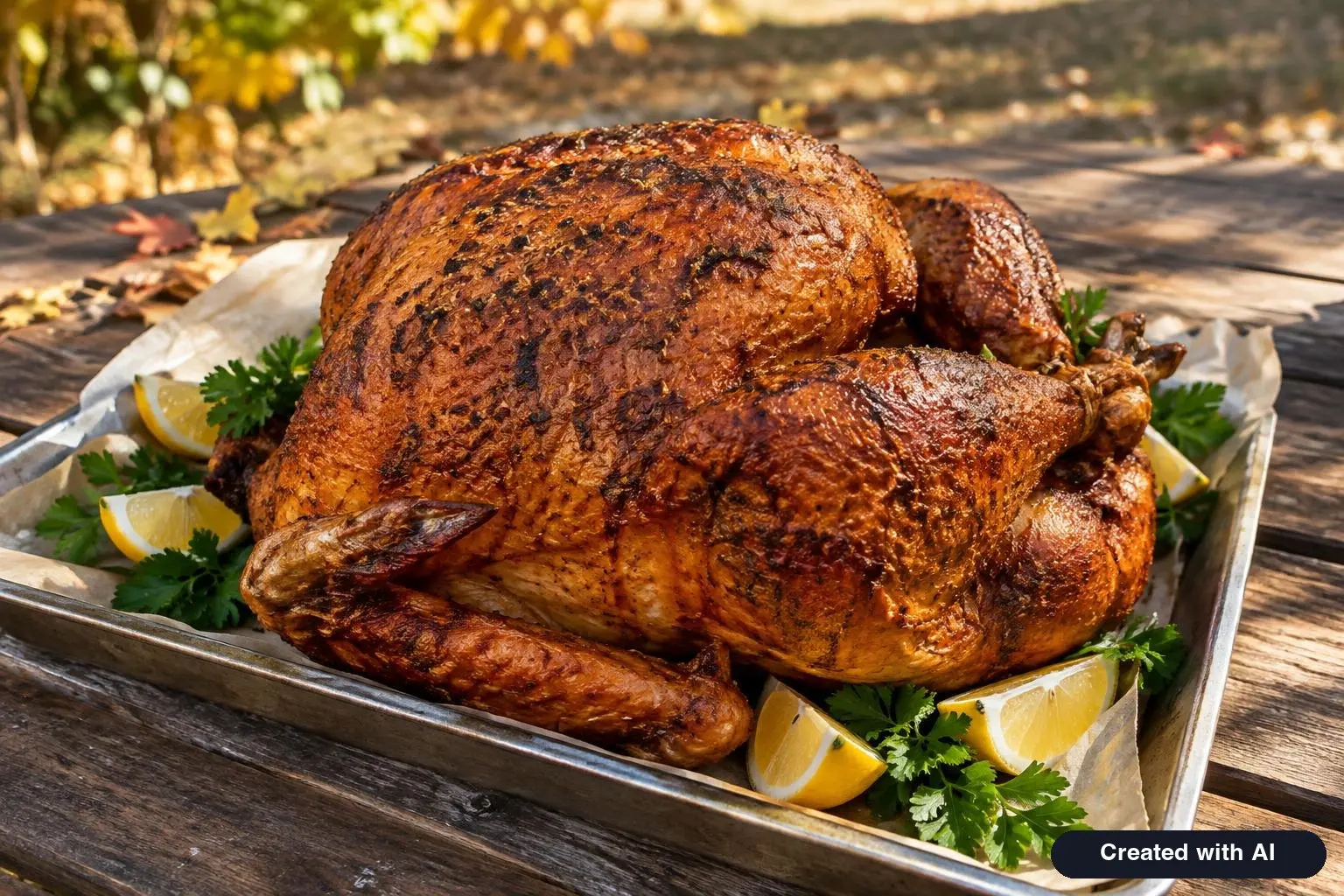
Classic Deep-Fried Turkey
No ratings yet – be the firstIngredients
Directions
- Water test. The day before, put the turkey in the basket in the empty pot, cover with water by 1 to 2 inches, remove the turkey and mark the water level. Empty and dry the pot completely.
- Season. Pat the turkey dry. Rub with the 2 tablespoons kosher salt, paprika, garlic powder, pepper, onion powder and cayenne. Refrigerate uncovered overnight.
- Heat the oil. Outdoors on level ground, fill the pot with oil to the mark and heat to 350°F (175°C), or 375°F (190°C) to allow for the drop when the turkey goes in.
- Lower. Pat the turkey dry again, including the cavity, and set it in the basket. Turn the burner off, lower the turkey very slowly into the oil, then relight the burner.
- Fry. Fry at 350°F (175°C) for 3 to 5 minutes per pound, 30 to 60 minutes for a 10 to 12 lb bird. Never leave the fryer unattended.
- Check. Turn the burner off and lift the turkey to drain. It is done at 165°F (74°C) in the innermost thigh, innermost wing and thickest part of the breast. Return it to the oil if needed.
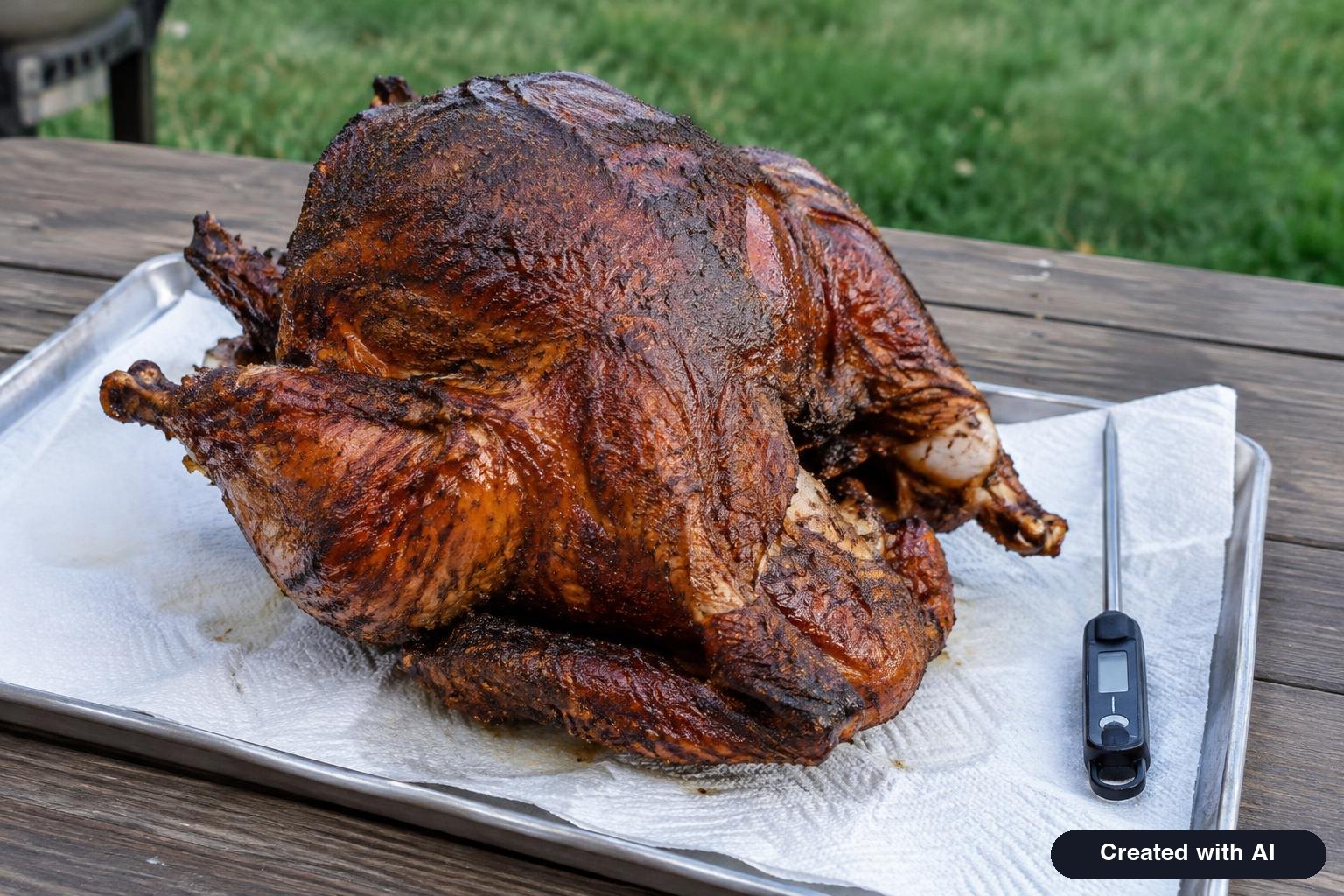
- Rest. Drain on a tray lined with paper towels and rest about 20 minutes before carving. Let the oil cool completely before moving the pot.
A deep-fried turkey cooks in 3 to 5 minutes per pound in oil held at 350°F, according to the USDA Food Safety and Inspection Service (FSIS). That is 36 to 60 minutes for a 12-pound bird, the largest size USDA recommends frying. The turkey has to be completely thawed, completely dry and unstuffed, and it is done when a thermometer reads 165°F in the innermost thigh, the innermost wing and the thickest part of the breast.
Frying produces crisp skin and moist meat in under an hour and keeps the oven free. It is also the riskiest way to cook a turkey. The National Fire Protection Association (NFPA) says plainly that turkey fryers that use cooking oil are not safe and strongly discourages their use. If you are going to fry, the procedure below is the one to follow exactly.
How long to deep fry a turkey
| Turkey weight | At 3 minutes per pound | At 3 to 5 minutes per pound (USDA range) |
|---|---|---|
| 8 lb | 24 minutes | 24 to 40 minutes |
| 10 lb | 30 minutes | 30 to 50 minutes |
| 12 lb | 36 minutes | 36 to 60 minutes |
| 14 lb | 42 minutes | 42 to 56 minutes (Butterball's 3 to 4 minutes per pound; above USDA's size limit) |
The sources agree closely. USDA says 3 to 5 minutes per pound. Butterball says about 3 to 4 minutes per pound. The National Turkey Federation says approximately 3 minutes per pound. Start checking at 3 minutes per pound: lift the turkey clear of the oil, let it drain for a moment, and take the temperature. If it is short of 165°F, USDA's instruction is to return it to the hot oil immediately.
Oil temperature
USDA and the National Turkey Federation call for 350°F. Butterball preheats to 375°F, because the temperature falls sharply when a cold turkey goes in, and then cooks at about 350°F. Clip a deep-fry thermometer to the pot and watch it the whole time. Below about 325°F the turkey absorbs oil and turns greasy. Much above 375°F and you are approaching the point where oil breaks down and smokes. Refined peanut oil smokes at around 450°F, and oil that is smoking is close to igniting.
The safety rules that are not optional
According to NFPA, Thanksgiving is the peak day of the year for home cooking fires: an estimated 1,139 were reported to U.S. fire departments on Thanksgiving Day 2024, more than three times the daily average. Turkey fryers hold several gallons of oil at high temperature over an open flame, on a stand that can tip. Most accidents come from a handful of avoidable mistakes.
- Fry outdoors, away from everything. The National Turkey Federation says never to fry indoors, in a garage or in any structure attached to a building. Set the fryer on level dirt or grass, not on a wooden deck, which can catch fire. Keep it well clear of the house, eaves, fences and trees.
- Thaw the turkey completely. Ice turns to steam instantly in 350°F oil and throws the oil out of the pot and onto the burner. USDA says never to deep-fry a frozen turkey. Thawing takes 24 hours per 4 to 5 pounds in the refrigerator; see how long to thaw a turkey.
- Dry it inside and out. Water causes the same boil-over on a smaller scale. Drain the cavity and pat everything dry with paper towels.
- Measure the oil with water first. Overfilling is the classic cause of fryer fires. The method is below.
- Do not stuff it. USDA and the National Turkey Federation both say so.
- Stay with it. USDA: never leave hot oil unattended. Keep children and pets away from the area, before, during and for hours after, while the oil cools.
- Turn the burner off to lower the bird. Butterball's instruction for propane fryers: when the oil is hot, turn the burner off, lower the turkey slowly, then relight. If oil spills, there is no flame for it to reach.
- Use two people to lower and raise the turkey, as the National Turkey Federation advises, and wear long sleeves, closed shoes, heavy gloves and eye protection.
- Keep a fire extinguisher suitable for grease fires within reach. Never use water on burning oil. If a fire is not out at once, get away and call 911.
- Skip the alcohol until the oil is off.
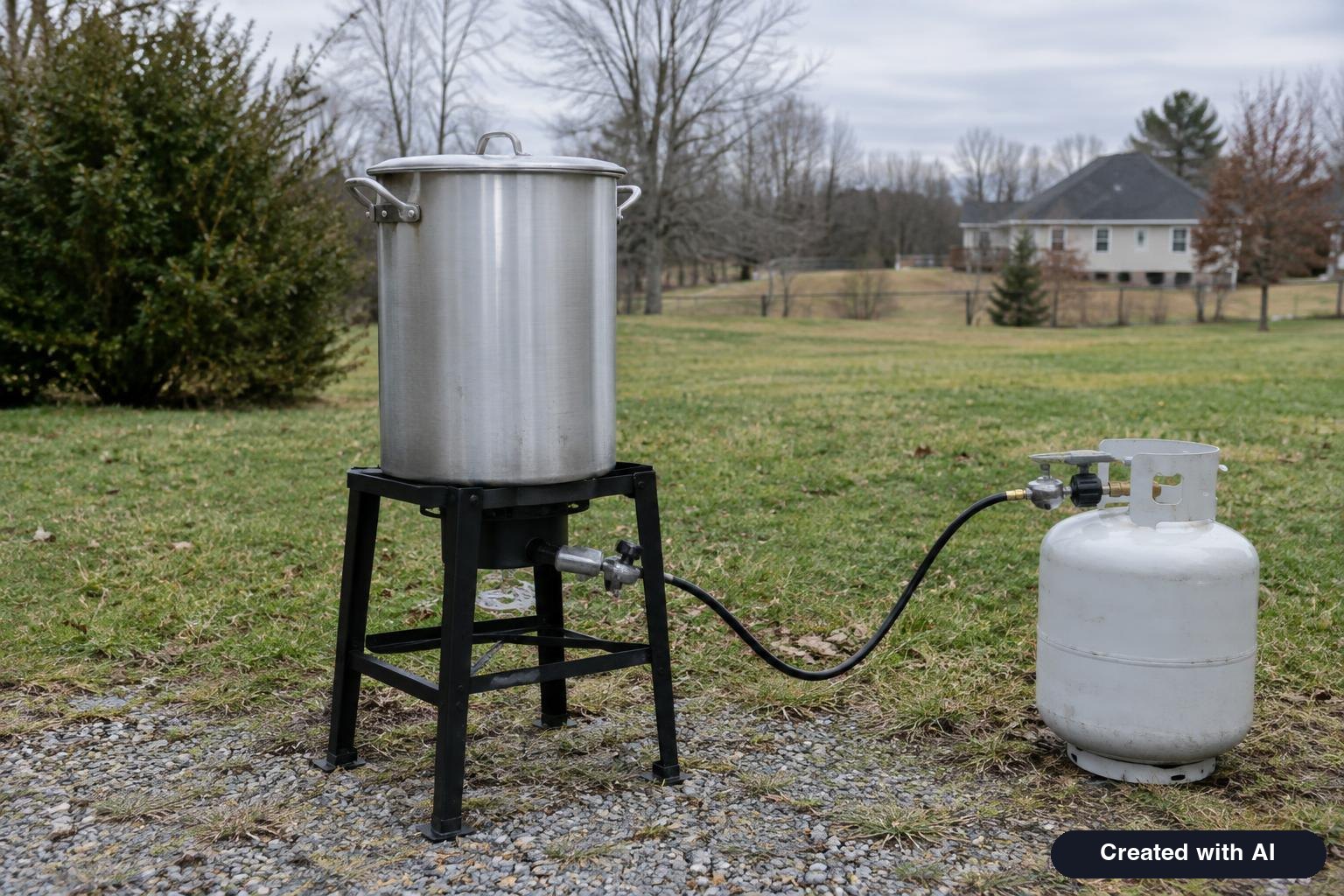
What you need
- A turkey of 8 to 12 pounds. USDA sets 12 pounds as the limit; the National Turkey Federation says 8 to 10 pounds and turkey parts fry best. For more guests, fry two small birds one after the other. Sizing help is in how much turkey per person.
- A turkey fryer: a 28- to 30-quart pot with a basket or hanger, a sturdy stand and propane burner, or an electric turkey fryer designed for the job. Follow the manual, and with an electric fryer never exceed the maximum fill line.
- Oil with a high smoke point. The National Turkey Federation lists peanut, refined canola, corn, rice and sunflower oils.
- A deep-fry thermometer for the oil and a food thermometer for the turkey.
- A full propane tank, heavy gloves, a fire extinguisher, paper towels and a sturdy tray.
How much oil to deep fry a turkey
The National Turkey Federation's estimate is approximately 5 gallons, more for larger turkeys; many 30-quart setups need 3 to 4 gallons for a 12-pound bird. Do not go by estimates. Use the water test from USDA and Butterball, and do it before you season the turkey:
- Place the thawed turkey in the fryer basket and set it in the empty pot.
- Add water until the turkey is covered by 1 to 2 inches. There should still be several inches of space below the rim.
- Lift the turkey out, letting the water drain back into the pot.
- Mark the water line on the pot, or measure the water. That is your oil level.
- Pour out the water and dry the pot and the turkey completely.
Peanut oil or something else?
Peanut oil is traditional because it tolerates high heat and has a clean flavor, but it is the most expensive option and a concern if any guest has a peanut allergy. Refined canola, corn and sunflower oils fry a turkey just as well. Tell your guests which oil you used. Do not use olive oil, butter or shortening blends with low smoke points.
Deep-fried turkey recipe, step by step
For one 10- to 12-pound turkey, serving 8 to 10. Amounts match the recipe card.
Ingredients
- 1 whole turkey, 10 to 12 lb (4.5 to 5.4 kg), completely thawed, giblets and neck removed
- 3 to 5 gallons (11 to 19 L) peanut, canola or corn oil, measured by the water test
- 2 tablespoons kosher salt (omit for a kosher or self-basting turkey)
- 1 tablespoon paprika
- 2 teaspoons garlic powder
- 2 teaspoons ground black pepper
- 1 teaspoon onion powder
- ½ teaspoon cayenne pepper, optional
Steps
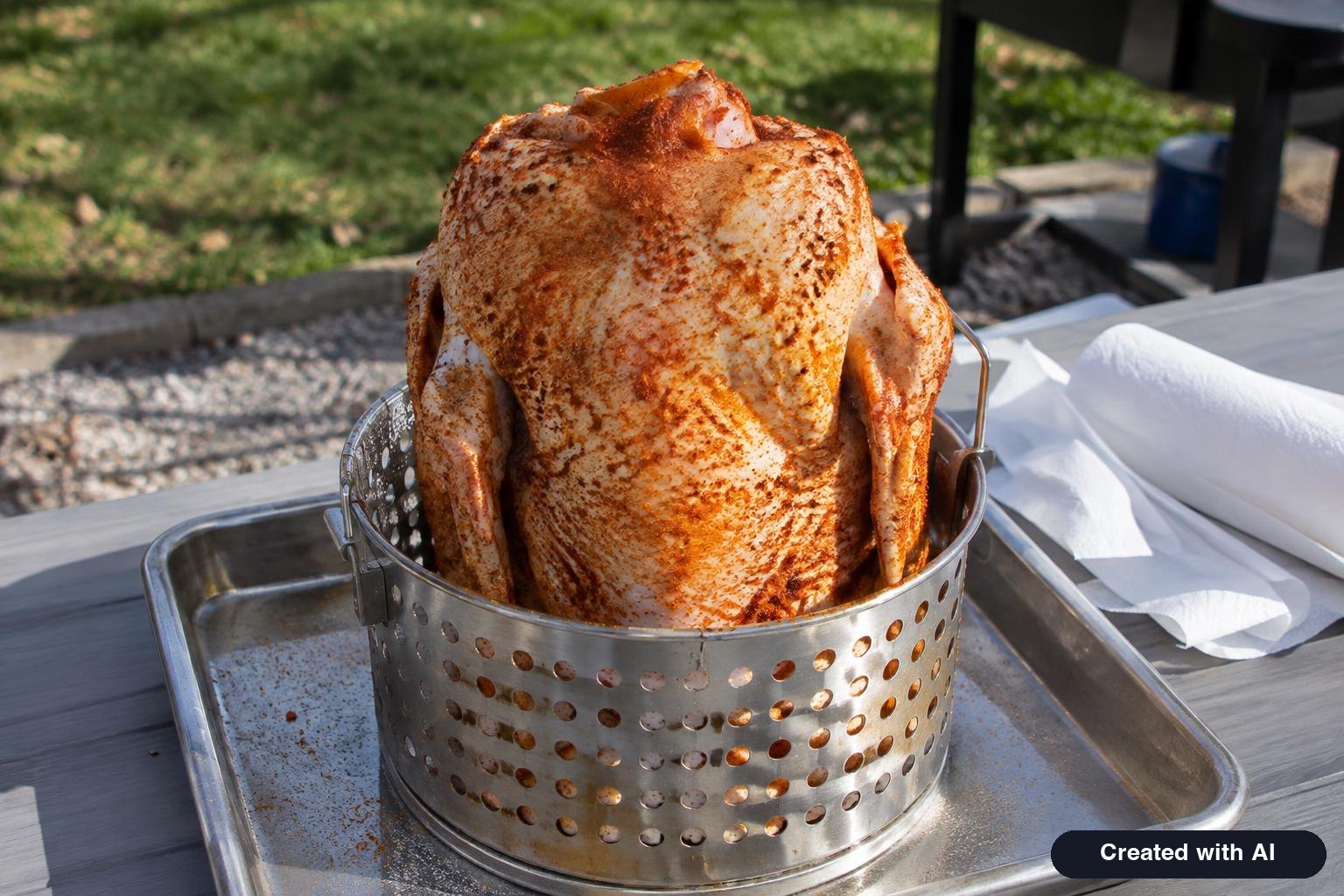
- The day before: do the water test. Dry the turkey thoroughly, rub it inside and out with the salt and spices, and refrigerate it uncovered on a rack. This dry brine seasons the meat and dries the skin. Remove any pop-up timer and any plastic or metal leg truss.
- Set up the fryer outdoors on level ground. Fill the pot with oil to your mark.
- Heat the oil to 350°F, or to 375°F if you are following Butterball's method. The National Turkey Federation says this usually takes 45 minutes to an hour.
- Prepare the bird. Take the turkey out of the refrigerator while the oil heats. Pat it dry again, including the cavity. Place it in the basket or on the hanger, neck end down, so the cavity can drain.
- Lower it. Turn off the burner. Wearing gloves, lower the turkey into the oil very slowly, pausing if the oil surges. This should take a full minute. Relight the burner.
- Fry for 3 to 5 minutes per pound, 30 to 60 minutes for this size, holding the oil as close to 350°F as you can. Do not cover the pot.
- Check. Turn off the burner, lift the turkey slowly, and let oil drain from the cavity. The turkey is done at 165°F in the innermost thigh, the innermost wing and the thickest part of the breast. If it is not there, lower it back in.
- Drain and rest. Set the turkey on a tray lined with paper towels and rest it about 20 minutes before carving, as USDA and Butterball both advise. The skin can range from golden to very dark brown; USDA notes it may be almost black.
Carving a fried turkey is the same as carving a roasted one; see how to carve a turkey.
Seasoning, injecting and brining
Dry rubs on the skin mostly wash off in the oil, so the seasoning that counts is the salt that has had time to work into the meat. That is why the dry brine the day before matters. Avoid sugar in a rub; it burns at frying temperatures and darkens the oil.
Injection is the traditional way to flavor a fried turkey. The National Turkey Federation's guideline is about 1 cup of marinade for an 8- to 10-pound turkey, with two-thirds injected into the breast and one-third into the rest of the bird. A simple injection is melted butter mixed with low-sodium chicken broth, garlic powder and hot sauce, strained so it does not clog the needle. Inject, then pat the skin dry again; liquid on the surface will spatter.
Wet brining works but adds water, which is exactly what you do not want near hot oil. If you wet brine, drain the turkey well and let it air-dry on a rack in the refrigerator for several hours. Do not brine a kosher or self-basting turkey. Ratios are in turkey brine.
No breading or batter is needed. The skin crisps on its own.
Common questions about the cook itself
Why is part of the breast pale?
Butterball notes that if the turkey is not totally immersed, the top of the breast can stay white even when it has reached the proper temperature. Go by the thermometer.
Why did the oil temperature crash?
A 12-pound turkey straight from the refrigerator pulls a lot of heat out of the oil. Preheating to 375°F, as Butterball suggests, leaves room for the drop. Bring the burner back up gradually; do not walk away with it on high.
Can I fry a turkey in the rain or snow?
No. Water falling into hot oil causes violent spattering. If the weather turns, roast the turkey instead: a 12-pound bird takes about 3 hours at 325°F. See how long to cook a turkey.
Can I fry a turkey breast?
Yes. The National Turkey Federation says turkey parts such as breasts, wings and thighs fry well. Use the same oil temperature and check for 165°F. Other ways to cook a breast are in turkey breast.
After frying: the oil
- Let it cool completely before moving the pot. Several gallons of oil stay dangerously hot for hours. Keep the lid on and the area off-limits.
- Reusing. USDA says used oil can be reused if it is strained, covered and used within a month, and recommends refrigerating it. Strain it through cheesecloth or a fine sieve back into its original containers. Discard oil that smells off, foams or has darkened heavily.
- Disposing. Never pour oil down a drain or onto the ground. Seal cooled oil in its containers and check whether your city or county has a cooking-oil recycling drop-off, which some communities set up after Thanksgiving. Otherwise it goes in the household trash, sealed.
Safer alternatives with a similar result
- Oil-less turkey fryers. These outdoor units cook with radiant heat instead of a vat of oil. NFPA's warning is specifically about fryers that use cooking oil.
- Electric turkey fryers. They use less oil and have a thermostat and a fill line. Use only as the manual directs.
- Spatchcocking. A flattened turkey roasted at 450°F has crisp skin all over and is done in about 80 minutes. See spatchcock turkey.
- Air-fried turkey breast. Butterball's directions are 400°F for 45 to 60 minutes.
- Buying one. Some grocery stores and restaurants sell fried turkeys to order for the holiday. If you buy one hot, keep it hot and serve it within 2 hours, or refrigerate it and reheat it to 165°F.
Leftovers and reheating
The National Turkey Federation's advice is to serve fried turkey right away and refrigerate leftovers within 2 hours of cooking. USDA's storage rules apply: 3 to 4 days in the refrigerator, or 2 to 6 months in the freezer for best quality. To reheat without losing the skin entirely, warm pieces uncovered on a rack in an oven set no lower than 325°F until they reach 165°F. The microwave is safe but turns the skin soft.
Frying day checklist
- Turkey 12 pounds or less, fully thawed, giblets out, no stuffing
- Water test done; oil line marked; pot and bird dried
- Fryer outdoors on level ground, clear of buildings and overhangs
- Propane tank full; hose and connections checked
- Oil thermometer clipped on; food thermometer in your pocket
- Gloves, long sleeves, closed shoes, eye protection
- Fire extinguisher within reach; no water hose
- Children and pets indoors
- Burner off before lowering and before lifting
- 165°F in thigh, wing and breast before it leaves the fryer area
Thanksgiving 2026 is Thursday, November 26. A frozen 12-pound turkey that will be dry-brined on Wednesday should be in the refrigerator by Sunday, November 22.
Frequently asked questions
How long does it take to deep fry a 12 pound turkey?
About 36 to 60 minutes, at USDA's 3 to 5 minutes per pound in 350°F oil. Start checking at 36 minutes; it is done at 165°F in the thigh, wing and breast.
How long do you deep fry a turkey per pound?
Three to five minutes per pound, according to USDA. Butterball says 3 to 4 minutes and the National Turkey Federation about 3 minutes. Use the low end as your first check.
What temperature should the oil be to fry a turkey?
350°F. Butterball recommends preheating to 375°F because the temperature drops when the turkey goes in. Monitor it constantly with a deep-fry thermometer.
How much oil do I need to deep fry a turkey?
Usually 3 to 5 gallons, depending on the pot and the bird. Find the exact amount by putting the turkey in the pot, covering it with water by 1 to 2 inches, removing the turkey and marking the water level.
Can you deep fry a frozen turkey?
No. Ice in the bird turns to steam, forces hot oil out of the pot and can cause a fire or explosion-like boil-over. The turkey must be completely thawed and patted dry.
What is the best oil for deep frying a turkey?
Any oil with a high smoke point. The National Turkey Federation lists peanut, refined canola, corn, rice and sunflower oils. Choose something other than peanut oil if a guest has a peanut allergy.
Can you deep fry a 20 pound turkey?
It is not recommended. USDA says a turkey for frying should be 12 pounds or less. Large birds can overflow the pot and the outside overcooks before the inside is done. Fry two smaller turkeys instead.
Can you reuse turkey fryer oil?
Yes. USDA says the oil can be reused if it is strained, covered and used within a month. Let it cool completely first and store it in the refrigerator.
Log in to comment
No comments yet. Be the first.