Turkey Brine: Wet and Dry Brine Recipes, Ratios and Timing
- USDA's wet brine ratio is ¾ cup of salt per gallon of water, refrigerated at least overnight; most test kitchens brine 12 to 24 hours.
- USDA's dry brine ratio is 1 tablespoon of kosher salt per 5 pounds of turkey, refrigerated for up to 2 days.
- Do not brine kosher, basted or self-basting turkeys; they already contain salt.
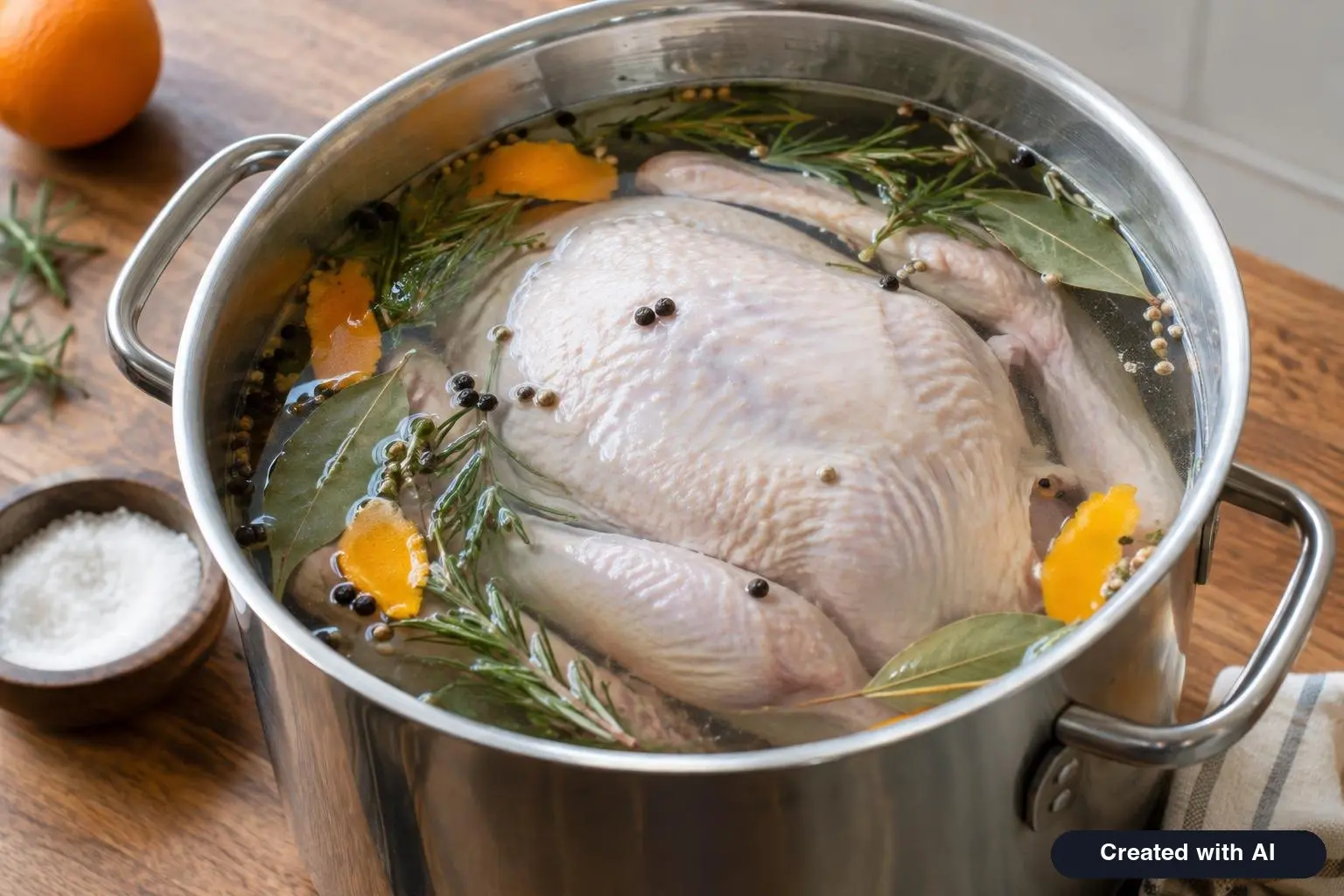
- Wet brine or dry brine: which to choose
- What brining does
- Do not brine these turkeys
- Wet turkey brine recipe (for a 12- to 16-pound turkey)
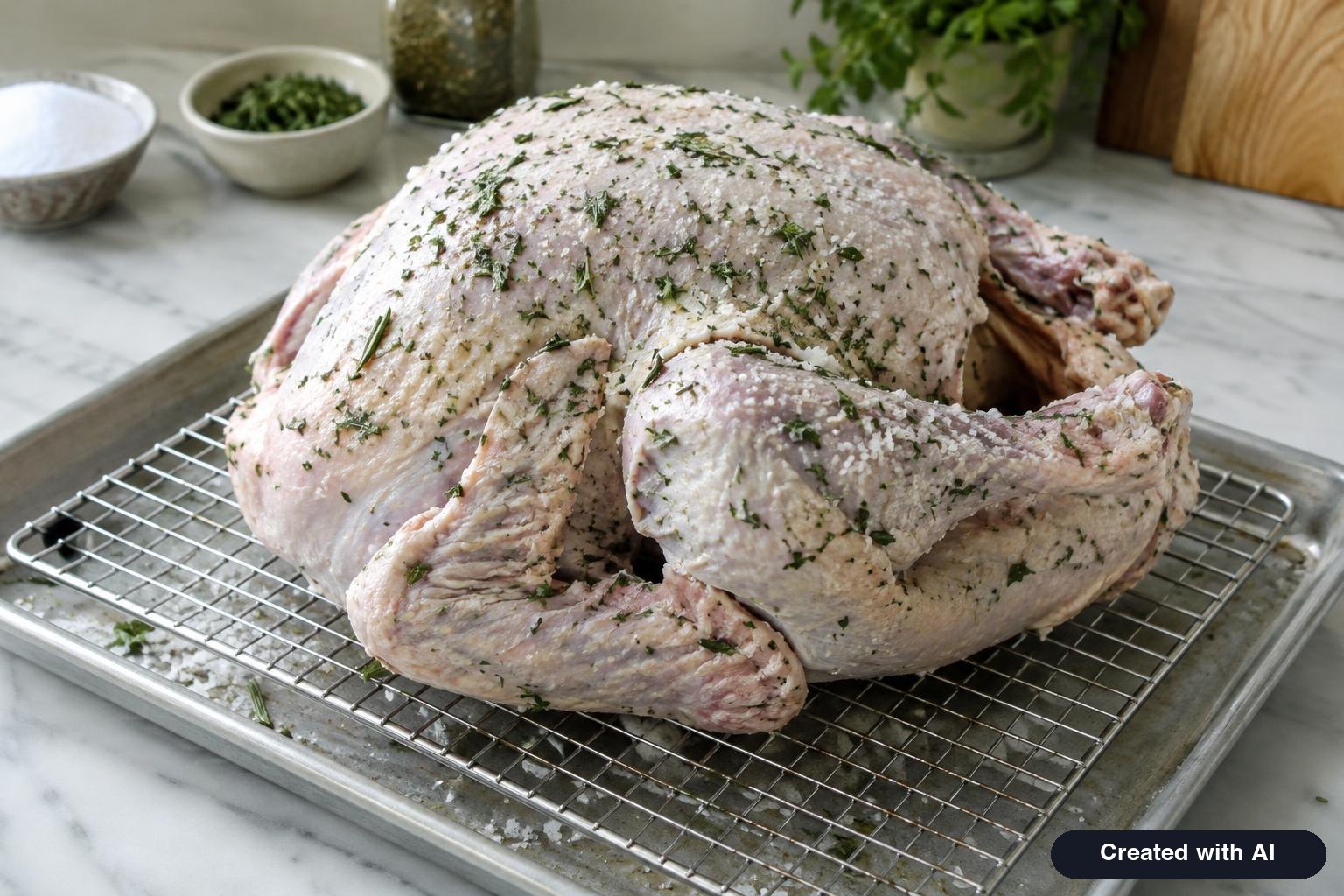
- Dry brine for turkey
- How long to brine a turkey
- Brining safely: containers, bags and coolers
- Brine for smoked, fried and spatchcocked turkey
- Cooking a brined turkey
- Common brining mistakes
Basic Wet Turkey Brine
No ratings yet – be the firstIngredients
Directions
- Dissolve. Warm 1 quart (about 1 L) of the water with the 1½ cups (430 g) table salt, the sugar and any aromatics, stirring just until the salt dissolves.
- Chill. Add the remaining cold water, part of it as ice if you like. The brine must be at 40°F (4°C) or below before the turkey goes in.
- Submerge. Place the turkey breast side down in a food-grade container or brining bag set in a pan. Pour in the brine to cover completely; weigh the bird down with a plate if it floats.
- Refrigerate. Keep at 40°F (4°C) or below for 12 to 24 hours.
- Drain and dry. Lift the turkey out, drain well and pat completely dry inside and out with paper towels. Discard the brine.
- Air-dry and roast. For crisper skin, leave the turkey uncovered on a rack in the refrigerator for several hours. Roast at 325°F (165°C) or above until it reaches 165°F (74°C) in the thigh, wing and breast. Do not add more salt.
A basic turkey brine is salt and water: ¾ cup of table salt per gallon of water (3 tablespoons per quart), with the turkey fully submerged and refrigerated at least overnight. That is the ratio from the USDA Food Safety and Inspection Service (FSIS). A dry brine skips the water: rub 1 tablespoon of kosher salt per 5 pounds of turkey over the bird and refrigerate it for 1 to 2 days. Both methods season the meat all the way through and help it hold on to moisture in the oven.
This guide gives a wet brine recipe sized for a 12- to 16-pound turkey, a dry brine chart by weight, how long each takes, which turkeys should not be brined at all, and the food safety rules that apply while the bird sits in salt.
Wet brine or dry brine: which to choose
| Wet brine | Dry brine | |
|---|---|---|
| What it is | Turkey soaked in salt water | Turkey rubbed with salt, no liquid |
| Salt | ¾ cup table salt per gallon of water (USDA); or 1 cup kosher salt per gallon (The Kitchn) | 1 tablespoon kosher salt per 5 lb of turkey (USDA) |
| Time | At least overnight; 12 to 24 hours is the usual range | 1 to 2 days; test kitchens go up to 3 |
| Space needed | A container big enough to submerge the bird, kept at 40°F or below | One refrigerator shelf |
| Skin | Softer unless air-dried afterward | Drier, browns and crisps more easily |
| Flavor | Very juicy; can taste slightly diluted | Concentrated turkey flavor, well seasoned |
| Best for | Cooks with a spare fridge or large cooler; lean heritage or wild birds | Most home kitchens; anyone short on fridge space |
USDA describes dry brining as "an easy alternative to traditional liquid brining methods," and that is the general direction test kitchens have moved in as well. The Kitchn sums up the trade-off: dry brining is less messy and takes less space, but takes longer. If you have never brined before and your refrigerator is already full, dry brine.
What brining does
USDA's explanation comes from Dr. Alan Sams of Texas A&M University: salt dissolves some of the protein in the muscle, and the salt and protein together reduce moisture loss during cooking. The result is meat that is juicier, more tender and better seasoned. In a dry brine the salt first draws liquid out of the bird, dissolves in it, and is then reabsorbed, so the turkey ends up brined in its own juices without added water.
Sugar is optional in either method. USDA notes that a sweetener such as sugar, molasses, honey or corn syrup can be added for flavor and to improve browning. Herbs, peppercorns, citrus and garlic add aroma mostly to the skin and the outer layer of meat; salt is the ingredient doing the work.
Do not brine these turkeys
Check the label before you buy salt. Some turkeys are already seasoned, and brining them again makes them too salty.
- "Basted" or "self-basting" turkeys. USDA requires that label on bone-in poultry injected or marinated with a solution of broth, fat, water and seasonings. The label will say something like "contains up to 3% of a solution." Many supermarket frozen turkeys fall in this group.
- Kosher turkeys. They are salted as part of processing.
- Anything labeled "enhanced," "marinated" or "for flavoring." USDA says these terms mean a solution has been added: up to 3 percent by weight for bone-in poultry and up to 8 percent for boneless.
A turkey labeled "natural" or "minimally processed" with no added solution is the right candidate. If you already own a self-basting bird, skip the brine and season with pepper, herbs and unsalted butter instead.
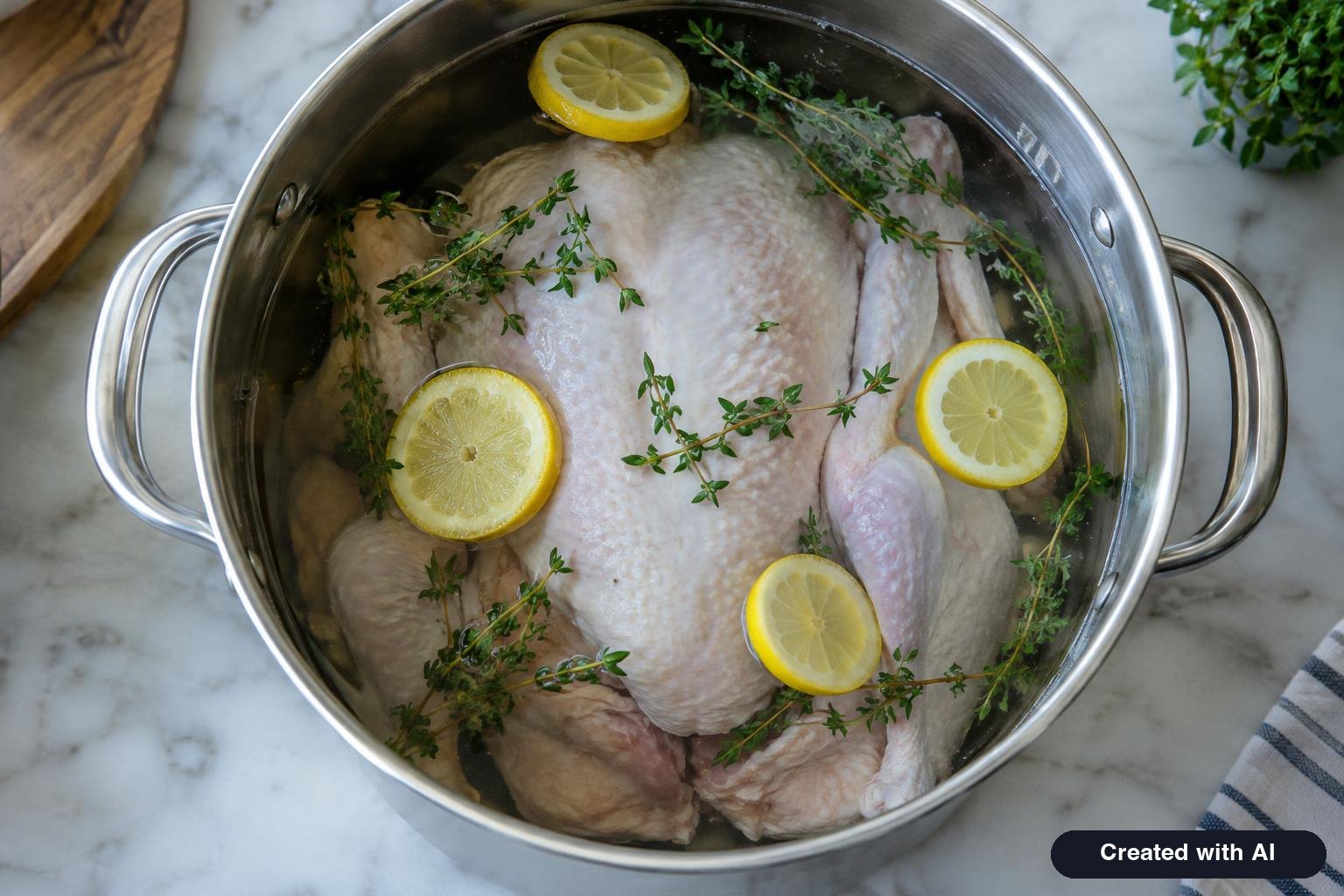
Wet turkey brine recipe (for a 12- to 16-pound turkey)
This follows USDA's ratio. Two gallons is usually enough to cover a 12- to 16-pound turkey in a tall stockpot or brining bag; make a third gallon at the same ratio if the bird is not covered.
Ingredients
- 2 gallons (7.6 L) cold water, divided
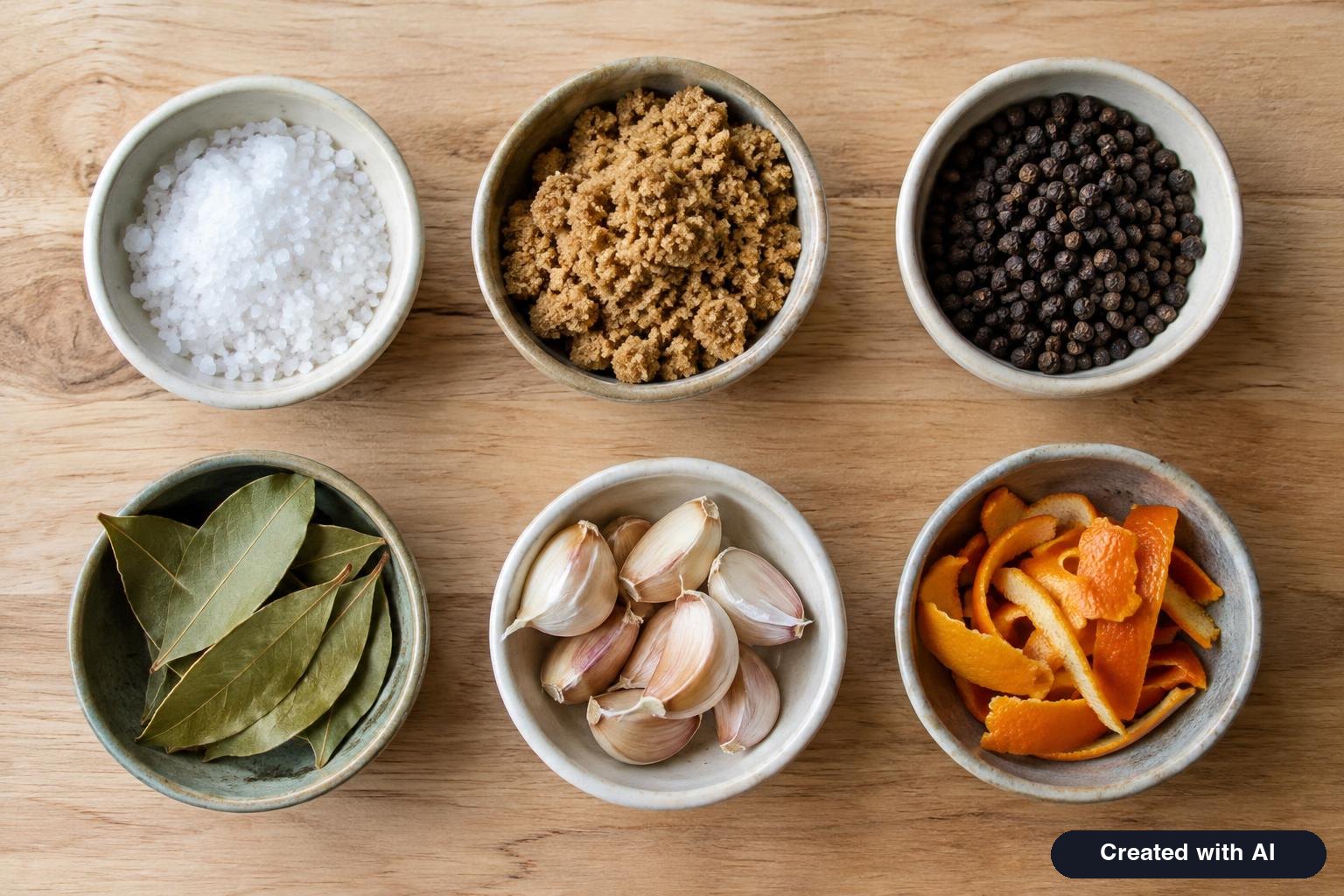
- 1½ cups (about 430 g) table salt, or 2 cups kosher salt
- ½ cup (100 g) brown sugar, optional
- 2 bay leaves, 1 tablespoon whole black peppercorns, 4 smashed garlic cloves, optional
- A few sprigs of thyme or rosemary and strips of peel from 1 orange or lemon, optional
- 1 whole turkey, 12 to 16 lb (5.4 to 7.3 kg), thawed, giblets removed, with no added solution
Steps
- Dissolve. Warm 1 quart (about 1 L) of the water with the salt, the sugar and any aromatics, stirring just until the salt dissolves. It does not need to boil.
- Chill. Add the remaining cold water. The brine must be cold, 40°F or below, before the turkey goes in. Adding some of the water as ice speeds this up.
- Submerge. Put the turkey in a food-grade container or brining bag, breast side down, and pour in the brine. It should cover the bird completely. Weigh the turkey down with a plate if it floats.
- Refrigerate 12 to 24 hours. Keep it at 40°F or below the entire time. USDA's guidance is at least overnight. The Kitchn advises not going past 24 hours, after which the texture turns spongy.
- Drain and dry. Lift the turkey out, let it drain over the container, and pat it thoroughly dry inside and out with paper towels. Discard the brine; never reuse it.
- Air-dry if you have time. For crisper skin, leave the turkey uncovered on a rack in the refrigerator for several hours or overnight before roasting.
About rinsing. Some recipes, including The Kitchn's, rinse the bird after a wet brine and then tell you to scrub the sink. USDA advises against washing raw poultry at all, because splashing spreads bacteria; in its study, 60 percent of people who washed raw poultry had bacteria in the sink afterward. Draining and patting dry removes surface salt well enough. If you do rinse, do it gently in an empty sink and sanitize the sink and counters right away.
Kosher salt, table salt and why the cup measure changes
Salts differ in density, so a cup of one is not a cup of another. Table salt is the densest. Morton kosher salt is coarser, and Diamond Crystal kosher salt is lighter still. Serious Eats gives a useful conversion in its dry-brine mix: ½ cup of Diamond Crystal equals 6 tablespoons of Morton kosher salt, so use about three-quarters as much Morton. The Kitchn's wet brine calls for 1 cup of kosher salt or ¾ cup of fine table salt per gallon. If a recipe names a brand, match it or convert, and if you own a kitchen scale, weigh the salt.
Dry brine for turkey
A dry brine needs salt, a tray and a shelf. USDA's ratio is 1 tablespoon of kosher salt (or seasoned salt) for every 5 pounds of poultry.
| Turkey weight | Kosher salt (USDA ratio) |
|---|---|
| 10 lb | 2 tablespoons |
| 12 to 13 lb | 2½ tablespoons |
| 15 lb | 3 tablespoons |
| 17 to 18 lb | 3½ tablespoons |
| 20 lb | 4 tablespoons (¼ cup) |
| 24 lb | About 5 tablespoons |
| 6-lb bone-in turkey breast | About 1¼ tablespoons |
Test kitchens often salt more heavily. Bon Appétit's roast turkey uses ½ cup of Diamond Crystal kosher salt (or ¼ cup plus 1½ teaspoons Morton) for a 12- to 14-pound bird, in a rub with sugar and spices, left for at least 24 hours and up to 2 days. Serious Eats mixes ½ cup of Diamond Crystal (or 6 tablespoons Morton) with 2 tablespoons of baking powder and rests the bird 12 hours to 3 days; the baking powder raises the skin's pH so it browns and crisps. Not all of a mix like that has to end up on the bird. If you are unsure, start with the USDA amount, which seasons the meat without risk of oversalting.
How to dry brine a turkey
- Thaw completely. Salt cannot penetrate frozen meat. Timing is in how long to thaw a turkey.
- Dry the bird. Remove the giblets and neck and pat the turkey dry with paper towels.
- Mix the rub. Measure the salt for your bird's weight. Add black pepper, dried or chopped fresh herbs, citrus zest or garlic powder if you like. USDA lists herbs, spices, citrus and garlic as fine additions.
- Salt everything. Sprinkle the mixture over the breast, legs, wings and back and a little inside the cavity. Where you can, loosen the breast skin and get some salt directly on the meat. Use more on the thick breast and thighs than on the wings.
- Refrigerate 1 to 2 days. USDA's method seals the turkey in a food-grade plastic bag with the air pressed out and massages the salt in every 8 to 12 hours. The test-kitchen variation sets the turkey on a rack over a rimmed tray, uncovered, which dries the skin for better browning. Either way, keep it on the lowest shelf.
- Do not rinse. USDA's instruction is to take the bird out, pat it dry and cook it to 165°F. Do not add more salt before roasting.
How long to brine a turkey
| Method | Minimum | Usual | Upper limit |
|---|---|---|---|
| Wet brine, whole turkey | Overnight (USDA) | 12 to 24 hours (The Kitchn) | USDA: poultry may stay refrigerated up to 2 days after thawing or purchase; The Kitchn: stop at 24 hours for texture |
| Dry brine, whole turkey | 12 hours (Serious Eats) | 1 to 2 days | 2 days (USDA); up to 3 days (Serious Eats) |
| Turkey breast, wet or dry | Overnight | 12 to 24 hours | Same limits as a whole bird |
The clock that matters most is the food safety one. USDA says fresh or thawed raw poultry keeps 1 to 2 days in the refrigerator, and its brining guidance allows up to 2 days. Count the brining time as part of that window, not in addition to it.
Brining schedule for Thanksgiving 2026
Thanksgiving is Thursday, November 26, 2026.
- Dry brine, 2 days: salt the thawed turkey Tuesday morning, November 24. That means a frozen 12- to 16-pound bird should start thawing by Friday, November 20.
- Dry brine, 1 day: salt it Wednesday morning, November 25.
- Wet brine, 12 to 24 hours: make the brine Wednesday morning, chill it, and submerge the turkey between Wednesday noon and Wednesday evening. Take it out Thursday morning and let it air-dry in the refrigerator until it is time to roast.
The Kitchn notes that a partly frozen turkey can go into a wet brine, since it keeps thawing in the cold liquid. Make sure the cavity is ice-free before roasting.
Brining safely: containers, bags and coolers
- Use food-grade containers. USDA specifies food-grade plastic, stainless steel or glass. Purpose-made brining bags and large stockpots qualify. Trash bags, scented or not, and utility buckets from the hardware store are not food-grade.
- Set the bag in a pan. A brining bag holding a turkey and two gallons of liquid weighs close to 30 pounds. Set it in a roasting pan or stockpot before filling so a leak does not flood the refrigerator.
- Keep it at 40°F or below. The refrigerator is the simplest place. A cooler works only if you treat it like one: pack the bagged turkey and brine with plenty of ice or frozen gel packs, keep a thermometer in the liquid, check it every few hours and add ice as needed. A porch or garage is not a substitute for refrigeration, even in cold weather, because the temperature cannot be controlled.
- Bottom shelf. Raw poultry belongs below ready-to-eat food.
- Discard the brine. USDA says to discard it after use. Wash the container with hot soapy water.
- Stuffing. If you are stuffing the bird, brine first, then stuff just before roasting, and cook it immediately.
Brine for smoked, fried and spatchcocked turkey
Smoked turkey. Long, low cooking dries out lean breast meat, so brining before smoking is common. Either method works; a little sugar in the brine helps the skin color in the smoker. Pat the bird very dry and, if possible, air-dry it overnight, because damp skin turns rubbery at smoking temperatures. Times and wood choices are in smoked turkey.
Deep-fried turkey. Water and 350°F oil do not mix. A dry brine is the safer choice here. If you wet brine, the turkey has to be drained and dried completely, inside the cavity as well, before it goes near the fryer. Skip sugar in the rub; it darkens fast in hot oil. See deep-fried turkey.
Spatchcocked turkey. A flattened bird is easy to dry brine because all of the skin faces up on the tray. Salt it after removing the backbone. See spatchcock turkey.
Turkey breast. Use the same ratios. A 6-pound bone-in breast fits in a gallon of wet brine in a stockpot, or takes about 1¼ tablespoons of kosher salt as a dry brine. See turkey breast.
Cooking a brined turkey
Brining does not change the cooking time or the target temperature. Roast at 325°F or above until a thermometer reads 165°F in the innermost thigh, the innermost wing and the thickest part of the breast. The chart by weight is in how long to cook a turkey.
Three adjustments are worth making:
- Do not salt again. Use unsalted butter under the skin and leave salt out of any rub.
- Watch the gravy. Drippings from a brined turkey are salty. Use unsalted or low-sodium stock, and taste before adding any salt.
- Go easy on salty stuffing inside the bird. It absorbs seasoned juices. Baking it separately, as USDA recommends for safety, also solves this.
Common brining mistakes
- Brining a self-basting or kosher turkey. The most common cause of an oversalted bird.
- Swapping salts cup for cup. A cup of table salt contains far more salt than a cup of Diamond Crystal kosher salt.
- Warm brine. Pouring warm liquid over a raw turkey puts it straight into the 40 to 140°F Danger Zone. Chill the brine first.
- Brining on the counter or in the garage. The bird must stay at 40°F or below.
- Going too long. Past a day in a wet brine, the meat turns soft and ham-like.
- Wet skin. A turkey straight from the brine steams in the oven. Dry it well.
- Salting the gravy by habit. Taste first.
Frequently asked questions
How long should you brine a turkey?
For a wet brine, at least overnight and typically 12 to 24 hours in the refrigerator. For a dry brine, 1 to 2 days. USDA's brining guidance allows up to 2 days; some test kitchens dry brine for up to 3.
What is the ratio of salt to water for a turkey brine?
USDA's ratio is ¾ cup of table salt per gallon of water, which is 3 tablespoons per quart. If you use kosher salt, The Kitchn calls for 1 cup per gallon.
Is it better to dry brine or wet brine a turkey?
Dry brining is easier, needs no container, and gives crisper skin and more concentrated flavor. Wet brining adds the most moisture but takes up space and softens the skin. For most home cooks, dry brining is the practical choice.
Do you rinse a turkey after brining?
After a dry brine, no; USDA says to pat it dry and cook it. After a wet brine, draining and patting dry is enough. USDA advises against washing raw poultry because it spreads bacteria around the sink.
Can you brine a frozen turkey?
A fully frozen turkey cannot absorb salt. A partly thawed turkey can go into a wet brine in the refrigerator, where it will continue to thaw. For a dry brine, thaw the bird completely first.
Can I brine a Butterball or other self-basting turkey?
It is not recommended. Turkeys labeled basted, self-basting or containing a percentage of solution are already injected with a salt solution, and brining them again usually makes them too salty.
Can you brine a turkey in a cooler?
Only if the brine stays at 40°F or below. Use a food-grade brining bag inside the cooler, pack it with ice or gel packs, keep a thermometer in the liquid and add ice as it melts. The refrigerator is more reliable.
How much salt do I need to dry brine a 15 pound turkey?
By USDA's ratio of 1 tablespoon of kosher salt per 5 pounds, a 15-pound turkey takes 3 tablespoons. Test-kitchen recipes often use more, around ½ cup of Diamond Crystal kosher salt in a rub for a 12- to 14-pound bird.
Sources
- USDA FSIS – Poultry: Basting, Brining, and Marinating
- USDA FSIS – Turkey from Farm to Table (basted and self-basted labels)
- USDA – Washing Raw Poultry: Our Science, Your Choice
- FoodSafety.gov – Cold Food Storage Chart
- The Kitchn – The Only Turkey Brine You'll Ever Need
- Serious Eats – How to Brine a Turkey for Thanksgiving
- Serious Eats – Dry Brine Is the Best Way to Brine Meat, Poultry and More
- Bon Appétit – Expertly Spiced and Glazed Roast Turkey
Log in to comment
No comments yet. Be the first.