Halloween Safety Tips: Trick-or-Treating, Costumes and Candy
- Children are more than twice as likely to be hit by a car and killed on Halloween, says Safe Kids Worldwide; kids under 12 should go with an adult.
- Choose flame-resistant costumes that fit, face paint over masks, and check all candy at home before anyone eats it.
- Use battery candles in jack-o'-lanterns, keep pets and chocolate apart, and never drive after drinking.
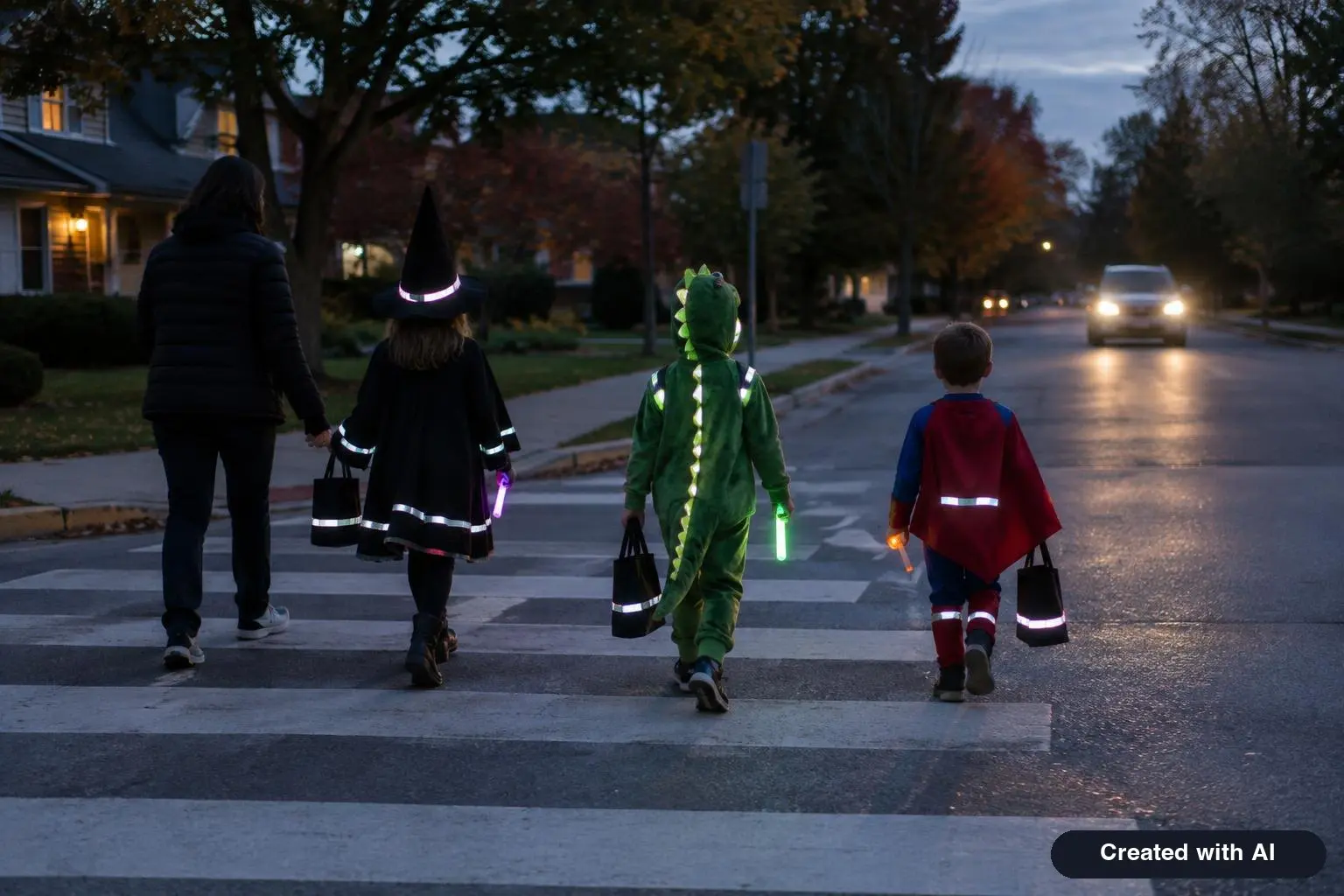
The biggest danger on Halloween is traffic, not candy. Safe Kids Worldwide reports that children are more than twice as likely to be hit by a car and killed on Halloween than on any other day of the year. The rest of the risk is ordinary and preventable: trips over long costumes, cuts from carving pumpkins, candles near decorations, and impaired drivers on the road after parties. Ten minutes of preparation covers most of it.
Halloween 2026 is Saturday, October 31. A weekend Halloween means more families out for longer and more adult parties the same night, so both the walking and the driving advice below apply.
Halloween Safety Checklist
- Children under 12 go with an adult; older kids go in a group with a set route and a time to be home.
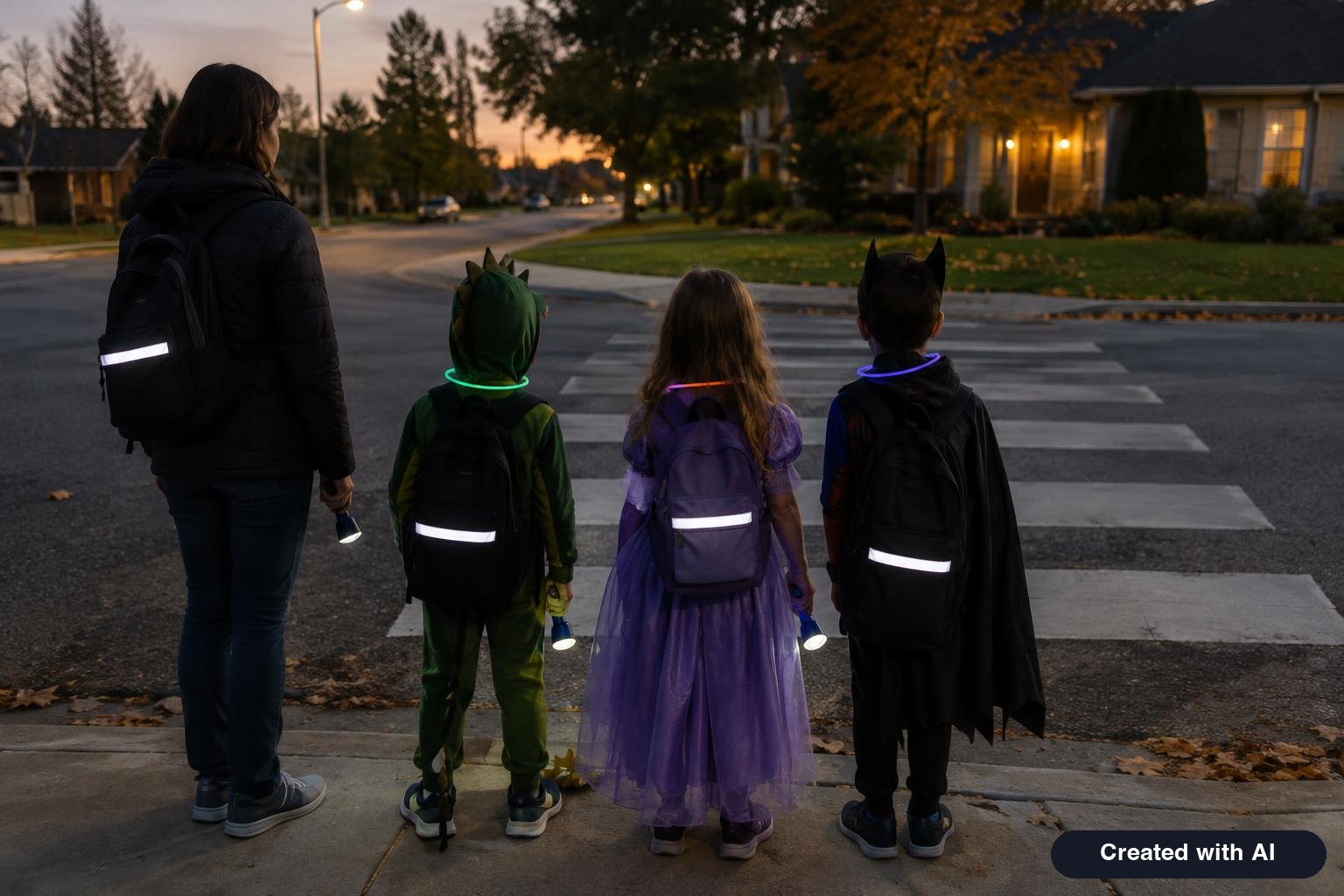
- Every child carries a light: a flashlight, glow stick or clip-on LED.
- Add reflective tape to costumes and treat bags.
- Choose face paint over a mask where you can, and hem costumes above the ankle.
- Cross at corners and crosswalks, never between parked cars.
- Phones stay in pockets while crossing streets.
- Visit only homes with the porch light on, and never go inside a house or car.
- No eating treats until an adult has checked them at home.
- Drivers: slow down in neighborhoods and turn headlights on early.
- If you drink, do not drive. Arrange the ride before the party.
- Use battery candles or glow sticks in jack-o'-lanterns.
- Keep pets indoors, away from the door and the candy.
Halloween by the Numbers
| Risk | What the data say | Source |
|---|---|---|
| Child pedestrians | More than twice as likely to be hit by a car and killed on Halloween as on any other day | Safe Kids Worldwide |
| Impaired driving | In 2023, nearly half of all crash fatalities on Halloween night were alcohol-related | NHTSA |
| Injuries | About 3,200 Halloween-related injuries treated in U.S. emergency rooms per year (three-year average): 55% from pumpkin carving, 25% from falls, 20% other (cuts, ingestions, allergic reactions, rashes) | CPSC |
| Who gets hurt | 54% of those injured were adults; 46% were under 18 | CPSC |
| Fires | An average of 835 home fires a year started with decorations (2020–2024), causing 3 deaths, 29 injuries and $18 million in property damage; 47% began when decorations were too close to a heat source and 33% were started by candles | NFPA |
Pedestrian Safety for Trick-or-Treaters
Trick-or-treating puts children on the street at dusk, in dark clothes, excited and not looking. Every tip in this section is about making them visible and predictable.
Be seen
- Carry a light. Safe Kids recommends glow sticks or flashlights for every child. The NFPA suggests working glow sticks into the costume itself.
- Add reflective tape or stickers to costumes and treat bags. Light-colored costumes are easier for drivers to spot.
- Go early. If your town has no set hours, the half hour before sunset is the safest time for small children. Local schedules are in our trick-or-treating hours guide.
Cross streets the same way every time
- Cross at corners or crosswalks. NHTSA advises crossing at crosswalks or intersections where possible and looking for cars in all directions, including vehicles turning left or right.
- Never cross mid-block or between parked cars. The American Academy of Pediatrics specifically warns against crossing between parked cars or out of driveways and alleys.
- Do not assume a driver will stop. Make eye contact before stepping off the curb.
- Use sidewalks. Where there are none, the AAP says to walk at the far edge of the road, facing traffic.
- Work one side of the street, then the other, instead of zigzagging.
Stay together
- Under 12, with an adult. That is the Safe Kids guideline.
- Use a buddy system. NHTSA recommends setting one up before the evening starts so no one walks home alone.
- Put the phone away. The AAP asks parents to talk with kids about distracted walking: no texting, scrolling or headphones while moving.
- For toddlers, a stroller or wagon with a light on it keeps a tired child off the curb.
Costume Safety
The FDA, CPSC and AAP give nearly identical advice on costumes. The short version: you should be able to see, breathe, walk and stay away from flames.
| Part of the costume | What to do | Why |
|---|---|---|
| Fabric | Look for a "flame resistant" label. For homemade costumes, choose polyester or nylon over sheer cotton or rayon. | CPSC notes that any fabric can burn, but these ignite less readily |
| Length and fit | Hem above the ankle; avoid baggy sleeves, capes that drag and oversized shoes | Falls and trips account for about a quarter of Halloween injuries |
| Face | Makeup or face paint instead of a mask. If a mask is essential, the eye and nose holes must allow full vision and easy breathing. | Masks limit side vision at exactly the moment kids are crossing streets |
| Makeup | Test on a small patch of skin, such as the arm, 24 to 48 hours ahead. Do not use products with colors not approved for cosmetic use, especially near the eyes. Wash it off before bed. | Redness, swelling or a rash can signal an allergic reaction |
| Hats and wigs | Fit them so they cannot slide over the eyes; check wigs for a flame-resistant label | Vision and fire |
| Props | Swords, wands and canes should be short, soft and flexible | A child who trips lands on whatever is in their hand |
| Shoes | Regular sneakers under any costume | Two hours of walking in the dark |
Decorative contact lenses
The FDA is blunt on this one: do not wear decorative or colored contact lenses unless an eye care professional has examined you and fitted them. Contact lenses are medical devices, and selling them without a prescription is illegal. Lenses from costume shops, beauty stores or online sellers that do not ask for a prescription can scratch the cornea and cause infections and vision loss. If you have never worn contacts, Halloween should not be the first time.
Costume ideas that work with these rules are in our guides to Halloween costume ideas and Halloween makeup.
Checking Halloween Candy
Checking the bag takes five minutes and catches the common problems: allergens, choking hazards and torn wrappers. The FDA's steps:
- Eat before you go. A snack or early dinner makes it easier for kids to wait.
- Nothing gets eaten on the route. Treats come home first.
- Keep only commercially wrapped treats. Children should not accept or eat anything that is not in its original packaging.
- Inspect wrappers. Look for an unusual appearance, discoloration, tiny pinholes or tears. Throw away anything suspicious.
- Read labels for allergens if your child has a food allergy.
- Remove choking hazards for young children: gum, peanuts, hard candies and small toys.
Food allergies
The AAP calls Halloween one of the trickiest days of the year for children with food allergies, and notes that candy made without an allergen can still trigger a reaction if it was produced in a facility that processes it. If your child has a prescribed epinephrine auto-injector, bring it along and make sure every supervising adult knows how to use it. Houses displaying a teal pumpkin offer non-food treats; our Halloween candy guide explains the Teal Pumpkin Project and lists the nine major allergens.
Babies and toddlers
The AAP's list of Halloween foods that babies and toddlers should not have is longer than most parents expect: hard candies, caramel apples, popcorn, gum, small candies such as jelly beans, gummy candy, pumpkin seeds and anything with whole nuts. Wrappers, stickers, small toys and temporary tattoos are choking hazards too.
At parties
- Cider and juice: the FDA warns that unpasteurized juice carries a higher risk of foodborne illness. Check for a warning label, especially on cider pressed on site at orchards and farm stands.
- Bobbing for apples: rinse apples under cool running water and scrub them with a produce brush first.
- Black licorice: the FDA has cautioned that adults 40 and older who eat 2 ounces (57 g) of black licorice a day for at least two weeks could develop an irregular heart rhythm.
Pet Safety on Halloween
The ASPCA's Halloween guidance for pet owners comes down to five points.
- Lock up the candy. Chocolate, especially dark and baking chocolate, is dangerous to dogs and cats. Sugar-free candy and gum containing xylitol can cause serious problems. Keep bowls and trick-or-treat bags off the floor and out of reach.
- Give pets a quiet room. During peak trick-or-treating, keep dogs and cats in a separate, comfortable room away from the front door, with a chew, food puzzle or favorite toy. A doorbell ringing 60 times and strangers in costumes are stressful, and an open door is an escape route.
- Make sure they have ID. A collar tag and an up-to-date microchip get a spooked pet home. If you walk a dog after dark, use a reflective collar and a secure leash.
- Watch flames and wires. A wagging tail can knock over a lit jack-o'-lantern, and curious kittens get burned by candles. Keep electrical cords out of chewing range.
- Costumes only if the pet is comfortable. A pet costume should not restrict movement, vision, breathing, barking or meowing, and should have no small or dangling pieces to chew off. Try it on before Halloween. If the animal seems distressed, a festive bandana is enough. Comfortable options are in our guide to dog Halloween costumes.
If you think your pet has eaten something toxic, call your veterinarian or the ASPCA Animal Poison Control Center at (888) 426-4435 right away.
Driving on Halloween
If you are driving through neighborhoods
NHTSA reminds drivers that on Halloween there are more pedestrians on the road and in unexpected places. Its advice:
- Slow down and scan. Drive well below the limit on residential streets. Children may be unaware of traffic and dart into the street without warning.
- Turn headlights on early. Safe Kids suggests turning them on earlier in the day so you can spot children from farther away.
- Watch driveways and alleys. Back out slowly and check twice; small children are below window height.
- Put the phone down. A text can wait until you are parked.
- Skip the shortcut. If you do not need to drive through a residential area between 5:30 and 9 p.m., take the main road.
- If you see a drunk driver, call law enforcement.
If you are going to a party
According to NHTSA, nearly half of all crash deaths on Halloween night in 2023 involved alcohol. Halloween on a Saturday puts more parties and more trick-or-treaters on the road in the same hours.
- Decide how you are getting home before you have a drink: a designated driver, a rideshare, a taxi or a place to stay.
- If you drink, do not drive. NHTSA's wording: even a small amount of alcohol can affect driving ability.
- Walking home? Use the buddy system, stick to lit streets and remember that a dark costume makes you as hard to see as any child.
If you are hosting
- Serve food and plenty of non-alcoholic drinks; ideas are in our Halloween food guide.
- Be ready to call a ride, offer a couch or, if you are sober, drive a guest home.
- Take the keys from anyone who has been drinking.
Home and Fire Safety
Pumpkin carving
More than half of Halloween emergency room visits in CPSC's data come from carving pumpkins, and adults account for more than half of all Halloween injuries.
- Adults do the cutting. Both CPSC and the AAP say children can draw the face with a marker and scoop out the seeds, but should not handle the knife.
- Use a small serrated pumpkin saw from a carving kit instead of a large kitchen knife; it is less likely to slip or get stuck.
- Carve on a dry, stable surface with dry hands and good light, cutting away from yourself.
- Painting or stickers are the no-blade option for small children.
Patterns and step-by-step technique are in our guide to pumpkin carving ideas.
Candles and decorations
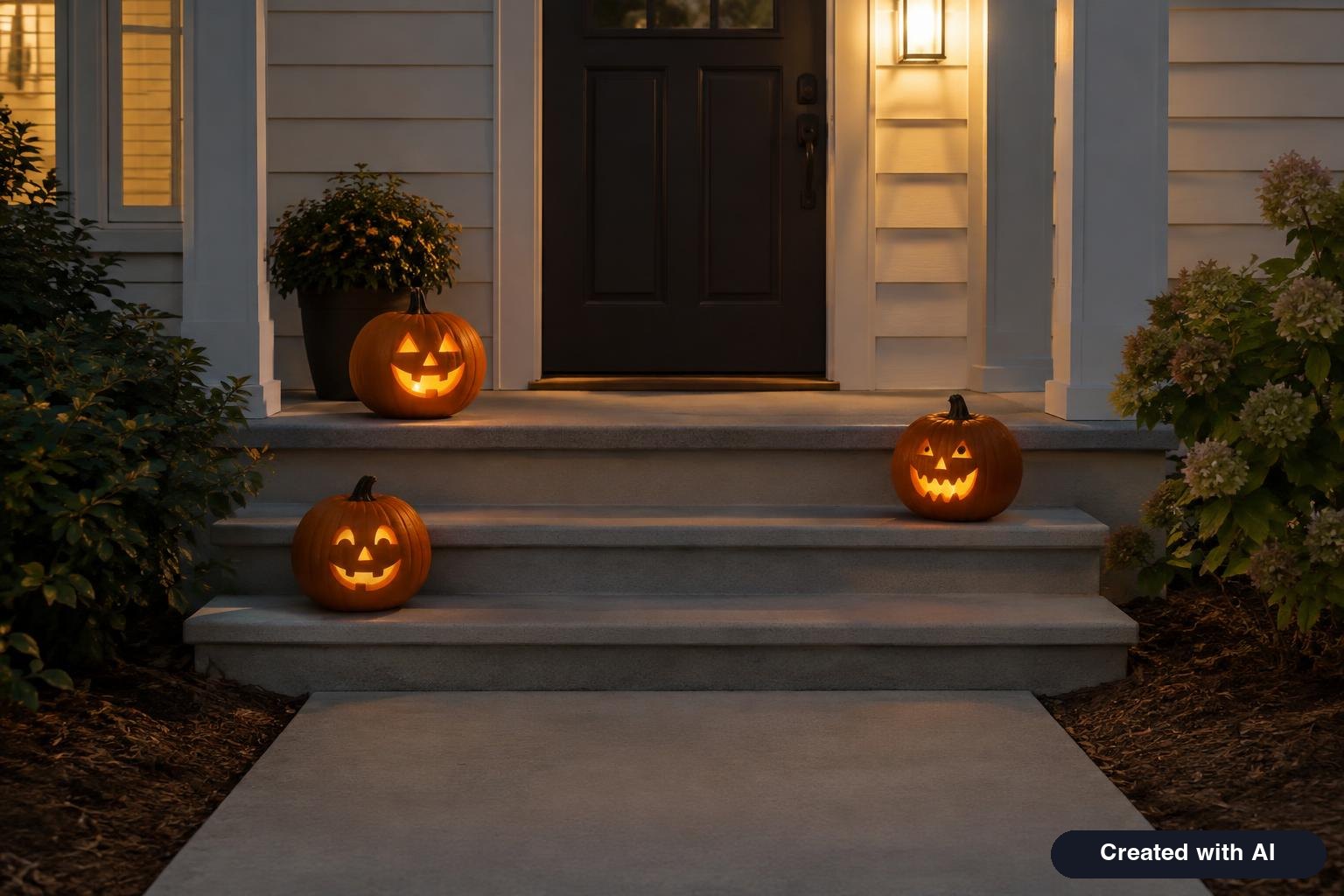
- Light jack-o'-lanterns with battery candles or glow sticks. This is the first tip on the NFPA's list. If you do use a real flame, the AAP says a votive candle is safest, and the pumpkin should not sit on a porch or path where visitors pass close by.
- Keep decorations away from heat. Dried cornstalks, hay bales, crepe paper and fake cobwebs ignite easily. NFPA says to keep all decorations clear of open flames, light bulbs and heaters.
- Keep exits clear. Nothing should block doors, stairs or escape routes, and smoke alarms should be working.
- Never leave a burning candle unattended, and keep it away from curtains and anything else that can catch fire.
Lights, cords and ladders
- Use only lights tested by a recognized testing laboratory. CPSC advises checking each string for broken sockets, frayed or bare wires and loose connections, and discarding damaged sets.
- Outdoor inflatables and lights need outdoor-rated extension cords. Keep cords out of walkways.
- Follow ladder safety basics when hanging decorations: firm, level ground and someone holding the base.
Getting the house ready for trick-or-treaters
- Clear the porch and yard of hoses, toys, bikes and anything else to trip on.
- Sweep wet leaves off steps and sidewalks.
- Replace burned-out outdoor bulbs and turn the porch light on.
- Restrain pets so they cannot jump on or bite a visitor.
Halloween Safety for Teens
Teenagers are too old for a chaperone and still new to most of the risks. A short, specific conversation works better than a lecture.
- Agree on the plan. Who they are with, where they are going and what time they will be home. The AAP recommends a specific return time, not "later."
- Keep the phone charged and location sharing on, and answer when a parent calls.
- Teen drivers need extra rules for this night. The AAP suggests setting specific expectations and reminding new drivers to slow down in neighborhoods. Consider whether a newly licensed teen needs to drive at all between 5:30 and 9 p.m.
- Never ride with a driver who has been drinking or using drugs. Make a no-questions-asked pickup offer and mean it.
- Costume rules still apply: no masks while driving, no decorative contacts without a prescription, and no realistic-looking weapons, which can be mistaken for real ones in the dark.
- Pranks have consequences. Egging cars and smashing pumpkins is vandalism. Know your town's curfew, if it has one.
- Trick-or-treating is fine. A teen in costume who is polite at the door is welcome almost everywhere. A few cities do set age limits; see the section on ages in our trick-or-treating guide.
- Trust the exit instinct. If a party or a situation feels wrong, leaving early is always allowed.
If Something Goes Wrong
| Situation | What to do |
|---|---|
| Someone is seriously hurt, or a child is missing | Call 911 |
| A person swallowed something that may be poisonous (glow stick liquid, makeup, medication mistaken for candy) | Call Poison Help at 1-800-222-1222, the national line that connects to your local poison center |
| A pet ate chocolate, xylitol or a decoration | Call your veterinarian or ASPCA Animal Poison Control at (888) 426-4435 |
| Candy looks tampered with | Do not eat it; keep it and report it to local police |
| You see an impaired driver | Pull over safely and call 911 |
| A costume or decoration catches fire | Stop, drop and roll; get everyone out and call 911 from outside |
For event-specific advice, see the safety section of our trunk-or-treat guide. Everything else for the holiday is in the main Halloween 2026 guide.
Frequently asked questions
What are the most important Halloween safety tips?
Make children visible with a flashlight or glow stick and reflective tape, have kids under 12 go with an adult, cross only at corners and crosswalks, pick costumes that fit and do not block vision, check candy at home before anyone eats it, use battery candles in pumpkins and never drive after drinking.
Why is Halloween dangerous for kids?
Mostly because of traffic. Safe Kids Worldwide reports that children are more than twice as likely to be hit by a car and killed on Halloween than on any other day of the year. Kids are out at dusk, often in dark costumes, excited and crossing streets more than usual.
How do I check Halloween candy?
Follow the FDA's steps: let nothing be eaten until it is home, keep only commercially wrapped treats, look for an unusual appearance, discoloration, tiny pinholes or tears in wrappers, and throw out anything suspicious. Check labels for allergens and remove gum, hard candy, peanuts and small toys for very young children.
Are Halloween masks safe for kids?
Makeup or face paint is safer because masks can block a child's vision. Safe Kids, the FDA and the CPSC all recommend face paint where possible. If a mask is used, the eye and nose holes should allow full vision and easy breathing, and it should come off while crossing streets.
Is it safe to wear colored contacts for Halloween?
Only if an eye care professional has examined you and prescribed them. The FDA says decorative contact lenses sold without a prescription are illegal and can cause harm. If you have never worn contact lenses, Halloween should not be your first time.
How do I keep my dog or cat safe on Halloween?
Keep candy out of reach, since chocolate and the sweetener xylitol are dangerous to pets. Put pets in a quiet room away from the front door during trick-or-treating, make sure they wear ID, keep them away from candles and cords, and use a costume only if the animal is comfortable. ASPCA Animal Poison Control is (888) 426-4435.
How can drivers stay safe on Halloween night?
Slow down in residential areas, turn headlights on early, watch for children darting out from between parked cars, back out of driveways carefully and stay off the phone. NHTSA reports that nearly half of crash deaths on Halloween night in 2023 were alcohol-related, so arrange a sober ride before any party.
What is the safest way to light a jack-o'-lantern?
With a battery-operated candle or a glow stick, as the National Fire Protection Association recommends. NFPA data show decorations start an average of 835 home fires a year, and about a third of those are started by candles. Keep any real flame away from costumes, curtains and dried decorations.
Sources
- NHTSA – Halloween Safety Tips
- Safe Kids Worldwide – Halloween safety
- FDA – Halloween Safety Tips: Costumes, Candy, and Colored Contact Lenses
- U.S. Consumer Product Safety Commission – Safety Tips to Keep Hazards from Haunting Your Halloween
- National Fire Protection Association – Staying Safe on Halloween
- ASPCA – Halloween Safety Tips
- American Academy of Pediatrics (HealthyChildren.org) – Halloween Fun & Safety Tips (updated Sept. 29, 2026)
- American Heart Association News – Black licorice is a candy that should inspire caution (FDA warning)
- Poison Help (HRSA) – 1-800-222-1222
Log in to comment
No comments yet. Be the first.