Iron Infusion: Who Needs It, Products and Side Effects
- Ferric derisomaltose can be given as a single 1,000 mg infusion; ferumoxytol and standard ferric carboxymaltose courses use two doses.
- Low blood phosphate occurred in about 74% to 75% of patients after ferric carboxymaltose versus about 8% after ferric derisomaltose in 2020 trials.
- FDA labels call for observation for at least 30 minutes after an infusion because of rare serious allergic reactions.

An iron infusion delivers iron directly into a vein, replacing in one or a few visits what iron pills take months to rebuild. It is used mainly for iron-deficiency anemia when oral iron has not worked or cannot be tolerated, and for people with chronic kidney disease, certain bowel conditions or heart failure. A single session typically lasts from 15 minutes to about an hour of infusion time, followed by at least 30 minutes of observation. The most common side effects are nausea, headache, dizziness, flushing and injection site reactions; serious allergic reactions are rare but are why infusions happen only in a monitored setting. One product, ferric carboxymaltose (Injectafer), carries an FDA boxed warning for low blood phosphate.
This guide explains who qualifies for IV iron, the FDA-approved products and how they differ, what happens on infusion day, the side effects to expect (including fatigue, low phosphate and skin staining), how quickly you should feel better, and what to ask about cost. If you are still deciding between pills and IV iron, start with the iron supplements guide or the pages on low hemoglobin and low ferritin.

Who Gets an Iron Infusion
Iron pills are the most common treatment for iron-deficiency anemia, but they are slow and often hard on the stomach. The NHLBI says IV iron often restores iron levels in only one or a few sessions, and that people with serious iron-deficiency anemia or long-term conditions are more likely to receive it. Based on FDA-approved indications, IV iron is typically used for:
- Adults with iron-deficiency anemia who could not tolerate oral iron or did not respond adequately to it
- People with chronic kidney disease, whether or not they are on dialysis, depending on the product
- Adults with heart failure (New York Heart Association class II or III) and iron deficiency, to improve exercise capacity (ferric carboxymaltose only)
- Children with iron-deficiency anemia in specific situations (ferric carboxymaltose from age 1; iron dextran from 4 months; iron sucrose and sodium ferric gluconate for children with kidney disease)
Doctors also use IV iron in situations that guidelines support, such as restless legs syndrome with low iron stores (see iron for RLS) and anemia late in pregnancy when pills are not working (see iron in pregnancy). In all cases, iron deficiency should be confirmed by blood tests first, and the cause of the deficiency investigated.
IV Iron Products Approved in the US
The table summarizes current FDA labels, accessed in October 2026 via DailyMed and openFDA. Generic versions of ferric carboxymaltose, ferumoxytol and iron sucrose are also marketed.
| Product (generic name) | Labeled uses | Typical adult course | Key warning |
|---|---|---|---|
| Injectafer (ferric carboxymaltose) | IDA with oral iron intolerance or poor response (adults and children 1 year and older); IDA in non-dialysis CKD; iron deficiency in heart failure | 750 mg twice, at least 7 days apart (1,500 mg); or in adults, one dose of 15 mg/kg up to 1,000 mg | Boxed warning: symptomatic hypophosphatemia |
| Monoferric (ferric derisomaltose) | Adult IDA with oral iron intolerance or poor response; non-dialysis CKD | 1,000 mg once, infused over at least 20 minutes (20 mg/kg if under 50 kg) | Hypersensitivity reactions |
| Feraheme (ferumoxytol) | Adult IDA with oral iron intolerance or poor response; CKD | 510 mg, then 510 mg 3 to 8 days later, each over at least 15 minutes | Boxed warning: serious hypersensitivity and anaphylaxis |
| Venofer (iron sucrose) | IDA in CKD | Non-dialysis CKD: 200 mg on 5 occasions within 14 days; dialysis: 100 mg per session, usually 1,000 mg total | Hypersensitivity, low blood pressure |
| Ferrlecit (sodium ferric gluconate complex) | IDA in hemodialysis patients receiving epoetin (adults and children 6 and older) | 125 mg per dialysis session; often about 1,000 mg over 8 sessions | Hypersensitivity, low blood pressure |
| INFeD (iron dextran) | Documented iron deficiency with oral iron intolerance or poor response (adults and children 4 months and older) | Dose calculated from weight and hemoglobin; requires a test dose | Boxed warning: anaphylactic-type reactions, including fatalities |
How the products compare in head-to-head trials
- Low phosphate: In two US trials published in JAMA in 2020, low blood phosphate developed in about 74% to 75% of patients after ferric carboxymaltose versus about 8% after ferric derisomaltose. In a 2018 trial, it occurred in 38.7% after ferric carboxymaltose versus 0.4% after ferumoxytol.
- Allergic reactions: In the same 2018 trial of nearly 2,000 patients, moderate to severe hypersensitivity reactions or moderate to severe low blood pressure occurred in 0.6% with ferumoxytol and 0.7% with ferric carboxymaltose, and no anaphylaxis was reported in either group.
- Effect: Hemoglobin rose by an average of 1.4 g/dL with ferumoxytol and 1.6 g/dL with ferric carboxymaltose by week 5 in that trial.
The choice of product depends on your diagnosis, kidney function, insurance coverage, how many visits you can make, your allergy history and what your clinic stocks.
What Happens on Infusion Day
Before the appointment
- Expect blood work beforehand: hemoglobin, ferritin and often transferrin saturation. The iron dextran label lists hemoglobin, hematocrit, serum iron, total iron-binding capacity and transferrin saturation as baseline tests.
- If you have had ferric carboxymaltose within the past three months or are at risk of low phosphate, your clinician should check phosphate before another course, per the Injectafer label.
- Tell the team about any previous reaction to IV iron, multiple drug allergies, asthma, pregnancy and all medicines you take. The iron dextran label notes higher risk with multiple drug allergies and with ACE inhibitor blood pressure drugs.
- If you are receiving iron dextran, the label says to stop other iron-containing products beforehand. Ask whether to pause your iron pills for other products.
- Ask whether you can drive yourself home. Dizziness and low blood pressure are listed side effects, and some clinics prefer that you arrange a ride for your first infusion.
During the infusion
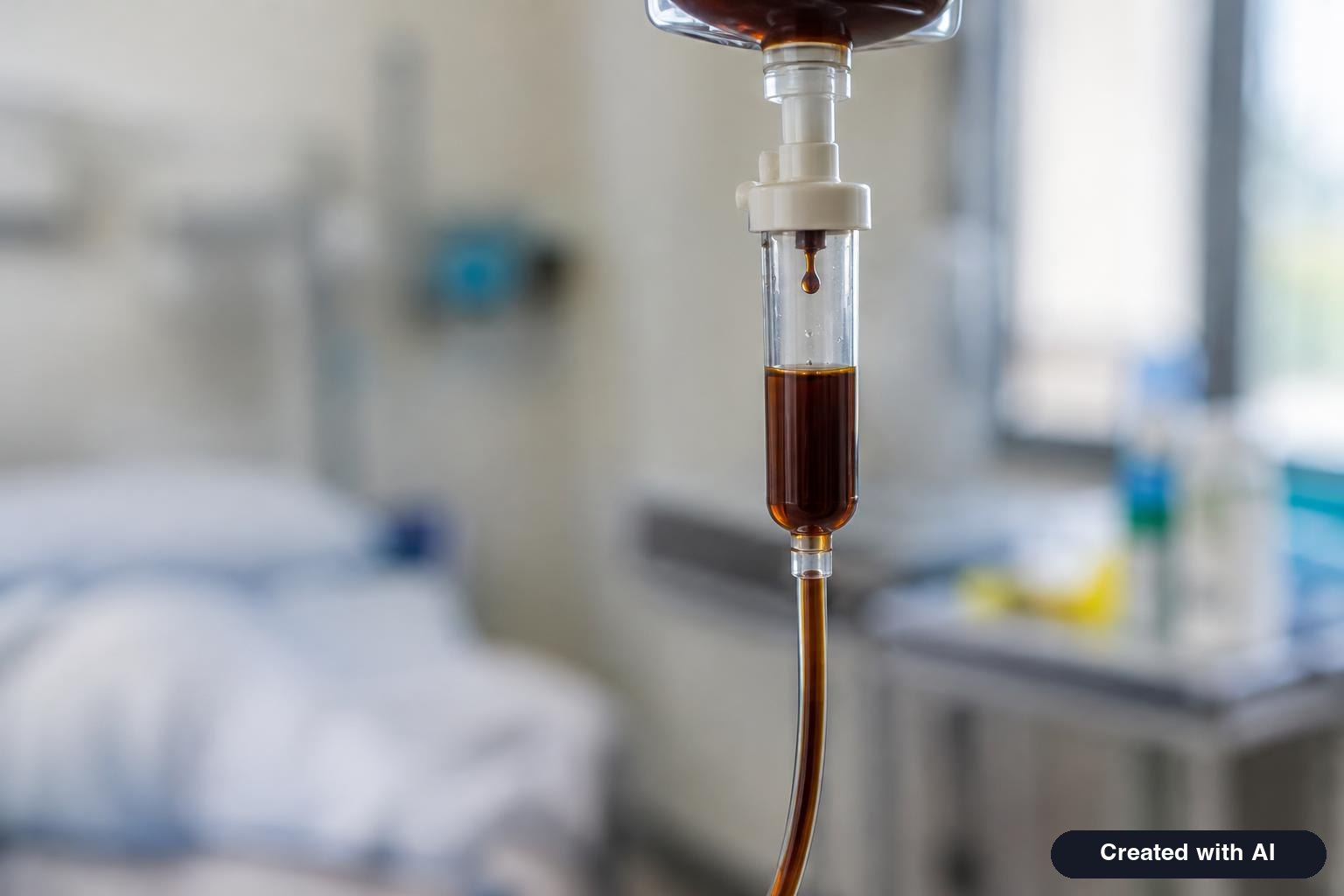
A nurse places an IV line, usually in your arm, and the iron is given either as a slow injection or diluted in a bag of saline. Infusion times on the labels range from at least 15 minutes for ferumoxytol and at least 20 minutes for ferric derisomaltose to about an hour for sodium ferric gluconate; larger doses of iron sucrose for peritoneal dialysis patients run 1.5 to 2.5 hours. Ferumoxytol is given while you are reclined or semi-reclined. For iron dextran, you first receive a small test dose and are observed for at least an hour before the rest is given.
Tell the nurse right away if you feel itching, rash, wheezing, chest tightness, lightheadedness, back pain or burning or swelling at the IV site.
After the infusion
The labels for ferric carboxymaltose, ferric derisomaltose, ferumoxytol, iron sucrose and sodium ferric gluconate require monitoring for signs of hypersensitivity during and for at least 30 minutes after the infusion, until you are stable. Most reactions to IV iron occur within that window, the Venofer label notes.
Iron Infusion Side Effects
| Product | Most common side effects on the FDA label |
|---|---|
| Ferric carboxymaltose | Nausea, high blood pressure, flushing, injection site reactions, skin redness, low phosphate, dizziness |
| Ferric derisomaltose | Rash, nausea |
| Ferumoxytol | Diarrhea, headache, nausea, dizziness, low blood pressure, constipation, swelling in the legs |
| Iron sucrose | Diarrhea, nausea, vomiting, headache, dizziness, low blood pressure, itching, limb pain, joint and back pain, muscle cramps, injection site reactions, chest pain, leg swelling |
| Iron dextran | Nausea, vomiting, chest pain, back pain, allergic reactions, shortness of breath, low blood pressure, itching, flushing, dizziness |
The NHLBI says vomiting or headaches can occur right after treatment and usually go away within a day or two.
Serious allergic reactions
All IV irons can cause hypersensitivity reactions, some life-threatening. The rates in trials are low: 0.4% of patients with iron-deficiency anemia had hypersensitivity reactions with ferumoxytol infused over at least 15 minutes, and 0.3% had serious or severe hypersensitivity with ferric derisomaltose. Ferumoxytol should not be given to anyone with a history of allergic reaction to any IV iron product. If you have had a reaction before, make sure every new provider knows.
Low phosphate and fatigue after an infusion
Ferric carboxymaltose can cause severe, prolonged hypophosphatemia, which in rare cases has led to hospitalization, softening of the bones (osteomalacia) and fractures. Symptoms to report include fatigue, muscle weakness or pain, bone and joint pain, and fractures. Risk factors listed on the label include malabsorption conditions, inflammatory bowel disease, hyperparathyroidism, vitamin D deficiency and malnutrition, but it has occurred in people without risk factors. In most cases it resolved within three months. If you feel more tired in the weeks after an infusion rather than less, ask for a phosphate level.
Delayed reactions
Large doses of iron dextran given at once have been linked to reactions that start 24 to 48 hours later, with joint and muscle aches, backache, chills, fever, headache, malaise, nausea and vomiting, per the INFeD label. Call your clinic if symptoms are severe or last more than a couple of days.
Skin staining
If iron leaks out of the vein into surrounding tissue, it can cause brown discoloration that may be long-lasting, according to the ferumoxytol and ferric derisomaltose labels. Injection site discoloration was reported in 1.4% of ferric carboxymaltose patients in trials. Speak up immediately if the IV site burns, swells or hurts so the infusion can be stopped.
MRI and lab test interference
- Ferumoxytol can alter MRI images for up to 3 months after the last dose. Tell radiology staff, and schedule planned MRIs before the infusion if possible.
- Blood tests in the 24 hours after ferric carboxymaltose can overestimate serum iron, and the iron sucrose label advises not measuring serum iron for at least 48 hours after a dose.

How Soon Will You Feel Better?
IV iron delivers a full course quickly, but your bone marrow still needs time to build new red blood cells. In the 2018 comparison trial, hemoglobin rose by about 1.4 to 1.6 g/dL on average by week 5. The ferumoxytol label advises checking hemoglobin, ferritin, iron and transferrin saturation at least one month after the second infusion. Many people notice more energy over the following weeks, but the timeline varies with how low you started and whether blood loss continues. If the underlying cause is not fixed, iron can run low again, and a repeat course may be needed; most labels allow retreatment if iron deficiency recurs.
Iron Infusion in Pregnancy
IV iron is used in pregnancy when oral iron fails or is not tolerated. According to the iron sucrose label, published studies of use after the first trimester have not shown adverse maternal or fetal outcomes, while first-trimester data are insufficient. Labels for several products warn that a severe allergic reaction in the mother can cause a dangerously slow fetal heart rate, especially in the second and third trimesters. Read more in our pregnancy iron guide.
Who Should Not Get IV Iron
- People with a known hypersensitivity to the specific product or its ingredients
- For ferumoxytol, anyone with a history of allergic reaction to any IV iron
- People with iron overload; the labels warn against giving IV iron to patients with excess iron
- People who do not have documented iron deficiency
Cost and Insurance
We could not find a current, reputable public source for the typical price of an iron infusion in the US, so we are not quoting one. What you pay depends on the product (brand or generic), the number of visits, where it is given (hospital outpatient department, infusion center or doctor's office) and your insurance. Before scheduling, ask your clinic for the billing codes and the product they plan to use, and ask your insurer what your share will be.
Questions to Ask Before Your Infusion
- Which product will I receive, and why that one?
- How many visits, and how long is each?
- Should I stop my iron pills, and when should I restart them, if at all?
- Will you check my phosphate level, and when?
- When will my follow-up blood tests be, and what results are we aiming for?
- What is causing my iron deficiency, and how are we treating that?
- What will this cost me with my insurance?
Frequently asked questions
How long does an iron infusion take?
Infusion time ranges from about 15 minutes to an hour for most products, plus at least 30 minutes of observation. Some regimens for kidney disease run longer, and some products need two or more visits.
What are the side effects of an iron infusion?
Common ones include nausea, headache, dizziness, flushing, changes in blood pressure and injection site reactions. Serious allergic reactions are rare. Ferric carboxymaltose can cause low phosphate.
Does an iron infusion make you tired?
Fatigue can happen in the first days, and new or worsening fatigue in the weeks after ferric carboxymaltose can be a sign of low phosphate. Ask your doctor to check your phosphate if that happens.
How long after an iron infusion will I feel better?
Hemoglobin rises over several weeks; in one major trial it was up about 1.4 to 1.6 g/dL by week 5. Follow-up labs are usually done about a month after the course.
How many iron infusions will I need?
It depends on the product: one for ferric derisomaltose (or a single-dose ferric carboxymaltose regimen), two for ferumoxytol or standard ferric carboxymaltose, and five or more for iron sucrose.
Can I drive after an iron infusion?
Many people can, but dizziness and low blood pressure are possible side effects. Ask your clinic, and consider arranging a ride for your first infusion.
Are there foods to avoid after an iron infusion?
We found no dietary restrictions in the FDA label sections we reviewed. Ask your clinic for any specific instructions, and ask whether and when to restart iron pills.
Can an iron infusion stain my skin?
Yes, if iron leaks out of the vein. The brown staining can last a long time. Tell the nurse immediately if the IV site burns or swells.
Sources
- NHLBI: Iron-Deficiency Anemia
- DailyMed: Injectafer (ferric carboxymaltose) label
- DailyMed: Monoferric (ferric derisomaltose) label
- DailyMed: Feraheme (ferumoxytol) label
- DailyMed: Venofer (iron sucrose) label
- DailyMed: Ferrlecit (sodium ferric gluconate complex) label
- DailyMed: INFeD (iron dextran) label
- Wolf et al., Ferric derisomaltose vs ferric carboxymaltose and hypophosphatemia, JAMA (2020)
- Adkinson et al., Ferumoxytol vs ferric carboxymaltose safety trial, Am J Hematol (2018)
- Winkelman et al., Treatment of RLS and PLMD: an AASM clinical practice guideline, J Clin Sleep Med (2025)
- Allen et al., IRLSSG guidelines for the iron treatment of RLS, Sleep Medicine (2018)
Log in to comment
No comments yet. Be the first.