Iron Supplements for Low Ferritin: How to Raise Ferritin
- There is no universal ferritin cutoff; the USPSTF noted in 2024 that no consensus level defines iron deficiency.
- In trials, oral iron raised ferritin about 25 to 35 ng/mL over 8 to 12 weeks.
- Ferritin also rises with inflammation, liver disease and obesity, so a normal result can hide low iron.
- What Ferritin Is and Why It Drops First
- What Is a Low Ferritin Level?
- Who Should Have Ferritin Checked
- How to Get an Accurate Ferritin Test
- How to Raise Ferritin With Iron Supplements
- How Fast Does Ferritin Go Up?
- Mistakes That Keep Ferritin Low
- A Worked Example
- "Ferritin Supplement" vs Iron Supplement
- Low Ferritin Without Anemia: Should You Treat It?
- Food to Support Your Ferritin
- When High Ferritin Is the Problem
- Safety Checklist
Low ferritin means your body's iron stores are running low, and the way to raise ferritin is to take iron, not a "ferritin supplement." For most adults that means an oral iron such as ferrous sulfate (65 mg of elemental iron per 325 mg tablet), taken daily or every other day for several months, with a repeat blood test to check progress. In clinical trials, ferritin rose by roughly 25 to 35 ng/mL over 8 to 12 weeks of oral iron. If pills fail or cannot be tolerated, IV iron raises ferritin much faster. Before you start, ask your doctor to confirm the result and look for the reason your stores are low.
This guide explains what ferritin measures, what counts as low, which thresholds doctors use in different situations, how to raise ferritin with supplements, how fast it climbs, and when high ferritin is the real concern. For forms, side effects and safe storage, see the main iron supplements guide.
What Ferritin Is and Why It Drops First
Ferritin is a protein that binds iron and stores it, much of it in the liver. A ferritin blood test shows how much iron your body has stored, MedlinePlus explains. When you lose more iron than you absorb, through heavy periods, pregnancy, gut bleeding, poor absorption or a low-iron diet, the body draws on these stores first. Ferritin falls while hemoglobin can still be normal. If the shortfall continues, hemoglobin eventually drops and iron-deficiency anemia develops.
That is why low ferritin with a normal blood count is common, and why it is worth treating in many people: it is iron deficiency caught early. MedlinePlus lists symptoms of low iron as shortness of breath, weakness or fatigue, dizziness, heart rhythm problems, pale skin and restless legs syndrome.
What Is a Low Ferritin Level?
There is no single cutoff that every lab and specialty uses. The US Preventive Services Task Force noted in 2024 that there is no consensus on the exact ferritin level indicating iron deficiency. Your lab report shows its own reference range, and your doctor will interpret the number alongside hemoglobin, transferrin saturation and your symptoms.
The thresholds below show how differently ferritin is used depending on the question being asked. Each comes from the source named.
| Context | Ferritin threshold | Source |
|---|---|---|
| "Iron-depleted" women in absorption trials | 25 ng/mL or less | Stoffel et al., Lancet Haematology, 2017 |
| Children with restless legs syndrome: start iron | Below 50 ng/mL | AASM guideline, 2025 |
| Adults with restless legs syndrome: oral or IV iron | 75 ng/mL or less (or transferrin saturation below 20%) | AASM guideline, 2025 |
| Adults with restless legs syndrome: IV iron only | 75 to 100 ng/mL | AASM guideline, 2025 |
| Eligibility in US IV iron trials for iron-deficiency anemia | 100 ng/mL or less, with hemoglobin 11 g/dL or less | Wolf et al., JAMA, 2020 |
| Heart failure maintenance dosing of IV ferric carboxymaltose | Below 100 ng/mL, or 100 to 300 ng/mL with transferrin saturation below 20% | Injectafer FDA label |
The takeaway: a ferritin of 40 ng/mL may be "normal" on a lab report yet low enough for treatment if you have restless legs syndrome, while the same number in a symptom-free person may simply be monitored. See our iron for RLS guide for the restless legs thresholds in detail.
Why ferritin can look normal when iron is low
Ferritin is also an inflammation marker. MedlinePlus lists inflammation from infection or surgery, autoimmune disorders, liver disease, cancer, obesity, alcohol use disorder and hyperthyroidism as conditions that can raise ferritin. In these situations, a normal ferritin may hide iron deficiency, so doctors often add transferrin saturation.
Who Should Have Ferritin Checked
MedlinePlus lists several reasons a provider may order a ferritin test: symptoms of low or high iron, a low hemoglobin or hematocrit on another blood test, restless legs syndrome, monitoring of long-term conditions such as kidney disease, cancer or autoimmune disease, checking how well iron treatment is working, and screening people at high risk, including those who cannot absorb food well because of inflammatory bowel disease or a past gastrointestinal operation.
How to Get an Accurate Ferritin Test
- Your provider may ask you to fast for 12 hours, and the test is usually done in the morning, according to MedlinePlus.
- For restless legs evaluation, the AASM advises avoiding iron supplements and iron-containing foods for at least 24 hours before the blood draw.
- After IV iron, wait before measuring iron levels. Lab tests can overestimate serum iron in the 24 hours after ferric carboxymaltose, and the iron sucrose label advises not measuring serum iron for at least 48 hours after a dose.
- If you are sick or recovering from surgery, ask whether to repeat the test later.

How to Raise Ferritin With Iron Supplements
Step 1: Confirm and find the cause
Ask why your ferritin is low. Heavy menstrual bleeding, childbirth, regular aspirin or NSAID use, celiac disease, inflammatory bowel disease, H. pylori infection, weight loss surgery and endurance sports are among the causes the NHLBI lists, and the USPSTF notes that a diet low in iron-rich foods, such as a vegan diet without enough iron sources, raises risk in pregnancy. In men and postmenopausal women, a gut source of blood loss needs to be ruled out.
Step 2: Choose a form and dose with your doctor
| Option | Elemental iron | Good fit for |
|---|---|---|
| Ferrous sulfate 325 mg | 65 mg per tablet | Most adults; cheapest, best studied |
| Ferrous gluconate | Less per tablet (check label) | People who want a smaller dose per pill |
| Ferrous fumarate | More per tablet (check label) | Fewer pills for a higher dose |
| Ferrous bisglycinate | As labeled | People with stomach side effects from salts; best evidence is in pregnancy |
| Liquid iron | As labeled per mL | Children and adults who cannot swallow pills |
Step 3: Take it the smart way
- One dose, not split doses. In a 2017 trial, splitting 120 mg into two daily doses did not increase absorption and raised hepcidin, the hormone that blocks iron uptake.
- Consider every other day. Women given 60 mg on alternate days for 28 days absorbed more iron in total (175 mg) than women given 60 mg daily for 14 days (131 mg), with the same number of pills.
- Food if you need it. MedlinePlus says iron is usually taken with food or right after a meal, which can reduce nausea.
- Skip black tea with your dose. It binds iron.
- Vitamin C is optional. A 2020 trial in 440 adults found iron alone was as effective as iron plus vitamin C at raising hemoglobin and ferritin.
- Space interacting drugs: 4 hours from levothyroxine, 2 hours from tetracycline antibiotics, and take ciprofloxacin 2 hours before or 6 hours after iron.
Step 4: Recheck
Plan a repeat ferritin, ideally with hemoglobin and transferrin saturation, after several weeks to a few months. The NHLBI says it often takes three to six months to restore iron levels with pills.
How Fast Does Ferritin Go Up?
Ferritin climbs more slowly than hemoglobin because the body uses absorbed iron for red blood cells first and stores what is left. Two trials give a realistic picture:
| Study | Who | Iron regimen | Ferritin change |
|---|---|---|---|
| Wang et al., Sleep Medicine, 2009 | Adults with RLS and low-normal ferritin (about 37 to 41 ng/mL) | Oral iron for 12 weeks | Up about 25 ng/mL (placebo: about 7.5) |
| Li et al., JAMA Network Open, 2020 | Adults with iron-deficiency anemia | 100 mg iron every 8 hours | Up about 35 ng/mL at 8 weeks |
If your starting ferritin is very low, getting to a comfortable level can take many months of steady dosing. Results vary with dose, adherence, absorption and ongoing losses.
When IV iron makes sense
If ferritin will not rise on pills, if you cannot tolerate them, or if you need iron quickly, IV iron is the alternative. According to their FDA labels, a course of ferric derisomaltose is a single 1,000 mg infusion, ferumoxytol is two 510 mg infusions 3 to 8 days apart, and ferric carboxymaltose is two 750 mg infusions at least 7 days apart or, in adults, a single dose of up to 1,000 mg. See iron infusion for details on products, side effects and what to expect.
Mistakes That Keep Ferritin Low
- Stopping when you feel better. Hemoglobin and energy often improve before stores are refilled. Stop only when a repeat test says so.
- Splitting the dose through the day. In absorption studies this raised hepcidin without increasing total iron absorbed.
- Taking iron with black tea or close to antacids. The USPSTF lists antacids among medications that can decrease iron absorption.
- Taking iron at the same time as thyroid medicine or certain antibiotics, which reduces the effect of those drugs.
- Ignoring ongoing losses. Heavy periods or slow gut bleeding can drain iron as fast as you replace it.
- Testing during an illness. Inflammation raises ferritin and can make your stores look better than they are.
A Worked Example
Consider a hypothetical 28-year-old runner with heavy periods whose ferritin comes back at 12 ng/mL, with normal hemoglobin. She has iron deficiency without anemia. After discussing it, her clinician recommends one 325 mg ferrous sulfate tablet (65 mg iron) every other morning with breakfast, avoiding tea with the dose, and a recheck in about three months. Based on the trials above, a rise of roughly 25 ng/mL over three months would be a reasonable result; if her ferritin barely moves, the next steps are to confirm she is taking it, look again for blood loss or absorption problems, and consider IV iron.
"Ferritin Supplement" vs Iron Supplement
Ferritin is your body's storage protein and the name of the blood test. When people search for a ferritin supplement, what they need is an iron supplement, which supplies the iron your body then stores as ferritin. Some products use "ferritin" in their names or marketing; judge them by the elemental iron listed in the Supplement Facts panel, the same way you would any iron product.
Low Ferritin Without Anemia: Should You Treat It?
Many people with low ferritin and normal hemoglobin feel tired, notice restless legs or simply had the result flagged on routine labs. Whether to treat depends on the number, your symptoms and your risk factors. Treatment is common when there is a clear ongoing loss (such as heavy periods), pregnancy, restless legs syndrome or symptoms consistent with iron deficiency. Because the USPSTF found no agreed cutoff, this is a shared decision with your clinician. What is not a good idea is taking high-dose iron indefinitely without retesting.
Food to Support Your Ferritin
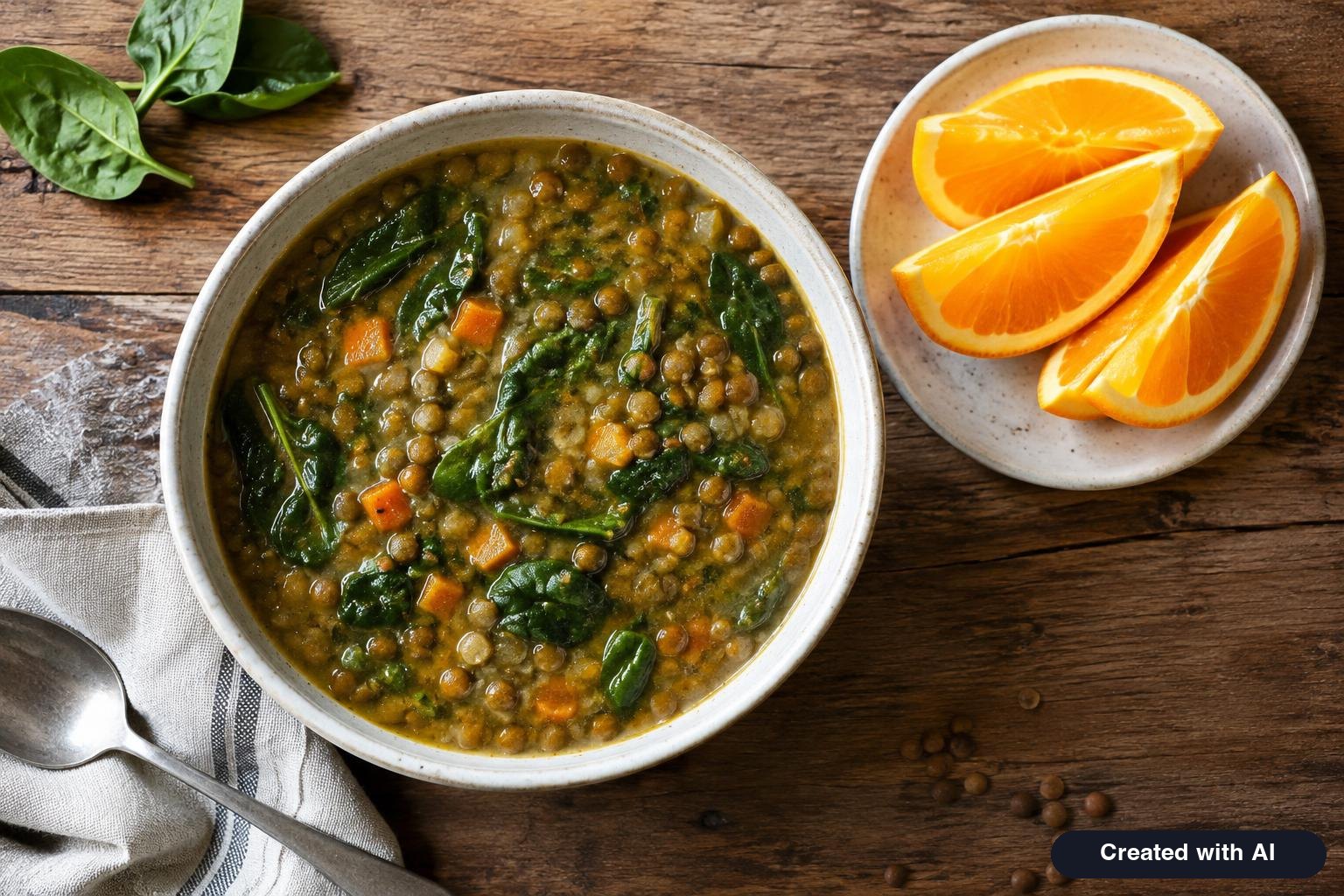
Diet alone raises ferritin slowly, but it matters for keeping levels up after treatment. Good iron sources include liver, lean red meat, oysters, poultry, salmon, tuna, eggs, iron-fortified cereals, whole grains, dried beans and dried fruits, MedlinePlus says. Plant iron (from legumes, nuts, seeds and greens such as spinach, kale and broccoli) is harder to absorb; mixing some lean meat, fish or poultry with beans or leafy greens can improve absorption of the plant iron up to three times, and vitamin C-rich foods help too. Cooking in a cast-iron skillet can add iron to food.
When High Ferritin Is the Problem
If your ferritin is high, more iron is the wrong move. High ferritin can mean too much stored iron, as in hemochromatosis, a genetic disorder treated with a low-iron diet, no iron supplements and regular blood removal. It can also reflect inflammation, liver disease, alcohol use disorder, obesity, cancer or hyperthyroidism. Symptoms of iron overload listed by MedlinePlus include fatigue, joint pain (often in the knees or hands), loss of sex drive or erectile dysfunction, abdominal pain and a gray, metallic or bronze skin tone. A high result needs follow-up with your doctor.
Safety Checklist
- Do not take iron if you have hemochromatosis or iron overload.
- Do not combine several iron-containing products unless your doctor tells you to.
- Tell your doctor about ulcers, GI bleeding or blood disorders before starting.
- Keep iron out of children's reach. If a child swallows iron, call Poison Control at 1-800-222-1222.
Frequently asked questions
What is the best iron supplement for low ferritin?
Ferrous sulfate is the standard, inexpensive choice with the most evidence. If it upsets your stomach, ask about every-other-day dosing, a different ferrous salt or ferrous bisglycinate.
How can I increase my ferritin levels quickly?
IV iron is the fastest route: one or two infusions deliver about 1,000 to 1,500 mg of iron. With pills, take one daily or alternate-day dose consistently and expect a rise over weeks to months.
How long does it take to raise ferritin with iron pills?
In trials, ferritin rose about 25 to 35 ng/mL over 8 to 12 weeks. Fully rebuilding stores often takes three to six months.
What ferritin level is considered low?
Lab ranges vary, and there is no universal cutoff. Thresholds used in practice range from 25 ng/mL or less in research on iron-depleted women to 75 ng/mL or less for adults with restless legs syndrome.
Can I have low ferritin and normal hemoglobin?
Yes. That is iron deficiency without anemia, an early stage in which stores are depleted before red blood cell production suffers.
Should I stop iron before a ferritin test?
Follow your doctor's instructions. For restless legs testing, the AASM advises avoiding iron supplements and iron-rich foods for 24 hours, and testing in the morning.
Is there such a thing as a ferritin supplement?
What raises ferritin is iron. Choose a product by its elemental iron content, not by the word "ferritin" on the label.
Can low ferritin cause hair loss?
Low iron is often discussed as a possible factor in hair shedding, but hair loss has many causes. If you are losing hair, ask your doctor or a dermatologist to check ferritin along with other causes rather than starting iron on your own.
Sources
- MedlinePlus: Ferritin Blood Test
- USPSTF: Iron Deficiency and Iron Deficiency Anemia During Pregnancy: Screening and Supplementation (2024)
- Winkelman et al., Treatment of RLS and PLMD: an AASM clinical practice guideline, J Clin Sleep Med (2025)
- Stoffel et al., Iron absorption on consecutive vs alternate days and single vs split doses, Lancet Haematology (2017)
- Stoffel et al., Alternate vs consecutive day dosing in iron-deficient anemic women, Haematologica (2020)
- Wolf et al., Ferric derisomaltose vs ferric carboxymaltose and hypophosphatemia, JAMA (2020)
- DailyMed: Injectafer (ferric carboxymaltose) label
- DailyMed: Venofer (iron sucrose) label
- DailyMed: Monoferric (ferric derisomaltose) label
- DailyMed: Feraheme (ferumoxytol) label
- Wang et al., Oral iron in RLS with low-normal ferritin, Sleep Medicine (2009)
- Li et al., Vitamin C with oral iron in iron deficiency anemia: randomized trial, JAMA Network Open (2020)
- NHLBI: Iron-Deficiency Anemia
- MedlinePlus: Iron in diet
- MedlinePlus: Iron Supplements (drug information)
- DailyMed: Ferrous Sulfate 325 mg tablets label (Richmond Pharmaceuticals)
- Fischer et al., Ferrous bisglycinate supplementation: systematic review and meta-analysis, Nutrition Reviews (2023)
- DailyMed: Synthroid (levothyroxine) label
- DailyMed: Cipro (ciprofloxacin) label
- MedlinePlus: Iron overdose
Log in to comment
No comments yet. Be the first.