The Mandela Effect Explained: Famous Examples and the Science
- The Mandela effect is a shared false memory: many people confidently remember the same detail the same wrong way.
- Fiona Broome coined the term in 2009 after finding others also recalled Nelson Mandela dying in prison; he died on December 5, 2013.
- A 2022 University of Chicago study in Psychological Science confirmed consistent, confident false memories for icons such as the Monopoly man and Pikachu.
- Reconstructive memory, schemas, the misinformation effect, the DRM paradigm, source confusion and social contagion explain how the errors form and spread.
- Parallel-universe explanations are popular online; Britannica classifies them as untestable, and CERN's extra-dimension research does not involve memory.
- What is the Mandela effect?
- Where the name came from
- Famous Mandela effect examples: what people remember vs. what is true
- The science: why so many people share the same false memory
- The 2022 University of Chicago study
- Why the internet makes it bigger
- Parallel universes, CERN and what physics says
- How to test your own memory
- Why the Mandela effect matters
- The bottom line
The Mandela effect is the name for a shared false memory: a large number of people confidently remember the same detail the same wrong way, from a misspelled brand to a movie line that was never spoken. It is not lying. Memory scientists describe it as an ordinary feature of how human memory works, amplified by culture and the internet, and a 2022 study in Psychological Science confirmed that some of the most famous examples really are consistent, widespread and held with high confidence.
What is the Mandela effect?
Encyclopaedia Britannica defines the Mandela effect as a phenomenon in which a group of people collectively misremember facts, events or other details in a consistent manner. Collectively: one person misremembering a logo is a slip; thousands of strangers misremembering it identically is a pattern. Consistent: people make the same specific error, such as a monocle on the Monopoly mascot. The building block is the false memory, a recollection that feels genuine but does not match what happened; the Mandela effect is its social version.
Where the name came from
The term dates from 2009. Fiona Broome, a self-described paranormal researcher and author, had a vivid memory of Nelson Mandela dying in prison in the 1980s, complete with news coverage, a speech by his widow and riots. According to Britannica, at a science fiction and fantasy convention in 2009 she learned from a security staff member that others held the same false memory with similar details. She set up a website for memories that did not match recorded history, thousands of comments followed, and the phrase went viral. BBC Bitesize and the Association for Psychological Science both trace the coinage to Broome and 2009; Britannica notes it inspired a 2019 film titled The Mandela Effect.
The memory is wrong in every particular. Nelson Mandela was released from prison in 1990, served as South Africa's first Black president from 1994 to 1999, and died on December 5, 2013, in Johannesburg at the age of 95.
Many people who have never met remember the same detail the same wrong way, and feel sure about it. The question is not whether that happens (it does) but why.
Famous Mandela effect examples: what people remember vs. what is true
These are the examples most often cited by Britannica, BBC Bitesize, the Association for Psychological Science and the University of Chicago researchers.
| Example | What many people remember | What is actually true |
|---|---|---|
| Nelson Mandela | Died in prison in the 1980s | Released in 1990, president 1994-99, died December 5, 2013 |
| The Berenstain Bears | "Berenstein" with an e | "Berenstain" with an a, after creators Stan and Jan Berenstain |
| Looney Tunes | "Looney Toons," like cartoons | "Looney Tunes" |
| The Empire Strikes Back | "Luke, I am your father" | "No, I am your father" |
| Monopoly mascot (Rich Uncle Pennybags) | Wears a monocle | Top hat, mustache and cane, never a monocle |
| Fruit of the Loom logo | Fruit spilling from a cornucopia | Fruit and leaves only; there has never been a cornucopia |
| Pikachu | Black tip on the tail | The tail is entirely yellow |
| Curious George | Has a tail | No tail |
| Snow White and the Seven Dwarfs (1937) | "Mirror, mirror on the wall" | "Magic mirror on the wall" |
| Kit Kat | "Kit-Kat" with a hyphen | Two words, no hyphen |
| Febreze | "Febreeze" with a double e | "Febreze" |
| C-3PO | Entirely gold | Has a silver lower right leg in the original 1977 film |
| Oscar Mayer | "Oscar Meyer" | "Oscar Mayer" |
| Jif peanut butter | "Jiffy" | "Jif" |
| Sinbad genie movie | A 1990s film called Shazaam with Sinbad as a genie | No such film exists; Kazaam (1996) starred Shaquille O'Neal as a genie |
| Mona Lisa | A flat, expressionless face, or a smile that "changed" | The painting is unchanged; its faint, ambiguous smile has been discussed for centuries |
| Tiananmen "Tank Man" (June 5, 1989) | The tank ran him over | The tanks stopped; he climbed onto the lead tank and was led away by two unidentified people. His fate is unknown |

The science: why so many people share the same false memory
Memory is reconstruction, not playback
The British psychologist Frederic Bartlett, in experiments that began in 1914 and were published in his 1932 book Remembering, showed that very little of an event is perceived at the time; when we recall it later, the gaps are filled in from previous experience. Memories, in Britannica's summary, are mental reconstructions colored by cultural attitudes and personal habits, not direct recordings. Every time you remember the Monopoly man, your brain rebuilds him from fragments, using the same shortcuts as everyone else's.
Schemas and the gist
Bartlett also introduced the schema: a mental structure that tells you what a kitchen, an office or a wealthy cartoon banker normally contains. Schemas make recall efficient but predictable in its errors. In a 1981 study by William Brewer and James Treyens described by Britannica, 30 people waited 35 seconds in an office and then listed its contents: 29 recalled the chair, desk and walls, only eight recalled an anatomical skull, and nine confidently recalled books, though there were none. Closely related is gist memory: we keep the meaning of an experience far better than its surface details, so "a bear family with an unusual surname" survives while the spelling does not.
The misinformation effect
From the early 1970s Elizabeth Loftus showed that information received after an event can rewrite the memory of it: participants who watched a simulated accident at a stop sign and were later told it was a yield sign tended to remember a yield sign. Writing in Scientific American in 1997, Loftus reported more than 200 such experiments involving over 20,000 people. In her "lost in the mall" study with Jacqueline Pickrell, 24 adults read accounts of childhood events supplied by relatives, one of which, being lost in a mall at about age five, was invented. Seven (29 percent) remembered the false event at least partly after the first reading, and six (25 percent) still did in two follow-up interviews. Misinformation, she noted, enters memory when we talk to others, are questioned suggestively or consume media about things we half remember, which describes a comment thread about the Berenstain Bears rather well.
The Deese-Roediger-McDermott paradigm
Building on a 1959 report by James Deese, Henry Roediger and Kathleen McDermott showed in a 1995 paper in the Journal of Experimental Psychology: Learning, Memory, and Cognition that people who hear related words such as bed, rest, awake, tired and dream later recall the never-presented word "sleep." In their second experiment it was recalled on 55 percent of the lists, about as often as words actually heard, and most people said they genuinely "remembered" it. When many cues converge on one idea, the mind produces that idea and labels it a memory.
Source confusion and confabulation
Source confusion is forgetting where information came from, so a parody, a friend's retelling or a different movie is filed as the original. Britannica's example is Shazaam: a memory of Sinbad as a genie may blend the real 1996 film Kazaam with Sinbad's own 1990s fame. Confabulation is the brain's habit of filling gaps with plausible content without any intent to deceive. Both are normal; they only become visible when thousands of people confabulate the same thing.
Memory is socially contagious
In a 2001 paper in Psychonomic Bulletin and Review titled "Social contagion of memory," Roediger, Michelle Meade and Erik Bergman had participants study six household scenes with a partner secretly working for the experimenters, who during joint recall "remembered" objects that had not been there. Recalling alone later, participants reported those planted objects more often than a control group, most strongly when the scene had been shown briefly (15 seconds instead of 60) and when the item fit the schema (a toaster rather than oven mitts). One person's error, the authors wrote, can infect another's memory. Multiply that by a viral post and you have the modern Mandela effect.
The 2022 University of Chicago study
The first measurement came with "The Visual Mandela Effect as Evidence for Shared and Specific False Memories Across People" by Deepasri Prasad and Wilma Bainbridge of the University of Chicago's Brain Bridge Lab, published in Psychological Science (volume 33, issue 12, December 2022) and announced by the university in June 2022.
The researchers assembled 40 icons, including characters and logos reported online as misremembered (the Monopoly man, Pikachu, C-3PO, Curious George, the Fruit of the Loom logo, Waldo) plus others they altered themselves. In Experiment 1, 100 adults saw each icon in three versions, the real one and two altered ones, and chose the one they believed correct. For a subset of images people consistently picked the same wrong version, said they were confident, and reported being familiar with the character: the visual Mandela effect. Experiment 2 (60 adults) used eye-tracking-like methods and found no attentional differences that could explain the errors. Experiment 3 checked image searches and found the canonical version overwhelmingly dominates, so people are not simply seeing the wrong image in the world. Experiment 4 (50 adults) had people draw the icons from memory, and the same errors appeared spontaneously.
The most discussed finding concerns schema theory. A monocle on a rich banker fits expectation, so schemas explain that one. The cornucopia does not: when participants were offered a Fruit of the Loom logo with a plate under the fruit, an object far more commonly associated with fruit, they still preferred the cornucopia. "The fact that they chose cornucopia over plate ... is evidence against the idea that it's just the schema theory explaining it," Prasad said in the university's announcement. The authors concluded that no single mechanism explains every case. Bainbridge added the stakes: some faces generate many false memories, so a police lineup containing such a face could be biased against an innocent suspect. For more on how memory can be trained and tested, see what the research says about crosswords and the brain.
Why the internet makes it bigger
Shared false memories existed before the web, but three features of online life turn a scattered error into a named phenomenon. Discovery: a thread lets thousands of people learn that others share the same slip, which is how Broome's site worked. Repetition: Britannica points out that "Luke, I am your father" circulates constantly online, and repeated exposure to a misquote is exactly the post-event information Loftus showed can overwrite the original. Social proof: hearing a confident person state a false detail increases your own recall of it, and a viral post is a confident person multiplied by millions. The BBC notes that the most common explanation offered for the effect is simply people sharing their mistaken memories and altering the memories of others.
Parallel universes, CERN and what physics says
Many people who experience the Mandela effect find the memory explanation unsatisfying, because the memories feel too detailed and too widely shared to be errors. Britannica records that Broome herself rejected the false-memory account and named parallel realities and alternate histories as her favored science fiction explanations, and that a popular strand of online theory links the effect to string theory, the "mixing" of universes or experiments at CERN's Large Hadron Collider, with the idea that timelines shifted and some people carry memories from the one they came from. For those who hold it, the theory offers a world in which their memory was never wrong.
The physics position, stated neutrally: CERN does study the possibility of extra spatial dimensions, which its own site says might explain why gravity is so much weaker than the other forces. Its detectors look for specific signatures, such as heavier copies of known particles, gravitons escaping as missing energy, or microscopic black holes that would decay almost instantly. These are open searches rather than discoveries, and none of the models involved predicts that collisions would alter the past, move people between universes or edit memories. Britannica classifies the multiverse accounts as untestable, meaning no observation could confirm or rule them out. Readers drawn to the deeper questions can continue with our explainer on whether time is an illusion.
How to test your own memory
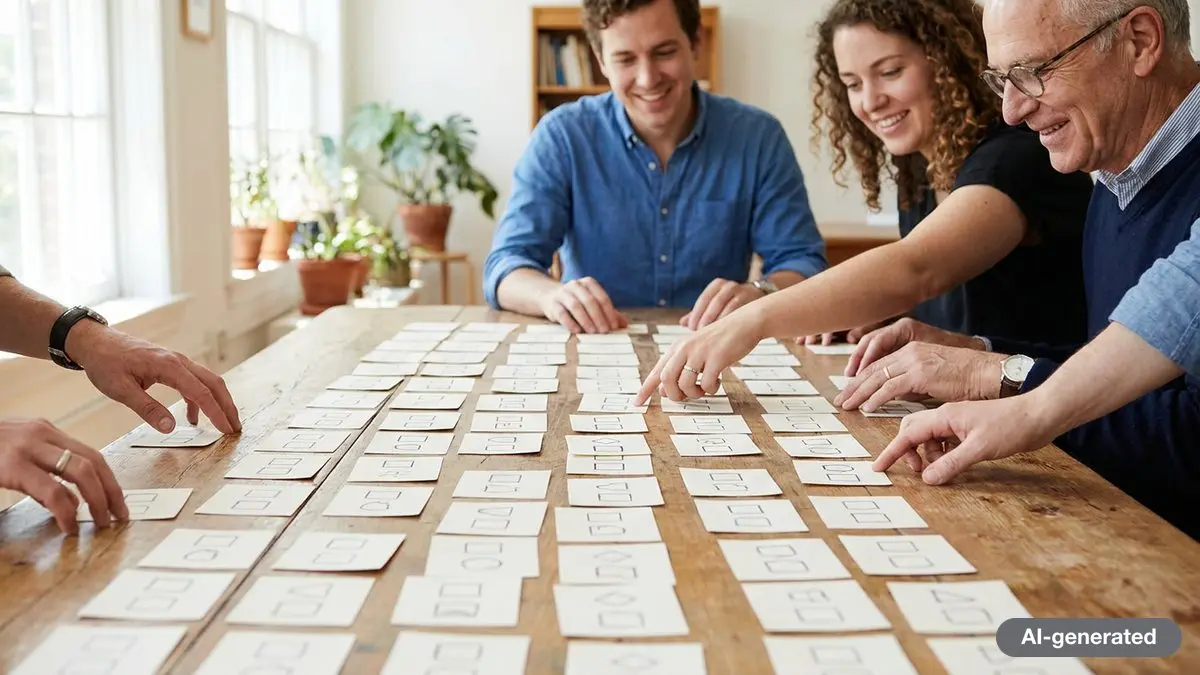
You can run a small version of the Chicago experiments on yourself; the point is to notice how confidence and accuracy come apart.
- Write first, look second. Before checking any example in the table, write or sketch what you remember: spell "Berenstain," draw Pikachu's tail, finish the queen's line in Snow White.
- Rate your confidence from 1 to 5. The Mandela effect is defined by high-confidence errors, so your 5s are the interesting ones.
- Check against a primary source: the original film, book cover, packaging or official page, not a meme.
- Try the DRM list. Have someone read you bed, rest, awake, tired, dream, wake, snooze, blanket, doze, slumber, snore, nap, yawn, drowsy. After a minute, write every word you remember. If "sleep" is on your sheet, you have just produced a false memory.
- Ask where the memory came from. For any confident error, look for the source: a parody, a friend, a different film. Often Shazaam turns out to be Kazaam plus Sinbad.
None of this means your memory is broken. The same reconstructive system that misremembers a logo lets you recognize a friend from a glimpse; it trades fidelity for speed and meaning.

Why the Mandela effect matters
Much of the Mandela effect is harmless fun, but its mechanisms have serious consequences. Eyewitness testimony is the clearest: Loftus's career began with the finding that a single misleading question can change what a witness remembers seeing, and the Chicago researchers note that faces which generate false memories could lead to false identifications in lineups. Misinformation is the second: the Mandela effect shows, with trivial and verifiable examples, that repetition plus social confirmation can install a false detail in millions of minds without anyone intending it, and the same pathway operates for false claims about health, history and politics. There is a gentler lesson too. Memory is partly social, which is why the stories a culture repeats, from an undeciphered manuscript to a figure glimpsed during sleep paralysis, take on such consistent shapes across people who have never met.
The bottom line
The Mandela effect is what happens when the reconstructive, socially shared nature of memory meets a culture that repeats the same images and lines billions of times. Bartlett showed memories are rebuilt from schemas; Loftus showed later information rewrites them; the DRM paradigm shows the mind generates what a pattern implies; contagion studies show errors pass between people; and the 2022 Chicago study showed that for certain icons the result is a specific, confident, widespread false memory with no single cause. Whether you find that complete or keep a door open to stranger possibilities, the practical advice is the same: write down what you remember, then go and look at the original.
Frequently asked questions
What is the Mandela effect in simple terms?
It is a shared false memory: many unrelated people confidently remember the same detail the same wrong way, such as the Monopoly man wearing a monocle or the line "Luke, I am your father." Psychologists treat it as a normal product of reconstructive memory, schemas, suggestion and social sharing rather than a defect.
Why is it called the Mandela effect?
Because the first widely discussed example was the false memory that Nelson Mandela died in prison in the 1980s. Paranormal researcher Fiona Broome coined the term in 2009 after discovering that others shared the memory. Mandela was released in 1990, served as president from 1994 to 1999 and died on December 5, 2013.
What are the most famous Mandela effect examples?
The Berenstain Bears (not Berenstein), "No, I am your father" (not "Luke"), the Monopoly man without a monocle, the Fruit of the Loom logo without a cornucopia, Pikachu's all-yellow tail, Curious George without a tail, "Magic mirror on the wall," Kit Kat without a hyphen, C-3PO's silver leg, Jif (not Jiffy) and the nonexistent Sinbad genie movie Shazaam.
Is the Mandela effect scientifically proven?
The phenomenon itself is documented. A 2022 study by Deepasri Prasad and Wilma Bainbridge in Psychological Science tested 40 icons and found that for several of them people consistently chose the same wrong version with high confidence, even when drawing from memory. The study did not find one cause that explains every example.
What causes the Mandela effect?
Several overlapping mechanisms: memory is a reconstruction that fills gaps with expectations (schemas), misleading information received later can overwrite details (the misinformation effect), the mind generates whatever a pattern implies (the DRM effect), people forget where a detail came from (source confusion), and errors spread between people (social contagion), especially online.
Is the Mandela effect evidence of parallel universes?
Some people believe shifted timelines or experiments at CERN explain their memories, and that belief is widely shared online. Britannica classifies these explanations as untestable. CERN's own research into extra dimensions searches for particle signatures and does not involve altering the past or human memories. Memory science explains the known examples without requiring other universes.
What is the difference between the Mandela effect and a false memory?
A false memory is any recollection that feels real but does not match what happened; everyone has them. The Mandela effect is the collective case, where a large number of people share the same specific false memory. The individual mechanisms are the same; the scale and consistency are what make it notable.
Did Sinbad ever make a genie movie?
No. There is no film called Shazaam starring Sinbad as a genie. The likely source of the memory is Kazaam, a 1996 film in which basketball player Shaquille O'Neal played a genie, blended with Sinbad's own 1990s fame. Britannica cites it as a classic example of source confusion.
How can I test whether I have a Mandela effect memory?
Write down or draw the detail before you check it, rate your confidence from 1 to 5, then compare it with a primary source such as the original film or product packaging rather than a meme. High-confidence misses are Mandela effect memories. You can also try a DRM word list and see whether you "remember" the missing word.
Why does the Mandela effect matter?
The same mechanisms affect eyewitness testimony, where misleading questions or memorable faces can produce false identifications, and misinformation, where repetition and social confirmation can install false details in many minds. The Mandela effect is a safe, verifiable demonstration of how confident memories can be wrong.
Sources
- University of Chicago Division of the Social Sciences: New Research Shows Consistency in What We Misremember
- Psychological Science (via PubMed): The Visual Mandela Effect as Evidence for Shared and Specific False Memories Across People, Prasad and Bainbridge, 2022
- Encyclopaedia Britannica: Mandela effect
- Encyclopaedia Britannica: Nelson Mandela
- BBC Bitesize: What is the Mandela Effect and why does it happen?
- Association for Psychological Science: The Mandela Effect Describes the False Memories Many of Us Share. But Why Can't Scientists Explain It?
- Scientific American, September 1997 (author's copy, University of Washington): Creating False Memories, Elizabeth F. Loftus
- APA PsycNet: Creating false memories: Remembering words not presented in lists, Roediger and McDermott, 1995
- Psychonomic Bulletin and Review: Social contagion of memory, Roediger, Meade and Bergman, 2001
- Encyclopaedia Britannica: Frederic Bartlett
- Encyclopaedia Britannica: Tank Man
- CERN: Extra dimensions, gravitons, and tiny black holes



Log in to comment
No comments yet. Be the first.