Ozempic Dosage: Doses, Schedule, Injection and Storage
- Start at 0.25 mg weekly for 4 weeks, then 0.5 mg; increase to 1 mg and 2 mg only if needed, each after at least 4 weeks.
- Take a missed dose within 5 days or skip it; doses must be at least 48 hours apart when changing your day.
- After first use, a pen keeps for 56 days at 59°F to 86°F or in the fridge; never use a frozen pen.
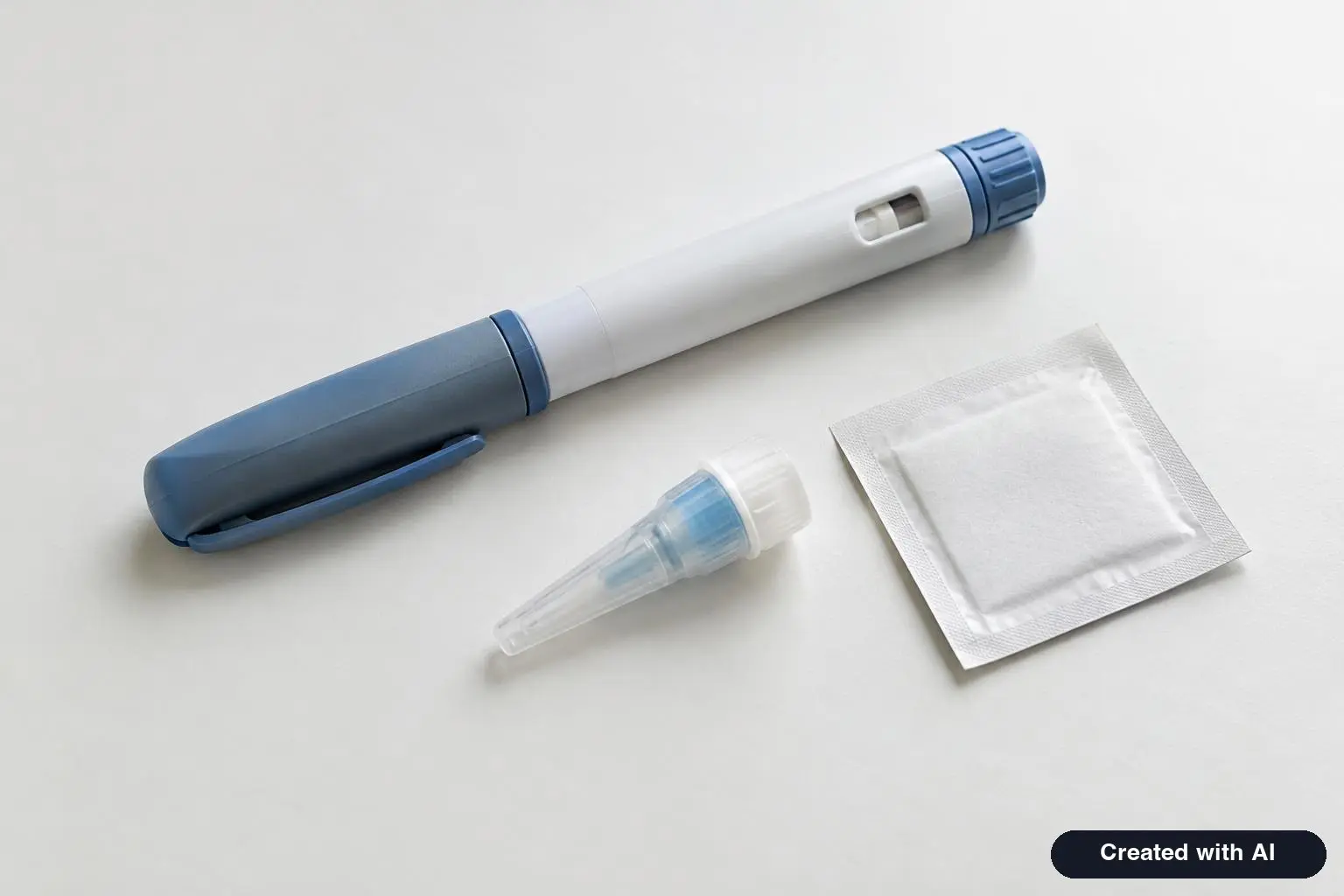
- Ozempic dosing schedule
- The maximum dose: 2 mg
- Which pen delivers which dose
- How to inject Ozempic, step by step
- Where to inject and how to rotate
- Needles
- Missed a dose: what to do
- Changing your injection day
- How to store Ozempic
- Traveling with Ozempic
- How long to take Ozempic
- Too much Ozempic: what to do
- Food and other medicines
- Switching to Ozempic tablets
Ozempic is injected under the skin once a week, on the same day each week, at any time of day, with or without food, into the abdomen, thigh or upper arm. Every patient starts at 0.25 mg once weekly for four weeks, then moves to 0.5 mg. If blood sugar needs more control, the dose can go to 1 mg after at least four weeks at 0.5 mg, and to 2 mg, the maximum, after at least four weeks at 1 mg. For kidney protection in type 2 diabetes with chronic kidney disease, the FDA label specifies 1 mg. If you miss a dose, take it within five days; if more than five days have passed, skip it. Before first use, pens go in the refrigerator; once in use, a pen can be kept at room temperature (59°F to 86°F) or refrigerated for up to 56 days. Use a new needle every time.
Everything on this page comes from the current FDA prescribing information and the instructions for use that come with the pen. Your prescriber sets your dose; this guide explains how the schedule works and how to use the pen correctly.
Ozempic dosing schedule
| Weeks | Weekly dose | When to move on |
|---|---|---|
| 1 to 4 | 0.25 mg | Always after 4 weeks. This dose is for getting used to the drug, not for controlling blood sugar |
| 5 onward | 0.5 mg | A common maintenance dose; increase only if more glucose control is needed |
| Week 9 at the earliest | 1 mg | After at least 4 weeks on 0.5 mg, if needed. The labeled maintenance dose for kidney protection |
| Week 13 at the earliest | 2 mg | After at least 4 weeks on 1 mg, if needed. Maximum dose |
The schedule climbs slowly because stomach side effects are dose-related. In the label's trials, most reports of nausea, vomiting and diarrhea occurred while the dose was being increased.
Moving up is not mandatory. The label's recommended maintenance doses are 0.5 mg, 1 mg or 2 mg, "based on glycemic control." Many people stay at 0.5 mg or 1 mg for years. Your clinician decides using your A1C, glucose readings, side effects and other conditions, and may keep you at a step longer if a dose increase brings nausea you cannot tolerate. Do not change your dose unless your prescriber tells you to.
The 0.25, 0.5, 1 and 2 mg doses are the same medicine in different amounts. Semaglutide has a half-life of about one week, so a weekly injection is enough, and blood levels take several weeks at a steady dose to settle.
The maximum dose: 2 mg
The highest FDA-approved Ozempic dose is 2 mg once a week. It was studied in the 40-week SUSTAIN FORTE trial in people already on metformin: A1C fell 2.2 points on 2 mg versus 1.9 points on 1 mg, and weight fell 6.9 kg versus 6.0 kg. Stomach side effects were somewhat more common on 2 mg (34%) than on 1 mg (30.8%). Doses above 2 mg are not approved for Ozempic. Higher semaglutide doses exist only as Wegovy, which is approved for weight management, not diabetes; see Ozempic vs Wegovy.
Which pen delivers which dose
Ozempic pens are multi-dose pens for one patient. Each delivers only the doses printed on its label: the dose selector stops at the available doses, and when not enough medicine is left for a full dose, the counter stops short.
| Pen | Contents | Doses it can deliver | Needles in the box |
|---|---|---|---|
| 0.25 mg or 0.5 mg pen | 2 mg in 3 mL | Four 0.25 mg doses and two 0.5 mg doses (starter use), or four 0.5 mg doses | 6 NovoFine Plus |
| 1 mg pen | 4 mg in 3 mL | Four 1 mg doses | 4 NovoFine Plus |
| 2 mg pen | 8 mg in 3 mL | Four 2 mg doses | 4 NovoFine Plus |
The current label also lists single-dose prefilled syringes of 0.25 mg, 0.5 mg and 1 mg (one dose each). Ask your pharmacist which form you are getting, because the steps differ. Prices for each pen are in Ozempic cost.
Why you should never count clicks
A popular online tip says you can get extra or in-between doses from a pen by counting the clicks of the dose selector. The instructions for use say plainly, more than once: do not count the pen clicks. The selector clicks differently when turned forward or backward, so the number of clicks does not tell you how much medicine you are setting. Only the dose counter and the dose pointer show the dose. A wrong dose can be too small to work or large enough to cause severe nausea, vomiting and dehydration. If you need a different dose, your prescriber writes a prescription for a different pen.
How to inject Ozempic, step by step
Before you use the pen for the first time, ask your clinician, nurse or pharmacist to show you. Here is a summary of the official instructions; read the full leaflet in the box too. You will need the pen, a new needle, an alcohol swab, a gauze pad or cotton ball, and a sharps disposal container.
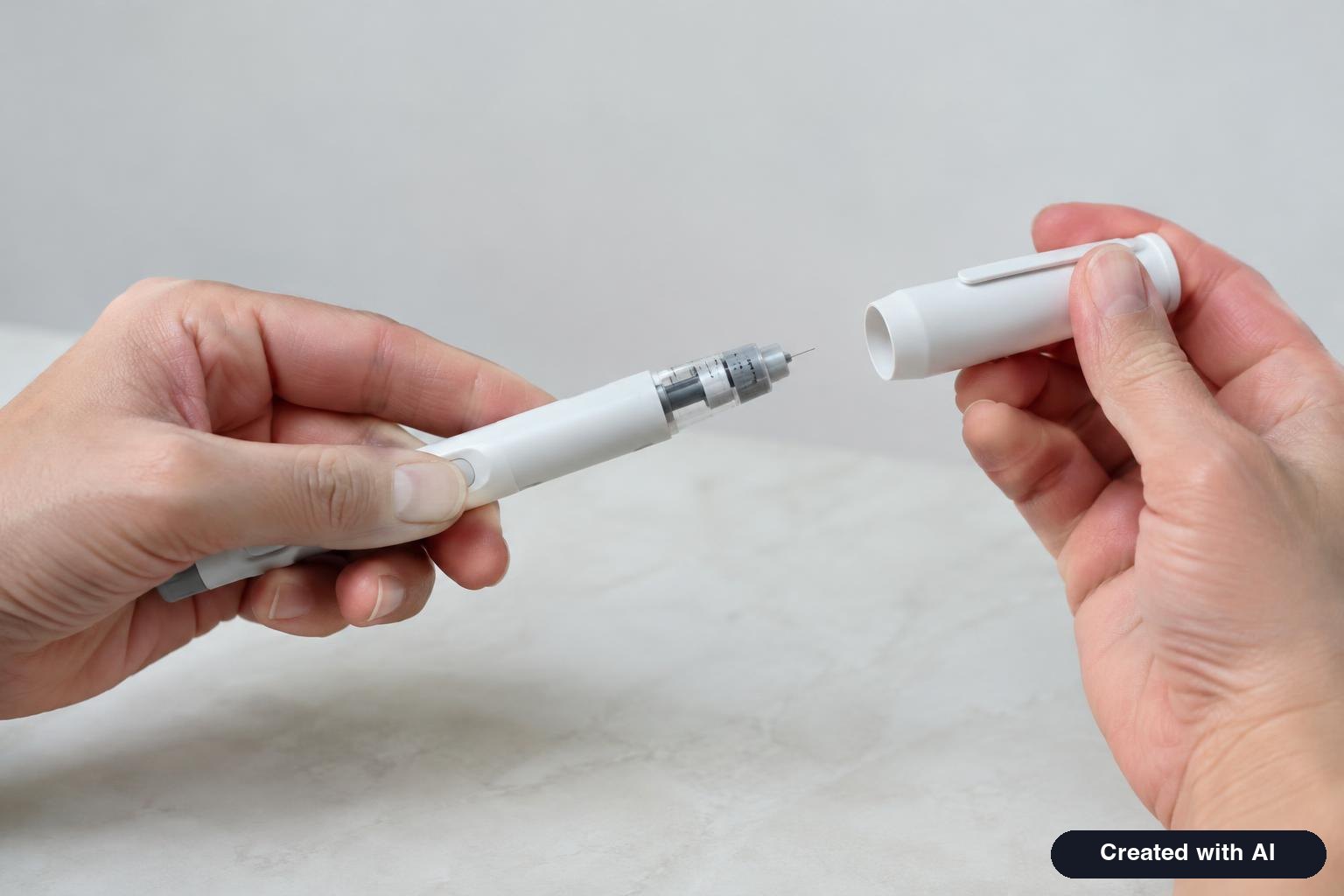
- Check the pen. Wash your hands. Check the name and the colored label to be sure it is Ozempic at your dose, especially if you use other injectables such as insulin. Pull off the cap and look through the window: the medicine should be clear and colorless. If it is cloudy or has particles, do not use it.
- Attach a new needle. Tear off the paper tab, push the needle straight onto the pen and turn until tight. Pull off the outer needle cap and keep it. Pull off the inner needle cap and throw it away. If you forget to remove both caps, no medicine will be injected.
- Check the flow, with each new pen only. Turn the dose selector to the flow check symbol. Hold the pen needle up and press and hold the dose button until the counter shows 0. A drop should appear at the needle tip. If not, repeat up to 6 times; if there is still no drop, change the needle and try once more. If no drop appears, do not use the pen and call Novo Nordisk at 1-888-693-6742. You do not repeat this step for a pen already in use.
- Select your dose. Turn the dose selector until the counter shows your dose (0.25, 0.5, 1 or 2 mg), lined up exactly with the dose pointer.
- Inject. Wipe the site with an alcohol swab and let it dry. Insert the needle as you were shown. Keep the dose counter visible; do not cover it with your fingers.
- Press and hold, then count to 6. Press and hold the dose button until the counter shows 0. Keep pressing with the needle in your skin and count slowly to six. If you pull out early, a stream of medicine may come from the needle and you will not get the full dose.
- Remove the needle. Pull the needle out, then release the button. If blood appears, press lightly with gauze; do not rub. A drop at the needle tip afterward is normal.
- Remove and discard the needle. Guide the needle into the outer cap on a flat surface without touching it, push the cap on, unscrew the needle and put it in your sharps container. Never put the inner cap back on; you could stick yourself. Put the pen cap back on.
If the counter does not return to 0 while you hold the button, the needle may be blocked and you have not received any medicine, even though the counter moved. Change the needle and repeat all steps. If you dropped the pen or think something is wrong with it, attach a new needle and do a flow check before injecting.
Where to inject and how to rotate
Ozempic goes under the skin only, in one of three areas: the abdomen, the front of the thigh or the upper arm. It must not be injected into a vein or muscle. You can switch areas without changing the dose. The label asks you to use a different spot each week when injecting in the same area, which helps prevent irritation and lumps under the skin; avoid bruised, scarred or hardened skin.
If you also take insulin, give the two as separate injections and never mix them. They can go in the same body area, but not right next to each other. Injection site reactions such as discomfort or redness were reported by 0.2% of people in placebo-controlled trials; mention persistent ones to your clinician.
Needles
NovoFine Plus 32G 4 mm needles come in the box, one for each dose. If you need more, the instructions say NovoFine Plus, NovoFine or other compatible disposable needles up to 8 mm long can be used. Always use a new needle for each injection. Reusing needles raises the risk of contamination, infection, leakage and blocked needles that lead to a wrong dose. Never use a bent or damaged needle, and never share your pen or needles with anyone, even if you change the needle; you could give or get a serious infection.
Disposing of needles and pens
Put used needles and empty pens in an FDA-cleared sharps container right away. If you do not have one, a heavy-duty plastic household container with a tight, puncture-resistant lid, such as a detergent bottle, can work. When it is about three-quarters full, follow your state or local rules for disposal; many pharmacies and health departments take them. Do not put loose needles in household trash or recycling.
Missed a dose: what to do
- Five days or less since your scheduled day: take the missed dose as soon as you remember, then go back to your usual day.
- More than five days: skip the missed dose and take the next one on your usual day.
- Never take two doses to make up for a missed one.
If you have missed several weeks in a row, call your prescriber before restarting. After a longer break, clinicians often restart at a lower dose to avoid strong nausea. The simplest way not to forget is to pick a day that anchors your week and set a phone reminder; noting each injection date on a calendar also helps you track how long the pen has been in use.
Changing your injection day
You can change the day of the week if needed, as long as the time between two doses is at least two days, more than 48 hours. For example, if you inject on Mondays and want to move to Thursdays, you can take your next dose on Thursday of the same week (three days later) and continue on Thursdays. Moving from Monday to Wednesday would also work, since more than 48 hours pass. After the switch, keep injecting once a week on the new day.
How to store Ozempic
| Status | Where to keep it | For how long |
|---|---|---|
| New pen, not yet used | Refrigerator, 36°F to 46°F (2°C to 8°C), away from the cooling element | Until the expiration date |
| Pen in use | Room temperature 59°F to 86°F (15°C to 30°C) or refrigerator | Up to 56 days after first use |
| Single-dose prefilled syringe | Refrigerator; if needed, 46°F to 86°F | Up to 28 days outside the fridge |
Keep the cap on when the pen is not in use to protect it from light, and store it without a needle attached. Write the date of first use on the pen or box; throw the pen away 56 days later even if medicine remains. Keep pens and needles out of reach of children.
Frozen, overheated or left in the sun
Do not use Ozempic that has been frozen, even if it has thawed and looks normal. Protect it from excessive heat and sunlight; a car in summer or winter can go far outside the safe range. If an in-use pen spent a long time above 86°F, or you suspect it froze at the back of the fridge, ask your pharmacist. Starting a new pen is the safer choice.
Traveling with Ozempic
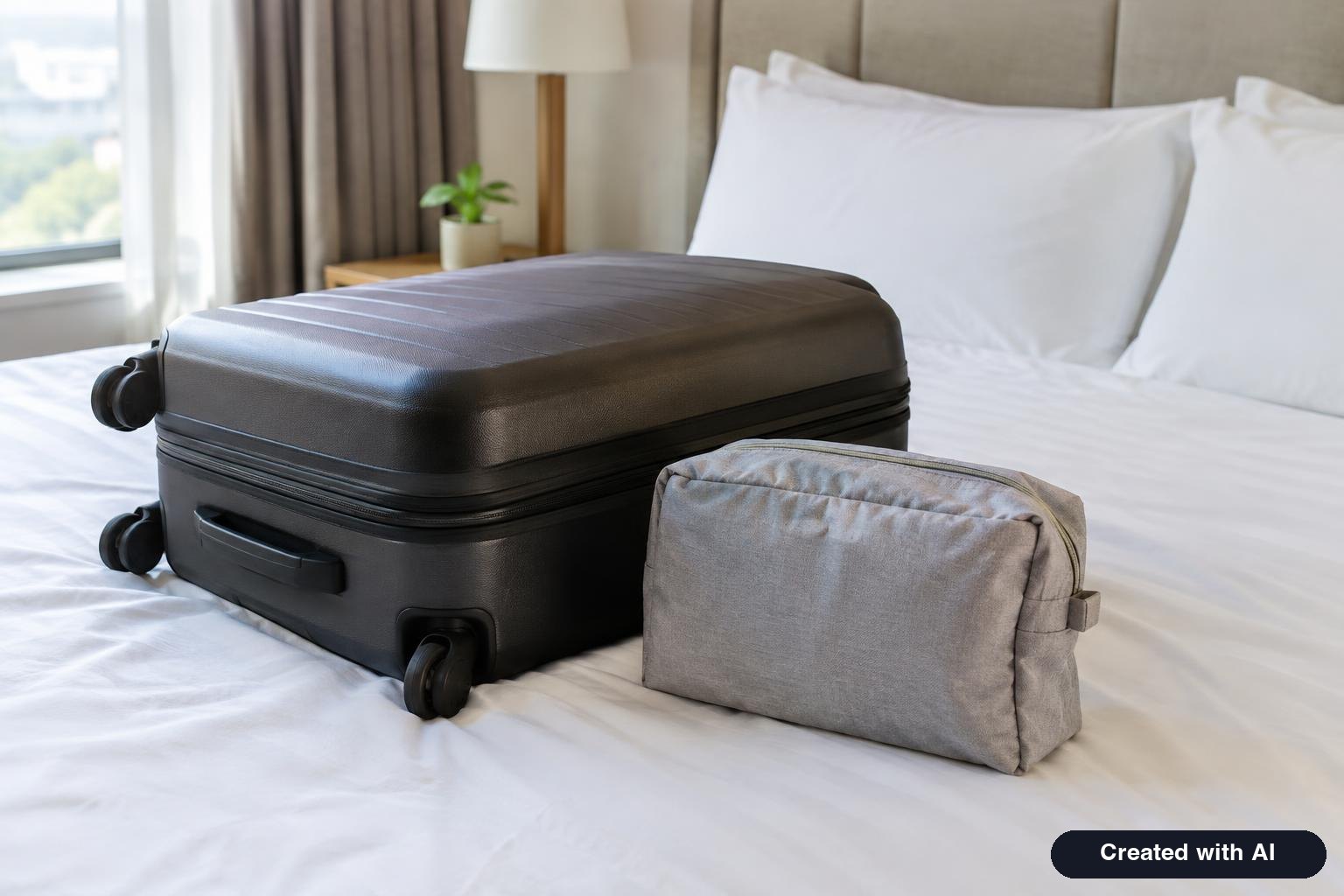
Because a pen in use can stay at room temperature for up to 56 days, a short trip usually does not require a cooler. On a plane, keep pens in your carry-on bag, not in checked luggage, where the hold can get very cold and bags get thrown around. Bring enough needles and a copy of your prescription or a note from your prescriber, especially for international travel. Keep pens in your room or a hotel fridge in hot climates, not in a beach bag or car. When you cross time zones, inject on your usual day; a few hours' difference does not matter, and if you need to shift the day, follow the 48-hour rule.
How long to take Ozempic
Type 2 diabetes is a chronic condition, so Ozempic is usually taken long term, for as long as it works and is well tolerated. The label sets no end date. Do not stop without talking to your prescriber, because blood sugar can rise. Your clinician reviews treatment with regular A1C tests and adds or changes medicines if goals are not met; see Ozempic for diabetes.
Treatment is stopped or paused in some situations:
- Planned pregnancy: stop at least two months beforehand, because semaglutide takes a long time to leave the body.
- Suspected pancreatitis: stop and seek care for severe, persistent abdominal pain, sometimes spreading to the back, with or without vomiting.
- Serious allergic reaction: stop and get emergency care.
Before surgery or a procedure with general anesthesia or deep sedation, tell the team you take Ozempic. Because it slows stomach emptying, aspiration of stomach contents has been reported in GLP-1 users undergoing these procedures. More on all warnings in Ozempic side effects.
Too much Ozempic: what to do
If you inject too much, for example by taking two doses in one week or using the wrong pen, call your prescriber. For advice right away, call Poison Help at 1-800-222-1222. Severe nausea, vomiting and diarrhea are the likely effects. There is no antidote; treatment supports you until symptoms pass, and because the half-life is about a week, symptoms can last and observation may need to be prolonged. Drink fluids if you can. Seek urgent care if you cannot keep fluids down, have severe abdominal pain or feel very weak or faint. If you also take insulin or a sulfonylurea, check your blood sugar more often, because the risk of low blood sugar goes up.
Food and other medicines
Meals do not affect how Ozempic works, so you do not need to time injections around food. In the first weeks and after each dose increase, smaller portions, eating slowly and limiting fatty food can ease nausea; see Ozempic and alcohol for diet tips.
If Ozempic is added to metformin or an SGLT2 inhibitor, those doses usually stay the same. If it is added to insulin or a sulfonylurea, your prescriber may lower their dose to prevent low blood sugar. Because Ozempic slows stomach emptying, it can affect how other oral medicines are absorbed; give your clinician and pharmacist a complete list of what you take.
Switching to Ozempic tablets
The tablet label allows people on Ozempic 0.5 mg injections to switch to Ozempic tablets: one week after the last 0.5 mg injection, start 4 mg or 9 mg tablets once daily. The tablets are taken each morning on an empty stomach with up to 4 ounces of plain water, with a 30-minute wait before food, drink or other oral medicines. Details in Ozempic pill. For a move to tirzepatide, see switching from Ozempic to Mounjaro. For the bigger picture, start with the Ozempic guide.
Frequently asked questions
What are the Ozempic doses?
0.25 mg once weekly for 4 weeks to start, then 0.5 mg. If more blood sugar control is needed, 1 mg after at least 4 weeks on 0.5 mg, and 2 mg after at least 4 weeks on 1 mg.
What is the maximum dose of Ozempic?
2 mg once a week. Higher semaglutide doses are available only as Wegovy, which is approved for weight management rather than diabetes.
Can I count clicks to get a different dose from my Ozempic pen?
No. The instructions for use say not to count pen clicks, because the selector clicks differently forward and backward. Only the dose counter shows the dose. Your prescriber can prescribe a different pen.
Where should I inject Ozempic?
Under the skin of the abdomen, the front of the thigh or the upper arm, using a different spot each week within the same area. Never into a vein or muscle.
How long do I hold the Ozempic pen in?
Press and hold the dose button until the counter shows 0, then keep pressing with the needle in your skin while you count slowly to 6 before removing it.
What if I miss a dose of Ozempic?
If 5 days or fewer have passed, take it as soon as you remember. If more than 5 days have passed, skip it and take the next dose on your usual day. Never double up.
How long can Ozempic stay out of the fridge?
Once you start using a pen, it can be kept at 59°F to 86°F or in the refrigerator for up to 56 days. Unused pens should be refrigerated and never frozen.
Can I change the day I take Ozempic?
Yes, as long as at least 2 days (more than 48 hours) pass between two doses. Then continue once a week on the new day.
Sources
- Ozempic (semaglutide) injection prescribing information – DailyMed
- Rybelsus and Ozempic (semaglutide) tablets prescribing information – DailyMed
- Frías JP et al. Semaglutide 2.0 mg versus 1.0 mg in type 2 diabetes (SUSTAIN FORTE). Lancet Diabetes Endocrinol 2021;9:563-574
- Wegovy (semaglutide) injection and tablets prescribing information – DailyMed
Log in to comment
No comments yet. Be the first.