Ozempic vs Wegovy: Same Semaglutide, Different Doses and Uses
- Ozempic maxes out at 2 mg weekly for type 2 diabetes; Wegovy's maintenance dose is 2.4 mg, with a 7.2 mg dose approved March 19, 2026.
- Average weight loss was 14.9% on Wegovy 2.4 mg in adults without diabetes (STEP 1) versus about 6 to 7 kg on Ozempic 1 to 2 mg in adults with diabetes.
- As of October 14, 2026, NovoCare self-pay prices are $349 a month for most doses of both, $499 for Ozempic 2 mg and $399 for Wegovy 7.2 mg.
- Ozempic vs Wegovy at a glance
- Is Wegovy the same as Ozempic?
- Dosing schedules compared
- Weight loss: Ozempic vs Wegovy
- Blood sugar, heart, kidneys and liver
- Side effects
- The pills: Ozempic tablets and Wegovy tablets
- Cost and coverage
- Can you use Ozempic for weight loss?
- Switching from Ozempic to Wegovy, or back
- Which one fits which situation
Ozempic and Wegovy contain the same active ingredient, semaglutide, and are made by the same company, Novo Nordisk. They are not the same product. Ozempic is approved for adults with type 2 diabetes and tops out at 2 mg a week. Wegovy is approved for chronic weight management, for lowering cardiovascular risk in people with heart disease and excess weight, and for the liver disease MASH, and it goes up to 2.4 mg a week, with a 7.2 mg option for some adults. Different labels mean different doses, different pens, different insurance rules and different prices.
If you are wondering whether you can simply use one in place of the other, the short answer is that the molecule is identical but the prescriptions are not interchangeable. Here is how they compare, with prices as of October 2026.
Ozempic vs Wegovy at a glance
| Ozempic | Wegovy | |
|---|---|---|
| Active ingredient | Semaglutide | Semaglutide |
| First FDA approval | 2017 | 2021 |
| Approved for | Blood sugar control in adults with type 2 diabetes; lowering cardiovascular risk in adults with type 2 diabetes and established cardiovascular disease; lowering the risk of kidney disease progression in adults with type 2 diabetes and chronic kidney disease | Weight reduction and maintenance in adults with obesity, adults with overweight plus a weight-related condition, and children 12 and older with obesity; lowering cardiovascular risk in adults with established cardiovascular disease and obesity or overweight; noncirrhotic MASH with moderate to advanced liver fibrosis |
| Weekly injection doses | 0.25, 0.5, 1 and 2 mg | 0.25, 0.5, 1, 1.7 and 2.4 mg; 7.2 mg (Wegovy HD) |
| Usual maintenance dose | 0.5, 1 or 2 mg | 2.4 mg (1.7 mg if needed) |
| Injection device | Multi-dose pen; you attach a needle and dial the dose | Single-dose pen with a built-in hidden needle; a four-dose FlexTouch pen also exists for 2.4 mg |
| Tablet version | Ozempic tablets 1.5, 4 and 9 mg daily, for type 2 diabetes | Wegovy tablets, 25 mg daily maintenance, for weight and cardiovascular risk in adults |
| Approved for teens? | No | Yes, injection, from age 12, for obesity |
| List price | About $1,028 per pen | About $1,349 per month |
| Manufacturer self-pay price | $199 to $499 a month by dose | $199 to $399 a month by dose |
Is Wegovy the same as Ozempic?
The semaglutide inside is the same molecule. What differs is everything built around it.
- The approved purpose. The FDA reviewed separate trial programs: SUSTAIN for diabetes (Ozempic) and STEP for weight management (Wegovy). Each label reflects only what its trials tested.
- The dose ceiling. Ozempic's maximum is 2 mg. Wegovy's standard maintenance dose is 2.4 mg, and since March 19, 2026 adults who have tolerated 2.4 mg for at least four weeks and need more weight reduction can be moved to 7.2 mg.
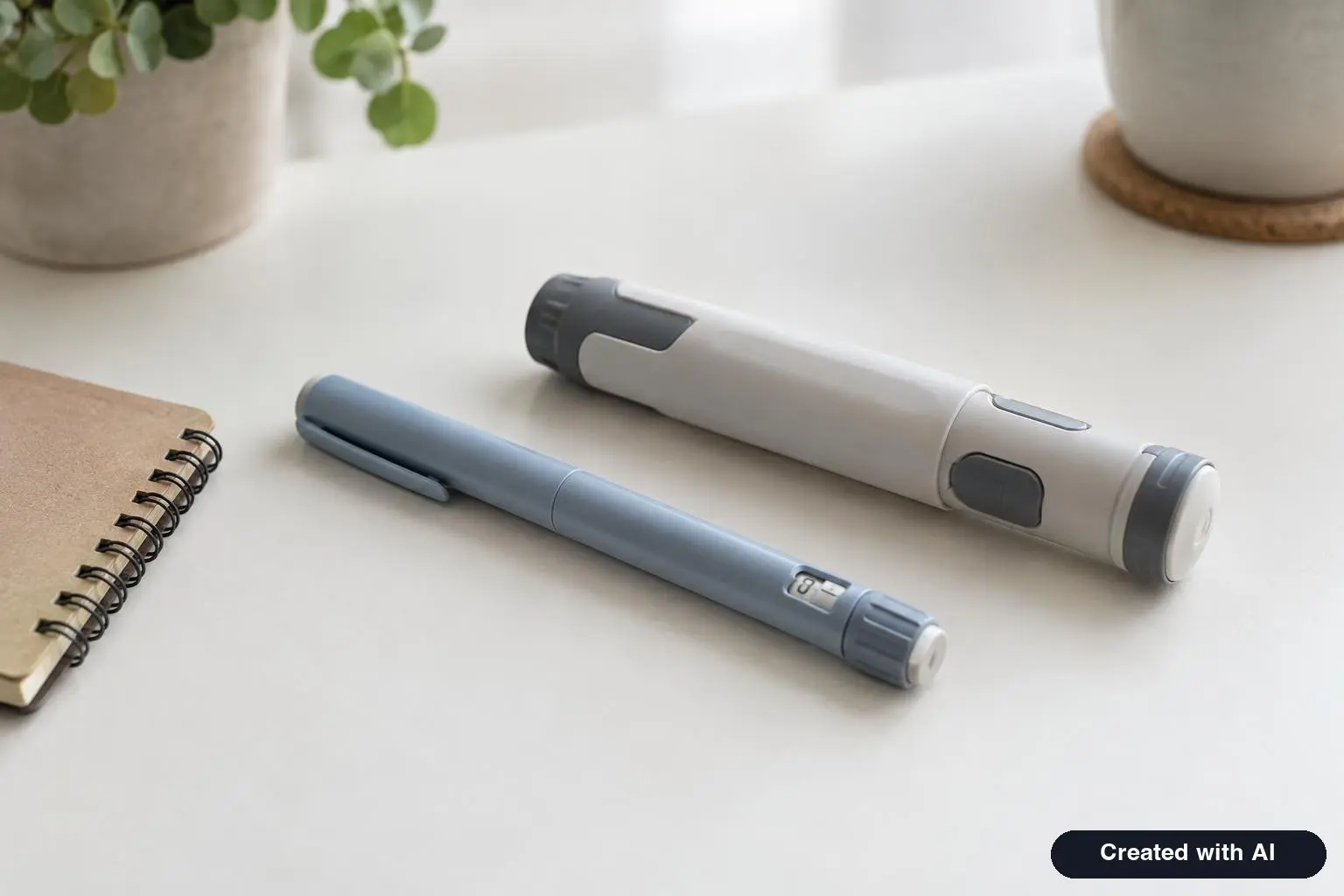
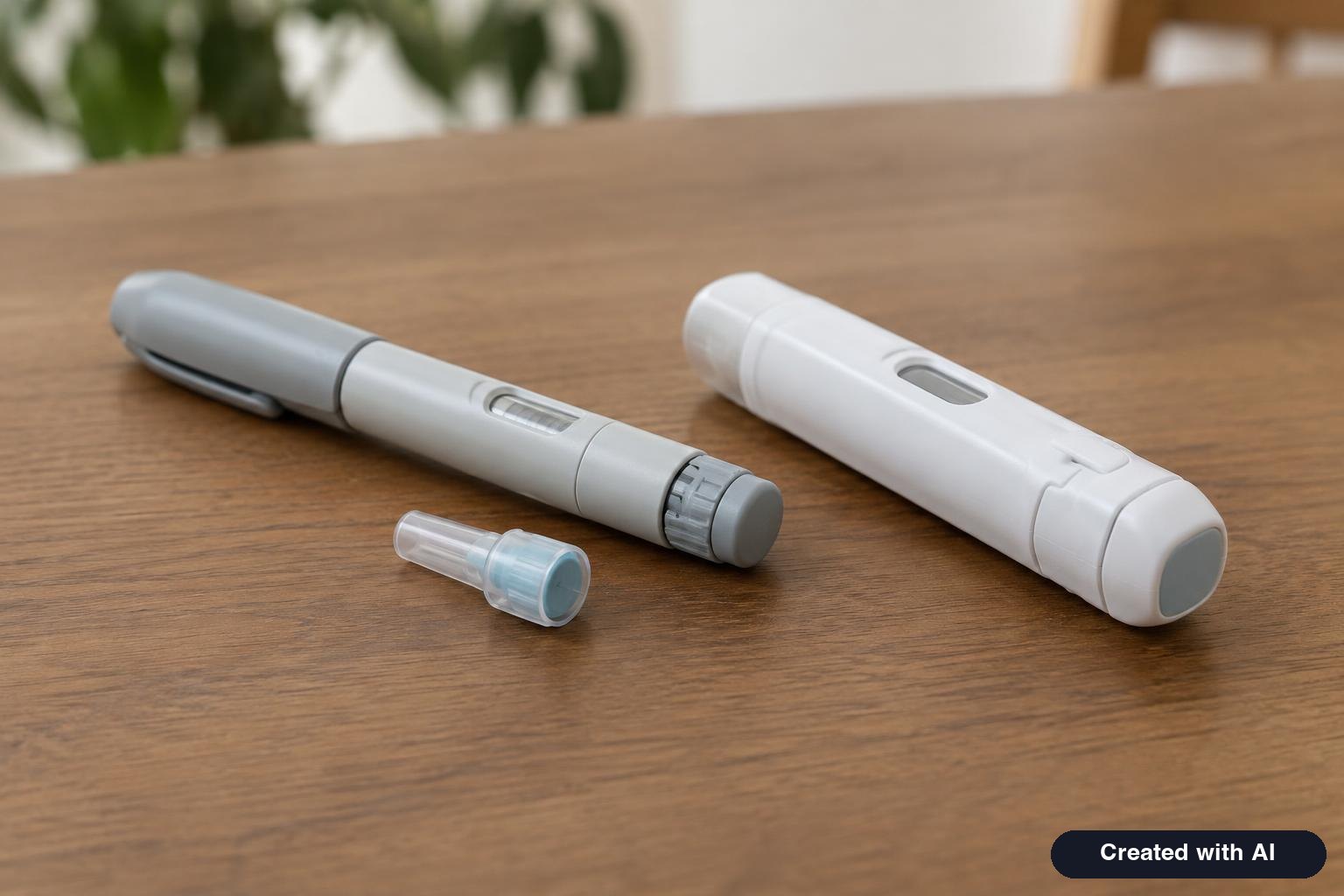
- The pen. One Ozempic pen lasts about a month and delivers several doses. Standard Wegovy pens are single-use: four pens in a box, one per week, no needle handling.
- The paperwork. Separate brand names let insurers cover semaglutide for diabetes while restricting or excluding it for weight management.
Eli Lilly's tirzepatide follows the same two-brand pattern; see Mounjaro vs Zepbound.
Dosing schedules compared
| Weeks | Ozempic | Wegovy injection |
|---|---|---|
| 1 to 4 | 0.25 mg | 0.25 mg |
| 5 to 8 | 0.5 mg | 0.5 mg |
| 9 to 12 | Stay at 0.5 mg, or 1 mg if more blood sugar control is needed | 1 mg |
| 13 to 16 | Stay, or 2 mg after at least 4 weeks on 1 mg | 1.7 mg |
| 17 onward | 0.5, 1 or 2 mg | 2.4 mg, or 1.7 mg |
| Optional | None above 2 mg | 7.2 mg after at least 4 weeks on 2.4 mg, adults, for weight reduction |
The philosophy differs. With Ozempic, you stop climbing when your blood sugar is where it should be; many people stay at 0.5 mg or 1 mg for years. For kidney protection in type 2 diabetes with chronic kidney disease, the label specifies 1 mg. With Wegovy, the schedule is designed to reach 2.4 mg, the dose with the main weight-loss and cardiovascular evidence, with 1.7 mg as a fallback.
Missed doses. Ozempic: take it within 5 days, otherwise skip. Wegovy: take it if your next scheduled dose is more than 2 days away; if you miss two or more in a row, the label says to restart escalation at a lower dose.
Storage. Both are refrigerated before first use and must never be frozen. An Ozempic pen in use can be kept at room temperature (59°F to 86°F) or in the refrigerator for up to 56 days.
Weight loss: Ozempic vs Wegovy
People do lose weight on Ozempic, and that is where the drug's fame began. But the amounts measured in its trials are smaller than Wegovy's, for two reasons: the doses are lower, and the trials enrolled people with type 2 diabetes, who lose less weight on these drugs than people without it.
| Trial | Who | Dose | Length | Average weight change |
|---|---|---|---|---|
| SUSTAIN FORTE | Type 2 diabetes | Ozempic 1 mg | 40 weeks | -6.0 kg (about 13 lb) |
| SUSTAIN FORTE | Type 2 diabetes | Ozempic 2 mg | 40 weeks | -6.9 kg (about 15 lb) |
| STEP 2 (Wegovy label) | Type 2 diabetes with overweight or obesity | Wegovy 2.4 mg | 68 weeks | -9.6% |
| STEP 1 (Wegovy label) | Overweight or obesity, no diabetes | Wegovy 2.4 mg | 68 weeks | -14.9% |
| STEP UP | Obesity, no diabetes | Wegovy 7.2 mg | 72 weeks | -18.7% |
In STEP 1, 83.5% of people on Wegovy lost at least 5% of their body weight and 47.9% lost at least 15%, compared with 31.1% and 4.8% on placebo. Ozempic has never been tested in a dedicated weight-management trial in people without diabetes, because that was Wegovy's job.
These are averages over a year or more, with diet and activity counseling alongside the drug. They also describe people who stayed in the trials. When semaglutide 2.4 mg was stopped in the STEP 1 extension, participants regained about two-thirds of the lost weight within a year.
Blood sugar, heart, kidneys and liver
| Outcome | Ozempic | Wegovy |
|---|---|---|
| A1C in type 2 diabetes | Labeled use. In SUSTAIN FORTE, A1C fell 1.9 points on 1 mg and 2.2 points on 2 mg from a baseline of 8.9%. | Not approved to treat diabetes, though blood sugar falls. People with diabetes on Wegovy are told to monitor glucose. |
| Heart attack, stroke, cardiovascular death | Approved for adults with type 2 diabetes and established cardiovascular disease (SUSTAIN-6: 6.6% vs 8.9% with placebo). | Approved for adults with established cardiovascular disease and obesity or overweight, with or without diabetes (SELECT: 6.5% vs 8.0% with placebo in 17,604 people without diabetes). |
| Kidney disease | Approved for adults with type 2 diabetes and chronic kidney disease (FLOW: 24% lower risk of major kidney outcomes). | No kidney indication. |
| MASH (fatty liver disease with inflammation and fibrosis) | No liver indication. | Accelerated approval for noncirrhotic MASH with moderate to advanced fibrosis in adults, at 2.4 mg. |
If you have type 2 diabetes and also want to lose weight, this table is the heart of the decision. Ozempic treats the diabetes with the kidney and cardiovascular labeling behind it. Wegovy delivers a higher dose for weight. Which one is prescribed often comes down to which goal is primary and what your plan will pay for. You cannot take both.
Side effects
Same drug, same side effects, but more of them at Wegovy's higher doses.
| Side effect | Ozempic 0.5 mg | Ozempic 1 mg | Wegovy 2.4 mg | Wegovy 7.2 mg |
|---|---|---|---|---|
| Nausea | 15.8% | 20.3% | 44% | 39% |
| Vomiting | 5% | 9.2% | 24% | 22% |
| Diarrhea | 8.5% | 8.8% | 30% | not in the 7.2 mg table |
| Constipation | 5% | 3.1% | 24% | 20% |
| Abdominal pain | 7.3% | 5.7% | 20% | 12% |
| Skin tingling or sensitivity (dysesthesia) | not listed | not listed | 2% | 22% |
| Hair loss | not listed | not listed | 3% | 6% |
Figures are from the two FDA labels and come from different trials. The 2.4 mg and 7.2 mg columns are from separate studies too, which is why a few 7.2 mg rates look lower than 2.4 mg; in the trial that compared them directly, nausea was 35% on 2.4 mg and 39% on 7.2 mg.
Both labels carry a boxed warning about thyroid C-cell tumors seen in rodents. Neither drug should be used by anyone with a personal or family history of medullary thyroid carcinoma or with MEN 2, or by anyone who has had a serious allergic reaction to semaglutide. Both warn about pancreatitis, gallbladder disease, kidney injury from dehydration, severe stomach problems, low blood sugar with insulin or sulfonylureas, worsening of diabetic retinopathy, and aspiration during anesthesia. Wegovy's label adds a warning about an increase in resting heart rate.
Stop the medicine and get urgent care for severe abdominal pain that will not go away, or for swelling of the face or throat or difficulty breathing. Tell your prescriber about vision changes or vomiting and diarrhea that persist. Both labels advise stopping semaglutide at least two months before a planned pregnancy.
The pills: Ozempic tablets and Wegovy tablets
Both brands now exist in tablet form, which adds a second layer to the comparison.
| Ozempic tablets | Wegovy tablets | |
|---|---|---|
| Approved for | Type 2 diabetes; cardiovascular risk in adults with type 2 diabetes at high risk | Weight reduction and cardiovascular risk reduction in adults |
| Strengths | 1.5 mg, 4 mg, 9 mg | 1.5 mg, 4 mg, 9 mg, 25 mg |
| Schedule | 1.5 mg for 30 days, then 4 mg; 9 mg if more control is needed | 1.5 mg, 4 mg and 9 mg for 30 days each, then 25 mg |
| How to take | Once daily on an empty stomach with up to 4 ounces of plain water; wait 30 minutes before food, drink or other oral medicines | Same |
| Self-pay price | $149 (1.5 mg), $199 (4 mg), $299 (9 mg) | $149 (1.5 mg), $199 (4 mg), $299 (9 mg and 25 mg) |
Ozempic tablets reached U.S. pharmacies on May 4, 2026. They are a reformulation of Rybelsus, the original oral semaglutide, in a smaller pill; the two are not interchangeable milligram for milligram (Rybelsus 7 mg corresponds to Ozempic tablets 4 mg, and 14 mg to 9 mg). Wegovy tablets were approved in December 2025; in the OASIS 4 trial, average weight loss at 64 weeks was 13.6% versus 2.2% on placebo. More in GLP-1 pills compared.
Cost and coverage
Prices were checked on NovoCare, Novo Nordisk's patient site, on October 14, 2026.
| Ozempic injection | Wegovy injection | |
|---|---|---|
| List price | $1,027.51 per pen | About $1,349 per month |
| Self-pay, introductory | $199 a month for the first two fills of 0.25 or 0.5 mg, new patients, through December 31, 2026 | $199 a month for the first two fills of 0.25 or 0.5 mg, new patients, through December 31, 2026 |
| Self-pay, ongoing | $349 a month for 0.25, 0.5 or 1 mg; $499 for 2 mg | $349 a month for 0.25 through 2.4 mg; $399 for 7.2 mg |
| Commercial insurance that covers it | As little as $25 a month with the savings offer (maximum savings $100 a month) | As little as $25 a month with the savings offer (maximum savings $100 a month) |
An oddity worth noticing: at the top of each range, Wegovy 2.4 mg ($349) now costs a cash payer less than Ozempic 2 mg ($499), even though it contains more semaglutide.
- Commercial plans nearly always cover Ozempic for type 2 diabetes, usually with prior authorization confirming the diagnosis. Wegovy coverage for weight management depends on whether the employer bought that benefit; many have not. Wegovy prescribed to reduce cardiovascular risk in someone with established heart disease is sometimes covered where weight management is excluded.
- Medicare Part D covers Ozempic for type 2 diabetes. It may cover Wegovy for cardiovascular risk reduction. For weight management, the Medicare GLP-1 Bridge offers Wegovy injection or tablets at a $50 monthly copay from July 1, 2026 through December 31, 2027 to people who meet its BMI and health criteria; Ozempic is not part of that program. Separately, a Medicare-negotiated price for semaglutide products, reported at $274 for a 30-day supply, is scheduled to take effect January 1, 2027.
- Medicaid programs generally cover Ozempic for type 2 diabetes, often with prior authorization; Wegovy coverage for weight varies by state.
See GLP-1 cost without insurance for every cash-pay route, including tirzepatide.
Can you use Ozempic for weight loss?
Doctors may legally prescribe a drug for a use not on its label, and Ozempic has been widely prescribed off-label for weight loss. Three practical points:
- Insurance. Plans rarely pay for Ozempic without a type 2 diabetes diagnosis. Prior authorization forms ask for it.
- Dose. Ozempic stops at 2 mg. The weight-management evidence is for 2.4 mg and above.
- Price. With Wegovy now at $199 to $349 a month for cash payers, the old argument that Ozempic was the more affordable way to get semaglutide no longer holds.
If weight is the goal and you do not have diabetes, the on-label options are Wegovy, Zepbound and the newer pills. A comparison of all of them is in the best GLP-1 for weight loss.
Switching from Ozempic to Wegovy, or back
The Wegovy label does not give a conversion table from Ozempic, and Ozempic's does not give one from Wegovy. Because the first three dose steps are the same milligram amounts (0.25, 0.5 and 1 mg), prescribers commonly move a patient to the matching or next Wegovy step rather than back to the beginning, provided there has been no break in treatment. Someone stable on Ozempic 1 mg, for instance, might be moved to Wegovy 1 mg or 1.7 mg and then to 2.4 mg after four weeks. That is clinical practice, not a labeled instruction, and your prescriber may choose differently based on side effects and blood sugar.
Points to settle first:
- Do not overlap. Take the first dose of the new brand on the day the old one would have been due.
- Relearn the pen. The devices work differently, and dosing errors happen when people assume otherwise.
- Diabetes medicines. If you take insulin or a sulfonylurea, a higher semaglutide dose can raise the risk of low blood sugar; doses of those drugs may need adjusting.
- Gaps. After two or more missed weekly doses, restarting at a lower dose reduces nausea and vomiting.
The labels do spell out moves between injection and tablet within each brand. A person on Wegovy 2.4 mg can start Wegovy 25 mg tablets one week after the last injection. A person on Ozempic 0.5 mg can start Ozempic tablets 4 mg or 9 mg one week after the last injection. Switching to tirzepatide is a different process, described in switching from Ozempic to Mounjaro.
Which one fits which situation
- Type 2 diabetes, main goal is blood sugar: Ozempic.
- Type 2 diabetes with chronic kidney disease: Ozempic has the kidney indication.
- Obesity or overweight with a related condition, no diabetes: Wegovy.
- Heart disease and excess weight, no diabetes: Wegovy has the cardiovascular indication for this group.
- MASH with fibrosis: Wegovy.
- Age 12 to 17 with obesity: Wegovy injection.
- Type 2 diabetes and obesity together: either may be reasonable; discuss which goal leads and check the formulary.
If semaglutide is not giving you the result you and your prescriber hoped for, the tirzepatide comparisons are the next read: Ozempic vs Mounjaro for diabetes and Wegovy vs Zepbound for weight. One thing to skip: non-prescription GLP-1 patches and supplements do not contain semaglutide, whatever the label implies.
Frequently asked questions
Is Wegovy the same as Ozempic?
They contain the same active ingredient, semaglutide, from the same manufacturer. They differ in approved uses, maximum dose, pen design and insurance coverage. Ozempic is approved for type 2 diabetes up to 2 mg weekly; Wegovy is approved for weight management, cardiovascular risk reduction and MASH at 2.4 mg weekly, with a 7.2 mg option.
Is Wegovy stronger than Ozempic?
Wegovy is dosed higher. Its standard maintenance dose is 2.4 mg a week and some adults can go to 7.2 mg, while Ozempic's maximum is 2 mg. Milligram for milligram, the semaglutide is identical.
Can I take Ozempic for weight loss instead of Wegovy?
A prescriber can write Ozempic off-label, but insurers rarely cover it without a type 2 diabetes diagnosis, its dose stops at 2 mg, and Wegovy's cash price is now similar or lower. Wegovy is the semaglutide product approved for weight management.
Can I switch from Ozempic to Wegovy?
Yes, with a new prescription. There is no official conversion table. Because the first dose steps match, prescribers often continue at the same or next step, then move toward 2.4 mg at four-week intervals. Do not use both at once.
Which is cheaper, Ozempic or Wegovy?
For cash payers through NovoCare Pharmacy as of October 14, 2026, both are $199 a month for the first two starter fills for new patients and $349 for most ongoing doses. Ozempic 2 mg is $499 and Wegovy 7.2 mg is $399. With commercial coverage, either can be as little as $25 a month.
Do Ozempic and Wegovy have the same side effects?
Yes: nausea, vomiting, diarrhea, constipation and abdominal pain lead the list for both, and both carry a boxed warning about thyroid C-cell tumors. Rates are higher on Wegovy because the doses are higher; nausea was reported by 44% at 2.4 mg versus about 16% to 20% on Ozempic 0.5 to 1 mg.
Can you take Ozempic and Wegovy together?
No. Wegovy's label says it should not be used with other semaglutide-containing products or any other GLP-1 receptor agonist.
Is Rybelsus the same as Ozempic?
Rybelsus is semaglutide in tablet form for type 2 diabetes. In 2026 Novo Nordisk introduced a reformulated tablet under the Ozempic name in 1.5, 4 and 9 mg strengths. The two tablets are not interchangeable milligram for milligram: Rybelsus 7 mg corresponds to Ozempic tablets 4 mg, and 14 mg to 9 mg.
Sources
- Ozempic (semaglutide) injection prescribing information – DailyMed
- Wegovy (semaglutide) injection and tablets prescribing information – DailyMed
- Rybelsus and Ozempic (semaglutide) tablets prescribing information – DailyMed
- Wilding JPH et al. Once-Weekly Semaglutide in Adults with Overweight or Obesity (STEP 1). N Engl J Med 2021;384:989-1002
- Wharton S et al. Once-weekly semaglutide 7.2 mg in adults with obesity (STEP UP). Lancet Diabetes Endocrinol 2025;13:949-963
- Frías JP et al. Once-weekly semaglutide 2.0 mg versus 1.0 mg in type 2 diabetes (SUSTAIN FORTE). Lancet Diabetes Endocrinol 2021;9:563-574
- Marso SP et al. Semaglutide and Cardiovascular Outcomes in Patients with Type 2 Diabetes (SUSTAIN-6). N Engl J Med 2016;375:1834-1844
- Lincoff AM et al. Semaglutide and Cardiovascular Outcomes in Obesity without Diabetes (SELECT). N Engl J Med 2023;389:2221-2232
- Perkovic V et al. Effects of Semaglutide on Chronic Kidney Disease in Patients with Type 2 Diabetes (FLOW). N Engl J Med 2024;391:109-121
- Wharton S et al. Oral Semaglutide at a Dose of 25 mg in Adults with Overweight or Obesity (OASIS 4). N Engl J Med 2025;393:1077-1087
- Wilding JPH et al. Weight regain and cardiometabolic effects after withdrawal of semaglutide: the STEP 1 trial extension. Diabetes Obes Metab 2022;24:1553-1564
- FDA: higher-dose (7.2 mg) Wegovy approved, March 19, 2026
- Novo Nordisk news release: Ozempic pill available in the US starting May 4, 2026
- NovoCare – Ozempic list price and coverage
- NovoCare Pharmacy – self-pay prices for Ozempic and Wegovy
- NovoCare – Wegovy pricing options
- Medicare.gov – Weight loss drugs (Medicare GLP-1 Bridge)
- Healthcare Dive – Medicare negotiated 2027 prices for Ozempic, Wegovy and other drugs
Log in to comment
No comments yet. Be the first.