GLP-1 Patch: What It Is, What's in It and Does It Work?
- As of October 14, 2026, the FDA has not approved any GLP-1 drug in patch form; approved versions are injections and tablets only.
- A 2026 University of Connecticut review of 25 "GLP-1" skin products found none listed semaglutide or tirzepatide; berberine was on 56% of labels.
- Patches cost about $15 to $35 a month; FDA-approved GLP-1 pills start at $149 a month self-pay as of October 2026.
- GLP-1 patches at a glance
- What a GLP-1 patch is, and what it is not
- What is actually in GLP-1 patches
- Is there an FDA-approved GLP-1 patch?
- Do GLP-1 patches work?
- Side effects and safety
- What GLP-1 patches cost next to real medication
- Patch vs. injection vs. pill
- How people use them, and where they put them
- Where they are sold: Amazon, TikTok Shop, Costco, CVS and Walmart
- Brands and reviews
- How to spot a misleading GLP-1 patch listing
- Are GLP-1 patches different for men and women?
- What to do instead
- When to call a doctor
A GLP-1 patch is a stick-on product sold online as a needle-free way to get the appetite and weight effects of drugs like Ozempic, Wegovy and Zepbound. It does not contain any of those drugs. As of October 14, 2026, the FDA has not approved a single GLP-1 medication in patch form, and the patches sold on Amazon, TikTok Shop and brand websites are adhesive stickers loaded with small amounts of plant extracts and vitamins, most often berberine. No published human trial shows that any of them causes weight loss.
That is the short version. The longer one matters, because these patches are everywhere, they are cheap, the packaging borrows the language of prescription medicine, and a real drug patch is in early human testing. This guide explains what is in the products, what regulators have said, what the evidence does and does not show, what they cost next to real GLP-1 medication, and how to tell a misleading listing from an honest one.
GLP-1 patches at a glance
| Question | Answer as of October 14, 2026 |
|---|---|
| Do they contain semaglutide, tirzepatide or any GLP-1 drug? | No. In a University of Connecticut review of 25 "GLP-1" skin products, none listed an FDA-approved GLP-1 ingredient. |
| Is any GLP-1 patch FDA-approved? | No. Approved GLP-1 medicines come only as injections and tablets. |
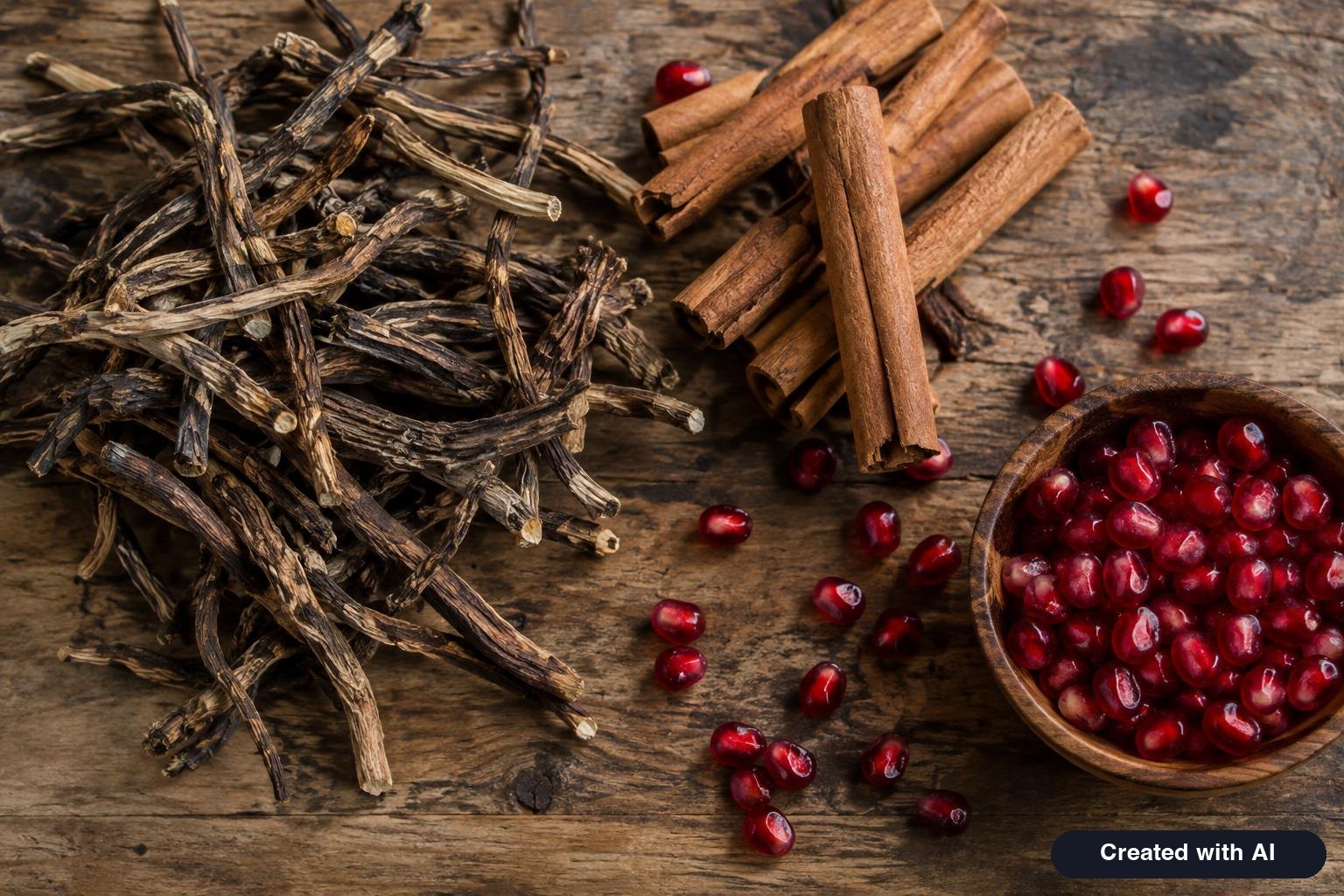
| What is in them? | Usually berberine, pomegranate, cinnamon, L-glutamine, chromium and B vitamins, in milligram amounts. |
| Is there proof they cause weight loss? | No human study of any of these patches has been published. |
| Typical price | About $15 to $35 for a one-month pack at the three brand stores we checked. |
| Most reported problems | No effect, and skin reactions such as rash, irritation and blisters. |
| Is a real GLP-1 patch coming? | Possibly. Microneedle patches that carry actual semaglutide are in Phase 1 trials. None is close to approval. |
What a GLP-1 patch is, and what it is not
GLP-1 stands for glucagon-like peptide-1, a hormone your gut releases after you eat. It tells the pancreas to release insulin, slows how fast the stomach empties and signals fullness to the brain. Prescription drugs in this class, including semaglutide (Ozempic, Wegovy, Rybelsus), tirzepatide (Mounjaro, Zepbound) and the newer pill orforglipron (Foundayo), mimic that hormone at the receptor and keep working for hours or days.
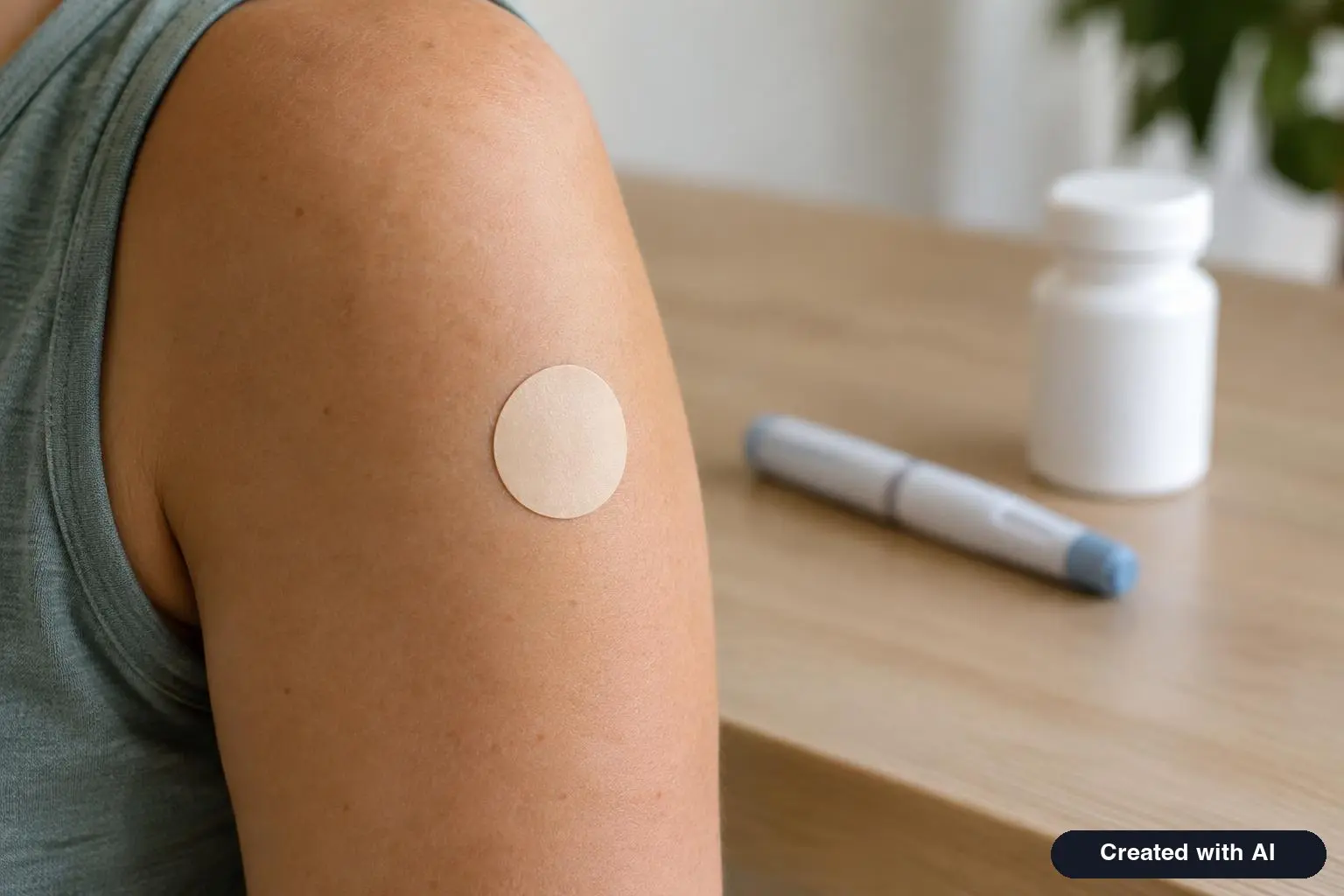
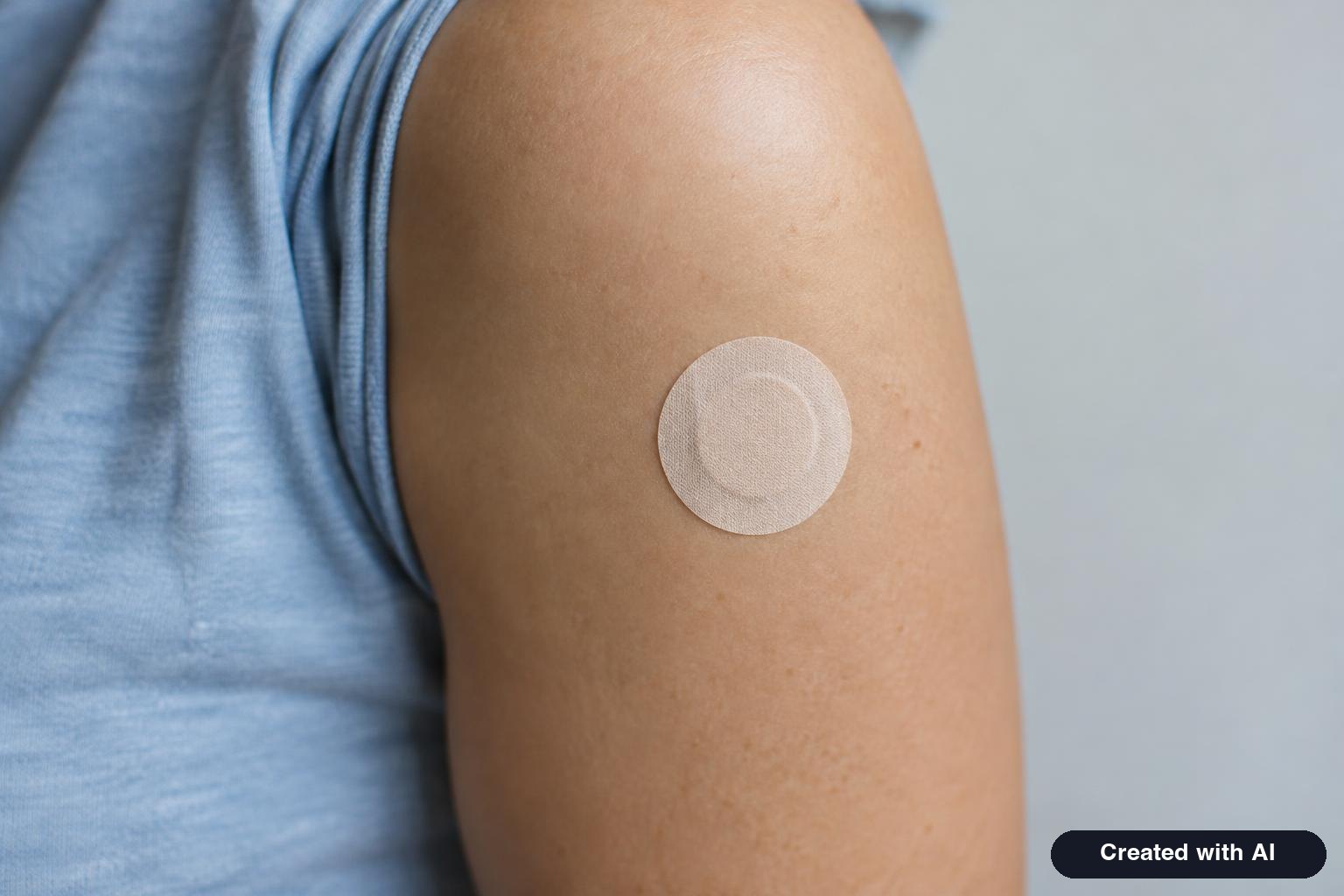
The products sold as "GLP-1 patches," "GLP-1 support patches" or "GLP-1 friendly patches" do something different on paper and, as far as anyone has shown, nothing comparable in practice. They are thin adhesive circles or squares, usually worn on the arm, shoulder or abdomen for eight to twelve hours. The seller's theory is that herbal ingredients soak through the skin and nudge your body to make more of its own GLP-1.
Cleveland Clinic endocrinologist Keren Zhou, MD, put the core problem plainly in the hospital's review of these products: "GLP-1 hormones are large molecules that can't easily pass through your skin. That's why the prescription medications currently only come as injections or pills. GLP-1 skin patches just aren't scientifically possible yet."
So the name describes a marketing association, not a content. Some brands say so in their own small print. Ledisa, one of the most searched names, states on its website that its patches "are not medications" and "do not contain synthetic hormones or mimic prescription GLP-1 drugs."
What is actually in GLP-1 patches
The best public inventory comes from pharmacists at the University of Connecticut School of Pharmacy, who searched for "natural GLP-1" skin products between May and September 2025 and published their findings in the Annals of Pharmacotherapy in 2026. They found 24 patches and one gel that used "GLP-1" in the name, packaging or description.
- None of the 25 listed semaglutide, tirzepatide or any other approved GLP-1 drug.
- Four listed no active ingredients at all.
- The other 21 listed an average of seven plant, vitamin or mineral ingredients.
- None carried U.S. Pharmacopeia or NSF certification, and none posted a certificate of analysis showing what a lab found inside.
- Only six displayed the full FDA disclaimer that supplement-style claims are supposed to carry.
| Ingredient listed | Share of the 25 products |
|---|---|
| Berberine | 56% |
| Pomegranate extract | 44% |
| Glutamine or glutamate | 44% |
| Cinnamon | 44% |
| Chromium | 32% |
| Garcinia cambogia | 20% |
| Green tea extract | 20% |
| B vitamins (B1, B2, B3, B6) | 20% each |
| Ginger root | 16% |
| No ingredients specified | 16% |
The amounts are small. Kind Patches, whose product is labeled "Berberine Patches (GLP-1 Friendly)," lists 8.75 mg of berberine extract, 2.75 mg of cinnamon extract, 1.75 mg of pomegranate extract, 3.5 mg of L-glutamine, 35 mcg of chromium and 8.25 mg of B vitamins per patch. Ledisa's product page lists 23 ingredients, led by 8 mg each of garcinia cambogia extract and berberine extract. For scale, the oral berberine studies that found modest weight changes mostly used more than 1,000 mg a day, according to the National Center for Complementary and Integrative Health (NCCIH).
Because nobody independently tests these products before sale, the label is the seller's word. "Even if the ingredients are listed, there's no way of knowing if they're in the product, or how much of an ingredient they contain, due to a lack of regulation," Zhou said. Our full breakdown of the main ingredient is in the berberine patch guide.
Is there an FDA-approved GLP-1 patch?
No. Every FDA-approved GLP-1 medicine is either injected under the skin or swallowed as a tablet. There is no approved transdermal semaglutide, tirzepatide, liraglutide or dulaglutide, and no approved "Ozempic patch."
The regulatory status of the stick-on products is murkier than most shoppers assume, and not in the sellers' favor:
- They are not dietary supplements under FDA's definition. The agency's own guidance says supplements "are products that are ingested – specifically, they must be swallowed – so, for example, topical or inhaled products are not supplements." The University of Connecticut authors concluded that selling these patches as supplements is therefore not legal.
- The FDA does not approve supplements anyway. Even for pills and powders, the agency has no authority to review safety or effectiveness before sale.
- At least one patch line is on an FDA import alert. Import Alert 66-41, which lets border staff detain "unapproved new drugs promoted in the U.S." without examining them, added "GLP-1 Transdermal Patches" from a Chinese manufacturer, Hebei Houde Hanfang Medical Devices Co., on June 23, 2026.
- The FDA's public GLP-1 warnings focus elsewhere. The agency's page on unapproved GLP-1 drugs, updated October 1, 2026, covers compounded and counterfeit injectables and products sold "for research purposes." We found no FDA warning letter naming a consumer GLP-1 patch brand as of this writing.
The Federal Trade Commission, which polices advertising, has a standing position on the whole category. Its consumer guidance on weight loss ads says: "Nothing you can wear or apply to your skin will cause you to lose weight. Period." The details, including the real drug patches in clinical trials, are in our guide to the Ozempic patch question.
Do GLP-1 patches work?
There is no human evidence that they do. That is different from proof that every ingredient is inert, so it is worth being exact about what is known.
- No patch has been tested. No clinical trial of any consumer GLP-1 patch has been published.
- The oral evidence is modest. A 2020 meta-analysis of 12 randomized trials found that berberine taken by mouth lowered body weight by about 2 kg (roughly 4.5 pounds) on average. A larger 2022 analysis put the figure under 1 kg. NCCIH calls the evidence "not conclusive" and notes many trials had a high risk of bias.
- Skin delivery is unstudied in people. "There's no scientific evidence that your body can effectively absorb berberine through your skin," Zhou said.
- The proposed mechanism runs through the gut. Lab research suggests berberine triggers GLP-1 release by acting on receptors in intestinal cells. A patch is designed to skip the intestine.
Compare that with the drugs the name borrows from. In their pivotal trials, people taking Wegovy injections lost about 15% of body weight over 68 weeks and people on the highest Zepbound dose lost about 21% over 72 weeks. We go through the evidence claim by claim in Do GLP-1 patches work?
Side effects and safety
Sellers often advertise "no side effects." Customer reviews say otherwise. When the Connecticut team read the review sections for these products, nine of the 25 had adverse events described by buyers: 123 reports in all. Forty-seven said the product did nothing. Thirty-two described skin problems, including 10 rashes, 8 cases of skin damage on removal, 7 of irritation, 6 described as chemical burns and 1 blister. Others reported headaches, nausea, diarrhea, jitteriness or trouble sleeping.
The larger concern is the unknown. Weight loss products have a long history of hidden drug ingredients, and the FDA maintains a public list of tainted ones. A patch with no lab certificate gives you no way to check. People who are pregnant or breastfeeding, anyone under 18, and anyone taking prescription medicine, especially for diabetes, blood pressure, transplant or blood clotting, should talk to a clinician before putting one on. Full details are in GLP-1 patch side effects.
What GLP-1 patches cost next to real medication
Price is the patch's strongest selling point. It is also the comparison that has changed most in the past year, because manufacturers now sell real GLP-1 medication directly to cash-paying patients for far less than the old list prices. All figures below are as of October 14, 2026 and can change without notice.
| Product | What it is | Self-pay price per month | Prescription? |
|---|---|---|---|
| Kind Patches Berberine Patches | Herbal skin patch, 30 count | $15 | No |
| Ledisa GLP-1 Patches | Herbal skin patch, one-month supply | $21.50 with subscription or $25 one-time | No |
| Gentle Patches Weight Loss GLP-1 Patches | Herbal skin patch, 30 count | $34.99 | No |
| Wegovy pill (semaglutide tablets) | FDA-approved daily tablet | $149 (1.5 mg), $199 (4 mg), $299 (9 mg and 25 mg) through NovoCare Pharmacy | Yes |
| Foundayo (orforglipron) | FDA-approved daily tablet | From $149 for the lowest dose through LillyDirect | Yes |
| Wegovy injection | FDA-approved weekly pen | $349; $199 for the first two fills of 0.25 mg or 0.5 mg for new patients through December 31, 2026 | Yes |
| Zepbound (tirzepatide) | FDA-approved weekly injection, vial or KwikPen | $299 (2.5 mg), $399 (5 mg), $449 for higher doses when refilled within 45 days | Yes |
A $15 patch is still far cheaper than a $149 prescription. But the honest comparison is between $15 for something with no demonstrated effect and $149 for a medicine with trial data, a known dose and a prescriber checking whether it is safe for you. Insurance, manufacturer savings cards and Medicare rules can lower the drug prices further. If you are weighing the two leading drug families, see our companion guide, Ozempic vs. Mounjaro.
Patch vs. injection vs. pill
| "GLP-1" patch sold online | GLP-1 injection | GLP-1 pill | |
|---|---|---|---|
| Active ingredient | Herbal extracts and vitamins | Semaglutide, tirzepatide, liraglutide or dulaglutide | Semaglutide or orforglipron |
| FDA-approved | No | Yes | Yes |
| Human weight loss trials | None | Yes, about 15% to 21% average loss in pivotal trials of Wegovy and Zepbound | Yes, about 11% to 14% average loss in the main Foundayo and Wegovy pill trials |
| How often | Daily, 8 to 12 hours | Weekly for most | Daily |
| Known common side effects | Skin irritation; others unstudied | Nausea, diarrhea, vomiting, constipation | Nausea, constipation, diarrhea, vomiting |
| Medical supervision | None | Required | Required |
If the appeal of a patch is avoiding needles, the pill column is the one to look at. The Wegovy pill was approved on December 22, 2025, and Foundayo on April 1, 2026.
How people use them, and where they put them
Label directions are similar across brands. Ledisa tells buyers to wash and dry the skin, apply one patch daily to a clean, hair-free area, wear it for 8 to 12 hours and then discard it. Kind Patches lists a wear time of 8 hours a day and advises against using lotions or creams on the application site. Common placement spots in product photos are the upper arm, shoulder, inner wrist and abdomen.
There is no evidence that one location works better than another, or that wearing a patch on the stomach targets belly fat. If you choose to try one anyway, the sensible precautions are the same as for any adhesive product:
- Use only on intact skin. Do not apply over cuts, rashes, sunburn or freshly shaved skin.
- Rotate sites so the same patch of skin is not covered every day.
- Remove it right away if you feel burning, itching or pain, and wash the area with soap and water.
- Do not wear more than one at a time to "boost" the dose.
- Keep used and unused patches away from children and pets.

Where they are sold: Amazon, TikTok Shop, Costco, CVS and Walmart
Most sales happen online. A PBS News investigation in July 2025 found one patch ranked first in its TikTok Shop category at about $15 a pack, with more than 250,000 packs sold and affiliates earning $2.97 per sale. The Connecticut researchers identified Amazon and eBay as the predominant retailers for the products they reviewed.
People also search for GLP-1 patches at Costco, CVS and Walmart. Whatever you find on a shelf or a marketplace page under that name is the herbal product described above. No pharmacy counter in the United States can sell you an FDA-approved GLP-1 patch, because one does not exist. If a listing says otherwise, treat that as the clearest warning sign on the page.
Brands and reviews
Search interest clusters around a handful of names: Ledisa, Gentle Patches, Kind Patches, Oceaura, Buildleaf and Purisaki. Star ratings for these products are hard to interpret. In the Connecticut review, a single product accounted for 2,251 of the 2,639 customer ratings the team counted and had no one- or two-star reviews at all. With that product set aside, 21% of ratings on the remaining products were one or two stars.
We cover what each company's own label and policies say, how subscriptions and refunds work, and how to read reviews in GLP-1 patch reviews.
How to spot a misleading GLP-1 patch listing
- It uses a drug name, such as "Ozempic patch," "semaglutide patch" or "tirzepatide patch."
- It claims FDA approval, "FDA registered" status or "clinically proven" results for the patch itself.
- It promises a specific number of pounds or weight loss without changes to eating or activity.
- It shows before-and-after photos, a tape measure around a thin waist or a doctor in a white coat with no name.
- It lists no ingredients, or ingredients without amounts.
- It enrolls you in a recurring shipment at checkout or offers a "free trial" that requires a card.
- The seller has no physical address or the brand name on the package differs from the one in the ad.
Report deceptive ads at ReportFraud.ftc.gov and health problems to the FDA's MedWatch program.
Are GLP-1 patches different for men and women?
No. Listings aimed at men, women or "women over 50" use the same ingredient lists. Nothing in the published research separates results by sex, because there is no published research on the patches. Menopause-related weight change is a real medical topic with real treatments, and a clinician is the right starting point for it.
What to do instead
If you want what GLP-1 medication offers, the route is a conversation with a doctor, nurse practitioner or pharmacist about whether you qualify. FDA-approved weight management drugs are generally prescribed to adults with a body mass index of 30 or higher, or 27 or higher with a weight-related condition such as high blood pressure or type 2 diabetes, according to the National Institute of Diabetes and Digestive and Kidney Diseases. A clinician can also check for the conditions that rule these drugs out and talk through cost.
If you do not qualify or do not want medication, the approaches with evidence are unglamorous: a modest calorie deficit, enough protein and fiber, regular movement, sleep, and support from a registered dietitian or a structured program. They work slowly, which is exactly why a $15 patch that promises to do the job in the background is so easy to sell. Other wellness trends make similar promises; our guide to celery juice applies the same test to that one.
When to call a doctor
- Call 911 for trouble breathing, swelling of the face, lips or throat, chest pain, fainting or a racing heartbeat after using any weight loss product.
- Call your doctor or an urgent care clinic for a blistering, spreading or oozing rash, signs of skin infection, persistent vomiting, or symptoms of low blood sugar such as shakiness, sweating and confusion if you take diabetes medication.
- Call Poison Control at 1-800-222-1222 if a child or pet chews or swallows a patch.
- Tell your prescriber about any patch or supplement you use before starting a real GLP-1 medication or any other prescription.
This article is general information, not medical advice. Decisions about weight loss treatment are best made with a licensed health professional who knows your history.
Frequently asked questions
Is there an FDA-approved GLP-1 patch?
No. As of October 14, 2026, every FDA-approved GLP-1 medication is an injection or a tablet. No patch form of semaglutide, tirzepatide or any other GLP-1 drug has been approved.
Do GLP-1 patches actually contain GLP-1?
No. A University of Connecticut review of 25 skin products marketed as GLP-1 found none that listed semaglutide, tirzepatide or another approved GLP-1 drug. Most list berberine, pomegranate, cinnamon, L-glutamine, chromium and B vitamins.
Do GLP-1 patches work for weight loss?
There is no evidence that they do. No clinical trial of any consumer GLP-1 patch has been published, and the FTC says nothing worn on the skin causes weight loss. The main ingredient, berberine, has shown only a small effect when taken by mouth at doses of about 1 gram a day.
How do you use GLP-1 patches and where do you put them?
Brand directions say to apply one patch a day to clean, dry, hair-free skin, often the upper arm, shoulder or abdomen, and wear it for 8 to 12 hours. No evidence shows any placement works better. Use only on intact skin and remove it if you feel burning or itching.
How much do GLP-1 patches cost?
About $15 to $35 for a one-month pack as of October 14, 2026, based on prices listed by Kind Patches, Ledisa and Gentle Patches. For comparison, manufacturer self-pay prices for FDA-approved GLP-1 pills start at $149 a month, and Wegovy and Zepbound injections run roughly $299 to $449 a month depending on dose.
Are GLP-1 patches safe?
They have not been tested for safety. The most commonly reported problem is skin irritation or rash. People who are pregnant or breastfeeding, under 18 or taking prescription medication should talk to a clinician before using one.
Can you buy GLP-1 patches at Costco, CVS, Walmart or Amazon?
Herbal patches using the GLP-1 name are sold mainly through online marketplaces such as Amazon and TikTok Shop. Wherever you find one, it is not a prescription GLP-1 drug; no pharmacy can sell an FDA-approved GLP-1 patch because none exists.
Is a real GLP-1 patch coming?
Possibly. Microneedle patches carrying real semaglutide are in Phase 1 trials in South Korea and the United States. No approval date has been announced, and such patches would be prescription drugs.
All parts of the guide
 Do they work?No published human trial shows GLP-1 patches cause weight loss. They contain no GLP-1 drug and about 1% of the berberine dose used in oral studies.
 Reviews & brandsGLP-1 patch reviews can't show the products work: no brand has trial data. Here is what labels, refund policies and published complaint counts say.
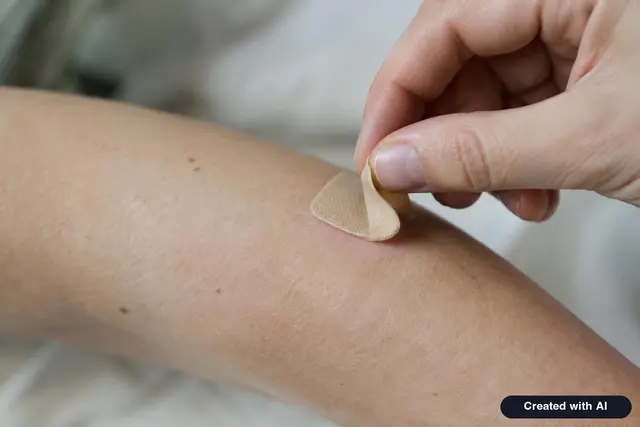 Side effectsSkin rashes are the most reported GLP-1 patch side effect. The patches are untested, so their full risks and true ingredients are unknown.
 Berberine patchNo human study shows a berberine patch delivers berberine through skin or causes weight loss. Oral trials used about 100 times the patch dose.
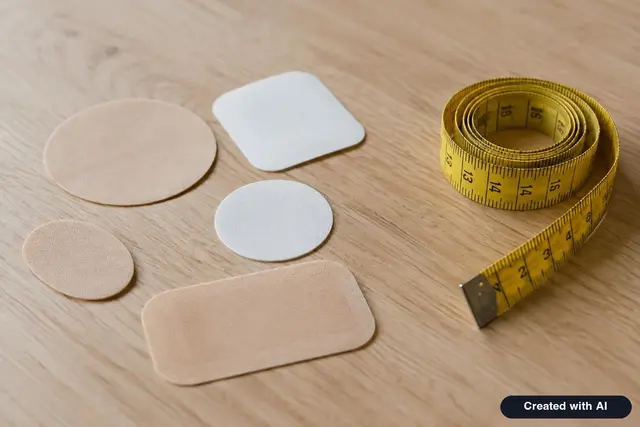 Weight loss patchesNo weight loss patch is FDA-approved or proven in trials. The FTC says nothing worn on the skin causes weight loss. Here is each type explained.
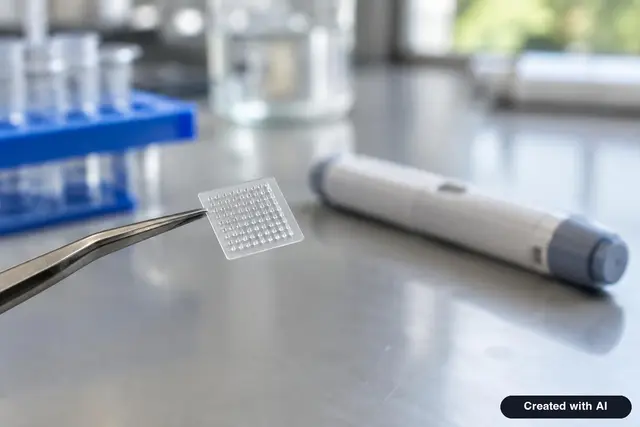 Ozempic patchNo Ozempic, semaglutide or tirzepatide patch exists or is FDA-approved. Real microneedle patches are in Phase 1 trials with no approval date.
Sources
- FDA – FDA's Concerns with Unapproved GLP-1 Drugs Used for Weight Loss
- FDA – Questions and Answers on Dietary Supplements
- FDA – Import Alert 66-41, Unapproved New Drugs Promoted in the U.S.
- Annals of Pharmacotherapy (2026) – Transdermal "Natural GLP-1" Dietary Supplements Violate Law and Place Patients at Risk
- Cleveland Clinic – Do GLP-1 Patches Actually Work?
- PBS News – In the gray world of GLP-1 supplements online, health experts urge caution
- NCCIH (NIH) – Berberine and Weight Loss: What You Need To Know
- Clinical Nutrition ESPEN (2020) – Berberine and obesity parameters, meta-analysis
- Frontiers in Nutrition (2022) – Berberine and cardiovascular risk factors, dose-response meta-analysis
- FTC Consumer Advice – The Truth Behind Weight Loss Ads
- DailyMed – Wegovy (semaglutide) prescribing information
- DailyMed – Zepbound (tirzepatide) prescribing information
- Novo Nordisk – FDA approves Wegovy pill (December 22, 2025)
- Eli Lilly – FDA approves Foundayo (orforglipron) (April 1, 2026)
- NovoCare Pharmacy – self-pay pricing for Wegovy and Ozempic
- LillyDirect – Zepbound self-pay pricing
- Ledisa – GLP-1 Patches product page
- Ledisa – What's Inside GLP-1 Patches? Ingredient Breakdown
- Kind Patches – Berberine Patches (GLP-1 Friendly) product page
- NIDDK – Prescription Medications to Treat Overweight & Obesity
- FDA – Tainted Weight Loss Products
- FDA – MedWatch Safety Information and Adverse Event Reporting Program
- Gentle Patches – Weight Loss GLP-1 Patches product page
Log in to comment
No comments yet. Be the first.