Celery Juice: Benefits, Nutrition, Recipe and Side Effects
- A 16-oz glass has about 80 calories, 6 g of sugar and up to 458 mg of sodium, per USDA FoodData Central.
- No clinical trial has tested celery juice for detox, weight loss or skin; blood pressure trials used celery seed extract capsules.
- One large bunch, about 1.75 lb (800 g), typically makes about 16 oz, though yield varies; drink fresh juice within 24 to 72 hours of refrigerating it.
- What Celery Juice Is and Where the Trend Came From
- Celery Juice Benefits: What Holds Up
- Celery Juice Nutrition Facts
- How to Make Celery Juice
- How Much Celery Juice to Drink, and When
- Celery Juice vs. Eating Celery vs. a Celery Smoothie
- Who Should Be Careful
- How Long Celery Juice Lasts
- Buying Celery Juice: Bottled, Cold-Pressed and Powdered
- The Bottom Line
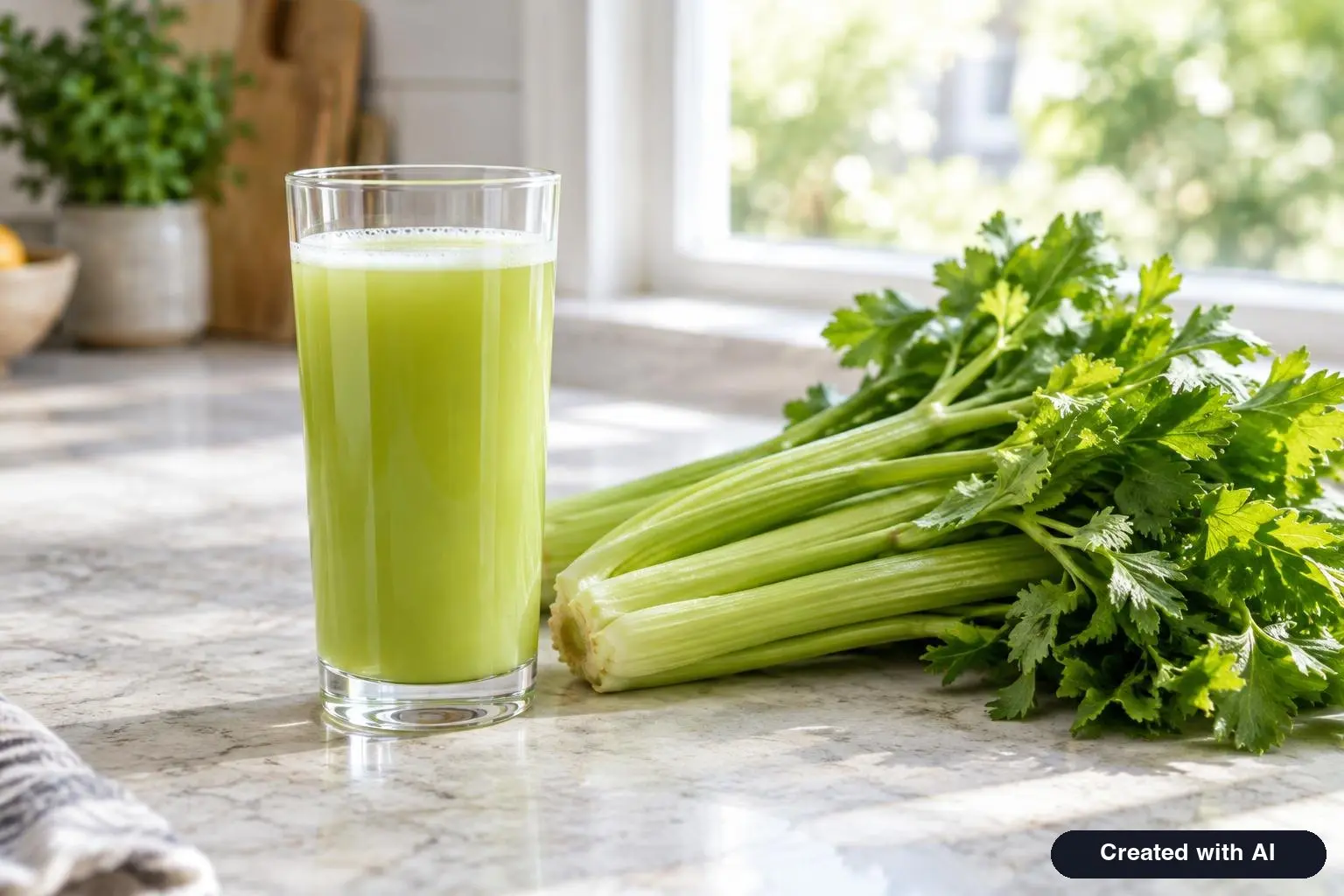
Celery juice is the strained liquid pressed from raw celery stalks, usually drunk plain in a 16-ounce glass. It is a low-calorie, hydrating vegetable drink with useful amounts of potassium, folate and vitamin K, and that is where the solid evidence ends: no clinical trial has tested celery juice itself for detox, weight loss, clear skin, gut healing or blood pressure. The trials that do exist used celery seed extract in capsules, not juice. A glass a day is safe for most healthy adults, but it carries roughly 240 to 460 mg of sodium and more than a day's worth of vitamin K, which matters if you take warfarin, have kidney disease or watch your salt.
This guide covers what is in the glass, how to make it with a juicer or a blender, how much to drink, how long it keeps, and who should skip it. Four companion pages go deeper: the evidence behind each benefit claim, the full celery juice recipe with variations, side effects and drug interactions, and a hard look at the celery juice cleanse.
What Celery Juice Is and Where the Trend Came From
Celery (Apium graveolens) is about 95% water by weight, according to USDA FoodData Central. Run a bunch through a juicer and you get a pale green, slightly salty liquid; the stringy fiber stays behind as pulp. People have juiced celery as part of mixed green juices for decades, but drinking it straight became a mass habit around 2018 and 2019, driven largely by Anthony William, who publishes as the "Medical Medium." His protocol is specific: 16 ounces of plain celery juice every morning on an empty stomach, then a wait of at least 15 to 30 minutes before eating. William is not a doctor or dietitian, and the mechanism he credits, "undiscovered sodium cluster salts," is not a recognized substance in nutrition science or chemistry.
The habit outlived the hype. Americans still search for celery juice about 18,000 times a month, with a peak every winter from December through March, when people reset their diets. The drink is fine. The promises attached to it are the problem.
Celery Juice Benefits: What Holds Up
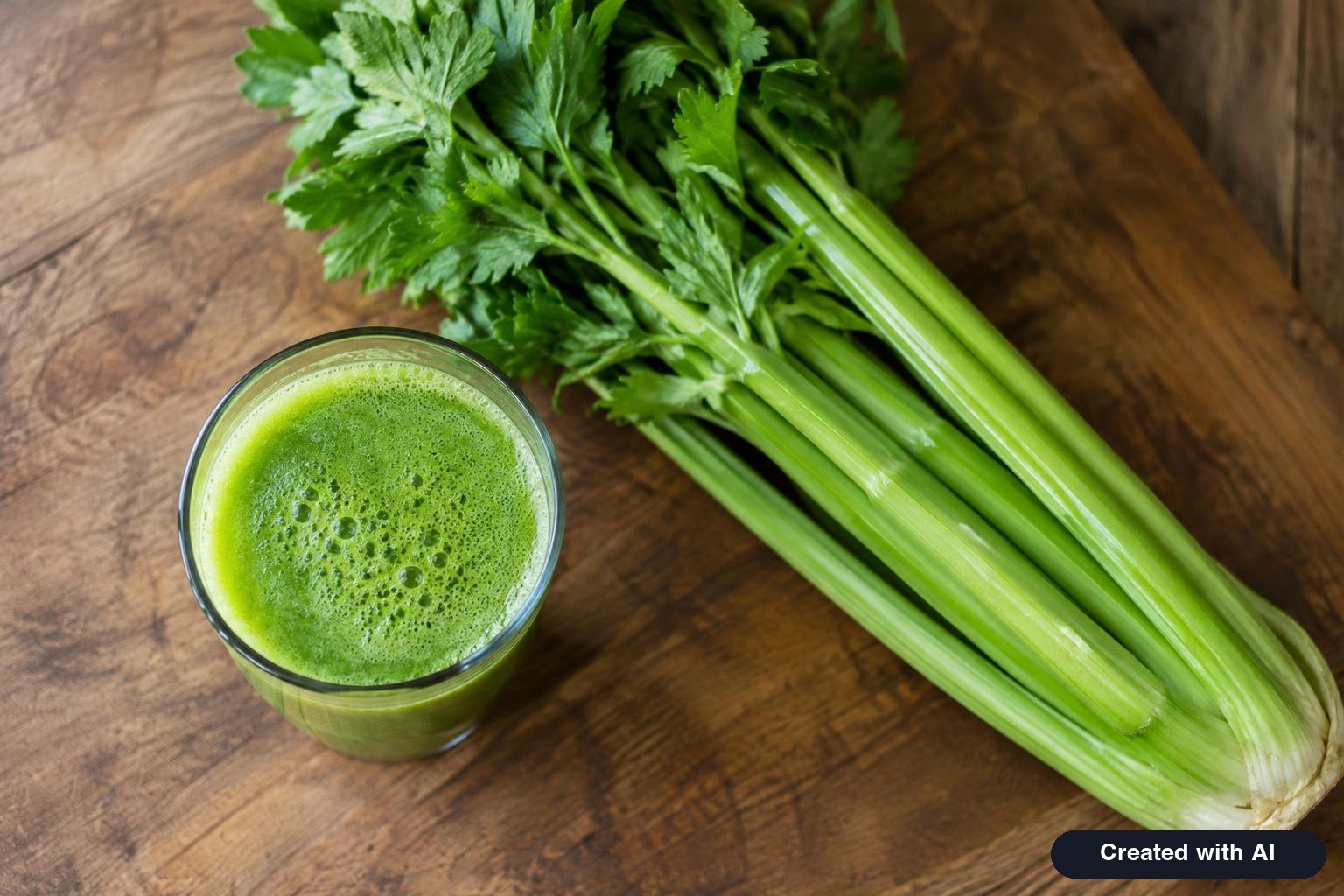
Here is the short version. The benefits page walks through each study.
| Claim | What the evidence shows | Verdict |
|---|---|---|
| Hydration | It is about 95% water with sodium and potassium. | True, like most vegetable juices |
| Vitamins and minerals | 16 oz supplies potassium, folate and vitamin K in meaningful amounts. | True |
| Lowers blood pressure | Small trials of celery seed extract capsules lowered blood pressure. Celery juice: one case report of a single patient. | Unproven for juice |
| Weight loss | No trials. It is low in calories (about 80 per 16 oz), so it can replace a higher-calorie drink. | Indirect at best |
| Detoxes the liver | No human evidence. NIH's complementary health center says there is no compelling research behind detox diets. | Not supported |
| Heals the gut | No trials. Juicing removes most of the fiber that gut bacteria feed on. | Not supported |
| Clears skin, eczema, acne | No trials. | Not supported |
| Anti-inflammatory | Celery contains apigenin and luteolin, which are active in lab studies. No human trials with juice. | Plausible, unproven |
Celery Juice Nutrition Facts
USDA's FoodData Central lists celery juice in its survey database (FNDDS) with the same composition as raw celery, because the entry is modeled from the whole vegetable. That makes its numbers a reasonable upper estimate for the vitamins and minerals in fresh homemade juice, and an overestimate for fiber, since straining removes most of it.
| Nutrient | 8 fl oz (1 cup) | 16 fl oz (2 cups) | % Daily Value in 16 oz |
|---|---|---|---|
| Calories | 40 | 80 | – |
| Carbohydrate | 7.8 g | 15.7 g | 6% |
| Total sugars | 3.2 g | 6.3 g | – |
| Protein | 1.2 g | 2.3 g | – |
| Sodium | 229 mg | 458 mg | 20% |
| Potassium | 625 mg | 1,251 mg | 27% |
| Vitamin K | 69 mcg | 138 mcg | 115% |
| Folate | 85 mcg | 170 mcg | 42% |
| Calcium | 109 mg | 217 mg | 17% |
| Vitamin C | 7 mg | 15 mg | 16% |
Source: USDA FoodData Central, "Celery juice" (FNDDS, 1 cup = 236 g). Daily Values are the FDA's reference amounts for adults.
Real bottles come in a little lower. Nutrition labels for cold-pressed celery juices in USDA's branded-foods database list roughly 6 to 17 calories and 50 to 80 mg of sodium per 100 ml, which works out to about 30 to 80 calories and 240 to 370 mg of sodium in 16 ounces, with 0 grams of fiber on most labels. Celery varieties also differ: a 2022 analysis of juice from 26 celery cultivars, published in the journal Foods, found more than tenfold differences in some plant compounds from one variety to another.
Three numbers deserve attention:
- Sodium. Celery is naturally salty for a vegetable. A 16-ounce glass can hold up to a fifth of the 2,300 mg a day that the FDA's Daily Value and the Dietary Guidelines for Americans set as the adult limit, before you have eaten anything. The American Heart Association recommends no more than 2,300 mg a day and moving toward an ideal limit of 1,500 mg for most adults.
- Vitamin K. One glass can exceed the full Daily Value of 120 mcg. That is fine for most people and a real issue for anyone on warfarin.
- Sugar. About 6 grams per 16 ounces, a fraction of what the same amount of fresh orange juice (about 42 grams) or unsweetened apple juice (about 48 grams) carries, per USDA figures. Plain celery juice is one of the lowest-sugar juices you can drink.
How to Make Celery Juice
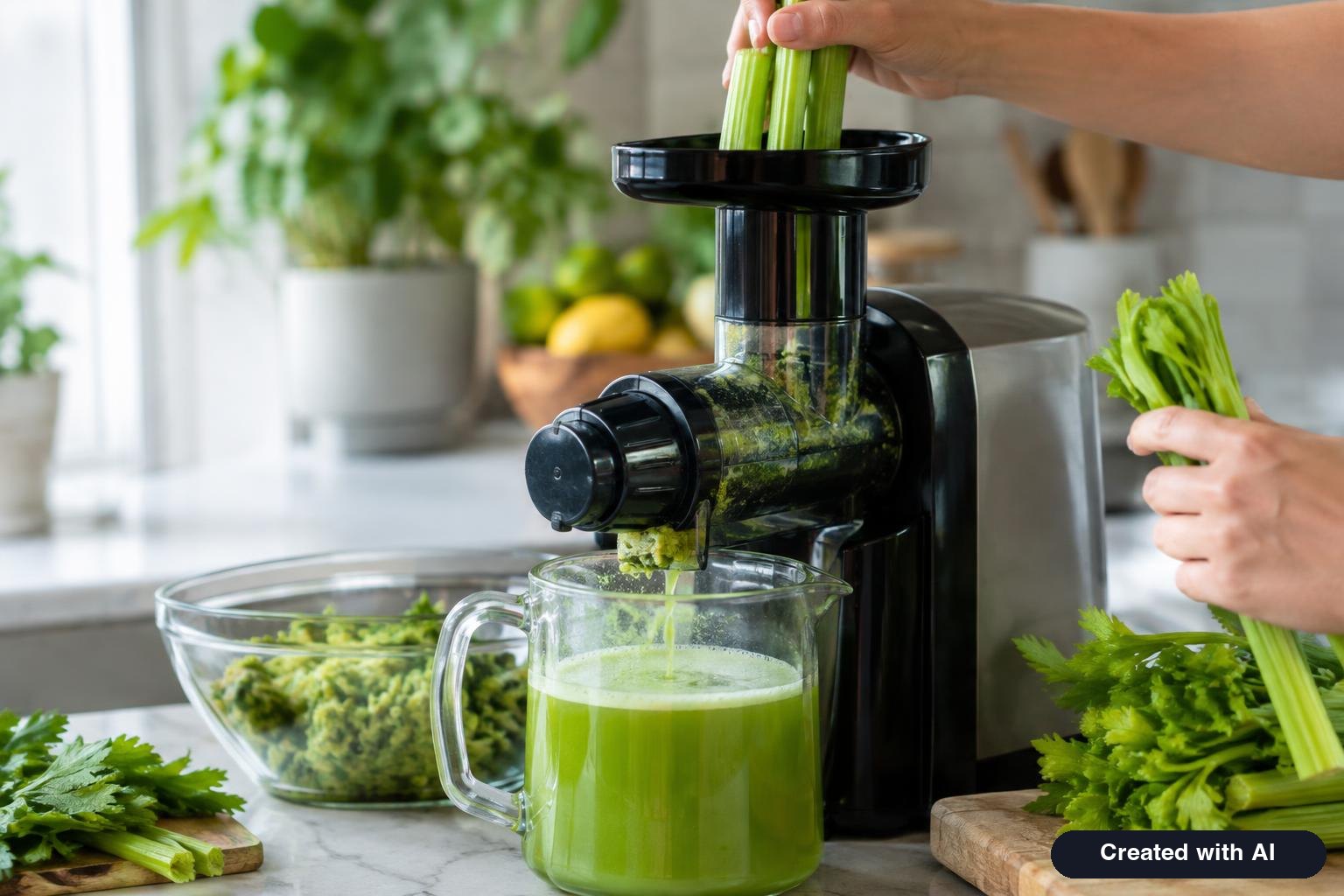
You need one ingredient. Our celery juice recipe uses 1.75 pounds (800 g) of celery, which is one large bunch or two small ones, for about 16 fluid ounces (475 ml), and it takes roughly 10 minutes. Trim 1/2 inch (1 cm) off the root end, rinse each stalk under cold running water, then either feed the stalks through a juicer or chop them into 1-inch (2.5 cm) pieces, blend with 1/4 cup (60 ml) of cold water for 60 to 90 seconds and squeeze the puree through a nut milk bag or a cheesecloth-lined sieve.
Treat the yield as a typical figure, not a guarantee. In a test published by juicer maker Kuvings, 0.95 pound of celery gave a little over 1 cup of juice in a slow juicer; the amount varies with how fresh the celery is and with the machine, and slow (masticating) juicers generally extract more than fast centrifugal ones. The step-by-step recipe card, juicer types, fixes for bitter or foamy juice, and blends with cucumber, apple, lemon, ginger, carrot and pineapple are all on the recipe page.
How Much Celery Juice to Drink, and When
There is no official serving recommendation, because no health authority treats celery juice as a therapy. The 16-ounce figure comes from the Medical Medium protocol, not from research. A practical approach:
- Start with 4 to 8 ounces. Celery is high in mannitol, a sugar alcohol that pulls water into the gut. A full pint on day one sends plenty of people to the bathroom.
- Cap it at about 16 ounces a day. More than that adds sodium and vitamin K without any documented benefit.
- Count it as one vegetable serving, not all of them. In the Dietary Guidelines for Americans, 2020-2025, the basis of USDA's MyPlate, 1 cup of vegetable juice counts as a 1-cup equivalent of vegetables, but whole vegetables bring the fiber that juice leaves behind.
Morning or empty stomach? No study has compared celery juice on an empty stomach with celery juice at lunch. Nutrients are absorbed either way. Morning works for many people simply because the habit sticks; if it upsets your stomach before food, drink it with breakfast. It will not replace breakfast, though: 80 calories and 2 grams of protein will not carry you to noon. Pair it with eggs, oatmeal or cottage cheese pancakes.
Does celery juice break a fast? Yes, in the strict sense. A 16-ounce glass has around 80 calories and 16 grams of carbohydrate.
Celery Juice vs. Eating Celery vs. a Celery Smoothie
Juicing is a way to drink a large amount of celery quickly. The trade-off is fiber. The 1.75 pounds of stalks that go into one glass contain roughly 13 grams of fiber, close to half of the 28-gram Daily Value, and most of it lands in the pulp bin.
| Strained juice (16 oz) | Whole celery (same 1.75 lb) | Blended smoothie (unstrained) | |
|---|---|---|---|
| Fiber | Little to none | About 13 g | About 13 g |
| Fullness | Low | High (it takes a long time to chew) | Moderate |
| Potassium, folate, vitamin K | Most carried over | All | All |
| Sodium | Up to about 460 mg | About 640 mg | About 640 mg |
| Realistic to consume daily? | Yes, in two minutes | Rarely, it is 12 or more large stalks | Yes, but thick and stringy |
A 2025 Northwestern University study in the journal Nutrients illustrates why fiber matters. Fourteen adults followed a juice-only diet, a juice-plus-food diet or a whole plant-food diet for three days. The juice groups showed shifts in mouth bacteria, and gut bacteria linked to inflammation rose in relative abundance, which the authors attributed to the low fiber and higher sugar of juice diets. It was a small study of mixed fruit and vegetable juices, not celery alone, and it looked at juice replacing food. A glass of celery juice alongside normal meals is a different situation, but the lesson stands: juice adds to a diet with vegetables in it, and does not substitute for them.
If you want the fiber, blend the celery and skip the straining, or save the pulp for soup. A pot of pumpkin soup takes a cup of celery pulp without anyone noticing.
Who Should Be Careful
For most healthy adults the realistic side effects are loose stools, gas and bloating in the first days. A few groups should talk to a doctor or pharmacist first:
- People taking warfarin (Coumadin, Jantoven). The NIH Office of Dietary Supplements says people on warfarin need to keep vitamin K intake consistent, because sudden changes can increase or decrease the drug's effect. Starting or stopping a daily pint of celery juice is exactly that kind of change.
- People with chronic kidney disease or high potassium. A single stalk is a low-potassium food. A pint of juice has about 1,000 to 1,250 mg.
- People on sodium-restricted diets for heart failure, hypertension or kidney disease.
- People with IBS on a low-FODMAP diet. Monash University, which developed the diet, names celery among the vegetables richest in mannitol.
- People with celery allergy or pollen-food allergy syndrome linked to birch or mugwort pollen.
- Pregnant women, young children, older adults and anyone with a weakened immune system should avoid unpasteurized juice from juice bars and markets, per the FDA.
- Tanning-bed users and people on light therapy. Celery contains psoralens, compounds that make skin more sensitive to ultraviolet light. Reactions from eating celery are rare, but documented.
Details, including when a symptom means you should call a doctor, are on the side effects page.
How Long Celery Juice Lasts
Fresh celery juice is a raw, low-acid, unpasteurized product. Treat it like any perishable food.
| Storage | How long | Notes |
|---|---|---|
| Room temperature | Up to 2 hours | Then refrigerate or discard |
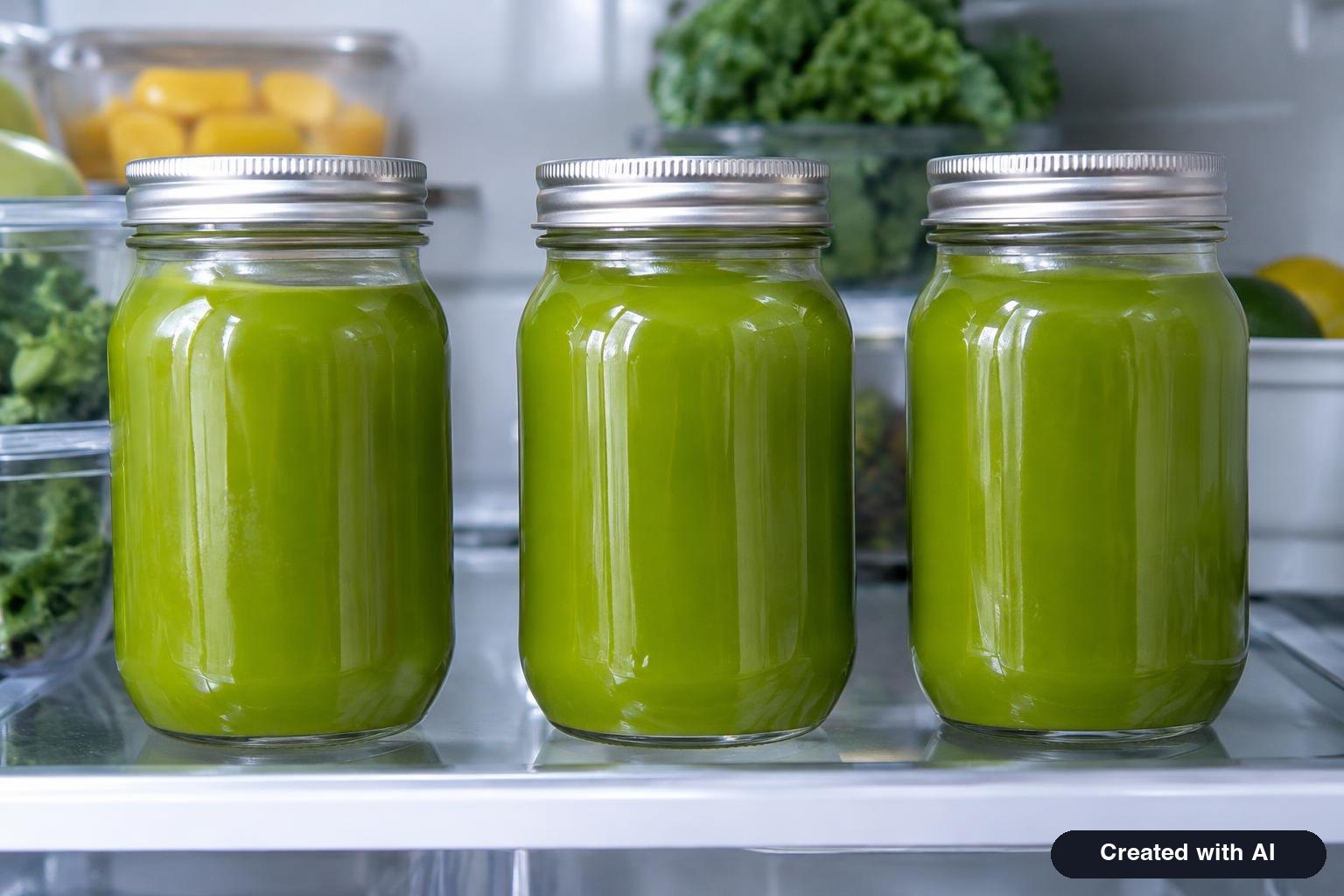
| Refrigerator, 40°F (4°C) or colder | Within 24 to 72 hours | Airtight glass jar filled to the brim to limit air |
| Freezer, 0°F (-18°C) | About 2 to 3 months for good quality | Leave 1 inch (2.5 cm) of headspace; thaw overnight in the fridge |
| Store-bought, unopened | Until the date on the bottle | Once opened, follow the label, usually a few days |
Federal agencies do not publish a specific shelf life for homemade juice, so these figures are general practice rather than an official rule. The 24-to-72-hour refrigerator window and the 2-to-3-month freezer figure come from a senior food safety specialist at the National Environmental Health Association, quoted by Southern Living; she notes that frozen juice stays safe much longer, but its quality declines, and that thawed juice should be drunk within 24 to 72 hours because freezing pauses bacterial growth without killing everything. The two-hour limit at room temperature and the 40°F and 0°F settings are the FDA's general rules for perishable food. Separation is normal, so shake the jar. Browning means oxidation and a flatter taste, not danger by itself. A sour smell, fizzing or a bulging lid means it has started to ferment: pour it out.
Buying Celery Juice: Bottled, Cold-Pressed and Powdered
If you do not want to clean a juicer every morning, you have three options.
- Juice bars press it to order. It is fresh but untreated, and the FDA does not require a warning label on juice sold by the glass. Ask if you are in a higher-risk group.
- Refrigerated bottles at grocery stores are usually labeled "cold-pressed." Most national brands treat the sealed bottle with high pressure (HPP) instead of heat to kill bacteria, which is why they last weeks instead of days. Packaged juice that has not been pasteurized or otherwise treated must carry an FDA warning statement. Read the ingredient list: many "celery juices" include lemon juice, and blends with apple or pineapple carry far more sugar.
- Shelf-stable bottles and powders. Heat-pasteurized celery juice in glass bottles keeps for months unopened. Celery juice powder stirred into water is convenient, but check the label: products vary widely, and "celery powder" sold for curing meat is a concentrated nitrate source for sausage making, not a drink mix.
Whichever you buy, compare the sodium and sugar lines on the Nutrition Facts panel, and note the serving size; some bottles list values for 8 ounces while holding 12 or 16.
Organic or conventional? In the Environmental Working Group's 2026 Shopper's Guide, celery ranks 30th of 47 fruits and vegetables for pesticide residues, outside the "Dirty Dozen" it used to appear on and outside the "Clean Fifteen." Either way, rinse every stalk under running water. The FDA advises against washing produce with soap or commercial washes.
The Bottom Line
Celery juice is a pleasant, very low-sugar way to drink a vegetable. It hydrates, it supplies potassium, folate and vitamin K, and if it replaces a sweetened coffee drink or soda it cuts calories. It does not detoxify the liver, cure chronic illness or melt fat, and it should not replace medication or whole vegetables. If you like it, drink it. If you take warfarin, have kidney disease or need to limit sodium, check with your doctor before making it a daily habit.
Frequently asked questions
Is celery juice good for you?
Yes, as a vegetable drink. It is about 95% water, very low in sugar, and a 16-ounce glass supplies roughly a quarter of the Daily Value for potassium and more than a full day's vitamin K. It is not a detox or a cure: no clinical trial supports those claims, and juicing removes most of celery's fiber.
How much celery juice should I drink a day?
There is no official recommendation. Start with 4 to 8 ounces to see how your gut reacts, and treat 16 ounces as a sensible daily maximum for a healthy adult. More adds sodium and vitamin K without any proven extra benefit.
How many calories are in celery juice?
About 40 calories per cup (8 fl oz) and 80 per 16 ounces, according to USDA FoodData Central. Bottled cold-pressed celery juices list roughly 30 to 80 calories per 16 ounces. A pint has about 16 grams of carbohydrate and 6 grams of sugar.
How long does celery juice last in the fridge?
There is no official shelf life for homemade juice. The general practice, as a food safety specialist at the National Environmental Health Association told Southern Living, is to drink fresh unpasteurized juice within 24 to 72 hours, kept at 40°F or colder. Do not leave it at room temperature for more than 2 hours. Frozen, it keeps good quality for about 2 to 3 months.
Is celery juice better than eating celery?
No. Juice lets you take in the potassium and vitamin K from a whole bunch quickly, but it leaves behind most of the fiber, about 13 grams in the 1.75 pounds of celery that make one glass. Whole celery is more filling. Blending without straining keeps the fiber.
Does celery juice break a fast?
Yes. Sixteen ounces contains around 80 calories and 16 grams of carbohydrate, which ends a fast by strict intermittent-fasting rules. Drink it during your eating window.
Who should not drink celery juice?
People taking warfarin, people with chronic kidney disease or high potassium, and people on strict sodium limits should check with their doctor first. Those with celery allergy or IBS triggered by high-FODMAP foods may react to it. Pregnant women, young children, older adults and immunocompromised people should avoid unpasteurized juice.
Where can I buy celery juice?
Most large grocery stores stock refrigerated cold-pressed celery juice, usually high-pressure processed for safety, and juice bars press it to order. Shelf-stable pasteurized bottles and powders are also sold. Check the label for added lemon or fruit juice, sodium and serving size.
All parts of the guide
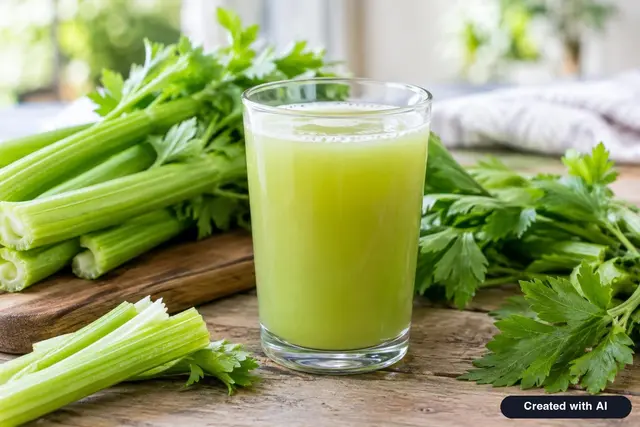 BenefitsProven celery juice benefits are hydration, low sugar and potassium, folate and vitamin K. Other claims rest on seed-extract trials or no trials at all.
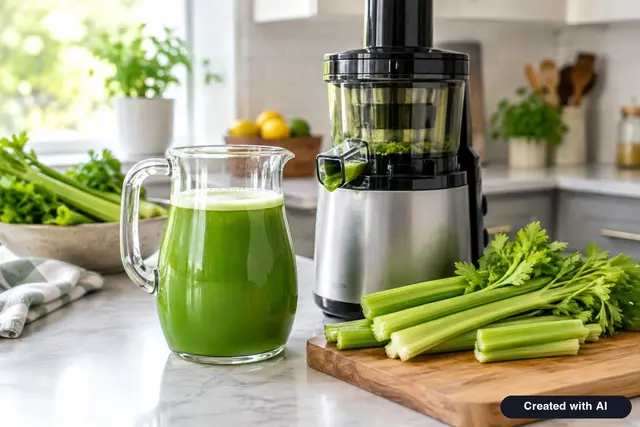 RecipeOne large bunch of celery (1.75 lb) makes about 16 oz of juice in 10 minutes. Use a juicer, or blend with 1/4 cup water and strain.10 min
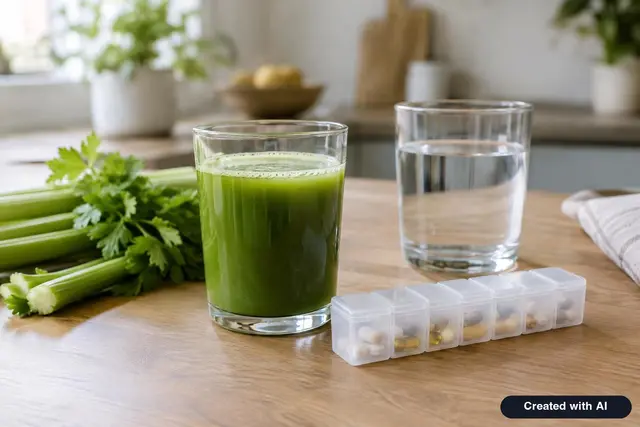 Side EffectsCelery juice most often causes loose stools and bloating. Its sodium, vitamin K and potassium matter for people on warfarin or with kidney or heart disease.
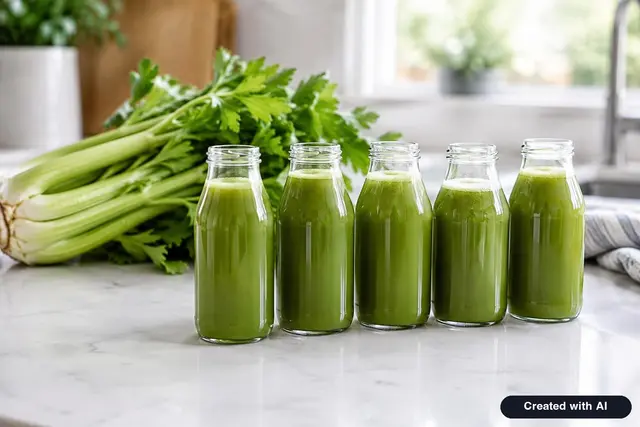 Cleanse & DetoxA celery juice cleanse is 16 oz of plain juice each morning on an empty stomach. No trial shows it detoxifies anything; a daily glass is low-risk.
Sources
- USDA FoodData Central: Celery juice (FNDDS, FDC ID 2709811) and Celery, raw (SR Legacy, FDC ID 169988)
- FDA: Daily Value on the Nutrition and Supplement Facts Labels
- FDA: What You Need to Know About Juice Safety
- NIH Office of Dietary Supplements: Vitamin K Fact Sheet for Health Professionals
- NIH National Center for Complementary and Integrative Health: "Detoxes" and "Cleanses": What You Need To Know
- Liu et al., Effects of celery on blood pressure, glycemic and lipid profile in adults: systematic review and meta-analysis, Frontiers in Nutrition (2025)
- Illes, Blood Pressure Change After Celery Juice Ingestion in a Hypertensive Elderly Male, Journal of Chiropractic Medicine (2021)
- Sardaro et al., Effects of Vegetable and Fruit Juicing on Gut and Oral Microbiome Composition, Nutrients (2025)
- Yan et al., Comprehensive Quality and Bioactive Constituent Analysis of Celery Juice Made from Different Cultivars, Foods (2022)
- National Kidney Foundation: Potassium in Your CKD Diet
- Monash University FODMAP: High and low FODMAP foods
- Environmental Working Group: 2026 Shopper's Guide to Pesticides in Produce, full list
- Medical Medium: Celery Juice Movement (source of the protocol described)
- Kuvings USA: How Much Produce Makes 1 Cup of Juice?
- Southern Living: How Long Will Fresh Juice Last In The Fridge?
- FDA: Sodium in Your Diet
- American Heart Association: How Much Sodium Should I Eat Per Day?
- USDA and HHS: Dietary Guidelines for Americans, 2020-2025 (cup-equivalents for vegetable juice; juice before 12 months)
- USDA FoodData Central, SR Legacy: Apples, raw, with skin (FDC ID 171688); Apples, raw, Granny Smith (168203); Carrots, raw (170393); Cucumber, with peel, raw (168409); Pineapple, raw (169124); Lemon juice, raw (167747); Orange juice, raw (169098); Apple juice, unsweetened (173933)
- FDA: Are You Storing Food Safely?
Log in to comment
No comments yet. Be the first.