Celery Juice Cleanse: Does the Detox Work? What Science Says
- The protocol (16 oz, plain, empty stomach, wait 15 to 30 minutes) comes from the Medical Medium, not from clinical research.
- NIH's NCCIH says there is no compelling research supporting detox diets for removing toxins or managing weight.
- A 16-oz glass has about 80 calories, so it breaks a fast; juice-only versions carry real risks and no proven benefit.
- What Is a Celery Juice Cleanse?
- Where the Celery Juice Detox Came From
- The Claims, Checked
- What "Detox" Means in a Body That Works
- Why People Say They Feel Better
- Empty Stomach, First Thing in the Morning: Does It Matter?
- How Much Celery Juice Per Day?
- Does Celery Juice Break a Fast?
- Celery Juice as a Parasite Cleanse
- Risks of Juice-Only Cleanses
- Celery Juice "Detox Symptoms"
- Who Should Not Do a Celery Juice Cleanse
- If You Want to Try It: A Sensible 7-Day Plan
- Before and After: What to Realistically Expect
- What Works Better for the Same Goals
- The Bottom Line
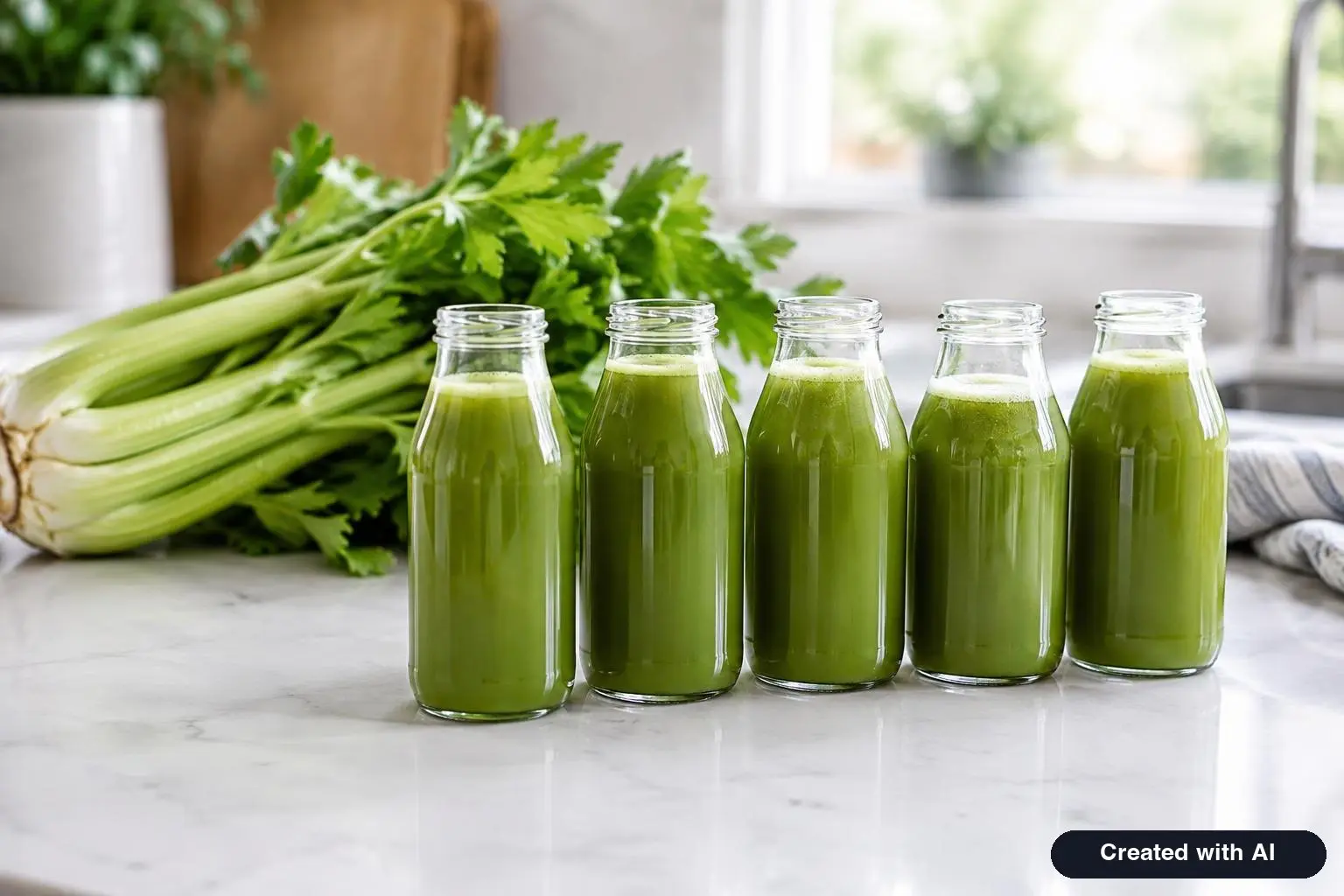
A celery juice cleanse means drinking about 16 ounces of plain celery juice every morning on an empty stomach, usually for 7 to 30 days, in the belief that it detoxifies the liver and clears the body of pathogens. There is no clinical evidence that it does either. No human trial has tested a celery juice cleanse, and the National Center for Complementary and Integrative Health, part of NIH, says there is no compelling research to support detox diets for eliminating toxins or managing weight. What a daily glass does reliably is add fluid, potassium and vitamin K, and for many people it loosens the bowels.
That gap between the promise and the evidence is the subject of this page: where the cleanse came from, what its claims rest on, what people actually feel and why, who should not try it, and how to do a week of celery juice sensibly if you want to. The drink itself is covered in our celery juice guide.
What Is a Celery Juice Cleanse?
The term covers three quite different things. Which one you mean matters for safety.
| Version | What you do | Typical length | Risk level for a healthy adult |
|---|---|---|---|
| Morning celery juice protocol | 16 oz plain celery juice on waking, wait 15–30 minutes, then eat normally | Open-ended; "challenges" run 7, 14 or 30 days | Low |
| Celery juice plus a restricted "detox" diet | The morning juice plus cutting out foods such as eggs, dairy, gluten or fats | Days to weeks | Depends on how restrictive the diet is |
| Celery juice fast | Only celery juice, or only juices, in place of meals | 1 to several days | Higher; not recommended |
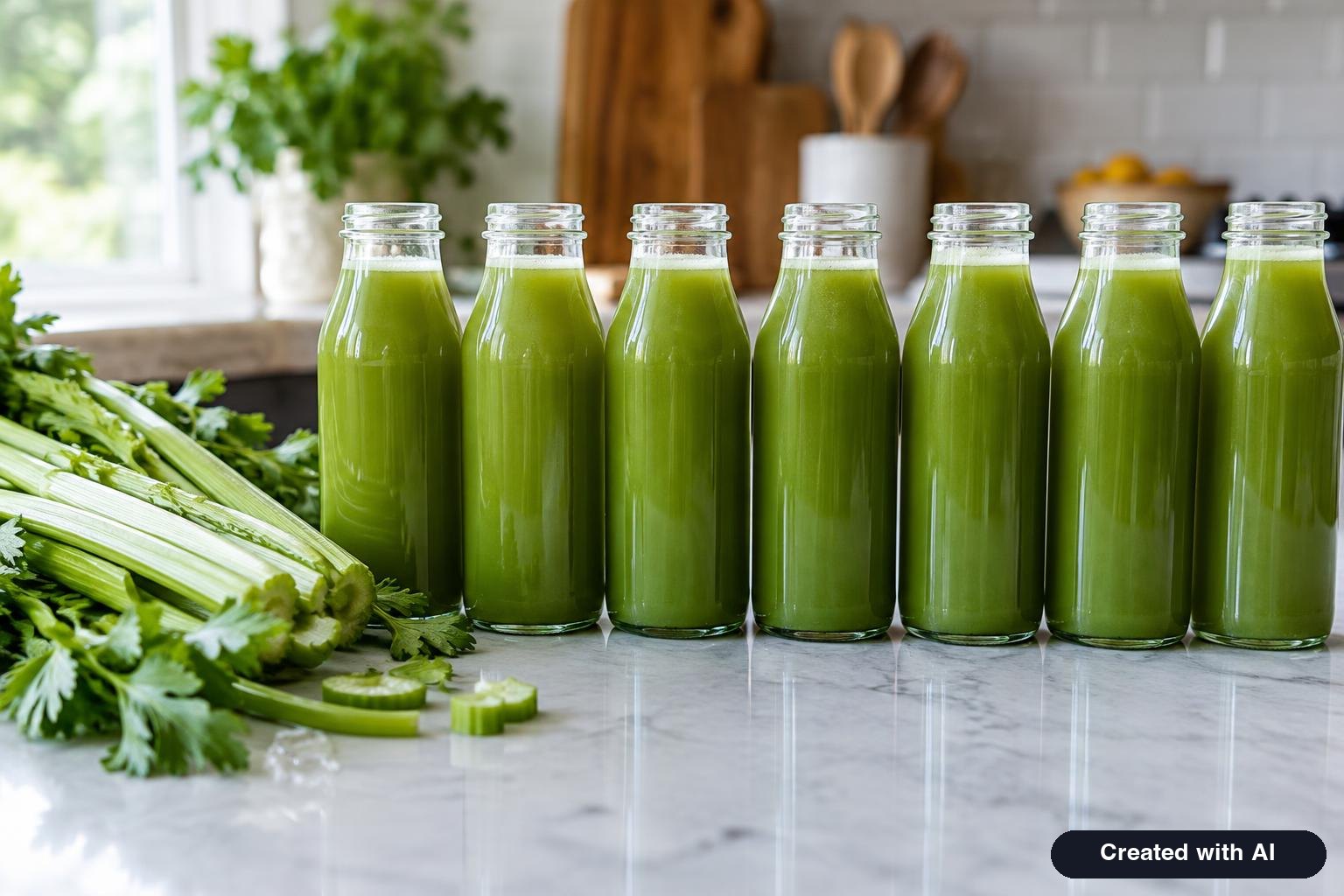
Bottled "7-day celery juice cleanse" packs sold by juice companies are simply seven bottles, one a day. They are the first version with a price tag.
Where the Celery Juice Detox Came From
The cleanse is the creation of Anthony William, who writes as the "Medical Medium" and published a book devoted to celery juice, Medical Medium Celery Juice (Hay House), in May 2019. His own website states that he is not a licensed medical doctor or other formally licensed health care practitioner, and says his information comes from a source he calls the "Spirit of Compassion." His website describes the protocol this way: every morning, drink 16 ounces or more of fresh, plain celery juice with no other ingredients on an empty stomach, then wait at least 15 to 30 minutes before consuming anything else. One large bunch of celery makes the dose. People who find 16 ounces too much are told to start smaller and work up.
Celebrity endorsements and before-and-after posts carried it across social media in 2018 and 2019, and it has stuck: Americans still search for "celery juice cleanse" and "celery juice detox" more than a thousand times a month each, with a spike every January and February.
The Claims, Checked
| Claim made for the cleanse | What science says |
|---|---|
| Celery juice contains "undiscovered sodium cluster salts" that kill viruses and bacteria | No such compound has been identified. The sodium in celery is ordinary sodium, 80–97 mg per 100 g per USDA data. A claim that rests on something "undiscovered" cannot be tested. |
| It flushes toxins and poisons out of the liver | No human study shows celery juice changes liver function or toxin clearance. The liver and kidneys remove waste continuously without dietary help. |
| It restores stomach acid (hydrochloric acid) | Not studied. No evidence. |
| It removes heavy metals | No evidence. Heavy metal poisoning is treated with prescription chelation therapy under medical supervision. |
| It dissolves gallstones | No evidence. |
| It kills parasites | No evidence in humans. Parasitic infections require diagnosis and prescription antiparasitic drugs. |
| It heals autoimmune and chronic illness | No trials. Stopping prescribed treatment in favor of juice can cause real harm. |
| It must be drunk plain, on an empty stomach, to work | No study has compared timing or tested plain versus mixed juice. |
The research that does exist on celery is described on our benefits page: small trials of celery seed extract in capsules found lower blood pressure and triglycerides. None involved a juice cleanse, and none measured "detoxification."
What "Detox" Means in a Body That Works
Your body handles unwanted substances all day. The liver converts them into forms that can be excreted; the kidneys filter the blood and send waste out in urine; the gut, lungs and skin handle the rest. When those organs fail, the treatments are dialysis, medication or transplant, not juice.
NIH's complementary health center, in a fact sheet last updated in March 2025, summarizes the research on commercial detoxes and cleanses plainly: only a small number of studies exist, and they have been of low quality, with design problems and few participants. A 2015 review it cites concluded there was no compelling research to support detox diets for weight management or eliminating toxins from the body. A 2017 review found that juicing and detox diets can cause initial weight loss because of low calorie intake but tend to lead to weight gain once a normal diet resumes. The agency also notes that the FDA and the Federal Trade Commission have taken action against companies selling detox products marketed with false claims that they could treat serious diseases.
Why People Say They Feel Better
Many people who try a celery juice cleanse report more energy, less bloating or clearer skin. Those experiences are real. Detoxification is not needed to explain them.
- More fluid, earlier. A pint of liquid before breakfast is more than many people drink all morning.
- Something else got displaced. The juice often replaces a pastry, a sweetened coffee or nothing at all. People on a "cleanse" also tend to drink less alcohol and eat fewer processed foods at the same time.
- A bowel movement. Celery's mannitol and the morning fluid load get things moving, which can feel like a flatter stomach.
- Routine and attention. A daily ritual makes people more aware of sleep, meals and how they feel.
- Expectation. When you expect to feel better and have invested effort, you usually report that you do. This is why controlled trials exist.
If the habit makes you eat better overall, that is a genuine benefit, just not the advertised one.
Empty Stomach, First Thing in the Morning: Does It Matter?
No research supports the rule. Potassium, folate and water are absorbed whether or not there is food in the stomach. Vitamin K is fat-soluble and is absorbed better alongside a meal that contains some fat, which argues, if anything, for drinking it with breakfast.
What an empty stomach does change is tolerance. A pint of mannitol-rich juice with nothing to slow it reaches the intestine quickly, so cramps, nausea and urgent trips to the bathroom are more common that way. If you get those, drink it with food or cut the amount. If you prefer it on an empty stomach and feel fine, there is no harm in that either.
Can you drink it at night or before bed? Yes. The only practical downsides are a full bladder and, for some, reflux when lying down after a large drink.
How Much Celery Juice Per Day?
Sixteen ounces is a number from a book, not a dose established by research. For a healthy adult it is a reasonable upper limit:
- 16 oz has about 80 calories, up to 458 mg of sodium (20% of the Daily Value), about 1,250 mg of potassium and roughly 138 mcg of vitamin K (115% of the Daily Value), per USDA data.
- 32 oz doubles all of that: close to 900 mg of sodium before you have eaten anything.
- 4 to 8 oz is a sensible starting amount and is plenty if your goal is simply a low-sugar vegetable drink.
Is it safe to drink celery juice every day? For most healthy adults, yes, in that range. Daily use is where interactions matter: people taking warfarin, people with kidney disease and people on sodium limits should read celery juice side effects first.

Does Celery Juice Break a Fast?
Yes. A 16-ounce glass contains around 80 calories and 16 grams of carbohydrate, enough to end a fast by any strict definition used in intermittent fasting. If you follow time-restricted eating, drink it inside your eating window. Water, black coffee and plain tea are the usual fasting-window drinks.
A "celery juice fast," living on celery juice alone, is a starvation diet with a vegetable flavor: roughly 80 calories and 2 grams of protein per pint. There is no health reason to do it.
Celery Juice as a Parasite Cleanse
Searches for "celery juice parasite cleanse" reflect a wider social media trend of blaming vague symptoms such as bloating, fatigue and sugar cravings on intestinal parasites. Two facts are worth holding on to. First, nothing in celery juice has been shown to kill or expel parasites in people. Second, material that people photograph in the toilet after a cleanse is far more likely to be mucus and undigested vegetable fiber than worms.
Parasitic infections do occur in the United States. They are diagnosed with stool or blood tests and treated with specific prescription medicines. If you have persistent diarrhea, unexplained weight loss, visible worms, or symptoms after travel or drinking untreated water, see a doctor and ask about testing.
Risks of Juice-Only Cleanses
Adding a glass of celery juice to a normal diet is low-risk for healthy people. Replacing meals with juice is different.
- Too little protein and energy. Expect fatigue, headaches, dizziness and irritability within a day or two, and muscle loss if it continues.
- Blood sugar swings. People with diabetes, especially those on insulin or sulfonylureas, can become hypoglycemic. NCCIH advises people with diabetes to consult their health care providers before making major changes in eating habits.
- Gut bacteria. In a 2025 Northwestern University study published in Nutrients, 14 adults followed a juice-only diet, juice plus food, or whole plant foods for three days. The juice diets were associated with changes in oral bacteria, and gut bacteria linked to inflammation and gut permeability increased in relative abundance. The researchers pointed to the low fiber and high sugar of juice diets. The study was small and used mixed juices, but it found no upside to going juice-only.
- Foodborne illness. NCCIH and the FDA both warn that unpasteurized juices can contain harmful bacteria, with serious illness most likely in children, older adults and people with weakened immune systems.
- Kidney problems. Green-juice cleanses heavy in spinach or beets deliver large amounts of oxalate, which NCCIH flags as a threat to people prone to kidney stones.
- Rebound. Weight lost during a juice fast is mostly water and gut contents and returns when you eat again.
- Delay of real care. The most serious harm reported from wellness cleanses is indirect: people postpone diagnosis or stop medication.
Celery Juice "Detox Symptoms"
Cleanse guides tell people to expect a "healing reaction": diarrhea, headaches, nausea, fatigue, breakouts, even flu-like feelings, described as toxins leaving. Each has a simpler explanation. Diarrhea and cramps come from mannitol, a poorly absorbed sugar alcohol in celery. Headache and fatigue follow from eating less or dropping caffeine. Breakouts happen for dozens of reasons and are not evidence of anything exiting through the skin.
Symptoms are information. If the juice makes you feel worse, drink less or stop. Fever, vomiting, bloody or persistent diarrhea, fainting, a rash with swelling, or a racing heartbeat are not a detox reaction and need medical attention.
Who Should Not Do a Celery Juice Cleanse
- People taking warfarin, unless the anticoagulation clinic is involved (celery is rich in vitamin K)
- People with chronic kidney disease or high blood potassium
- People on sodium-restricted diets for heart failure, cirrhosis or hypertension
- People with diabetes who use insulin or other glucose-lowering drugs, for any version that replaces meals
- Pregnant or breastfeeding women, for any restrictive or juice-only version; pasteurized juice with normal meals is fine
- Children and teenagers
- Anyone with a current or past eating disorder
- People with celery allergy, or IBS that flares with high-FODMAP foods
- Anyone considering it instead of prescribed treatment
If You Want to Try It: A Sensible 7-Day Plan
You can test whether you like a morning celery juice without the rules or the risks. This version keeps your normal meals.
| Day | Amount | How |
|---|---|---|
| 1–2 | 4 oz (120 ml) | With breakfast. Notice how your stomach responds. |
| 3–4 | 8 oz (240 ml) | With or shortly before breakfast. |
| 5–7 | 8–16 oz (240–475 ml) | Whenever suits you. Stay at 8 oz if more causes loose stools. |
- Make it or buy it. One large bunch, about 1.75 pounds (800 g), typically yields about 16 ounces, though it varies; the method is in our celery juice recipe. Lemon, cucumber or ginger are fine additions.
- Keep eating. Three meals with protein, whole grains, fruit and whole vegetables. The juice is an extra, not a replacement.
- Change one thing at a time if you want to know what the juice itself does. Starting juice, quitting alcohol and cutting sugar in the same week tells you nothing about celery.
- Keep taking your medications exactly as prescribed.
- Decide at day 7. If you enjoy it, keep it as a drink. If you do not, you have lost nothing.
Before and After: What to Realistically Expect
| Often reported | Likely explanation | Will it last? |
|---|---|---|
| A few pounds down in the first week | Less food, less sodium from processed foods, emptier gut | Only if overall eating stays changed |
| Flatter stomach | Regular bowel movements, less late-night eating | While the routine lasts |
| More bloating, not less | Mannitol fermentation | Improves when you cut back |
| More energy | Better hydration, better breakfast habits, expectation | Varies |
| Clearer skin | Unproven; often coincides with less sugar and alcohol | Unknown |
| Lab results or chronic disease improved | Not demonstrated in any study | – |
What Works Better for the Same Goals
- "Support my liver": the most common causes of cirrhosis, according to the National Institute of Diabetes and Digestive and Kidney Diseases (NIDDK), are alcohol-associated liver disease, fatty liver disease, which is more common in people with overweight or obesity, and chronic hepatitis. So limit alcohol, keep a healthy weight (NIDDK says that can help prevent fatty liver disease), ask about the hepatitis A and hepatitis B vaccines, and never take more acetaminophen than the label says; the FDA warns that too much can cause liver failure.
- "Lose weight": a moderate calorie deficit you can sustain, enough protein, regular activity and sleep. For people who qualify, prescription options exist; see Ozempic vs. Mounjaro.
- "Fix my digestion": more fiber from whole plants, added gradually, plus fluids. Juice removes the fiber.
- "Lower my blood pressure": the DASH eating pattern, less sodium, activity and prescribed medication.
- "Eat more vegetables": here celery juice can help, as one serving among several, alongside whole vegetables at meals.
The Bottom Line
A celery juice cleanse does not detoxify anything, and the theory behind it is not science. The juice is still a perfectly good low-sugar vegetable drink. Have a glass because you like it, keep your meals and your medications, skip the juice-only fasts, and see a doctor about symptoms that made a cleanse sound appealing in the first place.
Frequently asked questions
Does a celery juice cleanse actually work?
Not as a detox. No human study shows that celery juice removes toxins, cleanses the liver or kills pathogens. People often feel better because they drink more fluid, have more regular bowel movements and improve other habits at the same time.
How do you do a celery juice cleanse?
The popular protocol is 16 ounces of plain celery juice each morning on an empty stomach, followed by a 15- to 30-minute wait before eating. A gentler approach is to start with 4 ounces with breakfast, build to 8 to 16 ounces over a week and keep eating normal meals.
Does celery juice detox your liver?
There is no evidence that it does. The liver and kidneys clear waste continuously on their own. Limiting alcohol, keeping a healthy weight and never exceeding the labeled dose of acetaminophen address the common causes of liver damage that NIDDK and the FDA describe; no juice does.
Does celery juice kill parasites?
No. Nothing in celery juice has been shown to kill or expel parasites in people. Parasitic infections are diagnosed with lab tests and treated with prescription medication.
Should you drink celery juice on an empty stomach?
You can, but no research shows it works better that way. An empty stomach makes cramps and urgent bowel movements more likely. Drinking it with breakfast is fine and may improve vitamin K absorption.
Does celery juice break a fast?
Yes. A 16-ounce glass has about 80 calories and 16 grams of carbohydrate. If you practice intermittent fasting, have it during your eating window.
What are celery juice detox symptoms?
Diarrhea, cramps, headache, fatigue and nausea in the first days are side effects, not toxins leaving the body. Diarrhea comes from mannitol in celery; headaches usually come from eating less or cutting caffeine. Reduce the amount or stop, and seek care for fever, vomiting or bloody diarrhea.
Is it OK to drink celery juice every day?
For most healthy adults, yes, up to about 16 ounces. People taking warfarin, people with kidney disease or high potassium, and people on sodium-restricted diets should check with their doctor first.
Sources
- Medical Medium: Celery Juice Movement (source of the protocol described)
- NIH National Center for Complementary and Integrative Health: "Detoxes" and "Cleanses": What You Need To Know
- USDA FoodData Central: Celery juice (FNDDS, FDC ID 2709811) and Celery, raw (SR Legacy, FDC ID 169988)
- FDA: Daily Value on the Nutrition and Supplement Facts Labels
- Sardaro et al., Effects of Vegetable and Fruit Juicing on Gut and Oral Microbiome Composition, Nutrients (2025)
- FDA: What You Need to Know About Juice Safety
- NIH Office of Dietary Supplements: Vitamin K Fact Sheet for Health Professionals
- Monash University FODMAP: High and low FODMAP foods
- Liu et al., Effects of celery on blood pressure, glycemic and lipid profile in adults: systematic review and meta-analysis, Frontiers in Nutrition (2025)
- CDC: Parasites
- Open Library catalog record: Medical Medium Celery Juice, Anthony William, Hay House (May 21, 2019)
- Medical Medium: About Anthony William (source of the 'Spirit of Compassion' attribution and licensing disclaimer)
- Medical Medium: Celery Juice (protocol wording)
- NIDDK: Symptoms and Causes of Cirrhosis
- NIDDK: Eating, Diet, and Nutrition for NAFLD and NASH
- NIDDK: Hepatitis A
- NIDDK: Hepatitis B
- FDA: Acetaminophen
- Kuvings USA: How Much Produce Makes 1 Cup of Juice?
Log in to comment
No comments yet. Be the first.