Celery Juice Side Effects: Risks and Who Should Avoid It
- Celery is rich in mannitol, a poorly absorbed sugar alcohol that draws water into the gut, which is why the juice often causes loose stools.
- A pint can contain more than the 120 mcg Daily Value of vitamin K; people on warfarin need consistent vitamin K intake, per NIH.
- 16 oz carries roughly 1,000 to 1,250 mg of potassium and 240 to 460 mg of sodium, a concern in kidney disease and on salt-restricted diets.
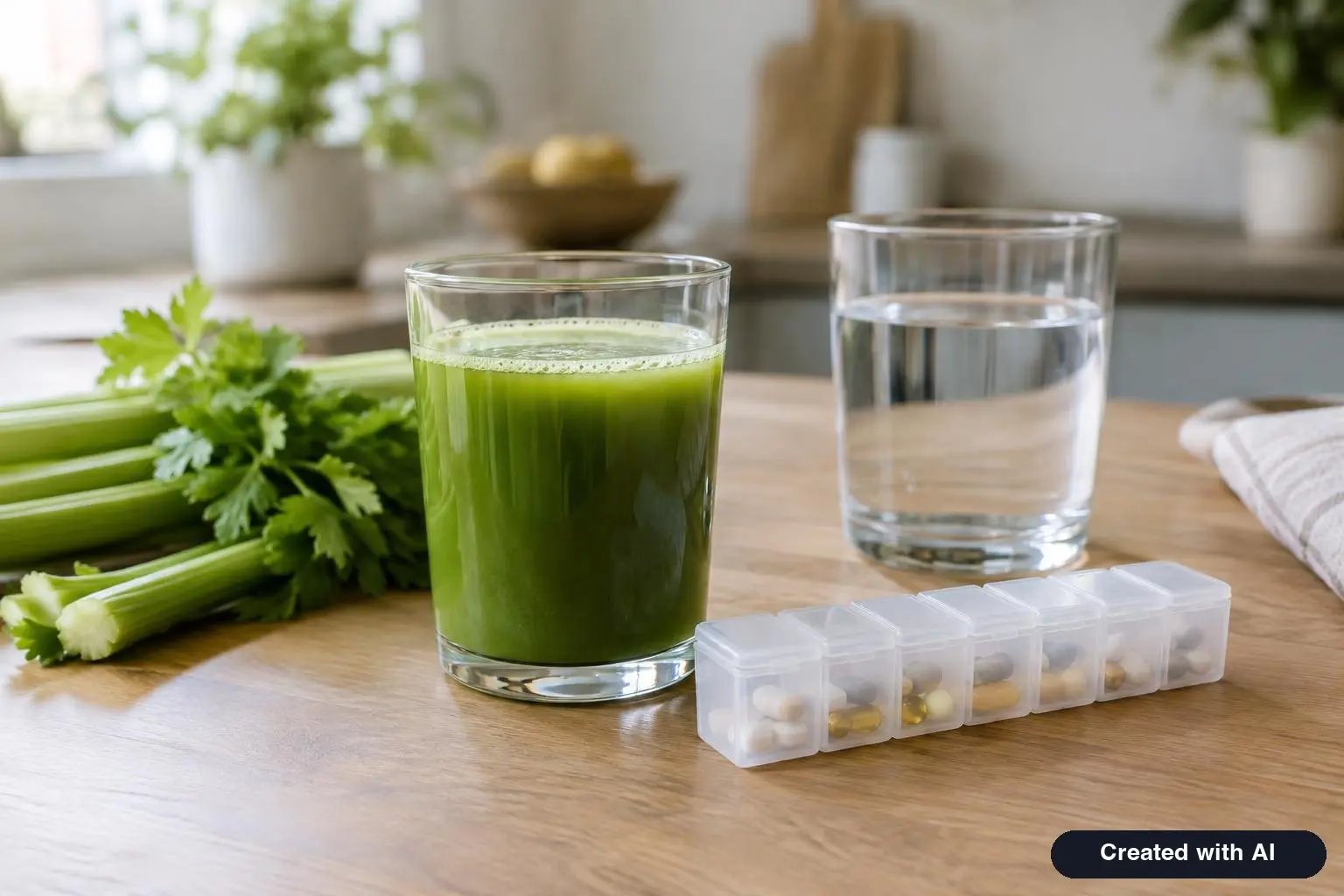
- Celery Juice Side Effects at a Glance
- Does Celery Juice Make You Poop?
- "Detox Symptoms" Are Side Effects
- Sodium: The Salt in the Glass
- Vitamin K and Warfarin
- Kidneys: Potassium and Kidney Stones
- Liver
- Sun Sensitivity From Psoralens
- Celery Allergy
- Acid Reflux and GERD
- Gout and Uric Acid
- Nitrates in Celery Juice
- Pregnancy, Breastfeeding and Children
- Food Safety: When the Juice Itself Makes You Sick
- How Much Is Too Much?
- When to Call a Doctor or 911
The most common negative side effects of celery juice are digestive: loose stools or diarrhea, gas, bloating and stomach cramps, especially in the first days and after a full 16-ounce glass on an empty stomach. Less obvious, and more important for some people, are its sodium (up to about 460 mg per pint), its vitamin K (more than a full day's worth, which can interfere with warfarin), its potassium (a concern in kidney disease), its light-sensitizing psoralens, and the risk of allergy. Fresh unpasteurized juice can also carry bacteria.
For a healthy adult, a daily glass is low-risk. This page explains each side effect, who is most likely to run into it, how to reduce it and when to call a doctor. It is general information, not personal medical advice. For the basics of the drink, see the celery juice guide.
Celery Juice Side Effects at a Glance
| Side effect or risk | Who is most affected | What to do |
|---|---|---|
| Loose stools, diarrhea, urgency | New drinkers; people with IBS | Cut to 4–8 oz, drink with food |
| Gas, bloating, cramps | People sensitive to FODMAPs (mannitol) | Reduce or stop; try cucumber-diluted juice |
| Extra sodium | High blood pressure, heart failure, kidney disease | Count it toward your daily limit |
| Vitamin K load | People taking warfarin | Talk to your prescriber before starting or stopping |
| Potassium load | Chronic kidney disease, people on potassium-sparing drugs | Ask your nephrologist or dietitian first |
| Sun sensitivity | Tanning-bed users, people on PUVA light therapy | Avoid large amounts before UV exposure |
| Allergic reaction | People with birch or mugwort pollen allergy, known celery allergy | Avoid; seek emergency care for severe symptoms |
| Foodborne illness | Pregnant women, young children, older adults, weakened immune systems | Choose pasteurized or HPP-treated juice |
| Heartburn | Some people with reflux | Skip lemon; do not drink it on an empty stomach |
Does Celery Juice Make You Poop?
Often, yes. Three things are going on.
- Mannitol. Celery is one of the vegetables richest in mannitol, a sugar alcohol, according to Monash University, whose researchers developed the low-FODMAP diet. Mannitol is poorly absorbed in the small intestine. It draws water into the bowel and is fermented by bacteria in the colon, which produces gas. The same mechanism is why sugar-free gum and candy made with sugar alcohols carry laxative warnings.
- Volume. Juicing concentrates the mannitol from a pound and a half of celery into one glass that goes down in two minutes. Few people would eat a dozen stalks at a sitting.
- Timing. A large drink first thing in the morning triggers the gastrocolic reflex, the normal urge to go after the stomach fills.
How fast it happens varies from person to person; no study has timed it. Many people notice nothing. Others have an urgent bowel movement within an hour or two of their first few glasses, and the effect usually eases within a week or two as intake becomes routine or the portion is reduced.
Is it a laxative, then? Not in the medical sense, and it is not a treatment for chronic constipation. The fiber that helps with constipation is the part juicing removes. If you rely on celery juice to have a bowel movement, raise it with your doctor.
Diarrhea, bloating and IBS
If you have irritable bowel syndrome or have been told you may have small intestinal bacterial overgrowth (SIBO), celery juice is a concentrated dose of a known trigger. Celery juice is not low FODMAP in the amounts people drink; only very small portions of celery stalk fit within a low-FODMAP serving (the Monash FODMAP app lists the current gram limit). Bloating, cramping and watery stools after celery juice are a sign of mannitol intolerance, not of "toxins leaving the body."
What helps:
- Drop to 4 ounces and increase slowly, or stop.
- Drink it with breakfast instead of on an empty stomach.
- Dilute it half and half with cucumber juice, which is low in FODMAPs.
- Replace fluids if you have diarrhea, and stop the juice until it settles.
Diarrhea that lasts more than two days, contains blood, or comes with fever or signs of dehydration (very dark urine, dizziness, a dry mouth) needs medical attention regardless of the cause.
"Detox Symptoms" Are Side Effects
Celery juice promoters describe headaches, fatigue, nausea, breakouts and diarrhea in the first weeks as "detox reactions" or "die-off" and advise pushing through. There is no physiological basis for that. Diarrhea is the mannitol. Headache and fatigue during a cleanse usually come from eating less, cutting caffeine or losing fluid. If a food reliably makes you feel worse, the reasonable response is to have less of it. More on the claims in our look at the celery juice cleanse.
Sodium: The Salt in the Glass
Celery is naturally high in sodium for a vegetable: 80 to 97 mg per 100 grams in USDA FoodData Central. A 16-ounce glass of juice works out to as much as 458 mg, and labels on bottled cold-pressed celery juices list roughly 240 to 370 mg per 16 ounces. Against the FDA's 2,300 mg Daily Value that is 10% to 20% in one drink. The Dietary Guidelines for Americans give adults the same 2,300 mg ceiling. The American Heart Association recommends no more than 2,300 mg a day and moving toward an ideal limit of no more than 1,500 mg for most adults; a pint of celery juice can use up nearly a third of that lower figure.
For most people that is manageable if the rest of the day is not heavy on processed food. If you have heart failure, kidney disease or resistant hypertension and have been given a sodium target, count the juice. Swelling in the ankles, rapid weight gain of 2 to 3 pounds in a day or worsening shortness of breath in someone with heart failure warrants a call to the cardiology team.
Celery juice is sometimes promoted for lowering blood pressure. The supporting trials used celery seed extract capsules, not juice; see celery juice benefits. Do not swap prescribed blood pressure medicine for juice. If you take medication and add daily celery juice, keep checking your readings as usual and report any dizziness or lightheadedness to your doctor.
Vitamin K and Warfarin
Celery supplies 29.3 mcg of vitamin K per 100 grams (USDA). The roughly pint of juice from a large bunch can deliver up to about 138 mcg, above the 120 mcg Daily Value. Vitamin K is what warfarin works against. The NIH Office of Dietary Supplements states that people taking warfarin and similar anticoagulants need to maintain a consistent intake of vitamin K from food and supplements, because sudden changes can increase or decrease the anticoagulant effect.
In practice:
- If you take warfarin (Coumadin, Jantoven), talk to the clinic that manages your INR before you start daily celery juice, and again before you stop. They may want an extra INR check.
- Consistency is the goal, not avoidance. The same amount every day is easier to manage than a pint some days and none on others.
- Newer anticoagulants such as apixaban (Eliquis), rivaroxaban (Xarelto) and dabigatran (Pradaxa) work differently: they block clotting factor Xa or thrombin directly instead of acting against vitamin K, and a pharmacy review of the class describes them as having no known interactions with food. Confirm with your pharmacist that this applies to your prescription.
Unusual bruising, nosebleeds that will not stop, blood in urine or stool, or black tarry stools while on any blood thinner need prompt medical attention. Signs of a clot or stroke, such as sudden weakness on one side, trouble speaking, chest pain or sudden shortness of breath, mean call 911.
Kidneys: Potassium and Kidney Stones
Is celery juice good for your kidneys? For healthy kidneys it is neutral: a watery, low-sugar drink. It does not "cleanse" or "flush" kidneys, which do that job themselves. For kidneys that are not working well, it can be a problem.
- Potassium. The National Kidney Foundation counts a food as high in potassium at 200 mg or more per serving. One celery stalk is on its lower-potassium list. Sixteen ounces of celery juice has roughly 1,000 to 1,250 mg, the equivalent of two to three bananas. People with chronic kidney disease, or those taking ACE inhibitors, ARBs or potassium-sparing diuretics such as spironolactone, can build up potassium in the blood. The foundation notes that high potassium often causes few symptoms; when it comes on suddenly it can cause heart palpitations, shortness of breath, chest pain, nausea or vomiting and is life-threatening. If you have kidney disease, ask your nephrologist or renal dietitian before drinking vegetable juices.
- Kidney stones. Celery is not in the same league as spinach, beets or rhubarb for oxalate; one widely used clinical list, from the University of California, Irvine kidney stone center, rates a raw stalk as low (about 3 mg). Published values vary, though, and juice concentrates many stalks. If you form calcium oxalate stones, a daily pint is worth mentioning to your urologist, and green-juice blends heavy on spinach, beet or parsley are a bigger concern than celery itself. NIH's complementary health center specifically warns that juices made from high-oxalate foods can be a threat to people prone to stones.
Liver
There is no evidence that celery juice in normal amounts harms the liver, and none that it cleanses, "cools" or repairs it. If you have liver disease, the practical issues are the same as for everyone else, sodium above all, since doctors may recommend limiting sodium for people with cirrhosis, according to the National Institute of Diabetes and Digestive and Kidney Diseases. Yellowing skin or eyes, dark urine, pale stools or pain in the upper right abdomen are reasons to see a doctor, not to start a juice regimen.
Sun Sensitivity From Psoralens
Celery contains furanocoumarins, also called psoralens, including xanthotoxin (8-methoxypsoralen) and bergapten (5-methoxypsoralen). These compounds make skin react more strongly to ultraviolet A light. The usual victims are people who handle celery for a living: DermNet, the dermatology reference, notes that the blistering rash called phytophotodermatitis particularly affects pickers, canners and grocery workers, and that celery infected with pink rot fungus contains far more of the chemicals.
Reactions from eating celery are rare but real. A 1990 report in Archives of Dermatology described a 65-year-old woman who developed a severe, generalized phototoxic burn after a visit to a tanning salon; she had eaten a large quantity of celery root an hour earlier, and testing of a similar root suggested a psoralen dose of about 45 mg. DermNet also cites people severely sunburned after eating celery soup and then going into the sun or a tanning salon.
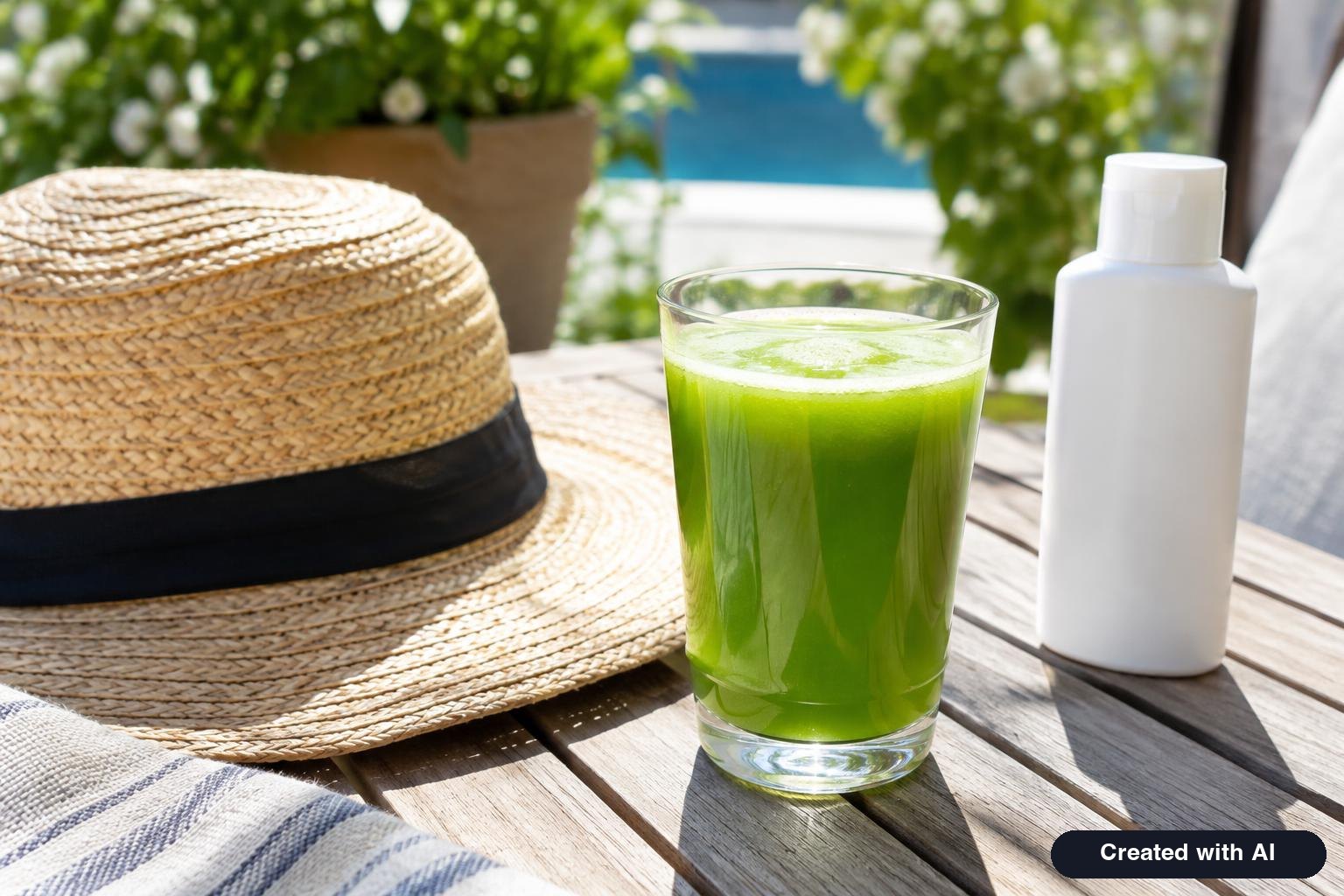
What that means for juice drinkers: everyday sun exposure after a glass of celery juice is not known to be a hazard. Be cautious with large amounts before tanning beds or long, unprotected midday sun, and tell your dermatologist about the habit if you receive PUVA or other phototherapy or take a photosensitizing medicine. Also rinse juice off your hands and arms after juicing if you are heading outdoors. Skin that blisters or burns far out of proportion to the sun you got should be seen by a clinician.
Celery Allergy
Celery is a recognized food allergen. It is one of the 14 substances listed in Annex II of the European Union's food labeling regulation (No 1169/2011), which must be declared on food labels there, though it is not among the nine major allergens covered by US labeling law. Two patterns are seen:
- Pollen-food allergy syndrome (oral allergy syndrome). People with hay fever from birch or mugwort pollen can react to raw celery with an itchy mouth, lips or throat within minutes, according to the American Academy of Allergy, Asthma & Immunology. Symptoms are often worse during pollen season. Raw juice delivers the proteins responsible in an undiluted form.
- Systemic reactions. Less often, celery causes hives, vomiting, wheezing or anaphylaxis. Mugwort-related celery allergy in particular is associated with severe reactions.
If your mouth itches after raw celery, carrots, apples or parsley, skip celery juice and mention it to an allergist. Hives, swelling of the lips, tongue or throat, trouble breathing, repeated vomiting or faintness after drinking it is an emergency: use epinephrine if you have it and call 911.
Acid Reflux and GERD
Celery juice is promoted both as a cure for acid reflux and blamed for causing it. Neither has been studied. Plain celery juice is only mildly acidic and low in fat, so it is not a classic reflux trigger, but a pint of any liquid on an empty stomach can bring on reflux in people prone to it, and added lemon or ginger makes that more likely. If it helps you, fine. If heartburn occurs more than twice a week, that is worth a medical visit; juice is not a substitute for evaluating persistent reflux.
Gout and Uric Acid
People search for celery juice for gout because celery seed has a folk reputation for lowering uric acid. In a 2026 randomized trial of 28 adults with metabolic syndrome, 150 mg a day of celery seed extract for 12 weeks was followed by a fall in uric acid from 297.4 to 261.7 µmol/L in the celery seed group. That is a small study of a seed supplement, in people without gout. Celery juice itself has not been tested for gout flares. It is a reasonable low-sugar drink for people with gout (fructose-sweetened drinks are a known trigger), but it does not replace allopurinol or other prescribed treatment.
Nitrates in Celery Juice
Celery is naturally rich in nitrate, which is why concentrated celery powder is used to cure "uncured" bacon and deli meats. This is the same nitrate found in spinach, beets and lettuce, and vegetables are the main source of nitrate in most diets; it is not a reason for healthy adults to avoid celery or its juice. Babies are a different matter: the American Academy of Pediatrics recommends that fruit juice not be given to infants under 12 months, and the Dietary Guidelines for Americans, 2020-2025, say the same of 100% fruit or vegetable juices, so celery juice is not a drink for infants.
Pregnancy, Breastfeeding and Children
- Pregnancy. Celery as a food is safe in pregnancy. The concern is raw juice: the FDA lists pregnant women among those who risk serious illness from untreated juice. Buy pasteurized or high-pressure-processed juice, or make it at home from thoroughly washed celery and drink it immediately. Celery seed supplements are a different, concentrated product that has not been shown to be safe in pregnancy; avoid them unless your obstetric provider approves.
- Breastfeeding. No specific concerns with food amounts.
- Children. For children older than 12 months, the American Academy of Pediatrics says 4 ounces of juice a day, given as part of a meal, may be a reasonable option; its advice is written for fruit juice. Choose pasteurized juice. There is no reason to give a child a daily pint, and the sodium is proportionally higher for a small body.
Food Safety: When the Juice Itself Makes You Sick
Fresh-pressed juice is not heat-treated, so any bacteria on the celery end up in the glass. The FDA says illness from contaminated juice usually starts within 1 to 3 days, with vomiting, diarrhea, abdominal pain and flu-like symptoms such as fever and body aches. That pattern, particularly with fever, is different from the loose stools mannitol causes within hours. Wash produce under running water, keep juice at 40°F (4°C) or colder, and drink it soon after making it. If several people in your household are sick with vomiting and diarrhea at once, a stomach virus is more likely than the juice; compare the timeline with norovirus symptoms.

How Much Is Too Much?
There is no established upper limit for celery juice. A sensible ceiling for a healthy adult is about 16 ounces a day. Beyond that you add sodium and vitamin K, raise the odds of diarrhea and gain nothing that has been demonstrated. Multi-day celery-juice-only fasts add the risks of any very-low-calorie diet: dizziness, low blood sugar in people on diabetes medication, and muscle loss.
Checklist: lowering your risk of side effects
- Start with 4 to 8 ounces for the first week.
- Have it with or after food if your stomach is sensitive.
- Count the sodium if you have a daily limit.
- Clear it with your prescriber if you take warfarin, blood pressure medicine or potassium-sparing drugs, or have kidney disease.
- Choose pasteurized or HPP juice if you are pregnant, an older adult, immunocompromised or serving a young child.
- Wash celery well and refrigerate juice promptly.
- Stop if you get an itchy mouth, hives or a blistering sunburn.
When to Call a Doctor or 911
Call 911 for trouble breathing, swelling of the tongue or throat, fainting, chest pain, a racing or irregular heartbeat with weakness, or signs of stroke.
Call your doctor for diarrhea lasting more than two days or with blood or fever; vomiting that prevents you from keeping fluids down; unusual bleeding or bruising on a blood thinner; new swelling or shortness of breath with heart or kidney disease; muscle weakness, numbness or tingling if you have kidney disease; or a severe or blistering skin reaction after sun exposure.
In the US you can also reach Poison Control at 1-800-222-1222 for questions about a possible reaction between a food or supplement and a medication.
Frequently asked questions
What are the negative side effects of celery juice?
The most common are loose stools or diarrhea, gas, bloating and cramps. Others apply to specific groups: extra sodium for people with high blood pressure or heart failure, a vitamin K load that can affect warfarin, potassium that can build up in kidney disease, rare sun-sensitivity reactions, allergy, and foodborne illness from unpasteurized juice.
Does celery juice make you poop?
Often, yes. Celery is high in mannitol, a sugar alcohol that pulls water into the intestine, and a pint of liquid first thing in the morning stimulates the bowel. The effect usually eases with smaller portions or after a week or two.
Can celery juice cause diarrhea?
Yes, especially at 16 ounces on an empty stomach and in people with IBS. Cut back to 4 ounces, drink it with food or stop. See a doctor for diarrhea that lasts more than two days or comes with blood, fever or dehydration.
Is celery juice good for your kidneys?
It does not cleanse the kidneys. For healthy kidneys it is simply a low-sugar drink. For people with chronic kidney disease, the roughly 1,000 to 1,250 mg of potassium and several hundred milligrams of sodium in a pint can be harmful, so ask your nephrologist first.
Can I drink celery juice if I take blood thinners?
If you take warfarin, talk to your prescriber before starting or stopping daily celery juice, because a pint can supply more than a day's vitamin K and sudden changes alter warfarin's effect. Apixaban, rivaroxaban and dabigatran do not act against vitamin K and have no known food interactions; confirm with your pharmacist.
Is celery juice safe during pregnancy?
Celery is safe to eat in pregnancy, but the FDA warns that untreated juice can carry harmful bacteria and lists pregnant women among those at higher risk. Choose pasteurized or high-pressure-processed juice, or drink freshly made juice from well-washed celery right away.
Is celery juice low FODMAP?
No, not in normal serving sizes. Monash University lists celery among the vegetables richest in mannitol, a FODMAP, and juice concentrates many stalks into one glass. Only small portions of celery fit a low-FODMAP serving.
Can celery juice make you sensitive to the sun?
Rarely. Celery contains psoralens that increase sensitivity to UVA light. Documented reactions from eating celery involved large amounts followed by tanning-bed or strong sun exposure. Normal daily sun after a glass of juice is not known to be a problem.
Sources
- USDA FoodData Central: Celery juice (FNDDS, FDC ID 2709811) and Celery, raw (SR Legacy, FDC ID 169988)
- FDA: Daily Value on the Nutrition and Supplement Facts Labels
- NIH Office of Dietary Supplements: Vitamin K Fact Sheet for Health Professionals
- FDA: What You Need to Know About Juice Safety
- Monash University FODMAP: High and low FODMAP foods
- National Kidney Foundation: Potassium in Your CKD Diet
- National Kidney Foundation: High Potassium (Hyperkalemia)
- UCI Kidney Stone Center: Oxalate Content of Foods
- NIH National Center for Complementary and Integrative Health: "Detoxes" and "Cleanses": What You Need To Know
- Ljunggren, Severe phototoxic burn following celery ingestion, Archives of Dermatology (1990)
- DermNet: Celery
- American Academy of Allergy, Asthma & Immunology: Oral Allergy Syndrome
- Paul-Ehrlich-Institut: New Insights on Celery Allergies and Associated Risks (2024)
- FDA: Food Allergies
- Escobedo-Gutiérrez et al., Effect of celery seed administration on the components of metabolic syndrome, Pharmaceuticals (2026)
- American Heart Association: How Much Sodium Should I Eat Per Day?
- American Academy of Pediatrics: Fruit Juice in Infants, Children, and Adolescents: Current Recommendations, Pediatrics (2017)
- FDA: Sodium in Your Diet
- USDA and HHS: Dietary Guidelines for Americans, 2020-2025 (cup-equivalents for vegetable juice; juice before 12 months)
- American Academy of Pediatrics (HealthyChildren.org): Where We Stand: Fruit Juice for Children
- Stacy and Richter, The Use of Edoxaban in Patients with Nonvalvular Atrial Fibrillation and Venous Thromboembolism: A Pharmacist's Perspective, Hospital Pharmacy (2016)
- Regulation (EU) No 1169/2011 on the provision of food information to consumers, Annex II
- NIDDK: Eating, Diet, and Nutrition for Cirrhosis
Log in to comment
No comments yet. Be the first.