Celery Juice Benefits: What the Evidence Really Shows
- 16 oz of celery juice provides up to 27% of the Daily Value for potassium, 42% for folate and 115% for vitamin K (USDA data).
- A 2025 meta-analysis of 10 trials (511 people) found celery preparations lowered blood pressure, but none of the trials used juice.
- No clinical trial has tested celery juice for weight loss, skin, gut health, liver detox or cancer.
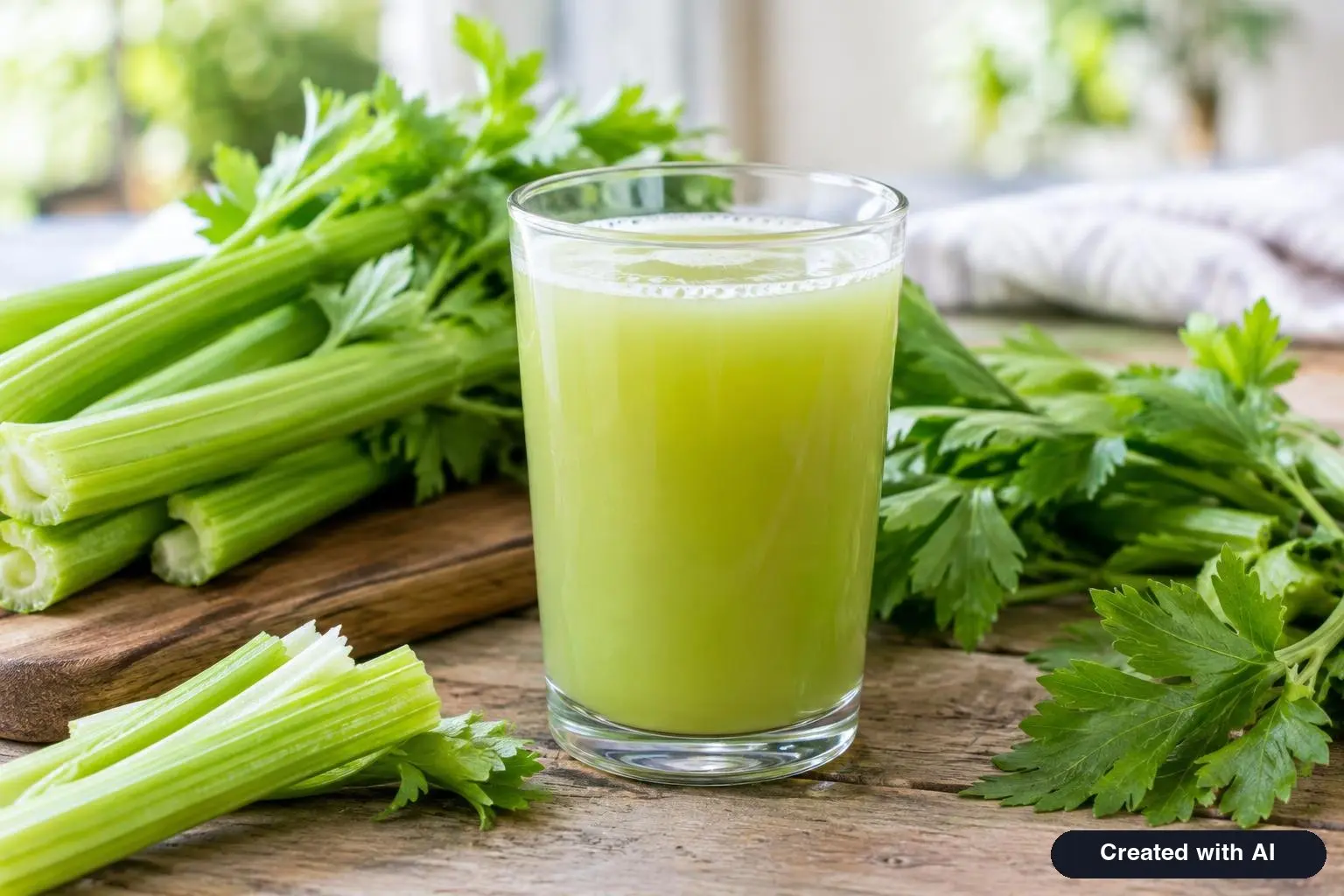
- Celery Juice Benefits at a Glance
- What Is in Celery Juice
- Benefits With Solid Support
- Does Celery Juice Lower Blood Pressure?
- Celery Juice for Weight Loss
- Inflammation and Antioxidants
- Gut Health, Bloating and Constipation
- Skin, Acne and Eczema
- Blood Sugar, Cholesterol and Triglycerides
- Liver, Kidneys, Parasites and Cancer
- Celery Juice Benefits for Women and for Men
- Do Blends Add Benefits? Cucumber, Carrot, Lemon, Apple, Pineapple
- Is It Better on an Empty Stomach in the Morning?
- How to Get the Real Benefits
- When to Talk to a Doctor
The proven benefits of celery juice are modest and specific: it hydrates, it is very low in sugar and calories, and a 16-ounce glass delivers about a quarter of the Daily Value for potassium, around 40% for folate and more than 100% for vitamin K, based on USDA data. Claims that it lowers blood pressure, burns fat, heals the gut, clears skin or detoxifies the liver are not backed by clinical trials of celery juice. The human studies that exist tested celery seed extract or celery powder in capsules, and a single published case report describes one man's blood pressure falling while he drank celery juice daily.
That does not make celery juice useless. It makes it a vegetable drink rather than a medicine. Below, each popular claim is checked against the published research as of October 2026. For the basics of the drink itself, start with the celery juice guide.
Celery Juice Benefits at a Glance
| Claimed benefit | Best available evidence | Evidence level for juice |
|---|---|---|
| Hydration | About 95% water plus electrolytes (USDA) | Solid |
| Potassium, folate, vitamin K | USDA nutrient data | Solid |
| Low-sugar juice option | About 6 g sugar per 16 oz (USDA) | Solid |
| Lower blood pressure | Trials of celery seed extract capsules; one case report with juice | Weak |
| Weight loss | No trials; low calorie content only | Indirect |
| Less inflammation | Lab and animal studies of apigenin and luteolin | Preliminary |
| Better digestion, less bloating | No trials; mannitol can loosen stools | None to mixed |
| Clearer skin | No trials | None |
| Lower blood sugar or triglycerides | Small trials of capsules and decoctions, not juice | Weak |
| Liver detox, parasite cleanse, cancer prevention | No human evidence | None |
What Is in Celery Juice
Two things give celery juice its reputation: ordinary nutrients and a long list of plant compounds.
Nutrients. USDA FoodData Central puts a cup (8 fl oz, 236 g) of celery juice at 40 calories, 229 mg of sodium, 625 mg of potassium, 69 mcg of vitamin K, 85 mcg of folate and 109 mg of calcium. Double those for the 16-ounce glass most people drink. The USDA entry is modeled on whole raw celery, so treat the figures as upper estimates for strained juice.
Plant compounds. When researchers at the Shanghai Academy of Agricultural Sciences analyzed juice from six celery cultivars in 2022, they detected 71 phenolic acids, 38 flavonoids, 18 coumarins, 41 terpenoids and 11 phthalides. The best known are the flavonoids apigenin and luteolin and a phthalide called 3-n-butylphthalide, which gives celery its smell and is the compound most often linked to blood pressure effects. The same study found that the amounts of some compounds differed more than tenfold between cultivars, which means two glasses of celery juice are not chemically identical, and that lab findings on one extract cannot be assumed for the bunch in your refrigerator.
Benefits With Solid Support
1. Hydration
Celery is roughly 95% water, and its juice carries sodium and potassium, the two main electrolytes lost in sweat. A pint of celery juice hydrates about as well as a pint of any other watery drink. It is not better than water for everyday needs, but if a savory green drink gets you to take in more fluid, that counts.
2. Potassium, folate and vitamin K
Most Americans fall short on potassium. Sixteen ounces of celery juice provides up to 1,251 mg, about 27% of the 4,700 mg Daily Value, for 80 calories. The same glass has up to 170 mcg of folate (42% of the Daily Value) and 138 mcg of vitamin K (115%), a vitamin needed for normal blood clotting and bone metabolism. These are real contributions. They are also available from the whole vegetable and from many other foods: a medium banana has about 420 mg of potassium, and a cup of raw spinach has more vitamin K than a pint of celery juice.
3. A juice without the sugar load
With about 6 grams of naturally occurring sugar per 16 ounces, plain celery juice has roughly one-seventh the sugar of the same amount of fresh orange juice (about 42 grams, per USDA). For someone who wants a morning juice and is watching blood sugar or calories, it is one of the best choices in the category. The advantage shrinks fast once apple or pineapple goes into the juicer.
Does Celery Juice Lower Blood Pressure?
This is the claim with the most research behind it, and almost none of that research involved juice.
- Celery seed extract, 2022. In a randomized, triple-blind, placebo-controlled crossover trial published in Phytotherapy Research, 52 patients with hypertension took 1.34 grams of celery seed extract a day for four weeks. Average 24-hour systolic pressure fell from 141.2 to 130.0 mmHg and diastolic from 92.2 to 84.2 mmHg, with no significant change on placebo.
- Meta-analysis, 2025. A review in Frontiers in Nutrition pooled 10 randomized trials with 511 participants and found that celery preparations lowered systolic and diastolic blood pressure, fasting glucose and triglycerides. Every trial used capsules of seed extract or powder, or cooked celery decoctions. None tested juice, all were conducted in Asian populations, samples were small, and results varied widely from study to study.
- Celery seed, 2026. A 12-week trial in Pharmaceuticals gave 150 mg a day of celery seed extract or placebo to 28 adults with metabolic syndrome. In the 14 who took celery seed, systolic pressure dropped from 121.0 to 115.7 mmHg and diastolic from 82.2 to 78.5 mmHg.
- Celery juice, 2021. The only published human report on juice is a case study in the Journal of Chiropractic Medicine. A 74-year-old man who had stopped his blood pressure medication juiced one bunch of celery every morning for six months while also receiving chiropractic care; his readings went from 150/80 to 118/82 mmHg. One patient, no control, self-reported intake: the author lists those limitations herself.
So there is a plausible signal for concentrated celery seed products, and a mechanism to match (in animal studies phthalides relax blood vessel walls, and celery supplies potassium and dietary nitrate). Whether a glass of stalk juice delivers enough of those compounds is unknown. The juice also brings up to 458 mg of sodium, which works in the opposite direction for people who are salt-sensitive.
If you have high blood pressure, celery juice can be part of your diet, but it is not a treatment. Do not stop or cut back on prescribed medication because of it. The eating pattern with the strongest trial evidence for lowering blood pressure is DASH, developed with funding from the National Heart, Lung, and Blood Institute, which is built on whole vegetables, fruit, low-fat dairy and less sodium. A reading of 180/120 mmHg or higher with chest pain, shortness of breath, vision changes, weakness or trouble speaking is an emergency: call 911.
Celery Juice for Weight Loss
No trial has tested celery juice for weight loss. What can be said:
- It is low in calories. Swapping a 16-ounce sweetened latte or a soda for celery juice saves roughly 100 to 250 calories a day, and that kind of swap adds up.
- It is not filling. Liquid calories without fiber or protein do little for appetite. Whole celery with peanut butter keeps you full longer than the juice of the same stalks.
- Juice-only "cleanses" produce fast scale changes that do not last. NIH's National Center for Complementary and Integrative Health notes that juicing and detox diets can cause initial weight loss because of low calorie intake, but tend to lead to weight gain once a normal diet resumes.
Celery juice does not "burn fat," "boost metabolism" or have negative calories. If weight loss is your main goal, the tools with real evidence are a sustained calorie deficit, protein, activity and, for some people, medication; our comparison of Ozempic vs. Mounjaro covers the prescription route.
Inflammation and Antioxidants
A 2017 systematic review in the Journal of Evidence-Based Complementary and Alternative Medicine screened 980 articles and included nine studies on celery's antioxidant activity. It concluded that compounds such as caffeic acid, ferulic acid, apigenin, luteolin and kaempferol give celery strong free-radical-scavenging activity. Those were mostly laboratory and animal experiments. Antioxidant activity in a test tube has a poor record of predicting health outcomes in people, and no trial has measured inflammation markers such as C-reactive protein in people drinking celery juice.
The fair statement: celery contains anti-inflammatory compounds, like most vegetables and herbs, and eating more vegetables in general is associated with lower chronic disease risk. Whether juice from one of them does anything special for arthritis, autoimmune conditions or "chronic inflammation" has not been studied.
Gut Health, Bloating and Constipation
Advocates say celery juice "restores stomach acid" and "heals the gut lining." There is no clinical evidence for either. What is known cuts both ways:
- It can get things moving. A pint of fluid first thing in the morning stimulates the bowel, and celery's mannitol draws water into the intestine. Some people with sluggish digestion like the effect.
- It can cause the bloating it is supposed to cure. Mannitol is a FODMAP. In people with irritable bowel syndrome it is a common trigger for gas, cramping and diarrhea.
- The fiber is gone. Fiber is what feeds beneficial gut bacteria, and juicing removes most of it. In a small 2025 Northwestern University study, three days of a juice-only diet shifted oral and gut bacteria in directions the researchers linked to inflammation.
For constipation, whole vegetables, fluids and fiber have far better support than any juice. For acid reflux, there are no studies of celery juice at all; if it seems to help or hurt you, that is individual tolerance.
Skin, Acne and Eczema
No controlled study has looked at celery juice and any skin condition. Before-and-after photos on social media do not separate the juice from everything else that changed at the same time: more water, less alcohol, fewer sugary drinks, a new skincare routine. Good hydration and a diet rich in vegetables are reasonable for skin health. One caution runs the other way: celery contains psoralens, which increase sensitivity to ultraviolet light, so heavy intake before tanning beds or prolonged sun is a bad idea. See side effects.
Blood Sugar, Cholesterol and Triglycerides
The 2025 meta-analysis found reductions in fasting glucose and triglycerides with celery preparations, and no significant effect on total, LDL or HDL cholesterol. Again, these were capsules and decoctions taken for 12 to 84 days by small groups of adults, not juice. Plain celery juice is a sensible drink for people with diabetes because it is low in carbohydrate, about 16 grams per pint. It is not a glucose-lowering treatment. If you take insulin or sulfonylureas, account for the carbohydrate as you would for any food, and talk to your care team before changing your eating pattern.
Liver, Kidneys, Parasites and Cancer
These are the claims furthest from the evidence.
- Liver detox. Your liver and kidneys clear waste continuously. No human study shows celery juice improves liver function, removes fat from the liver or "flushes toxins."
- Kidneys. Celery juice is not a kidney cleanser. For people with reduced kidney function its potassium and sodium can be a problem.
- Parasites. Nothing in celery juice has been shown to kill intestinal parasites in people. Parasitic infections are diagnosed with lab tests and treated with prescription drugs.
- Cancer. Apigenin and luteolin slow the growth of cancer cells in laboratory dishes. No human study shows that celery juice prevents or treats any cancer. Do not delay or replace cancer treatment with a juice regimen.
The background on where these ideas come from is in our piece on the celery juice cleanse.
Celery Juice Benefits for Women and for Men
For women. Folate is the nutrient most relevant here: it is essential before and during early pregnancy for preventing neural tube defects. A pint of celery juice supplies up to 170 mcg of food folate. That does not replace the 400 mcg of folic acid a day that the CDC recommends for all women who could become pregnant. During pregnancy, choose pasteurized or high-pressure-treated juice rather than fresh-pressed from a juice bar; the FDA lists pregnant women among those at risk of serious illness from untreated juice. There is no evidence that celery juice balances hormones, eases menstrual symptoms or improves fertility.
For men. Claims about testosterone, fertility and sexual performance trace back to rodent studies of celery extracts, not to human trials. The blood pressure question is the one men are most likely to care about, and the answer is the same as above: promising for seed extract, untested for juice.
Do Blends Add Benefits? Cucumber, Carrot, Lemon, Apple, Pineapple
Mixing celery with other produce changes the nutrition more than it changes the science: none of these combinations has been clinically tested either. What each one adds, using USDA figures for the whole ingredient:
| Add to celery | What it contributes | Watch for |
|---|---|---|
| Cucumber (1 whole, about 10 oz / 300 g) | More water, milder taste, dilutes the sodium per ounce; about 5 g sugar | Very little; the gentlest blend |
| Carrots (4 medium) | About twice the Daily Value for vitamin A, as beta carotene; about 12 g sugar | Sweeter, more carbohydrate |
| Lemon (juice of 1/2) | About 9 mg vitamin C, brighter flavor, slows browning | Acid can bother reflux and tooth enamel |
| Green apple (1 medium) | Sweetness that hides celery's bitterness | About 16 g sugar (Granny Smith; about 19 g for an average medium apple), with the apple's fiber left in the pulp |
| Pineapple (1 cup chunks) | About 79 mg vitamin C, 88% of the Daily Value | About 16 g sugar |
| Ginger (1-inch piece) | Heat and flavor; ginger has some evidence for easing nausea | Can cause heartburn in larger amounts |
Ratios and methods for each blend are in the celery juice recipe.
Is It Better on an Empty Stomach in the Morning?
The instruction to drink celery juice first thing, alone, and wait before eating comes from the Medical Medium protocol. No study has compared timing. Nutrients such as potassium and folate are absorbed with or without food, and vitamin K, which is fat-soluble, is actually absorbed better with a meal that contains some fat. Drink it whenever you will keep the habit and your stomach tolerates it.
How to Get the Real Benefits
- Drink it plain or with cucumber and lemon to keep sugar low.
- Keep it to 8 to 16 ounces a day.
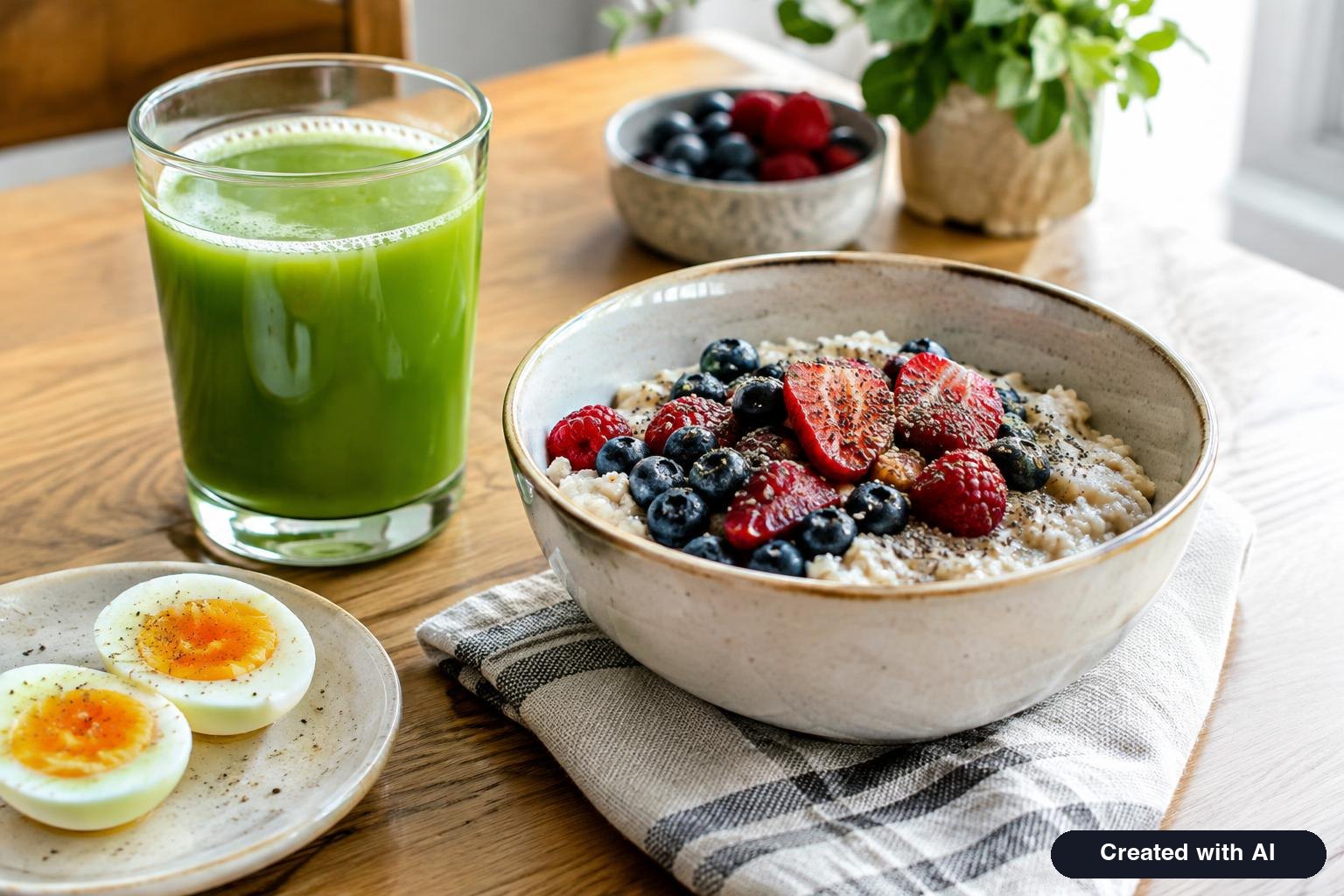
- Have it with or alongside a meal that includes protein and fiber.
- Use it to replace a sugary drink, not a serving of whole vegetables.
- Eat the pulp, or blend instead of juicing a few days a week.
- Keep taking prescribed medication, and tell your doctor about the habit if you take warfarin, blood pressure drugs or have kidney disease.
- Give up on it without guilt if it upsets your stomach. Nothing in celery juice is unavailable elsewhere.
When to Talk to a Doctor
See a clinician rather than a juicer for symptoms people often try to treat with celery juice: blood pressure readings that stay at or above 130/80 mmHg, unexplained fatigue, persistent bloating or a change in bowel habits lasting more than a few weeks, blood in the stool, unintended weight loss, or a rash that does not clear. Those deserve a diagnosis. Celery juice can sit alongside whatever treatment follows.
Frequently asked questions
What are the benefits of drinking celery juice?
The supported benefits are hydration, a low sugar and calorie count (about 80 calories and 6 grams of sugar per 16 ounces) and useful amounts of potassium, folate and vitamin K. Benefits for blood pressure, inflammation, weight, skin and digestion have not been shown in clinical trials of celery juice.
What does celery juice do for your body?
It supplies water, electrolytes and some vitamins, and in many people it loosens the stools because celery contains mannitol. It does not detoxify the liver or kidneys; those organs clear waste on their own.
Does celery juice lower blood pressure?
It is unproven. Small randomized trials found that celery seed extract capsules lowered blood pressure, including a 2022 trial in which systolic pressure fell from about 141 to 130 mmHg in four weeks. The only human report on celery juice is a single case study. Juice also contains up to 458 mg of sodium per pint. Do not replace blood pressure medication with it.
Does celery juice help you lose weight?
Not directly. No trial has tested it. It is low in calories, so it can help if it replaces a higher-calorie drink, but it is not filling and does not burn fat or speed up metabolism.
Is celery juice good for your skin?
There are no controlled studies of celery juice for acne, eczema or skin aging. Any improvement people report may come from drinking more fluid or cutting sugar and alcohol at the same time.
What are the benefits of celery juice on an empty stomach?
None have been demonstrated. No study has compared drinking it on an empty stomach with drinking it alongside food. Vitamin K is actually absorbed better with a meal that contains some fat, and an empty stomach makes cramps and loose stools more likely.
Is celery juice anti-inflammatory?
Celery contains apigenin, luteolin and other compounds that show antioxidant and anti-inflammatory activity in laboratory and animal studies. No human trial has measured inflammation in people drinking celery juice, so the effect in real life is unknown.
Is celery juice good for people with diabetes?
Plain celery juice is a reasonable choice because it is low in carbohydrate, about 16 grams per 16 ounces. It is not a treatment for blood sugar; the small trials showing lower fasting glucose used celery capsules or decoctions, not juice.
Sources
- USDA FoodData Central: Celery juice (FNDDS, FDC ID 2709811) and Celery, raw (SR Legacy, FDC ID 169988)
- FDA: Daily Value on the Nutrition and Supplement Facts Labels
- Liu et al., Effects of celery on blood pressure, glycemic and lipid profile in adults: systematic review and meta-analysis, Frontiers in Nutrition (2025)
- Shayani Rad et al., Effect of celery seed extract on hypertension: randomized, triple-blind, placebo-controlled crossover trial, Phytotherapy Research (2022)
- Escobedo-Gutiérrez et al., Effect of celery seed administration on the components of metabolic syndrome, Pharmaceuticals (2026)
- Illes, Blood Pressure Change After Celery Juice Ingestion in a Hypertensive Elderly Male, Journal of Chiropractic Medicine (2021)
- Yan et al., Comprehensive Quality and Bioactive Constituent Analysis of Celery Juice Made from Different Cultivars, Foods (2022)
- Kooti and Daraei, A Review of the Antioxidant Activity of Celery, Journal of Evidence-Based Complementary and Alternative Medicine (2017)
- Sardaro et al., Effects of Vegetable and Fruit Juicing on Gut and Oral Microbiome Composition, Nutrients (2025)
- NIH National Center for Complementary and Integrative Health: "Detoxes" and "Cleanses": What You Need To Know
- National Heart, Lung, and Blood Institute: DASH Eating Plan
- CDC: About Folic Acid
- FDA: What You Need to Know About Juice Safety
- Monash University FODMAP: High and low FODMAP foods
- USDA FoodData Central, SR Legacy: Apples, raw, with skin (FDC ID 171688); Apples, raw, Granny Smith (168203); Carrots, raw (170393); Cucumber, with peel, raw (168409); Pineapple, raw (169124); Lemon juice, raw (167747); Orange juice, raw (169098); Apple juice, unsweetened (173933)
Log in to comment
No comments yet. Be the first.