Celery Juice Recipe: How to Make It With a Juicer or Blender
- About 1.75 lb (800 g) of celery typically yields about 16 fl oz (475 ml); a small 1-lb bunch gives roughly 8 to 10 oz. Yield varies.
- No juicer needed: blend chopped celery with 1/4 cup (60 ml) water for 60 to 90 seconds and squeeze through a nut milk bag.
- General practice: drink fresh juice within 24 to 72 hours, kept at 40°F or colder; frozen, quality holds about 2 to 3 months.
- Ingredients and Yield
- Choosing and Prepping Celery
- Method 1: How to Make Celery Juice With a Juicer
- Method 2: How to Make Celery Juice in a Blender
- Juicer or Blender: Which Is Better for Celery?
- Celery Juice Recipes: 9 Combinations That Work
- How to Make Celery Juice Taste Better
- Troubleshooting
- Storing and Making Celery Juice Ahead
- What to Do With the Pulp
- Is This the "Medical Medium" Celery Juice Recipe?
- Nutrition in One Glass
Celery Juice (Juicer or Blender)
No ratings yet – be the firstIngredients
Directions
- Trim. Cut about 1/2 inch (1 cm) off the root end of the celery and separate the stalks. Trim any brown tips. Leave the leaves on for a stronger, slightly bitter juice or remove them for a milder one.
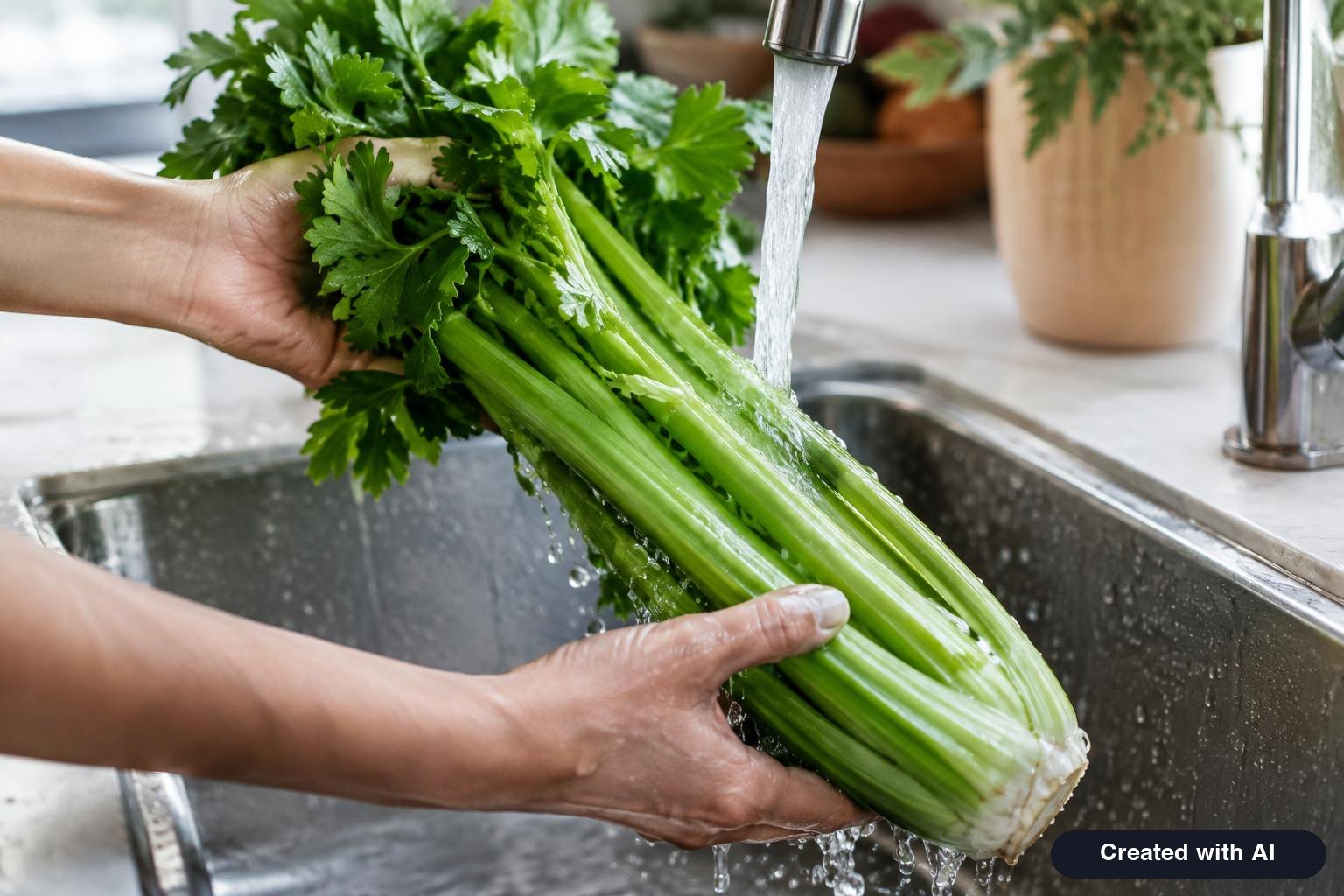
- Wash. Rinse each stalk under cold running water, rubbing away dirt near the base. Pat dry with a clean towel.
- Juicer method. Feed the stalks through the juicer one or two at a time. For a vertical slow juicer, first cut them into 1- to 2-inch (2.5–5 cm) pieces so the strings do not clog it. Run wet pulp through a second time.
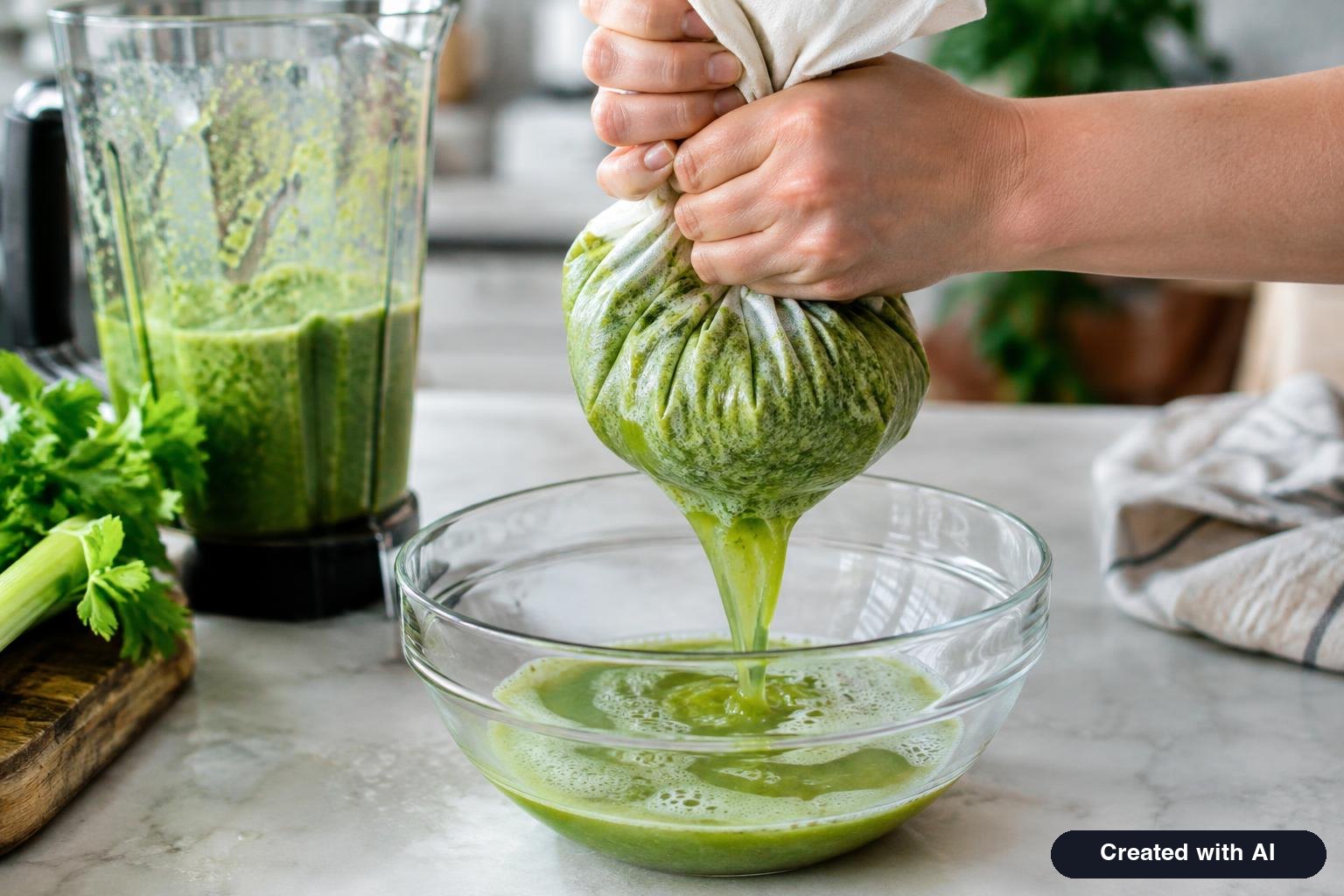
- Blender method. Chop the celery into 1-inch (2.5 cm) pieces. Put 1/4 cup (60 ml) cold water in the blender, add the celery and blend on high for 60 to 90 seconds until smooth. Pour into a nut milk bag or a fine sieve lined with cheesecloth set over a bowl and squeeze until the pulp is nearly dry.
- Finish. Strain through a fine sieve if you want it smoother. Stir in the lemon juice, if using.
- Serve or store. Drink right away, over ice if you like. To store, pour into a glass jar, fill to the brim, seal and refrigerate at 40°F (4°C) or colder; drink within 24 to 72 hours. Shake before drinking.
To make celery juice, wash one large bunch of celery, about 1.75 pounds (800 g), and run the stalks through a juicer; that typically gives about 16 ounces (475 ml), one large glass, though yield varies with the celery and the machine. No juicer? Chop the celery, blend it with 1/4 cup (60 ml) of cold water until smooth, and squeeze it through a nut milk bag or a cheesecloth-lined sieve. Either way it takes about 10 minutes, uses one ingredient and tastes best fresh.
The recipe card has the exact amounts and scales to more servings. Below it you will find the details that decide whether your juice tastes clean or bitter: how to pick celery, which machines work best, how to fix foam and separation, and tested ratios for celery with cucumber, apple, lemon, ginger, carrot, pineapple and beet. For what the drink does and does not do for your health, see the celery juice guide.
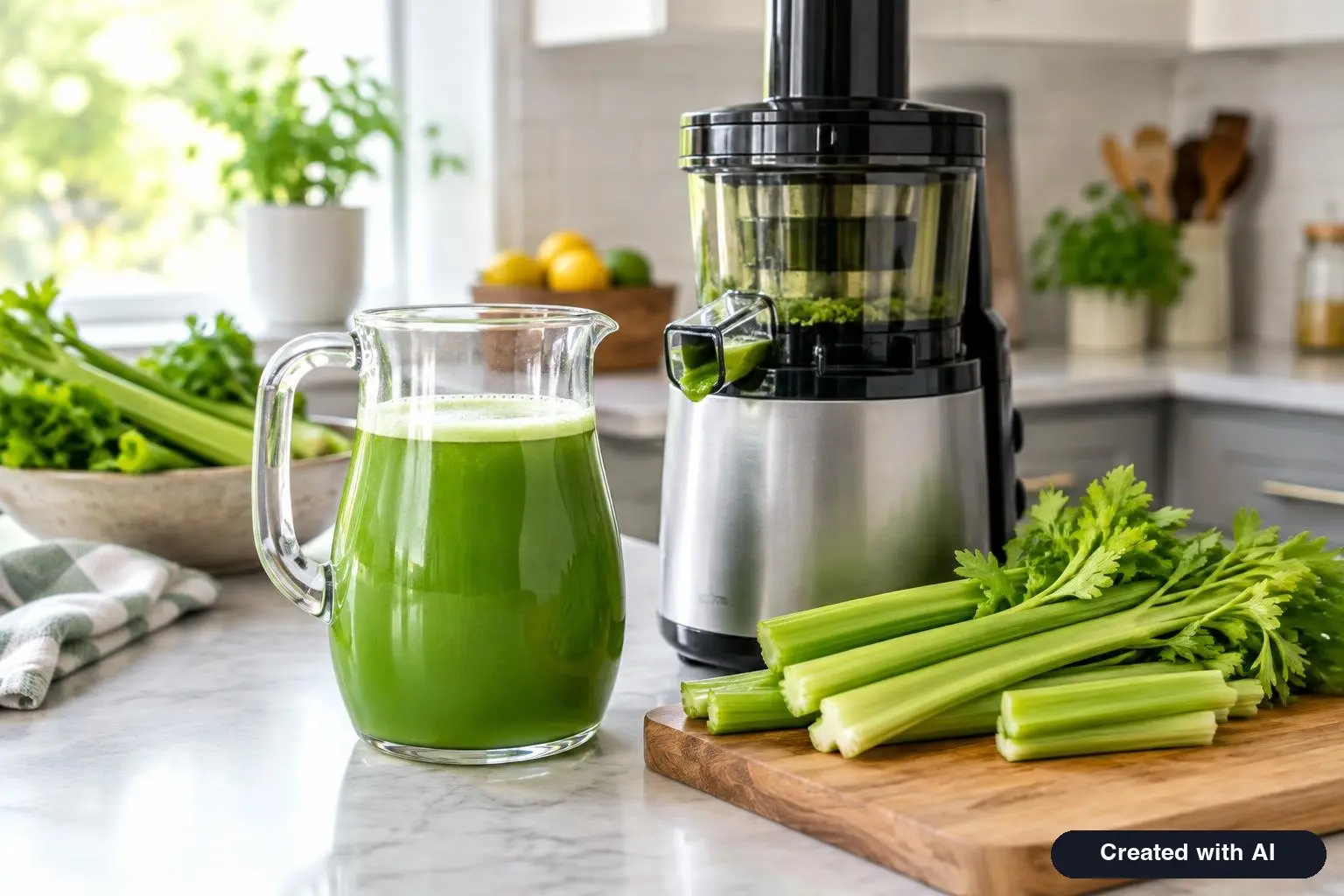
Ingredients and Yield
Plain celery juice is just celery. The only question is how much to buy. Celery is about 95% water, but no home machine gets all of it out; as a rough guide, a little over half the weight of the stalks ends up in the glass. That figure comes from a test published by juicer maker Kuvings, in which 0.95 pound of celery produced a little over 1 cup of juice in a slow juicer. It is one test on one machine, so treat the table below as typical ranges scaled from it, not exact amounts; freshness, variety and juicer type all change the result. The stalk counts use the USDA weight for a large stalk, 64 grams.
| Celery (untrimmed) | Roughly | Typical juice from a slow juicer (varies) |
|---|---|---|
| 1 lb (450 g) | 1 small bunch, 7–8 large stalks | 8–10 fl oz (240–300 ml) |
| 1.75 lb (800 g) | 1 large bunch, 12 or so large stalks | About 16 fl oz (475 ml) |
| 3.5 lb (1.6 kg) | 2 large bunches | About 32 fl oz (950 ml) |
Bunches vary a lot from store to store, so weigh yours the first time. A bunch sold as "celery hearts" is smaller and yields less. Centrifugal juicers and blenders leave more liquid in the pulp; add a few extra stalks if you want a full pint.
Optional additions, all of which keep it close to plain: the juice of 1/2 lemon or lime, a 1-inch (2.5 cm) piece of fresh ginger, or a handful of ice.
Choosing and Prepping Celery
- Buy firm, heavy bunches. Stalks should snap, not bend. Limp celery has already lost water and gives less juice. Pale inner stalks are sweeter; dark green outer stalks are stronger and saltier.
- Decide on the leaves. They are edible and nutritious but bitter. Leave them on for a sharper, more herbal juice; trim them for a milder one.
- Keep the base trimmed, not the stalks peeled. Cut about 1/2 inch (1 cm) off the root end and any brown tips. No peeling is needed.
- Wash under running water. The FDA advises rinsing all produce under running water before juicing and drying it with a clean towel, and recommends against soap or commercial produce washes. Rub the inside of each stalk near the bottom where grit collects.
- Chill it first. Cold celery makes cold juice, which tastes less grassy. An hour in the refrigerator after shopping is enough.
- Organic or conventional both work. Celery sits mid-table (30th of 47) in the Environmental Working Group's 2026 produce pesticide ranking. Wash it either way.
Method 1: How to Make Celery Juice With a Juicer
- Set up. Assemble the juicer with a pitcher under the spout and a container for pulp. Wash your hands for 20 seconds.
- Cut if your machine needs it. For vertical slow juicers, cut stalks into 1- to 2-inch (2.5–5 cm) pieces so the long strings do not wrap around the auger and clog the pulp outlet. Horizontal slow juicers and centrifugal juicers take whole stalks.
- Feed steadily. Push stalks in one or two at a time, leaf end first. Do not force them; let the auger pull.
- Run the pulp through again if it comes out wet. A second pass can squeeze out a little more.
- Strain if you like. Pour through a fine-mesh sieve to catch foam and stray fibers.
- Drink or store. Serve immediately, or pour into a glass jar, fill to the brim, seal and refrigerate.
- Rinse the juicer now. Celery fiber dries like glue on the screen. Thirty seconds under the tap right away saves ten minutes of scrubbing later.
Method 2: How to Make Celery Juice in a Blender
A blender plus a strainer makes juice that is nearly indistinguishable from the juicer version. Any model works; high-speed blenders are just faster.
- Chop. Cut the washed celery into 1-inch (2.5 cm) pieces. Short pieces keep the strings from tangling around the blade.
- Load liquid first. Pour 1/4 cup (60 ml) of cold water into the jar, then add the celery. The water gives the blades something to grab; the celery releases its own liquid within seconds.
- Blend. Start on low, move to high, and blend 60 to 90 seconds until there are no visible pieces. Use the tamper if you have one. With a personal blender such as a NutriBullet, work in two batches with 2 tablespoons (30 ml) of water each.
- Strain. Set a nut milk bag, or a fine sieve lined with two layers of cheesecloth or a clean thin dish towel, over a large bowl. Pour in the puree.
- Squeeze. Gather the bag and twist firmly with clean hands until the pulp feels almost dry.
- Serve. Pour into a glass. The added water makes blender juice very slightly milder; expect roughly a pint, depending on how hard you squeeze.
If you skip the straining you have a celery smoothie rather than juice: thicker, stringier, and with all the fiber. That is a fine choice nutritionally. Most people prefer it with half a cucumber, a green apple and a squeeze of lemon blended in.
Juicer or Blender: Which Is Better for Celery?
| Machine | How it works | For celery | Downsides |
|---|---|---|---|
| Slow (masticating) juicer | An auger crushes and presses at low speed | Highest yield, driest pulp, least foam | Slower; vertical models need stalks cut short |
| Twin-gear juicer | Two interlocking gears grind and press | Excellent yield on fibrous greens | Expensive, more parts to clean |
| Centrifugal juicer | A fast spinning blade and mesh basket | Quick, takes whole stalks | Wetter pulp, more foam, juice separates sooner |
| Blender + strainer | Purees, then you press by hand | No new appliance; good yield if you squeeze hard | More hands-on; a bag to wash |
If you plan to juice celery most mornings, a slow juicer earns its counter space because celery is exactly the kind of stringy, low-density produce that centrifugal machines handle worst. If you are trying the habit for a week or two, use the blender you already own. Do not buy a juicer on the strength of health promises; the evidence for celery juice benefits is thinner than the marketing.
Celery Juice Recipes: 9 Combinations That Work
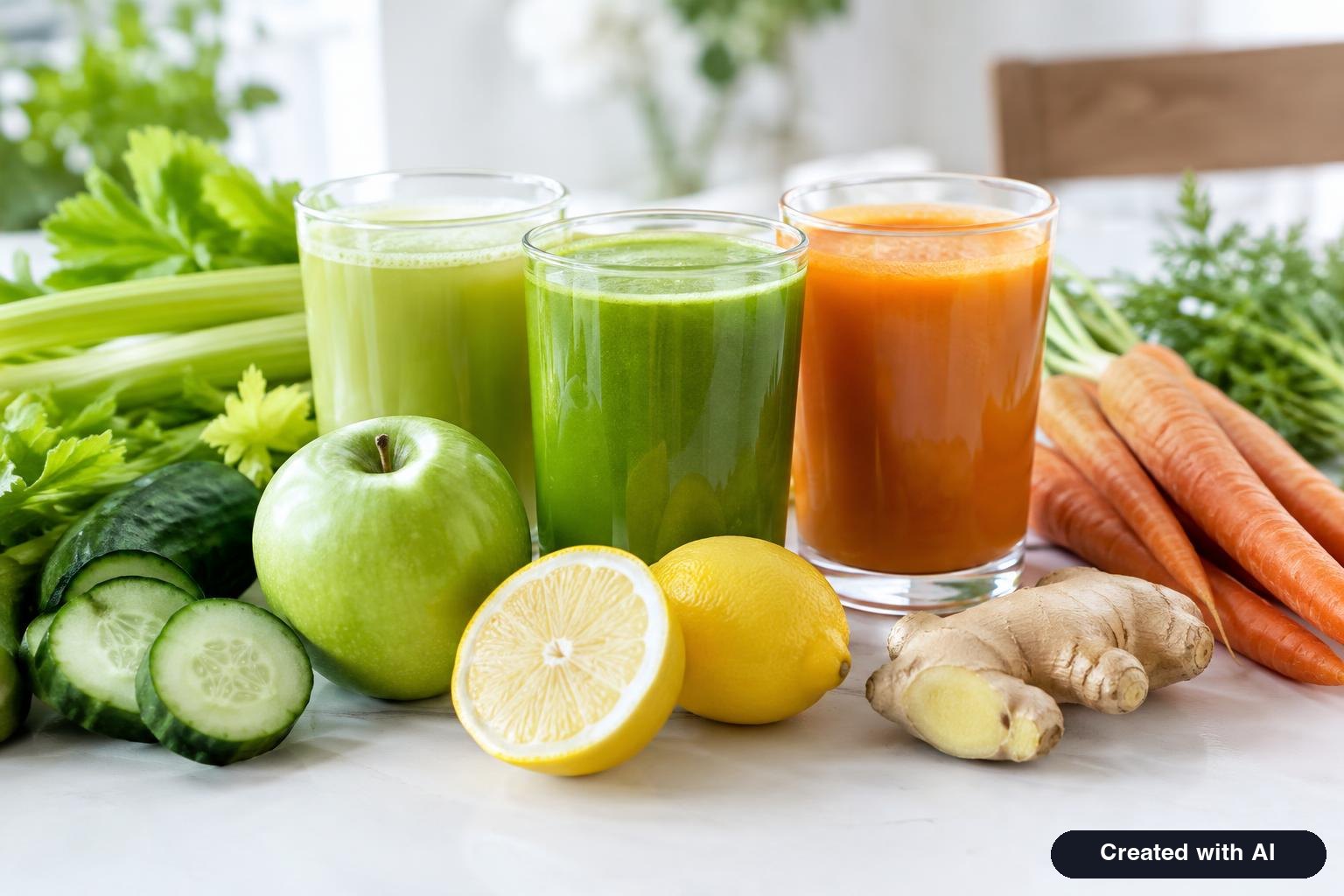
Straight celery juice tastes salty, vegetal and a little bitter. Blends fix that. Each ratio below makes about one 14- to 18-ounce glass; juice everything together, or blend with 1/4 cup (60 ml) of water and strain. Sweetness is the main thing that changes: plain celery juice has about 6 grams of sugar per pint, while, by USDA figures for the whole fruit, a medium apple adds 16 to 19 grams depending on variety (a Granny Smith is at the low end) and a cup of pineapple chunks about 16.
| Blend | What goes in | Taste |
|---|---|---|
| Celery cucumber juice | 1 lb (450 g) celery + 1 large cucumber (about 10 oz / 300 g) | Mild, cool, least salty; the best starter blend |
| Celery apple juice | 1.25 lb (570 g) celery + 1 medium green apple, cored | Lightly sweet and tart |
| Celery, cucumber and apple juice | 6 large stalks (12 oz / 340 g) celery + 1 medium cucumber + 1 green apple | Balanced; the classic "green juice" base |
| Celery lemon ginger juice | 1.75 lb (800 g) celery + 1/2 lemon, peeled + 1-inch (2.5 cm) piece ginger | Bright, spicy, still very low in sugar |
| Celery carrot juice | 1 lb (450 g) celery + 4 medium carrots (about 9 oz / 250 g) | Earthy and sweet, orange-brown color |
| Carrot, apple and celery juice | 6 large stalks celery + 3 medium carrots + 1 apple | Sweet; popular with kids |
| Celery pineapple juice | 1 lb (450 g) celery + 1 1/2 cups (250 g) pineapple chunks | Tropical, sweet-salty, frothy |
| Celery beet juice | 1 lb (450 g) celery + 1 small beet, scrubbed + 1 apple | Deep red, earthy |
| Green celery juice | 6 large stalks celery + 1 medium cucumber + 2 packed cups (60 g) spinach or kale + small handful parsley + 1/2 lemon, peeled + 1 green apple | Herbal and fresh |
A few practical notes on blends:
- Alternate soft and hard produce in the juicer. Follow leafy greens or pineapple with a stalk of celery or a carrot to push them through.
- Peel citrus but leave some white pith; the outer rind is bitter and hard on slow juicers. Apples and cucumbers do not need peeling. Remove apple cores.
- Ginger is strong. Start with a piece the size of the top joint of your thumb.
- Spinach, kale, parsley and beets are high in oxalate. If you have had calcium oxalate kidney stones, keep those to small amounts and ask your doctor; see side effects.
- Orange, watermelon and tomato also pair well: equal parts celery juice and fresh orange or watermelon juice for a sweeter drink, or celery with ripe tomatoes, lemon and a pinch of black pepper for a fresh take on a savory tomato juice.
How to Make Celery Juice Taste Better
- Serve it very cold. Over ice, celery's bitterness fades.
- Add acid. A squeeze of lemon or lime is the single most effective fix, and it slows browning.
- Trim the leaves and use the inner stalks when a bunch tastes harsh.
- Cut it with cucumber if the saltiness bothers you.
- Skip added salt and sweeteners. A pint already has several hundred milligrams of sodium, and honey or agave turns a 6-gram-sugar drink into a sweetened one.
Troubleshooting
| Problem | Why it happens | Fix |
|---|---|---|
| Bitter juice | Lots of leaves, dark outer stalks, or old celery | Trim leaves, add lemon or half an apple |
| Very salty | Natural sodium varies by bunch and growing conditions | Blend with cucumber; serve over ice |
| Foam on top | Air whipped in, mostly by centrifugal juicers and blenders | Skim with a spoon or strain |
| Separates into layers | Fine particles settle; this is normal | Shake or stir |
| Turns dull or brownish | Oxidation from air exposure | Fill the jar to the top, add lemon, drink it sooner |
| Juicer clogs | Long strings wrap around the auger | Cut stalks into 1- to 2-inch pieces |
| Low yield | Limp celery or a fast juicer | Buy fresher bunches; run pulp through twice |
Storing and Making Celery Juice Ahead
Fresh juice is raw and unpasteurized, so handle it like any perishable food.
- Refrigerator: drink within 24 to 72 hours, kept at 40°F (4°C) or colder in an airtight glass jar filled to the brim. Flavor and color are best on the first day.
- Freezer: pour into freezer-safe jars with 1 inch (2.5 cm) of headspace, or into silicone ice cube trays, and freeze. Quality holds for about 2 to 3 months. Thaw in the refrigerator, not on the counter, shake well and drink within 24 to 72 hours of thawing. The flavor is slightly flatter than fresh.
- Counter: no more than 2 hours.
- Shortcut: wash, trim and cut a week's celery on Sunday and keep it in a sealed container lined with a damp paper towel. Juicing then takes three minutes a day.
No federal agency sets a shelf life for homemade juice. The refrigerator and freezer times above are general practice as described by a senior food safety specialist at the National Environmental Health Association in Southern Living; the two-hour counter limit and the 40°F setting are FDA rules for perishable food.
Children, pregnant women, older adults and people with weakened immune systems are more vulnerable to bacteria in untreated juice, the FDA warns. For them, make it fresh with well-washed produce and serve it right away, or buy a pasteurized or high-pressure-treated bottle.
What to Do With the Pulp
The pulp holds most of the celery's fiber, and throwing it out is a waste. Stir it into soups and stews in place of some chopped celery, simmer it in stock, fold it into meatballs or veggie burgers, or mix a few spoonfuls into a smoothie. It disappears into pureed soups such as pumpkin soup. Pulp keeps three days in the refrigerator or three months frozen flat in a zip-top bag. Otherwise, compost it.
Is This the "Medical Medium" Celery Juice Recipe?
The recipe popularized by Anthony William is the plain version on this page: one large bunch of celery, juiced, nothing added, about 16 ounces. His instructions add rules that have no research behind them, such as drinking it on an empty stomach, waiting 15 to 30 minutes before eating and adding nothing to it. From a food standpoint, a squeeze of lemon changes nothing except the taste. The reasoning behind the protocol is examined in our article on the celery juice cleanse.
Nutrition in One Glass
Per USDA FoodData Central, 16 fluid ounces of celery juice has about 80 calories, 16 grams of carbohydrate, 6 grams of sugar, 2 grams of protein, up to 458 mg of sodium and 1,251 mg of potassium. Strained juice has little fiber; the unstrained smoothie version keeps roughly 13 grams. The full table is in the main guide.
Frequently asked questions
How much celery do I need for 16 oz of juice?
About 1.75 pounds (800 g), which is one large bunch or two small ones, roughly a dozen large stalks. In a Kuvings slow-juicer test, a little over half the celery's weight came out as juice; yield varies with freshness and machine, and centrifugal juicers usually give less.
How do you make celery juice without a juicer?
Chop washed celery into 1-inch pieces, blend with 1/4 cup of cold water on high for 60 to 90 seconds until smooth, then pour through a nut milk bag or a cheesecloth-lined sieve and squeeze out the liquid.
What is the best juicer for celery juice?
A slow (masticating) juicer gets the most juice and the least foam from stringy stalks. Vertical models need the celery cut into 1- to 2-inch pieces so strings do not clog them. Centrifugal juicers are faster but leave wetter pulp. A blender and a strainer work well for occasional use.
Should you juice celery leaves?
You can. The leaves are edible but bitter, so they make a sharper juice. Trim them if you prefer a mild flavor.
What can I add to celery juice to make it taste better?
Lemon or lime juice is the most effective fix for bitterness. Cucumber makes it milder and less salty, a green apple or pineapple adds sweetness, and fresh ginger adds heat. Serving it very cold also helps.
Can you make celery juice ahead of time?
Yes. Store it in an airtight glass jar filled to the top at 40°F or colder and drink it within 24 to 72 hours, the window food safety specialists generally give for fresh unpasteurized juice. For longer storage, freeze it; quality holds about 2 to 3 months. Thaw in the refrigerator.
What is the Medical Medium celery juice recipe?
It is plain celery juice: one large bunch of celery, juiced, with nothing added, making about 16 ounces. The accompanying rules about drinking it on an empty stomach and adding nothing have not been tested in research.
Can you freeze celery juice?
Yes. Pour it into freezer-safe jars with an inch of headspace or into ice cube trays and freeze. Quality holds for about 2 to 3 months. Thaw in the refrigerator, shake well and drink within 24 to 72 hours; the taste is slightly flatter than fresh.
Sources
- USDA FoodData Central: Celery juice (FNDDS, FDC ID 2709811) and Celery, raw (SR Legacy, FDC ID 169988)
- Kuvings USA: How Much Produce Makes 1 Cup of Juice?
- FDA: What You Need to Know About Juice Safety
- Environmental Working Group: 2026 Shopper's Guide to Pesticides in Produce, full list
- Medical Medium: Celery Juice Movement (source of the protocol described)
- Southern Living: How Long Will Fresh Juice Last In The Fridge?
- NIH National Center for Complementary and Integrative Health: "Detoxes" and "Cleanses": What You Need To Know
- USDA FoodData Central, SR Legacy: Apples, raw, with skin (FDC ID 171688); Apples, raw, Granny Smith (168203); Carrots, raw (170393); Cucumber, with peel, raw (168409); Pineapple, raw (169124); Lemon juice, raw (167747); Orange juice, raw (169098); Apple juice, unsweetened (173933)
- FDA: Are You Storing Food Safely?
Log in to comment
No comments yet. Be the first.