Norovirus Symptoms: Timeline, Treatment and When to Worry
- Symptoms begin 12 to 48 hours after exposure and most people recover within 1 to 3 days, the CDC says.
- Stay home until 48 hours after symptoms stop; the virus can be shed in stool for 2 weeks or more.
- Hand sanitizer does not work well against norovirus: use soap and water, and bleach on surfaces.

- Norovirus symptoms: the full list
- What is norovirus?
- Norovirus timeline: from exposure to recovery
- Norovirus symptoms in adults, kids, and older adults
- Dehydration: the complication to watch for
- When to see a doctor, and when to call 911
- How do you know if it is norovirus?
- How norovirus spreads and how long you are contagious
- Treatment at home
- Prevention: what works against norovirus
- Is norovirus going around? U.S. activity as of October 2026
- Is there a norovirus vaccine?
- Norovirus guide: all topics
The main symptoms of norovirus are sudden vomiting, watery diarrhea, nausea, and stomach pain or cramps. Some people also have a low fever, headache, and body aches. Symptoms start 12 to 48 hours after exposure and most people get better within 1 to 3 days, according to the Centers for Disease Control and Prevention (CDC). There is no specific medicine for it; the treatment is fluids, and the main danger is dehydration, especially in young children, older adults, and people with other illnesses.
This guide covers what norovirus feels like and how it unfolds, how to tell it from food poisoning and flu, when to call a doctor or 911, how to care for yourself and keep it from spreading, and what the latest U.S. data show. Linked pages go deeper on each topic.
Norovirus symptoms: the full list
| Symptom | How common | What it is like |
|---|---|---|
| Nausea | Most common group (CDC) | Comes on abruptly, often the first sign |
| Vomiting | Most common group; affects more than half of patients in a typical outbreak | Sudden and forceful; usually worst in the first 24 hours; especially prominent in children |
| Watery diarrhea | Most common group | Frequent, loose, and watery, without blood |
| Stomach pain or cramps | Most common group | Comes in waves, often just before vomiting or a bowel movement |
| Fever | Other symptom | Usually low-grade; chills are possible |
| Headache | Other symptom | Often worse with dehydration |
| Body aches, tiredness | Other symptom | General weakness that can outlast the stomach symptoms by a few days |
The CDC notes that a person with norovirus can feel extremely ill and vomit or have diarrhea many times a day. That intensity, arriving within hours in someone who felt fine at breakfast, is the signature of this virus.
First signs of norovirus
The earliest symptoms are usually a sudden wave of nausea, a queasy or "off" stomach, and cramping, followed quickly by vomiting or diarrhea. Some people notice chills, a mild headache, or unusual tiredness an hour or two beforehand. There is rarely a slow build over days; if your illness crept in gradually, something else is more likely.
Can you have norovirus without vomiting? Without diarrhea?
Yes to both. Not everyone gets every symptom. Adults are somewhat more likely to have diarrhea as the main problem, and children to have vomiting, but any combination occurs, including diarrhea alone or vomiting alone. Some people are infected and never feel sick at all: CDC outbreak guidance says up to 30 percent of norovirus infections cause no symptoms. A mild case still spreads the virus.
Does norovirus cause fever?
Sometimes, and usually a low one. A temperature above 102°F, or a fever that lasts more than a day or two, is not typical of norovirus and is a reason to call a doctor, because it raises the chance of a bacterial infection.
What norovirus stool looks like
Norovirus diarrhea is watery and loose and does not contain blood or pus. Color varies with what you have eaten and is not a reliable guide. Blood in the stool, or black, tarry stool, is not a norovirus symptom and needs medical attention.
Symptoms that are not norovirus
- Bloody diarrhea
- High or prolonged fever
- Cough, sore throat, or runny nose (think flu, COVID-19, or a cold)
- A rash
- Severe pain fixed in one spot, especially the lower right abdomen
- Illness that begins within a few hours of a meal (more typical of a bacterial toxin)
- Diarrhea lasting more than several days
Our comparison page, norovirus vs. food poisoning, stomach flu, and flu, explains how to tell these apart.

What is norovirus?
Norovirus is a very contagious virus that causes acute gastroenteritis, an inflammation of the stomach and intestines. People call it the stomach flu, the stomach bug, or the winter vomiting bug. It is not related to influenza, and the flu shot does not protect against it. It was formerly called Norwalk virus, after Norwalk, Ohio: the first norovirus was identified as the cause of a 1968 gastroenteritis outbreak there, at an elementary school, and researchers at the National Institutes of Health first saw the virus particle in 1972 in a stool sample from that outbreak.
It is the leading cause of vomiting and diarrhea from acute gastroenteritis in the United States, and the leading cause of foodborne illness. CDC estimates for a typical year:
| Each year in the United States | Estimate |
|---|---|
| Illnesses | 19 to 21 million |
| Outpatient visits | 2.27 million |
| Emergency department visits | 465,000, mostly young children |
| Hospitalizations | 109,000 |
| Deaths | About 900, mostly adults 65 and older |
| Reported outbreaks | About 2,500 |
Put another way, roughly 1 in every 16 or 17 Americans gets norovirus in a given year, and the great majority recover at home without seeing a doctor.
Norovirus timeline: from exposure to recovery
| When | What happens |
|---|---|
| Hour 0 | You swallow the virus from contaminated hands, food, water, or a surface |
| 12 to 48 hours later | Symptoms begin, suddenly. The median in pooled studies is about 1.2 days. |
| First 24 hours of illness | The worst phase: repeated vomiting, watery diarrhea, cramps |
| Day 2 to 3 | Vomiting stops; diarrhea tapers; appetite starts to return |
| 48 hours after the last symptom | Earliest point to return to work, school, daycare, or cooking for others |
| 2 weeks or more after recovery | Virus can still be shed in stool; keep washing hands carefully |
Young children, older adults, and hospitalized patients can be sick for 4 to 6 days. For the hour-by-hour picture, including the incubation period and what counts as too long, see how long norovirus lasts.
Norovirus symptoms in adults, kids, and older adults
Adults
Healthy adults typically have one very rough day and one or two improving ones. Diarrhea, cramps, and exhaustion are often the dominant complaints. Most need only fluids and rest. Adults with diabetes, kidney or heart disease, or a weakened immune system, and those on diuretics or certain blood pressure medicines, dehydrate more easily and should contact their doctor early.
Babies and children
Vomiting is often the first and most striking symptom in children. Because of their small size, babies and toddlers can become dehydrated within hours. Watch diapers and tears: no wet diaper for 3 hours or more, crying without tears, a dry mouth, or unusual sleepiness or fussiness are warning signs. Any baby under 6 months with vomiting or diarrhea, and any baby under 3 months with a temperature of 100.4°F or higher, should be evaluated by a doctor. Amounts of fluid by age and the full list of red flags are in norovirus in babies and kids.
Adults 65 and older
Older adults account for most norovirus deaths. Symptoms can last longer, and thirst is a less reliable signal with age, so dehydration can develop quietly. Watch for dizziness, new confusion, weakness, falls, a fast heartbeat, or very little urine. In nursing homes and assisted living, where more than half of U.S. norovirus outbreaks occur, staff should be told about symptoms immediately.
Pregnancy
Symptoms are the same, and norovirus is not known to harm the baby directly, but dehydration and fever matter more. Federal guidance is for pregnant women with symptoms of viral gastroenteritis to contact a doctor right away. Safe medicines and warning signs are in stomach bug and norovirus during pregnancy.
Dehydration: the complication to watch for
| Adults | Babies and young children |
|---|---|
| Extreme thirst, dry mouth and throat | Dry mouth and tongue |
| Urinating less than usual; dark urine | No wet diaper for 3 hours or more |
| Dizziness or light-headedness when standing | Crying with few or no tears |
| Tiredness | Unusual sleepiness or fussiness |
| Sunken eyes or cheeks | Sunken eyes; sunken soft spot on the head |
Lists are drawn from the CDC, the National Institute of Diabetes and Digestive and Kidney Diseases (NIDDK), MedlinePlus, and the American Academy of Pediatrics.
When to see a doctor, and when to call 911
Call a doctor or go to urgent care if an adult has:
- Diarrhea lasting more than 2 days
- Frequent vomiting, or cannot keep liquids down
- Six or more loose stools in a day
- A fever above 102°F
- Severe pain in the abdomen or rectum
- Stools that are black and tarry or contain blood or pus
- Signs of dehydration
Call the pediatrician right away if a child has:
- Diarrhea lasting more than a day
- Any fever in an infant, or a high fever in an older child
- Frequent vomiting or frequent loose stools
- Signs of dehydration
- Blood or pus in the stool, or black, tarry stool
- Severe belly pain
- A change in alertness, such as unusual irritability or lack of energy
Older adults, pregnant women, and people with a weakened immune system or another health condition should see a doctor right away if they have any symptoms of viral gastroenteritis, the NIDDK advises.
Call 911 or go to an emergency room for confusion, fainting, a seizure, a person who is hard to wake or too weak to stand, no urination, a rapid heartbeat or rapid breathing, trouble breathing, or a child who is limp or unresponsive. Severe dehydration is a medical emergency.
How do you know if it is norovirus?
Usually by the pattern: abrupt vomiting and watery diarrhea, a known exposure one or two days earlier, and recovery within three days. Most people are never tested, because the result would not change treatment.
When testing is needed, for severe or prolonged illness, for people at high risk, or during an outbreak, it is done on a stool sample in a laboratory. The CDC says diagnostic tests are available at all public health laboratories and many clinical laboratories. Its preferred method is RT-qPCR, which detects the virus's genetic material; commercial multiplex panels that check for norovirus and other gut infections at once have sensitivity in the same range. Rapid antigen tests (enzyme immunoassays) have poor sensitivity, 50 to 75 percent according to the CDC, and are generally not recommended for testing a single sample from an individual case.
How norovirus spreads and how long you are contagious
You get norovirus by getting tiny particles of an infected person's stool or vomit into your mouth: through direct contact, contaminated food or water, or contaminated surfaces. A sick person sheds billions of particles, and it takes only a few to infect someone else.
You are most contagious while you have symptoms and for the first few days after you feel better. The CDC advises staying home, and not preparing food or caring for others, for at least 48 hours after symptoms stop, and notes that you can still spread the virus for two weeks or more. You can get norovirus more than once, because there are many types and immunity to one may not protect against others. Details, including whether it is airborne and whether pets can catch it, are in how long norovirus is contagious.
Treatment at home
There is no specific medicine for norovirus, and antibiotics do not help. What works:
- Fluids, in small frequent sips. Oral rehydration solutions sold over the counter are the most helpful for mild dehydration, the CDC says. Water, broth, and diluted juice or sports drinks also help most healthy adults.
- Rest.
- Food when you want it. You do not need a special diet; the BRAT diet is no longer recommended as a plan, though bland foods are fine to start with.
- Caution with medicines. Adults can sometimes use loperamide or bismuth subsalicylate, but not with bloody diarrhea or fever, and these are not for young children.
What to drink, how much, what to eat, and a medicine-by-medicine table are in norovirus treatment.

Prevention: what works against norovirus
- Wash hands with soap and water for at least 20 seconds, especially after using the toilet or changing diapers and before eating or preparing food. Hand sanitizer does not work well against norovirus.
- Stay home when sick and for 48 hours after symptoms stop. Do not prepare food for others in that time.
- Disinfect with bleach. The CDC recommends 5 to 25 tablespoons of household bleach per gallon of water, left on for at least 5 minutes, or a product on the Environmental Protection Agency's List G.
- Wash soiled laundry with detergent and hot water on the longest cycle, and dry on high heat.
- Handle food safely. Rinse produce and cook oysters and other shellfish to at least 145°F.
Mixing amounts, a step-by-step cleanup, and which store products are actually registered against norovirus are in how to kill norovirus on surfaces, hands, and laundry.
Is norovirus going around? U.S. activity as of October 2026
Norovirus circulates year-round but is most common from November to April. As of our check on October 14, 2026:
- Current season: the CDC's NoroSTAT network of 12 states reported 27 outbreaks from August 1 to September 4, 2026, versus 29 in the same period a year earlier, within the normal range (data posted September 17, 2026).
- Last season (August 2025 to July 2026): 1,392 outbreaks in NoroSTAT states, an ordinary year.
- The season before (2024-25): 2,650 outbreaks, well above the usual range, driven by a strain called GII.17.
- Strains now: the long-established GII.4 Sydney strain is again the most common in CDC typing data updated October 9, 2026. No new strain has been reported.
Expect activity to rise through the holidays; searches for norovirus symptoms peaked in December last year. Updates, cruise ship outbreaks, oyster advisories, and ways to check your own area are in norovirus outbreaks in 2026.
Is there a norovirus vaccine?
Not yet. No norovirus vaccine is approved in the United States. The most advanced candidate, Moderna's mRNA-1403, is in a Phase 3 trial of more than 37,000 adults; the company reported on July 31, 2026 that an interim analysis did not meet the criteria for early success and that the blinded trial will continue through another winter. The full picture is in norovirus vaccine status.
Norovirus guide: all topics
| Question | Where to read |
|---|---|
| Incubation period, duration, recovery | How long does norovirus last? |
| Contagious period, how it spreads, getting it twice | How long is norovirus contagious? |
| What to drink and eat, medicines, dehydration | Norovirus treatment |
| Bleach, hand sanitizer, EPA List G, laundry | How to kill norovirus |
| Food poisoning, stomach flu, flu, rotavirus | Norovirus vs. food poisoning |
| Infants, toddlers, and children | Norovirus in babies and kids |
| Pregnancy and breastfeeding | Norovirus during pregnancy |
| Current activity, cruise ships, oysters | Norovirus outbreaks 2026 |
| Vaccine and antiviral research | Norovirus vaccine |
This guide is general information and is not a substitute for care from your own doctor. If you are worried about how sick someone is, call.
Frequently asked questions
What are the first symptoms of norovirus?
Usually a sudden wave of nausea and stomach cramps, followed quickly by vomiting, watery diarrhea, or both. Some people also notice chills, a mild headache, or tiredness. Symptoms begin 12 to 48 hours after exposure and tend to arrive abruptly rather than building over days.
How long do norovirus symptoms last?
Most people get better within 1 to 3 days, according to the CDC. The first 24 hours are usually the worst. Young children, older adults, and hospitalized patients can be sick for 4 to 6 days. Diarrhea lasting more than 2 days in an adult, or more than 1 day in a child, is a reason to call a doctor.
Can you have norovirus without vomiting?
Yes. Some people have only diarrhea, some have only vomiting, and up to 30 percent of infected people have no symptoms at all, according to CDC outbreak guidance. A mild case is still contagious.
Does norovirus cause a fever?
It can cause a low-grade fever, along with headache and body aches. A fever above 102°F, or one that lasts more than a day or two, is not typical of norovirus and should prompt a call to a doctor.
How do I know if I have norovirus or food poisoning?
Timing is the best clue. Norovirus symptoms start 12 to 48 hours after exposure and last 1 to 3 days. Vomiting within a few hours of a meal suggests a bacterial toxin, and bloody diarrhea or high fever suggests a bacterial infection. Norovirus is itself the most common cause of foodborne illness in the United States.
Is there a test for norovirus?
Yes, a laboratory test on a stool sample, usually RT-qPCR or a multiplex gastrointestinal panel. The CDC says tests are available at all public health laboratories and many clinical laboratories. Most people are not tested because the result does not change treatment.
When should I go to the ER for norovirus?
Go to an emergency room or call 911 for confusion, fainting, a seizure, a person who is hard to wake or too weak to stand, no urination, a rapid heartbeat or breathing, or a limp, unresponsive child. Call a doctor for blood in the stool, a fever above 102°F, inability to keep liquids down, or signs of dehydration.
Can norovirus kill you?
Rarely. The CDC estimates about 900 deaths a year in the United States out of 19 to 21 million illnesses, mostly among adults 65 and older. The usual cause is dehydration and its complications, which is why fluids and early medical attention for high-risk people matter.
All parts of the guide
 How Long It LastsNorovirus usually lasts 1 to 3 days, starting 12 to 48 hours after exposure. See the full timeline, when it runs longer, and when to return to work.
 Contagious PeriodNorovirus is contagious from the first symptom until at least 48 hours after the last, with shedding for 2 weeks or more. How it spreads and how to stop it.
 TreatmentNorovirus treatment is fluids, rest and time. See what to drink and how much, what to eat, which OTC medicines adults can use, and dehydration red flags.
 DisinfectingCDC bleach ratios for norovirus, a step-by-step cleanup, which Lysol and Clorox products are on EPA List G, why hand sanitizer falls short, and laundry rules.
 Vs. Food PoisoningHow to tell norovirus from food poisoning, stomach flu, influenza and rotavirus using onset time, symptoms and duration, plus when to see a doctor.
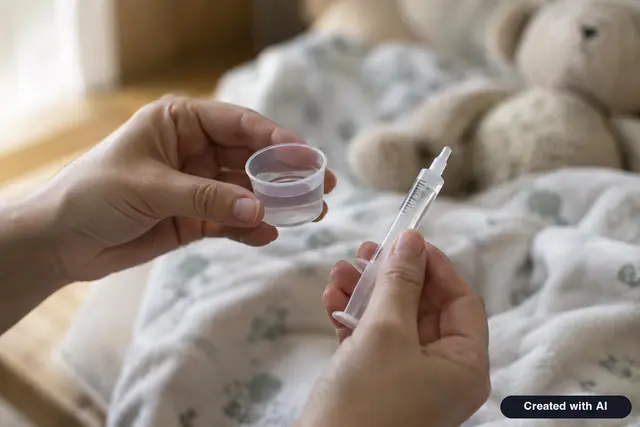 Babies and KidsBabies and kids with norovirus need small, frequent fluids. See fluid amounts by age, what not to give, dehydration signs, and when to call or go to the ER.
 PregnancyNorovirus in pregnancy is usually brief; dehydration and fever are the concerns. See what to drink, which medicines to avoid, and when to call your OB.
 Outbreaks 2026CDC norovirus data as of October 14, 2026: early-season outbreak counts, the past two seasons, strains, 2026 cruise ship outbreaks and FDA oyster advisories.
 VaccineNo norovirus vaccine is approved. See the status of Moderna's Phase 3 trial, Vaxart's pill, the failed HilleVax infant trial, and why it is so hard.
Sources
- CDC – About Norovirus
- CDC – Norovirus Facts and Stats
- CDC – How Norovirus Spreads
- CDC – How to Prevent Norovirus
- CDC – Laboratory Testing for Norovirus
- CDC – Updated Norovirus Outbreak Management and Disease Prevention Guidelines, MMWR 2011
- Lee RM et al. Incubation periods of viral gastroenteritis: a systematic review. BMC Infectious Diseases, 2013
- NIDDK – Symptoms & Causes of Viral Gastroenteritis
- MedlinePlus – Norovirus Infections
- MedlinePlus – Dehydration
- CDC – NoroSTAT Data (updated September 17, 2026)
- CDC – CaliciNet Data (updated October 9, 2026)
- CDC – Norovirus Outbreaks
- Moderna – Second Quarter 2026 financial results (SEC filing), July 31, 2026
- Kapikian AZ. The Discovery of the 27-nm Norwalk Virus: An Historic Perspective. Journal of Infectious Diseases, 2000
Log in to comment
No comments yet. Be the first.