Norovirus vs Food Poisoning vs Stomach Flu: How to Tell
- Norovirus starts 12 to 48 hours after exposure; vomiting within 8 hours of a meal suggests a staph toxin.
- Bloody diarrhea, fever over 102°F or diarrhea beyond 3 days points away from norovirus and needs a doctor.
- Norovirus causes 58 percent of foodborne illnesses acquired in the US, the CDC says.

Norovirus and food poisoning overlap more than most people realize: norovirus is the "stomach flu," and it is also the single most common cause of food poisoning in the United States. The useful question is not which label fits but which germ is likely, and three clues answer most of it: how fast symptoms started, whether vomiting or diarrhea dominates, and whether there is blood or high fever. Illness that begins 12 to 48 hours after exposure, with sudden vomiting and watery diarrhea, and is over in one to three days is classic norovirus. Vomiting within a few hours of a meal points to a bacterial toxin. Bloody diarrhea or a fever above 102°F points to bacteria and needs a doctor.
This comparison is part of our norovirus symptoms guide.
First, the names
- Stomach flu, stomach bug, stomach virus are everyday names for viral gastroenteritis, an infection of the stomach and intestines. Norovirus causes most of it in adults and, since rotavirus vaccination became routine, in children too.
- The flu is influenza, a respiratory infection. It is unrelated to "stomach flu," and a flu shot does not protect against norovirus.
- Food poisoning means any illness caught from contaminated food or drink. The cause can be a virus (most often norovirus), bacteria, a bacterial toxin, or a parasite.
So "is it norovirus or food poisoning?" can have the answer "both." The Centers for Disease Control and Prevention (CDC) attributes 58 percent of foodborne illnesses acquired in the United States to norovirus. What people usually mean by the question is: did I catch a virus from a person, or did I eat something bad? The difference matters mostly for two reasons. Viral illness is highly contagious to the people around you, and some bacterial infections need medical treatment.
Stomach flu vs. food poisoning: side-by-side
| Norovirus ("stomach flu") | Bacterial toxin food poisoning (e.g., staph) | Bacterial infection (e.g., Salmonella, Campylobacter, E. coli) | |
|---|---|---|---|
| Time from exposure to symptoms | 12 to 48 hours | 30 minutes to 8 hours | 6 hours to 6 days; often 1 to 4 days |
| Main symptoms | Sudden vomiting, watery diarrhea, nausea, cramps | Sudden, intense nausea and vomiting, cramps; diarrhea in some | Diarrhea (may be bloody), fever, cramps; vomiting less prominent |
| Fever | None or low-grade | Usually none | Common, can be high |
| Blood in stool | No | No | Possible; common with Campylobacter and Shiga toxin-producing E. coli |
| How long it lasts | 1 to 3 days | Usually about a day | Several days to a week or more |
| Contagious to others? | Extremely | No (the toxin, not an infection, causes the illness) | Yes, through stool, though less easily than norovirus |
| Typical clue | Others around you get sick one to two days apart | Everyone who ate one dish gets sick within hours of each other | Undercooked poultry, eggs, ground beef, raw milk, or a recalled product |
Onset times are from the CDC's foodborne illness tables. These are typical patterns, not rules; only a stool test can identify the germ with certainty.

The timing test
How quickly you got sick after a suspect meal is the best single clue you have at home. Using the CDC's ranges:
| Symptoms began | Most likely causes | Typical foods or sources |
|---|---|---|
| 30 minutes to 8 hours after eating | Staphylococcus aureus toxin | Foods handled after cooking and left out: sliced meats, sandwiches, pastries, puddings |
| 6 to 24 hours | Clostridium perfringens | Large batches of meat, poultry, or gravy kept warm too long; diarrhea and cramps, usually no vomiting or fever |
| Within 24 hours | Vibrio | Raw or undercooked shellfish, especially oysters |
| 12 to 48 hours | Norovirus | Sick people, contaminated surfaces, leafy greens, fresh fruit, shellfish |
| 6 hours to 6 days | Salmonella | Undercooked chicken, turkey, eggs; raw milk; some produce; reptiles and backyard poultry |
| 2 to 5 days | Campylobacter | Undercooked poultry, raw milk, untreated water |
| 3 to 4 days | Shiga toxin-producing E. coli | Undercooked ground beef, raw milk, leafy greens, sprouts |
| About 1 week | Cyclospora (a parasite) | Fresh produce and herbs |
| About 2 weeks | Listeria (invasive illness) | Soft cheeses, deli meats, smoked fish, melons, sprouts |
One trap: people blame the last thing they ate. With norovirus, the meal that made you sick was one or two days ago, not the dinner you ate two hours before the first wave of nausea. And very often it was not a meal at all, but a doorknob, a child, or a coworker.
Three quick scenarios
- Four people ate potato salad at a picnic and all were vomiting by evening. A few hours from food to symptoms, everyone at once: a bacterial toxin is likely. It should pass in about a day and will not spread through the house.
- Your second-grader threw up Tuesday night, you got sick Thursday, your partner Saturday. Staggered by a day or two, vomiting first: this is the norovirus pattern, spread person to person.
- Diarrhea and a fever of 102.5°F starting three days after a barbecue, with blood in the stool on day two. This is not norovirus. Call a doctor the same day; a stool test may be needed.
Norovirus vs. the flu
Influenza is a respiratory illness. The CDC lists its symptoms as fever or chills, cough, sore throat, runny or stuffy nose, muscle aches, headache, and fatigue, usually coming on suddenly. Some people with flu have vomiting and diarrhea, but the CDC notes this is more common in children than adults. Norovirus can cause a low fever, headache, and body aches too, which is why the first hours can feel like flu.
| Norovirus | Influenza | |
|---|---|---|
| Main symptoms | Vomiting, watery diarrhea, stomach cramps | Fever, cough, sore throat, body aches, exhaustion |
| Cough, sore throat, runny nose | No | Yes |
| Vomiting and diarrhea | The main event | Sometimes, mostly in children |
| Lasts | 1 to 3 days | Several days to two weeks |
| Spreads by | Stool and vomit: hands, surfaces, food | Respiratory droplets |
| Vaccine | None approved | Yearly flu vaccine |
| Specific treatment | None; fluids | Prescription antivirals, best started early |
COVID-19 can also cause nausea, vomiting, or diarrhea, usually alongside respiratory symptoms, and a home test can sort that out. If there is no cough or sore throat and the illness is all stomach and bowels, flu and COVID-19 are unlikely.
Norovirus vs. rotavirus
Both are stomach viruses with vomiting and watery diarrhea. The differences are mostly about age and duration.
| Norovirus | Rotavirus | |
|---|---|---|
| Who gets sick | All ages | Mostly infants and young children; adults usually have milder illness |
| Symptoms start | 12 to 48 hours after exposure | About 2 days after exposure |
| Lasts | 1 to 3 days | 3 to 8 days |
| Fever | Sometimes, low | Common |
| Vaccine | None | Yes, oral vaccine given in infancy |
The rotavirus vaccine protects against rotavirus only; a vaccinated child can still get norovirus. A baby with several days of heavy watery diarrhea needs a call to the pediatrician whichever virus is responsible. More in norovirus in babies and kids.
Other look-alikes worth knowing
- C. difficile (C. diff). Watery diarrhea, fever, stomach tenderness, loss of appetite, and nausea, most often during or in the month after a course of antibiotics, and more common in people 65 and older or recently in a hospital or nursing home. The CDC's advice: if you develop diarrhea while taking or after taking an antibiotic, contact a health care professional.
- Cyclospora. A parasite spread through contaminated produce. Illness starts about a week after exposure and, untreated, can last from a few days to more than a month, often with watery diarrhea, cramping, and loss of appetite. It is treated with antibiotics. A large U.S. outbreak in summer 2026 prompted a CDC health advisory in July. If diarrhea has gone on for more than a few days, ask about testing.
- Hantavirus. Much rarer, and spread mainly by rodents rather than by sick people or food. Hantavirus pulmonary syndrome begins one to eight weeks after exposure with fatigue, fever, and aches in the large muscles; about half of patients also have nausea, vomiting, diarrhea, or abdominal pain. Coughing and shortness of breath follow four to ten days later. A short vomiting illness with no rodent exposure is not hantavirus.
- Appendicitis and other surgical problems. Pain that settles in the lower right abdomen, gets steadily worse, or hurts with movement is not a stomach bug. Get seen promptly.
- Early pregnancy. Nausea and vomiting without diarrhea, lasting more than a few days, can be morning sickness. See stomach bug during pregnancy.
How doctors tell them apart
Most people with a short stomach illness are never tested, because the result would not change the care: fluids and time. Testing becomes worthwhile when the illness is severe or prolonged, when there is blood or high fever, when the patient is very young, elderly, pregnant, or immunocompromised, or when a health department is investigating an outbreak.
The test is a stool sample. Many hospital and commercial labs now run a multiplex gastrointestinal panel, a single test that looks for the genetic material of a couple dozen viruses, bacteria, and parasites at once, norovirus included. Public health labs confirm norovirus with a method called RT-qPCR, which the CDC describes as the preferred test. Rapid antigen tests for norovirus exist but have poor sensitivity, 50 to 75 percent according to the CDC, so they are generally not recommended for testing a single sample from an individual case. The CDC says norovirus tests are available at all public health laboratories and many clinical laboratories.
In an outbreak, investigators often do not wait for lab results. They use a set of rules of thumb known as the Kaplan criteria: more than half of the sick people are vomiting, the average incubation period is 24 to 48 hours, the illness lasts 12 to 60 hours on average, and no bacteria turn up in stool cultures. When all four fit, norovirus is very likely.
Does it matter which one you have?
For home care, not much. The treatment for nearly all of these is the same in the first days: replace fluids, rest, and eat when you can. See norovirus treatment for what to drink and which over-the-counter medicines are reasonable.
It matters in three situations:
- Protecting other people. If norovirus is likely, assume you are contagious until 48 hours after symptoms end, keep out of the kitchen, and disinfect with bleach. Details: how long norovirus is contagious and how to kill norovirus.
- Deciding when to see a doctor. Blood in the stool, high fever, or diarrhea beyond a few days suggests a bacterial or parasitic cause that may need testing and sometimes antibiotics. Do not take anti-diarrheal medicine such as loperamide if you have bloody diarrhea or fever without asking a doctor first.
- Reporting. If you think a restaurant, a catered event, or a packaged food made you sick, tell your local or state health department. Reports are how outbreaks and recalls get found.
When to see a doctor
The CDC advises seeing a doctor for any of these, whatever the cause:
- Bloody diarrhea
- Diarrhea that lasts more than 3 days
- Fever over 102°F
- Vomiting so often that you cannot keep liquids down
- Signs of dehydration: not urinating much, dry mouth and throat, feeling dizzy when standing up
The NIDDK adds that older adults, pregnant women, and people with weakened immune systems should see a doctor right away for symptoms of food poisoning, and that parents should call for any infant with symptoms, any fever in an infant, or diarrhea lasting more than a day in a child. Tingling, numbness, blurred or double vision, trouble swallowing, or muscle weakness after eating can signal botulism or a seafood toxin and is an emergency.
Call 911 for confusion, fainting, a seizure, trouble breathing, or someone who cannot be woken.
Preventing both
- Wash hands with soap and water for 20 seconds after the bathroom, after diaper changes, and before handling food. Hand sanitizer does not work well against norovirus.
- Do not cook for others while sick or for 48 hours afterward.
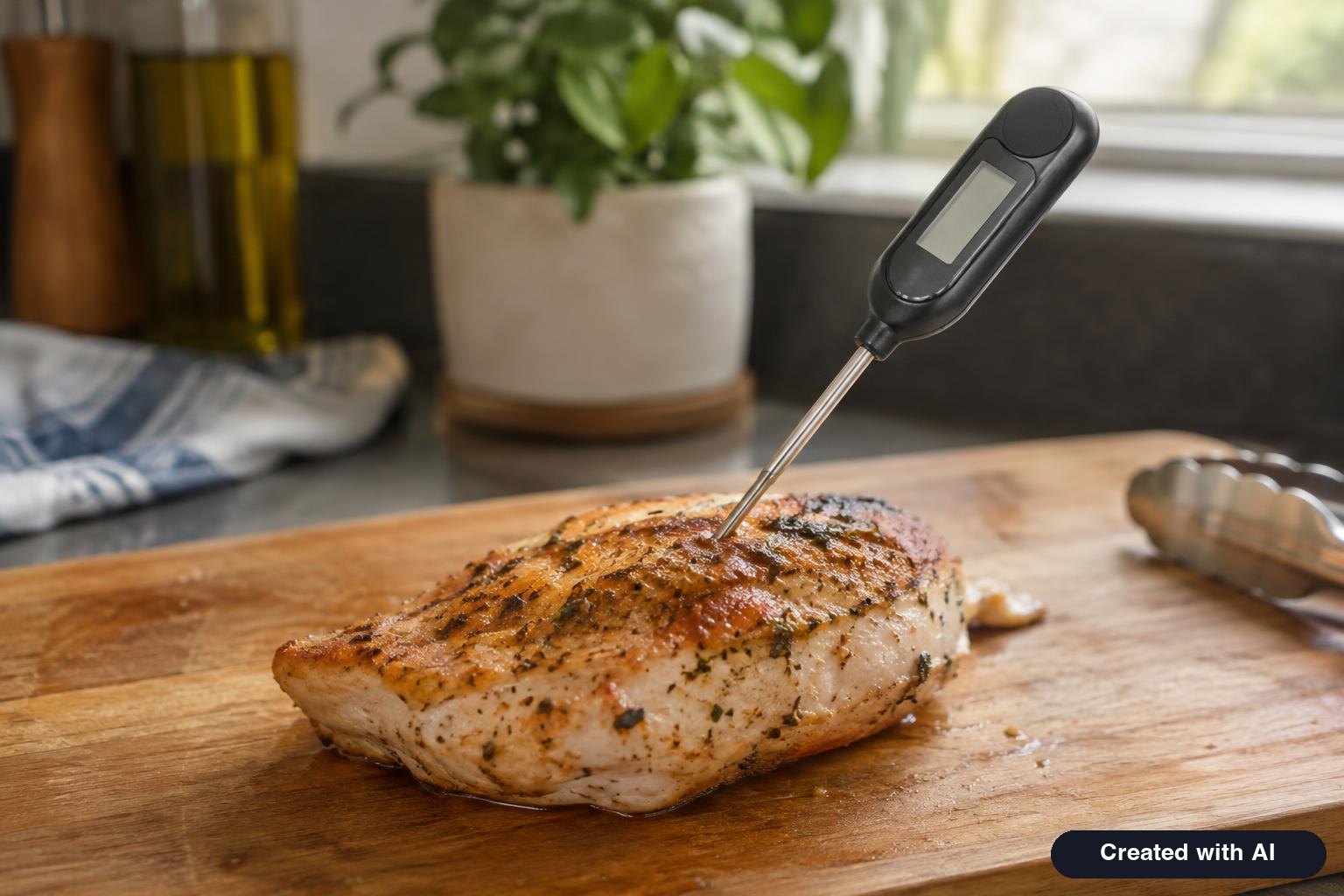
- Use a food thermometer. The federal chart at FoodSafety.gov lists 165°F for all poultry, including ground chicken and turkey, and for leftovers and casseroles; 160°F for ground beef, pork, veal, and lamb; and 145°F for fish and for whole cuts of beef, pork, veal, and lamb, with a 3-minute rest for the meats. For clams, oysters, and mussels the chart says to cook until the shells open; for norovirus specifically, the CDC says to cook oysters and other shellfish to an internal temperature of at least 145°F and warns that quick steaming is not enough. If you are roasting a holiday bird, our guide to how long to cook a turkey covers safe temperatures.
- Refrigerate leftovers within 2 hours, or within 1 hour if it is above 90°F outside.
- Rinse fruits and vegetables. Skip raw oysters if you are older, pregnant, or immunocompromised.
- Check recalls at FoodSafety.gov before eating a product you have heard about in the news.
Frequently asked questions
How can you tell the difference between food poisoning and a stomach bug?
Look at timing and symptoms. A stomach bug such as norovirus begins 12 to 48 hours after exposure, features vomiting and watery diarrhea, and often spreads through a household over several days. Toxin-type food poisoning begins within hours of a meal and hits everyone who ate the food at once. Bloody diarrhea or high fever suggests a bacterial infection.
Is norovirus food poisoning or stomach flu?
Both terms can apply. Norovirus causes most viral gastroenteritis, commonly called stomach flu, and it is also the leading cause of foodborne illness in the United States. It spreads through food, water, surfaces and direct contact.
How fast does food poisoning hit compared with norovirus?
Staph toxin can cause vomiting 30 minutes to 8 hours after eating. Norovirus takes 12 to 48 hours. Salmonella takes 6 hours to 6 days, Campylobacter 2 to 5 days, and E. coli 3 to 4 days, according to the CDC.
Is norovirus the same as the flu?
No. The flu is influenza, a respiratory infection with fever, cough, sore throat and body aches. Norovirus infects the gut and causes vomiting and diarrhea. The flu vaccine does not protect against norovirus.
What is the difference between norovirus and rotavirus?
Both cause vomiting and watery diarrhea. Rotavirus mainly affects infants and young children, starts about 2 days after exposure and lasts 3 to 8 days, and there is a vaccine. Norovirus affects all ages, lasts 1 to 3 days, and has no vaccine.
Is food poisoning contagious like norovirus?
It depends on the cause. Illness from a bacterial toxin is not contagious. Infections such as Salmonella can spread through stool but far less easily than norovirus, which is extremely contagious.
When should I see a doctor for food poisoning or stomach flu?
See a doctor for bloody diarrhea, diarrhea lasting more than 3 days, a fever over 102°F, vomiting so frequent you cannot keep liquids down, or signs of dehydration. Older adults, pregnant women, people with weakened immune systems, and infants should be seen sooner.
Sources
- CDC – Symptoms of Food Poisoning
- CDC – About Norovirus
- CDC – Norovirus Facts and Stats
- CDC – Laboratory Testing for Norovirus
- NIDDK – Symptoms & Causes of Viral Gastroenteritis
- NIDDK – Symptoms & Causes of Food Poisoning
- CDC – Signs and Symptoms of Flu
- CDC – About Rotavirus
- CDC – About C. diff
- CDC – About Cyclosporiasis
- CDC Health Alert Network – Cyclosporiasis advisory, July 14, 2026
- CDC – About Hantavirus
- CDC – Norovirus in Healthcare Settings Guideline: Evidence Review
- FoodSafety.gov – Safe Minimum Internal Temperatures
- CDC – How to Prevent Norovirus
Log in to comment
No comments yet. Be the first.