Norovirus Treatment at Home: What to Drink, Eat and Take
- No drug treats norovirus and antibiotics do not help; the goal is to replace fluids and salts.
- Oral rehydration solution in small, frequent sips works best; a restricted or BRAT diet is not needed.
- Call a doctor for diarrhea beyond 2 days, blood in stool, high fever, or signs of dehydration.
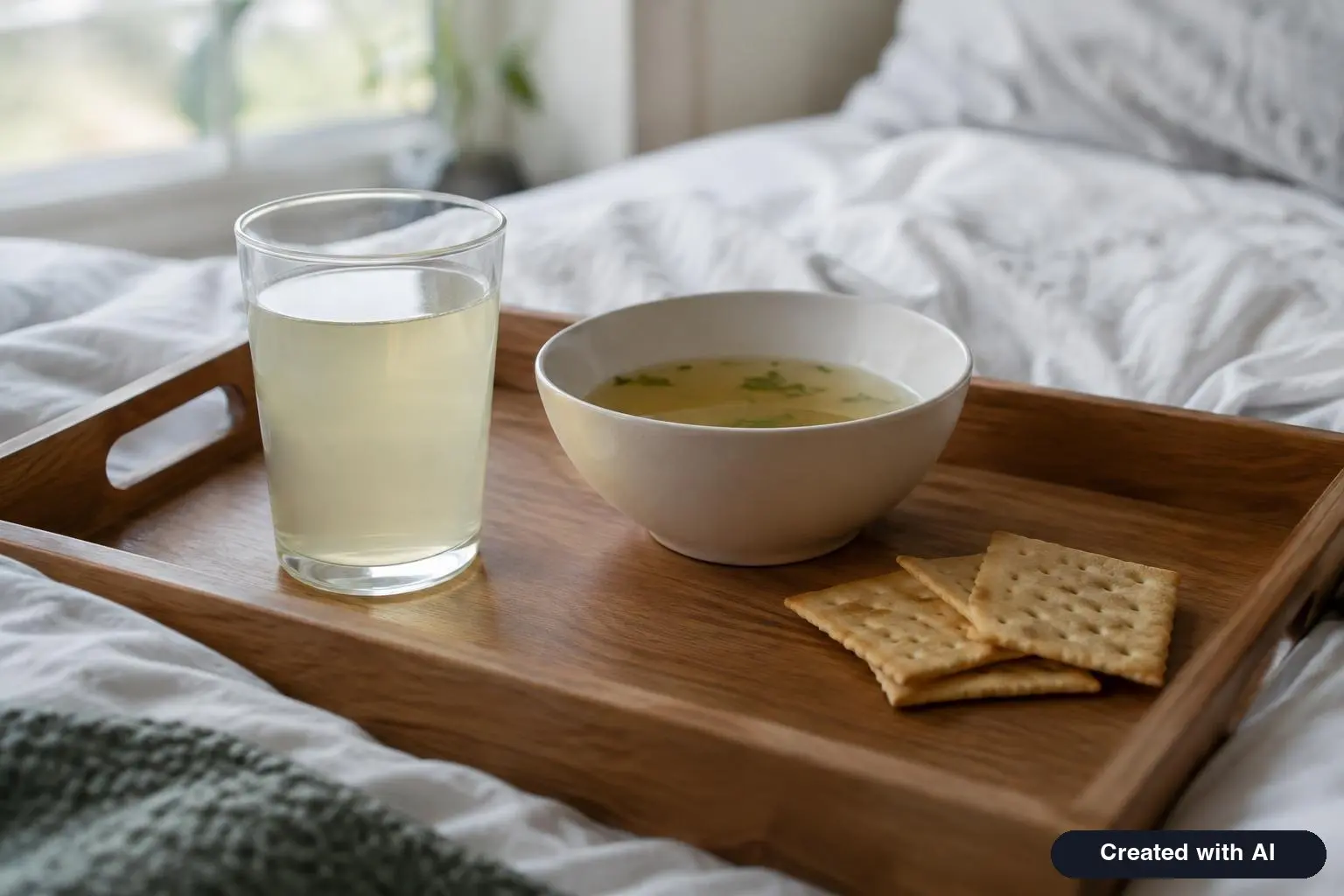
There is no medicine that cures norovirus; treatment means replacing the fluid and salts you lose until the virus runs its course, usually in one to three days. The Centers for Disease Control and Prevention (CDC) says there is no specific drug for norovirus illness and that antibiotics will not help, because they work on bacteria, not viruses. What does help: small, steady sips of the right fluids, rest, food when you are ready for it, and knowing the signs of dehydration that mean it is time to call a doctor.
This page covers what to drink and how much, what to eat, which over-the-counter medicines are reasonable for adults, and when home care is not enough. It is part of our norovirus symptoms guide. For babies and children, see norovirus in babies and kids; for pregnancy, norovirus during pregnancy.
Norovirus treatment at home: the short version
- Sip, do not gulp. Take a small mouthful of fluid every few minutes, even if you are still vomiting.
- Choose fluids with some salt and sugar. An oral rehydration solution is best; water, broth, and diluted juice or sports drinks also count for most healthy adults.
- Rest. Stay near a bathroom and let the first 24 hours pass.
- Eat when your appetite returns. Normal food is fine; you do not need a special diet.
- Use medicines sparingly. Adults can consider loperamide or bismuth subsalicylate in some cases; children should not get them without a doctor's advice.
- Watch urine. Pale and regular means you are keeping up. Dark, scant, or absent means you are not.
- Stay home until 48 hours after symptoms stop, and keep out of the kitchen.
What to drink with norovirus
Vomiting and diarrhea drain water along with sodium and potassium. Replacing only the water is usually fine for a healthy adult with a mild case. For anyone losing a lot of fluid, and for children, older adults, and people with chronic illness, the salts matter too.
Oral rehydration solution, sports drinks, or water?
The CDC's guidance is direct: sports drinks and other drinks without caffeine or alcohol can help with mild dehydration, but they may not replace important nutrients and minerals, and oral rehydration fluids sold over the counter are the most helpful. The National Institute of Diabetes and Digestive and Kidney Diseases (NIDDK) says most adults can replace fluids with water, fruit juices, sports drinks, and broths, and that older adults, adults with a weakened immune system, and adults with severe diarrhea or symptoms of dehydration should drink oral rehydration solutions.
The reason is chemistry. The intestine absorbs water best when sodium and glucose arrive together in the right proportion. Too much sugar pulls water into the gut and can make diarrhea worse. Figures published by the CDC show how far ordinary drinks are from that balance:
| Drink | Carbohydrate (grams per liter) | Sodium (mmol per liter) | Osmolarity (mOsm per liter) | Verdict |
|---|---|---|---|---|
| World Health Organization oral rehydration solution | 13.5 | 75 | 245 | The reference standard |
| Pedialyte | 25 | 45 | 250 | A commercial oral rehydration solution |
| Apple juice, undiluted | 120 | 0.4 | 730 | Too sugary, almost no sodium |
| Cola | 112 | 1.6 | 650 | Too sugary, almost no sodium, often caffeinated |
Source: CDC, Managing Acute Gastroenteritis Among Children, MMWR 2003. Product formulas can change; check the label. Sports drinks fall between the two groups, with more sugar and less sodium than a rehydration solution. Brand names are given because the source uses them, not as a recommendation.
Practical choices, best first:
- Oral rehydration solution (Pedialyte and store-brand equivalents, powders, or freezer pops). This is what the search for "Pedialyte for stomach flu" is really about: it works because of its salt-to-sugar ratio, and generic versions are equivalent.
- Broth or clear soup plus water. Broth supplies sodium.
- Sports drink diluted with water, or water alongside saltine crackers. The NIDDK notes that saltines help replace electrolytes.
- Plain water or ice chips if that is all that stays down. Any fluid beats none.
Skip alcohol, coffee and other caffeinated drinks, full-strength juice, and regular soda until you are better. Ginger ale is mostly sugar water; it is not harmful in sips, but it is not rehydration.
How to keep fluids down when you are vomiting
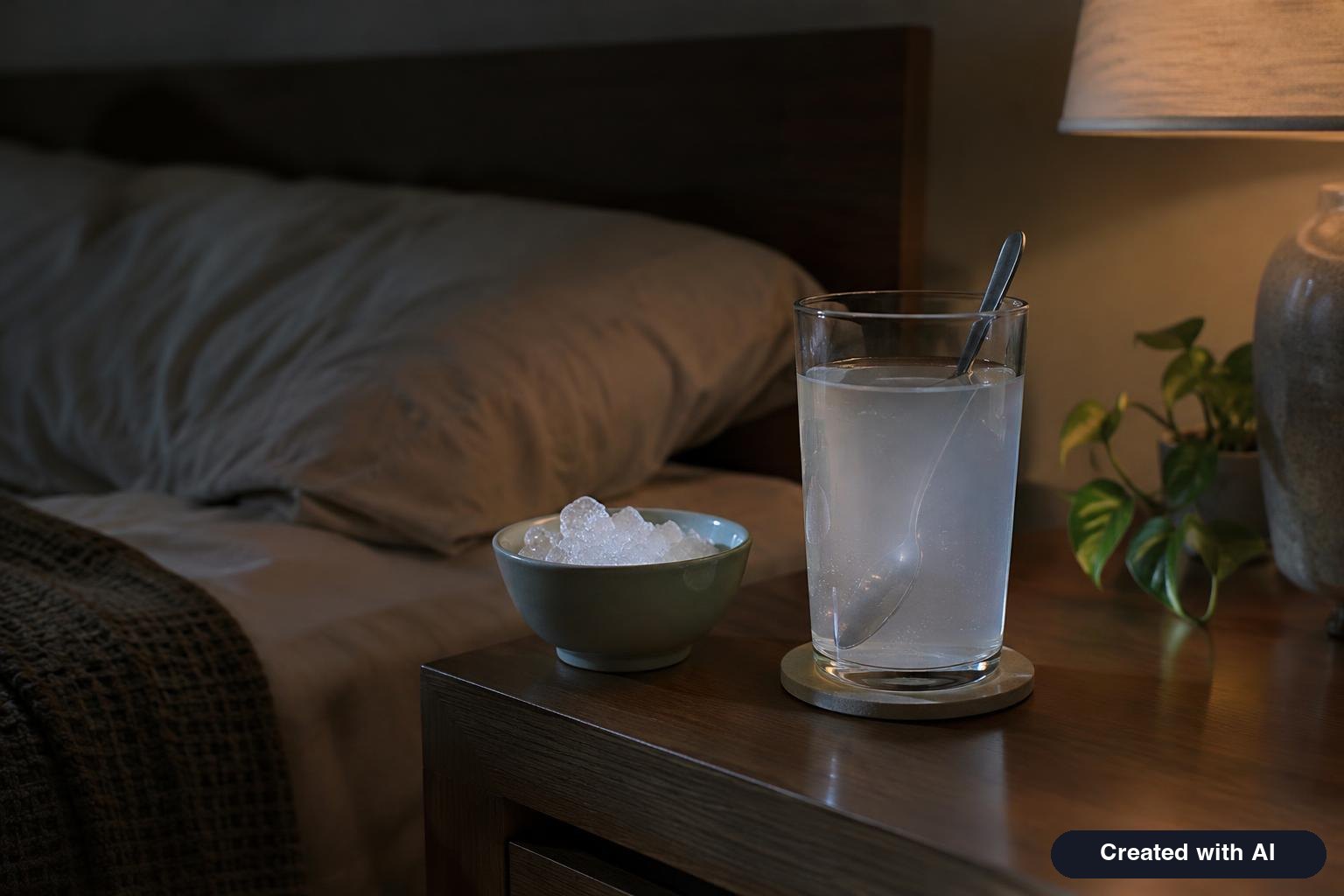
The stomach tolerates a trickle better than a glassful. Let your stomach settle briefly after vomiting, then start with a teaspoon or a small sip every few minutes. If that stays down for an hour, increase the amount gradually. If you vomit again, pause briefly and restart with smaller sips. Sucking on ice chips or frozen rehydration pops works for people who cannot face a cup. Even during active vomiting, some of what you sip is absorbed.
How much is enough?
There is no single official target for adults with norovirus. A workable rule of thumb, ours rather than an official figure: drink enough that you pass pale yellow urine every few hours, and add roughly a cup of fluid for each bout of vomiting or watery diarrhea. For children the CDC gives specific amounts, 2 to 4 ounces of rehydration solution after each loose stool or episode of vomiting for a child under 22 pounds and 4 to 8 ounces for a larger child; details are on our babies and kids page.
Should you make your own rehydration drink?
U.S. health authorities advise against it when commercial products are available. The CDC notes that although a homemade solution with the right concentrations is possible, serious errors can occur, and the American Academy of Pediatrics (AAP) tells parents not to prepare their own electrolyte solutions. A mismeasured spoonful of salt matters most for a small child. For an adult who is stuck at home without supplies, alternating water with salty broth and crackers is a safer improvisation than a kitchen recipe.
What to eat with norovirus
Eat when you feel like it, and eat what you normally eat. The NIDDK says research shows a restricted diet does not help treat viral gastroenteritis, and most experts do not recommend fasting or following a restricted diet. When your appetite returns, you can usually go back to your normal diet, even if you still have diarrhea.
Is the BRAT diet still recommended?
No. Bananas, rice, applesauce, and toast are perfectly good foods to start with, and many people find them appealing after a day of nausea. But as a diet, BRAT is no longer advised. The CDC calls it unnecessarily restrictive and says it can provide suboptimal nutrition; the AAP says it is no longer considered useful and that children can ideally resume a normal, well-balanced diet within 24 hours of getting sick. Use bland foods as a bridge for a meal or two, not as a plan for days.
Foods that often sit well in the first day or two
- Toast, crackers, rice, plain pasta, oatmeal, potatoes
- Bananas, applesauce
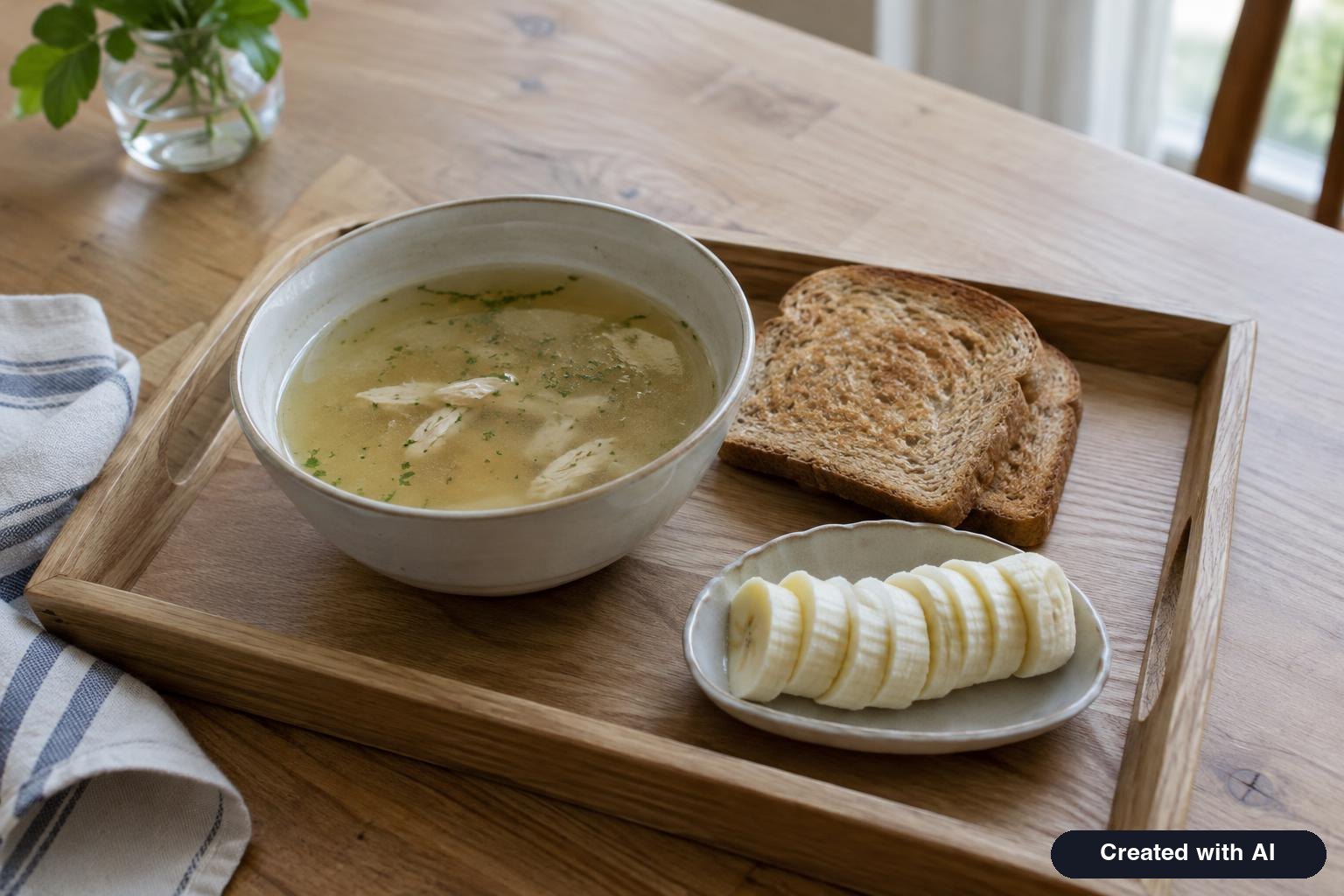
- Chicken soup, broth with noodles or rice
- Eggs, plain chicken or turkey, yogurt if dairy agrees with you
Foods and drinks that may make symptoms worse
According to the NIDDK, these can aggravate diarrhea while you recover:
- Drinks with caffeine, such as coffee, tea, and some soft drinks
- High-fat foods, such as fried foods, pizza, and fast food
- Foods and drinks with a lot of simple sugar, such as sweetened beverages and some fruit juices
- Milk and milk products. Some people have trouble digesting lactose for up to a month or more after viral gastroenteritis.
What to eat after norovirus
Once vomiting has stopped, return to regular meals over a day or two. Smaller portions more often are easier than three large meals. If milk, ice cream, or soft cheese brings back loose stools, cut back on dairy for a couple of weeks and reintroduce it gradually; yogurt and hard cheese are often tolerated sooner. Hold off on alcohol until you are eating and drinking normally.
Medicines: what helps, what to avoid
| Medicine | What it does | Who can consider it | Cautions from the label and federal guidance |
|---|---|---|---|
| Loperamide (Imodium A-D) | Slows the bowel, reducing diarrhea | Adults and children 12 and older, per the label | Do not use with bloody or black stool; ask a doctor first if you have a fever. Not for children under 2; ask a doctor for ages 2 to 5. Stop if diarrhea lasts more than 2 days. Never exceed the labeled dose: the FDA warns that higher doses can cause serious heart problems. |
| Bismuth subsalicylate (Pepto-Bismol, Kaopectate) | Eases nausea, upset stomach, and diarrhea | Adults and children 12 and older, per the label | Contains salicylate: not for people allergic to aspirin, and not for children or teens recovering from chickenpox or flu-like illness because of Reye's syndrome. Under 12: ask a doctor. Ask a health professional if pregnant or breastfeeding. May temporarily darken the tongue and stool. |
| Acetaminophen (Tylenol) | Lowers fever, eases aches | Most adults and children at label doses | Follow dosing limits; ask a doctor if you have liver disease. |
| Ibuprofen, naproxen | Lowers fever, eases aches | Use with care | Can irritate the stomach and stress the kidneys when you are dehydrated. Acetaminophen is usually the better choice during a stomach illness. |
| Ondansetron (Zofran) | Prescription anti-nausea drug | Only if a doctor prescribes it | Sometimes given in urgent care or the emergency room so a patient can keep fluids down. Can affect heart rhythm in people with certain conditions or low potassium or magnesium. |
| Antibiotics | Nothing for norovirus | No one | Do not work against viruses. |
The NIDDK's summary: in some cases adults can take over-the-counter loperamide or bismuth subsalicylate for diarrhea from viral gastroenteritis, but if you have bloody diarrhea or fever, which are signs of infection with bacteria or parasites, do not use them and see a doctor. These medicines can be unsafe for infants and children.
They are optional. Diarrhea medicine does not shorten the infection; it makes a trip, a workday you cannot miss, or a night's sleep more manageable. Many adults do fine with fluids alone.
Probiotics, ginger, zinc, and other remedies
- Probiotics. The NIDDK says some studies suggest probiotics may shorten a case of diarrhea but that research is ongoing. The American Gastroenterological Association concluded in 2020 that probiotics do not appear to be beneficial for children in North America with acute gastroenteritis. They are unlikely to hurt a healthy adult; they are not a treatment.
- Ginger. There is research support for ginger in pregnancy-related nausea, according to the National Center for Complementary and Integrative Health. It has not been shown to treat norovirus. Ginger tea is a reasonable fluid if you like it.
- Zinc. Helpful for childhood diarrhea in countries where zinc deficiency is common; the CDC says its role in developed countries needs further evaluation.
- Activated charcoal, grape juice, apple cider vinegar. We found no authoritative evidence that any of these prevents or treats norovirus.
You cannot "flush out" norovirus or speed its exit. The goal is to stay hydrated while your immune system does the work.
Dehydration: signs to watch for
Dehydration is the complication that sends people with norovirus to the hospital. Check for it every few hours.
| Adults | Infants and young children | |
|---|---|---|
| Early signs | Strong thirst, dry mouth, urinating less than usual, dark urine, tiredness | Dry mouth and tongue, fewer wet diapers, thirst, low energy |
| Worsening | Dizziness or light-headedness on standing, dry skin, sunken eyes | No wet diaper for 3 hours or more, crying without tears, sunken eyes, unusual sleepiness or fussiness |
| Emergency | Confusion, fainting, no urination, rapid heartbeat, rapid breathing | Very hard to wake, limp, cold or blotchy hands and feet, sunken soft spot |
Lists adapted from MedlinePlus, the NIDDK, and CDC guidance. Older adults need extra attention: MedlinePlus notes that some people lose their sense of thirst as they age, so they may not drink enough even when they need to. A caregiver should offer fluids on a schedule rather than waiting for a request, and watch for new confusion, weakness, or unsteadiness.
When to see a doctor, and when to call 911
Call a doctor or go to urgent care if an adult has any of the following, per the NIDDK:
- Diarrhea lasting more than 2 days
- Vomiting often, or being unable to keep liquids down
- Six or more loose stools in a day
- High fever
- Severe pain in the abdomen or rectum
- Stools that are black and tarry or contain blood or pus
- Symptoms of dehydration
- A change in mental state, such as irritability or lack of energy
The NIDDK adds that older adults, pregnant women, and adults with a weakened immune system or another health condition should see a doctor right away if they have any symptoms of viral gastroenteritis. That includes people with diabetes, kidney or heart disease, and anyone taking diuretics ("water pills") or other medicines that are affected by dehydration; call your prescriber and ask whether to adjust doses while you are sick.
Call 911 if someone loses consciousness, becomes confused, has a seizure, cannot be woken, has not urinated at all and is getting weaker, or has a racing heartbeat or rapid breathing. MedlinePlus describes severe dehydration as a life-threatening emergency.
What a doctor can do
For moderate dehydration, clinics and emergency departments often start with supervised oral rehydration and may give an anti-nausea medicine so fluids stay down. Severe dehydration is treated with intravenous fluids, sometimes with a short hospital stay. A stool test may be ordered if the illness is prolonged, bloody, or part of an outbreak. No prescription antiviral exists for norovirus; the research pipeline is described in norovirus vaccine status.
Caring for someone else without getting sick
- Wash hands with soap and water for 20 seconds after every contact; sanitizer alone does not work well against norovirus.
- Wear disposable gloves to clean up vomit or stool, and disinfect with a bleach solution. See how to kill norovirus.
- Give the sick person their own towel, cup, and, if possible, bathroom.
- Do not let them prepare food for others until 48 hours after symptoms stop.
How long to keep that up is covered in how long norovirus is contagious. If you are putting together a note or card for someone laid up with a stomach bug, there are ideas in our get-well wishes.
A sick-day supply list
- Oral rehydration solution: ready-to-drink bottles, powder packets, or freezer pops
- Broth or bouillon, saltine crackers, rice, applesauce, bananas
- Acetaminophen and a thermometer
- Unscented household bleach, disposable gloves, paper towels, trash bags
- A bucket or basin, and extra towels and sheets
- Your doctor's after-hours number and your pharmacy's number
Frequently asked questions
What is the fastest way to cure norovirus?
There is no cure and no way to shorten the infection. The CDC says there is no specific medicine for norovirus. What you can do is prevent dehydration with small, frequent sips of fluid, rest, and eat when you are able. Most people recover in 1 to 3 days.
Is Pedialyte good for the stomach flu?
Yes. Oral rehydration solutions such as Pedialyte and store-brand equivalents have the balance of sodium and sugar that helps the gut absorb water, and the CDC says they are the most helpful fluids for mild dehydration. They are especially useful for children, older adults, and anyone with heavy fluid losses.
What should I eat with norovirus?
Whatever you can tolerate once your appetite returns. The NIDDK says a restricted diet does not help. Toast, rice, bananas, soup, eggs and chicken are easy starters. Caffeine, greasy food, very sugary drinks and, for some people, dairy can make diarrhea worse.
Is the BRAT diet good for norovirus?
Bananas, rice, applesauce and toast are fine foods to begin with, but the BRAT diet is no longer recommended as a plan. The CDC calls it unnecessarily restrictive, and the American Academy of Pediatrics says children can resume a normal diet within about 24 hours.
Can I take Imodium or Pepto-Bismol for norovirus?
Adults sometimes can, according to the NIDDK, but not if there is blood in the stool or a fever. Follow the label, never exceed the dose, and stop if diarrhea lasts more than 2 days. Do not give these to children without a doctor's advice, and avoid bismuth subsalicylate in pregnancy.
Do antibiotics help norovirus?
No. Antibiotics work against bacteria, not viruses, and will not treat norovirus.
How do I know if I am dehydrated?
Signs in adults include strong thirst, a dry mouth, dark urine, urinating much less than usual, tiredness, and dizziness when standing. Confusion, fainting, no urination, or a rapid heartbeat or breathing are emergencies.
Does Zofran help with norovirus?
Ondansetron (Zofran) is a prescription anti-nausea medicine that doctors sometimes give so a patient can keep fluids down. It does not treat the virus and should be used only when prescribed for you.
Sources
- CDC – About Norovirus
- NIDDK – Treatment of Viral Gastroenteritis
- NIDDK – Eating, Diet, & Nutrition for Viral Gastroenteritis
- NIDDK – Symptoms & Causes of Viral Gastroenteritis
- CDC – Managing Acute Gastroenteritis Among Children: Oral Rehydration, Maintenance, and Nutritional Therapy, MMWR 2003
- HealthyChildren.org (AAP) – Diarrhea in Children
- DailyMed – Imodium A-D (loperamide) Drug Facts label
- DailyMed – Pepto-Bismol (bismuth subsalicylate) Drug Facts label
- DailyMed – Ondansetron tablets prescribing information
- FDA – Drug Safety Communication on loperamide packaging, January 30, 2018
- American Gastroenterological Association – Probiotics guideline announcement, June 9, 2020
- NCCIH – Ginger
- MedlinePlus – Dehydration
- MedlinePlus Medical Encyclopedia – Dehydration
Log in to comment
No comments yet. Be the first.