Norovirus in Pregnancy: Stomach Bug While Pregnant, What to Do
- Norovirus is not known to harm the baby directly, but research specific to pregnancy is limited.
- Avoid bismuth subsalicylate (Pepto-Bismol); ask your provider before taking loperamide or anything for fever.
- Call your OB if you cannot keep liquids down, pass little dark urine, feel faint, or have a fever of 100.4°F.
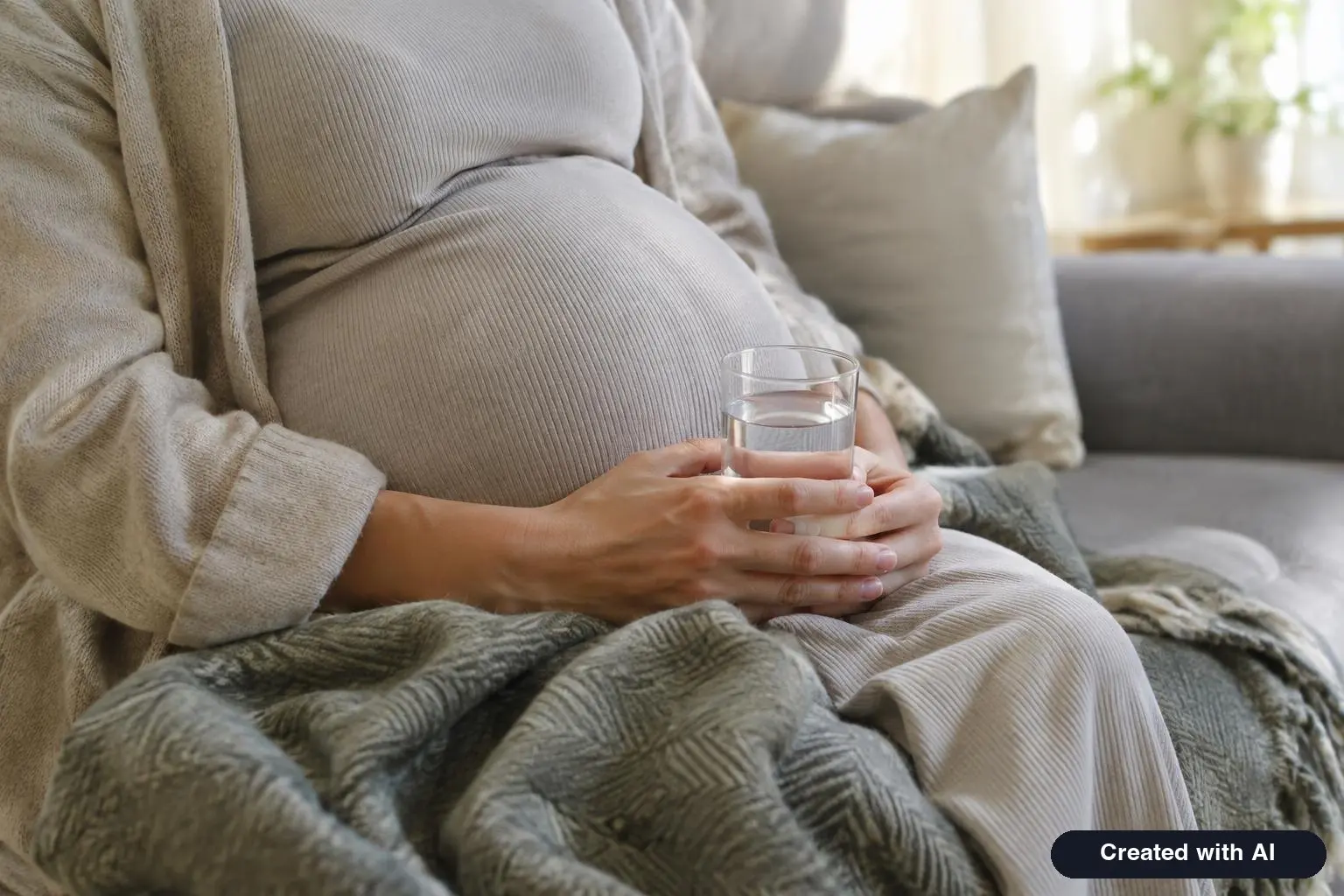
A stomach bug during pregnancy is miserable but usually short, and norovirus is not known to harm a developing baby directly. The real risk is dehydration, which arrives faster in pregnancy and, when severe, can cause problems for both mother and baby. So the plan is simple: sip fluids constantly, rest, treat a fever, and call your obstetric provider early rather than late. The National Institute of Diabetes and Digestive and Kidney Diseases (NIDDK) advises pregnant women to see a doctor right away if they have any symptoms of viral gastroenteritis, which in practice means a phone call to your OB or midwife's office on day one.
This page covers symptoms, what is safe to take, warning signs, breastfeeding, and how to avoid catching norovirus from your own household. It is part of our norovirus symptoms guide and does not replace advice from your own clinician.
Norovirus symptoms when you are pregnant
The symptoms are the same as for anyone else: sudden nausea and vomiting, watery diarrhea, stomach cramps, and sometimes a low fever, headache, and body aches. They begin 12 to 48 hours after exposure and usually last 1 to 3 days, according to the Centers for Disease Control and Prevention (CDC).
Pregnancy changes how the illness feels and how much margin you have:
- Your body needs more fluid than usual, so vomiting and diarrhea deplete you faster.
- If you already have pregnancy nausea, a virus on top can make it hard to keep anything down.
- Intestinal cramping can be hard to tell apart from uterine tightening, especially later in pregnancy.
- Several common stomach remedies are off the table.
Is it a stomach bug or morning sickness?
| Norovirus or other stomach bug | Nausea and vomiting of pregnancy | |
|---|---|---|
| Onset | Sudden, over an hour or two | Gradual; usually starts before 9 weeks of pregnancy |
| Diarrhea | Yes, watery | No |
| Fever, body aches | Sometimes | No |
| Stomach cramps | Yes | Not typical |
| Others at home sick | Often | No |
| Duration | 1 to 3 days | Weeks; for most women it goes away by 14 weeks of pregnancy, though for some it lasts longer |
Vomiting with diarrhea, a fever, or sick family members points to an infection. The timing figures are from the American College of Obstetricians and Gynecologists (ACOG), which also lists nausea and vomiting that occur for the first time after 9 weeks of pregnancy, abdominal pain, fever, and headache as signs that something other than morning sickness may be the cause. New vomiting that begins after 9 weeks, or vomiting with a severe headache, pain under the ribs on the right side, or vision changes, is not something to attribute to a bug without checking; call your provider the same day.
Can norovirus harm the baby?
There is no good evidence that norovirus infects the fetus or causes birth defects or miscarriage. It is an infection of the gut, and it does not normally spread through the bloodstream. It is equally fair to say that the research is thin: we found almost no published studies looking specifically at norovirus and pregnancy outcomes, beyond isolated case reports. Reassurance here rests on long clinical experience with a very common infection, not on large trials.
What can matter is the effect of the illness on you:
- Dehydration. MotherToBaby, the information service of the Organization of Teratology Information Specialists, notes that severe dehydration in pregnancy can raise the chance of some pregnancy problems, including low amniotic fluid.
- Fever. The American College of Obstetricians and Gynecologists (ACOG) says fever during pregnancy increases the risk of neural tube defects and other birth defects, and that untreated fever and pain carry their own risks. Norovirus fever is usually low and brief.
- Not eating for a couple of days is not harmful to the baby. Fluids are the priority; calories can wait.
One important look-alike: Listeria, a foodborne bacterium that is dangerous in pregnancy, can cause fever and flu-like symptoms. The CDC says pregnant women with a fever and other flu-like symptoms should see a doctor. A fever that is high, or that comes without much vomiting or diarrhea, deserves a call.

What to do: a day-one plan
- Call your OB or midwife's office. Tell them how far along you are, when symptoms started, whether you can keep fluids down, and your temperature. They may simply advise fluids and rest, or want to see you.
- Start sipping immediately. A teaspoon or small sip every few minutes, even between bouts of vomiting. An oral rehydration solution is the best choice; the CDC says over-the-counter oral rehydration fluids are most helpful for mild dehydration. Ice chips and frozen electrolyte pops count.
- Rest on your side when you can, and get up slowly to avoid dizziness.
- Take your temperature every few hours.
- Track urine. You should be urinating every few hours, and it should be light yellow.
- Eat when you can. Crackers, toast, rice, bananas, broth, or whatever appeals. There is no need for a restricted diet once appetite returns.
- Restart prenatal vitamins when your stomach settles. Missing a day or two is fine.
General fluid and food advice is in norovirus treatment.
What is safe to take during pregnancy?
Check with your own provider before taking anything; this table summarizes what U.S. labels and specialist sources say.
| Medicine | In pregnancy | Source notes |
|---|---|---|
| Oral rehydration solution | Yes | First-line treatment for everyone |
| Acetaminophen (Tylenol) for fever or aches | Ask your provider first. ACOG calls it the pain and fever medicine of choice in pregnancy, at the lowest effective dose for the shortest necessary time | See the note below |
| Bismuth subsalicylate (Pepto-Bismol, Kaopectate) | Avoid | Contains a salicylate. MotherToBaby says such products are not recommended in pregnancy, especially in the second and third trimesters. The label says to ask a health professional. |
| Loperamide (Imodium) | Only if your provider recommends it | Not well studied in pregnancy; one study suggested a possible increase in birth defects with first-trimester use and another did not, MotherToBaby reports. The label says to ask a health professional. |
| Ibuprofen, naproxen, aspirin | Avoid unless prescribed | The FDA notes ibuprofen and aspirin have well-documented adverse effects on the fetus |
| Ondansetron (Zofran) | Prescription only; your provider's decision | ACOG says it is highly effective but that studies are not clear about its safety for the fetus; MotherToBaby says studies covering more than 250,000 exposed pregnancies have not found an increased chance of birth defects overall |
| Antibiotics | No | Do not work against viruses |
| Herbal remedies, activated charcoal | Skip | No evidence for norovirus; safety in pregnancy often unknown |
A note on acetaminophen
The two bodies a pregnant reader is most likely to hear quoted have said different things, so here is each in its own words.
The FDA. On September 22, 2025, the Food and Drug Administration (FDA) announced that it had started the process for a label change for acetaminophen and sent a notice to physicians. The notice says evidence has accumulated "suggesting that the use of acetaminophen by pregnant women may be associated with an increased risk of neurological conditions such as autism and ADHD in children." It also says that "a causal relationship has not been established and there are contrary studies in the scientific literature," that "clinicians should consider minimizing the use of acetaminophen during pregnancy for routine low-grade fevers," and that "acetaminophen is the safest over-the-counter alternative in pregnancy among all analgesics and antipyretics." The FDA's announcement adds that high fevers in pregnant women can pose a risk to their children.
ACOG. In a practice advisory issued the same month, ACOG said that "acetaminophen remains the analgesic and antipyretic of choice during pregnancy," that "the current weight of evidence does not support a causal link between prenatal acetaminophen use and neurodevelopmental disorders," and that "no change in clinical practice is warranted." Its advice is "judicious use at the lowest effective dose for the shortest necessary duration," in consultation with an obstetrician or other obstetric care professional. ACOG's patient page says acetaminophen can be taken during pregnancy and that you should talk with your ob-gyn before taking it.
Both statements were unchanged when we checked on October 14, 2026. Neither tells pregnant women never to take acetaminophen, and both point to the same practical step for a stomach bug: if your temperature reaches 100.4°F, call your provider and ask what they want you to take.
When to call your provider, and when to go in
Call your OB, midwife, or the after-hours line the same day if:
- You cannot keep liquids down
- You are passing only a small amount of dark urine, or have not urinated in 8 hours
- You are dizzy or faint when you stand up
- Your heart is racing or pounding
- You have a fever of 100.4°F or higher
- Vomiting or diarrhea has lasted more than 24 hours without improving
- You see blood in your vomit or stool
- You have severe or constant abdominal pain, as opposed to cramps that come and go with diarrhea
- You have diabetes, high blood pressure, kidney disease, or another condition, or take daily medicines you cannot keep down
The first four items are the dehydration signs ACOG tells pregnant women to report. The threshold of being unable to keep food or fluids down for 24 hours comes from the United Kingdom's National Health Service; in practice, most U.S. obstetric offices want to hear from you sooner.
Go to labor and delivery or the emergency room for the general pregnancy warning signs, whether or not you think they are related to the stomach bug: vaginal bleeding, a gush or steady leak of fluid, regular painful contractions before 37 weeks, a baby who is moving much less than usual, a severe headache that will not go away, or vision changes.
Call 911 for fainting, confusion, chest pain, trouble breathing, or a seizure.
What treatment looks like
If you are dehydrated, the usual treatment is fluid through an intravenous line, often in an obstetric triage unit or emergency department over a few hours. ACOG notes that dehydrated pregnant patients may receive fluids and vitamins this way. Staff will typically check your urine, your vital signs, and the baby's heartbeat, and may give anti-nausea medicine. Most women go home the same day feeling far better.
Breastfeeding with a stomach bug
Keep nursing. The CDC says a nursing mother with diarrhea from a food- or waterborne illness can continue to breastfeed and should increase her own fluid intake, and that the organisms that cause travelers' diarrhea do not pass through breast milk. The CDC page does not mention norovirus by name, and we did not find a federal statement specific to it, but the same principle is applied in practice: the risk to your baby comes from your hands, not your milk.
- Wash your hands with soap and water before every feed and after every trip to the bathroom.
- Drink extra fluids; a brief dip in supply during illness usually recovers.
- Avoid bismuth subsalicylate while breastfeeding. The CDC notes it can transfer salicylate to the child through breast milk.
- Loperamide passes into breast milk in very small amounts and is not expected to cause side effects in the infant, according to MotherToBaby. Ask your provider first.
- If you pump, wash hands first and clean pump parts as usual.
If your baby gets sick too, see norovirus in babies and kids.
How to avoid catching norovirus while pregnant
Pregnant women are often the ones caring for a sick toddler, which is how most catch it. You cannot remove the risk, but you can cut it.
- Hand the cleanup to someone else if another adult is available. Vomit and diarrhea carry the highest amounts of virus.
- Wash hands with soap and water for 20 seconds after diaper changes, after touching the sick person or their laundry, and before eating. The CDC says hand sanitizer does not work well against norovirus.
- If you must clean up, wear disposable gloves and consider a mask, open a window, and use a bleach solution or an EPA-registered norovirus disinfectant. Use diluted bleach with gloves and good ventilation, and never mix it with other cleaners; ask your provider if you have concerns about cleaning products. Steps are in how to kill norovirus.
- Separate towels, cups, and utensils, and use a different bathroom if you have one.
- Do not eat food prepared by someone who is sick or who was sick in the past 48 hours.
- Skip raw oysters and other raw shellfish. They are a known norovirus source and are on the pregnancy avoid list for other reasons too.
- Keep it up for two weeks. People continue to shed virus after they recover; see how long norovirus is contagious.

Recovery and getting back to normal
Most women feel much better within three days and fully themselves within a week. As you recover:
- Keep drinking more than usual for a few days.
- Return to regular meals; ease back into dairy if it causes loose stools, which can happen for a few weeks after a stomach virus.
- Stay home from work until 48 hours after your last symptoms, and do not cook for others in that time.
- Mention the illness at your next prenatal visit, including any weight loss.
- If the baby's movements, your energy, or your appetite have not returned to normal within a few days, call.
Frequently asked questions
Is a stomach bug dangerous during pregnancy?
Usually not. Norovirus typically passes in 1 to 3 days and is not known to infect the baby. The risks come from dehydration and fever in the mother, which is why the NIDDK advises pregnant women with symptoms of viral gastroenteritis to contact a doctor right away.
Can norovirus hurt my unborn baby?
There is no good evidence that norovirus causes birth defects or miscarriage, though research specific to pregnancy is limited. Severe dehydration can lead to problems such as low amniotic fluid, and fever in pregnancy should be treated, so staying hydrated and calling your provider early are important.
What can I take for a stomach bug while pregnant?
Oral rehydration solution is the main treatment. Acetaminophen is generally the fever and pain medicine of choice in pregnancy, used at the lowest effective dose in consultation with your provider. Avoid bismuth subsalicylate, and ask your provider before using loperamide.
How do I know if it is morning sickness or a stomach bug?
A stomach bug starts suddenly and usually brings diarrhea, cramps, and sometimes fever, often with other people at home sick too. Pregnancy nausea usually starts before 9 weeks of pregnancy, lasts for weeks, and does not cause diarrhea or fever, according to ACOG.
When should I go to the hospital for a stomach bug while pregnant?
Call your OB the same day if you cannot keep liquids down, pass only small amounts of dark urine, feel dizzy or faint on standing, have a racing heartbeat, or have a fever of 100.4°F or higher. Go in for bleeding, leaking fluid, regular contractions before 37 weeks, or reduced fetal movement. Call 911 for fainting, confusion or trouble breathing.
Can I breastfeed if I have norovirus?
Yes. The CDC says a nursing mother with diarrhea from a food- or waterborne illness can continue breastfeeding and should drink extra fluids. Wash hands with soap and water before each feed and avoid bismuth subsalicylate while nursing.
Is it safe to clean up after a sick child while pregnant?
If another adult can do it, let them. If not, wear disposable gloves, ventilate the room, use a properly diluted bleach solution without mixing it with other cleaners, and wash your hands with soap and water afterward.
Sources
- NIDDK – Symptoms & Causes of Viral Gastroenteritis
- CDC – About Norovirus
- CDC – How to Prevent Norovirus
- CDC – Symptoms of Food Poisoning
- ACOG – Morning Sickness: Nausea and Vomiting of Pregnancy
- ACOG – Practice Advisory: Acetaminophen Use in Pregnancy and Neurodevelopmental Outcomes, September 2025
- ACOG – Acetaminophen and Pregnancy FAQ
- FDA – Notice to Physicians on acetaminophen use in pregnancy, September 22, 2025
- MotherToBaby – What to Do About Diarrhea in Pregnancy and Lactation, June 18, 2026
- MotherToBaby – Managing Tummy Troubles During Pregnancy, February 25, 2026
- MotherToBaby – Ondansetron (Zofran) fact sheet
- NHS – Vomiting and morning sickness in pregnancy
- CDC – Foodborne and Waterborne Illness and Breastfeeding
- DailyMed – Imodium A-D (loperamide) Drug Facts label
- DailyMed – Pepto-Bismol (bismuth subsalicylate) Drug Facts label
- FDA – Press announcement on acetaminophen label change, September 22, 2025
Log in to comment
No comments yet. Be the first.