How to Kill Norovirus: Bleach, Disinfectants and Laundry
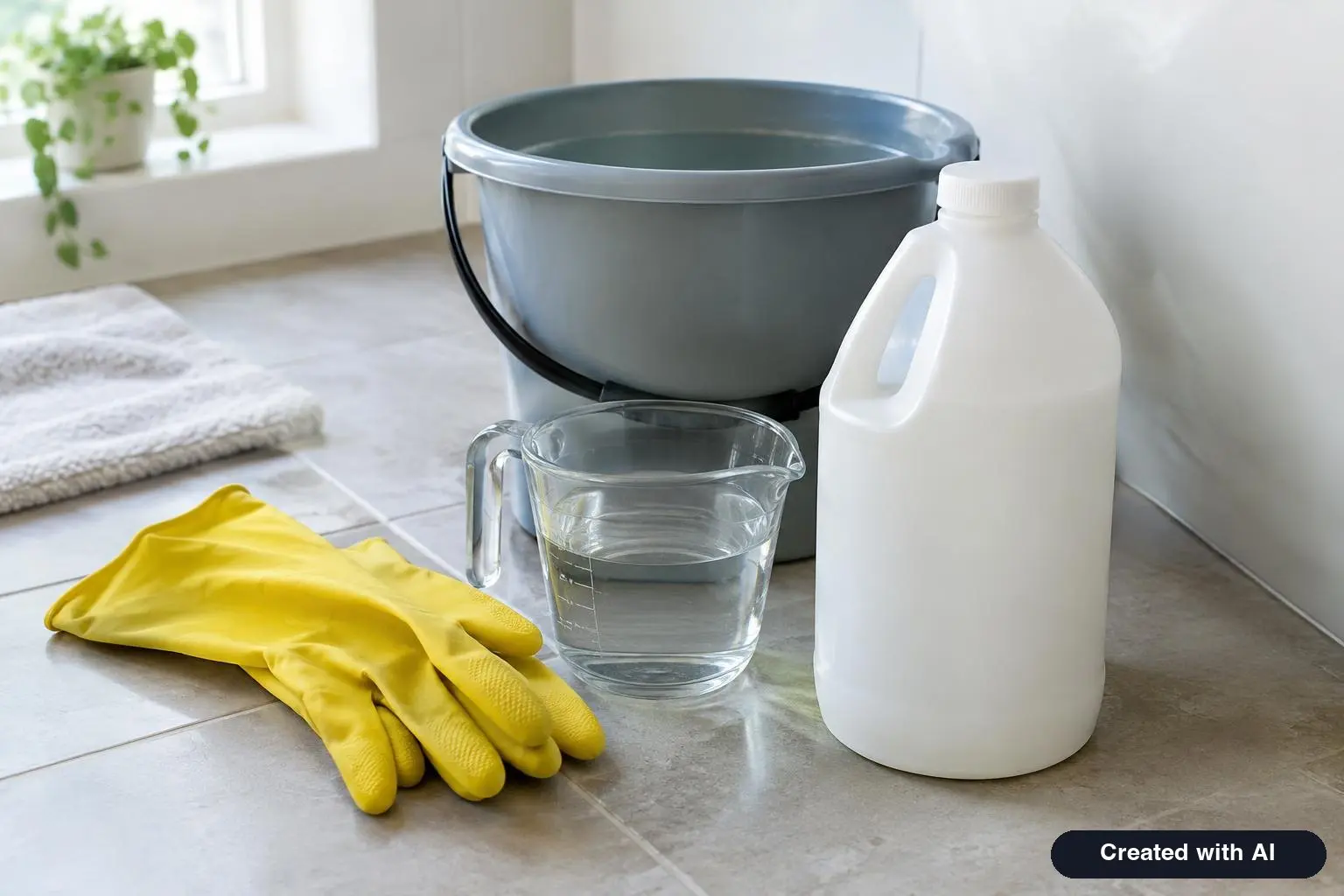
- CDC: 5 to 25 tablespoons of household bleach (5% to 8%) per gallon of water, wet for at least 5 minutes.
- Hand sanitizer does not work well against norovirus; wash with soap and water for 20 seconds.
- Wash soiled laundry hot on the longest cycle and dry on high heat; steam clean carpets instead of bleaching.
- What kills norovirus, at a glance
- Why norovirus is so hard to kill
- Bleach solution for norovirus: how to mix it
- How to clean up vomit or diarrhea, step by step
- EPA List G: disinfectants registered for norovirus
- Does hand sanitizer kill norovirus?
- Laundry: clothes, sheets, and towels
- Carpet, couches, mattresses, toys, and phones
- How long to keep disinfecting
- In the kitchen
Bleach kills norovirus; most everyday cleaners and hand sanitizers do not do it reliably. The Centers for Disease Control and Prevention (CDC) recommends a chlorine bleach solution of 1,000 to 5,000 parts per million, which is 5 to 25 tablespoons of regular household bleach (5% to 8% strength) per gallon of water, left on the surface for at least 5 minutes, or a disinfectant registered by the Environmental Protection Agency (EPA) as effective against norovirus. For hands, the answer is soap and running water for at least 20 seconds. For laundry, it is detergent, hot water, the longest cycle, and a high-heat dry.
Below are the exact mixing amounts, a step-by-step cleanup for vomit and diarrhea, what the evidence says about Lysol, Clorox wipes, hydrogen peroxide, vinegar, and hand sanitizer, and what to do about carpets and other things you cannot bleach. This page is part of our norovirus symptoms guide.
What kills norovirus, at a glance
| Method | Works against norovirus? | Notes |
|---|---|---|
| Chlorine bleach solution, 1,000 to 5,000 ppm | Yes; the best-documented option | At least 5 minutes of wet contact (CDC) |
| EPA List G disinfectants | Yes, when used exactly as the label directs | Contact times on the list range from 30 seconds to 15 minutes |
| Soap-and-water handwashing | Yes; physically removes virus from skin | At least 20 seconds |
| Hot wash plus high-heat drying | Yes, for laundry | Longest cycle, hottest dryer setting |
| Steam cleaning | Yes, for carpet and upholstery | 158°F for 5 minutes or 212°F for 1 minute, per a 2008 OSHA workplace fact sheet |
| Thorough cooking | Yes | Shellfish to at least 145°F internal temperature; quick steaming is not enough |
| Alcohol-based hand sanitizer | Not reliably | A backup between handwashings only |
| Regular disinfecting wipes and sprays not labeled for norovirus | Do not count on them | Many are quaternary ammonium products that CDC guidance calls less effective against norovirus |
| Vinegar, household 3% hydrogen peroxide, rubbing alcohol | No good evidence | None is a registered norovirus disinfectant |
| Freezing | No | The virus survives freezing |
Why norovirus is so hard to kill
Many germs, including flu viruses and coronaviruses, are wrapped in a fatty outer envelope that alcohol and detergents dissolve easily. Norovirus has no envelope. It is a small, tough protein shell, which is why it shrugs off many common disinfectants. The CDC says norovirus can persist on surfaces for days or weeks and is resistant to many common disinfectants. The Food and Drug Administration's Food Code cites studies showing it can survive on surfaces for at least five days at room temperature, and laboratory studies have detected the virus on stainless steel, laminate, and ceramic for as long as the experiments ran, a week or more. It survives freezing and can withstand heat up to 145°F. In groundwater, one study found it remained infectious for at least 61 days.
Add the low infectious dose, as few as 18 viral particles by one estimate cited by the CDC, and the scale of contamination from a single episode of vomiting, and it becomes clear why a quick wipe is not enough.
Bleach solution for norovirus: how to mix it
Use regular, unscented household bleach. The CDC's norovirus recipe is written for household bleach of 5% to 8% strength. Its general bleach guidance says most household bleach contains 5% to 9% sodium hypochlorite and says not to use a product if the percentage is outside that range or is not stated, which rules out some "splashless" and laundry bleaches. Check the percentage on the label before you mix.
| Strength | Bleach per gallon of water | Bleach per quart of water | Use for |
|---|---|---|---|
| About 1,000 ppm (CDC minimum for norovirus) | 5 tablespoons (1/3 cup) | 4 teaspoons | Hard, nonporous surfaces: counters, sinks, toilets, faucets, door handles, tile, sealed floors |
| About 5,000 ppm (CDC maximum for norovirus) | 25 tablespoons (a little over 1 1/2 cups) | About 6 tablespoons | Heavily soiled areas and porous surfaces such as unsealed wood floors, concrete, or natural stone |
The gallon amounts and the parts-per-million range are from the CDC's norovirus prevention page: 1,000 to 5,000 ppm, or 5 to 25 tablespoons of household bleach (5% to 8%) per gallon of water. The quart figure for the lower strength comes from the CDC's general page on disinfecting with bleach, which gives 5 tablespoons (1/3 cup) per gallon or 4 teaspoons per quart; the quart figure for the higher strength is simple arithmetic, a quarter of the gallon recipe. A cleanup poster developed with CDC experts and distributed by state health departments uses two similar tiers: 1/3 cup per gallon for hard surfaces and, rounding up to a 1-to-10 dilution, 1 2/3 cups per gallon for porous ones.
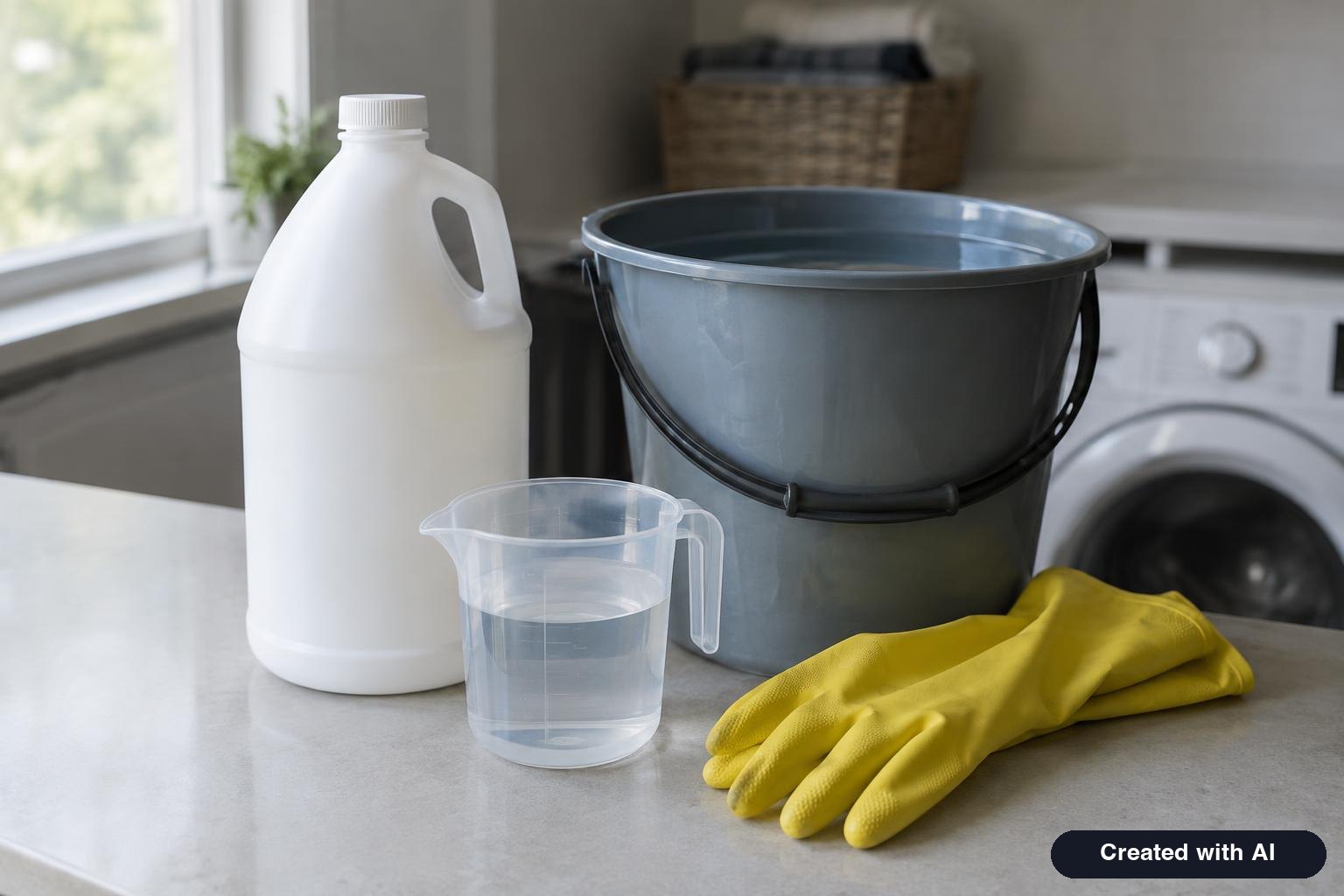
Rules for using bleach safely, from the CDC:
- Never mix bleach with any other cleaner or disinfectant. Combinations can release dangerous vapors.
- Ventilate. Open windows and doors.
- Wear gloves, and eye protection if splashing is likely.
- Use room-temperature water.
- Mix a fresh batch every day. Diluted bleach loses strength after about 24 hours.
- Clean first. Bleach works poorly through dirt and organic matter, so wipe up visible mess before disinfecting.
- Keep it wet for at least 5 minutes for norovirus, then rinse food-contact surfaces and anything a child might put in their mouth.
An opened bottle of bleach also weakens over time; a 2008 Occupational Safety and Health Administration (OSHA) fact sheet for workplaces says opened bottles of household bleach lose effectiveness after 30 days and advises starting a new bottle every 30 days for disinfecting. If your bottle has been open under the sink for a year, buy a new one. Bleach will discolor fabric, carpet, and some finishes, so test or choose another method for those.
How to clean up vomit or diarrhea, step by step
- Clear the room. Send everyone else out, especially children. Vomiting sprays tiny droplets that settle on nearby surfaces.
- Protect yourself. Put on disposable gloves. A disposable mask and an apron or old clothes are sensible; OSHA's workplace fact sheet calls for masks and eye protection when cleaning areas heavily contaminated with vomit or feces.
- Remove the mess with paper towels. Wipe gently so nothing splashes. On carpet, cover the spot with an absorbent material such as baking soda or cat litter, then lift it with paper towels. Do not vacuum it.
- Bag it. Put the towels and gloves in a plastic trash bag and tie it shut.
- Wash the area with soap or detergent and hot water, using fresh gloves.
- Disinfect. Apply the bleach solution, or an EPA List G product, generously to the spot and a wide area around it, and leave it visibly wet for at least 5 minutes or the label's contact time.
- Clean again with soap and hot water, as the CDC advises, and rinse any surface that touches food.
- Deal with laundry and trash. Take the bag outside. Put soiled fabrics straight into the washer.
- Wash your hands with soap and water for at least 20 seconds.
How wide an area? There is no CDC figure for homes. The one official number we found comes from the National Park Service, whose norovirus response guidance for park facilities says to clean and disinfect areas within a 25-foot radius of a vomiting or diarrhea incident. That is National Park Service guidance for public facilities, not a CDC rule for homes. In a house, a radius that size effectively means the whole room, plus anything uncovered that was sitting out: throw away exposed food and wash dishes and utensils that were nearby.
High-touch surfaces to disinfect daily while someone is sick
- Toilet seat, lid, flush handle, and the floor around the toilet
- Faucet handles, sink, and soap dispenser
- Door handles, light switches, stair rails
- Refrigerator and microwave handles, kitchen counters
- Remote controls, phones, tablets, game controllers
- Bedside table, bucket or basin, trash can lid
EPA List G: disinfectants registered for norovirus
List G is the EPA's roster of antimicrobial products with laboratory data showing they are effective against norovirus. As of the EPA's June 3, 2026 update, it contained 392 products. To use it:
- Find the EPA registration number on the product label ("EPA Reg. No." followed by two sets of numbers). Search that number on List G. A product with a third set of numbers is a distributor's version of the same formula.
- Check that the label gives directions for disinfecting against norovirus.
- Follow the contact time. This is how long the surface must stay visibly wet, and it is where most people fall short.
Examples of products on the list, with the contact time EPA shows:
| Product name on List G (company) | EPA Reg. No. | Active ingredient | Contact time |
|---|---|---|---|
| Clorox Regular Bleach (The Clorox Company) | 5813-100 | Sodium hypochlorite | 5 minutes |
| Clorox Clean Up Cleaner + Bleach (The Clorox Company) | 5813-21 | Sodium hypochlorite | 5 minutes |
| CPPC Tsunami, a ready-to-use product or wipe (Clorox Professional Products Company) | 67619-12 | Sodium hypochlorite | 1 minute |
| Clorox Commercial Solutions Hydrogen Peroxide Cleaner Disinfectant Wipes (Clorox Professional Products Company) | 67619-25 | Hydrogen peroxide | 2 minutes |
| Brace (Reckitt Benckiser); the EPA-accepted label for this registration covers Lysol Disinfectant Spray | 777-99 | Ethanol and quaternary ammonium | 10 minutes |
| Lysol Brand Bleach Mold and Mildew Remover (Reckitt Benckiser) | 777-83 | Sodium hypochlorite | 30 seconds |
| Purell Professional Surface Disinfectant Wipes (Gojo Industries) | 84150-1 | Ethanol | 5 minutes |
| Scrubbing Bubbles Multi-Purpose Disinfectant (S.C. Johnson & Son) | 4822-548 | Quaternary ammonium and triethylene glycol | 5 minutes |
| Windex Disinfectant Cleaner (S.C. Johnson & Son) | 4822-593 | L-lactic acid | 10 minutes |
| CleanSmart (Simple Science Limited) | 89896-2 | Hypochlorous acid | 10 minutes |
This is a sample for illustration, taken from the list as updated June 3, 2026, not a ranking or an endorsement. The name EPA lists is the registrant's primary product name, which can differ from the brand name on the shelf, and formulas and labels change, so go by the registration number on the bottle you buy. Two caveats matter. First, nearly every List G product is approved for hard, nonporous surfaces only; none is listed for carpet or upholstery. Second, because human norovirus is difficult to grow in a laboratory, products qualify by killing a stand-in virus, feline calicivirus. CDC guidance says the list should be interpreted with some caution for that reason, and it singles out quaternary ammonium compounds as less effective against viruses like norovirus. When you have a choice, a bleach-based or other chlorine-based product is the most defensible pick.
Does Lysol kill norovirus?
The EPA-accepted label for Lysol Disinfectant Spray (EPA Reg. No. 777-99, dated January 13, 2025) includes a norovirus claim, with a condition that is easy to miss: for norovirus, the label says surfaces must remain visibly wet for 10 minutes. A two-second mist that dries in a minute does not meet it. List G also shows a product named Lysol Brand Bleach Mold and Mildew Remover (EPA Reg. No. 777-83) with a 30-second contact time. A brand name alone does not tell you whether a product is on List G, so check the registration number.
Do Clorox wipes kill norovirus?
It depends on the exact product, not the brand. Major brands sell many different wipes under one name, with different active ingredients and different EPA registration numbers, and a norovirus claim belongs to a specific registration, not to a brand. To check the canister in your hand:
- Find the EPA Reg. No. on the back label.
- Search that number on List G. The EPA says to search it exactly as it appears; if the label shows a third set of digits, the first two sets identify the listed formula.
- Read the label's directions for disinfection and confirm that norovirus is named there, along with a contact time. The EPA says to check this even when the number is on the list.
- Keep the surface visibly wet for that whole time, which with a wipe usually means using more than one.
If the number is not on List G, or the label's disinfection directions do not name norovirus, do not count on that wipe for a norovirus cleanup; use the bleach solution above. Wipes do appear on List G: as of the June 3, 2026 update, the entries above for EPA Reg. Nos. 67619-25 and 84150-1 are both wipes. Read the label, not the brand.
Hydrogen peroxide, hypochlorous acid, vinegar, and alcohol
- Hydrogen peroxide. Dozens of formulated peroxide disinfectants are on List G. The brown bottle of 3% peroxide from the pharmacy is not a registered disinfectant, and in a U.S. Department of Agriculture laboratory study, 4% hydrogen peroxide had minimal effect on human norovirus even after 60 minutes.
- Hypochlorous acid. A number of hypochlorous acid sprays and home generators are on List G, with contact times up to 10 minutes. Use one that shows an EPA registration number and follow its time.
- Vinegar. No vinegar product is registered against norovirus, and we found no solid evidence that it works.
- Rubbing alcohol. Studies have found plain alcohol relatively ineffective against norovirus. A few specially formulated ethanol products are registered; isopropyl alcohol from the medicine cabinet is not.
- UV wands and boxes. Ultraviolet light inactivates related viruses in controlled water experiments. We found no evidence that consumer UV gadgets reliably disinfect household surfaces.
Does hand sanitizer kill norovirus?
Not well enough to rely on. The CDC states that hand sanitizer does not work well against norovirus, and that you can use it in addition to handwashing but not as a substitute. In one laboratory study with human volunteers, washing with soap or even rinsing with water removed far more norovirus from hands than an alcohol-based sanitizer, which barely reduced it. A survey of long-term care facilities found that those where staff relied on sanitizer as much as or more than soap and water had higher odds of norovirus outbreaks, an association rather than proof.
No hand sanitizer can legally promise to prevent norovirus. In a 2020 warning letter to the maker of Purell, the Food and Drug Administration (FDA) objected to marketing claims that mentioned norovirus and other specific germs, saying it knew of no adequate studies showing that killing germs on skin by a given amount translates into fewer infections.
How to wash hands so it counts:
- Wet hands with running water and lather with soap.
- Scrub for at least 20 seconds: backs of hands, between fingers, thumbs, under nails.
- Rinse well under running water. The rinse is what carries the virus away.
- Dry with a paper towel or your own clean towel, not a shared one.
Wash after using the toilet, after changing diapers, after any cleanup, and before eating or handling food. If no sink is available, sanitizer with at least 60% alcohol is better than nothing; wash properly as soon as you can.
Laundry: clothes, sheets, and towels
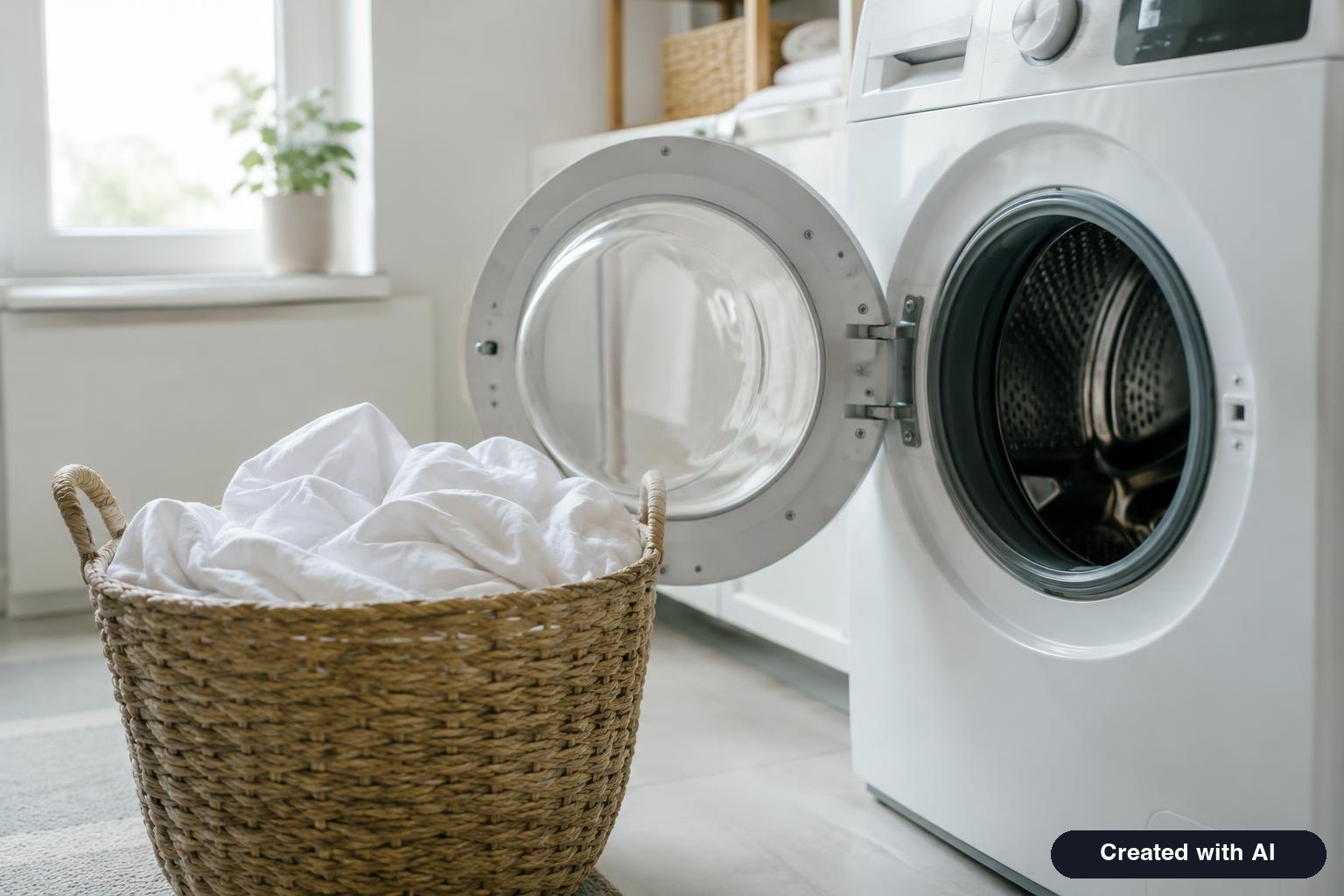
The CDC's instructions for anything that may have vomit or stool on it:
- Wear rubber or disposable gloves.
- Handle items carefully, without shaking them.
- Wash with detergent and hot water at the maximum available cycle length.
- Machine dry on the highest heat setting.
- Wash your hands afterward.
Rinse off solid matter into the toilet first if you can do it without splashing. Wash contaminated loads separately from other laundry. Bleach-safe whites can get chlorine bleach in the wash. OSHA suggests a prewash followed by a regular cycle for heavily soiled items, and notes that it may be better to throw away badly soiled items than risk exposure cleaning them. Afterward, wipe the washer door, lid, and controls with disinfectant.
Carpet, couches, mattresses, toys, and phones
- Carpet and upholstery. Absorb and lift the mess, clean with detergent and hot water, then steam clean. A 2008 OSHA fact sheet written for workplaces gives 158°F for 5 minutes or 212°F for 1 minute for complete inactivation; the CDC's consumer prevention page does not give a steam temperature. Bleach will stain. Many home carpet shampooers do not reach those temperatures; a true steam cleaner or a professional service is the surer route.
- Mattresses. We found no official instructions specific to mattresses. The practical approach is the same as upholstery: blot, clean, steam, and dry thoroughly. A waterproof mattress protector that can be washed hot is worth having before the next illness.
- Hard toys and items that go in mouths. OSHA's workplace fact sheet lists a weaker solution, 1 tablespoon of bleach per gallon of water, for food-contact and mouth-contact items and toys; rinse and air dry. Dishwasher-safe toys can go through a hot cycle.
- Soft toys. Machine wash hot and dry on high heat.
- Dishes and utensils. Use a dishwasher on its hottest or sanitizing cycle, or wash in hot soapy water with gloves.
- Phones, remotes, and keyboards. Follow the manufacturer's cleaning instructions. A wipeable cover makes disinfecting easier; use a List G wipe that the device maker permits.
How long to keep disinfecting
Disinfect the bathroom and high-touch surfaces daily while anyone has symptoms and for at least a few days afterward. People are most contagious while sick and for the first few days of recovery, but the virus can remain in stool for two weeks or more. For that longer stretch, careful handwashing and regular bathroom cleaning matter more than bleaching the whole house. Timelines are in how long norovirus is contagious and how long norovirus lasts.
In the kitchen
- Do not prepare food for others while sick or for 48 hours after symptoms stop.
- Cook oysters and other shellfish to an internal temperature of at least 145°F. The CDC warns that quick steaming will not heat them enough.
- Wash fruits and vegetables well.
- Throw away food that may have been contaminated, including anything uncovered near where someone vomited.
- Sanitize counters, cutting boards, and utensils after cleaning them, particularly after handling shellfish.
If someone in the house does get sick, care at home is covered in norovirus treatment.
Frequently asked questions
What kills norovirus on surfaces?
A chlorine bleach solution of 1,000 to 5,000 ppm, which is 5 to 25 tablespoons of regular household bleach per gallon of water, left wet for at least 5 minutes, or a disinfectant on EPA's List G used for its full label contact time.
Does hand sanitizer kill norovirus?
Not reliably. The CDC says hand sanitizer does not work well against norovirus and is not a substitute for washing with soap and water for at least 20 seconds. It can be used in addition to handwashing.
Does Lysol kill norovirus?
The EPA-accepted label for Lysol Disinfectant Spray (EPA Reg. No. 777-99) includes a norovirus claim, and the registration is on EPA's List G, but the surface must stay visibly wet for 10 minutes. Not every Lysol product is listed, so check the EPA registration number.
Do Clorox wipes kill norovirus?
It depends on the specific product, not the brand name. Find the EPA Reg. No. on the label, search that number on EPA's List G, and confirm that the label's disinfection directions name norovirus and give a contact time. If they do not, use a bleach solution instead.
How much bleach do I use for norovirus?
The CDC says 5 to 25 tablespoons of household bleach (5% to 8%) per gallon of water, which gives 1,000 to 5,000 ppm, left on for at least 5 minutes. Five tablespoons is 1/3 cup. Use the higher end for heavy contamination or porous surfaces. Mix it fresh each day and never combine it with other cleaners.
How long does norovirus live on surfaces?
Days to weeks, according to the CDC. It also survives freezing and temperatures up to 145°F, which is why thorough disinfection matters.
How do I wash clothes with norovirus on them?
Wear gloves, handle items without shaking them, wash with detergent in hot water on the longest cycle, machine dry on the highest heat setting, and wash your hands afterward.
Does hydrogen peroxide or vinegar kill norovirus?
Some formulated hydrogen peroxide disinfectants are registered on EPA's List G, but plain 3% peroxide from the pharmacy is not a registered disinfectant and performed poorly in a laboratory study. No vinegar product is registered against norovirus.
Sources
- CDC – How to Prevent Norovirus
- CDC – Cleaning and Disinfecting with Bleach
- EPA – Registered Antimicrobial Products Effective Against Norovirus (List G)
- CDC – Updated Norovirus Outbreak Management and Disease Prevention Guidelines, MMWR 2011
- CDC – Norovirus Outbreaks
- OSHA Fact Sheet – Noroviruses (2008)
- Clean-up and Disinfection for Norovirus poster (Georgia Department of Public Health copy)
- EPA-accepted label, Reg. No. 777-99 (Lysol Disinfectant Spray), January 13, 2025
- Liu P et al. Effectiveness of liquid soap and hand sanitizer against Norwalk virus on contaminated hands. Applied and Environmental Microbiology, 2010
- Blaney DD et al. Use of alcohol-based hand sanitizers as a risk factor for norovirus outbreaks in long-term care facilities. American Journal of Infection Control, 2011
- FDA – Warning Letter to GOJO Industries, January 17, 2020
- Kingsley DH et al. Inactivation of human norovirus using chemical sanitizers. International Journal of Food Microbiology, 2014
- Seitz SR et al. Norovirus infectivity in humans and persistence in water. Applied and Environmental Microbiology, 2011
- D'Souza DH et al. Persistence of caliciviruses on environmental surfaces and their transfer to food. International Journal of Food Microbiology, 2006
- FDA – Food Code 2026 (Annex 3)
- National Park Service – Norovirus Response and Cleanup
- CDC Yellow Book – Cruise Ship Travel
Log in to comment
No comments yet. Be the first.