Cottage Cheese Pancakes: Fluffy Pan-Fried Syrniki Recipe
- 12 pancakes from 1 lb (500 g) of cheese in 40 minutes—plus a handy ratio chart for smaller or larger batches.
- Why syrniki fall apart, stick, or turn out tough, and how to avoid these common mistakes.
- One pancake is about 113 calories; plus serving ideas, sour cream toppings, and freezing tips.
- Ingredients and How to Choose Them
- Ingredient Ratios for 6 oz (180 g), 1 lb (500 g), and 2 lb (1 kg) of Cheese
- How to Make Cottage Cheese Pancakes: Step by Step
- How Long to Cook Cottage Cheese Pancakes in a Skillet
- Common Mistakes: Why Pancakes Fall Apart, Stick, or Turn Out Tough
- Variations: All Parts of the Cottage Cheese Pancake Guide
- Cottage Cheese Pancakes for Kids and Babies
- Lighter Version: How Many Calories Each Swap Saves
- How Many Calories Are in Cottage Cheese Pancakes?
- What to Serve with Cottage Cheese Pancakes: Sauces and the Sour Cream "Hat"
- How to Store and Freeze Cottage Cheese Pancakes
- What to Cook Next
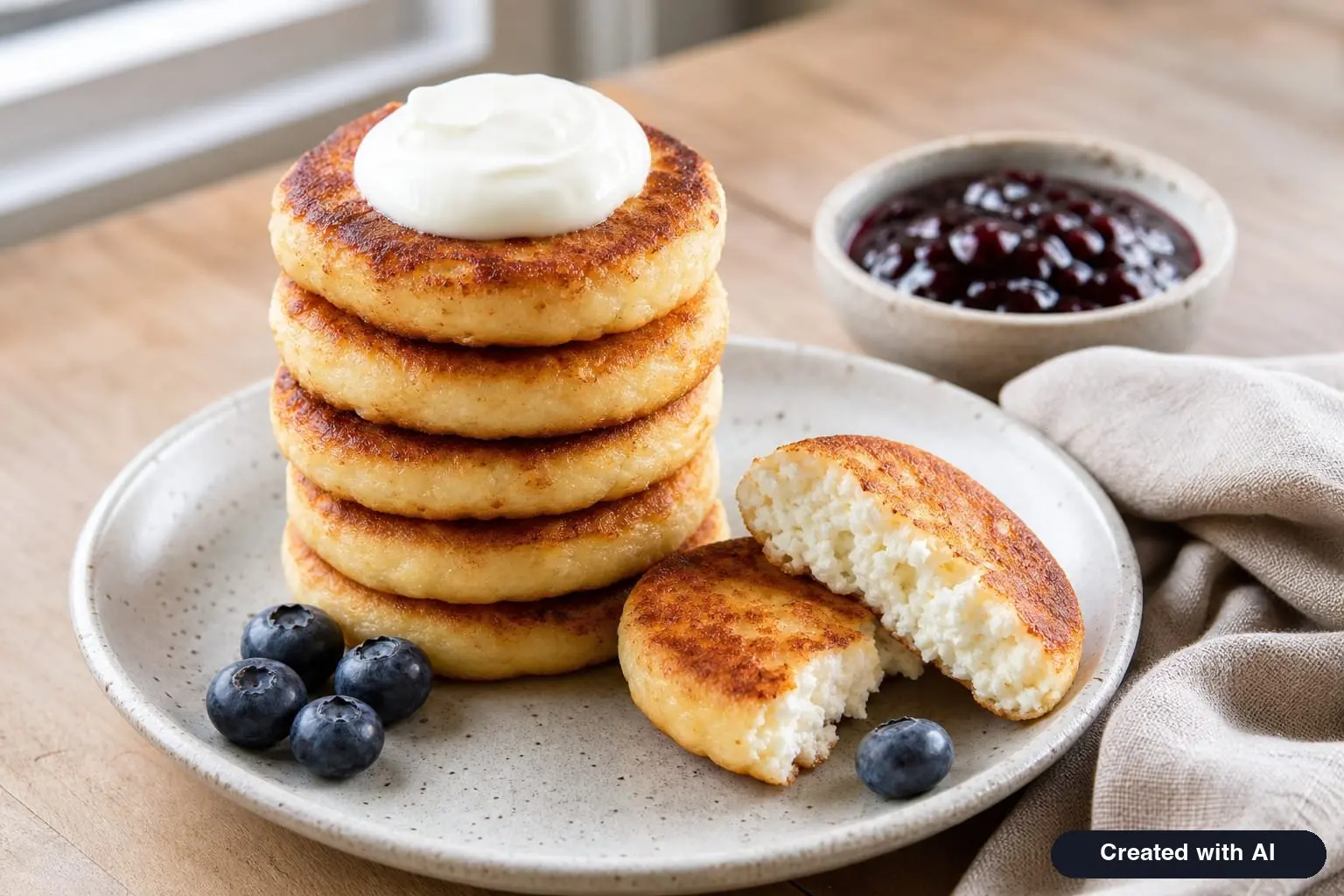
Cottage cheese pancakes, often known as syrniki, are one of the simplest and most beloved classics in Eastern European kitchens: mashed farmer cheese, an egg, a few tablespoons of flour, a little sugar, and a skillet. This short list of ingredients yields round, golden patties with a thin crust and a soft, moist center. They are equally loved by children and adults, and can be made in half an hour—making pan-fried cottage cheese pancakes perfect for both weekend breakfasts and quick weeknight dinners.
This cottage cheese pancake recipe is a classic, the way generations of home cooks have made it: the base of the dough is cheese, not flour. Flour is added only enough to help the mixture hold its shape, so the cooked pancakes remain fluffy and soft, not rubbery. A half teaspoon of baking powder adds to the fluffiness—it's what makes them rise noticeably in the pan, earning them the description "fluffy as clouds."
The recipe is perfect for first-time makers and those whose syrniki have previously fallen apart, stuck to the pan, or turned out tough: below, we explain not only what to do, but why. From 1 lb (500 g) of cheese, you get 12 medium-sized pancakes—four portions of three. Whether you only have a small 6 oz (180 g) package or a whole 2 lb (1 kg) block of farmer cheese, you'll find a ratio chart for all three scenarios below.
This is the main recipe in our cottage cheese pancakes guide. Other cooking methods—boiled, baked in the oven or air fryer, flourless, with bananas, apples, and old-fashioned Soviet-era canteen syrniki—are briefly introduced in the "Variations" section, and each has its own detailed recipe.
Below is the complete recipe in one card: you can adjust the quantities for a different number of pancakes, check off what you've already added, and print it. After the card, each step is discussed in more detail.
Fluffy Pan-Fried Cottage Cheese Pancakes (Syrniki)
No ratings yet – be the firstIngredients
Dough
For frying
Directions
- Cheese. Mash the cheese with a fork until smooth; if it has large curds, press it through a sieve. If using regular cottage cheese, drain and press it in cheesecloth for 20–30 minutes beforehand.
- Egg and sugar. Add the egg, sugar, salt, and vanilla. Mix with a fork—do not use a mixer, as it will thin the mixture.
- Flour. Mix ⅔ cup (80 g) of flour with the baking powder, add to the cheese, and fold just until no dry flour remains. The dough should be soft and slightly sticky.
- Rest. Cover and let rest for 10 minutes so the flour absorbs moisture and the mixture becomes easier to shape.
- Shaping. Divide the mixture into 12 portions of about 2 oz (55–60 g) each. With floured hands, roll into balls, coat in flour, and flatten into ½-inch (1.5 cm) thick, 2.5-inch (6–7 cm) wide patties. Shake off excess flour.
- Frying. Heat a skillet with a tablespoon of oil over medium heat. Add 6 pancakes and fry for 3 to 4 minutes until the bottom is golden. Flip, reduce the heat, cover with a lid, and fry for another 3 to 4 minutes.
- Second batch and serving. Wipe the skillet with a paper towel, add fresh oil, and fry the remaining batch. Drain the cooked pancakes on a paper towel for a minute and serve warm with sour cream, jam, or berries.
- Calories
- 113 kcal
- Protein
- 6.1 g
- Fat
- 4.8 g
- of which saturated
- 1.1 g
- Carbohydrates
- 11.1 g
- of which sugars
- 4.5 g
- Fiber
- 0.2 g
Calculated with the Firmus Medicus calorie database (USDA, Fineli).
Ingredients and How to Choose Them
The cheese determines almost everything. Syrniki are made from dry curd cheese (tvorog), not the creamy cottage cheese most Americans know. In the US, buy farmer cheese or dry-curd cottage cheese – whole-milk if you can find it; Eastern European delis also sell it as tvorog. It has enough fat to keep the pancakes soft and very little whey, so you don't need much flour. Low-fat cheese also works, but the pancakes will be slightly drier and more tart—you can add a tablespoon of sour cream to the mixture. Regular cottage cheese works only if you drain and press it first: wrap it in cheesecloth or a clean kitchen towel and let it sit in a strainer, weighted with a small plate, for 20 to 30 minutes, then press it through a sieve to break up the curds. Skip this and the dough turns runny, the patties spread in the pan, and you end up adding flour until the pancakes are tough – the more liquid left in the cheese, the more flour it demands.
Egg binds the mixture. One large egg is enough for 1 lb (500 g) of cheese. A second egg thins the mixture, requiring more flour, which dilutes the cheese flavor. If your eggs are small or the cheese is very dry and crumbly, you can use one egg and one yolk.
Flour. Regular all-purpose flour works perfectly. The dough gets ⅔ cup (80 g), and you'll need about 2 more tablespoons for dusting. To cut back on flour, you can replace part of it with semolina (farina or Cream of Wheat works), but that's a recipe of its own – see flourless cottage cheese pancakes.
Sugar and vanilla. 3 tablespoons (40 g) of sugar provide a mildly sweet taste—just enough so the pancakes can be enjoyed with either jam or sour cream. It's not worth adding more sugar, and not just because of the sweetness: sugar caramelizes in the pan, so sweeter pancakes will brown on the outside before the inside has time to cook.
Baking powder or baking soda. Half a teaspoon of baking powder releases gases during cooking that puff up the cheese mixture—this is how you get fluffy pan-fried pancakes. Syrniki with baking soda are made the same way: use a quarter teaspoon of baking soda instead of baking powder. The cheese itself is acidic, so there's no need to activate the soda with vinegar. Do not add too much—excess baking soda leaves a soapy aftertaste.
Cooking fat. Fry in neutral canola or sunflower oil. Butter tastes better but burns quickly, so it's best to toss a small piece in only at the end of cooking for the aroma.
Ingredient Ratios for 6 oz (180 g), 1 lb (500 g), and 2 lb (1 kg) of Cheese
Farmer cheese comes in small packages and in 1- and 2-pound tubs, so the question of how much flour to add comes up every time. The table shows the same recipe for three amounts of cheese. The proportion is simple: for every 3.5 oz (100 g) of cheese, you need about 2 tablespoons (16 g) of flour and 2 teaspoons (8 g) of sugar.
| Ingredient | For 6 oz (180 g) cheese | For 1 lb (500 g) cheese | For 2 lb (1 kg) cheese |
|---|---|---|---|
| Eggs | 1 yolk or half a beaten egg | 1 large | 2 large |
| Flour for dough | ¼ cup (30 g) | ⅔ cup (80 g) | 1⅓ cups (160 g) |
| Sugar | 1 tbsp (15 g) | 3 tbsp (40 g) | 6 tbsp (80 g) |
| Baking powder | a small pinch | ½ tsp | 1 tsp |
| Flour for dusting | 1 tbsp | 2 tbsp | 3–4 tbsp |
| Oil for frying | 1 tbsp | 2–3 tbsp | 5–6 tbsp |
| Yield | 4 pancakes | 12 pancakes | 24 pancakes |
| Batches in a 10- to 11-inch (26–28 cm) skillet | 1 batch | 2 batches | 4 batches |
When making pancakes from 6 oz (180 g) of cheese, a whole egg would be too much—the mixture would become too thin. Therefore, add only the yolk or beat the egg with a fork and pour in half. Pancakes from 2 lb (1 kg) of cheese are convenient to fry in two pans at once, and you can freeze some of the shaped, uncooked ones—we cover this at the end of the article.
How to Make Cottage Cheese Pancakes: Step by Step
1. Mash the cheese
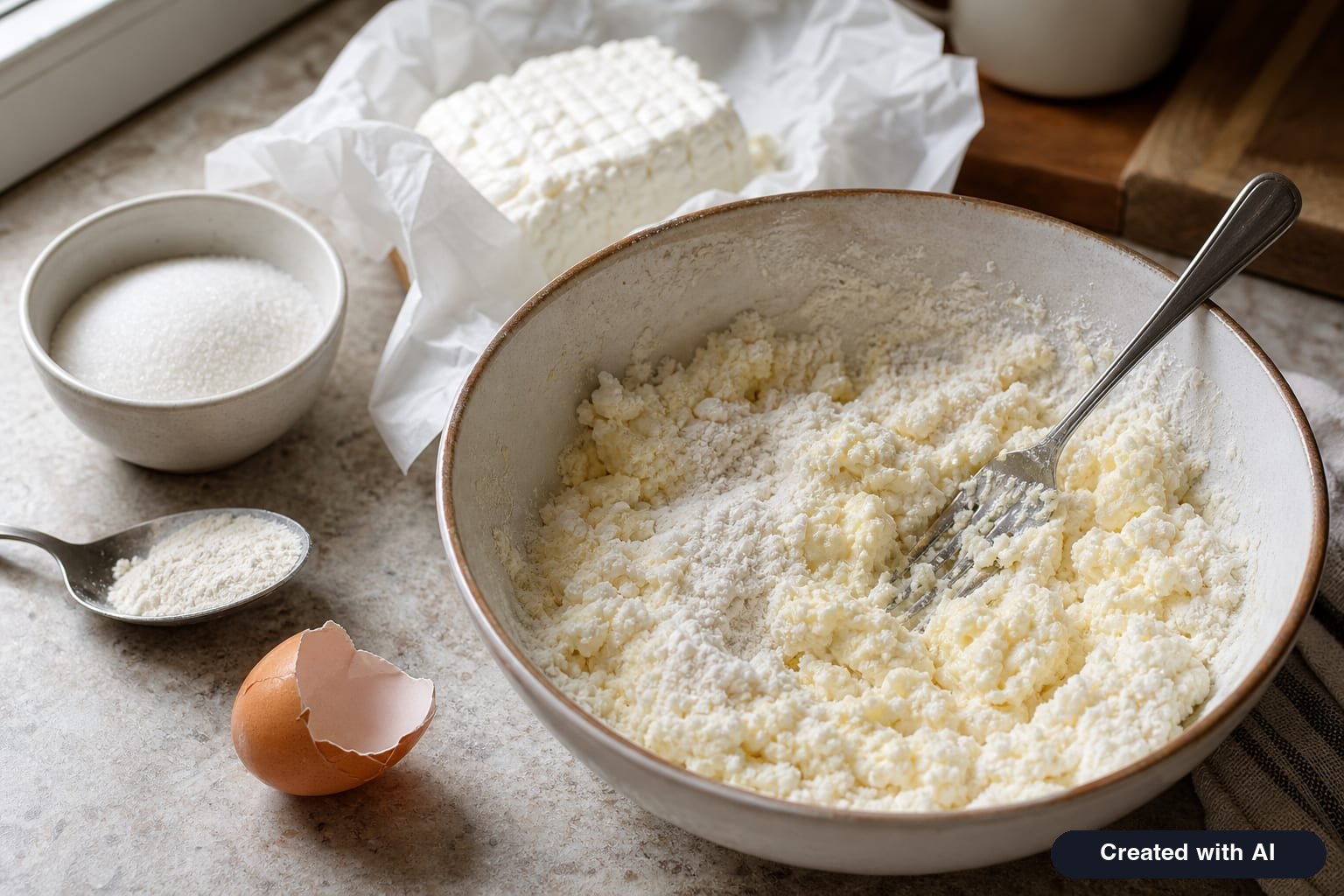
Place the cheese in a bowl and mash it well with a fork; if it has large curds, press it through a sieve or pulse it for a few seconds with an immersion blender. The smoother the mixture, the more even and softer the pancakes: large cheese curds harden in the pan and feel like separate lumps in the cooked pancake. Don't overdo it, though—cheese ground into a liquid paste releases whey and thins the dough.
2. Mix in the egg, sugar, and salt
Add the egg, sugar, a pinch of salt, and vanilla to the cheese. Mix with a fork or spoon. The salt isn't here for saltiness—it enhances the cheese flavor; without it, the pancakes taste bland. Do not use a mixer: whipping will thin the mixture.
3. Add the flour and baking powder
Mix the flour with the baking powder and fold it into the cheese mixture. Mix only until no dry flour remains. The dough should be soft and slightly sticky—that's exactly what you want. If the mixture runs off the spoon, add one more tablespoon of flour, but no more: it's better to have wetter dough and floured hands than tough dough and tough pancakes.
4. Let the dough rest for 10 minutes
Cover the bowl and let it sit for 10 minutes. During this time, the flour absorbs moisture, the mixture firms up, and it becomes easier to shape without adding extra flour. If you're in a hurry, you can skip this step—the quick pan-fried pancakes will still turn out fine, they'll just be a bit harder to shape.
5. Shape the pancakes
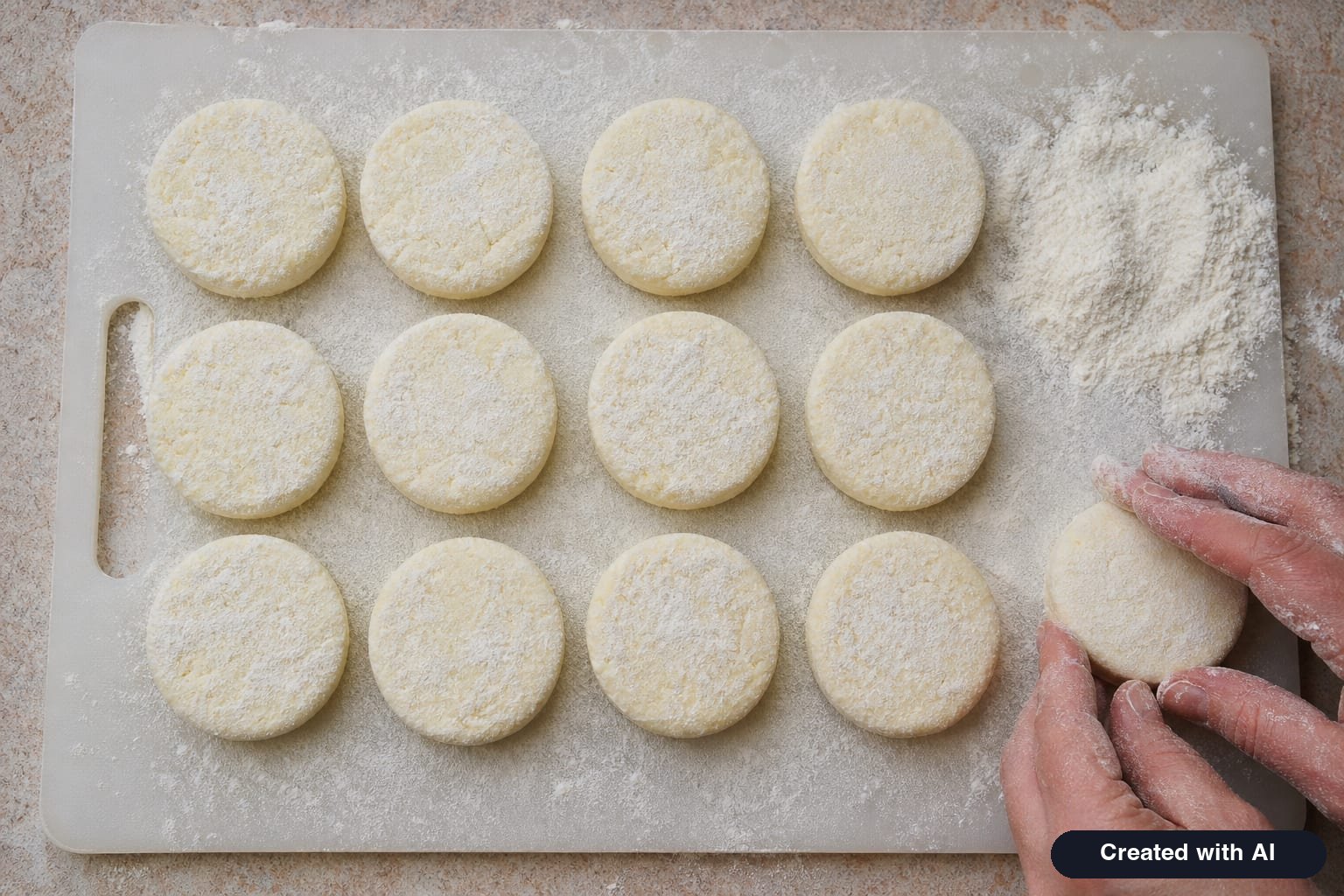
Sprinkle flour on a table or plate. Divide the mixture into 12 parts—each gets a heaping tablespoon, about 2 oz (55–60 g). With floured hands, roll into a ball, coat in flour, and gently flatten into a ½-inch (1.5 cm) thick, 2.5-inch (6–7 cm) wide patty. Shake off excess flour: loose flour burns in the pan and adds bitterness. Thickness matters – pancakes thinner than ⅜ inch (1 cm) dry out, while those thicker than ¾ inch (2 cm) won't cook through before the outside browns.
6. Fry on medium heat
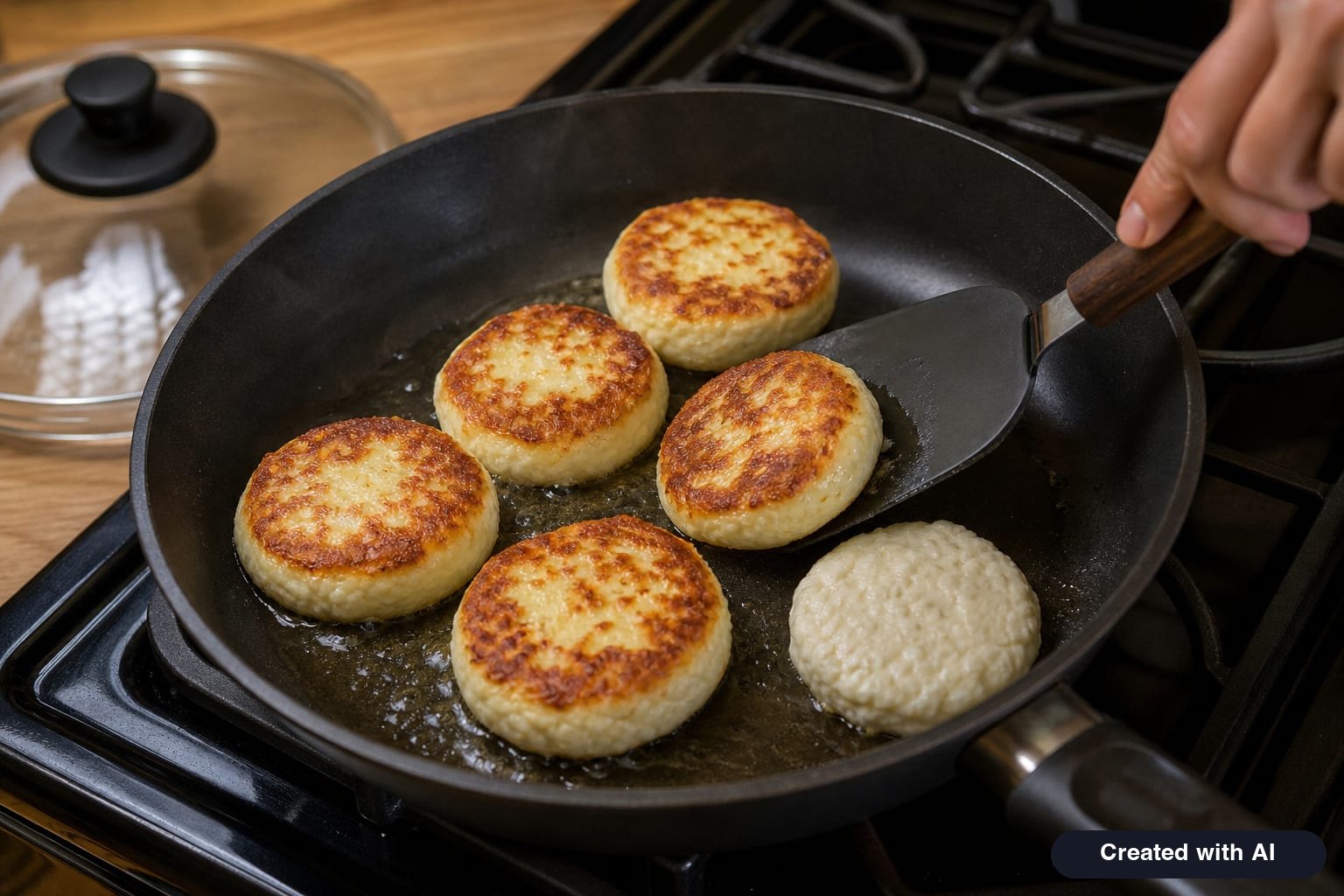
Heat a skillet over medium heat, add a tablespoon of oil, and wait for it to warm up—a pinch of flour dropped in should sizzle quietly. Place six pancakes in the pan, leaving space between them. Fry for 3 to 4 minutes until the bottom is golden, flip with a spatula, reduce the heat, and fry for another 3 to 4 minutes. Cook the second side covered with a lid: the steam helps the inside cook through and keeps the pancakes soft. Before the second batch, wipe the pan with a paper towel and add fresh oil.
7. Drain and serve
Place the cooked pancakes on a paper towel for a minute to absorb excess oil, and serve warm—with sour cream, jam, or berries.
How Long to Cook Cottage Cheese Pancakes in a Skillet
Medium-sized pancakes cook for 6 to 8 minutes: 3 to 4 minutes per side. The time depends on the thickness, so mini pancakes cook faster, while large ones require lower heat and a lid.
| Size | Weight and Thickness | Cooking Time | Heat |
|---|---|---|---|
| Mini pancakes (for kids) | 1 oz (30 g), ⅜ inch (1 cm) | 2–3 min. per side | medium |
| Medium (this recipe) | 2 oz (55–60 g), ½ inch (1.5 cm) | 3–4 min. per side | medium, then lower with lid after flipping |
| Large, thick | 3 oz (80–90 g), ¾ inch (2 cm) | 4–5 min. per side | medium-low, with lid |
| Frozen (uncooked) | 2 oz (55–60 g), ½ inch (1.5 cm) | 5–6 min. per side | low, with lid |
How do you know if the pancakes are done? Both sides should be evenly golden, the edges no longer wet or shiny, and when gently pressed with a finger, the center should spring back rather than sink. If in doubt, break one open: the inside of a cooked pancake is uniform and fluffy, without a raw streak of dough in the middle.
Common Mistakes: Why Pancakes Fall Apart, Stick, or Turn Out Tough
Pancakes fall apart in the pan. The most common reason is cheese that is too wet or not enough binding ingredients. Drain the cheese, mix in an extra tablespoon of flour or an egg yolk. The second reason is flipping too soon: until a crust forms on the bottom, the pancake is fragile. Wait the full 3 minutes and flip with a wide spatula.
Pancakes are tough and rubbery. Too much flour was added, or the dough was kneaded too long. Flour should only bind the cheese, not become the base. If the dough is sticky, flour your hands and the work surface, not the mixture.
The dough sticks to your hands. This is normal—soft dough is the secret to fluffy pancakes. Three things help: a 10-minute rest, floured or cold-water-moistened hands, and shaping with two spoons if doing it by hand is too difficult.
Sticking to the pan. The pan isn't hot enough or there isn't enough oil. Only place pancakes in hot oil and don't move them for the first minute.
Browned outside, raw inside. The heat is too high or the pancakes are too thick. Reduce the heat and cover with a lid. If they're already browned, the oven will rescue them—5 to 7 minutes at 350°F (180°C).
Puffed up in the pan, deflated on the plate. Too much baking powder or baking soda, or the mixture was too thin. Stick to half a teaspoon per 1 lb (500 g) of cheese.
Greasy. The oil was too cool and the dough absorbed it. Preheat the pan properly, and drain the cooked pancakes on a paper towel.
Variations: All Parts of the Cottage Cheese Pancake Guide
Pan-fried cottage cheese pancakes are just one method. Other syrniki recipes in our guide are described separately, with their own proportions, calories, and tips:
- Boiled cottage cheese dumplings – soft, melt-in-your-mouth dumplings, known as lazy vareniki. They are boiled in salted water and served with butter and breadcrumbs or a sour cream sauce; you'll also find boiling times there.
- Baked syrniki – baked without oil on parchment paper, making them lighter and convenient when you need to make a large batch at once.
- Air fryer syrniki – a crispy crust with almost no fat; this section also covers deep-fried cottage cheese donuts and waffle maker cooking.
- Flourless cottage cheese pancakes – made with semolina, cornstarch, oat, rice, or almond flour, gluten-free and egg-free options; also versions made with ricotta and small-curd cottage cheese.
- Healthy banana cottage cheese pancakes – no added sugar, sweetened with a ripe banana; a high-protein, diet-friendly option.
- Old-fashioned syrniki – the taste of Soviet-era canteens, kindergartens, and school lunchrooms, other vintage versions, and how Ukrainian syrnyky differ.
- Apple cottage cheese pancakes – and other add-ins: raisins, berries, pumpkin, carrots, as well as savory pancakes with zucchini, cheese, or spinach.
- Cottage cheese kefir pancakes – a looser kefir batter spooned into the pan; thin little pancakes instead of thick patties.
A few smaller questions that don't need a separate recipe.
Pancakes without baking powder. You can omit it entirely—the pancakes will be denser and flatter, but still soft if you don't overdo the flour. For extra fluffiness, you can fold in a separately whipped egg white at the end—this yields light, airy pancakes.
Yeast cottage cheese pancakes. That's a different dish—cottage cheese donuts or buns made from a risen dough. Everyday syrniki don't need yeast: the dough is lifted by baking powder and doesn't need to proof.
With whole wheat, spelt, or chickpea flour. You can substitute all-purpose flour at a 1:1 ratio. Whole wheat and spelt flours add a nutty flavor and more fiber; chickpea flour adds a distinct legume taste, making it better suited for savory pancakes. Finely ground rolled oats also work, but the dough needs to rest for 15 minutes.
With yogurt, sour cream, or milk. You can mix 1 to 2 tablespoons of Greek yogurt or sour cream into dry, crumbly cheese—the pancakes will be softer. Don't add milk: it only thins the dough. It's impossible to make cottage cheese pancakes completely dairy-free since the cheese itself is dairy—but lactose-free farmer cheese works for those with intolerances.
With cinnamon, chocolate, or raisins. Half a teaspoon of cinnamon, a handful of chocolate chips, or soaked raisins can be mixed in with the flour. Stuffed pancakes are made like this: place a teaspoon of thick jam, chocolate spread, or dulce de leche in the center of the patty and seal the edges.
With breadcrumbs. Instead of flour, you can coat the pancakes in fine breadcrumbs or semolina—the crust will be crispier. Crispy pancakes also result from frying without a lid, just slightly longer and on lower heat.
Braised cottage cheese pancakes. Lightly fried pancakes are placed in a pot or deep skillet, covered with a sauce made of sour cream and a splash of milk or heavy cream, and simmered for 10 minutes on low heat. They become incredibly soft—this is also a great way to revive day-old pancakes.
And if you don't feel like shaping and frying them one by one, you can pour the same mixture into a baking dish and bake it as a cottage cheese casserole.
Cottage Cheese Pancakes for Kids and Babies
Pancakes for kids are made using the same recipe, just smaller—about 1 oz (30 g) so they fit in a little hand—and with half the sugar. Mashed berries or a banana will add natural sweetness. Fry them on lower heat and always with a lid so the crust stays soft.
For a baby who is already eating cheese and eggs, make the pancakes without sugar, salt, or baking powder, and instead of frying in oil, opt for baking or boiling—see boiled cottage cheese dumplings. Consult your pediatrician on when to introduce new foods.
Lighter Version: How Many Calories Each Swap Saves
Cottage cheese pancakes aren't a heavy dish—the bulk of their weight is cheese. The extra calories mostly come from what's around them: the cooking oil and the toppings on the plate. The table shows how many calories remain in one pancake after common substitutions.
| Change | How | kcal / pancake | Difference |
|---|---|---|---|
| Main recipe | as written above | 113 | – |
| Less oil | non-stick pan and 1 tablespoon of oil (about 12 g) for all batches | 100 | −13 |
| Low-fat cheese | 1 lb (500 g) of low-fat farmer cheese instead of whole-milk; if the mixture is dry, add a tablespoon of yogurt | 103 | −10 |
| Half the sugar | 1.5 tbsp (20 g) of sugar instead of 3 tbsp (40 g)—berries or jam will add sweetness | 107 | −6 |
| Whole wheat flour in the dough | ⅔ cup (80 g) of whole wheat flour instead of white: calories stay about the same, but fiber increases to 0.9 g from 0.2 g | 111 | −2 |
| Low-fat cheese, less sugar and oil | all three swaps combined: low-fat cheese, 1.5 tbsp (20 g) sugar, 1 tbsp (12 g) oil | 83 | −30 |
| With sour cream | + 1 tablespoon (15 g) of sour cream on each pancake | 143 | +30 |
Calculated with the Firmus Medicus calorie database, with the recipe divided into 12 pancakes.
The numbers show that the most effective swap is using less oil: frying in a non-stick pan with one tablespoon of oil leaves the pancake at about 100 calories instead of 113. Low-fat cheese saves a similar amount—leaving about 103 calories, while slightly increasing the protein. Cutting the sugar in half yields about 107 calories. Whole wheat flour barely changes the calories (111 kcal), but the fiber per pancake jumps from 0.2 g to 0.9 g. Applying the first three swaps together brings one pancake down to about 83 calories—almost a third less. On the flip side, toppings tip the scales: a tablespoon (15 g) of sour cream adds about 30 calories per pancake, the same amount of Greek yogurt adds about 15 calories, and jam adds about 40 calories.
How Many Calories Are in Cottage Cheese Pancakes?
One pancake made according to this recipe (about 2 oz / 60 g of raw dough) has about 113 calories, 6 g of protein, 5 g of fat, and 11 g of carbs, of which 4.5 g are sugars. A serving of three pancakes is about 340 calories and 18 g of protein, making it a filling, high-protein breakfast. This is calculated using whole-milk farmer cheese and 2 tablespoons (30 g) of oil absorbed during frying; sour cream or jam is not included. Below is the contribution of each ingredient and links to their nutritional values.
| Ingredient | Amount | kcal, whole recipe | Share |
|---|---|---|---|
| Cottage cheese | 500 g | 490 | 36 % |
| White wheat flour | 80 g | 291 | 21 % |
| Canola oil | 30 g | 265 | 19 % |
| Granulated sugar | 40 g | 155 | 11 % |
| Egg | 60 g | 86 | 6 % |
| White wheat flour | 20 g | 73 | 5 % |
| Table salt | 1 g | 0 | 0 % |
| Total | 731 g | 1360 | 113 kcal / pancake |
Ingredient values – Firmus Medicus calorie database.
What to Serve with Cottage Cheese Pancakes: Sauces and the Sour Cream "Hat"
The classic combination is syrniki with sour cream and jam. The sour cream mellows the sweetness, while the jam adds a touch of tartness. Other options are in the table.
| Sauce or Topping | How to Prepare | Best For |
|---|---|---|
| Sweetened sour cream | Mix 7 oz (200 g) of sour cream with 1–2 tsp of powdered sugar and vanilla | everyday breakfast |
| Berry sauce | Simmer 7 oz (200 g) of blueberries or strawberries for 5 min. with 1 tbsp of sugar | kids, instead of jam |
| Vanilla sauce | Boil ¾ cup (200 ml) of milk with 1 tbsp of sugar and 1 tsp of cornstarch, stir in a yolk and vanilla | dessert |
| Cream sauce | Heat ½ cup (100 ml) of heavy cream with a tablespoon of sugar until slightly thickened | a more festive table |
| Sweetened condensed milk | Drizzle a teaspoon over warm pancakes | sweet tooths; use less sugar in the dough |
| Greek yogurt with honey | 5 oz (150 g) of yogurt and 1 tsp of honey | a lighter option |
| Mushroom sauce | Sautéed mushrooms with onion and sour cream | savory pancakes without sugar—for dinner |
Syrniki with a sour cream "hat". Arrange the cooked pancakes snugly in a skillet or baking dish. Mix 7 oz (200 g) of full-fat sour cream with a tablespoon of sugar and dollop a spoonful onto each pancake. Cover and simmer on the lowest heat for 5 minutes, or bake in a 350°F (180°C) oven for 10 minutes until the sour cream thickens and soaks into the top. Pancakes with a "hat" become exceptionally soft and taste just like the old Soviet canteen version.
For breakfast, cottage cheese pancakes pair well with coffee, milk, or kefir; for dinner, serve them with fresh berries or a savory sauce. If some family members prefer them sweeter and others don't, sweeten the dough moderately and serve the sauces on the side.
How to Store and Freeze Cottage Cheese Pancakes
Cooked pancakes keep in an airtight container in the fridge for 2 to 3 days. Reheat them in a covered skillet with a tablespoon of water, or for 5 minutes in a 325°F (160°C) oven; the microwave is fastest, but the crust will soften. The prepared dough can be kept in the fridge for up to 24 hours—just mix in the baking powder right before frying.
Frozen cottage cheese pancakes are a convenient breakfast stash. It's best to freeze them shaped but uncooked: arrange them on a floured board or tray so they don't touch, and place in the freezer for 1 to 2 hours. Once solid, transfer to a bag, squeeze out the air, and store for up to 3 months. Cook them straight from frozen—on low heat, covered, for 5 to 6 minutes per side. If thawed before cooking, they become mushy, stick together, and lose their shape.
You can also freeze already cooked pancakes: let them cool, layer them with parchment paper, and store for up to 2 months. Reheat for 10 minutes in a 340°F (170°C) oven. They will be slightly drier than fresh ones, so serve with a sauce.
What to Cook Next
Once you've mastered classic homemade cottage cheese pancakes, it's worth trying other cooking methods. If you want an even softer texture, choose boiled cottage cheese dumplings; if you need to feed a large family without standing by the stove, try baked syrniki. For those avoiding wheat flour, there are flourless cottage cheese pancakes, and during the season, apple cottage cheese pancakes. Leftover farmer cheese can also be used for a no-bake dessert like cottage cheese lazy cake.
The tastiest cottage cheese pancakes don't come from a complicated recipe, but from three simple rules: dry cheese, minimal flour, and unhurried cooking on medium heat. Follow these, and perfect syrniki—fluffy, soft, and intact—will turn out every time.
Frequently asked questions
How much flour goes into cottage cheese pancakes?
For 1 lb (500 g) of cheese, use ⅔ cup (80 g) of flour in the dough and about 2 tablespoons for dusting; for 6 oz (180 g), use ¼ cup (30 g), and for 2 lb (1 kg), 1⅓ cups (160 g). If the cheese is wet, drain it first instead of adding more flour, which makes them tough.
Why do my cottage cheese pancakes fall apart?
Usually, the cheese is too wet, there isn't enough egg or flour, or they are flipped too soon. Drain the cheese, mix in an extra tablespoon of flour or an egg yolk, and flip only after 3 minutes when a crust forms.
How do you make fluffy cottage cheese pancakes?
Use dry, whole-milk farmer cheese, one egg, and minimal flour. For 1 lb (500 g) of cheese, add ½ teaspoon of baking powder or ¼ teaspoon of baking soda. Fry on medium heat, covering with a lid for the second side.
How long do you cook cottage cheese pancakes?
Medium-sized, ½-inch (1.5 cm) thick pancakes take 3 to 4 minutes per side on medium heat, totaling 6 to 8 minutes. Mini pancakes take 4 to 6 minutes, and frozen ones take 10 to 12 minutes covered.
How many calories are in cottage cheese pancakes?
One pancake from this recipe has about 113 calories, 6 g of protein, and 11 g of carbs. A serving of three is about 340 calories. A tablespoon of sour cream adds around 30 calories.
Can I make cottage cheese pancakes with 6 oz (180 g) of cheese?
Yes, this yields 4 pancakes. Use one egg yolk (or half a beaten egg), ¼ cup (30 g) of flour, 1 tablespoon (15 g) of sugar, and a pinch of baking powder. A whole egg is too much liquid for this amount.
Can you freeze cottage cheese pancakes?
Yes. Freeze the shaped, uncooked pancakes on a floured tray for 1 to 2 hours, then transfer to a bag for up to 3 months. Cook them straight from frozen on low heat, covered, for 5 to 6 minutes per side.
What is the best cheese for syrniki?
Dry, crumbly whole-milk farmer cheese or dry-curd cottage cheese (tvorog) is best. Low-fat works but yields drier pancakes (add a tablespoon of sour cream). Regular cottage cheese is too wet: drain and press it for 20 to 30 minutes first, or the dough will be runny and need too much flour.
Cottage cheese pancakes: all recipes
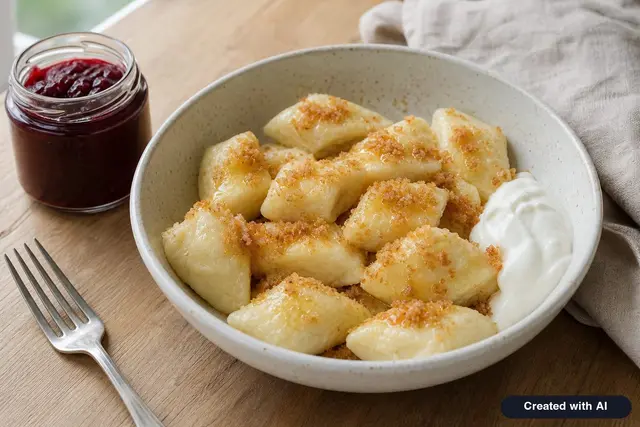 Boiled (lazy vareniki)Soft lazy vareniki that boil in just 4–5 minutes, served with butter-toasted breadcrumbs and sour cream.503 kcal · 35 min
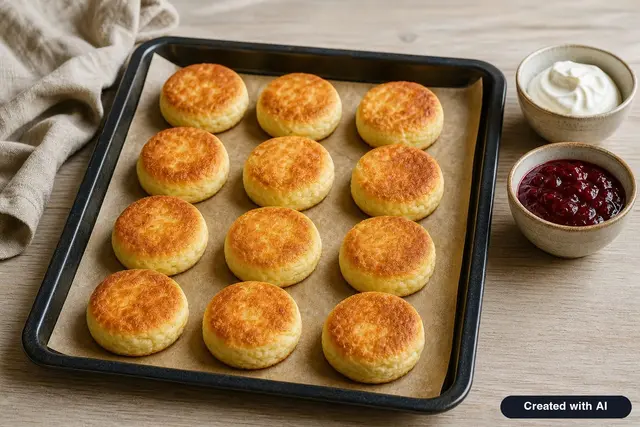 Oven-BakedBake twelve fluffy syrniki on a single sheet pan—no skillet, no oil splatters, and no standing over the stove required.102 kcal · 55 min
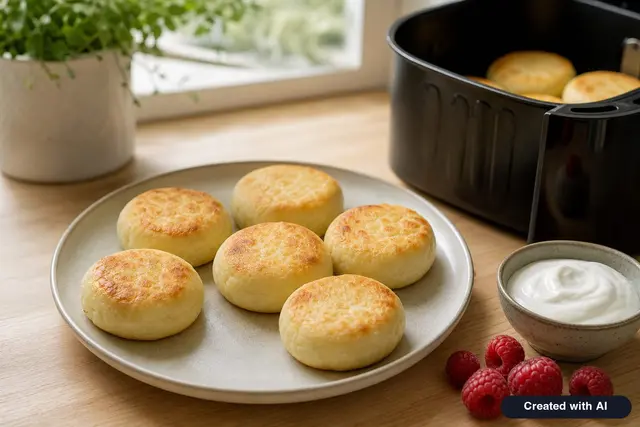 Air FryerAir fryer syrniki baked with just a tablespoon of oil: a thin crust, a soft center, and only about 96 calories each.96 kcal · 51 min
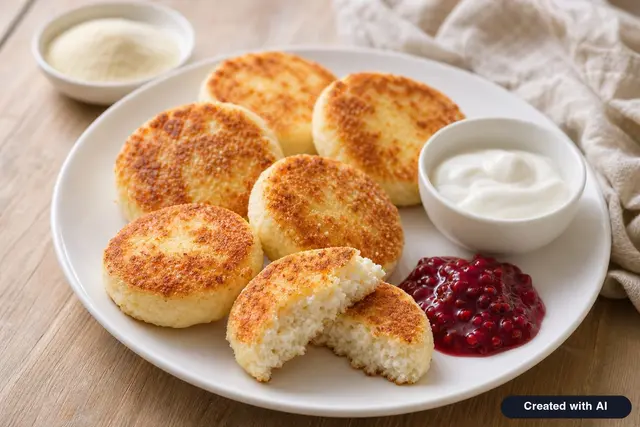 FlourlessSoft fried cottage cheese pancakes bound with semolina instead of flour, plus a chart of gluten-free and egg-free binders.100 kcal · 1 hr 5 min
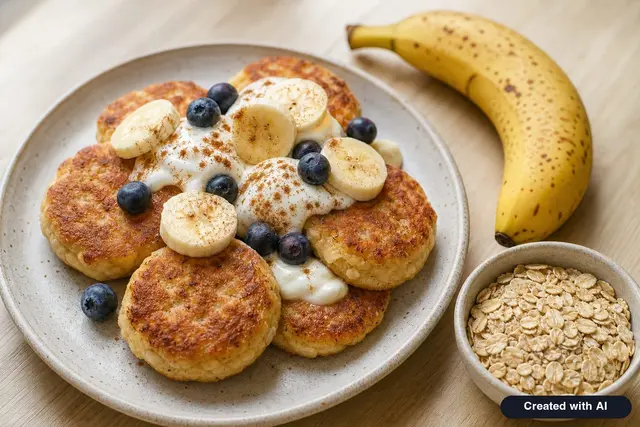 HealthierBanana cottage cheese pancakes sweetened with ripe fruit and made with ground oats instead of flour—only about 103 calories each.103 kcal · 46 min
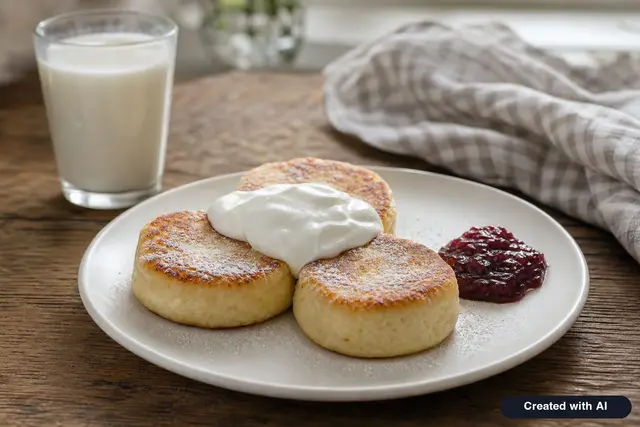 Old fashioned, vintageOld fashioned canteen-style syrniki: puréed dry farmer cheese, minimal flour, and a few minutes in the oven to finish.108 kcal · 50 min
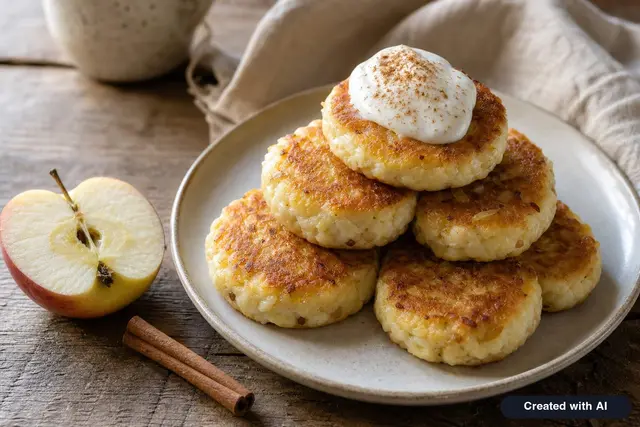 With add-insJuicy apple cottage cheese pancakes with cinnamon, plus a handy chart showing exactly how much of each add-in to use for 2¼ cups (500 g) of farmer cheese.125 kcal · 54 min
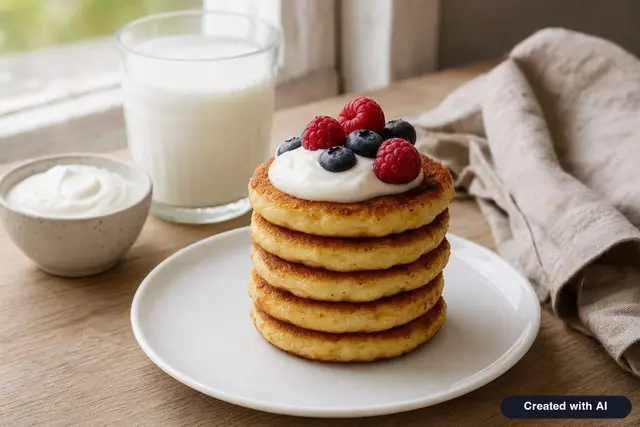 Kefir pancakesFluffy drop-style cottage cheese kefir pancakes, plus separate amounts for versions made with regular cottage cheese and with zucchini.112 kcal · 35 min
Log in to comment
No comments yet. Be the first.