Old Fashioned Syrniki: A Soviet-Era Canteen Recipe
- Only ½ cup (60 g) of flour and one egg per 1.1 lb (500 g) of farmer cheese keeps the inside perfectly cheesy
- Pan-fried syrniki are finished in a 350°F (180°C) oven for 5 to 7 minutes
- How Soviet-era canteen, kindergarten, Ukrainian, and rich vintage syrniki differ
- Ingredients and how to choose them
- How to fry old fashioned syrniki step by step
- Quantities based on the amount of farmer cheese
- Soviet-era, kindergarten, Ukrainian, and rich vintage syrniki: how they differ
- Common mistakes
- Variations
- Lighter version
- How many calories are in old fashioned syrniki
- What to serve with, how to store and freeze
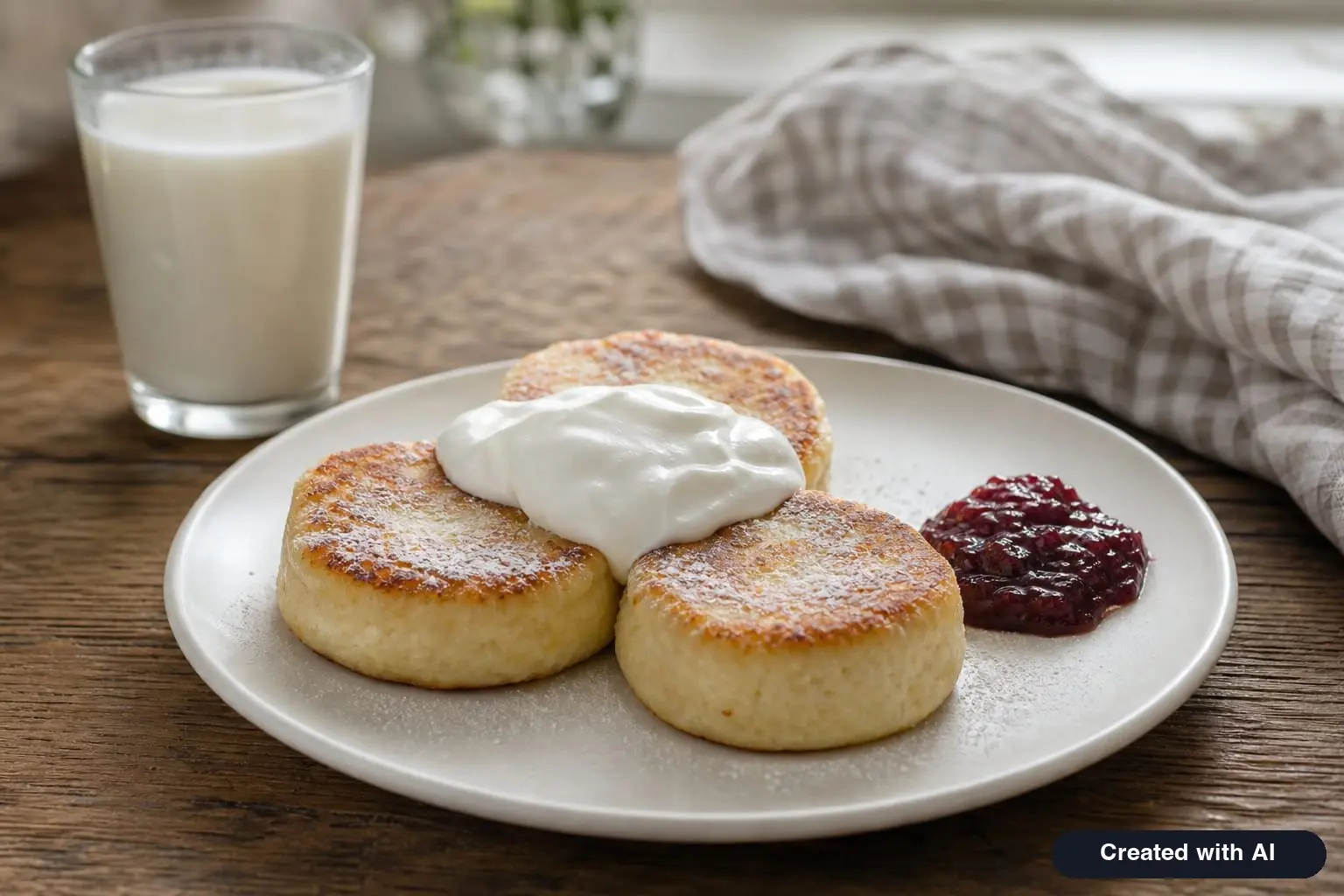
Old fashioned syrniki are the ones many remember from Soviet-era canteens, schools, or kindergartens: smooth, uniform in size, thick, with a thin flour crust and a dense but soft cheese center. They weren't very sweet or very fluffy—the cheese flavor was the star, and the sweetness and moisture came from what was poured on top: sour cream, jam, or kissel (a thickened berry sauce).
They differ from today's typical homemade cottage cheese pancakes in three ways. First, the farmer cheese is dry and pressed through a sieve into a smooth mass, without any curds. Second, very little flour is added, and leavening agents are usually omitted entirely, so the pancake holds its shape and doesn't deflate. Third, the shaped pancakes are dredged in flour, pan-fried, and then finished for a few minutes in the oven or under a lid.
To be clear: there is no single "true" Soviet recipe—every kitchen worked its own way, and at home, proportions were passed by word of mouth. Below is our recipe created in this style, rather than a copy of an official formula. 1.1 lb (500 g) of farmer cheese yields 12 syrniki—four portions of three. If you are looking for fluffier, modern ones, start with the basic cottage cheese pancakes recipe.
In the recipe card, you can adjust the quantities for a different number of pancakes, check off what you've already added, and print it. After the card, each step is explained in more detail.
Old Fashioned Syrniki
No ratings yet – be the firstIngredients
For the dough
For dredging and frying
Directions
- Farmer cheese. Press the farmer cheese through a fine-mesh sieve or mash it very well with a potato masher so no curds remain. If the cheese is wet, squeeze it through cheesecloth for 20 to 30 minutes beforehand.
- Dough. Crack in the egg, add the sugar, vanilla sugar (or extract), and salt, and mix. Sift in the ½ cup (60 g) of flour and mix only until it disappears.
- Rest. Cover and let rest for 10 minutes so the flour absorbs moisture and the dough firms up.
- Shaping. On a floured board, roll out two 2-inch (5 cm) diameter logs, and cut each into 6 pieces. Dredge in flour, flatten to ½-inch (1.5 cm) thickness, even out the edges with the side of a knife, and shake off excess flour.
- Frying. Heat the oil in a skillet over medium heat. Fry for 3 to 4 minutes on one side and about 3 minutes on the other, until evenly golden.
- Finishing. Transfer to a baking dish and bake in a 350°F (180°C) oven for 5 to 7 minutes, or cook in the skillet under a lid on low heat for 3 to 4 minutes, so the inside cooks evenly.
- Serving. Serve warm, three per portion, with sour cream, jam, or kissel (berry sauce).
- Calories
- 108 kcal
- Protein
- 5.9 g
- Fat
- 4.8 g
- of which saturated
- 1.1 g
- Carbohydrates
- 10.2 g
- of which sugars
- 4.5 g
- Fiber
- 0.2 g
Calculated with the Firmus Medicus calorie database (USDA, Fineli).
Ingredients and how to choose them
The cheese determines almost everything. Old fashioned syrniki are made from dry, crumbly curd cheese (tvorog), so in the US buy farmer cheese or dry-curd cottage cheese, ideally whole-milk; Eastern European delis also sell it as tvorog. It should hold together in a block and not release whey. The wetter the cheese, the more flour it will demand, and then the pancake becomes more like a floury fritter. If you only have wetter cheese, wrap it in cheesecloth or a clean towel and press it under a weight for 20 to 30 minutes—during this time, 1.1 lb (500 g) will release 2 to 4 tablespoons of liquid. Creamy cheese and regular cottage cheese straight from the tub don't suit this recipe: their wet curds demand far more flour. If regular cottage cheese is all you can find, drain and press it for the full 20–30 minutes and push it through a sieve.
Egg – one per 1.1 lb (500 g) of farmer cheese. This is intentionally minimal: the egg just binds the mixture. If you add two, the dough becomes too wet and asks for more flour. If your eggs are very large and the cheese is on the wetter side, you can use just the yolk—then the inside will be yellower and richer.
Flour – regular all-purpose flour. We add ½ cup (60 g) to the dough, and another 3 tablespoons (25 g) is needed for dredging. This is very little compared to many modern recipes, which use ¾ to 1¼ cups (100–150 g) of flour per 1.1 lb (500 g) of cheese. It's precisely because of the low flour content that the inside remains cheesy, not bready.
Sugar – 3 tablespoons (40 g). The dough for these pancakes is sweetened moderately for a practical reason: sugar caramelizes quickly in the pan, so a sweet dough will brown before the center has time to heat up. The missing sweetness is provided by the sauce. A teaspoon of vanilla sugar (or vanilla extract) is the only flavoring added.
Salt – a good pinch. Without it, the cheese tastes bland, no matter how much sugar you add.
Fat for frying. We use 2 tablespoons of neutral oil, such as sunflower or canola. If you want a richer flavor, toss a piece of butter into the pan at the end: frying in butter alone is risky because it starts to burn before the syrniki are cooked through.
How to fry old fashioned syrniki step by step
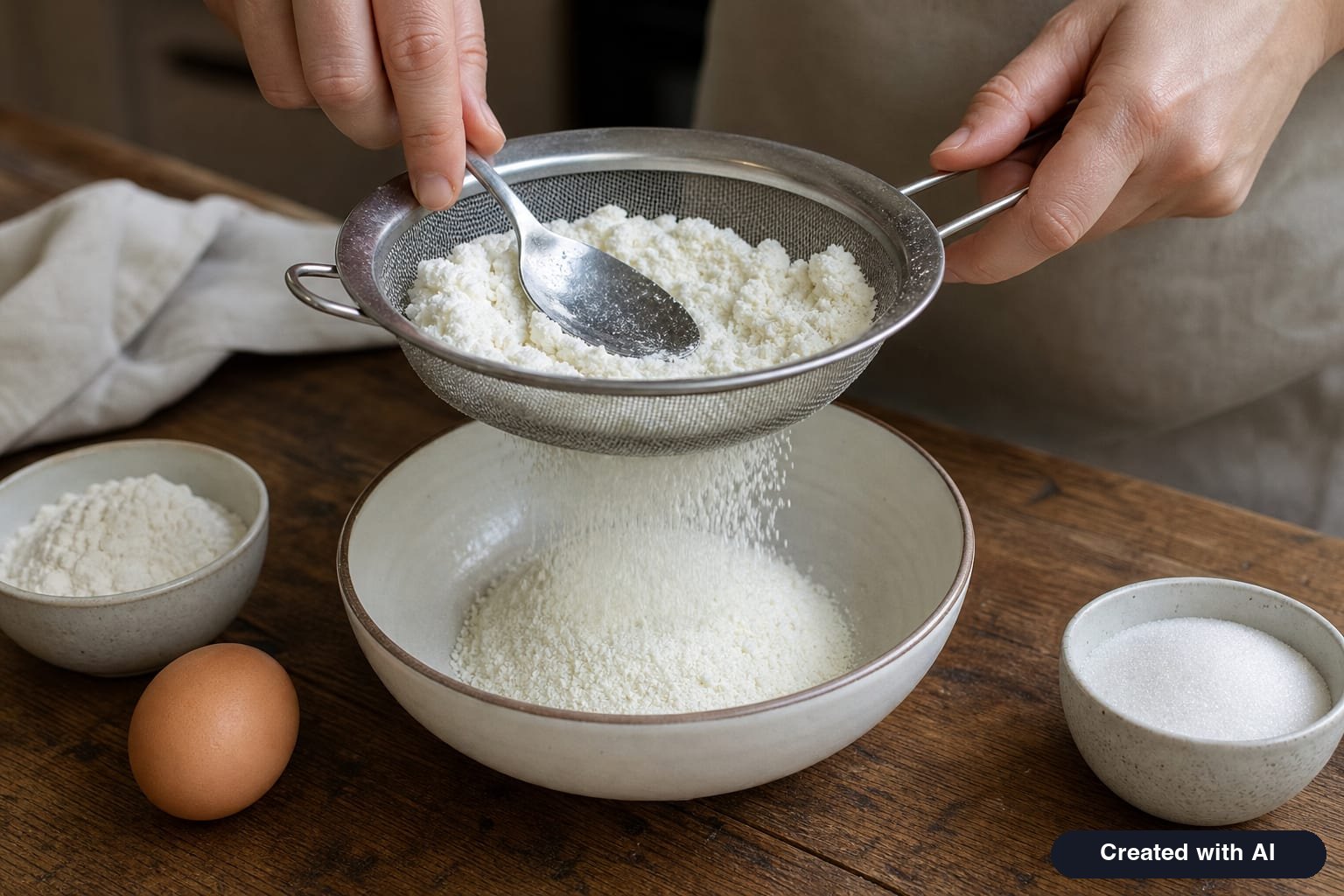
1. Purée the cheese. Press the farmer cheese through a fine-mesh sieve with a spoon or mash it very well with a potato masher; you can also pulse it briefly in a food processor. This is the most important step for this style: a smooth mass binds together better, so it needs less flour, and the cooked pancake will be smooth when cut, without individual curds. Do not blend it for a long time with an immersion blender—the cheese will become too liquid.
2. Mix the dough. Crack the egg into the cheese, add the sugar, vanilla sugar (or extract), and salt, and mix with a spoon. Then sift in the ½ cup (60 g) of flour and mix only until it disappears. Kneading for a long time develops gluten in the flour, making the syrniki rubbery. The dough should be soft, slightly sticky, but hold its shape when you squeeze a ball out of it. If it drips off the spoon, stir in one more tablespoon of flour—no more.
3. Let it rest. Cover the bowl and leave it for 10 minutes. During this time, the flour absorbs moisture, the sugar dissolves, and the dough firms up—it will be easier to shape, and you won't need to add extra flour.
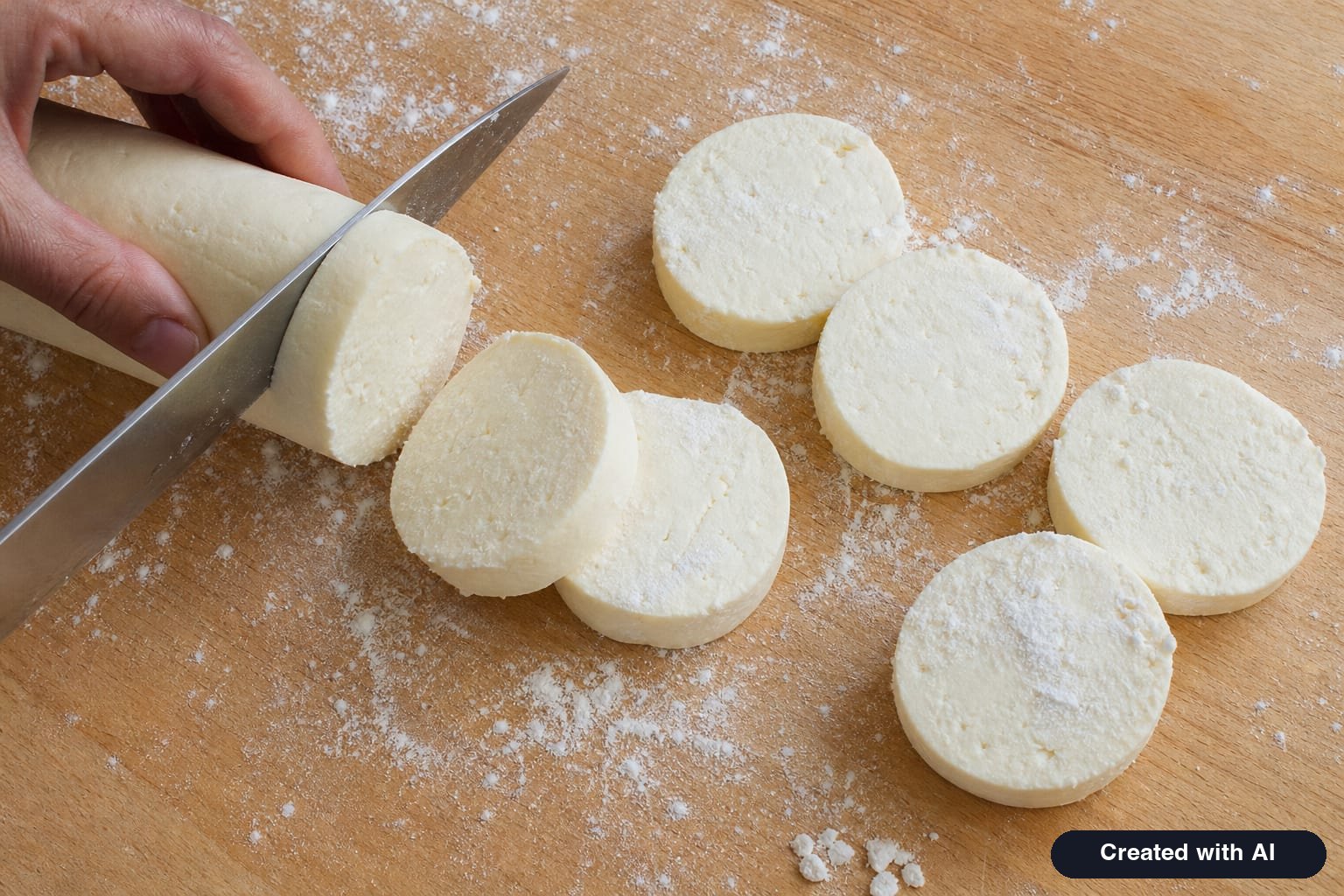
4. Shape. Dust a cutting board with flour. Divide the dough in half, and with floured hands, roll each part into a log about 2 inches (5 cm) in diameter, then cut it into 6 equal pieces. Dredge each piece in flour, flatten it to a thickness of ½ inch (1.5 cm), and use the side of a knife to even out the edges so you get a neat disc with straight sides. Shake off the excess flour: a thick layer of flour will burn in the pan and turn bitter. Don't make them thinner than ½ inch (1.5 cm)—they will dry out.
5. Pan-fry. Heat the oil in a wide skillet over medium heat. Add the syrniki, leaving space between them, and fry for 3 to 4 minutes until the bottom is evenly golden, then flip and fry for another 3 minutes. The heat shouldn't be too high: in a pan that's too hot, the crust will brown in a minute, while the inside remains cold and raw. 12 syrniki will only fit in a very large skillet at once, so they are usually fried in two batches.
6. Finish in the oven or under a lid. Transfer the pan-fried syrniki to a baking dish and place them in an oven preheated to 350°F (180°C) for 5 to 7 minutes. The reason for this step is simple: a thick pancake has time to brown in the pan, but doesn't always cook through to the center, while in the oven it heats evenly, puffs up slightly, and sets. If you don't want to turn on the oven, reduce the heat to low, cover the skillet with a lid, and let them cook for 3 to 4 minutes.
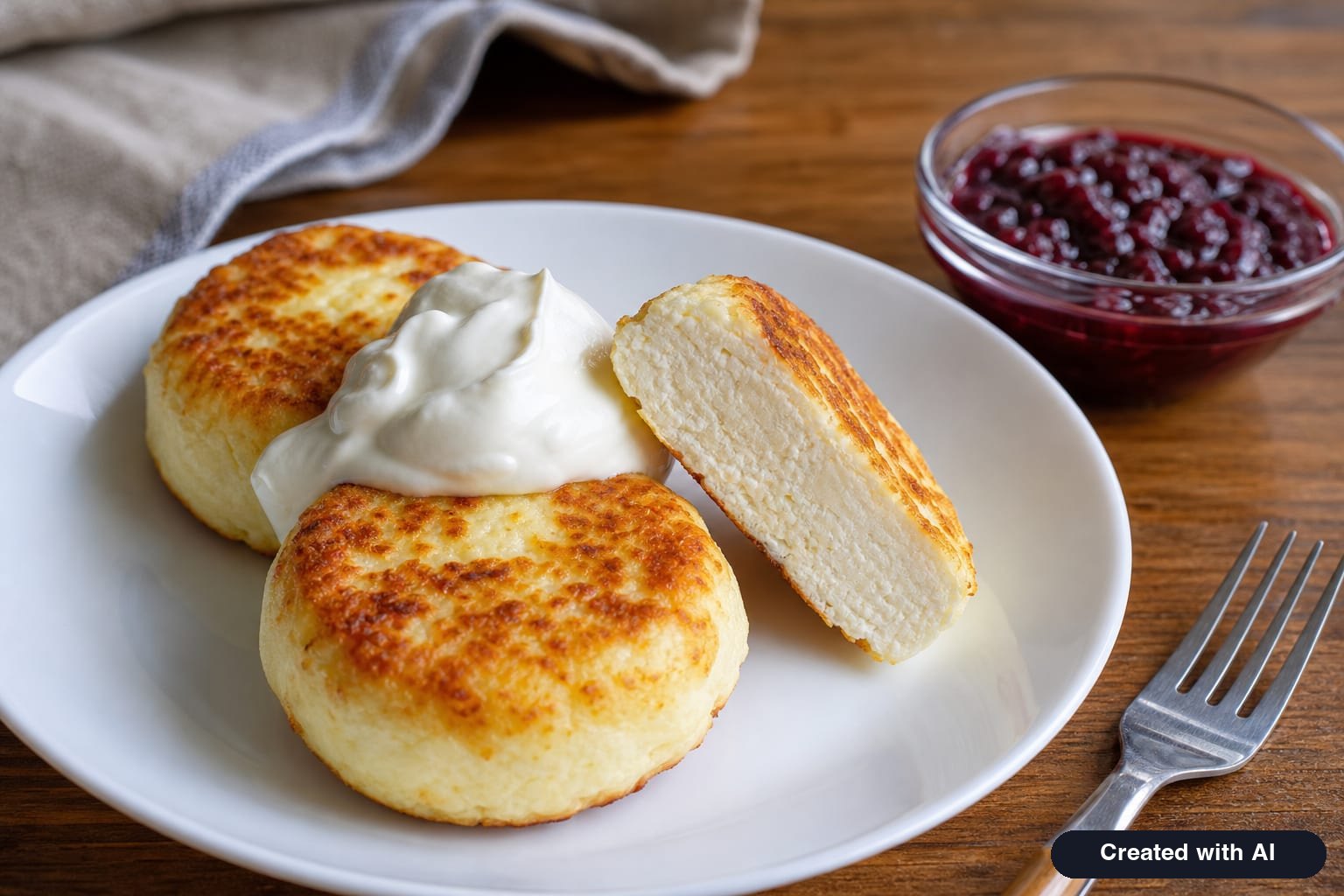
7. Serve warm. Place the syrniki on a plate, three at a time, and top with sour cream. They taste best 5 minutes after cooking, when the inside is still warm but has already set.
Quantities based on the amount of farmer cheese
| Farmer cheese | Eggs | Flour for dough | Flour for dredging | Sugar | Yield |
|---|---|---|---|---|---|
| 9 oz (250 g) | 1 yolk or half an egg | ¼ cup (30 g) | 2 tbsp (15 g) | 1½ tbsp (20 g) | 6 syrniki |
| 1.1 lb (500 g) | 1 | ½ cup (60 g) | 3 tbsp (25 g) | 3 tbsp (40 g) | 12 syrniki |
| 2.2 lb (1 kg) | 2 | 1 cup (120 g) | 6 tbsp (50 g) | 6 tbsp (80 g) | 24 syrniki |
When frying from 2.2 lb (1 kg) of farmer cheese, keep the first batch in a warm oven—this way, all the syrniki come to the table equally warm, and the step of finishing them in the oven happens naturally.
Soviet-era, kindergarten, Ukrainian, and rich vintage syrniki: how they differ
All these names refer to the same dish—fried farmer cheese pancakes—but people use them to describe different styles. There are no strict boundaries, so the table only shows the most common features, not rules.
| Style | Characteristics | Binder | Served with |
|---|---|---|---|
| Soviet-era (canteen) | Puréed dry farmer cheese, uniform thick discs, flour crust, no leavening | A little all-purpose flour | Sour cream, jam, kissel |
| Kindergarten-style | Softer, less browned, often finished or entirely baked in the oven | Flour or semolina | Sweet sour cream or milk sauce, kissel |
| Ukrainian (syrnyky) | Very cheese-forward, tall, often with raisins and vanilla | Minimal flour, mostly for dredging | Sour cream, jam, honey |
| Rich vintage-style | Richer—with yolks, butter, or sour cream in the dough; the term is also used for boiled dumplings | Flour | Melted butter, sour cream, cinnamon sugar |
| Modern fluffy | With baking powder or baking soda, lighter, more risen | More flour | Yogurt, berries, syrups |
Kindergarten-style. Many remember that kindergarten syrniki were lighter in color and softer than those fried at home. This result comes from two things: part of the flour is replaced with semolina, which absorbs moisture as it swells and leaves the inside tender, and the syrniki are baked on a sheet pan rather than fried in oil in a skillet. If you want to replicate this: replace the ½ cup (60 g) of flour in the dough with ⅓ cup (50 g) of semolina, let the mixture rest for 20 minutes, and bake following the baked syrniki recipe.
Ukrainian syrniki. In Ukrainian, this dish is called "syrnyky"—from the word "syr," which also means farmer cheese there. Outside Ukraine, "Ukrainian-style" usually means the most cheese-forward syrniki: made from very dry farmer cheese, with one yolk or egg, adding only enough flour to hold the mass together, and often with a handful of raisins. Using our recipe, you can make them by adding ¼ to ⅓ cup (30–40 g) of flour to the dough instead of ½ cup (60 g), stirring in ⅓ cup (50 g) of scalded and dried raisins, and shaping them into taller discs, about ¾ inch (2 cm) thick. For these, finishing in the oven is mandatory. A version with no flour at all in the dough is described in the flourless cottage cheese pancakes section.
Rich vintage-style syrniki. The name points to prewar home cooking, though there is no single established recipe behind it. Usually it means a richer version: only yolks plus a tablespoon of soft butter or sour cream go into the dough, and the syrniki are served with melted butter. The same name is also often used for boiled rather than fried cottage cheese dumplings – if that's what you're after, see the lazy vareniki recipe.
Traditional homemade syrniki were usually fried "by eye": farmer cheese, an egg, a handful of flour, a pinch of sugar and salt. If you want nostalgic syrniki like the ones a grandmother would fry, exact grams are less important than three principles—dry farmer cheese, little flour, and unhurried frying over medium heat.
Common mistakes
Syrniki fall apart and spread in the pan. The farmer cheese was too wet, or too many eggs were added. Squeeze the cheese through cheesecloth and stick to one egg per 1.1 lb (500 g). It's not worth pouring in flour until the dough hardens—the taste will suffer more than the shape.
Hard and rubbery. Too much flour or kneaded for too long. The dough for old fashioned syrniki is mixed with a spoon, briefly, and always remains slightly sticky.
Top is dark, inside is raw. The heat is too high, or the syrniki are too thick without being finished in the oven. Fry over medium heat and don't skip the sixth step.
Bitter aftertaste. Excess flour burned. Shake off the syrniki before placing them in the pan, and wipe the skillet with a paper towel between batches and add fresh oil.
Curds can be felt. The farmer cheese wasn't puréed. This is the only step in this recipe that cannot be skipped.
Variations
With raisins. Soak ⅓ cup (50 g) of raisins in hot water for 5 minutes, dry them well, and stir them into the dough. Undried raisins bring water, and the dough becomes too wet.
With semolina. Replace the ½ cup (60 g) of flour in the dough with ⅓ cup (50 g) of semolina (farina), and let the dough rest for 20 minutes before shaping. The inside will be more tender, and the crust crispier.
With potatoes. In some families, boiled, mashed, and cooled potatoes are added to the syrniki dough—about 5 oz (150 g) per 1.1 lb (500 g) of farmer cheese. This variation, like other additions, is covered in apple cottage cheese pancakes and other add-ins.
One large instead of twelve. If you don't have time to shape them, it's more convenient to bake a cottage cheese casserole from the same ingredients—its taste is very close to canteen syrniki.
Lighter version
These syrniki are already not heavy by nature, as they have little flour and sugar. Most of the calories depend on how much fat the crust absorbs and what you pour over them. Here is what specific changes do, calculated per pancake:
| Change | How | kcal / pancake | Difference |
|---|---|---|---|
| Main recipe | as written above | 108 | – |
| Low-fat farmer cheese | 1.1 lb (500 g) of low-fat farmer cheese instead of whole-milk | 97 | −11 |
| Half the oil | 1 tbsp of oil in a non-stick skillet instead of 2 tbsp | 97 | −11 |
| Half the sugar | 1½ tbsp (20 g) of sugar instead of 3 tbsp (40 g) – sweetness comes from jam or kissel | 101 | −7 |
| No flour dredge | shape with wet hands, flour only in the dough | 100 | −8 |
| With semolina (kindergarten-style) | ⅓ cup (50 g) of semolina instead of ½ cup (60 g) of flour in the dough, rest for 20 min. | 104 | −4 |
| With raisins (Ukrainian-style) | + ⅓ cup (50 g) of scalded and dried raisins | 120 | +12 |
Calculated with the Firmus Medicus calorie database, with the recipe divided into 12 syrniki.
The biggest difference comes from two changes: low-fat farmer cheese and half the oil—each subtracts about 11 kcal per pancake (leaving about 97 kcal instead of 108). Halving the sugar saves about 6 kcal, and skipping the flour dredge saves about 8 kcal, but then you lose the characteristic crust. Semolina barely changes the calories (about 104 kcal)—its purpose is texture, not lightness. Add-ins tip the numbers the other way: with ⅓ cup (50 g) of raisins, a pancake has about 120 kcal, and each tablespoon (30 g) of sour cream added to a portion of three syrniki adds about 60 kcal.
How many calories are in old fashioned syrniki
One pancake (about 2 oz or 60 g of raw dough) has about 108 kcal, 5.9 g of protein, and 4.8 g of fat. A portion of three syrniki without sauce is about 320 kcal, and with a tablespoon of sour cream, it's about 380 kcal. This is calculated assuming all the frying oil is absorbed; in reality, some of it remains in the pan, so the actual number is slightly lower. Below is how many calories each ingredient contributes.
| Ingredient | Amount | kcal, whole recipe | Share |
|---|---|---|---|
| Cottage cheese | 500 g | 490 | 38 % |
| Sunflower oil | 30 g | 265 | 21 % |
| White wheat flour | 60 g | 218 | 17 % |
| Granulated sugar | 40 g | 155 | 12 % |
| White wheat flour | 25 g | 91 | 7 % |
| Egg | 50 g | 72 | 6 % |
| Table salt | 2 g | 0 | 0 % |
| Total | 707 g | 1291 | 108 kcal / pancake |
Ingredient values – Firmus Medicus calorie database.
What to serve with, how to store and freeze
The classic combination is sour cream and a teaspoon of jam: strawberry, raspberry, or blackcurrant. In canteens, syrniki were often topped with a thick berry kissel; at home, you can replace it with berries pressed through a sieve and heated with a tablespoon of sugar. If you want a sweet sour cream sauce, mix ⅔ cup (150 g) of sour cream with a tablespoon of powdered sugar and a pinch of vanilla sugar or extract—the powdered sugar dissolves immediately, and the sauce doesn't stay grainy.
Cooked syrniki will keep in an airtight container in the refrigerator for 2 to 3 days. Reheat them in a skillet under a lid over low heat or for 8 to 10 minutes in a 325°F (160°C) oven; they heat up quickly in the microwave, but the crust softens.
It's best to freeze them uncooked: arrange the shaped and flour-dredged syrniki on a cutting board, freeze them, and then transfer them to a bag. They will keep in the freezer for up to 2 months. Fry them without thawing, over lower heat, under a lid, for 5 to 6 minutes per side, and be sure to finish them in the oven.
If you want to compare them with a modern, fluffier version, try the basic cottage cheese pancakes recipe. For another taste of childhood, try lazy vareniki with butter and toasted breadcrumbs, and if you want to avoid pan fat entirely—try baked syrniki.
Frequently asked questions
How are old fashioned syrniki different from regular ones?
They are made from dry, sieved farmer cheese with very little flour (about ½ cup or 60 g per 1.1 lb or 500 g of cheese) and usually no baking powder. The shaped pancakes are dredged in flour, pan-fried, and finished in the oven, making them smooth, thick, and denser than modern fluffy versions.
What kind of cheese do you need for old fashioned syrniki?
Dry, crumbly whole-milk farmer cheese or dry-curd cottage cheese (tvorog) that doesn't release whey. Regular cottage cheese is too wet unless drained and pressed. Squeeze wetter cheese through cheesecloth for 20 to 30 minutes, and press it through a fine-mesh sieve before mixing the dough so no curds remain.
How do you make kindergarten-style syrniki?
Replace the ½ cup (60 g) of flour in the dough with ⅓ cup (50 g) of semolina (farina or Cream of Wheat), let the mixture rest for 20 minutes, and bake the syrniki entirely in the oven (or at least finish them there). This makes them lighter in color and softer.
What makes Ukrainian syrniki special?
Ukrainian syrniki are very cheese-forward: made from dry farmer cheese with only ¼ to ⅓ cup (30–40 g) of flour per 1.1 lb (500 g) of cheese, often with raisins and vanilla. They are taller—about ¾ inch (2 cm)—and must be finished in the oven or under a lid.
What are rich vintage-style syrniki?
There is no single set recipe – the term usually means a richer, prewar-style version made with egg yolks, butter, or sour cream in the dough and served with melted butter. In some kitchens, the same name is also used for boiled cottage cheese dumplings.
Why do you need to finish syrniki in the oven?
A ½-inch (1.5 cm) thick pancake browns in the pan faster than its center heats up. Baking for 5 to 7 minutes in a 350°F (180°C) oven or cooking for 3 to 4 minutes under a lid on low heat allows it to cook evenly and set.
How many calories are in old fashioned syrniki?
According to this recipe, one pancake has about 108 kcal, a portion of three has about 320 kcal, and with a tablespoon of sour cream, it's about 380 kcal. Made with low-fat farmer cheese, one pancake has about 97 kcal.
What do you serve with traditional syrniki?
Usually with sour cream and jam, and in canteens, often with a thick berry kissel (fruit soup). For a sweet sauce, mix ⅔ cup (150 g) of sour cream with a tablespoon of powdered sugar and a pinch of vanilla sugar or extract.
Log in to comment
No comments yet. Be the first.