Berberine Patch: Does It Work, Side Effects and Evidence
- Oral berberine lowered weight by about 0.8 to 2 kg in meta-analyses, mainly at more than 1 gram a day; NIH calls the evidence inconclusive.
- Leading patch labels list 8 to 11 mg of berberine, roughly 1% of the studied oral dose.
- No published human study has measured berberine absorption from a skin patch.
- What berberine is
- What the research on oral berberine shows
- Where the GLP-1 claim comes from
- Can berberine get through the skin?
- Patch dose vs. studied dose
- Moringa berberine patches, "berberine x NAD" and other variants
- Do berberine patches work?
- Berberine patch side effects
- Berberine patch vs. berberine capsules
- What berberine patches cost
- How to judge a berberine patch listing
- The bottom line
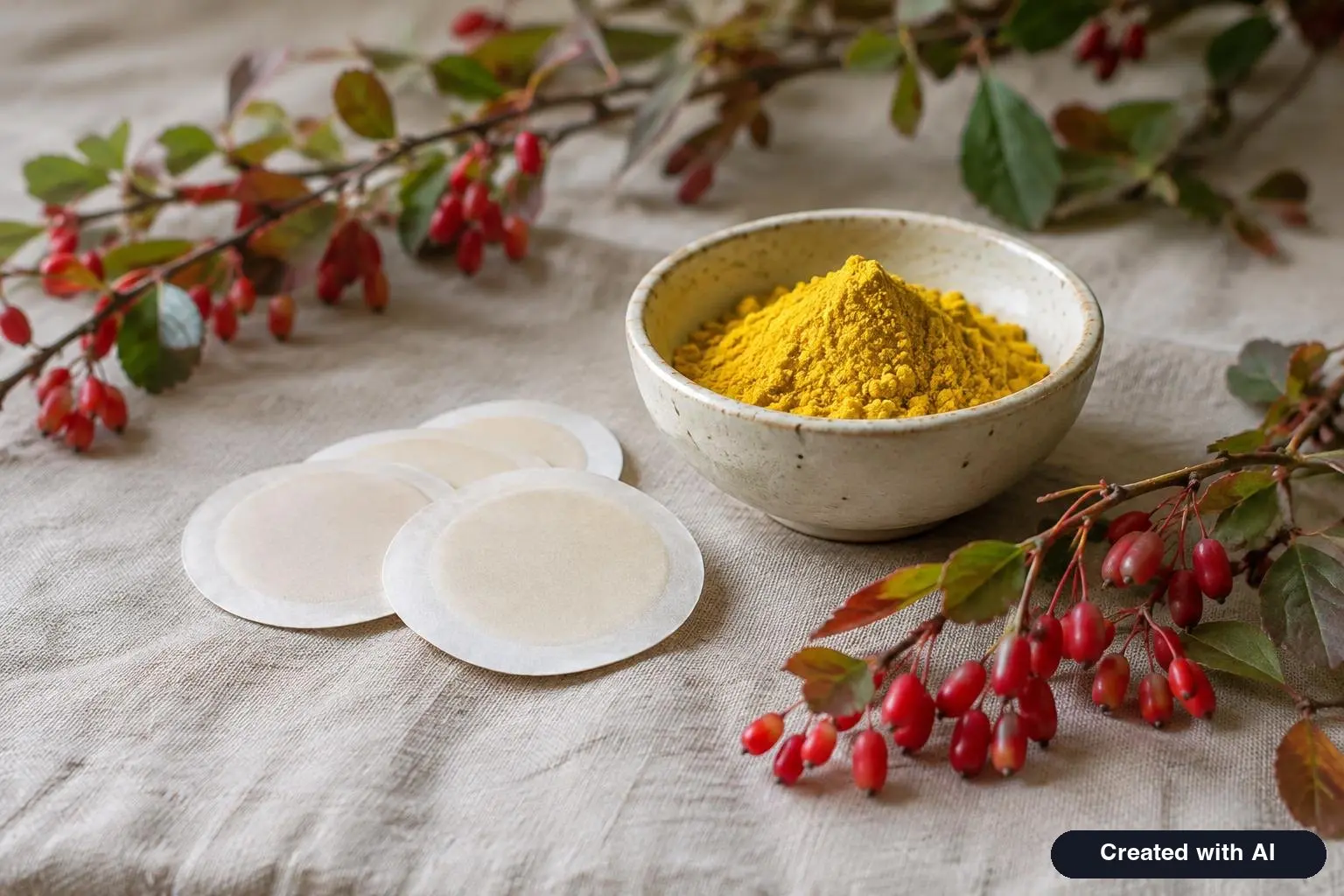
A berberine patch is an adhesive skin patch that lists berberine, a yellow plant compound, as its main ingredient and is sold for weight management, appetite control or blood sugar "support." There is no published human study showing that berberine from a patch reaches the bloodstream in a useful amount or causes weight loss. The research people cite for berberine was done with capsules, usually 1,000 mg or more a day; a typical patch lists about 8 to 11 mg.
Berberine patches and "GLP-1 patches" are largely the same product under two names. In a University of Connecticut review of 25 skin products marketed with the term GLP-1, berberine was the most common ingredient, listed on 56% of them. This guide covers what berberine can and cannot do, whether it gets through skin, the moringa and NAD versions, side effects, and how a patch compares with the capsule form that has actually been studied.
What berberine is
Berberine is an alkaloid found in the roots, bark and stems of several plants, including goldenseal, barberry and Oregon grape. Plants containing it have a long history in Ayurvedic and Chinese medicine, according to the National Center for Complementary and Integrative Health (NCCIH), and have been used for infections, skin conditions and digestive complaints. Modern research has focused on blood sugar, cholesterol and, more recently, weight.
On social media it picked up the nickname "nature's Ozempic." The comparison does not hold. Ozempic's active drug, semaglutide, directly activates GLP-1 receptors for about a week per dose. Berberine does not act on that receptor. Its proposed effects run through other pathways, and its measured effect on weight is a small fraction of what GLP-1 drugs achieve.
What the research on oral berberine shows
The evidence for berberine comes from trials of capsules and tablets, most of them small and conducted in Asia in people with diabetes, fatty liver disease or other metabolic conditions.
| Outcome | Average change with oral berberine vs. control | Source |
|---|---|---|
| Body weight | −2.07 kg (about 4.5 lb) | Asbaghi et al., Clinical Nutrition ESPEN, 2020, 12 trials |
| Body weight | −0.84 kg (about 1.9 lb) | Zamani et al., Frontiers in Nutrition, 2022 |
| Body mass index | −0.25 to −0.47 points | Both analyses |
| Waist circumference | −1.08 cm | Asbaghi et al., 2020 |
| Fasting blood glucose | −7.74 mg/dL | Zamani et al., 2022 |
| HbA1c | −0.45 percentage points | Zamani et al., 2022 |
| LDL cholesterol | −9.63 mg/dL | Zamani et al., 2022 |
Those numbers are worth taking seriously and worth keeping in proportion. A change of 2 to 5 pounds is real but modest, and NCCIH's summary is restrained: "Some studies suggest that it might, but the evidence is not conclusive." The agency notes that weight effects were seen "primarily in people who took berberine in doses of more than 1 gram per day and for more than 8 weeks," that many included studies "had a high risk of bias," and that results across trials were inconsistent. The 2022 analysis identified roughly 1 gram a day as the optimal dose for weight.
Every figure in that table comes from berberine that was swallowed.
Where the GLP-1 claim comes from
Patch sellers often say berberine "supports natural GLP-1 production." The idea traces to laboratory work. In a 2015 study in Biochemical Pharmacology, berberine prompted human intestinal cells in a dish to release GLP-1 by activating a bitter taste receptor on the cells' surface. Animal studies have reported similar signals.
Two things follow. First, a cell experiment shows a possible mechanism, not a clinical effect; whether oral berberine raises GLP-1 enough in people to affect appetite has not been established. Second, the mechanism sits in the lining of the intestine, where swallowed berberine arrives in high concentration. A patch is meant to deliver berberine through the skin into the blood, skipping the gut. The University of Connecticut pharmacists who reviewed these products wrote in the Annals of Pharmacotherapy in 2026 that "it is unclear how placing nutrients into the bloodstream through the skin and not having it track through the gastrointestinal tract would cause GLP-1 secretion."
Can berberine get through the skin?
This is the question the whole product rests on, and there is no human answer to it.
Skin's outer layer blocks most substances. Dermatologists use a rule of thumb that a compound generally needs a molecular weight under 500 daltons to pass, and berberine, at about 336 daltons, clears that bar. Size is only one requirement, though. Berberine carries a permanent positive charge, and charged molecules tend to cross the skin's fatty barrier poorly. Small size makes skin delivery conceivable. It does not show that it happens.
What researchers have done:
- Animal and lab studies. C. Michael White, the pharmacy professor who led the Connecticut review, told PBS News that in animal studies transdermal delivery has shown some promise for improving how much berberine the body can use compared with oral dosing, where absorption is known to be poor.
- Microneedle experiments. A 2024 study in Analytical and Bioanalytical Chemistry loaded berberine into chitosan microneedle arrays, which physically pierce the outer skin layer, and mapped where the compound spread in skin tissue. It was an imaging study of a delivery technology, not a test of weight or blood sugar.
- Human patch studies. None. "What we don't have, at least not in the literature, is anybody that studied these products in humans in a transdermal patch formulation," White said.
Cleveland Clinic endocrinologist Keren Zhou, MD, reached the same conclusion: "There's no scientific evidence that your body can effectively absorb berberine through your skin."
Patch dose vs. studied dose
| Product or study | Berberine amount | Route |
|---|---|---|
| Clinical trials showing weight effects | Mostly more than 1,000 mg a day, often split into two or three doses | Oral |
| Kind Patches Berberine Patches | 8.75 mg berberine extract per patch | Skin |
| Ledisa GLP-1 Patches | 8 mg berberine extract plus 3 mg berberine hydrochloride per patch | Skin |
On those label figures, a daily patch holds roughly 1% of the oral dose used in trials. Sellers answer that skin delivery avoids the gut, where most swallowed berberine is lost, so less is needed. That argument is reasonable in principle and unproven in practice. Without a study measuring berberine in the blood of people wearing the patch, no one can say whether the delivered amount is meaningful, trivial or zero. A manufacturer confident in its delivery system could commission that study. None has published one.
There is also the matter of trust in the label. None of the 25 products in the Connecticut review carried USP or NSF certification or posted a certificate of analysis, and four listed no ingredients at all.
Moringa berberine patches, "berberine x NAD" and other variants
Search interest has spread from plain berberine patches to combination products, often sold on marketplaces under changing brand names.
Moringa and berberine patches
These add extract of moringa, a tree whose leaves are eaten as a vegetable and sold as a supplement. Listings commonly describe them as "10-in-1" or "slimming" patches. We found no clinical trial of a moringa patch for weight in people, and no manufacturer label with verified amounts for the versions most searched.
Berberine x NAD patches
NAD+ is a coenzyme involved in cellular energy production that has become a popular "longevity" ingredient. Pairing it with berberine in a patch is a marketing combination, not one drawn from a clinical study. No published human trial has tested a berberine and NAD patch for weight loss, energy or any other outcome.
"Nano microneedle" berberine patches
Some listings claim tiny needles drive ingredients deeper. Real microneedle drug patches are made under sterile pharmaceutical standards and tested in trials. The FDA says the microneedling devices it has authorized are for improving the appearance of certain scars and wrinkles and are not approved for delivering drugs or vitamin solutions into the skin. A consumer patch that truly pierced the skin and held an untested mixture against it would raise infection and irritation concerns; one that does not pierce the skin is not a microneedle patch.
Purisaki berberine patches
Purisaki is a berberine patch brand many people search for by name. As of October 14, 2026, its official website states that the company has "chosen to pause new orders for now" and that existing subscriptions continue. The site did not show an ingredient label or price when we checked, so we cannot report what the patch contains or how much berberine it lists. If you are an existing subscriber, the label on the pouch you receive is the only place to confirm the formula and amounts.
Brand-specific pricing, refund and cancellation terms are covered in GLP-1 patch reviews.
Do berberine patches work?
There is no evidence that they do. The chain of reasoning behind them has a weak first link and two missing ones: oral berberine has a small, inconsistent effect on weight; absorption from a patch has not been measured in people; and the GLP-1 mechanism the marketing leans on would not obviously operate through the skin. When the Connecticut team read customer reviews for nine of these products, "no beneficial effects" was the most common comment, with 47 of 123 reports.
Some users do report less hunger. Daily rituals, expectation and concurrent diet changes can all produce that feeling, and people who start a patch often change how they eat the same week. Our page Do GLP-1 patches work? goes through those explanations and the dose math in detail.
Berberine patch side effects
Two sources of risk apply: the patch itself and the berberine, if any is absorbed.
- Skin reactions. In buyer reviews, skin problems were the most common health complaint: rash, irritation, blisters, skin damage on removal and what some described as chemical burns. Remove the patch and wash the area if you feel burning or itching.
- Digestive symptoms. NCCIH lists nausea, abdominal pain, bloating, constipation and diarrhea as the main side effects of oral berberine.
- Drug interactions. Berberine has been shown to interact with cyclosporine, a transplant drug, and may interact with other medicines. Because oral berberine lowers blood sugar, people on insulin or other diabetes drugs should be especially careful.
- Pregnancy, breastfeeding and infants. NCCIH warns that berberine exposure "has been linked to a harmful buildup of bilirubin in infants, which can cause brain damage," and that it "may also be unsafe for use during pregnancy or while breastfeeding." Keep patches away from babies and do not use them if you are pregnant or nursing.
White has cautioned that skin delivery bypasses the liver's first pass at breaking compounds down, so a transdermal product could in theory behave differently from an oral one at the same absorbed dose. A fuller list of warning signs is in GLP-1 patch side effects.
Berberine patch vs. berberine capsules
| Berberine patch | Berberine capsules | |
|---|---|---|
| Human trials | None | Dozens of small randomized trials |
| Typical labeled dose | About 8 to 11 mg a day | 500 mg two or three times a day in most studies |
| Average weight effect | Unknown | Roughly 1 to 2 kg over a few months |
| Legal category | Not a dietary supplement under FDA's definition, which requires products to be swallowed | Dietary supplement |
| Third-party testing available | None found in the Connecticut review | Some brands carry USP or NSF verification |
| Main side effects | Skin irritation | Gut upset |
If you are interested in berberine itself, the capsule is the form with data behind it. That is not a recommendation to take it. The FDA does not review supplements for safety or effectiveness before sale, quality varies between brands, and the weight effect is small. Talk with a doctor or pharmacist first, particularly if you take medication for diabetes, blood pressure, cholesterol or a transplant, and look for a product verified by U.S. Pharmacopeia, NSF or ConsumerLab.
What berberine patches cost
As of October 14, 2026, Kind Patches lists its 30-count Berberine Patches at $15. Ledisa lists its GLP-1 Patches, which contain berberine, at $25 for a one-month pack bought once or $21.50 by subscription, and its separate Berberine Patches at $42.95. Marketplace prices for unbranded moringa and NAD combinations vary widely and change often. At $15 to about $43 a month, a year of patches runs roughly $180 to $515.
For comparison, the lowest self-pay price for an FDA-approved GLP-1 pill was $149 a month in October 2026, for the starting doses of the Wegovy pill and Foundayo. That is about five to ten times the price of a patch, for a medicine with trial data and a prescriber involved. The cost table in our main GLP-1 patch guide lays out the options.
How to judge a berberine patch listing
- Does the label give the berberine amount in milligrams per patch?
- Does the seller cite a study of the patch, or only studies of oral berberine?
- Is there a certificate of analysis or a third-party seal?
- Does it avoid drug names such as Ozempic, semaglutide or "GLP-1 medication"?
- Does it carry pregnancy, age and medication warnings? In the Connecticut review, 72% of products gave no health precautions.
- Can you buy one pack without being enrolled in a subscription?
- Is there a company name and physical address?
The Federal Trade Commission's guidance for consumers is blunt about the category: "Nothing you can wear or apply to your skin will cause you to lose weight. Period."
The bottom line
Berberine is a legitimately interesting compound with modest, still-debated effects when swallowed in gram-level doses. A berberine patch asks you to accept that a hundredth of that amount, applied to the skin, will do the same job or a better one, with no human data to support it. Until a manufacturer publishes absorption and outcome studies, the honest description of a berberine patch is an untested product.
If weight or blood sugar is a health concern for you, a clinician can check what is driving it and discuss proven options, including whether prescription medication is appropriate; our guide to Ozempic vs. Mounjaro explains the leading drugs. This article is general information and is not medical advice.
Frequently asked questions
Do berberine patches work?
There is no evidence that they do. No human study has shown that a berberine patch delivers a meaningful amount through the skin or leads to weight loss. The research on berberine used capsules at doses of about 1,000 mg a day or more.
Can berberine be absorbed through the skin?
Not shown in people. Berberine is a small molecule but carries a positive charge, which makes crossing skin harder. Lab work with microneedles has moved it into skin tissue, but no study has measured blood levels in people wearing a consumer patch.
What are the side effects of a berberine patch?
Skin irritation, rash and blisters are the most reported. If berberine is absorbed, its known oral effects could apply: nausea, bloating, constipation or diarrhea, and interactions with drugs such as cyclosporine. It may be unsafe in pregnancy and breastfeeding.
Is a berberine patch the same as a GLP-1 patch?
Largely, yes. Berberine was the most common ingredient in products marketed as GLP-1 patches, appearing on 56% of labels in one review. Neither contains a GLP-1 drug.
Do moringa berberine patches or berberine x NAD patches work?
No clinical trial has tested either combination in a patch. Adding moringa or NAD+ changes the marketing, not the evidence, and labels for many marketplace versions could not be verified.
Is berberine really nature's Ozempic?
No. Ozempic's semaglutide directly activates GLP-1 receptors and produced about 15% weight loss at the Wegovy dose in trials. Oral berberine does not act on that receptor and produced a few pounds of loss at most.
Is a berberine patch better than berberine capsules?
Capsules are the only form studied in people, and some carry third-party testing seals. Patches have no human data. Talk with a doctor or pharmacist before taking berberine in any form, especially if you take prescription medication.
How much do berberine patches cost?
About $15 to $43 for a one-month pack as of October 14, 2026, based on prices listed by Kind Patches and Ledisa. Marketplace prices for moringa and NAD versions vary widely.
Sources
- NCCIH (NIH) – Berberine and Weight Loss: What You Need To Know
- Clinical Nutrition ESPEN (2020) – Berberine and obesity parameters, meta-analysis
- Frontiers in Nutrition (2022) – Berberine and cardiovascular risk factors, dose-response meta-analysis
- Biochemical Pharmacology (2015) – Berberine induces GLP-1 secretion through bitter taste receptor pathways
- Analytical and Bioanalytical Chemistry (2024) – Transdermal delivery of berberine in chitosan microneedles
- Experimental Dermatology (2000) – The 500 Dalton rule for skin penetration
- Annals of Pharmacotherapy (2026) – Transdermal "Natural GLP-1" Dietary Supplements Violate Law and Place Patients at Risk
- Cleveland Clinic – Do GLP-1 Patches Actually Work?
- PBS News – In the gray world of GLP-1 supplements online, health experts urge caution
- NIH Office of Dietary Supplements – Dietary Supplements for Weight Loss (Health Professional Fact Sheet)
- FDA – Questions and Answers on Dietary Supplements
- FDA – Microneedling Devices
- FTC Consumer Advice – The Truth Behind Weight Loss Ads
- Kind Patches – Berberine Patches (GLP-1 Friendly) product page
- Ledisa – GLP-1 Patches product page
- Purisaki – official site
- NovoCare Pharmacy – self-pay pricing for Wegovy and Ozempic
- Eli Lilly – FDA approves Foundayo (orforglipron) (April 1, 2026)
- PubChem – Berberine (molecular weight)
- Ledisa – Berberine Patches product page
Log in to comment
No comments yet. Be the first.