Ozempic Patch: Is There One? Semaglutide Patch Facts
- Semaglutide weighs about 4,114 daltons, roughly eight times the 500-dalton limit for passing through intact skin.
- Semaglutide microneedle patches from Daewoong and Terrestrial Bio are in Phase 1 trials; the U.S. study began June 15, 2026.
- Needle-free GLP-1 tablets are available now: the Wegovy pill (approved December 22, 2025) and Foundayo (April 1, 2026).
- Quick answers
- How Ozempic and its relatives actually come
- Why semaglutide cannot go in an ordinary patch
- What the "Ozempic patches" sold online contain
- Is there a semaglutide patch from a compounding pharmacy?
- The real research: microneedle patches
- How far away is an approved GLP-1 patch?
- Needle-free GLP-1 options available now
- How to tell a real GLP-1 product from an imitation
- If you bought something sold as an Ozempic patch
- The bottom line
There is no Ozempic patch. Novo Nordisk, the company that makes Ozempic, makes it as a once-weekly injection pen, and the current FDA label for its semaglutide tablets lists daily Ozempic tablets alongside Rybelsus. Semaglutide comes in no other form. The same is true across the class: as of October 14, 2026, the FDA has not approved a patch form of semaglutide, tirzepatide (Mounjaro, Zepbound) or any other GLP-1 medication. Products sold online as an "Ozempic patch," "semaglutide patch" or "GLP-1 patch" are herbal stickers that contain none of the drug.
A genuine semaglutide patch is being developed, though. At least two microneedle patches carrying real semaglutide are in early human trials, one in South Korea and one in the United States. This guide explains why an ordinary patch cannot deliver these drugs, what the trials have and have not shown, how far away approval is, and what needle-free options exist today.
Quick answers
| Question | Answer as of October 14, 2026 |
|---|---|
| Is there an FDA-approved Ozempic or semaglutide patch? | No |
| Is there a Mounjaro, Zepbound or tirzepatide patch? | No |
| Is there a Wegovy patch? | No. Wegovy comes as an injection pen and, since December 2025, a daily pill. |
| What are the "Ozempic patches" sold online? | Herbal patches, usually berberine-based, with no GLP-1 drug |
| Is a real one in development? | Yes. Semaglutide microneedle patches are in Phase 1 trials. |
| When could one be approved? | No date has been announced. Phase 1 is the first of three clinical trial stages. |
| Needle-free options now | Prescription GLP-1 tablets: Rybelsus, the Wegovy pill and Foundayo |
How Ozempic and its relatives actually come
| Brand | Drug | Form | FDA-approved use |
|---|---|---|---|
| Ozempic | Semaglutide | Weekly injection pen; daily tablets (1.5 mg, 4 mg and 9 mg) on the current FDA tablet label | Type 2 diabetes |
| Rybelsus | Semaglutide | Daily tablet | Type 2 diabetes |
| Wegovy | Semaglutide | Weekly injection pen; daily tablet | Weight management; cardiovascular risk reduction |
| Mounjaro | Tirzepatide | Weekly injection | Type 2 diabetes |
| Zepbound | Tirzepatide | Weekly injection, pen or vial | Weight management |
| Foundayo | Orforglipron | Daily tablet | Weight management |
| Saxenda | Liraglutide | Daily injection | Weight management |
Every item on that list requires a prescription. None is a patch, cream, drop, gummy or nasal spray. If you are comparing the two main drug families, our companion guide Ozempic vs. Mounjaro covers doses, results and cost.
Why semaglutide cannot go in an ordinary patch
The outer layer of skin, the stratum corneum, is a tightly packed barrier of dead cells and fats. In 2000, two Dutch dermatologists proposed what became known as the 500 dalton rule: a compound generally needs a molecular weight under 500 daltons to be absorbed through intact skin. They pointed out that every drug then used in a transdermal patch fell under that line.
| Drug | Approximate molecular weight | Available as a skin patch? |
|---|---|---|
| Nicotine | 162 daltons | Yes |
| Estradiol | 272 daltons | Yes |
| Scopolamine | 303 daltons | Yes |
| Fentanyl | 336 daltons | Yes |
| Semaglutide (Ozempic, Wegovy) | 4,114 daltons | No |
| Tirzepatide (Mounjaro, Zepbound) | 4,813 daltons | No |
Semaglutide and tirzepatide are peptides, chains of amino acids eight to ten times larger than that limit. Placed on the skin in a conventional adhesive patch, they stay on the surface. "GLP-1 hormones are large molecules that can't easily pass through your skin," Cleveland Clinic endocrinologist Keren Zhou, MD, said in the clinic's review. "That's why the prescription medications currently only come as injections or pills. GLP-1 skin patches just aren't scientifically possible yet."
Size is also why the pill form took so long. Swallowed semaglutide is mostly destroyed in the stomach; the FDA label for semaglutide tablets estimates that only about 0.4% to 1% of a Rybelsus dose reaches the bloodstream, and 1% to 2% for the lower-strength Ozempic tablets on the same label, compared with 89% from an injection, according to the Wegovy label. Novo Nordisk solved that with an absorption enhancer and a much larger dose. Eli Lilly took a different path with Foundayo, whose drug, orforglipron, is a small non-peptide molecule designed to survive digestion.
What the "Ozempic patches" sold online contain
Pharmacists at the University of Connecticut examined 24 patches and one gel marketed with the term GLP-1 and reported in the Annals of Pharmacotherapy in 2026 that none listed semaglutide, tirzepatide or any other approved GLP-1 drug. Four listed no active ingredient. The rest averaged seven plant or vitamin ingredients, led by berberine.
That raises a specific risk. "Some of them don't even tell you what ingredients are in it at all," lead author C. Michael White told PBS News. "And in those products, somebody may actually believe that they are going to get semaglutide or they are going to get tirzepatide."
Regulators abroad have tested products that put drug names on the label. In a 2026 safety advisory, Australia's Therapeutic Goods Administration reported lab results for ten imported products labeled as GLP-1, among them a "Tirzepatide GLP-1 Herbal Oral Liquid" and a "GLP-1 Nano Microneedle Patch." For each one: "No GLP-1 or analogues identified."
In the United States, the FDA added "GLP-1 Transdermal Patches" from a Chinese manufacturer to Import Alert 66-41 on June 23, 2026, allowing shipments to be detained at the border as unapproved new drugs. The Federal Trade Commission's standing guidance on anything worn on the skin for weight loss is that the claim is false.
What those herbal patches can and cannot do is covered in Do GLP-1 patches work? and in the main GLP-1 patch guide.
Is there a semaglutide patch from a compounding pharmacy?
Compounding pharmacies have sold their own versions of injectable semaglutide and tirzepatide, and some online sellers advertise other forms. The FDA's position, last updated October 1, 2026, applies to all of them: compounded drugs "are not FDA approved," meaning the agency "does not review compounded drugs for safety, effectiveness or quality before they are marketed," and they "should only be used in patients whose medical needs cannot be met by an FDA-approved drug."
The agency says that as of May 31, 2026, it had received 990 adverse event reports associated with compounded semaglutide and more than 730 associated with compounded tirzepatide, and it has warned that some products use salt forms of semaglutide that are "different active ingredients than are used in the approved drugs."
A compounded semaglutide patch or cream would have an additional problem: there is no evidence the drug can cross skin from a topical preparation, for the molecular-size reasons above. A product like that would be both unapproved and unproven to deliver a dose.
The real research: microneedle patches
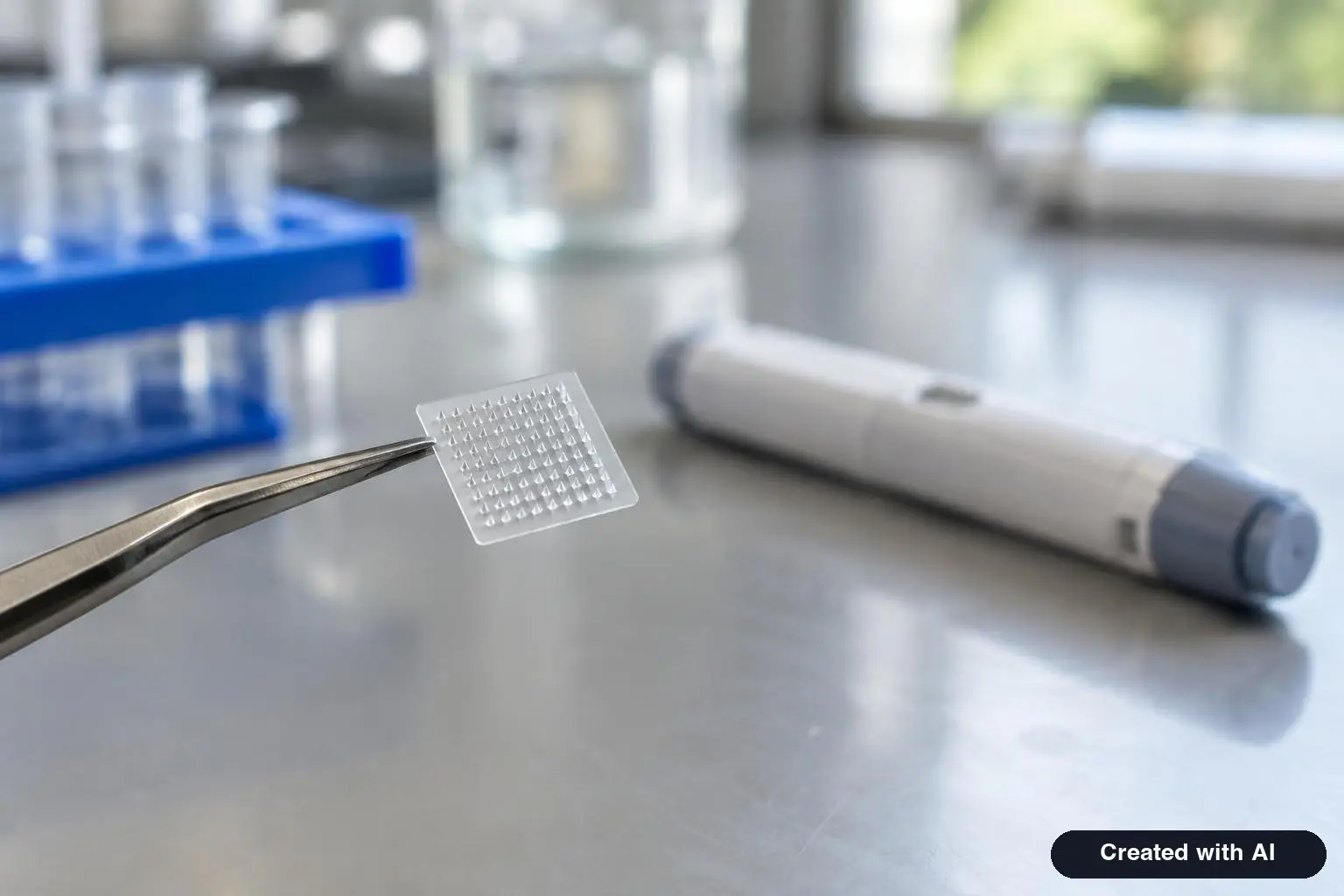
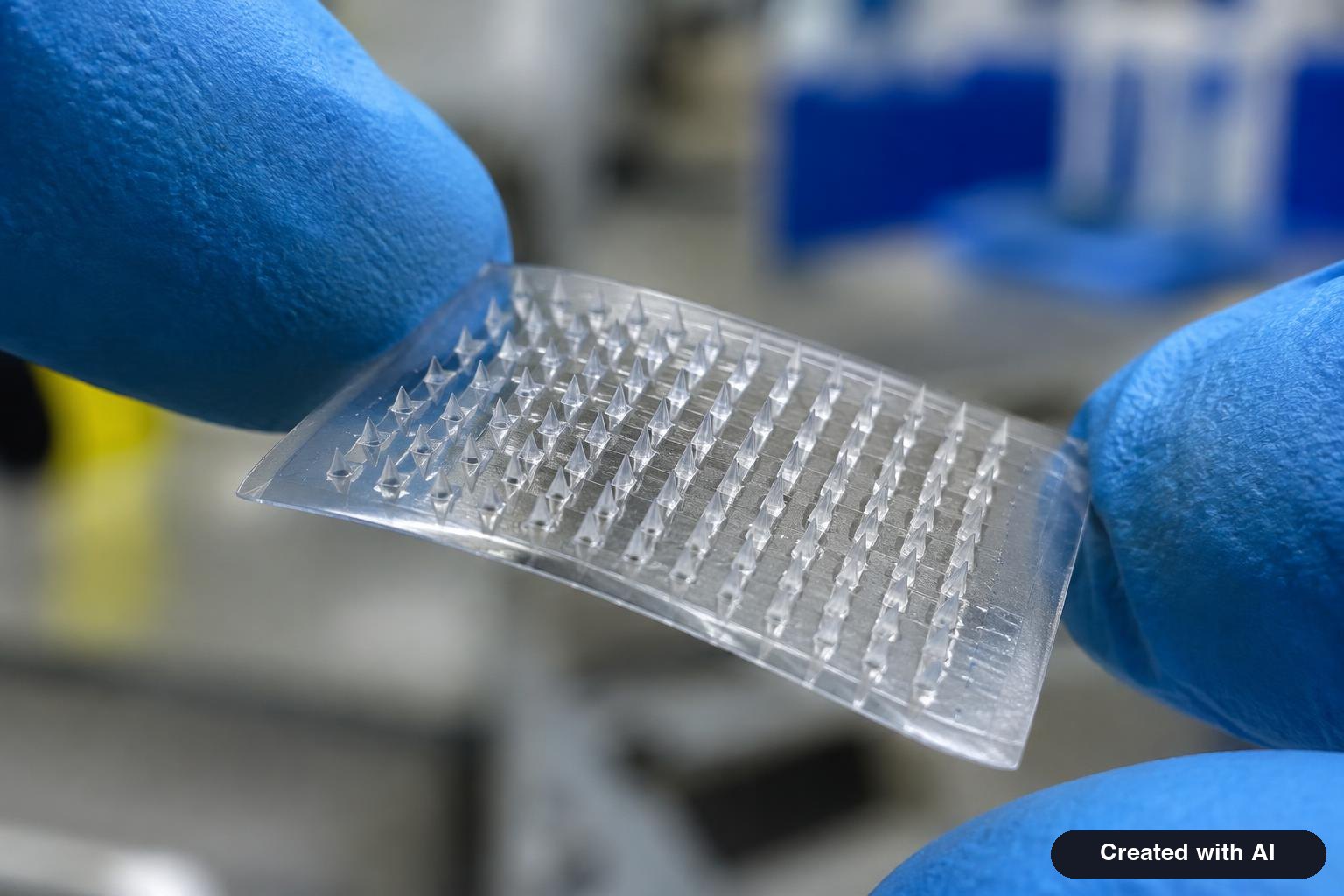
To get a peptide through skin, you have to get past the outer barrier physically. Microneedle patches do that with an array of projections, each a fraction of a millimeter long, that painlessly penetrate the stratum corneum. In dissolving designs, the tiny needles are made of the drug mixed with a material that melts into the skin over minutes to hours.
Here is where the programs with public, verifiable information stand.
| Developer | Product | Stage | What has been reported |
|---|---|---|---|
| Daewoong Pharmaceutical and Daewoong Therapeutics, South Korea | DWRX5003, semaglutide dissolving microneedle patch | Phase 1 | Company reported more than 80% relative bioavailability versus injection in a pilot study of 70 healthy adults (August 2025). Korean regulators cleared a Phase 1 trial, reported October 1, 2025. Trial described as ongoing in February 2026. |
| Terrestrial Bio, United States | VX-201, semaglutide microneedle array patch | Phase 1, recruiting | First-in-human study in healthy overweight and obese adults comparing patch with injection; started June 15, 2026; estimated enrollment 62; estimated completion May 2027 (ClinicalTrials.gov NCT07673900). |
| Anodyne Nanotech, United States | HeroPatch, once-weekly GLP-1 patch | Preclinical, preparing Phase 1 | Announced a $12.6 million Series A on June 24, 2026, to advance its once-weekly GLP-1 patch into Phase 1 clinical trials. |
| Academic groups | Various semaglutide and liraglutide skin delivery systems | Laboratory and animal studies | Published designs include a single-application "self-boosting" semaglutide microneedle patch (Advanced Therapeutics, 2024). |
Daewoong: the most advanced public data
On August 13, 2025, Daewoong announced results of a pilot pharmacokinetic study in which 70 healthy adults received a single dose of either its semaglutide microneedle patch or a subcutaneous injection. After adjusting for dose, the company said, the patch achieved more than 80% of the injection's bioavailability, against roughly 30% for earlier microneedle attempts, and kept therapeutic blood levels for a week. It also said the patches are stable at room temperature, unlike injectable semaglutide, which needs refrigeration.
Those are company-reported figures from a press release, not a peer-reviewed paper, and the study measured drug levels in blood, not weight loss or long-term safety. Korea Biomedical Review reported on October 1, 2025, that Korea's Ministry of Food and Drug Safety had approved a Phase 1 trial of the patch, DWRX5003, to assess safety and pharmacokinetics in healthy adults against Novo Nordisk's injectables. In February 2026, The Korea Herald reported that Daewoong Pharmaceutical had licensed global commercialization rights to the platform from its affiliate and that the patch "is currently undergoing Phase 1 clinical trials."
Terrestrial Bio: a U.S. trial
The ClinicalTrials.gov record for study VX-201-101 describes VX-201 as a needle-free microneedle array patch that delivers semaglutide through the skin as an alternative to subcutaneous injection. The randomized Phase 1 study has single-dose arms at 0.25 mg and 0.5 mg and a multiple-dose arm in which participants receive four weekly doses of 1.7 mg followed by four weekly doses of 2.4 mg, each compared with standard injections. It is listed as recruiting at U.S. sites, with primary completion estimated for February 2027.
Anodyne Nanotech
Anodyne says its HeroPatch has delivered "multi-milligram weekly doses of a GLP-1" in preclinical work without injection or cold storage. As of its June 2026 funding announcement, human trials had not yet been reported as started.

How far away is an approved GLP-1 patch?
No company has announced a target approval date, and it would be a guess to supply one. What can be said is where Phase 1 sits in the process.
- Phase 1 tests safety and how the drug moves through the body in a small group, often healthy volunteers. The semaglutide patches are here.
- Phase 2 tests dosing and early effectiveness in a few hundred patients.
- Phase 3 tests effectiveness and safety in hundreds to thousands of patients, typically for a year or more in obesity.
- FDA review of the full application follows.
Because semaglutide itself is already approved, a patch developer may be able to rely in part on existing data and run a shorter program than a brand-new drug would need. That depends on agreements with regulators that have not been made public. Many products that enter Phase 1 never reach the market. Until one does, nothing sold to consumers is a real GLP-1 patch.
If you are interested in taking part in research, search ClinicalTrials.gov for "semaglutide microneedle" and discuss any trial with your own doctor. Legitimate trials do not charge participants for the study drug.
Needle-free GLP-1 options available now
For people whose main objection is the needle, the alternative already exists in tablet form. Prices are manufacturer self-pay figures as of October 14, 2026, and can change.
| Tablet | Approved for | FDA approval | Average weight loss in main trial | Self-pay price per month |
|---|---|---|---|---|
| Wegovy pill (semaglutide 25 mg) | Weight management; cardiovascular risk reduction | December 22, 2025 | About 14% at 64 weeks; 16.6% in those who stayed on treatment | $149 (1.5 mg), $199 (4 mg), $299 (9 mg, 25 mg) via NovoCare Pharmacy |
| Foundayo (orforglipron) | Weight management | April 1, 2026 | 11.1% at 72 weeks on the highest dose; 12.4% in those who stayed on treatment | From $149 for the lowest dose via LillyDirect |
| Rybelsus (semaglutide) | Type 2 diabetes | September 20, 2019 | Not approved for weight loss | Varies by pharmacy and coverage |
The Wegovy pill has to be taken on an empty stomach with a small amount of water, followed by a wait before eating. Foundayo can be taken at any time of day without food or water restrictions, according to Lilly. Both carry a boxed warning about thyroid C-cell tumors and commonly cause nausea, constipation, diarrhea and vomiting, especially as doses increase. Neither is right for everyone; a prescriber will review your history first.
The injections remain the most effective option on average, about 15% weight loss with Wegovy at 68 weeks and about 21% with the top Zepbound dose at 72 weeks, and the pens use a short, very fine needle.
How to tell a real GLP-1 product from an imitation
- It requires a prescription. No approved GLP-1 drug is sold over the counter.
- It comes from a licensed pharmacy. The FDA advises patients to "obtain a prescription from their doctor and fill the prescription at a state-licensed pharmacy" and offers its BeSafeRx tool for checking online pharmacies.
- The brand and manufacturer match. Ozempic, Wegovy and Rybelsus are made by Novo Nordisk; Mounjaro, Zepbound and Foundayo by Eli Lilly.
- It is an injection or a tablet. Patches, drops, gummies and sprays using these names are not the approved drugs.
The FDA's list of red flags for online GLP-1 sellers includes prices that seem too good to be true, no screening by a licensed prescriber, spelling errors on labels and medicine that looks different from what was pictured. The agency has also warned about counterfeit Ozempic pens in the U.S. supply chain and about products sold "for research purposes" or "not for human consumption."
If you bought something sold as an Ozempic patch
- Do not rely on it to manage diabetes or weight. If you stopped a prescribed medication to use it, contact your prescriber.
- Stop using it if your skin reacts or you feel unwell. Warning signs and when to seek care are in GLP-1 patch side effects.
- Check your card statement for recurring charges. Cancellation tips are in GLP-1 patch reviews.
- Report the listing. Use ReportFraud.ftc.gov for false advertising and the FDA's MedWatch program for health problems or suspected counterfeit drugs.
Call 911 for trouble breathing, swelling of the face or throat, chest pain or fainting after using any product. People with diabetes who notice very high or very low blood sugar after switching products should seek care the same day.
The bottom line
An Ozempic patch is a reasonable thing to want and a real thing to wait for, but it is not something you can buy. The science that would make it possible, microneedles carrying actual semaglutide, is in its first human trials, with no approval date in sight. In the meantime, the needle-free form of GLP-1 treatment is a prescription tablet, and the patches using the drug's name are a different product altogether. For the ingredient that most of them rely on, see our berberine patch guide; for the wider category, see weight loss patches. This article is general information, not medical advice. Talk with a licensed health professional about whether GLP-1 medication is appropriate for you.
Frequently asked questions
Is there an Ozempic patch?
No. Ozempic is a once-weekly injection pen, and the current FDA label for semaglutide tablets also lists daily Ozempic tablets. As of October 14, 2026, no patch containing semaglutide has been approved by the FDA, and products sold online as Ozempic patches contain no semaglutide.
Is there a semaglutide or tirzepatide patch?
Not an approved one. Semaglutide microneedle patches are in Phase 1 clinical trials. We found no tirzepatide, Mounjaro or Zepbound patch in human trials or on the market.
Why can't Ozempic be made into a regular patch?
Semaglutide is a large peptide of about 4,114 daltons. Intact skin generally blocks molecules above about 500 daltons, so a conventional adhesive patch cannot deliver it. Microneedles are being tested to get around that barrier.
What are the Ozempic patches sold on Amazon or TikTok?
They are herbal patches, usually listing berberine and other plant extracts. A 2026 review of 25 such products found none that listed semaglutide or tirzepatide, and they are not FDA-approved.
When will a real GLP-1 patch be available?
No date has been announced. The semaglutide patches are in Phase 1, the first of three trial stages before FDA review, and many products that enter Phase 1 never reach the market.
Is there a needle-free alternative to Ozempic now?
Yes, by prescription. Rybelsus is a semaglutide tablet for type 2 diabetes, and the Wegovy pill and Foundayo are daily tablets approved for weight management, with self-pay prices from $149 a month as of October 2026.
Is a compounded semaglutide patch safe or effective?
Compounded drugs are not FDA-approved, and there is no evidence semaglutide can be absorbed from a topical preparation. The FDA says compounded drugs should be used only when an approved drug cannot meet a patient's medical need.
How can I join a GLP-1 patch clinical trial?
Search ClinicalTrials.gov for semaglutide microneedle studies and talk with your doctor. One U.S. Phase 1 study, NCT07673900, was listed as recruiting as of its last update in July 2026.
Sources
- FDA – FDA's Concerns with Unapproved GLP-1 Drugs Used for Weight Loss
- Experimental Dermatology (2000) – The 500 Dalton rule for skin penetration
- DailyMed – Wegovy (semaglutide) prescribing information
- DailyMed – Zepbound (tirzepatide) prescribing information
- DailyMed – Rybelsus (oral semaglutide) prescribing information
- Cleveland Clinic – Do GLP-1 Patches Actually Work?
- Annals of Pharmacotherapy (2026) – Transdermal "Natural GLP-1" Dietary Supplements Violate Law and Place Patients at Risk
- PBS News – In the gray world of GLP-1 supplements online, health experts urge caution
- Therapeutic Goods Administration (Australia) – Counterfeit weight loss products claiming to contain GLP-1
- FDA – Import Alert 66-41, Unapproved New Drugs Promoted in the U.S.
- FTC Consumer Advice – The Truth Behind Weight Loss Ads
- Daewoong – semaglutide microneedle patch pilot study announcement (August 13, 2025)
- Korea Biomedical Review – Daewoong Phase 1 trial launch for semaglutide patch (October 1, 2025)
- The Korea Herald – Daewoong secures global rights to obesity microneedle patch (February 25, 2026)
- ClinicalTrials.gov – NCT07673900, VX-201 semaglutide microarray patch Phase 1 study
- Anodyne Nanotech – Series A announcement (June 24, 2026)
- Advanced Therapeutics (2024) – Single-administration self-boosting microneedle patch for obesity
- Novo Nordisk – FDA approves Wegovy pill (December 22, 2025)
- Eli Lilly – FDA approves Foundayo (orforglipron) (April 1, 2026)
- NovoCare Pharmacy – self-pay pricing for Wegovy and Ozempic
- FDA – BeSafeRx: Your Source for Online Pharmacy Information
- FDA – MedWatch Safety Information and Adverse Event Reporting Program
- Drugs@FDA – NDA 213051, Rybelsus (semaglutide) tablets, approval history
- PubChem – Nicotine (molecular weight)
- PubChem – Estradiol (molecular weight)
- PubChem – Scopolamine (molecular weight)
- PubChem – Fentanyl (molecular weight)
- PubChem – Semaglutide (molecular weight)
- PubChem – Tirzepatide (molecular weight)
Log in to comment
No comments yet. Be the first.